Discover 5 major ways video marketing powers SEO. Learn how videos increase engagement, dwell time, rankings, and conversions for your website in 2026.
5 major ways video marketing powers seo videos increase engagement
Search engines have one job: connect people with the content that answers their questions best. Increasingly, that content is video. Pages with embedded video keep visitors around longer, earn more backlinks, and show up in more places across the search results page — from video carousels to rich snippets to YouTube itself. If your SEO strategy still treats video as an afterthought, you are leaving rankings, traffic, and engagement on the table.
In this guide, we break down the five major ways video marketing powers SEO and why videos increase engagement at every stage of the customer journey. You will also get a practical framework for building a video SEO strategy you can start using this week.

Why Video Has Become a Core SEO Signal
Google does not rank videos just because they look nice. It ranks them because of what they do to user behavior. When a visitor lands on a page with a relevant, well-produced video, three measurable things tend to happen: they stay longer, they interact more, and they are more likely to return. Each of those behaviors feeds the engagement signals search engines use to evaluate content quality.
There is also a format advantage. Search results pages are no longer ten blue links. They include video carousels, key moments, image packs, and featured snippets. A text-only content strategy can compete for one slot. A strategy that pairs strong written content with optimized video can compete for several slots on the same results page — sometimes for the same query.
Finally, video matches how people actually want to consume information. Product demos, tutorials, comparisons, and explainers are all faster to absorb in video form. Meeting that preference is exactly what Google's helpful content guidance asks publishers to do: create people-first content that satisfies the searcher, not the algorithm.
With that context in place, here are the five major ways video drives the results.
1. Videos Dramatically Increase Dwell Time and Reduce Bounce Rates
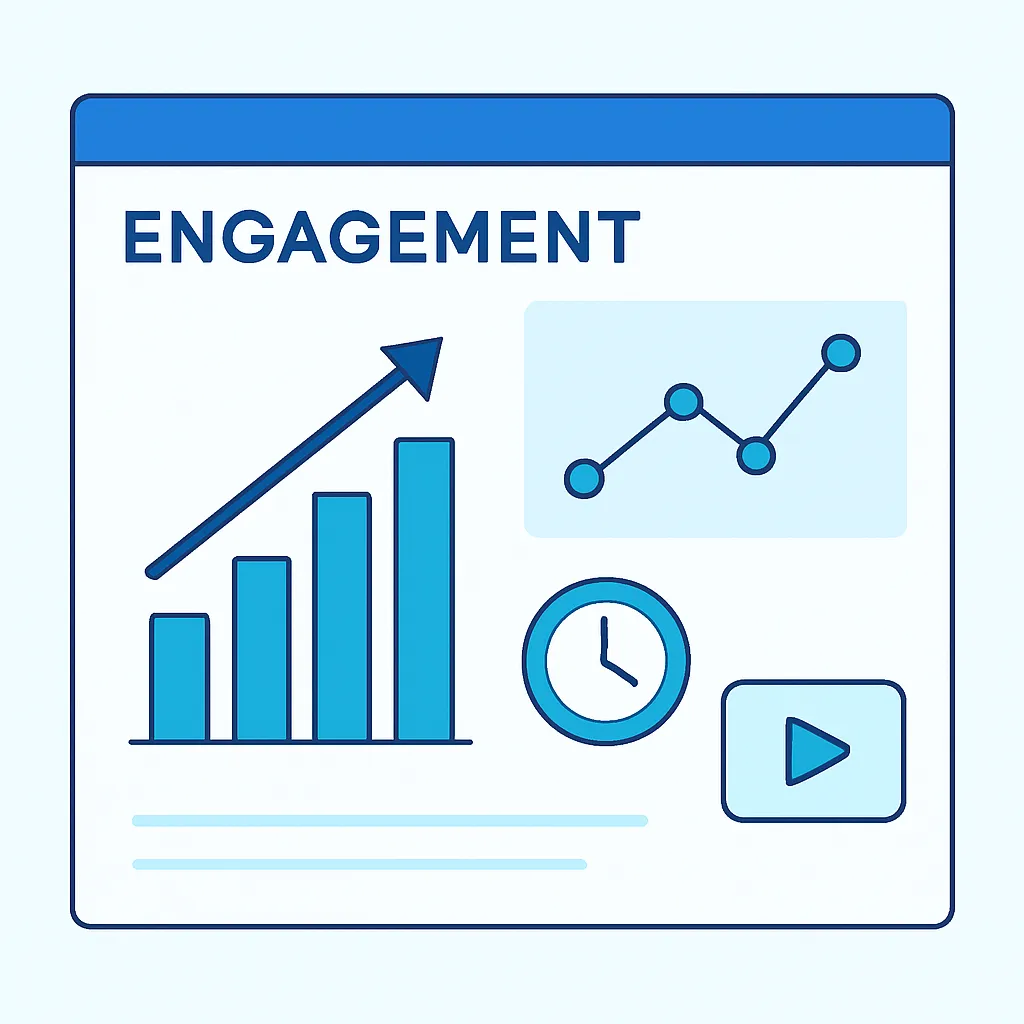
Dwell time — how long a searcher stays on your page before returning to the results — is one of the strongest behavioral indicators that your content satisfied their intent. Video is the single most effective on-page element for extending it.
The math is simple. The average reader skims a blog post in under a minute. A two-to-three minute embedded video that genuinely complements the article can double or triple total time on page. When thousands of visitors repeat that pattern, search engines notice that your page consistently resolves the query better than competing pages, and rankings tend to follow.
Video also reduces pogo-sticking, the behavior where a searcher clicks your result, immediately bounces, and clicks a competitor instead. A visible video player above the fold gives visitors an instant reason to stay: it promises an easier, faster way to get the answer.
To get this benefit, placement and relevance matter more than production budget:
- Match the video to the search intent. A page targeting "how to set up email automation" should embed a setup walkthrough, not a brand promo.
- Place the video where it helps. Near the top for tutorial content, mid-page for supporting demos.
- Keep intros short. Visitors decide within the first 8–10 seconds whether to keep watching. Cut the long animated logo.
- Add chapters or timestamps. They let viewers jump to the answer, which paradoxically increases total watch time because the content feels respectful of their time.
2. Video Content Earns Rich Results and Higher SERP Visibility
A standard organic listing gets a title, a URL, and a description. A page with properly marked-up video can earn a video thumbnail, key moments, and eligibility for the video carousel. Those visual elements occupy more screen space and consistently pull higher click-through rates than plain text listings — even when the plain listing ranks one position higher.
This is where technical video SEO pays off:
How to make your videos eligible for rich results
- Add VideoObject structured data to every page with an embedded video, including name, description, thumbnail URL, upload date, and duration.
- Create a video sitemap (or include video data in your existing sitemap) so crawlers discover your video content reliably.
- Use a crawlable embed. Make sure the video is visible on page load and not hidden behind tabs, lazy-load failures, or scripts that block rendering.
- Write keyword-informed titles and descriptions for the video itself, not just the page. These feed the metadata Google displays.
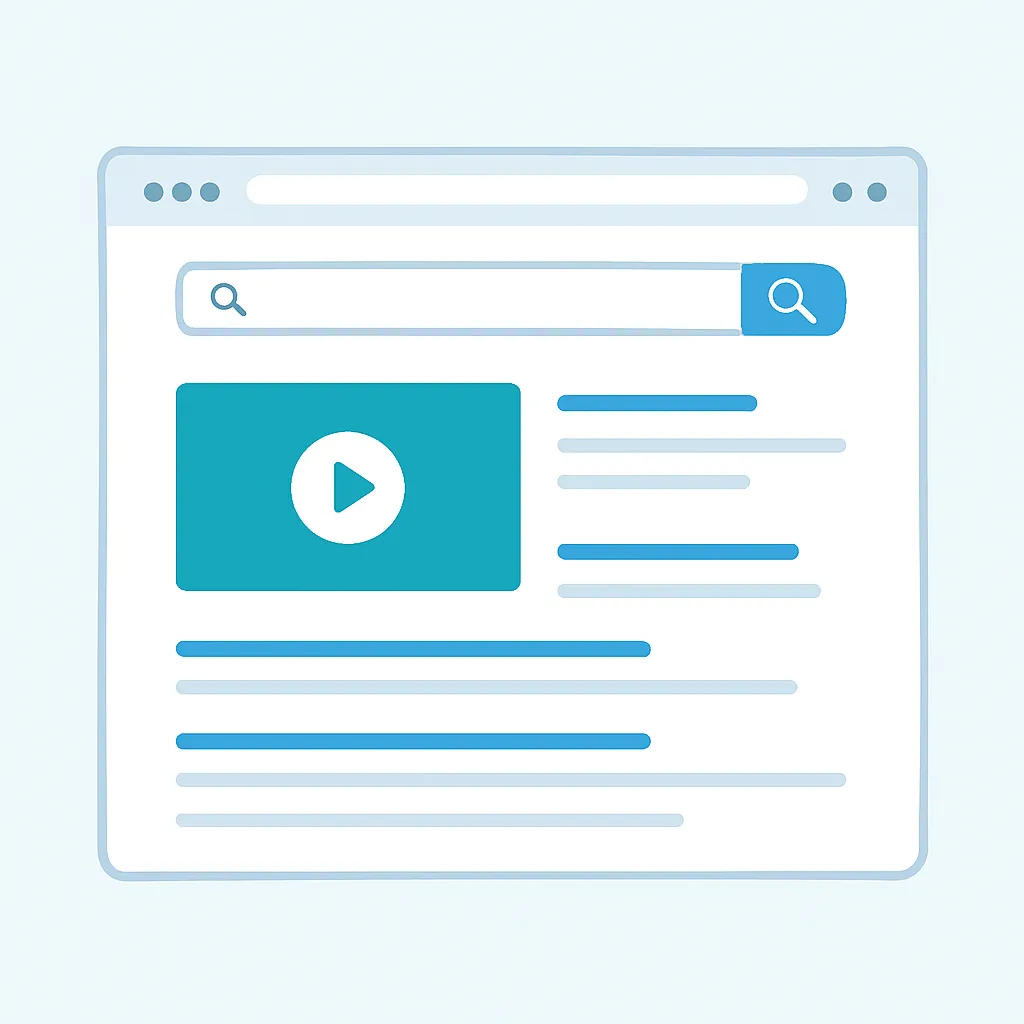
Higher click-through rate is itself an engagement multiplier. More clicks from the same ranking position means more traffic, more behavioral data, and more opportunities to earn the dwell-time benefits described above. Visibility compounds.
3. Videos Attract More Backlinks and Social Shares
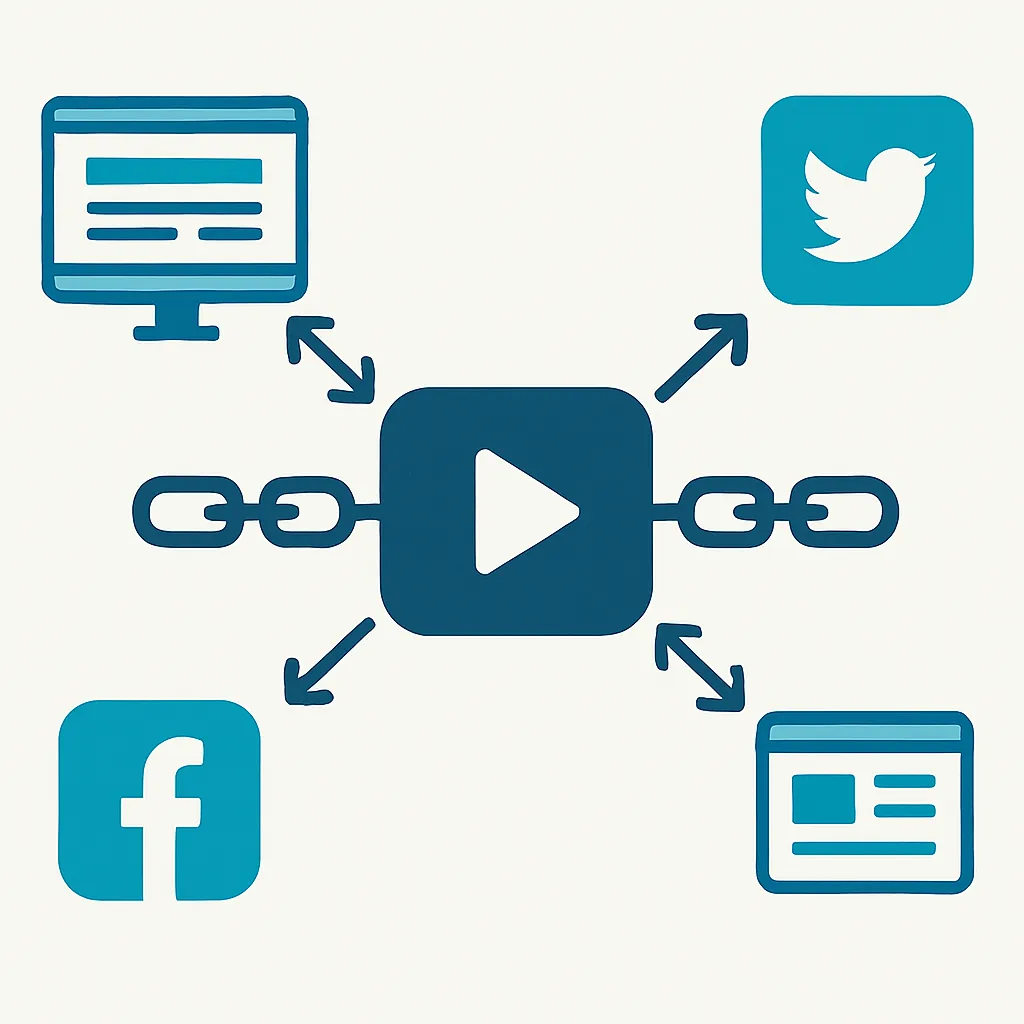
Backlinks remain one of the most heavily weighted ranking factors, and video is one of the most linkable content formats that exists. Original video content — a product teardown, an expert interview, a data visualization, a process walkthrough — gives other publishers something genuinely worth referencing. Bloggers and journalists embed videos far more readily than they quote paragraphs, and every embed is an opportunity for an attribution link back to your site.
The same dynamic plays out on social platforms, where video posts consistently earn more shares, comments, and saves than static posts. While social shares are not a direct ranking factor, they amplify reach, and reach generates the brand searches, mentions, and natural links that are ranking factors.
Practical ways to engineer linkability into your videos:
- Lead with original insight. Survey your customers, test products on camera, or document real results. Original material gets cited; recycled material gets ignored.
- Make embedding easy. Host on a platform that supports clean embeds and publish a short "embed and credit" note alongside flagship videos.
- Repurpose strategically. Cut a long-form video into platform-native clips for LinkedIn, Instagram, and TikTok, each linking back to the full version on your site.
- Pitch the video, not the page. When doing outreach, offer the video as a resource the publisher's audience will value.
4. YouTube Acts as a Second Search Engine for Your Brand
YouTube is the second-largest search engine in the world, and its results increasingly appear inside Google's own results pages. That means a single well-optimized video can rank in three places at once: on YouTube search, in Google's video carousel, and as a suggested video across related content.
For businesses, this is an entirely separate visibility channel with its own keyword landscape. Many high-intent queries — "X vs Y," "how to fix," "review," "tutorial" — show a strong searcher preference for video, and competition on YouTube is often far lighter than on the equivalent blog keyword.
To capture this channel:
- Do keyword research for YouTube specifically. Autocomplete, competitor channel analysis, and "people also watched" patterns reveal demand that standard SEO tools miss.
- Optimize titles, descriptions, and tags around one primary query per video.
- Upload accurate captions and transcripts. They improve accessibility, watch time, and the platform's understanding of your content.
- Design thumbnails for clicks. On YouTube, the thumbnail is your title tag — it determines whether the ranking turns into a view.
- Drive viewers back to your site with end screens, pinned comments, and description links so YouTube engagement becomes website traffic.
If producing this content in-house feels out of reach, professional video production services can handle everything from scripting and filming to platform-specific optimization, so each video is built to rank from day one.
5. Video Boosts Conversions and On-Site Engagement Signals
SEO does not end at the click. What visitors do after they arrive — scrolling, clicking internal links, filling out forms, making purchases — shapes both your business results and the behavioral footprint search engines observe.
Video is a proven conversion accelerator. Landing pages with explainer videos routinely outperform their video-free counterparts because video builds trust faster than text. Viewers can see the product working, hear a real voice, and watch a real customer describe their experience. That confidence shortens the decision cycle.

The engagement benefits show up across the funnel:
| Funnel Stage | Video Type | Engagement Effect |
|---|---|---|
| Awareness | Educational explainers | Longer sessions, more pages per visit |
| Consideration | Product demos, comparisons | Higher return-visit rates |
| Decision | Testimonials, case studies | More form fills and purchases |
| Retention | Onboarding and tutorial videos | Fewer support tickets, more repeat visits |
Repeat visits deserve special mention. Visitors who watch a useful video are significantly more likely to come back directly or search for your brand by name later. Branded search volume is a powerful trust signal, and video is one of the most reliable ways to grow it.
How to Build a Video SEO Strategy That Works
Knowing why video powers SEO is half the battle. Here is a straightforward framework for execution:
- Audit your top pages. Identify the 10 highest-traffic or highest-value pages that currently have no video.
- Map videos to intent. For each page, define the one video that would best serve its primary keyword — tutorial, demo, comparison, or testimonial.
- Produce for retention. Hook in the first 10 seconds, deliver the core answer early, and keep most videos under five minutes.
- Optimize technically. Structured data, video sitemaps, transcripts, descriptive file names, and fast-loading players on every embed.
- Distribute everywhere. Publish to YouTube, embed on your site, and clip for social — one production, many ranking opportunities.
- Measure and iterate. Track watch time, dwell time, rankings, and conversions, then double down on the formats that move them.
Common mistakes to avoid
- Embedding videos that are unrelated to the page's target query
- Hiding videos below heavy pop-ups or slow-loading sections
- Skipping transcripts and captions
- Publishing once and never analyzing retention data

Final Thoughts
Video marketing powers SEO because it improves the things search engines care about most: searcher satisfaction, engagement, authority, and visibility. Videos increase dwell time, unlock rich results, attract backlinks, open the YouTube channel, and lift conversions — five compounding advantages that text alone cannot match.
The businesses winning search in 2026 are the ones treating video as a core SEO asset rather than a marketing extra. If you are ready to make that shift, the team at ZoneTechify can help you plan, produce, and optimize video content engineered to rank and convert.