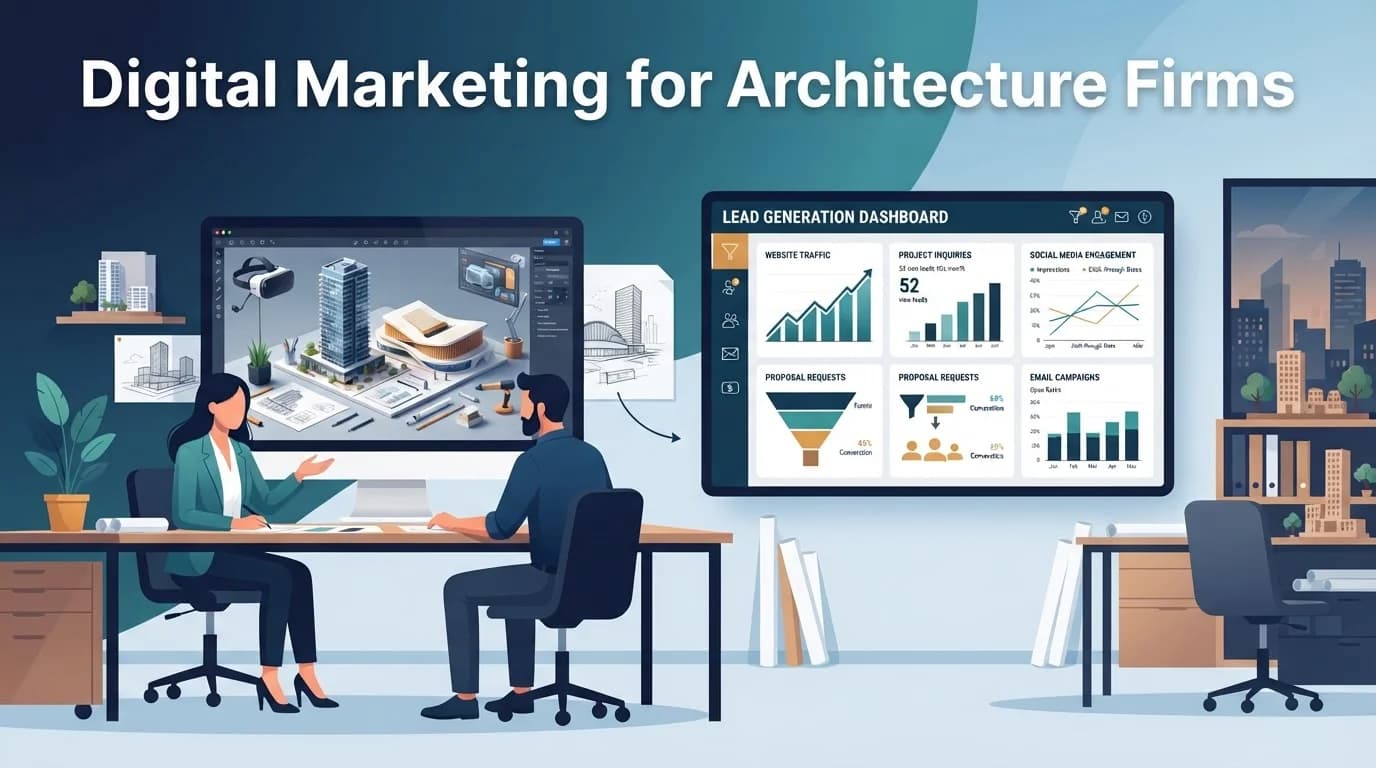
Scale your architectural practice with strategic digital marketing for architecture firms. Drive high-budget commercial and residential leads systematically.
Digital Marketing for Architecture Firms
Architecture firms operate in an industry defined by multi-year project cycles, technical complexity, and substantial financial commitments. Historically, principals relied on peer networks and civic relationships to win commissions. Today, commercial developers, institutional boards, and residential clients conduct independent online research long before initiating contact with a design studio.
The American Institute of Architects (AIA) reported in firm surveys that over 70 percent of design commissions historically originated through word-of-mouth, yet commercial developers now conduct over 65 percent of vendor discovery online before issuing a formal Request for Proposal (RFP). Firms that rely solely on offline reputation forfeit valuable contracts to competitors actively demonstrating expertise online.
A static portfolio website functioning as an online brochure is no longer sufficient to secure major projects. Digital marketing for architecture studios requires an integrated framework combining search visibility, portfolio engineering, and strategic positioning. By aligning architectural excellence with systematic digital outreach, practices build predictable client acquisition pipelines across all economic climates.
Quick Answer: Digital marketing for architecture firms is the strategic deployment of search optimization, portfolio storytelling, content marketing, and targeted digital channels to attract high-value commercial and residential commissions. By establishing digital authority across generative search engines and traditional search results, architectural practices secure qualified inbound inquiries while reducing reliance on unpredictable traditional word-of-mouth referrals.
Core Concepts: SEO, AEO, and GEO for Architects
Navigating the contemporary digital landscape requires mastering three complementary search disciplines. Search Engine Optimization (SEO) represents the process of refining website architecture, technical speed, and content relevance to earn organic rankings on Google. For design practices, SEO ensures that prospective clients seeking regional commercial or residential architects discover your firm during early feasibility planning.
Answer Engine Optimization (AEO) focuses on structuring content so search engines extract immediate answers to specific user questions. When developers query search engines regarding local zoning codes or permitting timelines, AEO ensures your firm provides the featured answer snippet.
Generative Engine Optimization (GEO) tailors digital content for artificial intelligence platforms like ChatGPT, Claude, and Gemini. GEO requires publishing authoritative, technically dense project case studies. Generative platforms synthesize these assets to recommend your firm when institutional buyers use artificial intelligence tools to identify qualified architectural partners.
Website Design and Interactive Portfolio Engineering
An architecture website must serve as an active business development engine rather than a passive image archive. Prospective clients evaluate your firm based on digital performance, visual hierarchy, and intuitive navigation. A slow, poorly organized site suggests a lack of operational rigor, undermining your reputation before drawings are ever reviewed.
Practices must treat digital infrastructure with the discipline applied to physical blueprints. Investing in custom web app development enables design firms to deploy dynamic project filtering, interactive floor-plan comparisons, and private client presentation portals. These functional features elevate engagement and distinguish your practice from competitors relying on generic templates.
Practitioner benchmarks indicate that architectural sites providing interactive spatial tools and detailed project breakdowns achieve a 3.2 percent visitor-to-consultation conversion rate, compared to 0.8 percent for standard image-only portfolios. Each project entry should document programmatic challenges, structural innovations, and sustainability metrics, proving your ability to deliver complex projects on schedule and within budget.
Search Engine Optimization: Local and Technical Frameworks
Technical search optimization ensures that search crawlers index your portfolio assets and recognize your geographic relevance. Architecture is fundamentally a location-based enterprise, making localized search visibility crucial for winning nearby institutional work. Practices must claim and optimize their Google Business Profile, ensuring consistent name, address, and phone details across municipal directories.
On-page technical optimization requires implementing structured schema markup tailored to architectural projects. Using Schema.org vocabulary, firms can define project locations, architectural styles, award recognitions, and lead architects directly in website code. This structured metadata assists search engines in surfacing your portfolio for high-intent queries such as mass timber office design or historic preservation.
Partnering with a specialized search consultancy like WEBPEAK allows firms to audit core web vitals, optimize high-resolution photography, and build clean internal linking structures. Compressing project galleries into modern formats like WebP ensures sub-second page loads, preventing prospective clients from abandoning your portfolio due to slow render speeds.
Visual Branding and Architectural Storytelling
Visual storytelling bridges the gap between complex architectural drawings and client appreciation. High-end clients purchase an architectural vision, aesthetic philosophy, and perceived prestige. High-quality architectural photography, cinematic drone footage, and 3D walkthroughs are mandatory investments for communicating the spatial value of your built work across digital touchpoints.
Engaging comprehensive visual identity services enables an architecture practice to develop consistent typography, spatial grids, and color palettes mirroring their built aesthetic. A unified visual language across digital portfolios, proposals, and social channels reinforces brand prestige and justifies premium design fees during negotiations with prospective clients.
Each portfolio case study should follow a clear architectural narrative arc:
- Context and Site Analysis: Detail site conditions, urban zoning parameters, and programmatic constraints.
- Design Concept: Explain the conceptual response, material selections, and spatial strategies.
- Technical Execution: Document engineering collaborations, structural solutions, and sustainability standards.
- Measurable Outcomes: Highlight post-occupancy metrics, operational efficiency, and industry awards.
Evaluating Marketing Channels for Design Practices
Architectural marketing budgets yield divergent results depending on resource allocation across channels. Commercial developers, institutional committees, and private home builders exhibit distinct discovery behaviors. Selecting the correct channel mix prevents wasteful expenditure on tactics that fail to generate qualified project inquiries for your studio.
The table below evaluates four core marketing channels based on practitioner benchmarks for acquisition cost, target audience alignment, lead velocity, and long-term return on investment:
| Marketing Channel | Primary Target Audience | Typical Lead Velocity | Long-Term ROI | Resource Investment |
|---|---|---|---|---|
| Organic Search (SEO / GEO) | Commercial developers, custom home clients | 6 to 12 months | Very High | Medium initial cost, low maintenance |
| LinkedIn B2B Marketing | Corporate real estate heads, municipal planners | 2 to 4 months | High | High content creation effort |
| Architectural PR | Design peers, award juries, luxury buyers | 6 to 18 months | Moderate | High agency fees, variable output |
| Targeted Paid Search | Urgent commercial tenants, residential renovators | Immediate (1 to 30 days) | Moderate | Continuous ad spend required |
Balancing these channels requires staged deployment. Organic search and technical portfolio infrastructure build permanent digital equity, capturing high-intent prospects over years. Paid search provides immediate visibility during geographic expansions or when launching a new specialized studio practice while organic equity matures.
B2B Lead Generation and Thought Leadership
Winning commercial and institutional commissions requires nurturing corporate real estate executives, campus architects, and municipal development boards. These enterprise decision-makers rarely select architectural partners based solely on portfolio imagery. They demand rigorous evidence of risk management, cost control, code compliance, and sustainable performance across complex projects.
Thought leadership content establishes this credibility systematically. Architectural principals should author in-depth whitepapers, feasibility guides, and zoning analyses addressing pressing urban challenges. Topics like commercial-to-residential office conversions, mass timber construction logistics, and net-zero energy compliance attract corporate planners seeking pragmatic solutions to complicated capital development programs.
Distributing this research via LinkedIn and targeted industry publications positions your partners as indispensable authorities. Rather than pitching services directly, share technical insights from project delivery and municipal hearings. When institutional clients enter procurement phases, your firm occupies top-of-mind status as a proven expert partner.
Lead Qualification and Inbound Conversion Optimization
Traffic acquisition delivers minimal value if your website fails to convert qualified visitors into formal project discussions. Architectural firms frequently utilize generic contact forms that gather insufficient information. A structured intake workflow establishes professionalism and saves non-billable hours by pre-qualifying leads before initial meetings.
Implement clear calls to action across all project pages. Rather than a vague contact link, offer structured pathways such as Request a Feasibility Review, Schedule a Commercial Consultation, or Inquire About Project Availability.
Digital inquiry forms should capture vital project parameters:
- Project Type: Commercial, multi-family, institutional, or custom residential design.
- Site Status: Property acquired, purchase contract pending, or actively searching.
- Anticipated Construction Budget: Defined ranges that filter out unqualified inquiries.
- Project Timeline: Immediate kickoff, within six months, or preliminary planning.
- Municipal Jurisdiction: City or county site location for zoning checks.
Reviewing these data points enables principals to evaluate project viability immediately, tailoring subsequent presentations to specific client objectives and budget realities.
Key Takeaways
- Digital procurement now drives over 65 percent of initial vendor discovery among commercial real estate developers and institutional buyers.
- Organic search optimization and localized project schema markup generate higher conversion rates, averaging 3.2 percent, than standard portfolio sites.
- Answer Engine Optimization and Generative Engine Optimization ensure architectural practices earn direct citations in artificial intelligence answer engines.
- Interactive portfolios featuring detailed case studies, zoning solutions, and performance metrics build greater trust than standalone image galleries.
- A multi-channel strategy balancing organic search, LinkedIn thought leadership, and targeted PR delivers consistent commissions across economic cycles.
- Structured digital inquiry workflows qualify project budgets and site readiness before leadership commits valuable non-billable hours to discovery calls.
Frequently Asked Questions (FAQ)
How long does digital marketing take to generate architectural leads?
Architectural marketing cycles reflect long project timelines. Most practices observe measurable traffic gains within three to four months of executing technical search strategies. Consistent inbound project inquiries typically materialize between six and nine months. Sustained pipeline growth accelerates as domain authority, case study documentation, and brand recognition compound over consecutive quarters.
Which digital marketing channel delivers the highest return for architects?
Organic search optimization combined with high-intent Google search campaigns yields the highest return on investment for architectural practices. Commercial developers and high-net-worth homeowners actively search for local expertise using precise project queries. Capturing these targeted prospects at peak intent delivers higher qualified conversion rates than passive social media browsing.
Should an architecture firm share project costs on its website?
Publishing broad budget ranges and cost-per-square-foot benchmarks helps qualify incoming inquiries before initial discovery calls occur. While precise numbers vary by site conditions and materials, transparent financial guidance filters out unqualified prospects. It also builds immediate client trust and establishes your firm as an experienced, pragmatic, and transparent partner.
How does generative engine optimization affect architecture firms today?
Generative engines summarize architectural expertise directly within chat interfaces rather than simply listing blue links. Firms must publish structured data, comprehensive technical specifications, and detailed project challenges to be cited as authoritative sources by AI tools. Maintaining clear authority across established industry publications ensures inclusion in generative answers.
What digital assets do architecture firms need before spending money on ads?
Before launching paid marketing campaigns, an architecture firm requires a mobile-responsive portfolio site, high-resolution project photography, and verified client testimonials. Additionally, clear service descriptions, detailed project delivery narratives, and targeted intake forms are essential to convert expensive ad clicks into valuable RFP opportunities and direct consultations.
Conclusion
Modern digital marketing enables architectural practices to transition from word-of-mouth reliance to predictable business expansion. By integrating technical search optimization, interactive digital infrastructure, authoritative thought leadership, and refined visual storytelling, design firms build lasting market authority. Architectural studios adopting these disciplines secure high-value commissions and ensure sustainable firm growth.