
A practical, expert guide showing how entrepreneurs can use artificial intelligence to automate work, cut costs, market smarter, and scale faster in 2026.
Entrepreneur Artificial Intelligence

Artificial intelligence has quietly become the most powerful employee an entrepreneur can hire, except it never sleeps, rarely complains, and costs a fraction of a full-time salary. After helping dozens of founders integrate AI into lean operations, one pattern is clear: the entrepreneurs who win are not the ones with the biggest budgets, but the ones who learn to delegate repetitive thinking to machines and reserve their own energy for judgment, relationships, and strategy.
This guide is written for founders, solopreneurs, and small business owners who want a straight answer on where AI actually moves the needle, what to adopt first, and how to avoid the expensive mistakes that come from chasing hype. Every recommendation here comes from real implementation, not marketing slides.
Quick Answer: Entrepreneur artificial intelligence means using AI tools to automate routine tasks, analyze data, personalize marketing, and support customers so founders can focus on strategy and growth. Start with one high-friction task, measure results, then expand AI across operations to save time, cut costs, and scale faster.
What Does Artificial Intelligence Mean for Entrepreneurs?
For an entrepreneur, artificial intelligence is not robots or science fiction. It is software that performs tasks normally requiring human intelligence, such as writing, forecasting, answering questions, and spotting patterns in data. In practical terms, AI acts as a force multiplier: a one-person business can suddenly operate with the output of a small team.
The distinction that matters is between generative AI (tools that create content, like ChatGPT, Claude, or Gemini) and predictive AI (tools that forecast outcomes, such as sales or churn). Entrepreneurs benefit most when they combine both, using generative AI to produce work and predictive AI to make smarter decisions about where to spend limited time and money.
The stakes are real. According to McKinsey's research on generative AI, the technology could add between 2.6 and 4.4 trillion dollars in value annually across the global economy. For a small business, capturing even a sliver of that efficiency can be the difference between stagnation and profitable growth. Agencies like ZoneTechify and WebPeak increasingly build AI directly into their client offerings because the return on invested time is so high.
Why AI Is a Competitive Advantage for Small Businesses
AI levels a playing field that used to favor large corporations with deep pockets. A solo founder can now run enterprise-grade analytics, produce professional marketing content, and offer round-the-clock customer service without hiring a single additional person.
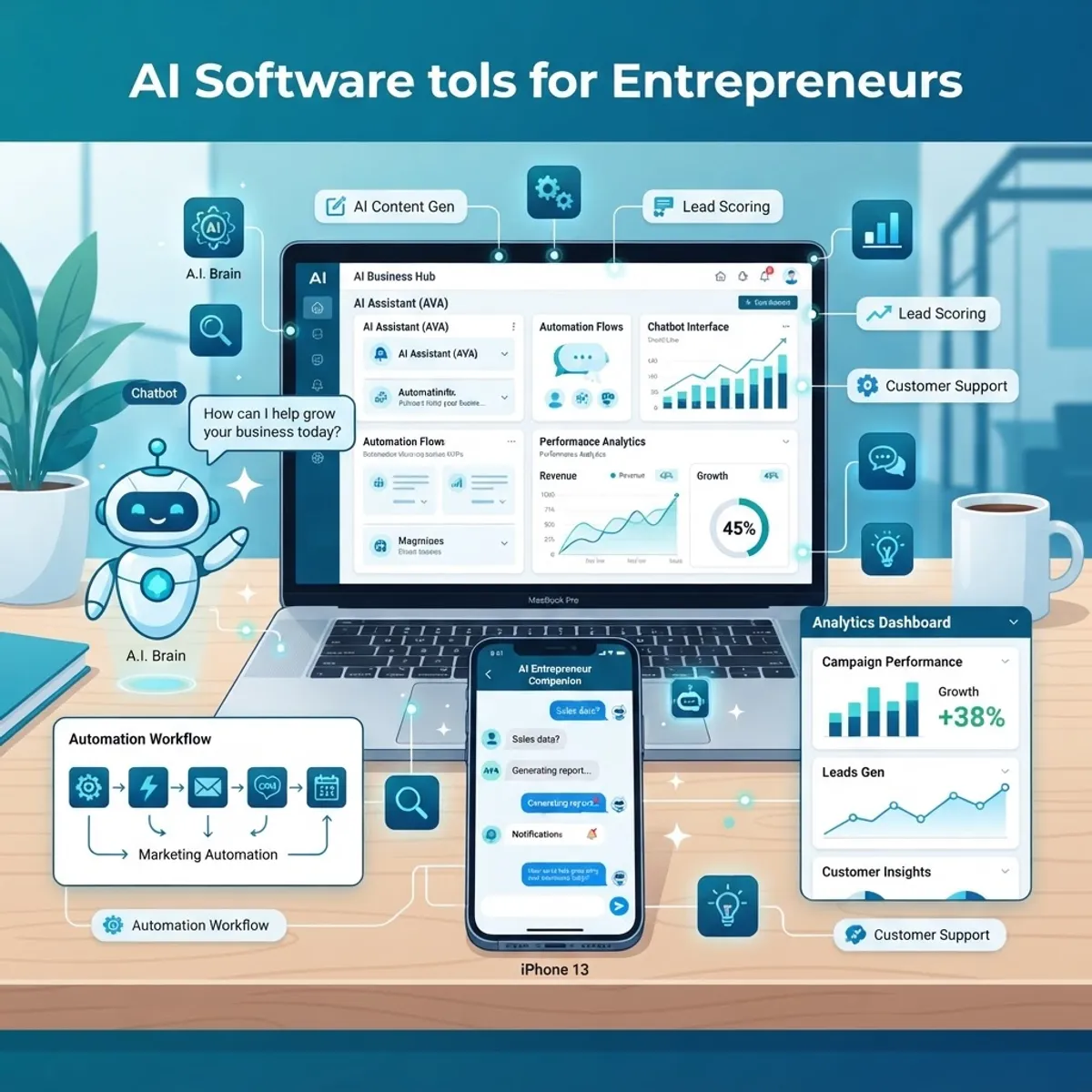
Three structural advantages make AI especially valuable for entrepreneurs:
- Speed: Tasks that took hours, like drafting proposals or summarizing research, now take minutes.
- Cost efficiency: AI tools often cost 20 to 200 dollars per month, versus thousands for equivalent human labor.
- Consistency: AI does not have bad days, ensuring uniform quality across content and customer interactions.
A useful rule from the field: if a task is repetitive, rule-based, and text or data heavy, AI can almost certainly handle the first draft. Your job shifts from producing the work to reviewing and refining it, which is where your expertise and brand voice add irreplaceable value.
The Best AI Use Cases for Entrepreneurs
Not every AI application is worth your attention. Based on real return on investment, the following use cases consistently deliver the strongest results for founders.
1. Automating Repetitive Operations

Operational busywork silently drains entrepreneurial time. AI-powered automation tools can schedule meetings, sort emails, generate invoices, extract data from documents, and route customer requests without manual effort. Platforms like Zapier and Make now embed AI to interpret messy inputs and take action, turning multi-step chores into single automated flows.
Start by listing every task you repeat weekly. Automate the one that costs you the most hours first. A founder who reclaims even five hours a week gains roughly 260 hours a year, the equivalent of six extra work weeks devoted to growth.
2. Data-Driven Decision Making

Entrepreneurs often make decisions on gut instinct because analyzing data feels overwhelming. AI removes that friction. Tools can now scan your sales figures, website traffic, and customer feedback, then surface plain-language insights such as which product drives the most repeat purchases or which marketing channel wastes budget.
The key term here is predictive analytics: using historical data and machine learning to forecast future outcomes. Instead of guessing next quarter's demand, you get a data-backed estimate, reducing the risk of overstocking, overspending, or missing a trend competitors will catch.
3. Marketing and Content at Scale
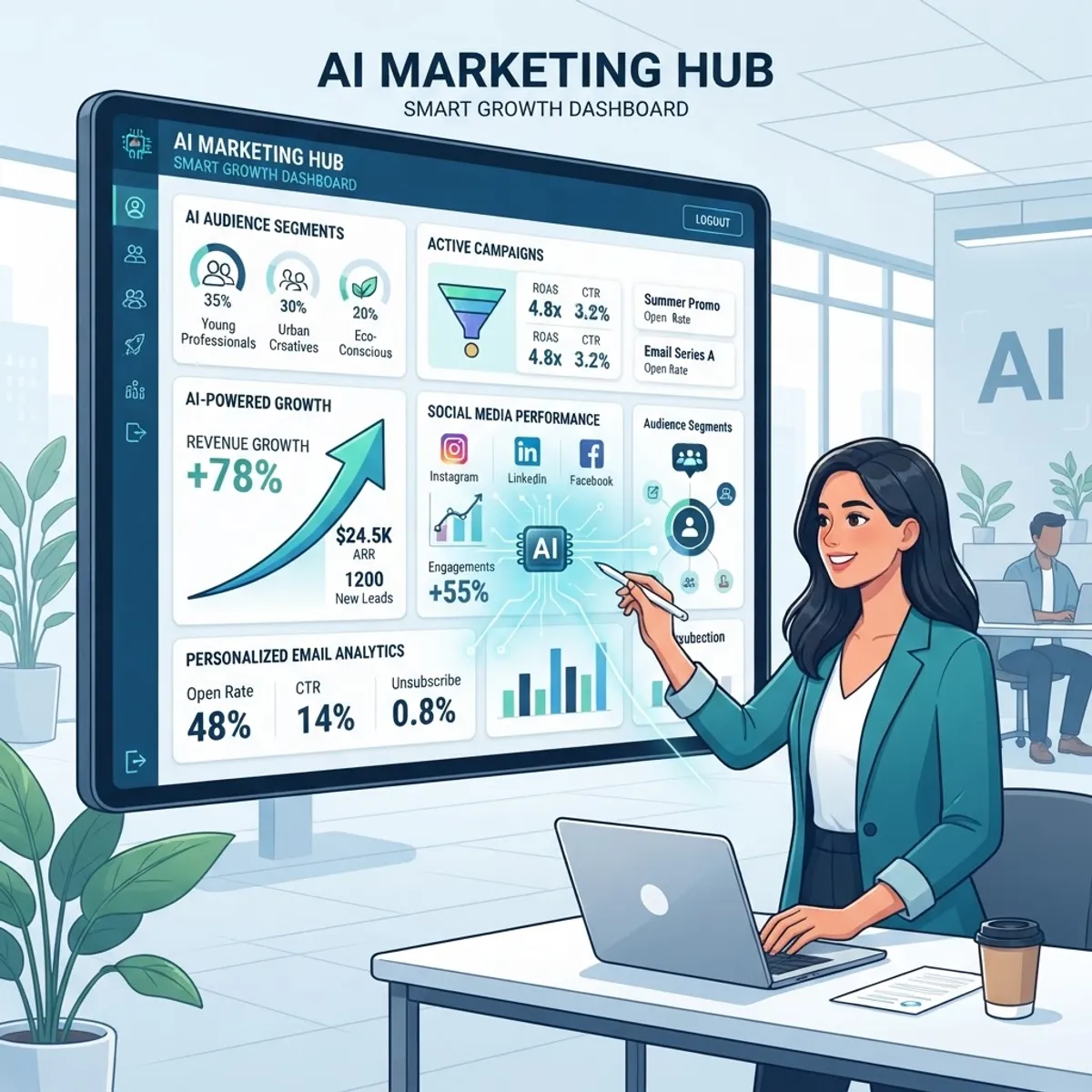
Marketing is where many entrepreneurs feel the fastest impact. AI can draft blog posts, generate social captions, write email sequences, and even produce images and ad variations. More importantly, it personalizes messaging at a scale no small team could match, tailoring subject lines and offers to individual segments.
The honest caveat: AI-generated marketing needs human editing to stay accurate, on-brand, and genuinely helpful, which aligns with Google's emphasis on people-first content. Use AI for the first draft and volume, then apply your expertise for nuance. Founders who want this done professionally often partner with specialists such as ZoneTechify's artificial intelligence services to build repeatable, high-quality content systems.
4. AI Customer Support
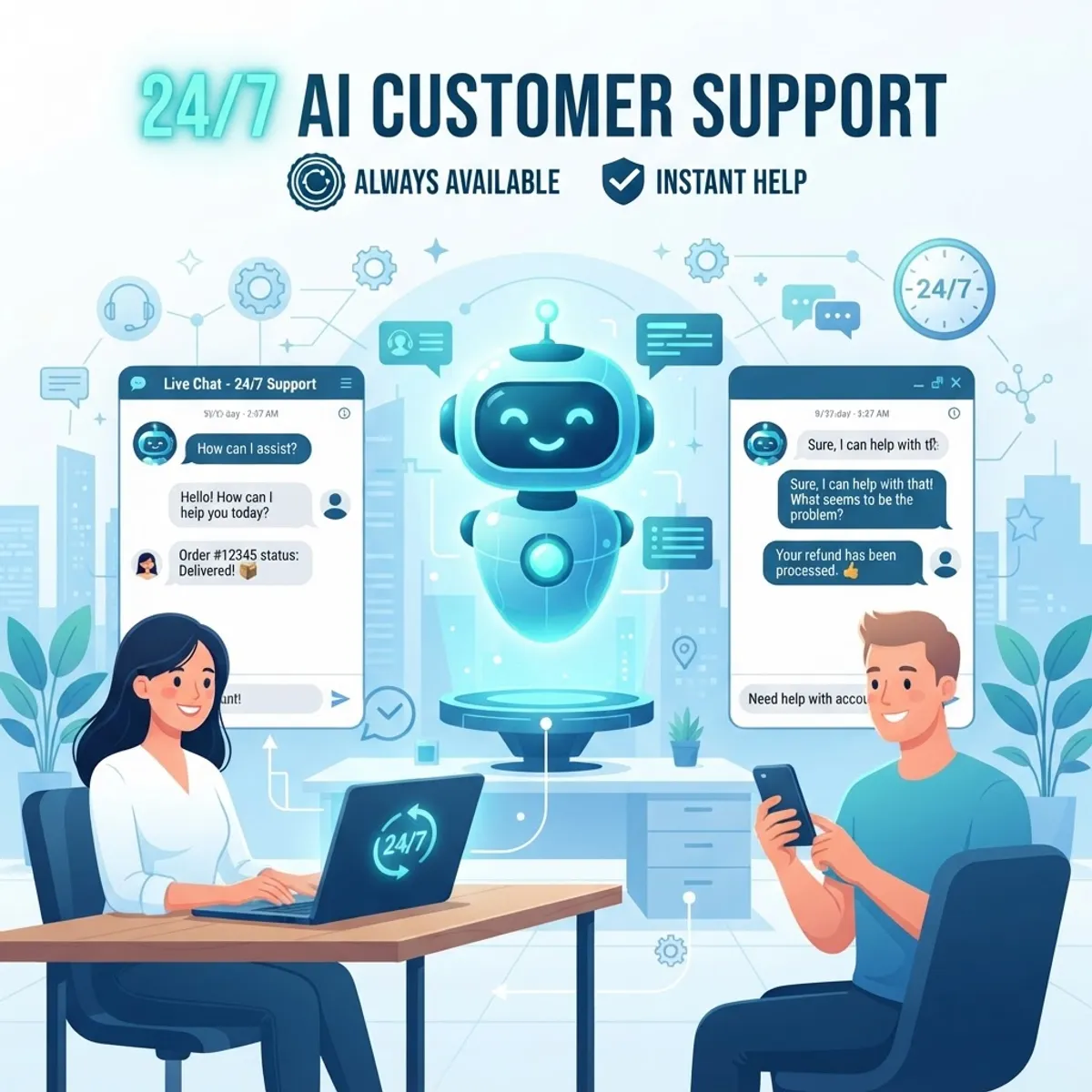
Modern AI chatbots resolve common customer questions instantly, at any hour, in multiple languages. Unlike the clunky bots of the past, today's models understand context and hand off gracefully to a human when needed. According to research cited by Google, 53 percent of mobile visitors abandon a page that takes longer than three seconds to load, and slow support responses trigger the same impatience, making instant AI replies a genuine retention tool.
For a lean business, this means never losing a lead because you were asleep or busy. A well-configured support assistant can handle 60 to 80 percent of routine tickets, freeing you to focus on complex, high-value cases.
Free vs Paid AI Tools: What Should Entrepreneurs Choose?
Budget-conscious founders constantly ask whether free AI tools are enough. The honest answer depends on volume and stakes. The comparison below reflects what typically works at each stage.
| Factor | Free AI Tools | Paid AI Tools |
|---|---|---|
| Best for | Testing, low volume, early stage | Scaling, client work, high volume |
| Output quality | Good for drafts | Higher accuracy and consistency |
| Usage limits | Restricted, throttled | Generous or unlimited |
| Data privacy | Often used for training | Business-grade privacy controls |
| Integrations | Limited | Deep workflow automation |
| Cost | Zero | 20 to 200+ dollars monthly |
A practical strategy: begin with free tiers to validate that AI helps a specific task, then upgrade only the tools that clearly save money or generate revenue. Do not pay for capability you have not yet proven you need.
How to Start Using AI as an Entrepreneur
Founders often stall because they try to adopt everything at once. A focused rollout works far better. Follow this proven sequence:
- Identify one painful task. Choose something repetitive that you dislike or that eats your time.
- Pick a single tool. Match the tool to that task rather than collecting subscriptions.
- Run a two-week test. Measure hours saved, quality, and cost.
- Document a simple process. Write down the prompt or workflow so results stay consistent.
- Expand gradually. Only add a second use case once the first delivers clear value.
This measured approach prevents wasted spending and builds genuine confidence with the technology, which is exactly how sustainable AI adoption happens.
Common Mistakes Entrepreneurs Make With AI
Experience reveals a handful of recurring errors. Avoiding them protects both your budget and your reputation:
- Publishing unedited AI content, which risks factual errors and generic, unhelpful writing.
- Ignoring data privacy by pasting sensitive customer information into free public tools.
- Chasing every new tool instead of mastering a few that fit the business.
- Removing the human entirely, when AI works best as an assistant to human judgment, not a replacement for it.
The entrepreneurs who see lasting results treat AI as a skilled junior team member: powerful, fast, but always supervised.
The Future of AI for Entrepreneurs

The near future belongs to AI agents, systems that do not just answer questions but complete multi-step tasks autonomously, such as researching a market, drafting a plan, and executing parts of it. For entrepreneurs, this means delegating entire workflows rather than single tasks.
The founders who thrive will be those who develop AI fluency now, building the habits, prompts, and processes that let them scale effortlessly as tools improve. Specialized partners such as WebPeak's artificial intelligence services help businesses adopt these emerging capabilities responsibly, ensuring automation aligns with real customer needs rather than novelty.
Key Takeaways
- Entrepreneur artificial intelligence is about delegating repetitive thinking to software so founders can focus on strategy and relationships.
- The strongest use cases are automation, data-driven decisions, marketing at scale, and 24/7 customer support.
- Generative AI creates content while predictive AI forecasts outcomes; combining both delivers the best results.
- McKinsey estimates generative AI could add 2.6 to 4.4 trillion dollars in annual global value, underscoring its economic weight.
- Start with one high-friction task, measure results over two weeks, and expand only what proves valuable.
- Always keep a human in the loop to protect accuracy, brand voice, and customer trust.
Frequently Asked Questions (FAQ)
What is the best AI tool for a small business owner?
The best tool depends on your biggest pain point. For content and communication, general assistants like ChatGPT or Claude excel. For automation, Zapier with AI works well. Start with one tool that solves your most time-consuming task, then expand as you see measurable results.
Can AI really replace employees in a startup?
AI rarely replaces employees outright, but it dramatically reduces how many you need. A single founder can handle marketing, support, and analysis that once required a small team. Treat AI as a productivity multiplier that lets you delay hiring and stay lean while you grow.
How much does it cost for an entrepreneur to use AI?
Many powerful AI tools offer free tiers, and paid plans typically range from 20 to 200 dollars monthly. Most entrepreneurs spend under 100 dollars a month total. Begin with free versions to test value, then upgrade only the tools that clearly save time or generate revenue.
Is AI-generated content bad for SEO?
AI content is not penalized by Google as long as it is helpful, accurate, and people-first. The risk comes from publishing unedited, generic output. Use AI for drafts and volume, then add your expertise, examples, and brand voice so the content genuinely serves readers.
How do I start using AI if I am not technical?
You do not need coding skills. Most modern AI tools use plain conversational language. Pick one repetitive task, choose a beginner-friendly tool, and describe what you want in normal sentences. Practice for two weeks, save the prompts that work, and build from there gradually.
Which business tasks should I automate with AI first?
Automate tasks that are repetitive, rule-based, and text or data heavy. Common starting points include email sorting, scheduling, invoice creation, social media drafting, and answering frequent customer questions. These deliver quick, visible time savings and build your confidence before you tackle more complex workflows.