A practical, experience-based guide to finding application development projects through marketplaces, referrals, niche outreach, and partnerships that actually convert into paid work.
Find Application Development Projects
Finding application development projects is a repeatable system, not a lucky break. Most developers who struggle with a dry pipeline are not short on skill; they are short on a predictable source of qualified leads. After years of building web and mobile products for clients across SaaS, healthcare, logistics, and retail, our team at ZoneTechify has learned that project acquisition follows the same engineering discipline as shipping software: define inputs, measure conversion, remove bottlenecks, and iterate.
This guide covers exactly where application development projects come from in 2026, which channels convert fastest, what to charge, and how to turn one project into five.
Quick Answer: To find application development projects, combine four channels: freelance marketplaces for fast first wins, a niche portfolio that ranks for buyer-intent searches, targeted outreach to 20 to 30 companies with visible technical gaps, and white-label partnerships with agencies. Track reply rates weekly and double down on whichever channel closes fastest.
What Counts as an Application Development Project?
An application development project is any paid engagement to design, build, extend, integrate, or maintain software that end users interact with, including mobile apps, web applications, internal dashboards, APIs, and SaaS platforms. Understanding this scope matters because most developers only hunt for greenfield builds, which are the rarest and most competitive type of work.
In practice, project demand splits into four categories:
- Greenfield builds — a brand new product from scratch. High budget, long sales cycle, heavy competition.
- Feature extensions — adding modules to an existing app. Faster to close, lower risk for the client.
- Rescue and modernization — fixing an abandoned or failing codebase. Highest margin, lowest competition.
- Maintenance and retainers — ongoing support. Predictable monthly revenue.
Our experience is consistent here: categories 2 and 3 close roughly twice as fast as greenfield work because the client already has budget approved and a painful, specific problem. If your pipeline is empty, stop chasing new app ideas and start looking for broken ones.
Where Application Development Projects Actually Come From
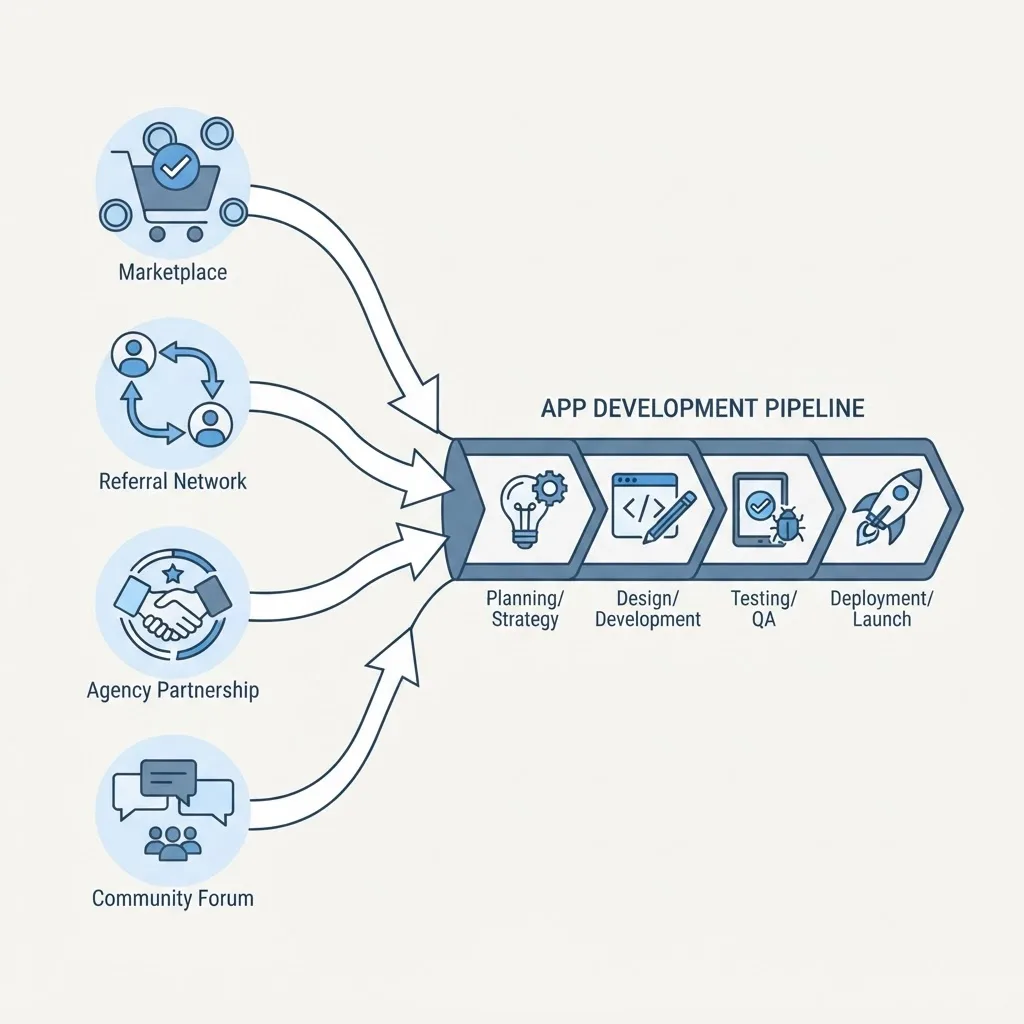
There are only five reliable sources of application development work, and each behaves differently.
1. Freelance Marketplaces
Upwork, Toptal, Contra, and Gun.io remain the fastest route to a first paid project. According to Upwork's Freelance Forward research, more than 60 million Americans performed freelance work in 2023, and software development consistently ranks among the highest-earning categories on these platforms. The trade-off is margin: platform fees plus price competition compress rates.
Use marketplaces strategically rather than permanently. They are excellent for building verified social proof in your first six months and terrible as a long-term primary channel.
2. Inbound Search Traffic
A portfolio site that targets buyer-intent queries such as "React Native developer for logistics app" produces the highest-quality leads we see because the prospect arrives already convinced they need help. According to Google, 53% of mobile site visits are abandoned if pages take longer than three seconds to load, which means a slow portfolio quietly kills leads before a prospect ever reads your case studies.
3. Referrals and Past Clients
Referred leads convert at dramatically higher rates than cold leads in every pipeline we have measured, because trust is transferred rather than earned. The mistake most developers make is passivity: they wait for referrals instead of requesting them at a specific moment, which is immediately after a successful launch.
4. Agency and White-Label Partnerships
Design studios, marketing agencies, and consultancies constantly sell application work they cannot build. Becoming their delivery partner gives you a steady flow of pre-sold projects with zero sales cost. This is the single most underrated channel for experienced developers.
5. Communities and Ecosystems
Indie Hackers, relevant subreddits, Discord servers, Slack groups for specific industries, and open-source issue trackers all surface project needs before they become public job posts. Being visibly helpful in a narrow community is a lead generation strategy, not a hobby.
Channel Comparison: Speed, Cost, and Quality
| Channel | Time to First Lead | Acquisition Cost | Lead Quality | Best For |
|---|---|---|---|---|
| Freelance marketplaces | Days | Platform fee 5 to 20 percent | Medium | Beginners, portfolio building |
| Inbound search and SEO | 3 to 6 months | Time plus content investment | High | Long-term compounding pipeline |
| Referrals from past clients | Weeks | Near zero | Very high | Anyone with shipped projects |
| Agency white-label partnerships | 2 to 8 weeks | Reduced rate margin | High | Experienced teams and specialists |
| Targeted cold outreach | 1 to 3 weeks | Time only | Medium to high | Filling gaps fast |
| Communities and open source | 1 to 3 months | Time only | High | Developers with a clear niche |
Run at least three of these channels at once. Single-channel pipelines collapse without warning when a platform changes its algorithm or a referral source goes quiet.
How to Win Projects on Freelance Marketplaces
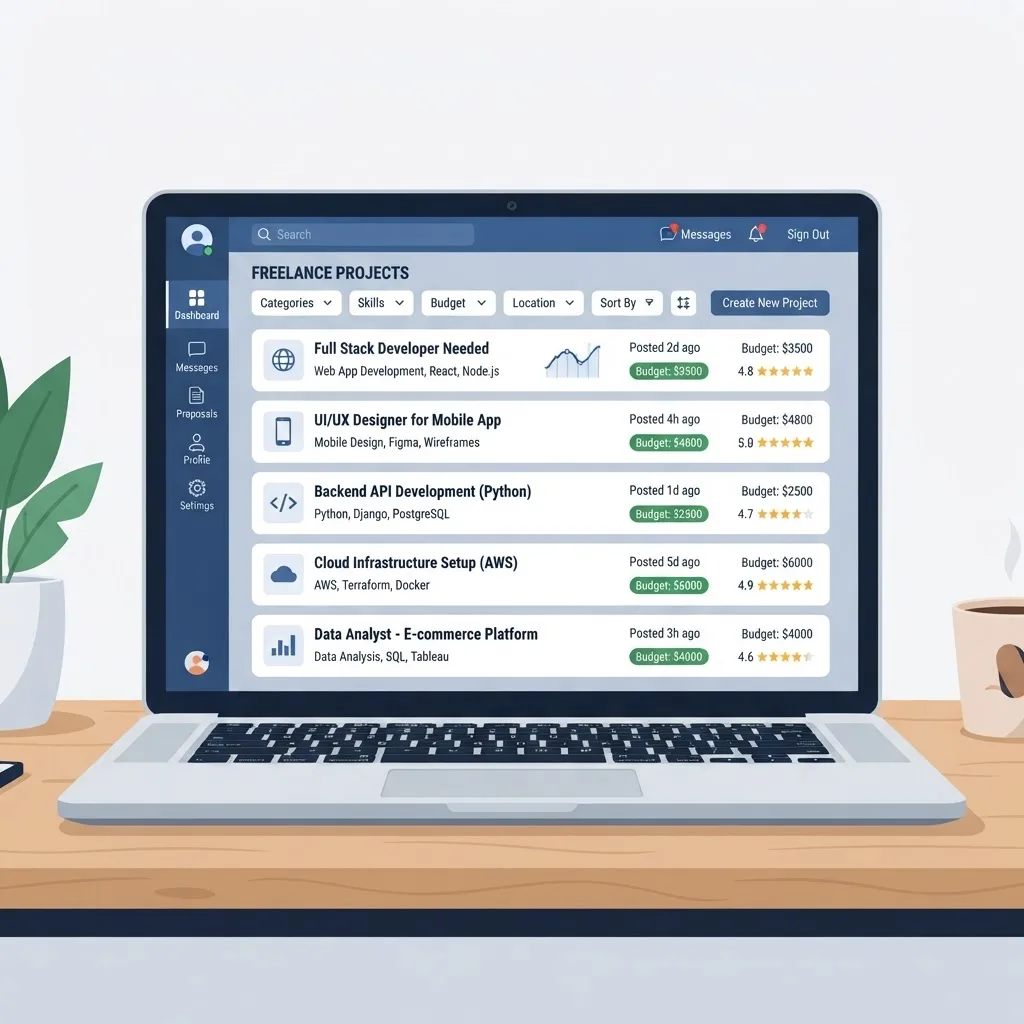
Marketplace success is a filtering problem, not a volume problem. Applying to 50 generic listings performs worse than applying to five well-matched ones with a tailored response.
Apply this filter before writing a single proposal:
- Verified payment method — unverified clients waste time.
- Budget above your floor — never negotiate upward from a low anchor.
- Clear problem statement — vague posts signal an unclear scope and scope creep.
- Client hire history — repeat hirers understand development timelines.
- Fewer than 15 existing proposals — arrive early or not at all.
Then structure every proposal in four short paragraphs: restate their problem in your own words, name the specific technical approach you would take, link one directly relevant case study, and ask one intelligent clarifying question. That final question is what separates you from templated bids, because it forces a reply.
Build a Portfolio That Attracts Application Projects
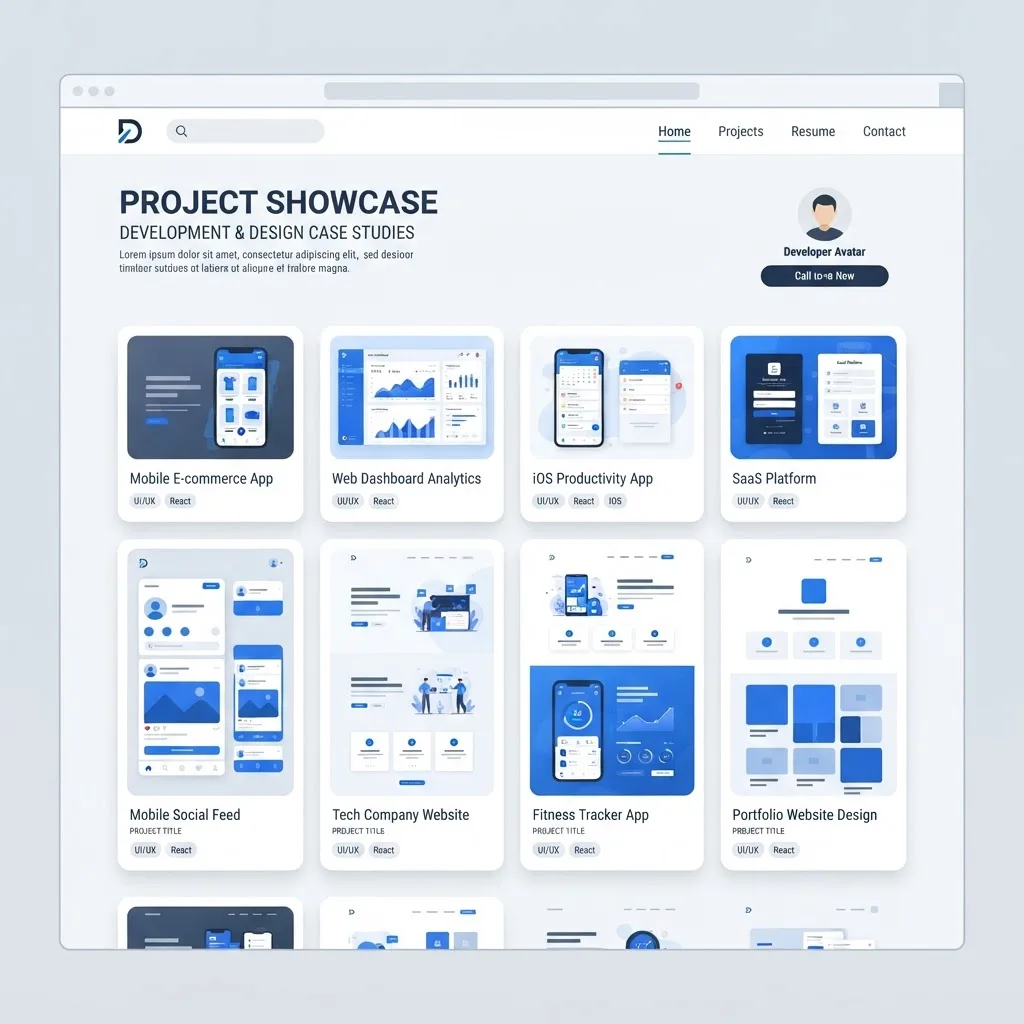
A portfolio that lists technologies attracts other developers. A portfolio that documents outcomes attracts buyers. Every case study should follow the same five-part structure:
- The business problem — what was broken and what it cost the client.
- Constraints — timeline, budget range, legacy systems, compliance needs.
- Your technical decisions — and specifically why you chose them over alternatives.
- Measured results — load time, conversion lift, cost saved, users onboarded.
- Client quote — one sentence of verifiable proof.
This structure is also how you demonstrate real experience and expertise, which is exactly what Google's helpful content systems and AI answer engines look for when deciding whose work to surface. Teams that need help building this kind of credibility-first web presence often start with professional web application development support, and resources at WebPeak cover the search visibility side of the same problem.
One detail matters more than most developers realize: publish your pricing range or engagement model. It filters out unqualified leads before they consume your time and signals confidence to serious buyers.
Targeted Outreach That Does Not Feel Like Spam
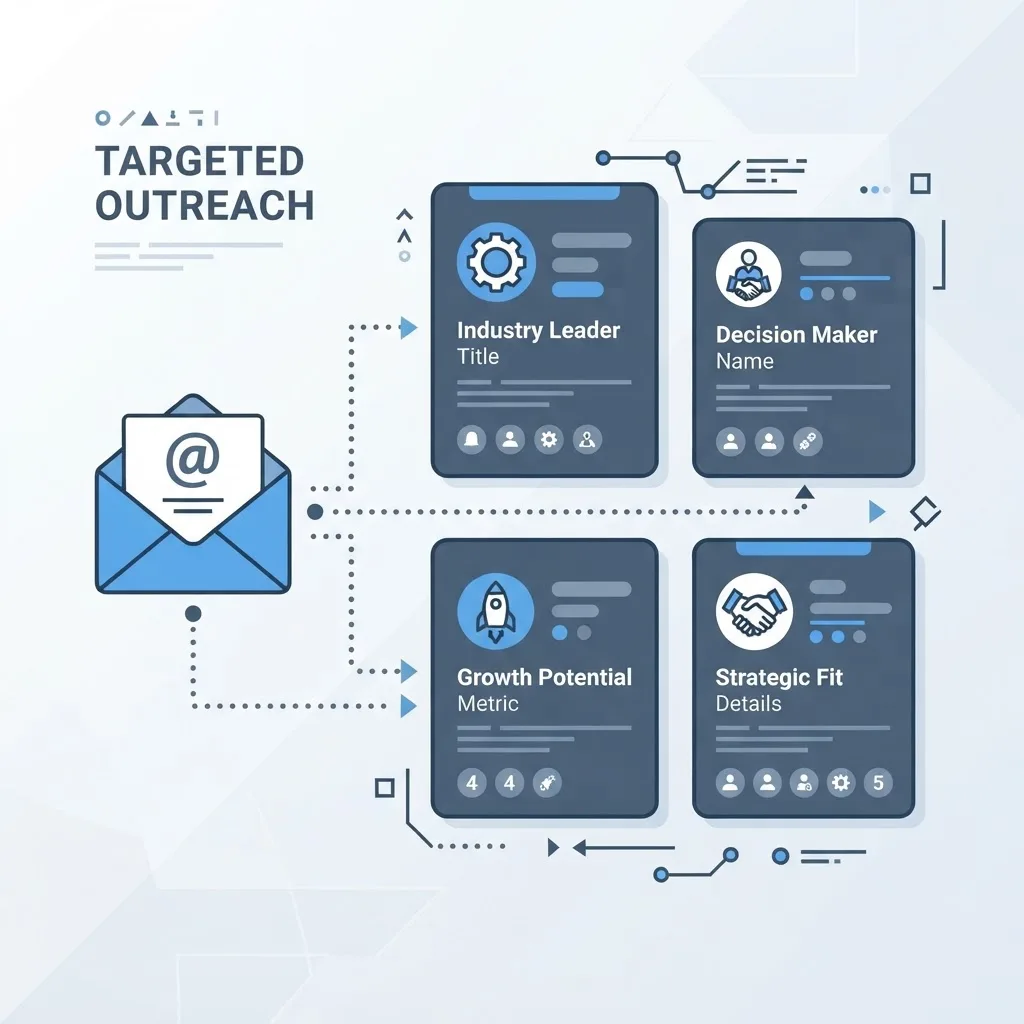
Cold outreach works when it is narrow, researched, and specific. Mass emailing 500 companies does not. Our highest-performing approach is a weekly cycle of 20 to 30 hand-picked prospects in one vertical.
Follow this sequence:
- Pick one vertical you understand, such as dental clinics, freight brokers, or fitness studios.
- Find a visible technical gap — a broken booking flow, a mobile app with poor recent reviews, a manual process described on their own site.
- Document the gap concretely with a screenshot, a load-time score, or a quoted app review.
- Send a short email of under 120 words that names the gap, states the business impact, and offers one specific fix.
- Follow up twice, spaced five and twelve days apart, each time adding new value rather than repeating your ask.
App store reviews are the most underused lead source in this process. A mobile app with a 2.8-star rating and dozens of complaints about crashes is a company with an approved budget and an urgent problem.
Pricing Application Development Projects Correctly
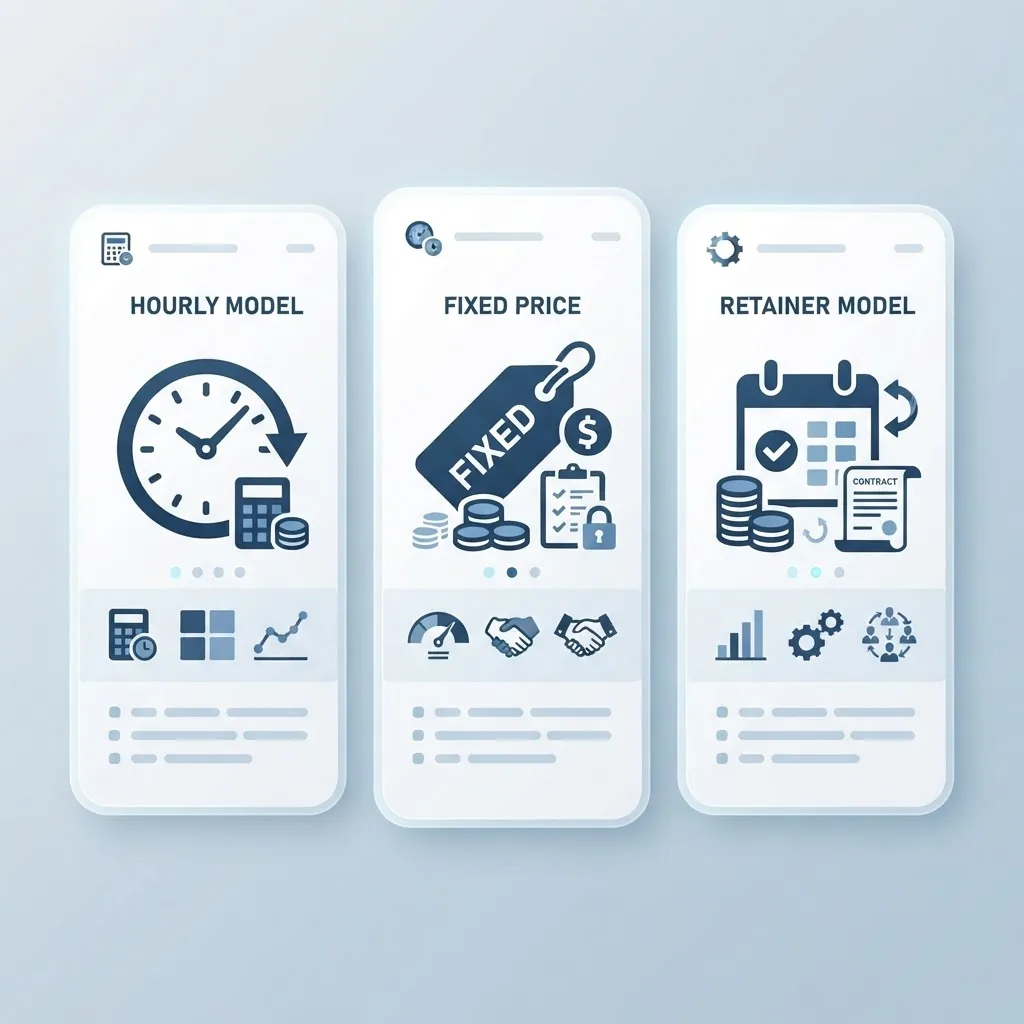
Pricing determines which projects you attract, so it is a lead generation decision, not just a finance decision.
- Hourly works for undefined scope, discovery phases, and ongoing collaboration. It caps your upside and rewards slowness, so use it deliberately.
- Fixed price works only when the scope is genuinely locked and documented. Always include a written change-request process; without one, fixed price becomes unpaid work.
- Value-based works when you can tie the application to measurable revenue or cost savings, such as replacing a manual workflow that costs the client thousands per month.
- Retainers are the goal. Predictable monthly income removes the pressure that drives developers to accept bad projects.
A practical rule from our own delivery data: quote a discovery phase separately as a small paid engagement. Clients who refuse to pay for discovery almost always dispute the scope later.
Turn One Project Into a Pipeline
The cheapest application development project you will ever win is the second one from an existing client. Build retention deliberately:
- Deliver a written handover document and a short walkthrough recording at launch.
- Propose a three-month roadmap of next improvements before the current project ends.
- Check in 30 and 90 days post-launch with one specific observation about their metrics.
- Ask for the referral at the moment of maximum satisfaction, and name the type of client you want.
Developers who systematize these four habits rarely search for projects again, because their pipeline compounds while they work.
Key Takeaways
- Application development projects come from five channels; run at least three simultaneously to avoid pipeline collapse.
- Feature extensions and rescue projects close roughly twice as fast as greenfield builds because budget is already approved.
- According to Google, 53% of mobile visits are abandoned when load time exceeds three seconds, so portfolio performance directly affects lead volume.
- Software development remains one of the highest-earning freelance categories, per Upwork's Freelance Forward research, but platform fees make marketplaces a starting point rather than a strategy.
- Case studies must document business problems and measured outcomes, not technology lists.
- Outreach at 20 to 30 researched prospects per week outperforms mass emailing by a wide margin.
- Paid discovery phases filter out clients who will dispute scope later.
Frequently Asked Questions (FAQ)
How do I find application development projects with no experience?
Start by building three self-directed projects that solve real problems, then offer discounted work to local businesses or nonprofits in exchange for testimonials and case study permission. Combine that with entry-level marketplace bids. Your goal in the first 90 days is verifiable proof, not maximum rate.
Which platform is best for finding app development projects?
Upwork offers the highest volume, Toptal and Gun.io offer higher rates with a vetting process, and Contra removes commission fees. Choose based on your stage: high volume when building proof, vetted networks once you have shipped several documented client applications successfully.
How much should I charge for an application development project?
Charge based on scope clarity and business value, not hours alone. Use hourly rates for undefined discovery work, fixed prices only for documented scopes with a change-request clause, and value-based pricing when the app measurably increases revenue or eliminates costly manual processes.
How long does it take to get a steady flow of projects?
Marketplaces can produce a first project within days. Referrals typically activate within weeks of your first successful delivery. Inbound search traffic usually takes three to six months to compound. Expect a genuinely steady pipeline around month six with consistent multi-channel effort.
Are cold emails still effective for finding development work?
Yes, when they are narrow and researched. Emails under 120 words that name a specific visible problem, quantify its business impact, and propose one concrete fix still generate replies. Generic mass outreach fails because it demonstrates no understanding of the prospect's actual situation.
Should I specialize in one industry or stay general?
Specialize once you have shipped four or five projects. A narrow niche makes outreach specific, referrals easier to route, and pricing higher because you carry domain knowledge alongside technical skill. Generalists compete on price; specialists compete on relevant, demonstrable experience.