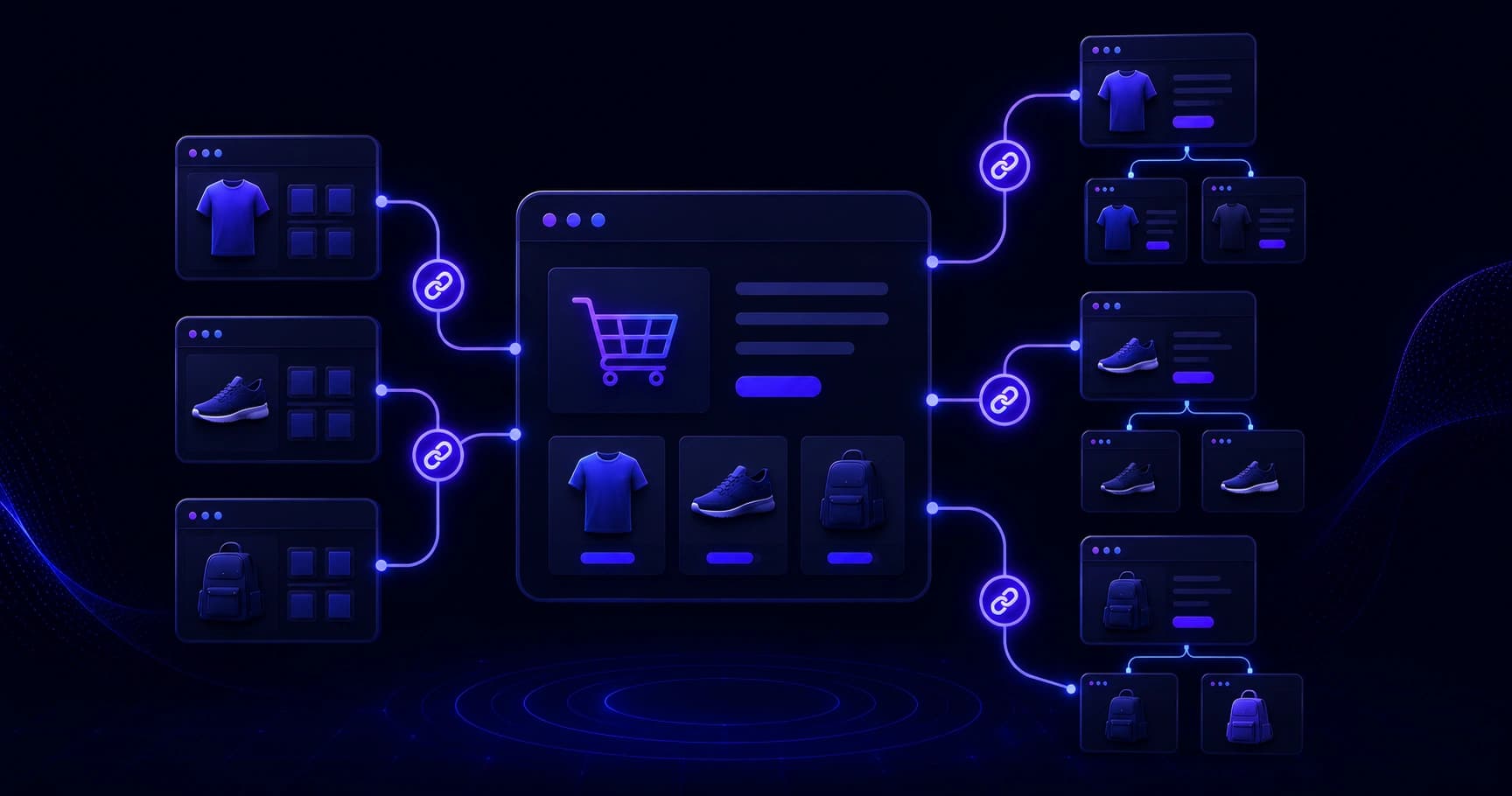
Learn how to set up internal linking for ecommerce SEO with proven strategies that boost rankings, improve crawlability, and drive more conversions from your online store.
How to Set Up Internal Linking for Ecommerce SEO
Internal linking is one of the most underused yet powerful SEO levers available to ecommerce store owners. While most merchants obsess over backlinks and keyword density, smart internal linking quietly does the heavy lifting — distributing link equity, guiding crawlers through thousands of product pages, and nudging shoppers toward purchase decisions.
If your ecommerce site has hundreds or thousands of products, categories, and blog posts, a well-planned internal linking structure is not optional. It is the foundation that holds your entire SEO strategy together. This guide walks you through exactly how to build that foundation from scratch, with actionable steps you can start implementing today.
Why Internal Linking Matters for Ecommerce SEO
Before diving into the how, it helps to understand the why at a deeper level than most guides go.
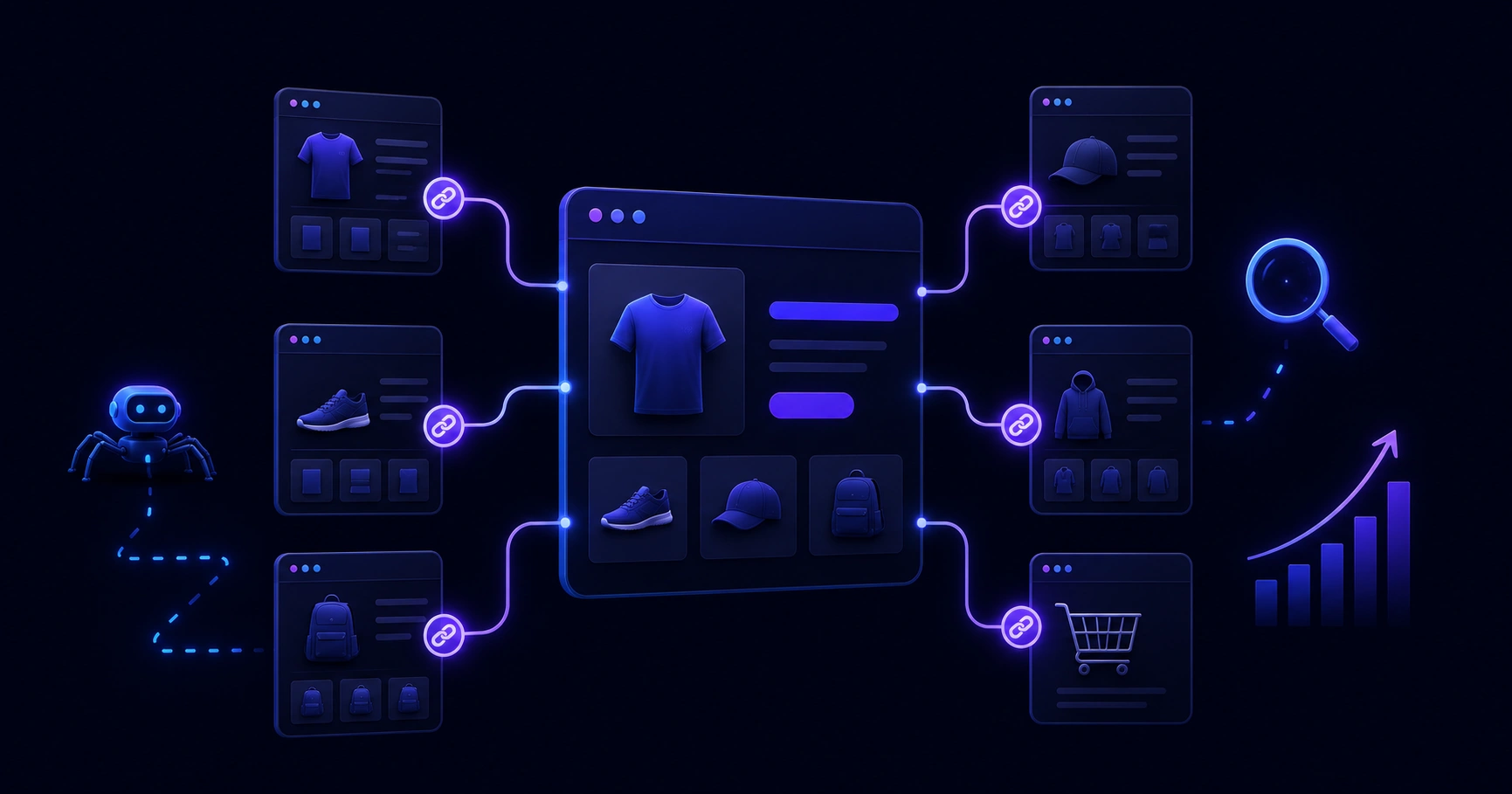
Search engines use links to discover and evaluate pages. When Googlebot lands on your homepage, it follows links to find category pages, which link to product pages, which may link to related products or blog content. If a page has no internal links pointing to it, crawlers may never find it — or find it so rarely that it gets crawled infrequently and ranked poorly.
Beyond crawlability, internal links pass what SEOs call link equity (sometimes called PageRank). Your homepage typically earns the most external backlinks and therefore carries the most authority. Internal links distribute a portion of that authority to the pages they point to. A product page with three internal links pointing to it will generally outrank the same product page with zero internal links, all else being equal.
For ecommerce specifically, internal linking also directly influences conversion rates. Linking related products, complementary accessories, and higher-margin alternatives keeps shoppers on your site longer and exposes them to more buying opportunities.
Step 1: Audit Your Current Internal Link Structure
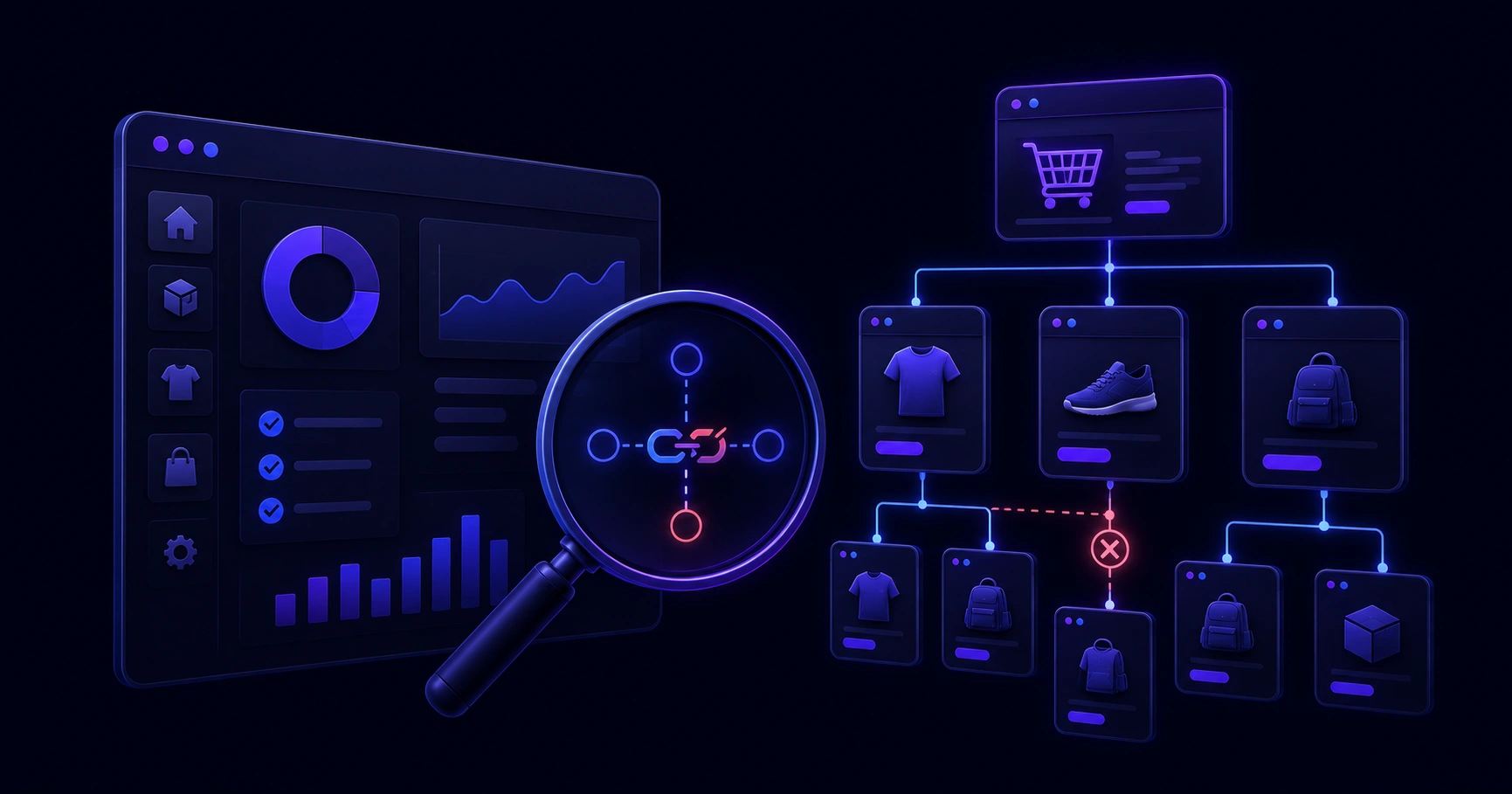
You cannot improve what you have not measured. Start by running a crawl of your ecommerce site using a tool like Screaming Frog, Ahrefs Site Audit, or Semrush. Look for:
- Orphan pages — pages with zero internal links pointing to them
- Deep pages — pages more than three clicks away from the homepage
- Over-linked pages — pages with hundreds of internal links, diluting equity
- Broken internal links — links pointing to 404 pages
Export this data into a spreadsheet. Sort by the number of inlinks each page receives. Your highest-converting product pages and most important category pages should appear near the top. If they do not, that is your first problem to fix.
Step 2: Build a Logical Site Architecture First
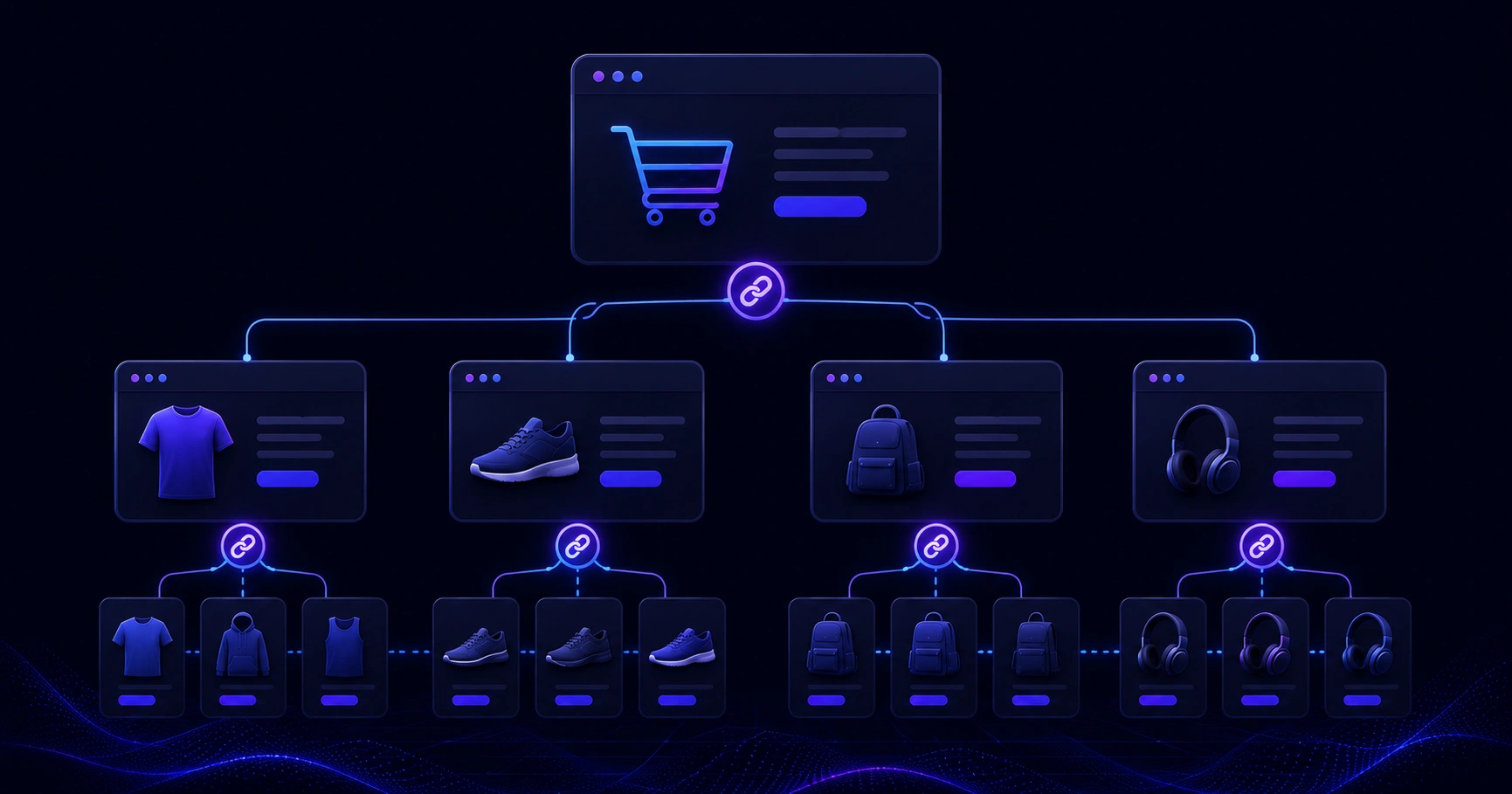
Internal linking cannot compensate for a broken site structure. Before optimizing individual links, make sure your site architecture follows a flat, logical hierarchy:
Homepage → Category Pages → Subcategory Pages → Product Pages
Every product page should be reachable within three clicks from the homepage. This is called a flat architecture, and it ensures crawlers reach all your pages efficiently while spreading link equity evenly.
For large ecommerce stores with tens of thousands of SKUs, you may need subcategories and filters. That is fine — just make sure filtered and faceted pages are either canonicalized or noindexed to prevent duplicate content from fragmenting your link equity.
Map out your architecture visually. Tools like Slickplan or even a simple spreadsheet can help you identify gaps. Every category page should link to its subcategories. Every subcategory should link back to its parent category. This bidirectional linking creates a cohesive web rather than a series of disconnected silos.
Step 3: Optimize Category Page Internal Links
Category pages are the workhorses of ecommerce SEO. They typically rank for broad, high-volume keywords and funnel traffic down to product pages. Your internal linking strategy here should focus on:
Linking to subcategories: If you sell running shoes, your main "Running Shoes" category page should link to subcategories like "Trail Running Shoes," "Road Running Shoes," and "Running Shoes for Women." Use descriptive anchor text that includes the target keyword.
Featuring top products: Most ecommerce platforms let you pin or feature specific products at the top of a category. Feature your bestsellers and highest-margin items. These will receive the most link equity from the category page and tend to rank better.
Adding contextual editorial links: Write a short 150–200 word intro paragraph for each category page and naturally link to related categories, buying guides, or blog posts within that text. This is often overlooked but extremely effective.
Step 4: Add Related Product Links on Product Pages
Every product page is a potential SEO asset — and a conversion opportunity. Use internal links here strategically:
Related Products Widget
Most ecommerce platforms include a related products section by default. Do not leave this on autopilot. Manually curate or use purchase-data-driven recommendations rather than random suggestions. Link to products that shoppers actually buy together.
Customers Also Viewed and Frequently Bought Together
These sections serve double duty: they keep users engaged and create additional internal links. Make sure they point to relevant, in-stock products.
Product Description Links
Within the product description itself, link to complementary accessories. If you are selling a camera, link to compatible memory cards, tripods, or camera bags. Use natural anchor text — not "click here," but "compatible with our 32GB memory cards."
Breadcrumb Navigation
Every product page should display a breadcrumb trail linking back through its category hierarchy. Breadcrumbs are a clean, efficient way to create structural internal links and help both users and crawlers understand where a page sits in your architecture.
Step 5: Use Blog Content as a Link-Building Engine
Your ecommerce blog is not just a content marketing tool — it is an internal linking powerhouse. Properly structured blog posts can funnel link equity directly to product and category pages.
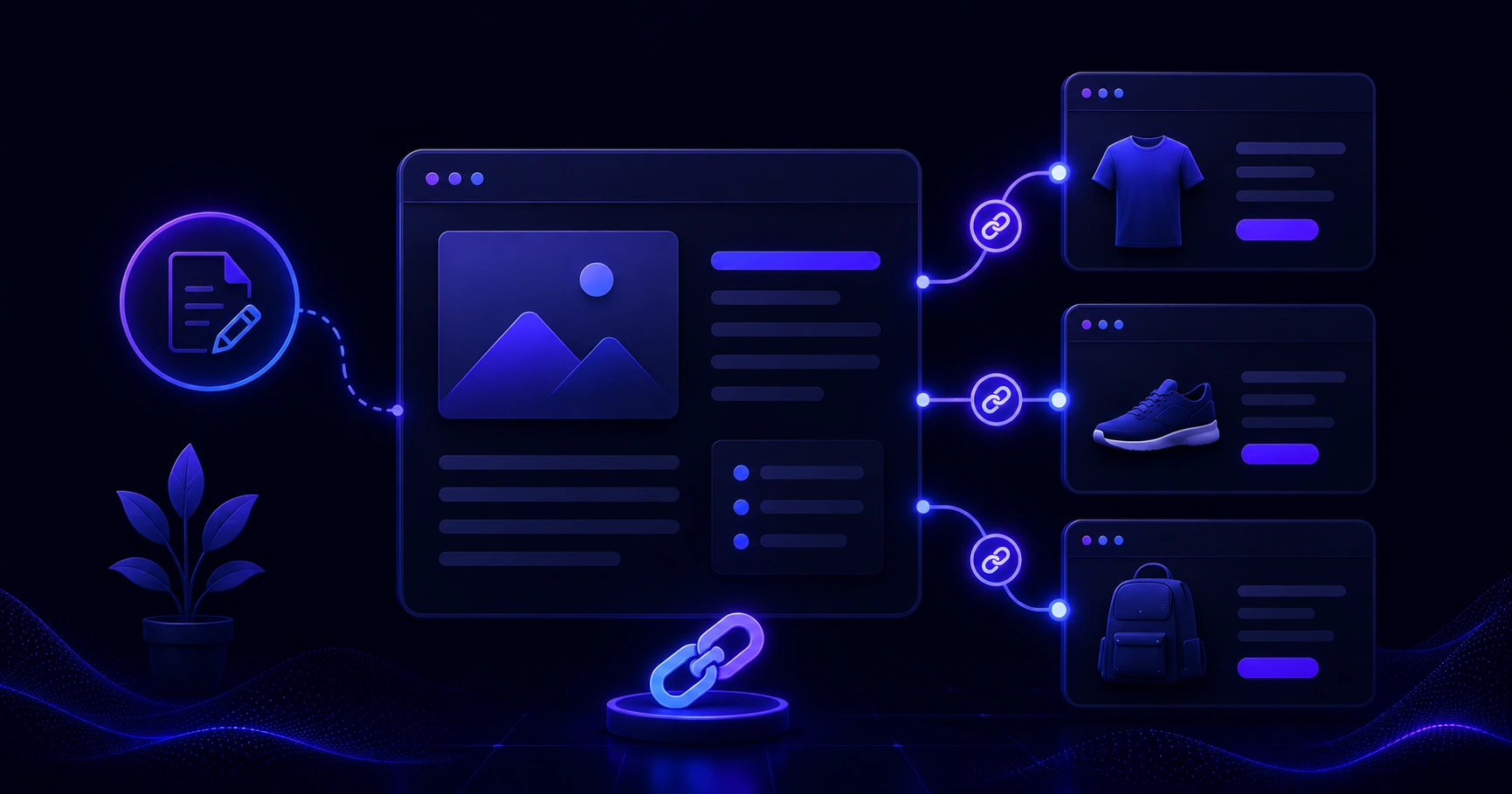
The strategy is simple: write blog posts that address purchase-intent questions your customers are searching, then link naturally to the relevant products and categories within the content.
For example, a post titled "How to Choose the Right Trail Running Shoes" can naturally link to your Trail Running Shoes category, specific featured products, and a sizing guide page. This creates a topic cluster that reinforces your category page's authority on that keyword theme.
At ZoneTechify, this blog-to-category linking approach is consistently one of the highest-ROI tactics used in ecommerce SEO campaigns. It requires consistent content production but delivers compounding returns as each new post adds more links into the ecosystem.
For a complete strategy tailored to your store, explore our Ecommerce SEO solutions — built specifically for online retailers who want sustainable organic growth.
Step 6: Optimize Anchor Text Without Over-Optimizing
Anchor text — the visible, clickable text of a link — signals to search engines what the destination page is about. Done right, it reinforces keyword relevance. Done wrong, it triggers over-optimization penalties.
Follow these anchor text best practices for ecommerce internal links:
| Anchor Text Type | Example | Use Frequency | |||| | Exact match | trail running shoes | Use sparingly (10-15%) | | Partial match | best trail running options | Use moderately (30-40%) | | Branded | Nike trail shoes | Use naturally | | Generic | shop here, view products | Minimize | | Descriptive | our full collection of trail shoes | Use freely |
Vary your anchor text naturally. If every internal link to a category page uses the exact same keyword phrase, it looks manipulative. Write the way a human would reference the page in context.
Step 7: Monitor, Iterate, and Maintain
Internal linking is not a one-time setup task. As you add products, retire old SKUs, publish new blog posts, and restructure categories, your internal link structure needs ongoing maintenance.
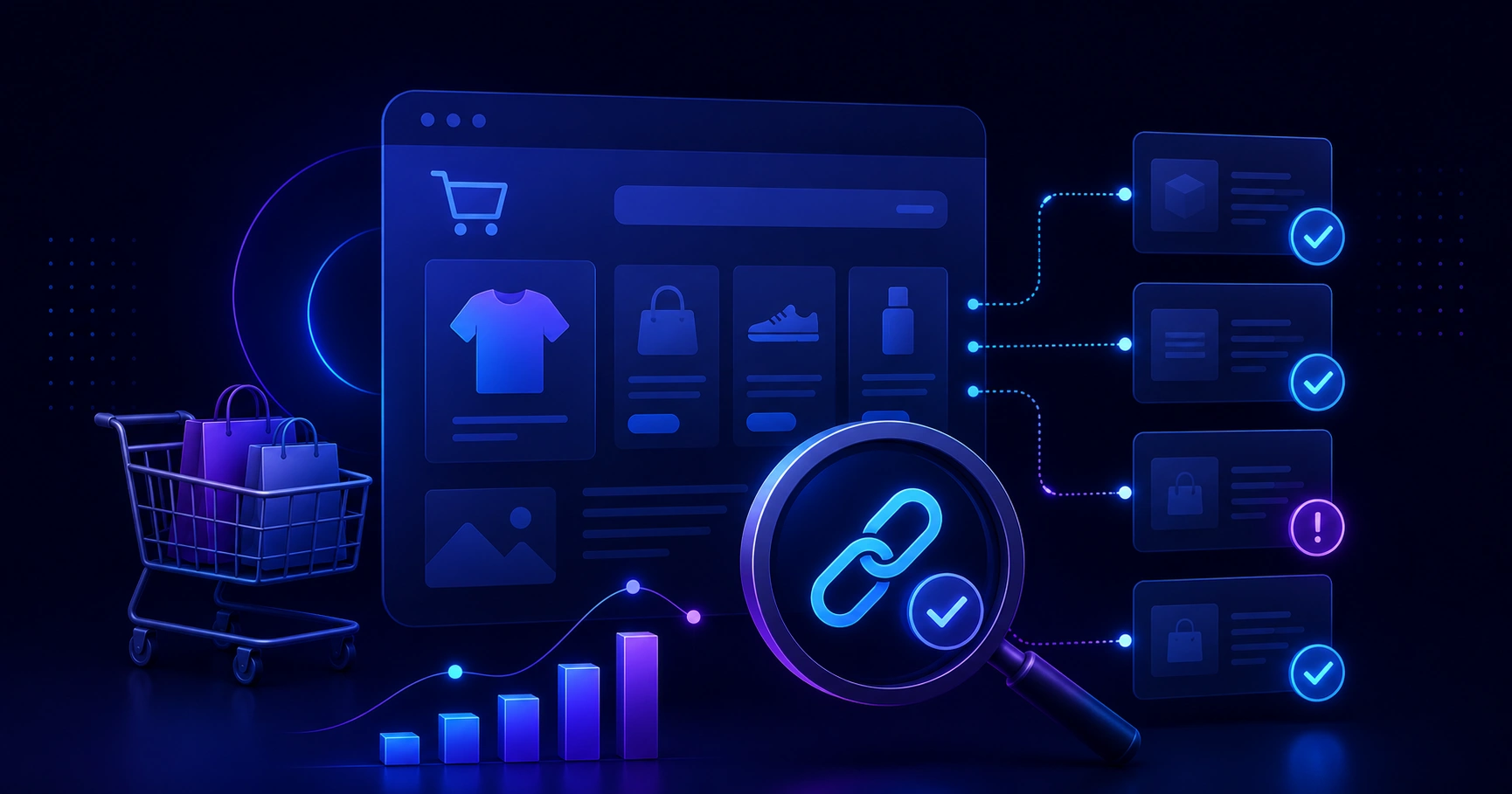
Set a recurring monthly audit reminder. Crawl your site, check for new orphan pages, verify that your highest-priority pages are still receiving adequate internal links, and fix any broken links caused by deleted products or changed URLs.
Track the impact of your internal linking changes in Google Search Console. Monitor impressions and clicks for the pages you have improved. Ranking improvements from internal linking typically surface within four to twelve weeks — faster for larger sites with frequent crawl cycles.
Common Internal Linking Mistakes to Avoid
Even experienced SEOs make these errors on ecommerce sites:
- Linking to noindexed pages — sends crawlers and equity to dead ends
- Using pagination links as primary navigation — page 2 of a category should not carry the same weight as page 1
- Ignoring seasonal or sale pages — these pages need internal links built up before the season, not during
- Creating link chains — avoid A to B to C to D structures; link directly from A to D where possible
- Over-relying on navigation menus — sitewide navigation links are discounted by search engines; contextual editorial links carry more weight
Putting It All Together
Setting up internal linking for ecommerce SEO is part technical, part editorial, and part ongoing discipline. The stores that do it well treat their site like a web of interconnected content — where every new page is immediately linked from existing relevant pages, and every important page is one or two clicks from the homepage.
Start with the audit. Fix orphan pages. Flatten your architecture. Enrich category pages with contextual links. Build topic clusters through blog content. Vary your anchor text. Then monitor and maintain every month.
Internal linking is the rare SEO tactic that costs nothing but time and delivers results that compound over years. For ecommerce stores competing in crowded niches, it is often the difference between ranking on page one and ranking nowhere.
Ready to build a complete ecommerce SEO strategy? Explore how ZoneTechify helps online stores grow through technical SEO, content strategy, and conversion-focused optimization.