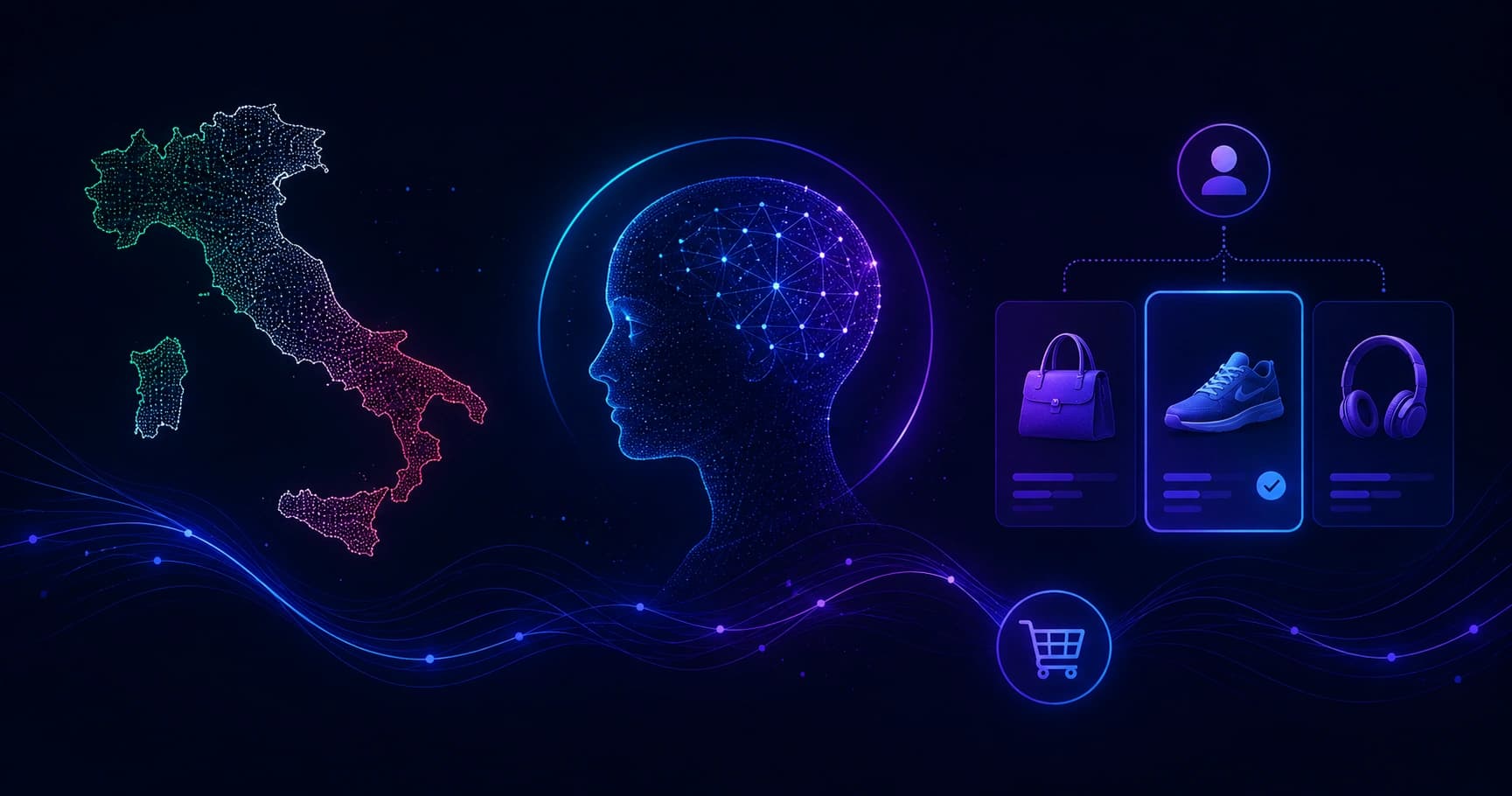
An expert, data-informed look at Italy's AI-based personalization market: its size, growth drivers, key industries, technology, GDPR challenges, and future outlook.
Italy Artificial Intelligence Based Personalization Market
Italy's digital economy is entering a decisive phase, and artificial intelligence based personalization sits at the center of it. From Milan's fashion houses to Rome's tourism platforms and Bologna's manufacturing exporters, Italian businesses are using AI to tailor every customer touchpoint in real time. This shift is no longer experimental — it has become a competitive requirement for any brand that wants to keep pace with rising consumer expectations.
This guide breaks down the size, drivers, industries, technology, and challenges shaping the Italy AI-based personalization market. Whether you run an e-commerce store in Turin or manage marketing for a national retailer, you will leave with a clear, data-informed picture of where this market is heading and how to act on it. For teams building these capabilities, agencies such as ZoneTechify and WebPeak are already helping Italian brands deploy personalization at scale.
Quick Answer: Italy's AI-based personalization market is expanding rapidly as retailers, banks, and media firms adopt machine learning to tailor content, offers, and experiences in real time. Driven by e-commerce growth, cloud adoption, and rising consumer expectations, it is forecast to grow at double-digit annual rates through 2030.

What Is AI-Based Personalization?
AI-based personalization is the use of machine learning algorithms to analyze customer data — behavior, preferences, purchase history, and context — and automatically deliver individually relevant content, products, and messaging. Unlike rule-based systems that follow fixed if-then logic, AI personalization learns and adapts continuously, improving its predictions with every interaction.
In practice, an Italian online shopper sees different homepage banners, product recommendations, and email offers than the next visitor, all generated in milliseconds. The goal is simple: show the right message to the right person at the right moment, at a scale no human team could manage manually. This precision is what separates modern AI systems from the basic segmentation most Italian companies used a decade ago.
The Current State of Italy's AI Personalization Market
Italy is one of Europe's largest economies and a fast-maturing AI adopter. According to Statista, Italy's overall artificial intelligence market is projected to grow strongly through the end of the decade, with recommendation and personalization systems ranking among the highest-value commercial applications. Investment is concentrated in retail, banking, telecommunications, and media — sectors where customer data is abundant and margins reward efficiency.
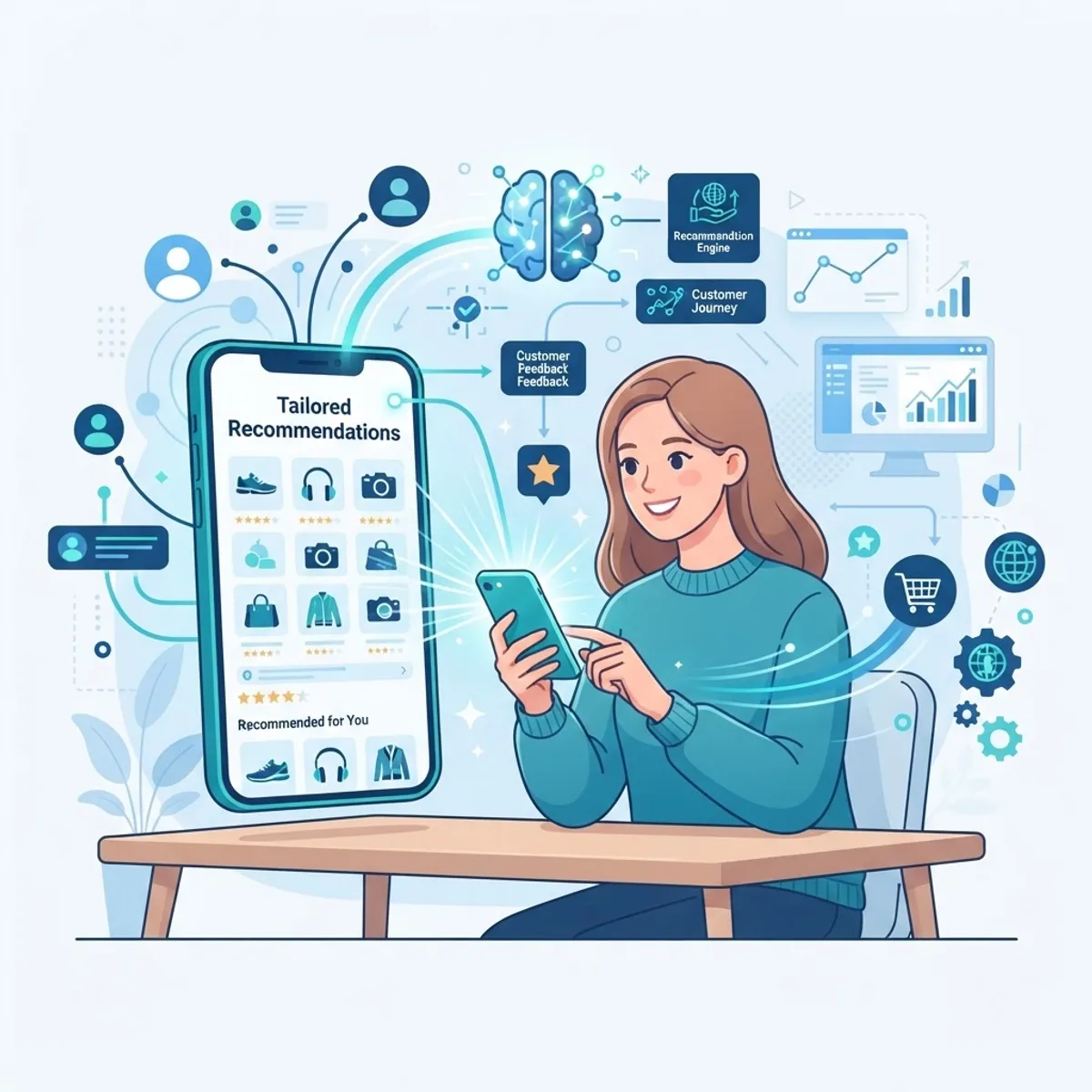
The momentum is partly consumer-driven. According to McKinsey, 71% of consumers now expect companies to deliver personalized interactions, and 76% get frustrated when this does not happen. Italian consumers are no exception: mobile-first shopping, streaming, and mobile banking habits have raised the baseline expectation for relevance across every digital channel, pushing even mid-sized firms to invest.
Why Italy Is Embracing AI Personalization
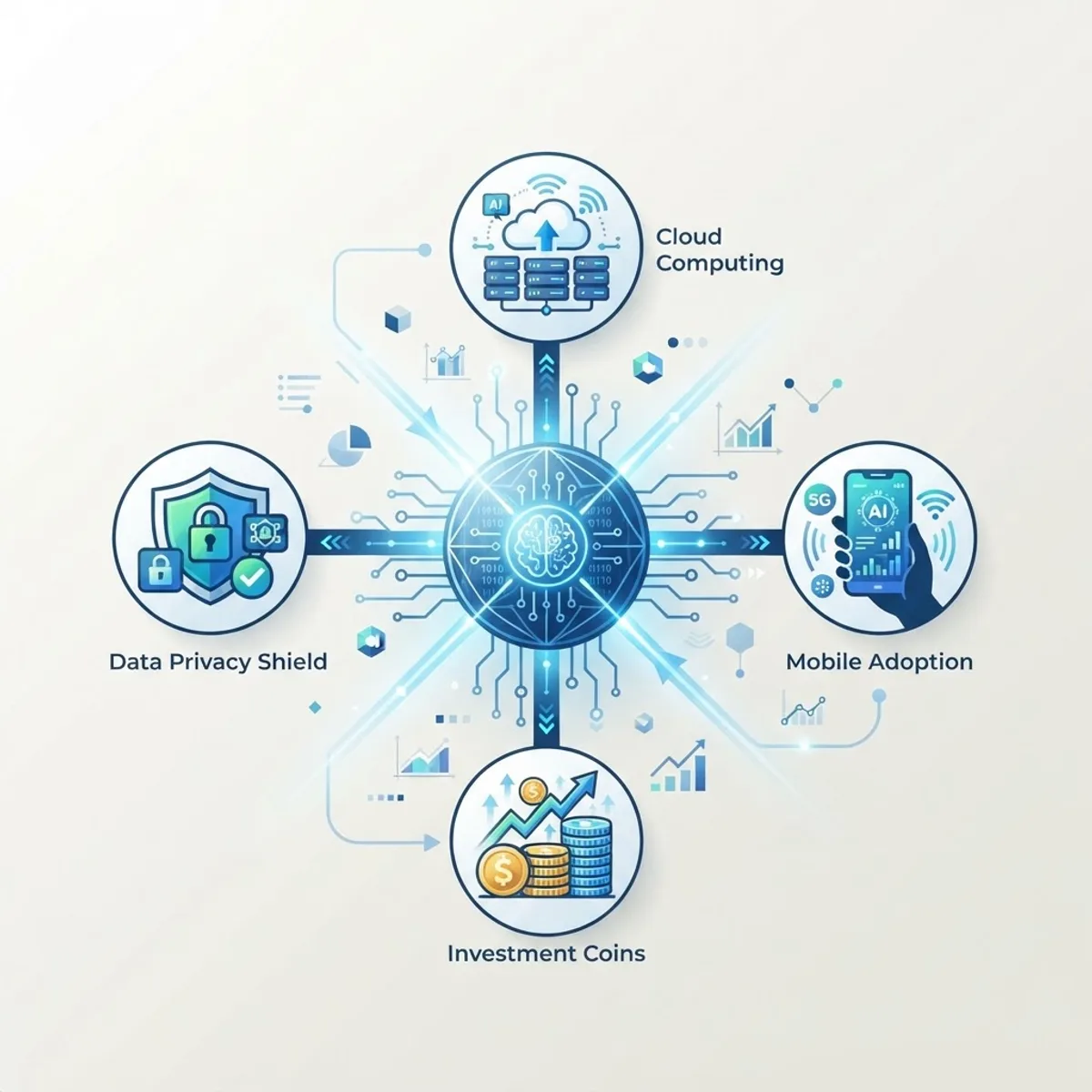
Several structural forces are accelerating adoption across the Italian market. Understanding them helps explain why budgets are shifting toward AI so quickly.
- E-commerce expansion: Italy's online retail sector continues to grow year over year, giving brands more digital touchpoints — and more data — to personalize.
- Cloud and SaaS maturity: Affordable cloud infrastructure has removed the biggest technical barrier, letting smaller firms access enterprise-grade AI tools.
- Competitive pressure: Global players like Amazon and Netflix have trained Italian consumers to expect tailored experiences, forcing local brands to match them.
- Measurable ROI: Personalization delivers clear uplift in conversion, average order value, and retention, making it easy to justify to finance teams.
The combination of stronger demand and lower technical cost has turned personalization from a nice-to-have into a board-level priority for Italian enterprises.
Key Industries Driving Adoption
Adoption is not uniform — a handful of sectors account for most of the market's value in Italy.
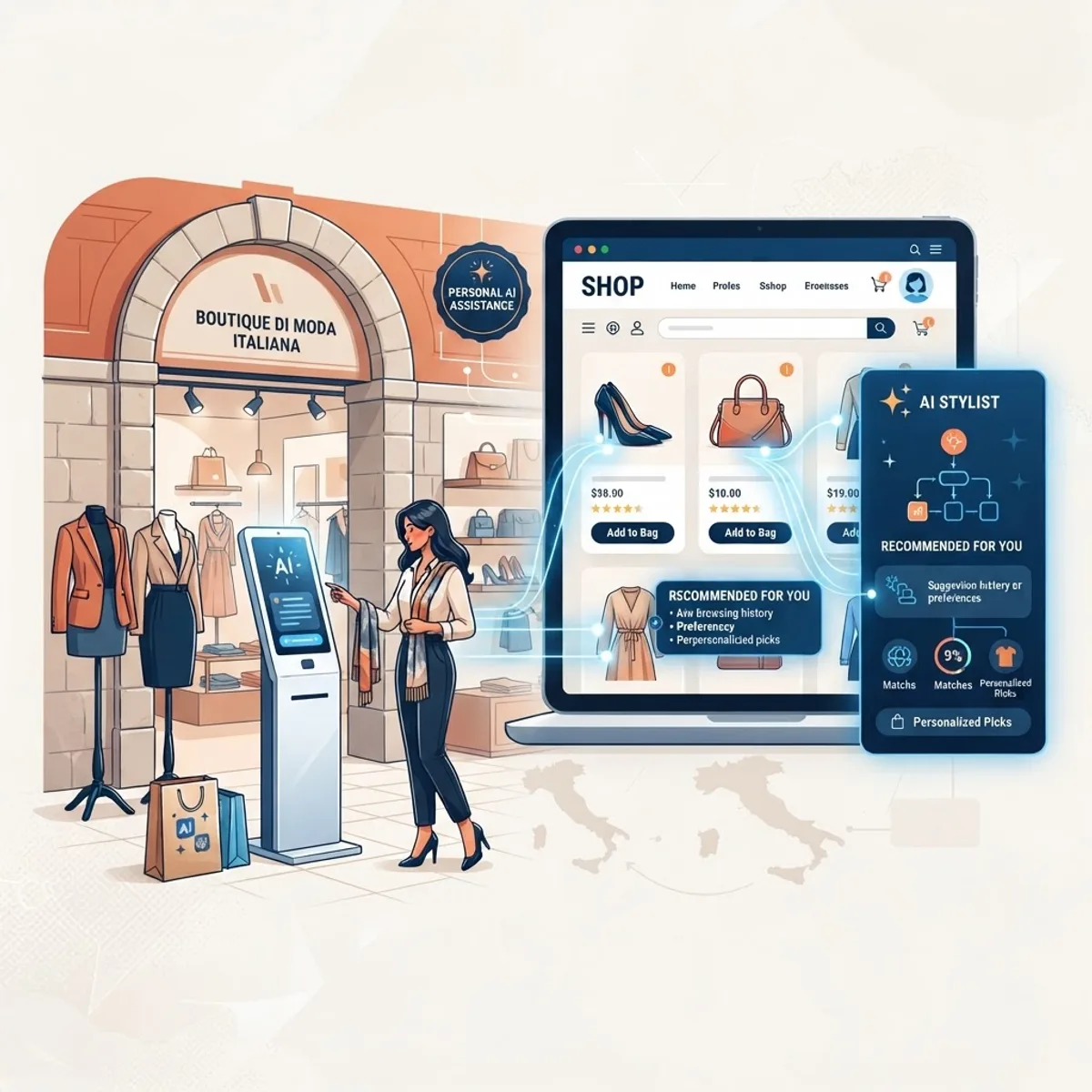
- Retail and fashion: Italy's world-famous fashion and luxury brands use AI to recommend products, predict trends, and personalize both online and in-store experiences.
- Banking and insurance: Financial institutions personalize offers, detect fraud, and tailor financial advice using behavioral models.
- Media and streaming: Content platforms rely on recommendation engines to increase watch time and reduce churn.
- Travel and tourism: Given tourism's importance to the Italian economy, platforms personalize itineraries, pricing, and destination suggestions.
How AI Personalization Engines Actually Work
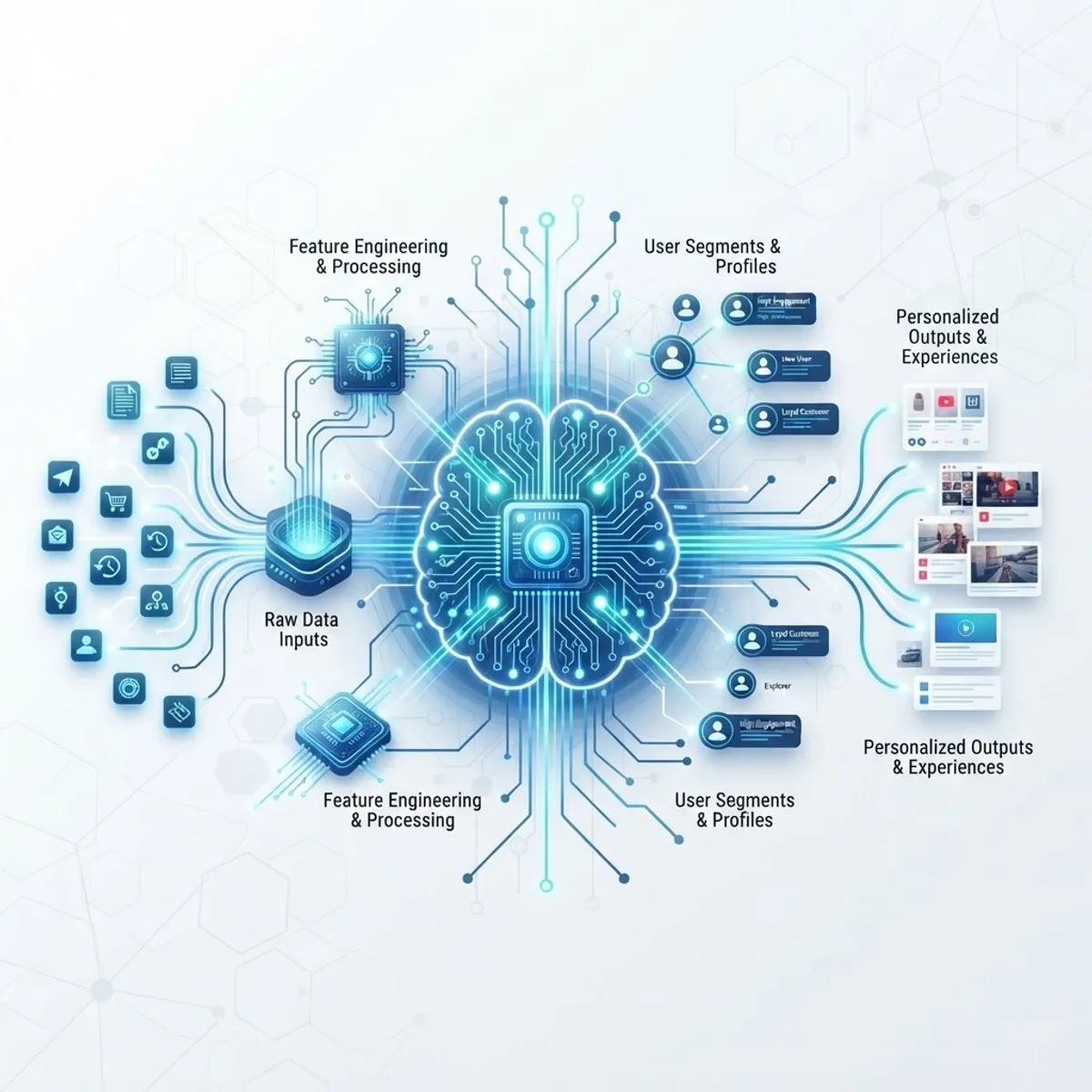
A personalization engine is the technical core that turns raw data into tailored experiences. Understanding its pipeline demystifies the technology for decision-makers.
First, the system collects data from web sessions, mobile apps, purchase records, and CRM systems. Next, it processes and enriches that data, cleaning it and building a unified customer profile. Machine learning models then predict intent — what a user is likely to want, buy, or click next. Finally, the engine delivers personalized content in real time and measures the outcome, feeding results back into the model so it keeps improving.
This feedback loop is what makes AI so powerful: performance compounds over time rather than staying static. Businesses that invest early accumulate a data advantage that late adopters struggle to replicate. Partnering with an experienced artificial intelligence services provider can dramatically shorten the time it takes to build this pipeline correctly.
Personalization Approaches Compared
Not every personalization system is equal. The table below compares the three dominant approaches Italian businesses choose between.
| Approach | Personalization Depth | Adapts Over Time | Best For |
|---|---|---|---|
| Rule-Based | Low | No | Simple segmentation and basic campaigns |
| AI / Machine Learning | High | Yes | Real-time, one-to-one experiences |
| Hybrid | Medium to High | Partial | Companies transitioning from rules to AI |
Most Italian enterprises begin with rule-based logic, adopt a hybrid model as data grows, and eventually move to full AI-driven personalization once they trust the results and have the infrastructure to support it.
Market Growth Drivers and Their Impact
The drivers behind this market are worth quantifying because they signal where the biggest opportunities lie. The table below summarizes the most influential factors.
| Growth Driver | Market Impact |
|---|---|
| Rising e-commerce volume | More data and touchpoints to personalize |
| Cloud infrastructure adoption | Lower cost of entry for smaller firms |
| Consumer demand for relevance | Higher pressure to deploy personalization |
| Generative AI tools | Faster content and creative production |
Generative AI deserves special attention. It allows Italian brands to produce personalized product descriptions, emails, and creative assets at a speed that was impossible just a few years ago, further lowering the cost of tailored experiences.
Benefits for Italian Businesses
The business case for AI personalization is concrete and measurable. Companies typically report higher conversion rates, larger average order values, improved customer retention, and more efficient marketing spend because budgets target the customers most likely to respond.
Beyond revenue, personalization strengthens brand loyalty. When customers feel understood, they return more often and recommend the brand to others. In a market as relationship-driven as Italy's, where reputation and trust carry significant weight, this loyalty effect can be even more valuable than short-term sales gains.
Challenges and Regulatory Considerations
The biggest challenge is data privacy. As an EU member state, Italy enforces the General Data Protection Regulation (GDPR), one of the world's strictest data laws. Any personalization strategy must be built on transparent consent, clear data-use policies, and strong security — or risk heavy fines and reputational damage.
Other obstacles include the shortage of skilled AI talent, the cost of integrating legacy systems, and the risk of over-personalization that feels intrusive. The most successful Italian companies treat privacy as a feature, not a burden, using compliance to build the customer trust that makes personalization effective in the first place.

The Future Outlook for Italy
The outlook is strongly positive. As generative AI matures and cloud costs fall further, personalization will move beyond retail into healthcare, education, public services, and B2B sectors. Expect real-time, cross-channel personalization — where a customer's experience stays consistent across web, app, email, and physical store — to become the standard rather than the exception.
Italian businesses that build clean data foundations and privacy-first strategies now will be best positioned to lead. The gap between AI-mature companies and laggards is widening, and the next few years will determine which Italian brands define their categories in the age of intelligent personalization.

Key Takeaways
- Italy's AI-based personalization market is growing at double-digit annual rates, led by retail, banking, media, and tourism.
- According to McKinsey, 71% of consumers expect personalized interactions and 76% are frustrated when they do not receive them.
- AI personalization outperforms rule-based systems because it learns and improves continuously.
- GDPR compliance is mandatory in Italy and should be treated as a trust-building advantage.
- Early adopters gain a compounding data advantage that later entrants find hard to match.
Frequently Asked Questions (FAQ)
What is the AI-based personalization market in Italy?
It is the sector where Italian companies use machine learning to tailor content, products, and offers to individual customers in real time. It spans retail, banking, media, and travel, and is growing rapidly as e-commerce, cloud adoption, and consumer expectations continue to rise across the country.
How fast is Italy's AI personalization market growing?
Analysts project double-digit annual growth through 2030, in line with Statista's forecasts for Italy's broader AI market. Growth is fueled by expanding e-commerce, cheaper cloud infrastructure, and the arrival of generative AI tools that make tailored experiences faster and cheaper to produce.
Is AI personalization legal under Italian and EU privacy laws?
Yes, but it must comply with the GDPR. That means obtaining clear consent, being transparent about data use, and securing customer data. Italian companies that treat privacy as a core feature build stronger trust and typically see better personalization results as a direct outcome.
Which industries in Italy benefit most from AI personalization?
Retail and fashion, banking and insurance, media and streaming, and travel and tourism benefit most. These sectors hold large volumes of customer data and operate in competitive markets where relevance, retention, and conversion improvements translate directly into measurable revenue gains.
How can a small Italian business start with AI personalization?
Start by unifying your customer data, then adopt affordable cloud-based personalization tools and begin with a single high-impact use case, such as product recommendations. Partnering with an experienced AI services provider helps you build a compliant, scalable foundation without a large in-house data team.