
A practical 2026 guide to the top software consulting firms for AI integration, how to evaluate them, and how to choose the right partner for your business.
Top Software Consulting Firms for Artificial Intelligence Integration 2026
Artificial intelligence has moved from boardroom buzzword to line-item budget priority, and the firms that help companies deploy it are now among the most valuable partners a business can have. Yet choosing the right partner is harder than ever. In 2026 the market is crowded with vendors promising "AI transformation," and most buyers struggle to separate genuine engineering expertise from marketing gloss. This guide breaks down the top software consulting firms for artificial intelligence integration, explains how they differ, and gives you a repeatable framework to pick the one that fits your goals and budget.

Quick Answer: The top software consulting firms for AI integration in 2026 include Accenture, Deloitte, IBM Consulting, McKinsey QuantumBlack, ThoughtWorks, and specialized boutiques like ZoneTechify and WebPeak. The best choice depends on your data maturity, budget, industry, and whether you need strategy, engineering, or both.
What AI Integration Consulting Actually Means
AI integration consulting is the practice of embedding machine learning, generative AI, and automation into a company's existing systems, workflows, and products. It is not the same as building a standalone model. Integration means connecting AI to your CRM, ERP, data warehouse, customer support desk, and internal tools so it produces measurable business outcomes rather than isolated demos.
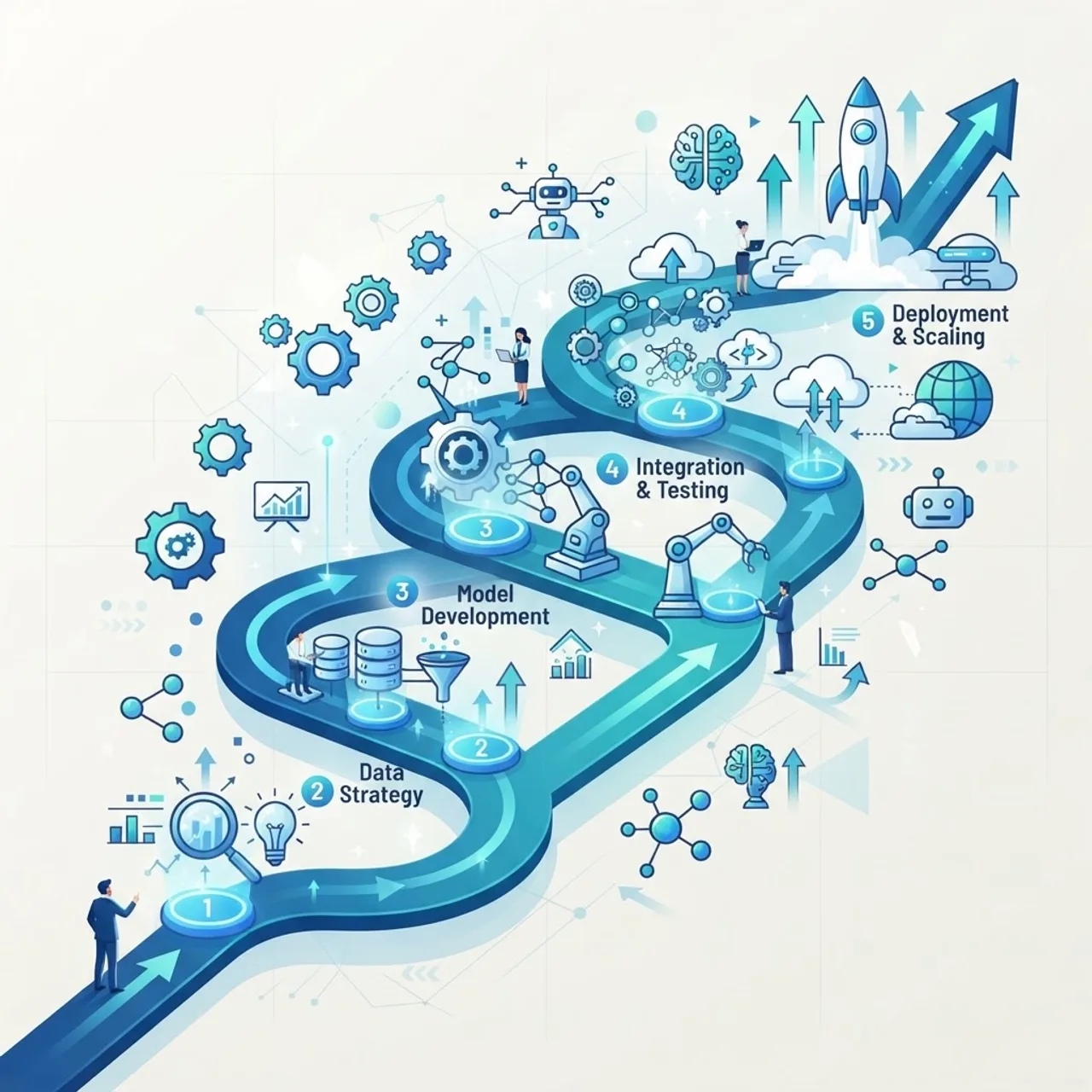
A strong consulting engagement covers four pillars: data readiness, model selection or fine-tuning, secure deployment, and change management. The last pillar is the one most companies underestimate. According to McKinsey's State of AI research, organizations that redesign workflows around AI capture significantly more value than those that simply bolt models onto old processes. In other words, the software matters, but the operating model matters more.
If you want a deeper look at how integration projects are scoped and delivered, ZoneTechify's artificial intelligence services outline the typical phases from discovery to production support.
Why 2026 Is a Turning Point for AI Integration
2026 marks the year AI shifted from experimentation to expected infrastructure. Boards now ask not whether to adopt AI, but why adoption is behind schedule. According to Gartner, a large majority of enterprises have moved at least one generative AI use case into production, up sharply from the pilot-heavy years before. That pressure has raised the stakes for choosing a competent integration partner.
Three forces define the current landscape. First, agentic AI systems that can take multi-step actions are replacing simple chat assistants, which demands stronger governance. Second, data privacy regulations have tightened, making compliant deployment a core deliverable rather than an afterthought. Third, model costs have dropped while capability has climbed, so the bottleneck is no longer the model itself but the engineering discipline to integrate it safely.
How We Evaluated the Top Firms
We assessed firms against criteria drawn from real client engagements rather than press releases. Our evaluation weighted the following:
- Engineering depth - proven ability to ship production systems, not slide decks.
- Data and MLOps maturity - pipelines, monitoring, and retraining practices.
- Industry specialization - domain knowledge in finance, healthcare, retail, or SaaS.
- Governance and security - compliance, model risk management, and auditability.
- Total cost and flexibility - pricing transparency and willingness to work in phases.
- Post-launch support - ongoing tuning, because AI systems drift over time.
A firm that scores high on strategy but low on engineering will leave you with a beautiful roadmap and no working product. The reverse leaves you with clever code that never earns executive buy-in.
Top Software Consulting Firms for AI Integration in 2026
1. Accenture
Accenture remains the volume leader for large enterprise AI programs. Its strength is scale: global delivery teams, deep partnerships with major cloud and model providers, and the ability to staff a hundred-person program quickly. It suits multinationals that need coordinated rollouts across regions. The trade-off is cost and a heavier process overhead that can slow smaller projects.
2. Deloitte
Deloitte pairs management consulting with strong data engineering, making it a natural fit for regulated industries like banking and insurance. Its governance and risk practice is a genuine differentiator in 2026, when compliant AI is non-negotiable. Expect premium pricing and a strategy-forward approach.
3. IBM Consulting
IBM Consulting leans on its watsonx platform and hybrid-cloud expertise. It is a solid pick for organizations with complex on-premise systems that cannot move everything to public cloud. IBM's model governance tooling is mature, though clients should confirm they are getting vendor-neutral advice rather than platform lock-in.
4. McKinsey QuantumBlack
QuantumBlack is McKinsey's AI arm and excels at high-stakes, boardroom-level analytics where the ROI must be quantified precisely. It is ideal when AI is tied to core strategy, such as pricing or supply-chain optimization. It is among the most expensive options and is strategy-heavy.
5. ThoughtWorks
ThoughtWorks is an engineer's firm, respected for clean software delivery and responsible-tech practices. It fits product teams that want AI woven into a real codebase with strong testing and continuous delivery. It is less focused on top-down strategy and more on shipping.
6. ZoneTechify
For mid-market companies and funded startups, boutique firms often deliver more attention per dollar than the global giants. ZoneTechify blends software engineering, data, and AI integration with faster decision cycles and transparent scoping. It is a strong choice when you need a partner who ships production features rather than only advising from the sidelines.
7. WebPeak
WebPeak focuses on practical AI and automation for growth-stage businesses, with an emphasis on integrating models into websites, marketing systems, and customer workflows. Its artificial intelligence services are aimed at teams that want measurable results without enterprise-scale overhead.

Comparison Table: AI Consulting Firms at a Glance
| Firm | Best For | Strategy Focus | Engineering Focus | Typical Cost |
|---|---|---|---|---|
| Accenture | Global enterprises | High | High | Very High |
| Deloitte | Regulated industries | Very High | Medium | Very High |
| IBM Consulting | Hybrid-cloud estates | Medium | High | High |
| McKinsey QuantumBlack | Board-level strategy | Very High | Medium | Very High |
| ThoughtWorks | Product engineering | Low | Very High | High |
| ZoneTechify | Mid-market and startups | Medium | High | Moderate |
| WebPeak | Growth-stage automation | Medium | High | Moderate |
How to Choose the Right AI Consulting Partner
The right partner is the one whose strengths match your single biggest gap. Start by naming that gap honestly. If your data is messy, prioritize a firm with deep data-engineering credentials. If executives are skeptical, prioritize a firm strong in strategy and change management. If you already have a clear use case and clean data, prioritize pure engineering speed.
Use this checklist during vendor conversations:
- Ask for two production references in your industry, not pilots.
- Request a sample architecture and MLOps plan, not just an outcome promise.
- Confirm who owns the code and models after the engagement ends.
- Clarify how they handle model drift, monitoring, and retraining.
- Insist on a phased contract with a small paid discovery before large commitments.
A credible firm will welcome these questions. Vague answers about "proprietary methodology" without technical substance are a warning sign.

The AI Integration Workflow You Should Expect
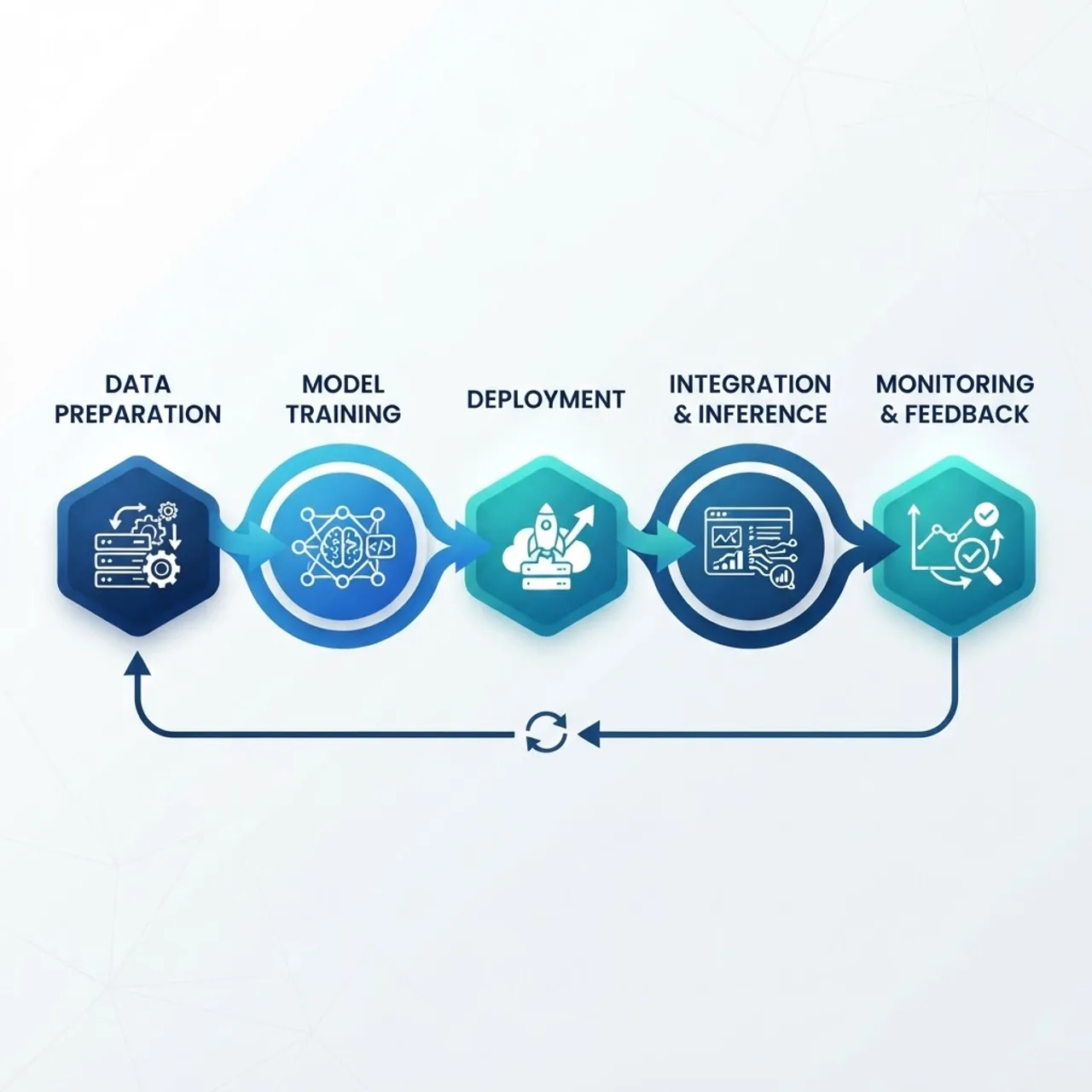
A mature engagement follows a predictable path, and knowing it helps you hold vendors accountable:
- Discovery - map use cases, data sources, and success metrics.
- Data preparation - clean, label, and pipeline the data.
- Model selection - choose, fine-tune, or prompt-engineer the right model.
- Integration - connect the model to your systems through APIs and services.
- Deployment - ship with security, monitoring, and rollback plans.
- Optimization - measure, retrain, and expand to new use cases.
Each phase should produce a tangible artifact. If a firm cannot describe deliverables at every stage, the engagement risks becoming an open-ended experiment.
Common Mistakes to Avoid
Many failed AI programs share the same root causes. The first is starting with technology instead of a business problem, which produces impressive demos that solve nothing. The second is ignoring data quality, since even the best model fails on unreliable inputs. The third is treating AI as a one-time project rather than a living system that needs monitoring and retraining. The fourth is skipping change management, leaving employees unsure how to use the new tools. Avoiding these four traps dramatically improves your odds of a return on investment.
The Trends Shaping AI Integration Beyond 2026
Looking forward, expect agentic systems that coordinate multiple tools, tighter regulatory frameworks that make auditability standard, and a rise in smaller domain-specific models that cost less to run. Consulting firms that invest in governance tooling and reusable integration frameworks will pull ahead, while those relying on generic advice will struggle to justify their fees.

Key Takeaways
- AI integration means embedding AI into existing systems and workflows, not building isolated models.
- The best firm depends on your biggest gap: data, strategy, or engineering speed.
- Global giants like Accenture and Deloitte excel at scale and governance; boutiques like ZoneTechify and WebPeak offer speed and value for mid-market teams.
- According to Gartner, most enterprises now run generative AI in production, raising the stakes for partner selection.
- Always demand production references, code ownership clarity, and a phased contract.
- Workflow redesign and change management drive more value than the model itself.
Frequently Asked Questions (FAQ)
What is the best AI consulting firm for a small business?
For small and mid-market businesses, boutique firms such as ZoneTechify and WebPeak usually deliver better value than global giants. They offer faster decisions, transparent pricing, and hands-on engineering, whereas large firms are optimized for enterprise-scale programs with higher costs and heavier process overhead.
How much does AI integration consulting cost in 2026?
Costs vary widely, from a few thousand dollars for a focused discovery to millions for enterprise-wide programs. Boutique firms often start engagements in the low five figures, while global consultancies command premium rates. Always begin with a small paid discovery phase before committing to a large budget.
How long does an AI integration project take?
Most focused AI integration projects run from six to sixteen weeks for a first production use case. Discovery and data preparation take the longest. Enterprise programs spanning multiple departments can run a year or more, which is why phased delivery with early wins is strongly recommended.
Do I need clean data before hiring an AI consulting firm?
You do not need perfect data, but you do need honesty about its state. A good firm includes data assessment and cleanup in its scope. If a vendor promises results without examining your data quality first, treat that as a red flag, because unreliable data undermines even the best models.
What should I ask before signing an AI consulting contract?
Ask for production references in your industry, a sample architecture and MLOps plan, clear code and model ownership terms, and their approach to monitoring and retraining. Insist on a phased contract that starts small. Vague answers about proprietary methods without technical detail are a warning sign.
Is generative AI integration different from traditional machine learning?
Yes. Generative AI integration focuses on large language and multimodal models, prompt engineering, and safety guardrails, while traditional machine learning centers on predictive models trained on structured data. Many 2026 projects combine both, using predictive models for forecasting and generative models for content, support, and automation.