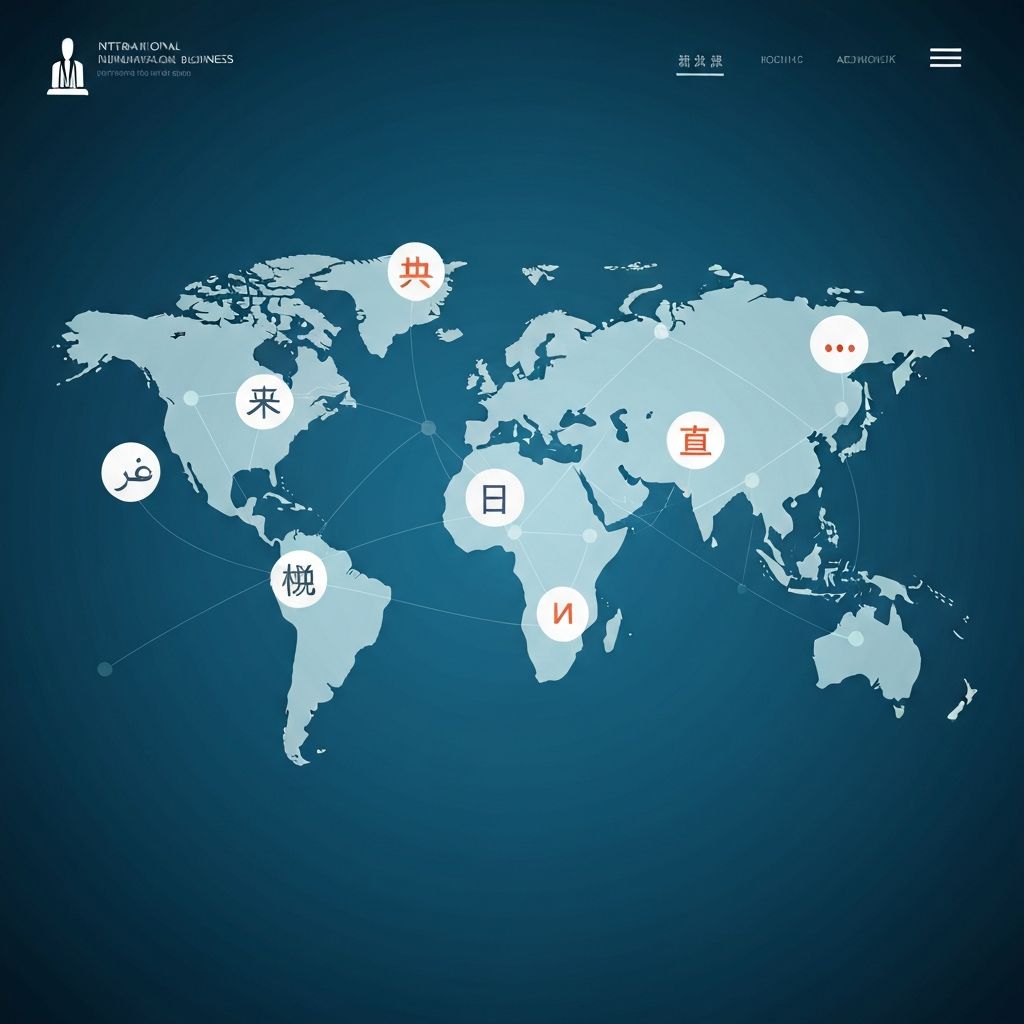
A comprehensive guide to selecting a web development partner experienced in building multilingual websites that reach global audiences.
Expanding your business globally requires more than just translating your website content. True internationalization demands a thoughtful approach to web development that considers language, culture, technical infrastructure, and user experience across diverse markets. Choosing the right development partner for multilingual websites is crucial for success in global markets.
The Complexity of Multilingual Web Development
Multilingual website development involves far more than content translation. It encompasses internationalization at the technical level, localization of content and design, cultural adaptation of imagery and messaging, and optimization for regional search engines and user behaviors.
Internationalization, often abbreviated as i18n, refers to the technical foundation that enables a website to support multiple languages. This includes proper character encoding, flexible layouts that accommodate varying text lengths, and infrastructure for managing multiple content versions.
Key Technical Considerations
URL structure is a fundamental decision for multilingual websites. Options include country-code top-level domains, subdomains, or subdirectories. Each approach has implications for SEO, user perception, and technical maintenance. Your development partner should be able to guide this decision based on your specific business goals and target markets.
Character encoding must properly support all target languages, including those with non-Latin scripts, right-to-left writing systems, and complex character sets. UTF-8 encoding is the standard choice for multilingual support.
Content management systems must be capable of efficiently managing translations while maintaining relationships between language versions. This includes workflows for translation updates, mechanisms for handling content that varies by market, and tools for coordinating translation teams.
Evaluating Development Partners
When evaluating potential development partners for multilingual projects, assess their specific experience with international websites. Request case studies and references from similar projects, and understand their approach to common multilingual challenges.
Technical expertise in internationalization frameworks and libraries is essential. For modern web applications, this might include experience with libraries like react-intl, vue-i18n, or next-intl, along with familiarity with translation management systems and localization workflows.
Cultural competency is equally important. The best development partners understand that effective localization goes beyond translation to encompass imagery, color choices, iconography, and user interface conventions that resonate with target audiences.
Content Strategy for Multiple Languages
Developing content strategy for multilingual websites requires decisions about what content to translate, how to handle region-specific content, and how to manage ongoing content updates across languages.
Some businesses choose to translate all content equally across languages, while others prioritize key pages and sections based on market importance. Understanding these trade-offs and developing efficient workflows for content management is essential for long-term success.
Translation memory systems and terminology databases help maintain consistency across translations and reduce costs over time. Your development partner should integrate with or recommend appropriate translation management tools.
SEO for International Markets
Multilingual SEO requires specialized knowledge of how search engines index and rank content in different languages and regions. Important considerations include hreflang tags for indicating language and regional targeting, localized keyword research for each market, and region-specific search engine optimization.
Google is not the dominant search engine in all markets. Optimizing for Baidu in China, Yandex in Russia, or Naver in Korea requires specific technical knowledge and content strategies.
Performance Optimization Across Regions
Users in different regions may experience significantly different performance based on server locations and network infrastructure. Content delivery networks with global presence help ensure fast loading times regardless of user location.
Consider hosting strategies that place content close to users, caching strategies that account for multiple language versions, and image optimization that adapts to varying network conditions.
Legal and Compliance Considerations
Different markets have varying legal requirements for websites, including privacy regulations, accessibility standards, and industry-specific compliance requirements. Your development partner should be aware of these considerations and build compliance into the technical architecture.
GDPR in Europe, CCPA in California, LGPD in Brazil, and similar regulations worldwide require thoughtful implementation of consent mechanisms, data handling practices, and privacy disclosures that may vary by region.
Testing Across Languages and Regions
Comprehensive testing for multilingual websites includes functional testing in each language, layout testing for text expansion and contraction, accessibility testing across languages, and performance testing from various geographic locations.
Automated testing frameworks should be configured to test all language versions, and visual regression testing helps catch layout issues that arise from text length variations.
Ongoing Maintenance and Updates
Multilingual websites require ongoing maintenance processes that account for translation updates, synchronized content changes across languages, and continuous optimization based on regional performance data.
Establish clear workflows for content updates that ensure timely translation while maintaining quality. Consider whether updates should be staged and released simultaneously across all languages or rolled out progressively.
Conclusion
Choosing the right development partner for multilingual websites requires careful evaluation of technical expertise, cultural competency, and relevant experience. The complexity of international web development demands partners who understand both the technical infrastructure and the strategic considerations that drive success in global markets. With the right partner, multilingual websites become powerful tools for international expansion and global brand building.