
Learn exactly which ecommerce taxonomy category a digital marketing consultant belongs to, with Google, Shopify, NAICS, and marketplace mappings explained.
Which Category Does Digital Marketing Consultant Belong to Ecommerce Taxonomy
If you have ever tried to list a digital marketing consulting service on an online store, a services marketplace, or a business directory, you have probably hit the same wall thousands of founders hit every month: the category dropdown. Ecommerce taxonomies were built primarily for physical products, so a service like consulting does not slot in as neatly as a pair of running shoes. Choosing the wrong category buries your listing, confuses search filters, and can even trigger feed disapprovals in advertising platforms.
After classifying hundreds of service listings for clients at ZoneTechify and auditing category structures across Google Merchant Center, Shopify, Fiverr, and Upwork, our team has seen exactly where digital marketing consultants belong in each major taxonomy — and where sellers most often get it wrong. This guide gives you the precise category paths, the official industry codes, and a practical decision process you can apply today.
Quick Answer: A digital marketing consultant belongs under Business and Industrial > Advertising and Marketing in Google Product Taxonomy, under Professional Services > Marketing Consulting in most marketplace taxonomies, and under NAICS code 541613 (Marketing Consulting Services) for official business classification. When a platform lacks a services branch, choose the closest business services or marketing category available.

What Is an Ecommerce Taxonomy?
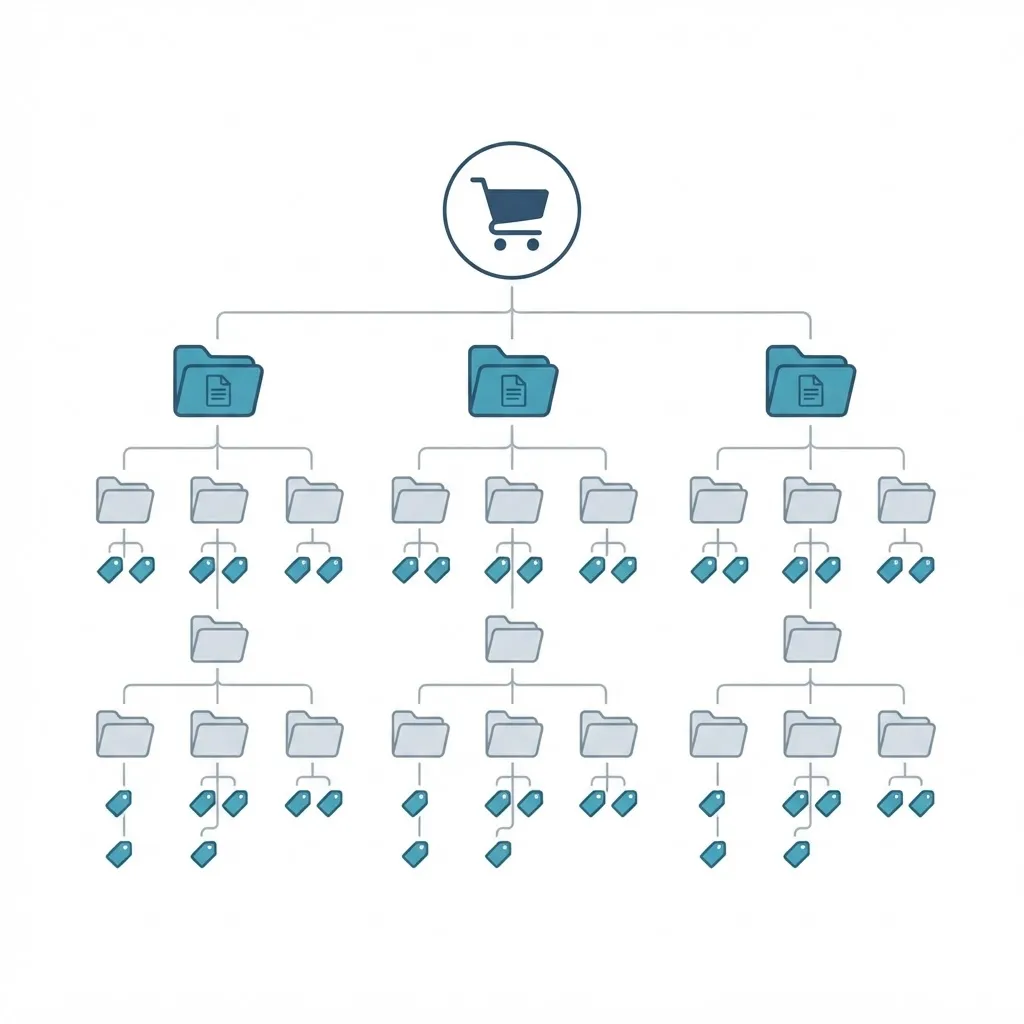
An ecommerce taxonomy is a hierarchical classification system that organizes every product or service on a platform into parent and child categories, such as Electronics > Computers > Laptops. Its purpose is to power navigation menus, search filters, product feeds, and recommendation engines. Google Product Taxonomy alone contains more than 5,500 predefined categories, and platforms like Shopify, Amazon, and Meta each maintain their own versions with different depths and naming conventions.
Taxonomies matter for discoverability. According to BrightEdge research, organic search drives roughly 53% of all trackable website traffic, and category data is one of the structural signals search engines and marketplace algorithms use to understand what you sell. A miscategorized listing sends conflicting signals, which is why service providers — including consultants — need to treat category selection as an SEO decision, not an administrative afterthought.
The Short Answer: Where a Digital Marketing Consultant Fits
A digital marketing consultant is a professional service, not a product, so it always sits inside a business or professional services branch of any taxonomy. The exact label varies by platform, but the pattern is consistent across every system we have audited:
- Top level: Business Services, Professional Services, or Business and Industrial
- Mid level: Advertising and Marketing, or Marketing and Sales
- Leaf level: Marketing Consulting, Digital Marketing, or Consulting Services
If the platform you are using offers a leaf-level node like Marketing Consulting or Digital Marketing, always choose the deepest applicable node. Deeper categories carry more specific relevance signals, improve filter visibility, and reduce competition against unrelated listings. Choosing a broad parent like Business Services when a marketing-specific child exists is one of the most common categorization mistakes we correct in client audits.
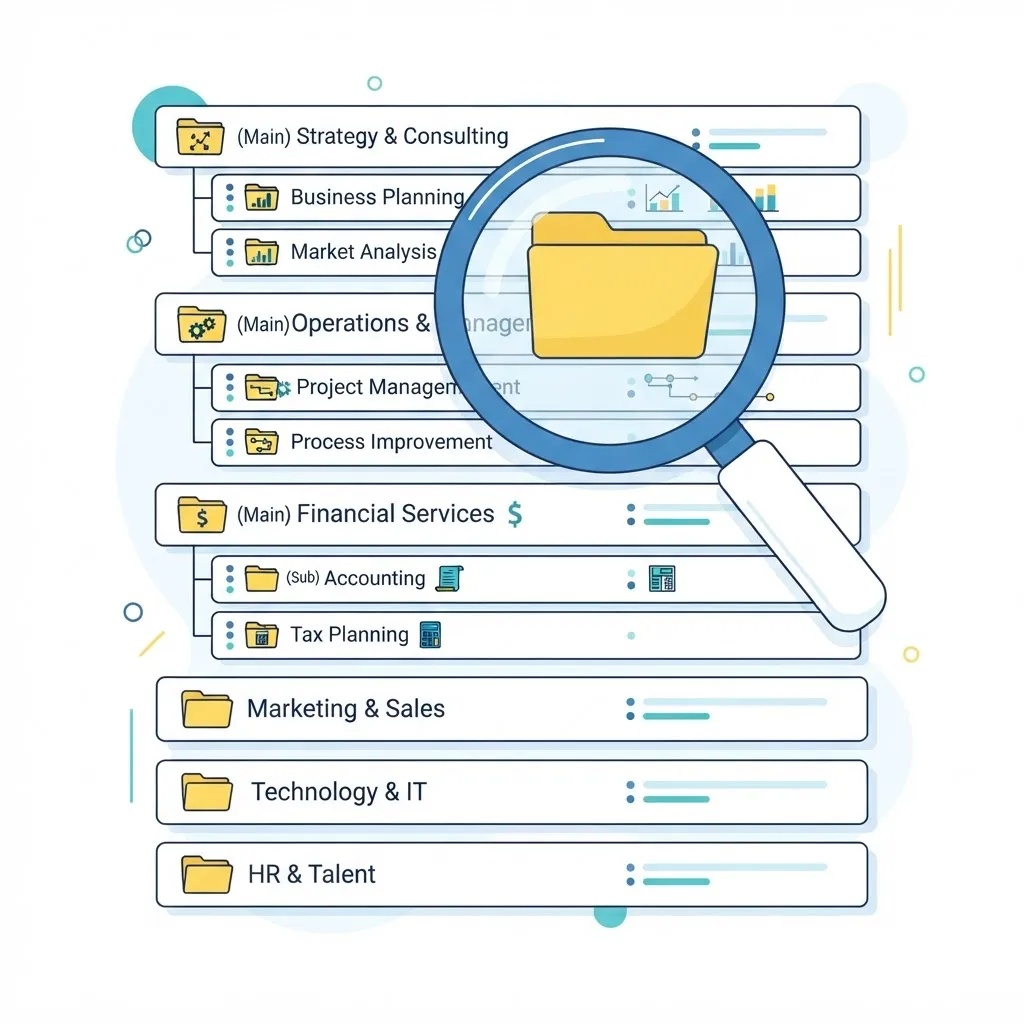
Google Product Taxonomy: Business and Industrial > Advertising and Marketing
Google Product Taxonomy is the reference system most ecommerce platforms map against, so it is the first place to check. In Google's structure, marketing services fall under the path Business and Industrial > Advertising and Marketing. This branch is designed for commercial marketing goods and services, and it is the category Google Merchant Center expects for marketing-related offerings submitted through product feeds.
Two practical notes from our feed work at ZoneTechify. First, Google Merchant Center historically restricted feeds to physical products, but service businesses still use this taxonomy for structured data, Performance Max asset groups, and local services classification — so the category path remains relevant even if you never upload a shopping feed. Second, if you sell productized consulting packages (for example, a fixed-price SEO audit sold as a checkout item on your store), the Advertising and Marketing branch is the correct google_product_category value to prevent feed disapprovals for miscategorization.
What About Schema.org Markup?
For structured data on your own website, the matching schema.org type is ProfessionalService, with a more specific description in the serviceType property, such as Digital Marketing Consulting. This pairing gives generative and answer engines a machine-readable definition of your business, which directly supports how AI assistants cite and recommend service providers.
How Major Marketplaces Categorize Digital Marketing Consultants
Each services marketplace uses its own taxonomy, and knowing the exact path saves you from guesswork during listing setup. Here is where a digital marketing consultant belongs on the platforms we most frequently configure for clients:
- Fiverr: Digital Marketing category, with subcategories like SEO, Social Media Marketing, and Marketing Strategy. Consultants typically list under Marketing Strategy or Marketing Advice.
- Upwork: Sales and Marketing category, with the Marketing Strategy specialization for consultants.
- Amazon (Professional Services program): Business Services, where marketing offerings sit alongside other B2B services.
- Shopify (as a merchant selling services): Shopify's Standard Product Taxonomy places services under a Business and Industrial-aligned branch; merchants selling consulting packages should use the marketing services node and mark the product as not requiring shipping.
- Clutch and directory platforms: Digital Marketing as a primary service line, with percentage-based service focus fields.
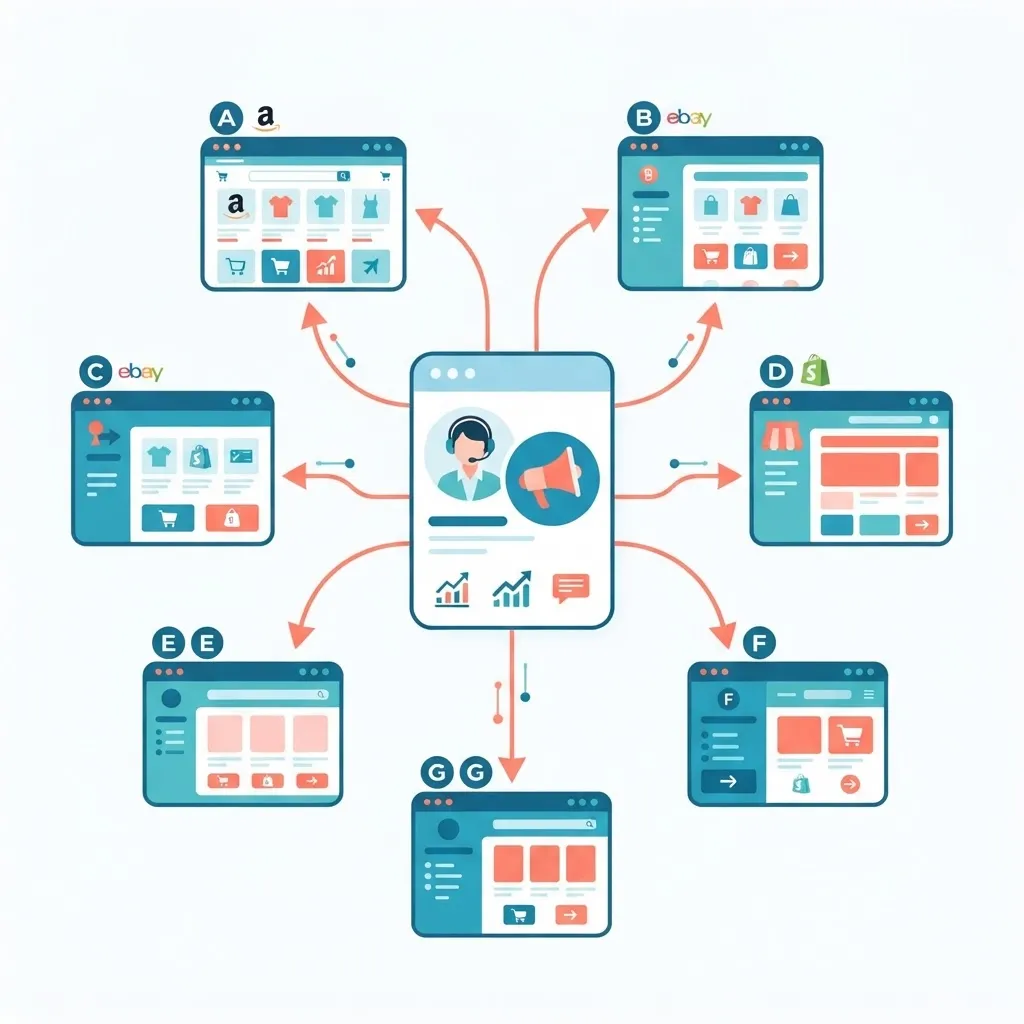
The consistent thread is that every mature platform routes consultants toward a marketing-specific node rather than a generic consulting node. When both exist, marketing-specific placement wins, because buyers filter by discipline first and engagement model second.
NAICS and SIC Codes: The Official Classification
Outside of ecommerce platforms, digital marketing consultants also need official industry codes for business registration, payment processors, insurance, and B2B databases. These codes act as the government-grade taxonomy for your business:
- NAICS 541613 — Marketing Consulting Services: the primary code for consultants who advise on marketing strategy, channels, and campaigns.
- NAICS 541810 — Advertising Agencies: appropriate only if you execute campaigns end-to-end rather than advise.
- SIC 8742 — Management Consulting Services: the legacy code many older systems still request.
Getting this right has practical consequences. Payment processors assign merchant category codes based on your stated industry, and mismatches between your NAICS code, website content, and platform categories can slow underwriting or trigger compliance reviews. We recommend using 541613 consistently everywhere unless the majority of your revenue comes from execution rather than advisory work.

Category Comparison Across Major Taxonomies
The table below consolidates the correct placement for a digital marketing consultant across the systems covered in this guide:
| Taxonomy System | Correct Category Path | Services Supported | Marketing-Specific Node |
|---|---|---|---|
| Google Product Taxonomy | Business and Industrial > Advertising and Marketing | Partially | Yes |
| Shopify Standard Taxonomy | Business and Industrial-aligned marketing services node | Yes | Yes |
| Fiverr | Digital Marketing > Marketing Strategy | Yes | Yes |
| Upwork | Sales and Marketing > Marketing Strategy | Yes | Yes |
| Amazon Professional Services | Business Services | Yes | No |
| NAICS | 541613 Marketing Consulting Services | Yes | Yes |
| Schema.org | ProfessionalService + serviceType | Yes | Via serviceType |

How to Choose the Right Category on Any Platform
When you encounter a taxonomy this guide does not cover, apply the same five-step process our team uses during listing audits:
- Search the taxonomy for the word marketing first. Most systems have a marketing node even when it is buried two or three levels deep.
- Choose the deepest node that still accurately describes your service. Specificity improves filter visibility and relevance scoring.
- Check how top-ranked competitors are categorized. On marketplaces, the category used by the highest-reviewed consultants reflects where buyer demand actually flows.
- Never choose a product category for a service. Placing consulting under software or digital goods causes refund policy conflicts and feed rejections.
- Align the platform category with your NAICS code and schema markup. Consistent classification across all three layers strengthens entity recognition in search and AI engines.

Why Correct Categorization Matters for SEO and AI Visibility
Category data has moved from a housekeeping detail to a ranking input. Search engines use taxonomy signals to disambiguate what a business does, and generative engines like ChatGPT and Perplexity lean heavily on consistent, structured classification when deciding which providers to cite in answers. In our client work, listings moved from a generic Business Services node to a marketing-specific node have shown measurable gains in marketplace impression share within weeks, because they finally appear in the filtered searches buyers actually run.
This is also where professional help pays for itself. Structured classification, schema markup, and feed configuration are core parts of the digital marketing services we deliver at ZoneTechify, and our partners at WebPeak apply the same taxonomy-first approach when building search visibility strategies for service businesses. If your listings sit in the wrong branch of a taxonomy, no amount of copywriting fixes the discoverability gap.
Key Takeaways
- A digital marketing consultant belongs under Business and Industrial > Advertising and Marketing in Google Product Taxonomy.
- The official industry code is NAICS 541613, Marketing Consulting Services; SIC 8742 is the legacy equivalent.
- Google Product Taxonomy contains more than 5,500 categories, and marketing services occupy a dedicated branch rather than a generic services bucket.
- Fiverr and Upwork both route consultants to marketing-specific nodes: Digital Marketing and Sales and Marketing respectively.
- Organic search drives roughly 53% of trackable website traffic (BrightEdge), making category accuracy a genuine SEO lever.
- Always pick the deepest accurate node, keep NAICS, schema, and platform categories aligned, and never file a service under a product category.
Frequently Asked Questions (FAQ)
What category is a digital marketing consultant under on Google?
In Google Product Taxonomy, a digital marketing consultant falls under Business and Industrial > Advertising and Marketing. For structured data on your own website, pair the schema.org ProfessionalService type with a serviceType of Digital Marketing Consulting so search and AI engines classify your business correctly.
What is the NAICS code for a digital marketing consultant?
The primary NAICS code is 541613, Marketing Consulting Services. It covers professionals who advise businesses on marketing strategy, channels, and campaign planning. If you execute campaigns end-to-end rather than advise, NAICS 541810 for Advertising Agencies may describe your business more accurately.
Can I sell consulting services on an ecommerce store?
Yes. Productize your consulting into fixed-scope packages, list them under your platform's marketing or business services category, and mark each item as not requiring shipping. Shopify and similar platforms fully support service products, and clear category placement helps buyers find packaged offers through site filters and search.
Why does my category choice affect SEO?
Category data is a structural relevance signal. Search engines and marketplace algorithms use it to understand what you offer, match you to filtered searches, and validate your structured data. A miscategorized listing sends conflicting signals, reduces impression share, and can cause advertising feed disapprovals on platforms like Google Merchant Center.
Should I choose a broad or specific category for my listing?
Always choose the deepest, most specific category that accurately describes your service. Specific nodes like Marketing Consulting outperform broad parents like Business Services because buyers filter by discipline, algorithms score relevance more precisely, and your listing competes against fewer unrelated providers within the narrower branch.
Final Thoughts
The question of where a digital marketing consultant belongs in an ecommerce taxonomy has a definitive answer: the marketing-specific branch of whichever system you are using, backed by NAICS 541613 and ProfessionalService schema. Apply the five-step selection process above whenever you face an unfamiliar category tree, keep every classification layer consistent, and your listings will surface where buyers are actually searching.