A clear, people-first breakdown of the latest US AI regulation news in 2025, covering federal action, state laws, business compliance, and what comes next.
AI Regulation US News Today 2025
Artificial intelligence has moved from a niche technical topic to a front-page policy debate, and in 2025 the United States is right in the middle of it. Lawmakers, regulators, businesses, and everyday users are all asking the same question: how should powerful AI systems be governed? If you have been trying to follow the headlines, the volume of announcements, executive actions, and state-level bills can feel overwhelming. This guide cuts through the noise and gives you a clear, practical look at AI regulation US news today in 2025.
We will walk through what is happening at the federal level, how individual states are filling the gaps, what it means for companies building or using AI, and where the rules are likely headed next. For more practical insights on technology and digital growth, you can also explore ZoneTechify and WebPeak.
Why AI Regulation Became a 2025 Priority
The pace of AI development has been the single biggest driver of regulatory urgency. Generative models can now write code, produce realistic images, draft legal documents, and hold convincing conversations. With that power comes real concern about misinformation, deepfakes, bias in automated decisions, data privacy, and job displacement.
In 2025, several high-profile incidents pushed AI from a theoretical worry to a tangible policy problem. Reports of AI-generated political content, automated hiring tools that quietly discriminated, and chatbots giving unsafe advice all made the case that voluntary guidelines were not enough. Policymakers across the political spectrum agreed that some form of oversight was needed, even if they disagreed sharply on how strict it should be.
The result is a regulatory landscape that is active but fragmented. Unlike the European Union, which passed a single comprehensive AI Act, the United States has taken a more piecemeal approach that blends executive action, sector-specific rules, and a growing patchwork of state laws.
Federal AI Policy in 2025
At the federal level, the story of 2025 is one of executive direction rather than sweeping legislation. Congress has debated multiple AI bills, but passing a single, binding national law has proven difficult. Instead, much of the momentum has come from the executive branch and federal agencies.
Key themes shaping federal AI policy this year include:
- Safety and testing standards. Agencies have pushed for developers of the largest AI models to share safety testing results and document known risks before release.
- Transparency requirements. There is growing pressure for clear disclosure when content is AI-generated, especially in advertising, politics, and customer service.
- National security. Export controls on advanced chips and model weights remain a major focus, reflecting concerns about how powerful AI could be used by foreign adversaries.
- Procurement leverage. The federal government is using its enormous buying power to set expectations, requiring vendors that sell AI tools to agencies to meet certain accountability standards.
The National Institute of Standards and Technology continues to play an influential role through its AI Risk Management Framework. While the framework is voluntary, it has effectively become a reference point that many organizations adopt to demonstrate responsible practices.
Executive Action and Its Limits
Executive orders have been one of the fastest tools available for shaping AI policy in 2025. They allow the administration to direct federal agencies, set internal rules, and signal priorities without waiting for Congress. The strength of this approach is speed; the weakness is durability, since executive orders can be revised or reversed by future administrations.
This year, executive direction has focused on areas the federal government can control directly: how agencies buy and deploy AI, how federal data is protected, and how the public sector models responsible AI use. Critics argue that without legislation, these measures lack staying power and real enforcement teeth against private companies. Supporters counter that they provide essential interim guardrails while the slower legislative process plays out.
The practical takeaway for businesses is that federal expectations are real and rising, even if they are not yet codified in a single statute. Treating voluntary frameworks as optional is increasingly risky.
The Growing Patchwork of State AI Laws
With federal legislation stalled, states have stepped into the gap, and this is where some of the most consequential AI regulation US news today is being made. Several states have passed or advanced their own AI rules in 2025, creating a patchwork that companies must navigate carefully.
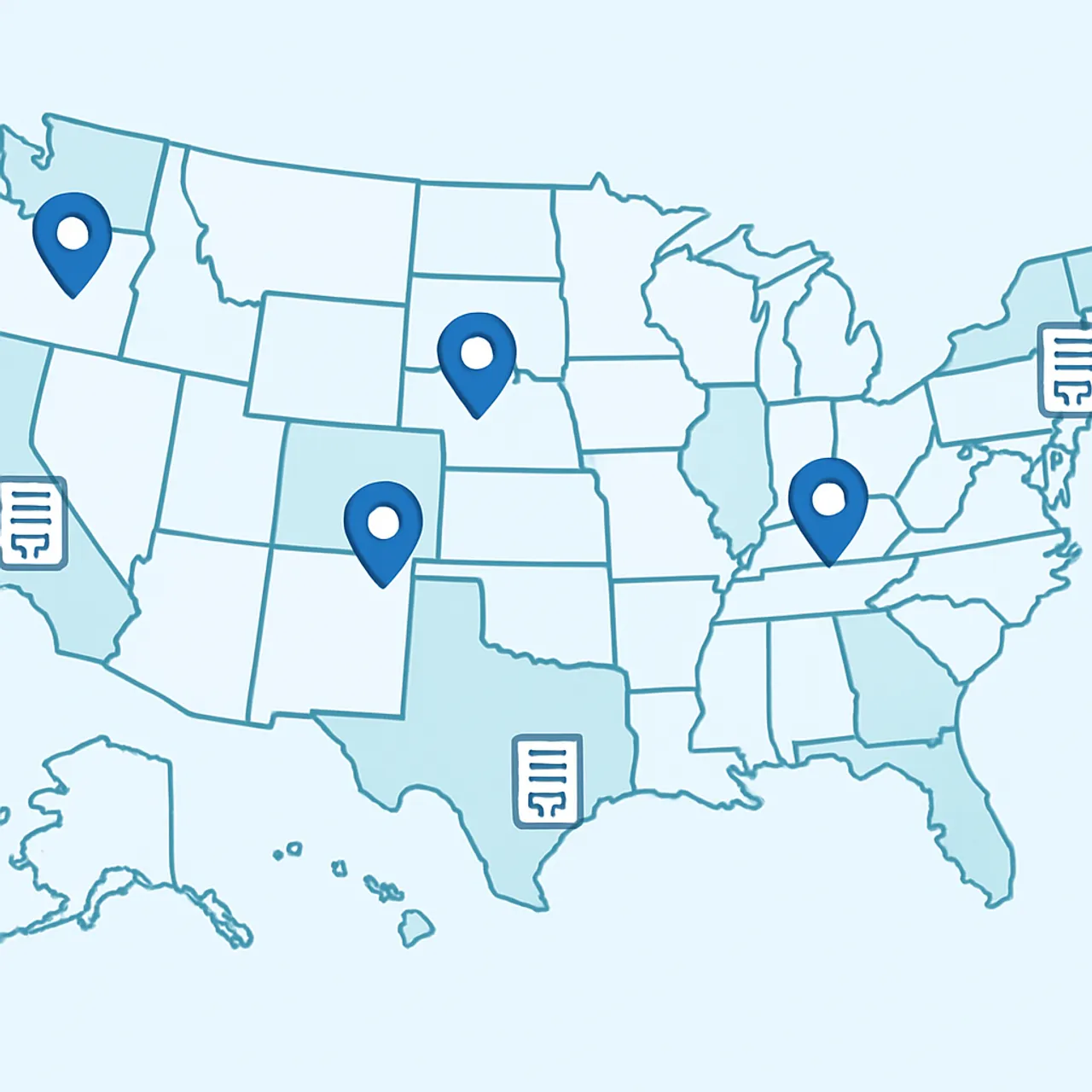
Common themes in state-level activity include:
| Focus Area | What States Are Doing |
|---|---|
| Deepfakes | Restricting AI-generated political and intimate imagery |
| Hiring | Requiring audits of automated hiring and screening tools |
| Transparency | Mandating disclosure when consumers interact with AI |
| Privacy | Extending data protection rules to AI training and use |
| High-risk uses | Adding oversight for AI in lending, housing, and healthcare |
The challenge is that these laws are not uniform. A disclosure rule in one state may differ from the requirements in another, and a hiring audit standard in a third state may add yet another layer. For national companies, compliance now means tracking a moving target across many jurisdictions rather than following one clear federal standard.
What This Means for Businesses
If you build, sell, or simply use AI tools, 2025 is the year to take governance seriously. Regulators have made clear that ignorance is not a defense, and customers increasingly expect responsible AI practices as a baseline.

Here are practical steps organizations are taking right now:
- Inventory your AI. Document every AI system you use, what data it touches, and what decisions it influences. You cannot govern what you have not mapped.
- Assess risk by use case. A chatbot answering FAQs carries different risk than an algorithm approving loans. Prioritize oversight where the stakes are highest.
- Add human review. For consequential decisions, keep a person in the loop who can review and override automated outputs.
- Document everything. Maintain records of testing, data sources, and risk assessments so you can demonstrate accountability if asked.
- Disclose AI use. Be transparent with customers when they are interacting with or being affected by AI.
Businesses that want to adopt AI responsibly and stay ahead of shifting rules often benefit from expert guidance. Specialized artificial intelligence services can help organizations implement AI in ways that are both effective and compliant, reducing the risk of costly missteps as regulations tighten.
The Debate in Congress
While states act, Congress continues to wrestle with the bigger question of a national framework. The debate generally splits along familiar lines: how to protect people from genuine harms without smothering innovation or handing an advantage to overseas competitors.
Several tensions keep surfacing in 2025:
- Innovation versus caution. Some lawmakers warn that heavy rules could slow American AI leadership, while others argue that weak rules invite real public harm.
- Federal versus state authority. There is active discussion about whether a national law should override the growing patchwork of state rules, and how to balance consistency with local flexibility.
- Defining the rules. Even agreeing on what counts as high-risk AI, or what meaningful transparency requires, has proven contentious.
Because of these disagreements, most observers expect targeted, sector-specific measures to advance before any single comprehensive law. Areas like child safety, election integrity, and fraud prevention tend to attract the broadest support and are the most likely candidates for near-term action.
What to Watch for Next
Looking ahead, the direction of AI regulation in the United States will likely be shaped by a few key forces. International standards, especially the European approach, will continue to influence American companies that operate globally and want a single compliance playbook. Public sentiment will also matter; as more people experience both the benefits and harms of AI directly, pressure on lawmakers will intensify.
For the rest of 2025 and beyond, watch for more enforcement actions under existing consumer protection and civil rights laws, continued growth of state legislation, and steady refinement of voluntary frameworks that quietly become industry expectations. The most realistic near-term future is not a single dramatic law but a layered system of overlapping rules that businesses must learn to manage.
Final Thoughts
AI regulation US news today in 2025 paints a picture of a country still defining its approach. The federal government is leaning on executive action and agency frameworks, states are building a fast-growing patchwork of laws, and Congress is debating the shape of a national standard that has not yet arrived. For businesses and individuals, the smart move is to assume that responsible AI practices are no longer optional.
By mapping your AI use, managing risk, staying transparent, and keeping humans involved in important decisions, you can adapt to whatever rules emerge. Staying informed through trusted resources like ZoneTechify and WebPeak will help you keep pace as the landscape continues to evolve through 2025 and into the years ahead.