
A practical guide to what a systems software engineer actually does, the skills and languages required, how the role differs from application development, and how to build a career in it.
Software Engineer Systems Software
Every application you use sits on top of software that most developers never touch. Operating system kernels, device drivers, compilers, runtimes, databases engines, hypervisors, and network stacks form the invisible layer that makes higher-level code possible. The engineers who build that layer are systems software engineers, and their work is measured in microseconds, kilobytes, and uptime rather than screens shipped.
This guide explains the role from the inside: what the daily work looks like, which skills genuinely matter, how the career path compares to application engineering, and how to enter the field without a PhD. It is written for developers considering the switch, students choosing a specialization, and hiring managers trying to scope the role accurately.

Quick Answer: A systems software engineer builds the low-level software that other software runs on: operating systems, kernels, drivers, compilers, runtimes, databases, and networking stacks. The role demands deep knowledge of memory management, concurrency, and hardware behavior, and it typically uses C, C++, Rust, Go, and assembly rather than web frameworks.
What Is Systems Software, Exactly?
Systems software is software whose primary user is other software, not a human. An application has an interface and a person clicking it. Systems software has an API, a syscall boundary, or a hardware register, and its consumers are programs, kernels, or devices.
The category includes seven recognizable families:
- Operating systems and kernels — process scheduling, memory management, file systems, permission models.
- Device drivers and firmware — code that translates generic OS requests into specific hardware commands.
- Compilers, interpreters, and runtimes — LLVM, JVM, V8, CPython, the Go runtime.
- Database and storage engines — B-trees, write-ahead logs, query planners, replication protocols.
- Networking stacks and proxies — TCP implementations, load balancers, service meshes.
- Virtualization and containers — hypervisors, container runtimes, sandboxes.
- Observability and performance tooling — profilers, tracers, debuggers, eBPF programs.
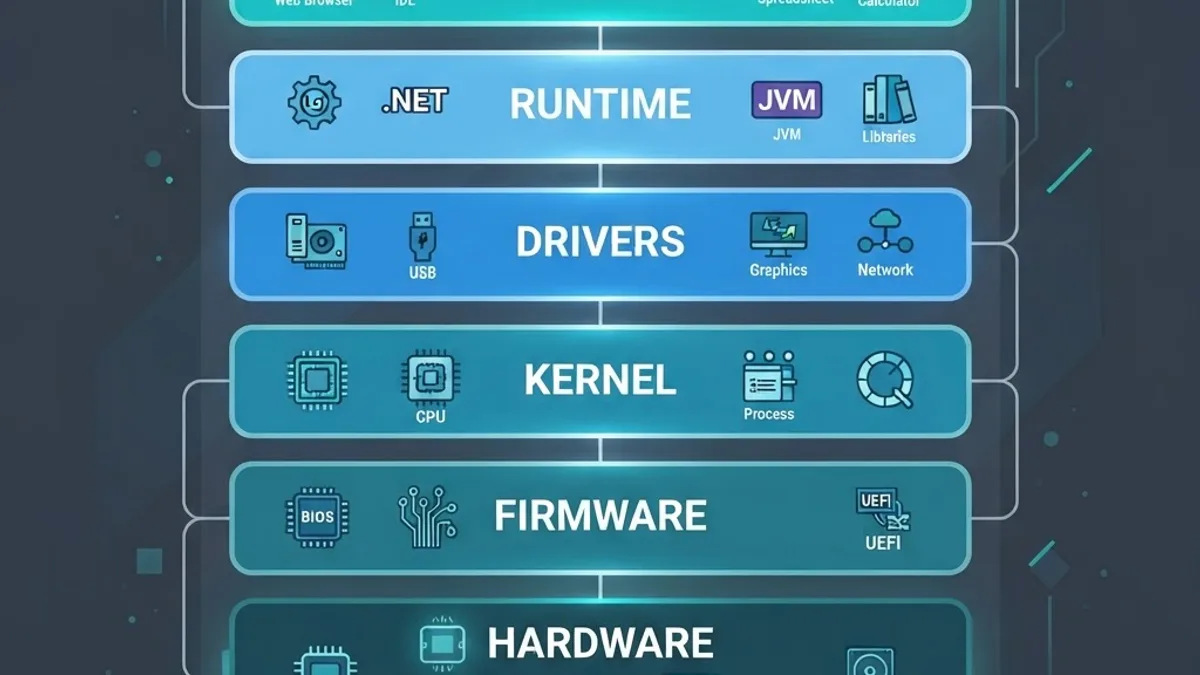
Why the Distinction Matters in Practice
The distinction changes how you work, not just what you build. Application engineers optimize for iteration speed and user feedback. Systems engineers optimize for correctness under conditions that are hard to reproduce: memory pressure, hardware failure, race conditions that appear once in ten million executions. A bug in a checkout page annoys a customer. A bug in a memory allocator corrupts data across every process on the machine.
Systems Software vs Application Software: A Direct Comparison
| Dimension | Systems Software Engineering | Application Software Engineering |
|---|---|---|
| Primary consumer | Other software, hardware | End users |
| Typical languages | C, C++, Rust, Go, Zig, assembly | JavaScript, TypeScript, Python, Java, Swift |
| Core concerns | Memory, latency, concurrency, correctness | Features, UX, business logic, iteration speed |
| Failure impact | System-wide crash or data corruption | Feature broken for some users |
| Debug cycle | Hours to days, hardware in the loop | Seconds to minutes, hot reload |
| Testing style | Fuzzing, formal methods, stress tests | Unit, integration, end-to-end |
| Release cadence | Weeks to months, heavy validation | Daily or continuous deployment |
| Abstraction level | Below the runtime | Above the framework |
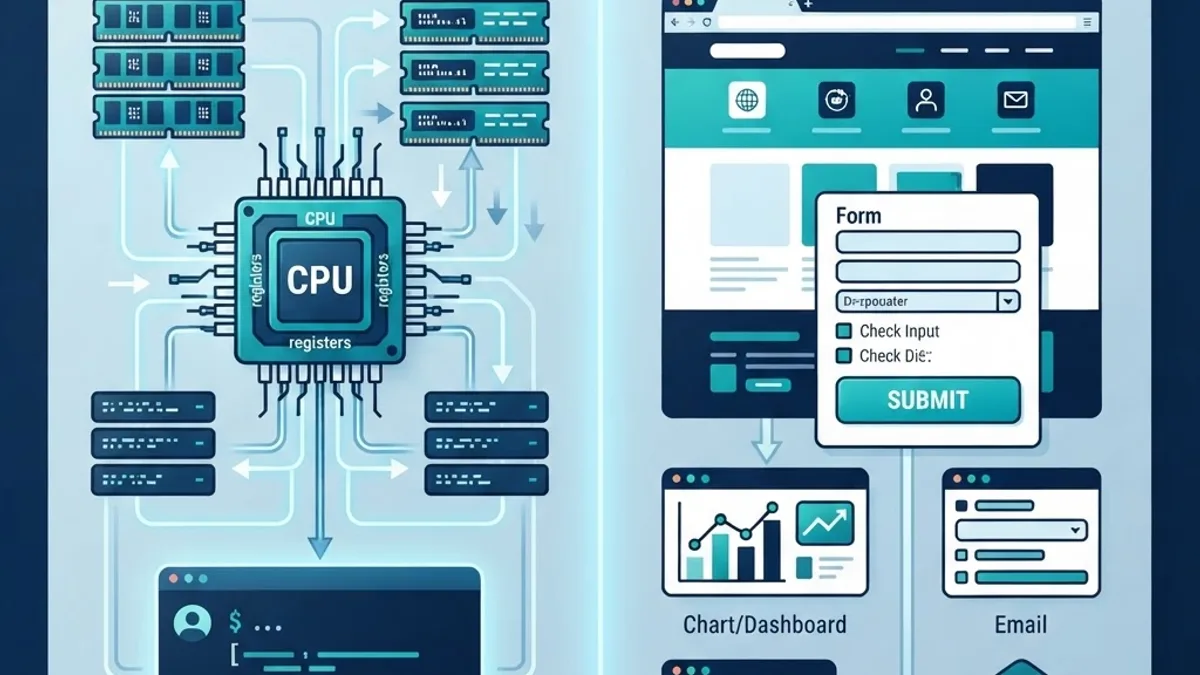
Neither column is harder in an absolute sense. They are hard in different directions. Systems work punishes shallow mental models; application work punishes poor product judgment. Engineers who move between the two consistently report that the transferable skill is disciplined reasoning about state, not syntax.
The Skills That Actually Determine Success
After reviewing what separates engineers who thrive in systems roles from those who stall, five competencies show up repeatedly.
1. Memory as a First-Class Concept
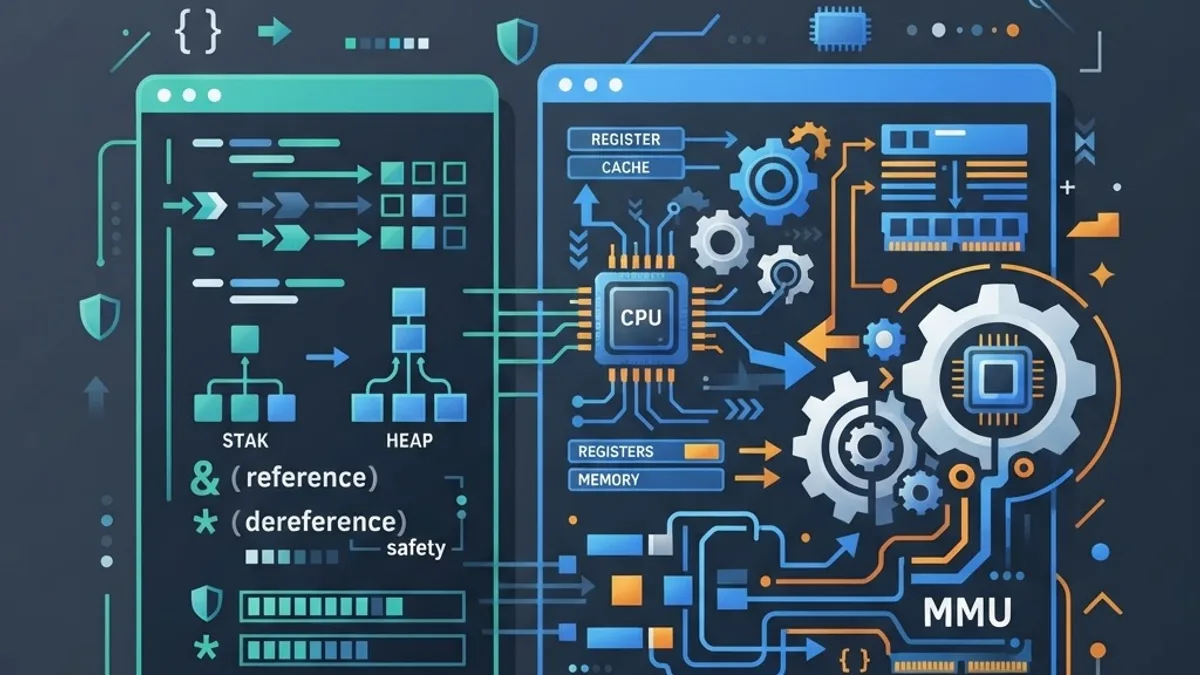
You need to know where every byte lives: stack, heap, static, memory-mapped, or a hardware register. That means understanding pointer arithmetic, alignment, cache lines, ownership, and lifetimes. A cache miss costs roughly 100x a register access, which is why data layout often matters more than algorithmic complexity in real systems code.
2. Concurrency Without Illusions
Threads, atomics, memory ordering, lock-free structures, and the specific ways compilers and CPUs reorder your instructions. Most production systems bugs that survive code review are concurrency bugs, because they are the ones that unit tests cannot deterministically catch.
3. Operating System Internals
Syscalls, virtual memory, page faults, schedulers, interrupts, file descriptors, and I/O models. You cannot debug a latency spike in a storage engine without knowing whether the kernel is blocking, swapping, or waiting on a disk flush.
4. Tooling Fluency
GDB or LLDB, perf, strace, valgrind, AddressSanitizer, ThreadSanitizer, flamegraphs, and eBPF. In systems work, your debugger is your primary instrument, not a last resort. Engineers who only know print-statement debugging plateau fast.
5. Reading Specifications and Source
Systems engineers spend more time reading than writing: RFCs, hardware datasheets, ISA manuals, POSIX documentation, and the source of the kernel or runtime they extend. The ability to derive behavior from a specification instead of guessing is the clearest expertise signal in interviews.
Languages: What to Learn and Why
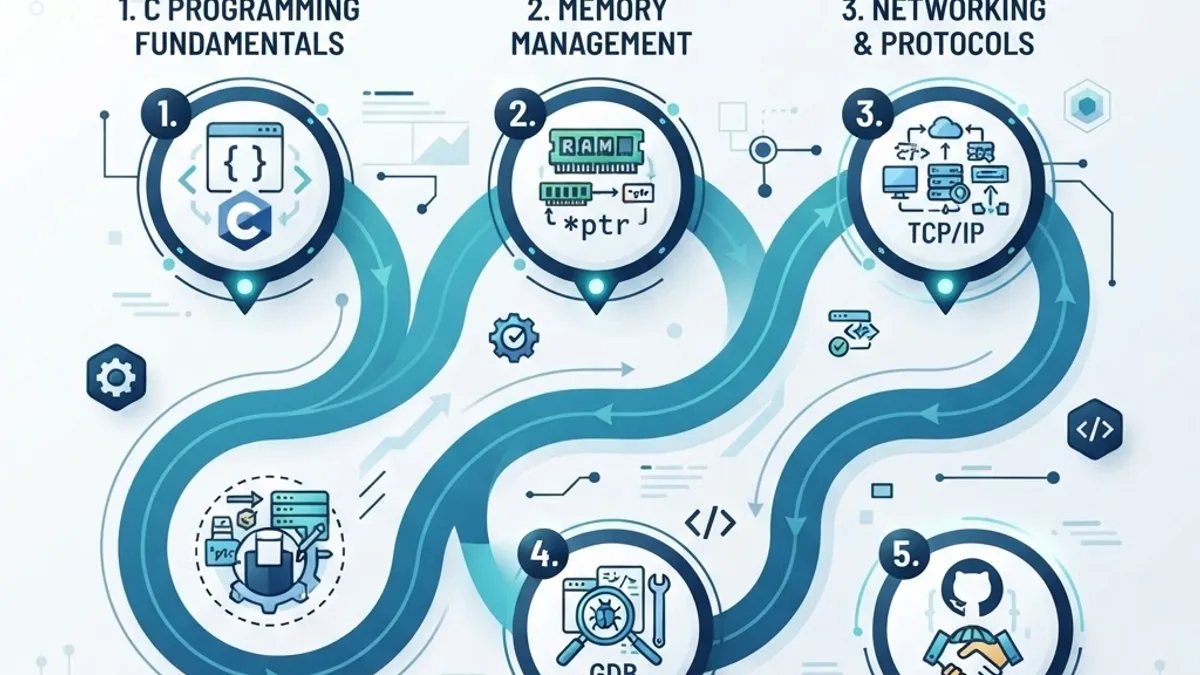
C remains the lingua franca of systems software because kernels, libc, and nearly every driver interface are defined in it. You will read C even if you write something else.
- C — non-negotiable for reading existing systems code and kernel interfaces.
- C++ — dominant in databases, browsers, game engines, and high-performance infrastructure.
- Rust — the fastest-growing option for new systems work. According to Google's Android security reporting, memory-safety vulnerabilities dropped from 76% of Android vulnerabilities in 2019 to 24% in 2024 as memory-safe languages replaced C and C++ in new code. Rust is now accepted in the Linux kernel, Windows components, and Android.
- Go — the pragmatic choice for distributed infrastructure: container runtimes, proxies, orchestration.
- Assembly — you rarely write it, but you read it when optimizing hot loops or debugging optimized builds.
A practical sequence: learn C to read the world, learn Rust or modern C++ to build safely, learn enough assembly to verify what the compiler produced.
Where Systems Engineers Work Today
The demand has shifted. Ten years ago the roles clustered around OS vendors and chip companies. Today four areas hire aggressively.
Cloud and Infrastructure Platforms
Hypervisors, storage layers, network data planes, and container runtimes. Every efficiency gain multiplies across millions of machines, which is why infrastructure teams justify deep optimization work that product teams cannot. Teams building this kind of low-level platform work often pair it with managed cloud solutions so that the infrastructure layer and the deployment layer are designed together rather than bolted on.
AI and Accelerator Software
Kernels for GPUs and custom accelerators, compilers for tensor operations, memory schedulers for large models. This is currently the highest-leverage systems niche, because model throughput is bounded far more often by memory bandwidth and kernel efficiency than by raw compute.
Embedded and Automotive
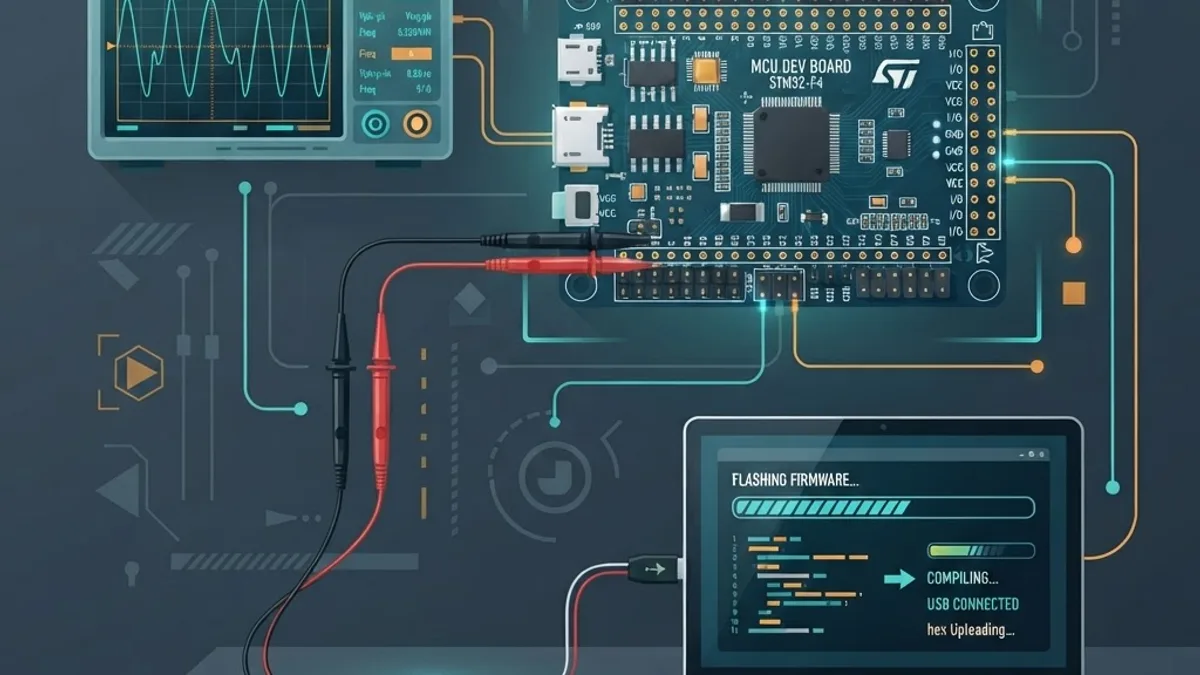
Firmware for microcontrollers, real-time operating systems, safety-certified stacks. Constraints here are absolute: fixed memory, hard deadlines, no dynamic allocation, and code that may run untouched for a decade.
Databases and Data Engines
Query execution, storage formats, consensus protocols. The recent wave of columnar engines and vectorized execution created sustained demand for engineers who understand both algorithms and hardware.
How to Break Into Systems Software
The most reliable path is demonstrable artifacts, not credentials. Hiring managers in this space evaluate code and reasoning, and a public repository beats a bullet point every time.
- Build a small OS or shell. A bootloader, a scheduler, and a memory allocator teach more than any course.
- Write an allocator, then benchmark it. Compare against the system allocator and explain the difference with data.
- Implement a protocol from its RFC. A partial TCP or HTTP/2 implementation proves you can read specifications.
- Contribute to an open source systems project. Start with build fixes and documentation in projects like the Linux kernel, SQLite, Redis, or a Rust runtime, then move to bug fixes.
- Profile something real. Take an open source tool, find a hot path with perf, submit a measured improvement.
- Learn to write the postmortem. Documenting a hard bug clearly is a hiring signal, because it shows you actually understood the root cause.
For engineers building technical authority through published work, the writing itself compounds. Teams at ZoneTechify and WebPeak see the same pattern across technical hiring: candidates who publish detailed debugging write-ups get inbound interest that resumes alone never generate.
Compensation and Career Trajectory
Systems roles typically pay at or above equivalent application roles at the same company, driven by a smaller qualified talent pool rather than by prestige. The compounding factor is durability: memory models, concurrency, and OS behavior change on decade timescales, while frontend frameworks turn over every few years. Skills learned in systems work depreciate slowly.

The common senior paths are performance engineering, kernel or runtime ownership, platform architecture, and technical leadership on infrastructure teams. A frequent trap is over-specialization in one proprietary stack; the antidote is keeping at least one portable skill sharp, such as compilers, networking, or storage internals.
Key Takeaways
- Systems software serves other software and hardware, not human users, which changes priorities from iteration speed to correctness and performance.
- C, C++, Rust, and Go cover the majority of modern systems work; C is required for reading, Rust is ascending for writing.
- According to Google, memory-safety issues fell from 76% of Android vulnerabilities in 2019 to 24% in 2024 as memory-safe languages replaced C and C++ in new code.
- Cache-aware data layout frequently outperforms algorithmic improvements, since a cache miss can cost around 100x a register access.
- Debugging and profiling tools such as GDB, perf, sanitizers, and eBPF are core instruments, not optional extras.
- Hiring in this field weighs demonstrable artifacts, such as an allocator, a toy kernel, or an upstream patch, over credentials.
Frequently Asked Questions (FAQ)
What does a systems software engineer do all day?
They design, implement, and debug low-level software such as kernels, drivers, runtimes, and storage engines. A typical day mixes reading specifications and existing source, writing tightly scoped code, profiling performance, and investigating hard reproducibility bugs using debuggers, tracers, and stress tests.
Is systems software engineering harder than web development?
It is difficult in a different direction. Systems work demands precise mental models of memory, concurrency, and hardware, with slow feedback loops. Web development demands product judgment and rapid iteration across a wide surface area. Neither is objectively harder, but systems mistakes are usually costlier to fix.
Do I need to learn C if I already know Rust?
Yes, at least well enough to read it. Kernels, libc, hardware interfaces, and most existing systems code are written in or expose C APIs. You can write new code in Rust, but you will constantly read C headers, drivers, and reference implementations to understand behavior.
Can I become a systems engineer without a computer science degree?
Yes. Hiring in this field heavily weighs demonstrated ability. Build a toy operating system, a memory allocator, or a protocol implementation, then contribute patches to an open source systems project. Public code plus a clear written explanation of your debugging process substitutes effectively for credentials.
Is systems programming still relevant with AI writing code?
More relevant, not less. AI workloads are bounded by memory bandwidth, kernel efficiency, and scheduling, all systems problems. AI tools also generate code that still requires engineers who can verify correctness at the memory and concurrency level, where subtle mistakes cause data corruption rather than visible errors.
What is the fastest way to get systems experience at my current job?
Volunteer for performance and reliability work. Profile a slow service, investigate a memory leak, or own the build and runtime tooling. These tasks sit closest to systems concerns, are usually under-owned on product teams, and produce measurable results you can point to in interviews.