
Discover how artificial intelligence transforms capacity planning for HVAC and plumbing systems with predictive forecasting, smarter sizing, and measurable ROI.
Artificial Intelligence for Capacity Planning for HVAC Plumbing
Capacity planning has always been the make-or-break moment in mechanical engineering. Size an HVAC system too small and occupants sweat through summer while equipment burns out early. Oversize it and you waste tens of thousands of dollars on hardware, energy, and short-cycling wear. The same tension defines plumbing design, where undersized supply lines starve fixtures and oversized ones invite stagnation and cost overruns. For decades, engineers leaned on static load calculations and rule-of-thumb multipliers. Today, artificial intelligence is rewriting that playbook by turning guesswork into data-driven precision.
At ZoneTechify and WebPeak, we work with mechanical contractors and building operators who are tired of the boom-and-bust cycle of manual capacity planning. This guide breaks down exactly how AI fits into HVAC and plumbing design, what it can realistically deliver, and how to adopt it without overhauling your entire workflow.
Quick Answer: Artificial intelligence improves HVAC and plumbing capacity planning by analyzing historical usage, weather, occupancy, and sensor data to predict real demand. It right-sizes equipment, forecasts peak loads accurately, cuts energy waste, and reduces costly oversizing, delivering more reliable systems at lower lifetime cost.
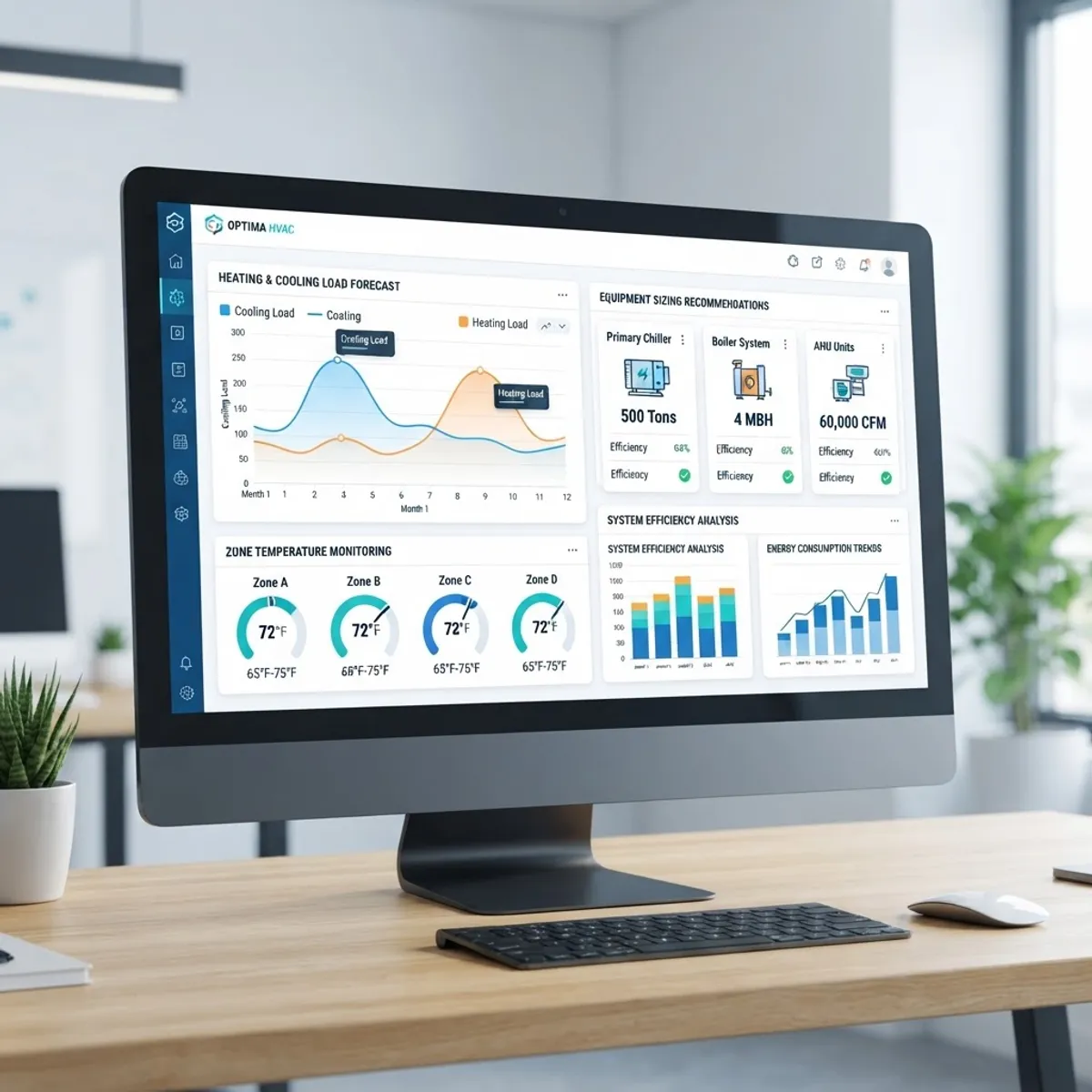
What Is AI-Driven Capacity Planning for HVAC and Plumbing?
AI-driven capacity planning is the use of machine learning models to determine the optimal size, quantity, and configuration of heating, cooling, and plumbing systems based on real-world data rather than static assumptions. Instead of relying solely on peak-day worst-case math, the system learns from thousands of data points to model how a building actually behaves.
Defining Capacity Planning in Mechanical Systems
Capacity planning is the process of matching system output to expected demand across a building's lifespan. In HVAC, that means sizing chillers, boilers, air handlers, and ductwork to meet heating and cooling loads. In plumbing, it covers supply line diameters, pump sizing, water heater capacity, and drainage. Traditionally this relied on Manual J, Manual D, and fixture-unit tables, which are reliable but inherently conservative and slow to adapt to change.
AI adds a predictive layer on top of these proven standards. It does not replace engineering judgment; it sharpens it by revealing patterns humans cannot compute by hand, such as how a specific building responds to humidity swings or how occupancy shifts hourly water demand.
Why Traditional HVAC and Plumbing Capacity Planning Falls Short
Traditional methods are built around safety margins, and those margins compound. An engineer adds 15% for uncertainty, the contractor rounds up to the next available unit size, and the result is a system that runs at 40 to 60% capacity most of the year. According to the U.S. Department of Energy, HVAC systems account for roughly 40% of a commercial building's total energy use, so oversizing directly inflates operating costs for the entire life of the equipment.
Static calculations also ignore how buildings evolve. Occupancy patterns, remote-work schedules, tenant changes, and climate shifts all move the demand curve after the design is locked in. A manual calculation captures a single moment in time; a building lives for 30 years. This mismatch is the root cause of both comfort complaints and energy waste.
How AI Transforms HVAC and Plumbing Capacity Planning
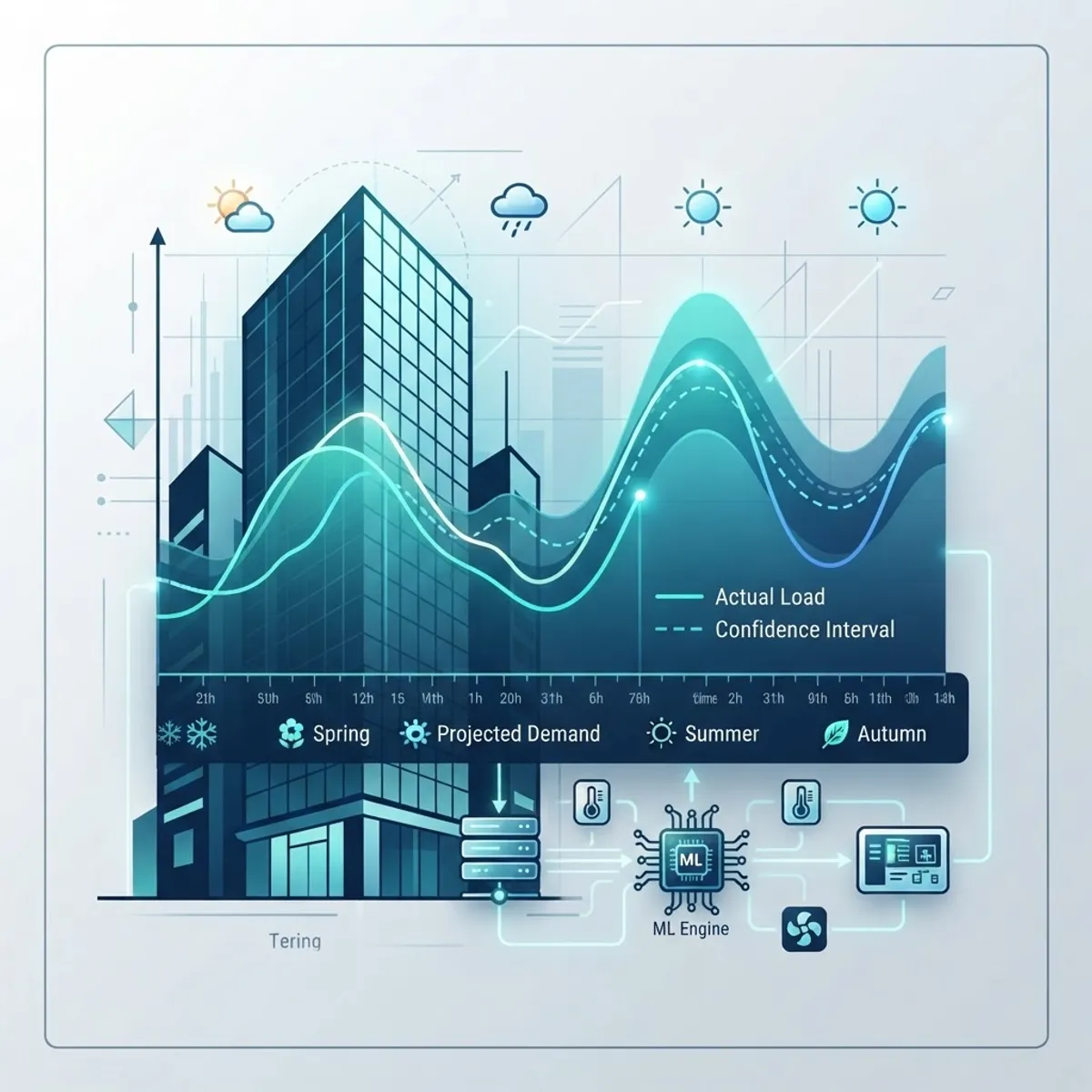
Artificial intelligence attacks the weaknesses of manual planning from three directions: better forecasting, live demand sensing, and smarter sizing. Here is how each works in practice.
1. Predictive Load Forecasting
Machine learning models trained on historical energy use, local weather data, and occupancy schedules can forecast heating and cooling loads with far greater granularity than a single peak calculation. Rather than one worst-case number, the model produces an 8,760-hour annual load profile, showing exactly when peaks occur and how often. This lets engineers size for realistic peaks and add staged equipment for rare extremes instead of oversizing everything.
Weather is the biggest variable in HVAC demand, and AI excels at correlating it with load. By ingesting years of local climate data alongside building performance, the model distinguishes a true design-day peak from a statistical outlier, preventing the reflexive oversizing that inflates budgets.
2. Real-Time Demand Sensing with IoT
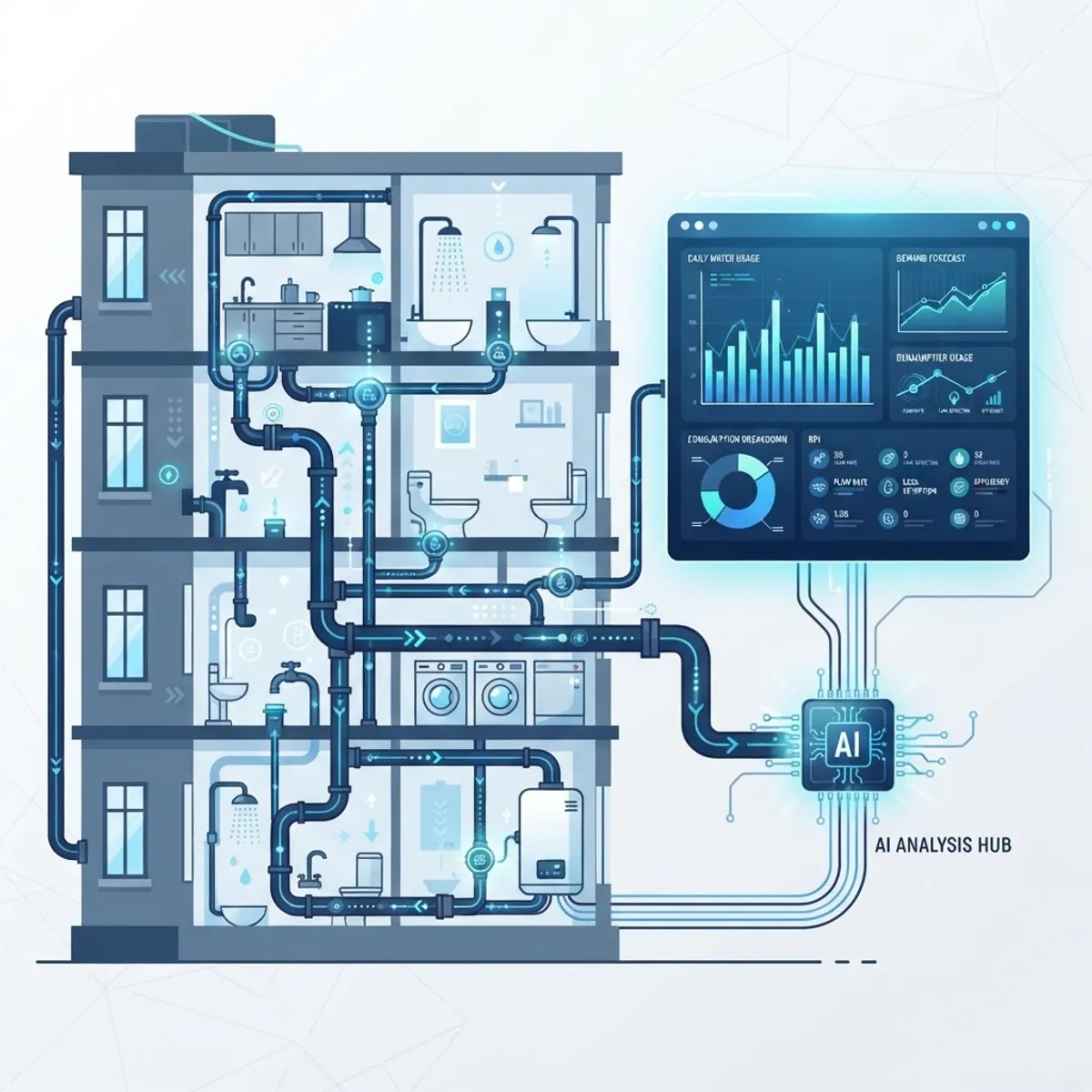
Internet of Things sensors on ducts, pipes, pumps, and thermostats stream continuous data into AI platforms. This closes the loop between design and reality. For plumbing, flow sensors reveal actual simultaneous fixture usage, which is almost always lower than the conservative fixture-unit tables predict. That insight alone can justify smaller, cheaper supply mains without risking performance.

Over time, this sensor data feeds back into the models, making each successive forecast more accurate. A building that has operated for two years becomes its own best training dataset, enabling continuous recommissioning rather than one-and-done design.
3. Machine Learning System Sizing
Once demand is understood, AI recommends specific equipment configurations. It can compare a single large chiller against modular units, evaluate variable-speed versus constant-speed pumps, and model how each choice performs across the full load profile. The output is not just a size but a strategy optimized for part-load efficiency, the condition equipment actually spends most of its life in.

For plumbing, the same logic optimizes water heater capacity and recirculation strategies, balancing wait times against energy loss. These are trade-offs engineers have always made intuitively; AI quantifies them so decisions are defensible and repeatable.
Traditional vs AI-Based Capacity Planning
The table below compares conventional manual planning with an AI-augmented approach across the factors that matter most to building owners and contractors.
| Factor | Traditional Planning | AI-Based Planning |
|---|---|---|
| Load basis | Single peak-day calculation | Full 8,760-hour annual profile |
| Data sources | Static tables and assumptions | Weather, occupancy, and live sensors |
| Oversizing risk | High (stacked safety margins) | Low (right-sized to real demand) |
| Adaptability | Fixed at design time | Continuous, learns over time |
| Energy efficiency | Often poor at part load | Optimized for part-load reality |
| Upfront speed | Slow, manual | Fast, automated modeling |
| Lifetime cost | Higher operating expense | Lower total cost of ownership |
Real-World Benefits and ROI
The financial case for AI capacity planning is straightforward: avoid buying capacity you never use, then run what you do buy more efficiently. Right-sizing reduces upfront equipment cost, and better part-load operation cuts ongoing energy bills. Industry research consistently shows that properly sized and controlled HVAC systems can reduce energy consumption by 20 to 30% compared with oversized, poorly staged installations.

There is also a reliability dividend. Oversized equipment short-cycles, which increases wear and shortens lifespan. By sizing to actual demand, AI reduces cycling, extends equipment life, and lowers maintenance frequency. For plumbing, avoiding oversized dead-leg piping reduces water stagnation risk, an important water-quality and health consideration.
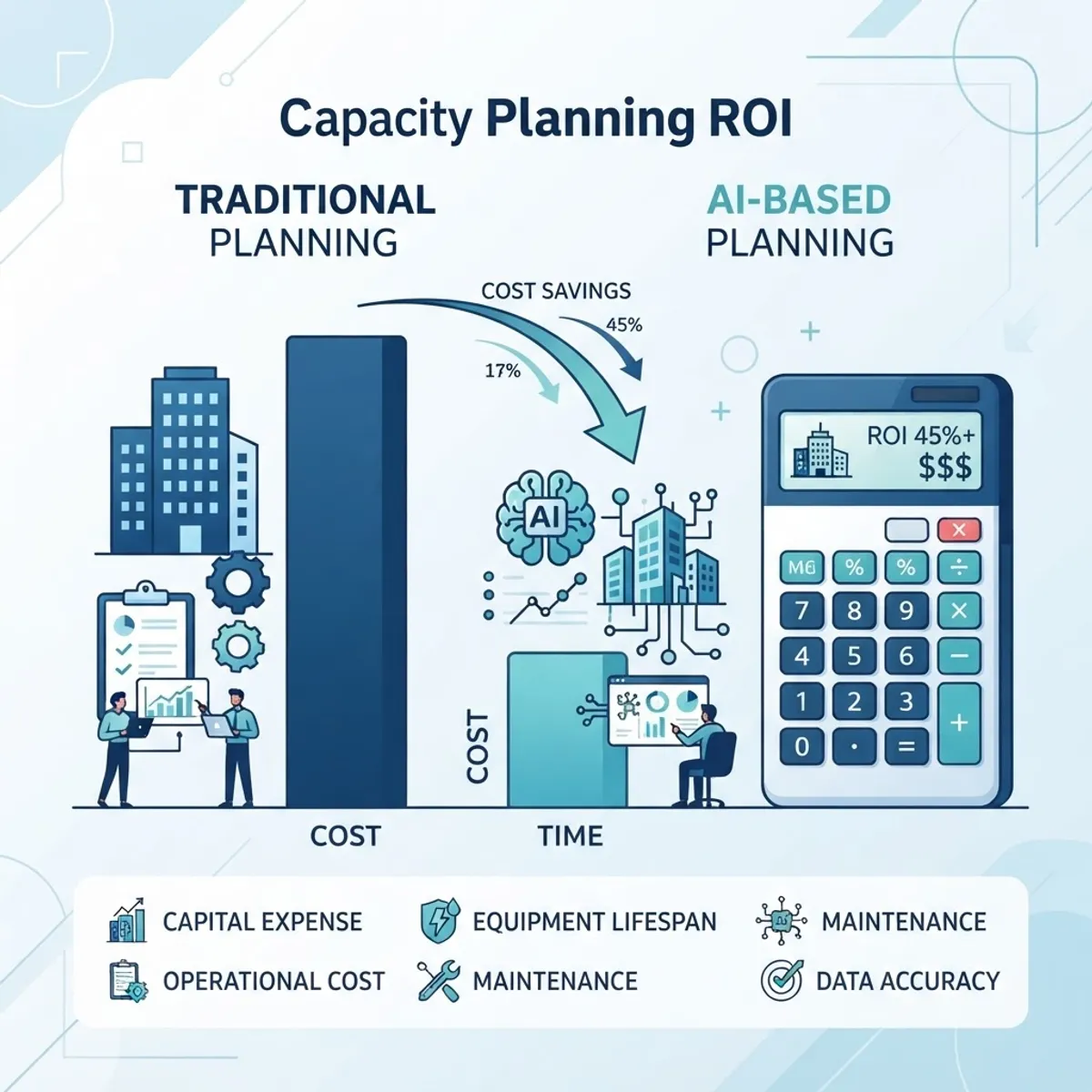
Businesses exploring these gains often start with a focused pilot rather than a full rollout. Partnering with an experienced team that offers artificial intelligence services helps translate raw building data into models that engineers can actually trust and act on.
How to Implement AI Capacity Planning: Step by Step
Adopting AI does not require throwing out your existing engineering standards. Follow these steps to layer it in responsibly:
- Audit your data. Gather utility bills, BMS logs, occupancy records, and any existing sensor data. AI is only as good as its inputs.
- Instrument key systems. Add IoT flow, temperature, and energy sensors where you lack visibility, especially at plant equipment and main supply lines.
- Validate against manual methods. Run AI forecasts alongside Manual J and fixture-unit calculations so you can trust the model before relying on it.
- Pilot on one building or zone. Prove value on a contained project, measure results, then scale.
- Enable continuous learning. Feed operational data back into the model so recommendations improve every season.
Plumbing demand forecasting deserves special attention because it is historically the most overdesigned discipline. Modern estimating methods like the Water Demand Calculator already show that real simultaneous use is far lower than legacy tables assume, and AI extends this by learning each building's true usage signature.
Key Takeaways
- AI right-sizes systems by modeling a full annual load profile instead of a single worst-case peak, cutting oversizing and cost.
- HVAC accounts for about 40% of commercial building energy use (U.S. Department of Energy), so accurate sizing has an outsized financial impact.
- Properly sized and controlled systems can save 20 to 30% in energy versus oversized installations.
- IoT sensors create a feedback loop that makes each forecast more accurate over time.
- AI complements, not replaces, proven standards like Manual J and fixture-unit calculations.
- Plumbing benefits significantly because traditional fixture-unit methods heavily overestimate simultaneous demand.
Frequently Asked Questions (FAQ)
Can AI really size HVAC and plumbing systems more accurately than an engineer?
AI does not replace engineers; it gives them sharper data. By analyzing thousands of hourly data points, weather patterns, and live sensor feeds, AI reveals real demand curves that manual calculations miss. Engineers then apply judgment to those insights, producing sizing that is both accurate and defensible.
Is AI capacity planning only for large commercial buildings?
No. While large buildings see the biggest dollar savings, AI tools scale down to multifamily, light commercial, and even high-end residential projects. Cloud-based platforms and affordable IoT sensors have lowered the entry cost, making data-driven right-sizing practical for small mechanical contractors, not just enterprise firms.
What data does AI need for HVAC and plumbing capacity planning?
AI models perform best with historical utility bills, building management system logs, occupancy schedules, local weather data, and live sensor readings from ducts, pumps, and pipes. The more complete and clean the data, the more accurate the forecast. Even limited data can improve on static assumptions.
How much can AI capacity planning reduce energy costs?
Results vary by building, but studies show properly sized and AI-optimized HVAC systems commonly reduce energy consumption by 20 to 30% versus oversized ones. Savings come from eliminating unused capacity, reducing short-cycling, and optimizing equipment for the part-load conditions systems spend most of their time in.
Does AI capacity planning work with existing engineering standards?
Yes. AI is designed to layer on top of established methods like Manual J, Manual D, and fixture-unit tables rather than discard them. Best practice is to run AI forecasts alongside traditional calculations, validate the results, and use the combined insight to make confident, code-compliant sizing decisions.
How do I start using AI for capacity planning without a big investment?
Start small. Audit the data you already have, add a few IoT sensors to your most uncertain systems, and run a pilot on a single building or zone. Validate AI outputs against manual methods, measure the savings, and scale only once you have proven, trustworthy results.