
Explore how AI reshapes consumer behavior, moving from predictive analytics that forecast demand to generative AI that personalizes every customer interaction in real time.
Artificial Intelligence and Consumer Behavior From Predictive to Generative AI
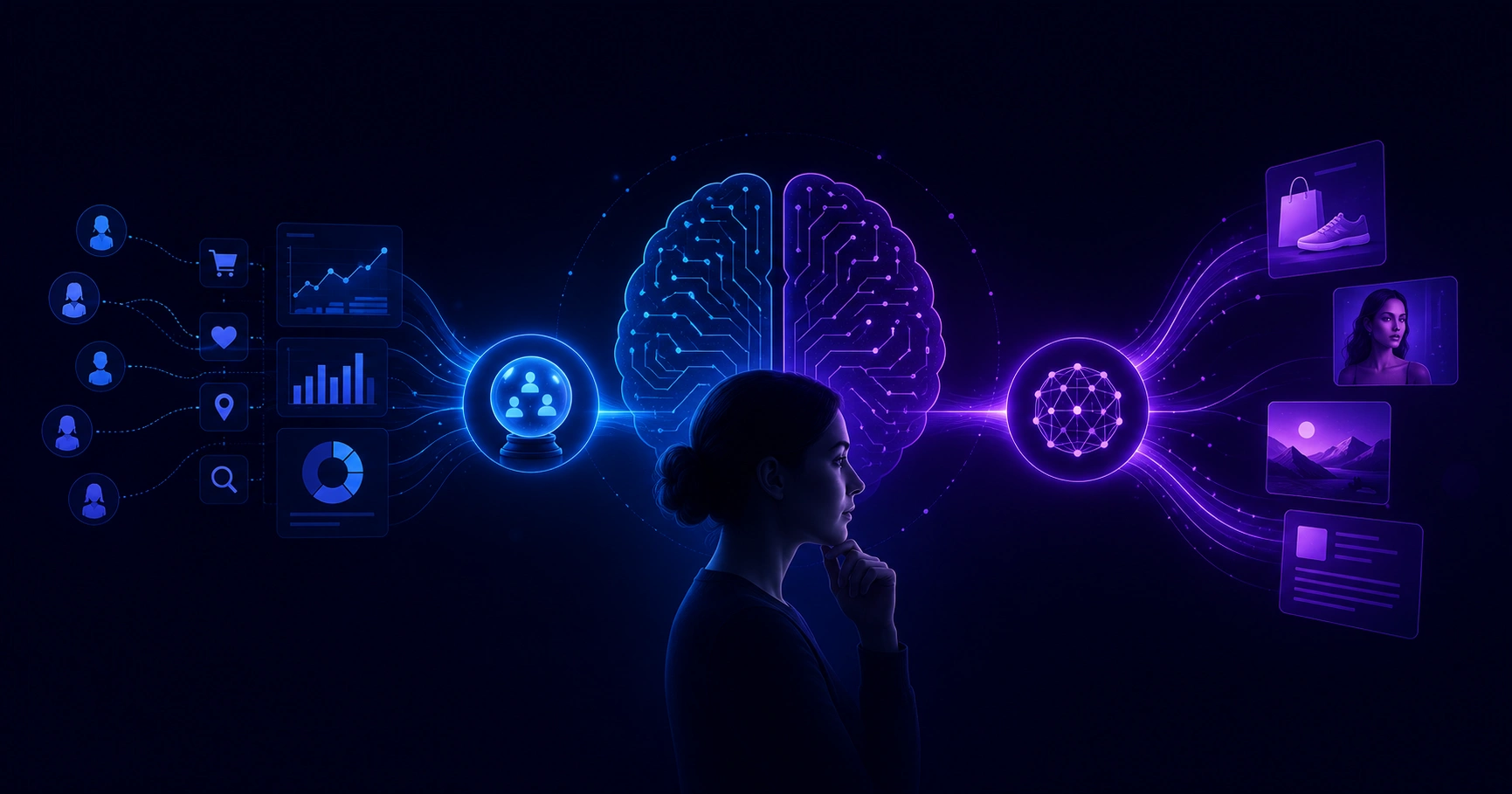
Artificial intelligence has quietly rewired how people discover, evaluate, and buy products. A decade ago, marketers guessed what shoppers wanted. Today, machines predict it, and increasingly, they create tailored experiences on the fly. This shift, from predictive to generative AI, is the most consequential change in consumer marketing since the arrival of the smartphone. Having worked alongside marketing teams deploying these systems, I have watched conversion rates climb not because brands shouted louder, but because they understood behavior more precisely.
This article breaks down exactly how AI influences consumer decisions, where predictive models still dominate, and why generative AI is redefining personalization. You will leave knowing what to adopt, what to avoid, and how to keep customer trust intact.
Quick Answer: AI shapes consumer behavior by analyzing data to predict what customers will buy, then using generative models to create personalized content, recommendations, and experiences in real time. Predictive AI forecasts demand, while generative AI produces tailored messaging that increases engagement, loyalty, and conversions.
What Is the Connection Between AI and Consumer Behavior?
Consumer behavior is the study of how individuals decide to spend their time, money, and attention. Artificial intelligence connects to this field by processing vast behavioral signals, clicks, searches, purchases, dwell time, and converting them into actionable insight faster than any human team could.
Key definition: Consumer behavior AI refers to machine learning systems that model, predict, and influence purchasing decisions using historical and real-time data.
According to McKinsey, companies that use AI-driven personalization generate up to 40% more revenue from those activities than average players. That gap is not luck. It reflects a structural advantage: AI sees patterns humans miss, then acts on them at scale.

The practical takeaway is simple. Brands no longer compete only on price or product. They compete on how well they understand and anticipate customer needs. Businesses building this capability, often with partners like ZoneTechify, treat data as a living asset rather than a static archive.
How Predictive AI Shapes Buying Decisions
Predictive AI uses historical data to forecast future outcomes. In consumer contexts, it answers questions like who is likely to churn, which product will a shopper buy next, and when will demand spike.

The core techniques
Predictive systems rely on a handful of proven methods:
- Recommendation engines that suggest products based on collaborative filtering, the same logic behind Amazon and Netflix suggestions.
- Churn prediction models that flag customers likely to leave so retention offers arrive before they do.
- Demand forecasting that optimizes inventory and pricing based on seasonal and behavioral trends.
- Propensity scoring that ranks leads by likelihood to convert, sharpening ad spend.
Amazon has reported that roughly 35% of its purchases originate from its recommendation engine. That single statistic explains why predictive AI became the backbone of modern e-commerce. It turns browsing into buying by reducing the effort a shopper must invest to find something relevant.
Where predictive AI falls short
Predictive models are powerful but reactive. They tell you what is likely based on the past, yet they cannot craft a fresh message, write a product description, or hold a conversation. They optimize existing content rather than create new content. That limitation is precisely where generative AI enters.
How Generative AI Transforms Personalization
Generative AI creates original content, text, images, audio, and even video, from learned patterns. Instead of only predicting what a customer wants, it produces the exact experience that customer sees.
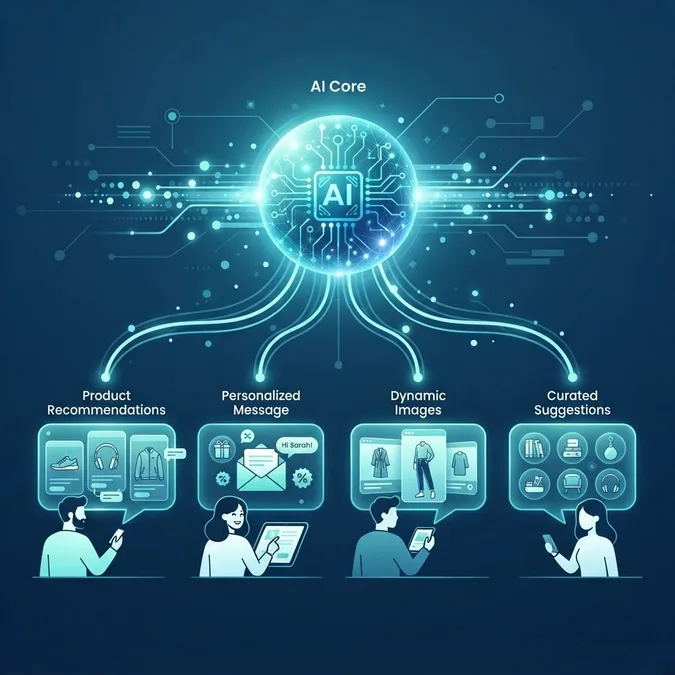
This is a fundamental leap. A predictive engine might rank ten products for a shopper. A generative engine writes a unique email, designs a matching banner, and drafts a chatbot reply tuned to that individual, all within seconds. Salesforce research found that 73% of customers expect companies to understand their unique needs, an expectation only generative personalization can meet at scale.
Real-world applications
- Dynamic product descriptions rewritten to match a visitor's browsing intent.
- Conversational commerce where AI assistants guide shoppers like a knowledgeable clerk.
- Hyper-personalized email generated per recipient rather than per segment.
- On-demand creative that produces ad variants for testing without a design bottleneck.
Companies investing in these capabilities often lean on specialized artificial intelligence services to integrate models responsibly into existing marketing stacks. The teams behind platforms like WebPeak increasingly bundle generative tooling directly into growth workflows.
Predictive vs Generative AI: A Clear Comparison
Understanding the difference helps you choose the right tool for each job. Predictive AI forecasts; generative AI creates. Most mature strategies use both together.
| Factor | Predictive AI | Generative AI |
|---|---|---|
| Primary function | Forecasts outcomes | Creates new content |
| Data output | Scores, rankings, probabilities | Text, images, audio, video |
| Consumer role | Anticipates needs | Personalizes experience |
| Example | Product recommendations | Custom email copy |
| Best for | Targeting and timing | Engagement and creative |
| Human effort | Interprets predictions | Reviews and refines output |
| Maturity | Established | Rapidly evolving |
The strategic insight here is that these approaches are complementary, not competing. Predictive AI decides who to reach and when. Generative AI decides what to say and how. Brands that connect the two create a closed loop: predict the need, generate the response, measure the result, and refine.
The AI-Driven Customer Journey
AI now touches every stage of the buying journey, not just the checkout. Mapping this helps marketers deploy the right model at the right moment.

- Awareness: Predictive targeting places ads in front of look-alike audiences most likely to care.
- Consideration: Generative AI answers questions through chatbots and tailored content that removes doubt.
- Decision: Recommendation engines and dynamic pricing nudge the final choice.
- Retention: Churn models trigger timely offers, while generative messaging keeps communication feeling personal.
- Advocacy: AI identifies satisfied customers and prompts reviews or referrals at the ideal moment.
In my experience advising retail clients, the biggest wins come from the middle of this funnel. Consideration is where most shoppers hesitate, and a well-timed, generatively crafted answer converts far better than a generic FAQ. The lesson is to invest where hesitation lives, not only where the sale closes.
Ethics, Privacy, and Consumer Trust
AI power comes with responsibility. Consumers reward relevance but punish surveillance that feels invasive. Building trust is now a competitive advantage, not a compliance checkbox.

A Pew Research Center study found that 79% of Americans are concerned about how companies use their data. Ignoring that sentiment is costly. The brands winning long-term follow three principles:
- Transparency: Tell customers when AI personalizes their experience.
- Consent: Collect and use data with clear, revocable permission.
- Value exchange: Ensure personalization genuinely helps the customer, not only the seller.
Generative AI adds a new risk, hallucinated or misleading output. A chatbot that invents a return policy erodes trust instantly. That is why human oversight remains essential. Treat AI as a capable assistant that still needs a manager, not an autonomous authority.
The Future of AI and Consumer Behavior
The next phase blends prediction and generation into a single adaptive system. Imagine a storefront that restructures its layout, copy, and offers for each visitor in real time, learning and adjusting with every click.

Three trends will define the coming years:
- Agentic AI that acts on a customer's behalf, comparing options and completing purchases autonomously.
- Multimodal personalization combining text, image, and voice into seamless experiences.
- Privacy-first models trained on aggregated, anonymized data to satisfy tightening regulation.
Brands that prepare now, by cleaning their data, defining ethical guardrails, and testing generative tools, will lead. Those that wait will spend the next decade catching up to competitors who treated AI as core infrastructure rather than a novelty.
Key Takeaways
- Predictive AI forecasts behavior; generative AI creates personalized experiences. The strongest strategies use both.
- Amazon attributes about 35% of sales to its recommendation engine, proving predictive AI's commercial impact.
- 73% of customers expect brands to understand their unique needs, a bar only generative personalization meets at scale.
- 79% of Americans worry about data use, so transparency and consent are non-negotiable.
- Human oversight is essential to catch generative errors and protect brand trust.
- The future is adaptive AI that predicts and generates within one continuous, privacy-conscious loop.
Frequently Asked Questions (FAQ)
What is the difference between predictive and generative AI in marketing?
Predictive AI analyzes past data to forecast outcomes like who will buy or churn. Generative AI creates original content such as emails, images, and chatbot replies. Predictive AI targets and times messages, while generative AI produces the actual personalized content customers see.
How does AI influence consumer buying decisions?
AI influences decisions by analyzing behavioral signals to recommend relevant products, personalize messaging, and time offers precisely. It reduces the effort shoppers spend finding what they want, surfaces options at the ideal moment, and answers questions instantly, all of which lower hesitation and increase conversion rates.
Is AI personalization safe for consumer privacy?
AI personalization is safe when brands use transparent, consent-based data practices. Risks arise when companies collect data without permission or feel invasive. The safest approach combines clear disclosure, revocable consent, anonymized data where possible, and a genuine value exchange that benefits the customer, not only the business.
Can small businesses use AI for consumer behavior analysis?
Yes. Affordable tools now offer recommendation engines, email personalization, and chatbots without large budgets or in-house data scientists. Small businesses can start with one predictive use case, such as product recommendations, then add generative tools gradually as they build clean data and clear results.
Will generative AI replace human marketers?
No. Generative AI handles scale and speed, but humans provide strategy, brand voice, ethical judgment, and oversight to catch errors. The most effective teams pair AI's productivity with human creativity and accountability, using AI as a powerful assistant rather than a replacement for skilled marketing professionals.
How do I start using AI to understand my customers?
Begin by consolidating clean, permissioned customer data. Choose one clear goal, such as reducing churn or improving recommendations, and pilot a proven tool against it. Measure results, add human review, then expand to generative personalization once predictive insights are reliable and trusted across your team.