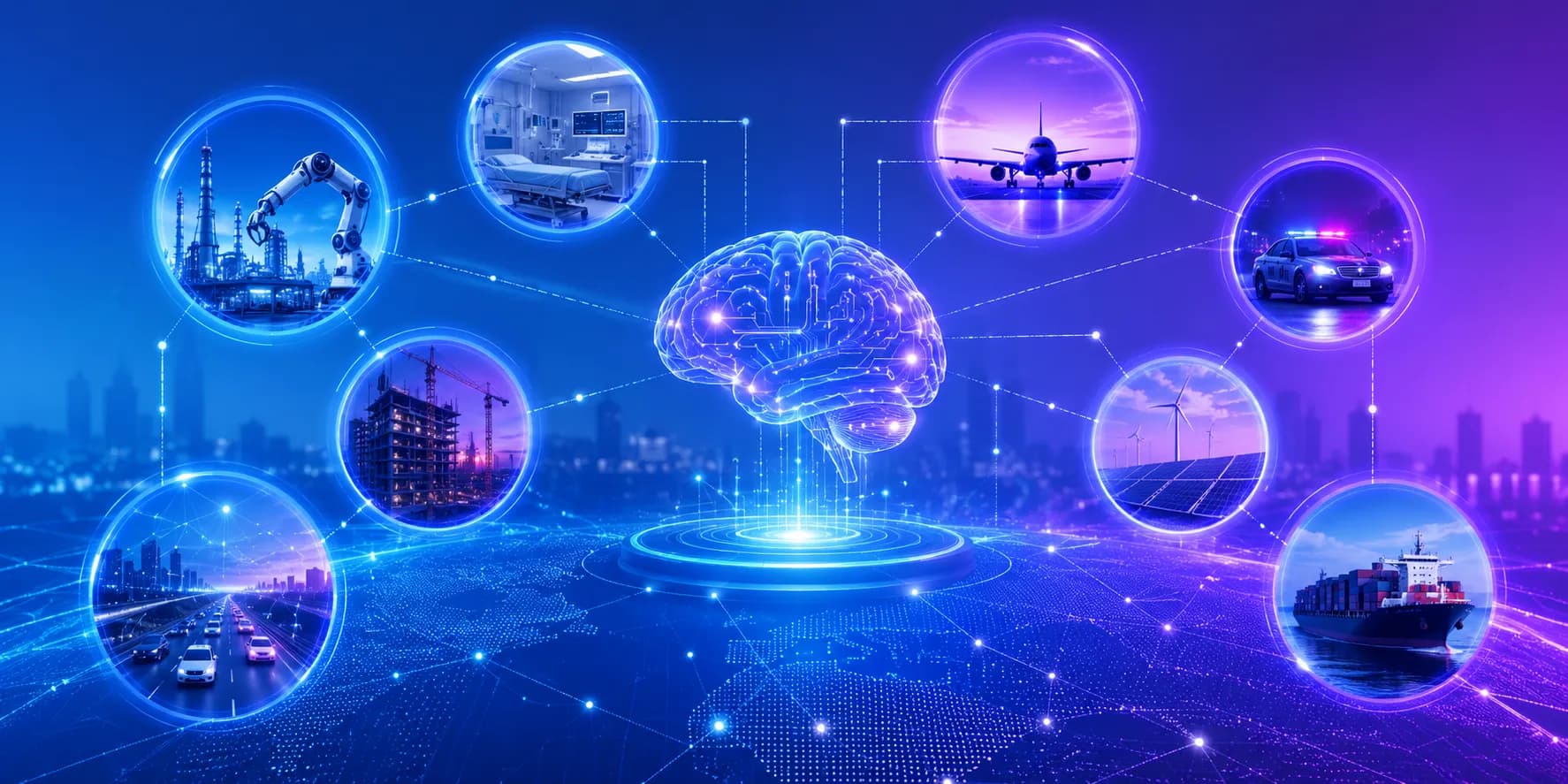
A practical breakdown of the 10 ways artificial intelligence improves situational awareness in manufacturing, healthcare, logistics, security, and energy. Includes real metrics, a comparison table, and deployment guidance.
10 Ways Artificial Intelligence Enhances Situational Awareness Across Industries
Situational awareness is the ability to perceive what is happening in an environment, understand what it means, and project what happens next. The term comes from aviation research in the 1980s, where Mica Endsley formalized it into three levels: perception, comprehension, and projection. Most organizations are stuck at level one. They have cameras, sensors, logs, and dashboards, but no reliable way to turn that raw perception into understanding fast enough to act.
That gap is where artificial intelligence earns its keep. AI does not create awareness by adding more data. It creates awareness by compressing thousands of simultaneous signals into a small number of decisions a human can actually make. This article covers ten specific mechanisms, what each one measurably improves, and where each one fails.
Quick Answer: Artificial intelligence enhances situational awareness by fusing multi-sensor data, detecting anomalies humans miss, forecasting incidents before they occur, and compressing overwhelming signal volume into ranked, actionable decisions. Across manufacturing, healthcare, logistics, and security, this shortens detection-to-response time and reduces both missed events and false alarms.
Why Situational Awareness Fails Without AI
Human situational awareness degrades predictably under three conditions: too many inputs, too little time, and too much sameness. Research on vigilance decrement, documented since Norman Mackworth's 1948 radar studies, shows that human detection accuracy on monitoring tasks drops measurably within the first 30 minutes of watching. A security operator facing 60 camera feeds is not lazy. The operator is operating outside the limits of human attention.
The second failure is alert fatigue. The 2024 Morning Consult research commissioned by IBM found security teams facing high alert volumes routinely ignore or delay triage on a meaningful share of alerts, and IBM's Cost of a Data Breach reporting has consistently shown breach lifecycles measured in hundreds of days. When everything alarms, nothing alarms.
AI addresses both limits directly. It does not get bored, and it can be tuned to suppress the 95 percent of events that are normal so humans see only the 5 percent that are not.
1. Multi-Sensor Fusion Into a Single Picture
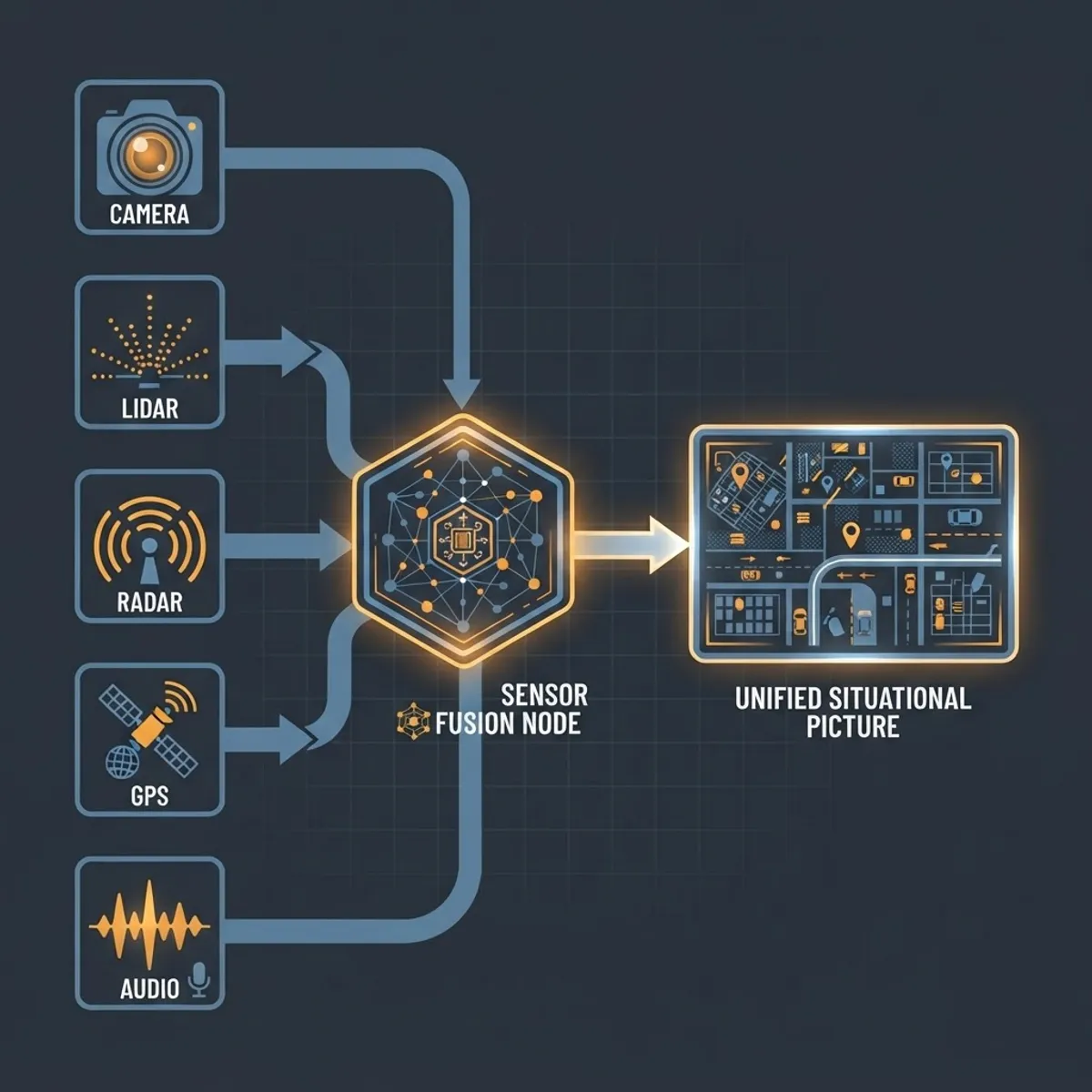
Sensor fusion is the process of combining data from different sensor types into one coherent model of the environment. A single sensor lies. A camera cannot see through fog, radar cannot read a label, and a vibration sensor cannot tell you why a bearing is shaking.
AI fusion models resolve conflicts between sensors by weighting each input according to its reliability in current conditions. In autonomous driving stacks, this is why a vehicle trusts radar over camera in heavy rain. In an industrial plant, it is why a thermal reading plus an acoustic signature plus a current draw anomaly get treated as one pump failure event rather than three separate alerts.
The actionable takeaway: fusion reduces alert count as much as it improves accuracy. If your AI deployment increases the number of alerts your team sees, fusion has not been implemented, only detection.
2. Anomaly Detection Without Predefined Rules
Traditional monitoring requires you to know what to look for. You write a rule: alert when temperature exceeds 80 degrees. That works for known failure modes and fails completely for novel ones.
Unsupervised anomaly detection inverts this. The model learns what normal looks like across dozens of correlated variables, then flags statistically improbable combinations. It can catch a failure signature no engineer has ever documented because it does not need a label to know something is out of distribution.
The practical caveat is baseline drift. A model trained on summer operating conditions will flag normal winter behavior as anomalous. Retraining cadence matters more than model architecture for most industrial deployments.
3. Predictive Projection of Near-Future State
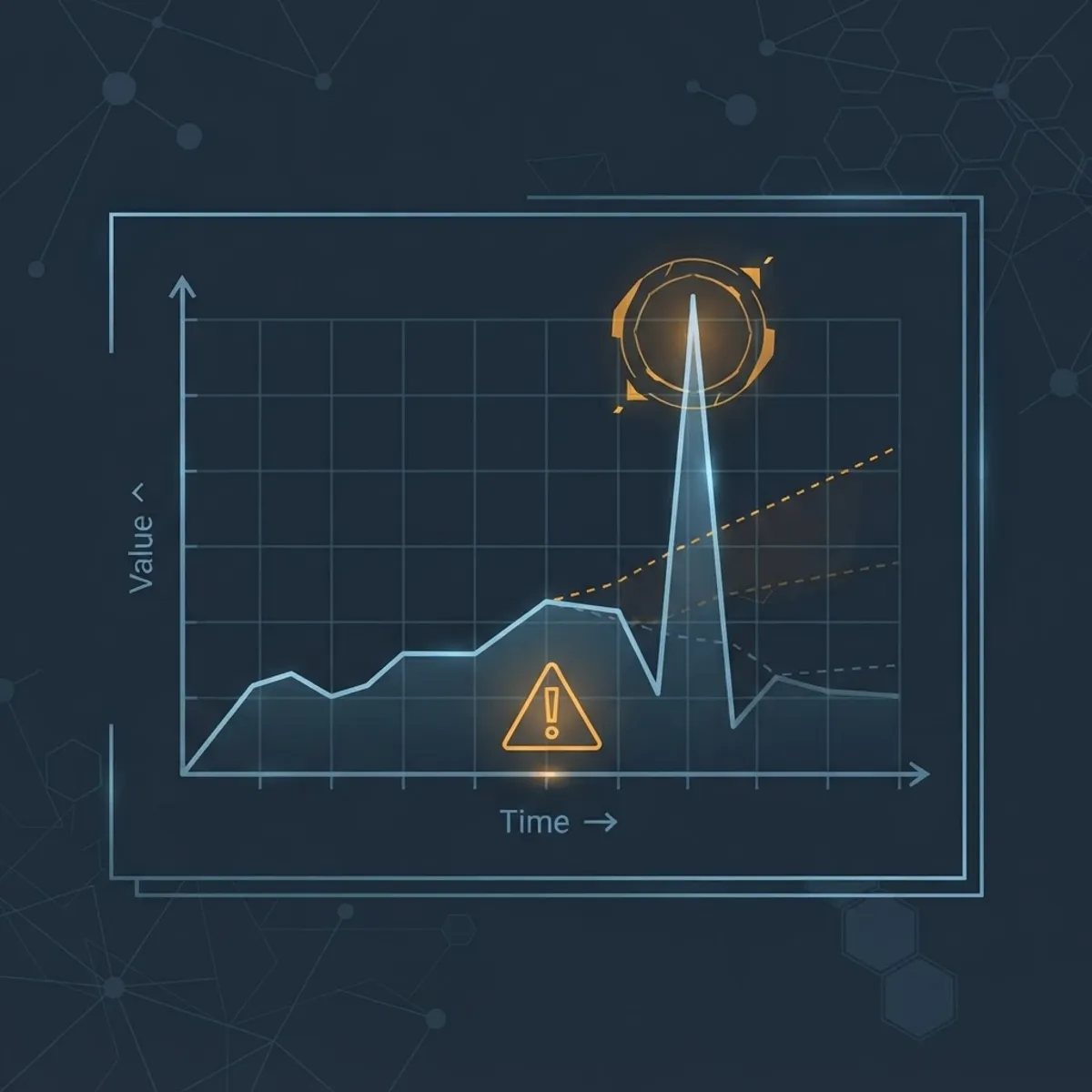
This is Endsley's level three, and it is the level AI improves most dramatically. Predictive maintenance models forecast component failure from degradation trends rather than waiting for a threshold breach. Deloitte analysis of predictive maintenance programs has reported equipment uptime improvements in the 10 to 20 percent range alongside meaningful reductions in maintenance planning time.
The same projection logic applies far beyond machinery. Emergency departments forecast bed demand four hours ahead. Grid operators forecast load and renewable output. Warehouses forecast picking congestion before it forms.
The honest limitation: projection accuracy collapses during genuinely unprecedented events, because the model has no comparable history. Treat forecast confidence intervals as first-class information, not decoration.
4. Computer Vision for Continuous Safety Monitoring
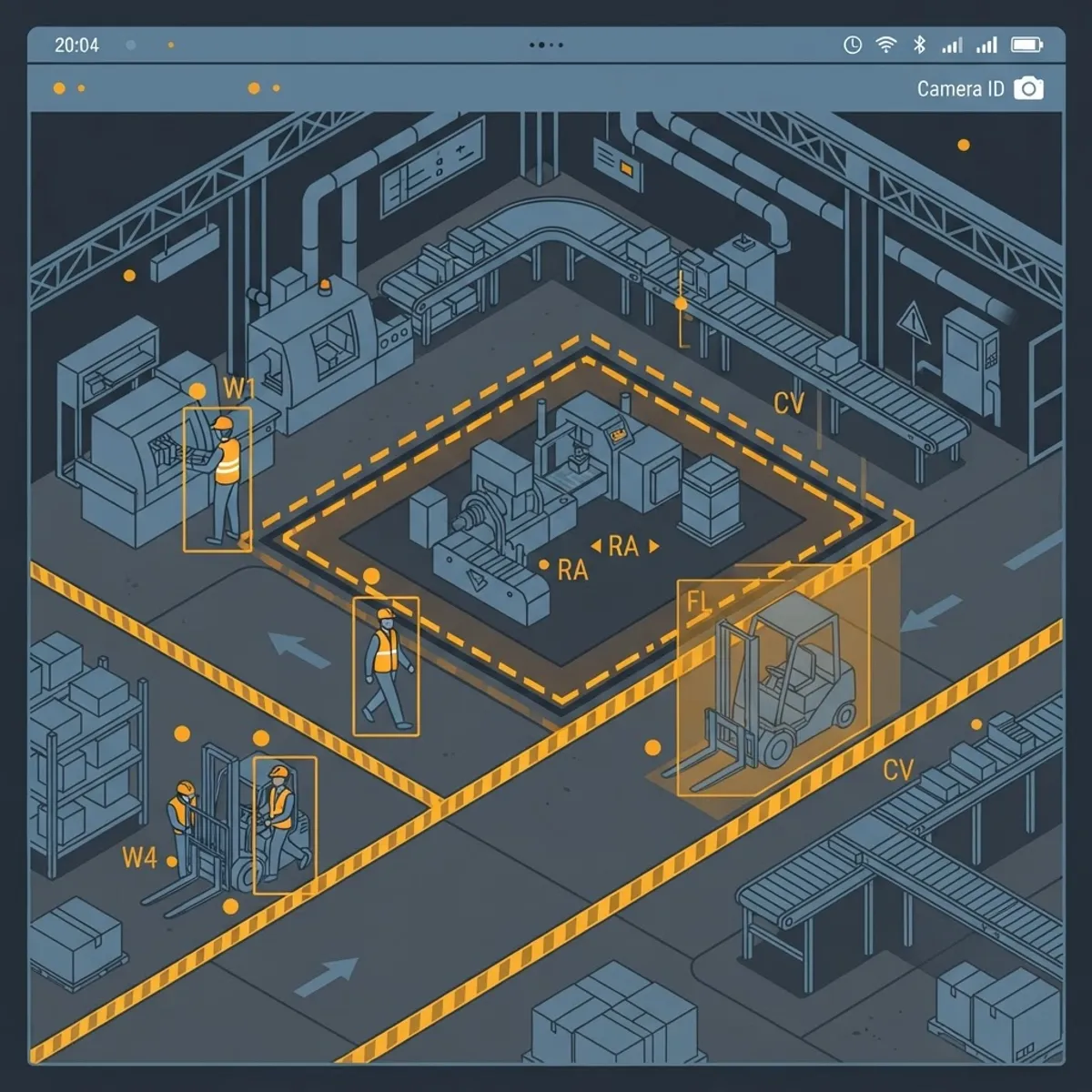
Computer vision converts existing camera infrastructure into a persistent safety observer. Practical deployments detect missing personal protective equipment, unauthorized entry into machine exclusion zones, forklift and pedestrian proximity conflicts, spills, and blocked emergency exits.
The advantage over human observation is coverage, not intelligence. A safety officer inspects a zone once per shift. A vision model inspects it 30 times per second.
Deploy this carefully. Worker-facing vision systems fail on adoption, not accuracy. The programs that survive are the ones that alert on conditions rather than scoring individuals, and that are documented and communicated before installation rather than after.
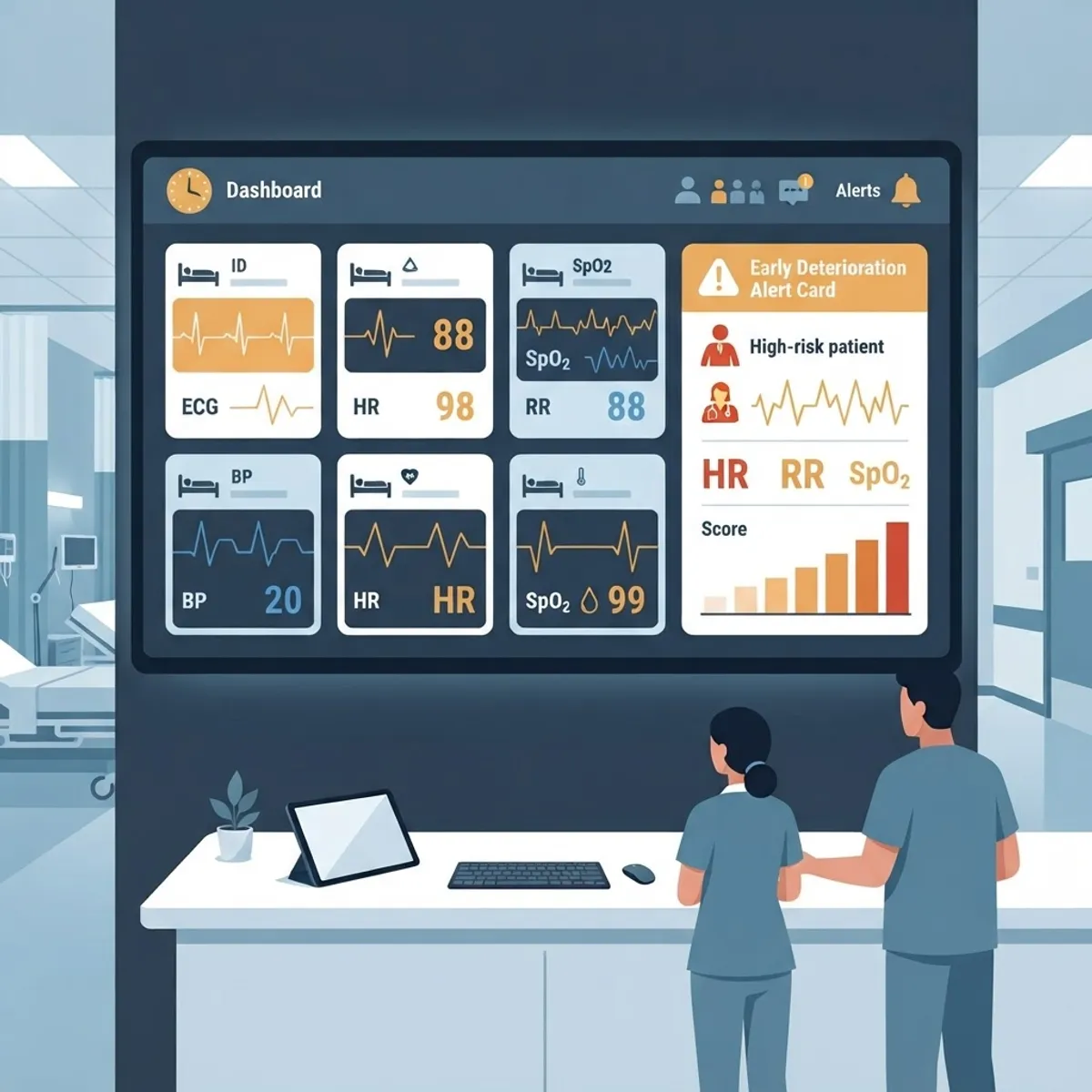
5. Early Clinical Deterioration Detection in Healthcare
Hospital deterioration is rarely sudden. It is usually a slow drift across heart rate, respiratory rate, blood pressure, oxygen saturation, and lab values that becomes obvious only in retrospect. Early warning models read that drift continuously across every monitored patient.
The well-documented lesson here is that model performance in a paper does not equal performance in a ward. Published external validations of widely deployed sepsis prediction tools have reported substantially weaker real-world discrimination than vendor claims, along with high false alert volumes. The fix is local validation on your own patient population before clinical rollout, not after.
Used correctly, these systems buy hours of lead time on conditions where hours change outcomes.
6. Supply Chain Disruption Visibility
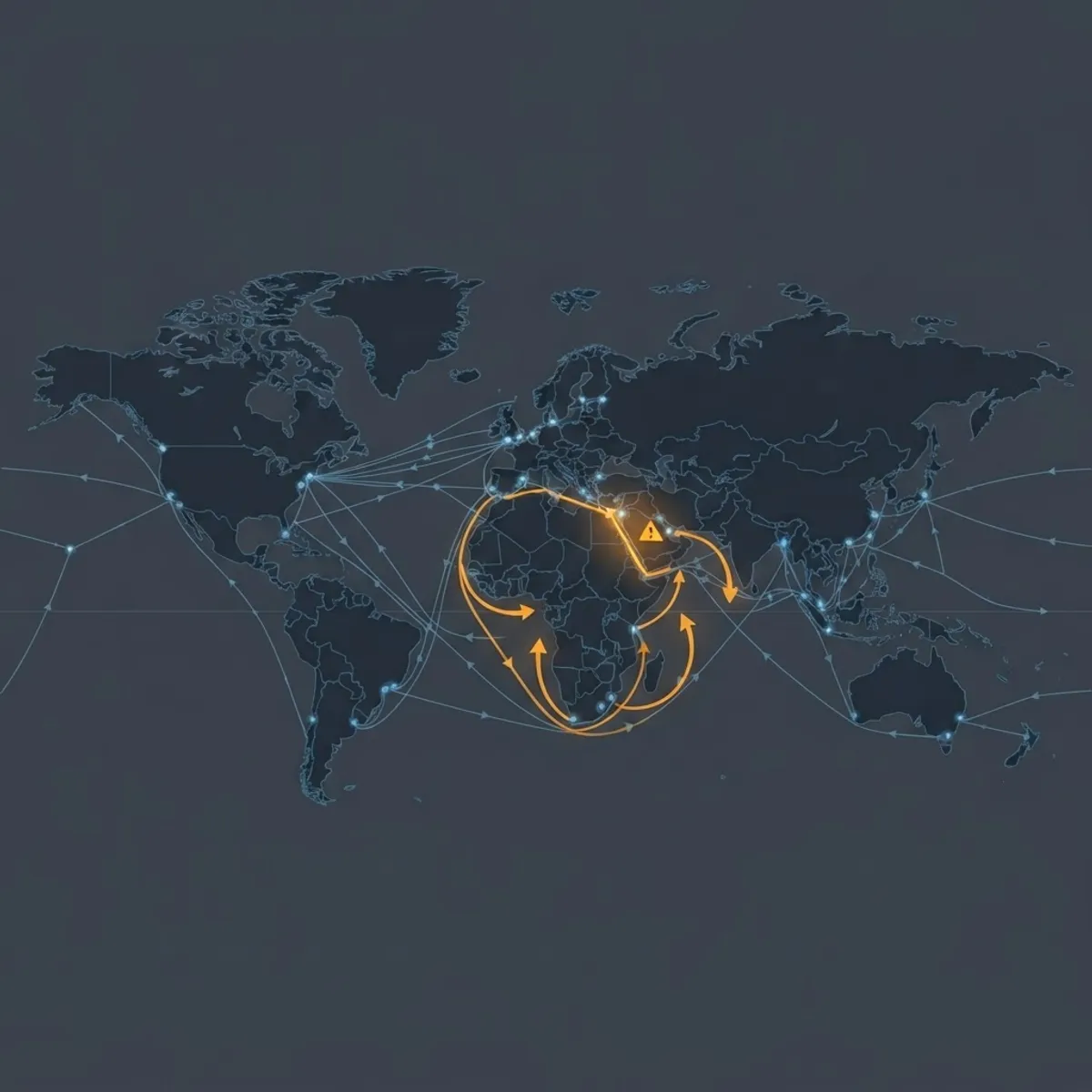
Most supply chain surprises are not information problems. They are latency problems. The information existed somewhere, just not in front of the planner in time.
AI improves this by monitoring external signals continuously and mapping them onto your specific bill of materials. Port congestion data, weather systems, carrier performance history, supplier financial signals, and customs delays get translated into a concrete statement: this specific SKU is now at risk on this date.
The measurable win is reroute lead time. When a planner learns about a disruption four days earlier, alternate capacity is still available at normal cost. Four days later, it is not.
7. Behavioral Anomaly Detection in Cybersecurity
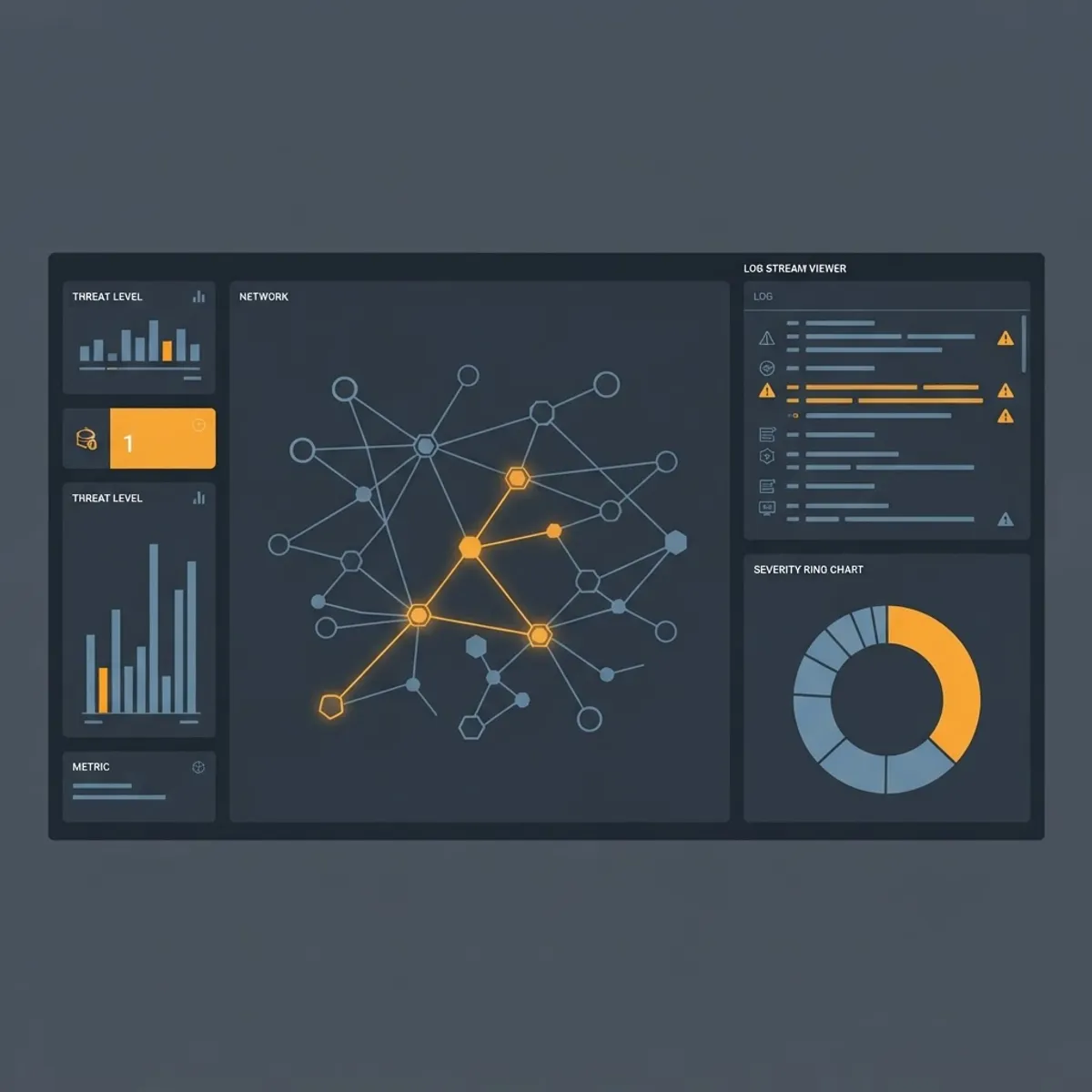
Signature-based security tools detect known attacks. Behavioral models detect unknown ones by learning the normal pattern of each user, device, and service account, then flagging deviations.
The classic catch is credential misuse. Valid credentials, valid access, but the account is suddenly querying database tables it has never touched, at 3 a.m., from a new geography. No signature exists for that. A behavioral baseline catches it immediately.
IBM's Cost of a Data Breach research has repeatedly shown organizations with extensive security AI and automation identify and contain breaches substantially faster and at materially lower average cost than those without it. Detection speed is the variable that drives breach cost more than almost anything else.
8. Natural Language Access to Operational Data
Situational awareness fails when the person who needs the answer cannot query the system. Large language models sitting on top of operational data let a shift supervisor ask which lines ran below target last night and why, and receive a grounded answer in seconds instead of filing a report request.
The engineering requirement is grounding. A language interface that generates plausible numbers instead of retrieving real ones is worse than no interface, because it destroys trust in the entire system. Every answer must cite the query and the source record it came from.
This is one of the highest-leverage and lowest-risk AI additions available to most operations teams, provided retrieval is strictly enforced. Teams building this layer often work with an AI digital agency to get retrieval grounding and access controls right before exposing operational data to a chat interface.
9. Alert Prioritization and Noise Suppression
More detection without prioritization makes awareness worse. Ranking models score each event by likely severity, confidence, and business impact, then present a short ordered queue instead of a flat firehose.
The correct metric to track is not alerts generated. It is alerts acted upon divided by alerts shown. If that ratio is below roughly 20 percent, your team has already learned to ignore the system and the detection quality no longer matters.
Suppression logic should also collapse related alerts into single incidents. One root cause producing 40 downstream alarms is one event, and should appear as one.
10. Human-in-the-Loop Decision Support
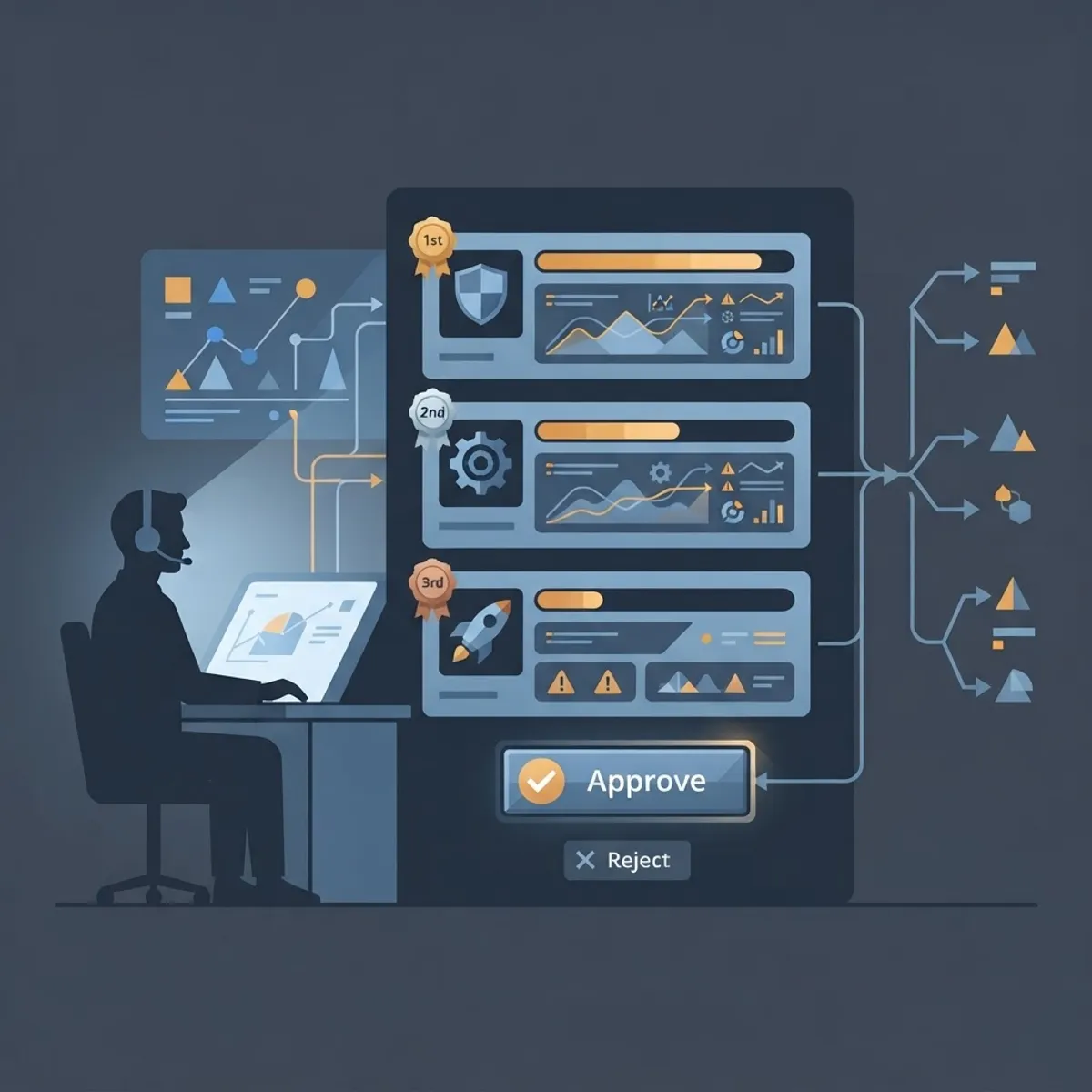
The final mechanism is the one that determines whether the other nine deliver value. AI should present ranked options with stated confidence and reasoning, and a human should decide. Full automation is appropriate only for reversible, low-consequence, high-frequency decisions.
This structure matters for accountability as much as accuracy. When an AI recommendation is logged with its inputs, its confidence, and the human decision that followed, you get an auditable record and a training dataset for improvement. Automation without that record gives you neither.
Comparison: Traditional Monitoring vs AI-Enhanced Awareness
| Dimension | Traditional Monitoring | AI-Enhanced Awareness |
|---|---|---|
| Detection basis | Predefined thresholds and rules | Learned baselines plus anomaly scoring |
| Novel failure modes | Missed until documented | Flagged as out of distribution |
| Coverage | Sampled inspections and shift checks | Continuous across all monitored assets |
| Alert volume | High and undifferentiated | Ranked, deduplicated, correlated |
| Time horizon | Reactive, after threshold breach | Predictive, before breach |
| Human workload | Scales linearly with sensor count | Roughly flat as sensors increase |
| Primary failure mode | Missed events | Model drift and false confidence |
Key Takeaways
- Situational awareness has three levels: perception, comprehension, and projection. AI adds the most value at levels two and three, not level one.
- Human vigilance on monitoring tasks degrades measurably within the first half hour, which is why continuous machine observation outperforms human observation on coverage.
- Sensor fusion should reduce total alert volume. If alerts increase after deployment, only detection was implemented, not fusion.
- Deloitte analysis of predictive maintenance programs reports uptime gains in the 10 to 20 percent range.
- IBM's Cost of a Data Breach research consistently shows organizations using security AI and automation extensively detect and contain incidents faster and at lower cost.
- Published external validations of clinical prediction tools have shown real-world performance well below vendor claims, making local validation mandatory before rollout.
- Track alerts acted upon divided by alerts shown. Below roughly 20 percent, the system is being ignored.
- Model drift, not model accuracy, is the most common cause of long-term situational awareness system failure.
Frequently Asked Questions (FAQ)
What is situational awareness in artificial intelligence?
Situational awareness in AI means a system's ability to perceive live environmental data, interpret what it means, and project the near-future state. AI achieves this by fusing multiple sensor streams, learning normal baselines, and surfacing meaningful deviations to human operators as ranked, actionable decisions.
Which industries benefit most from AI situational awareness?
Industries with high sensor density and high cost of delay benefit most: manufacturing, healthcare, logistics, energy and utilities, aviation, and cybersecurity. The common factor is that a few minutes of earlier detection produces a large measurable difference in safety outcomes, downtime cost, or breach containment.
How is AI situational awareness different from a normal dashboard?
A dashboard displays data and requires a human to interpret it. AI situational awareness interprets first, then displays conclusions. Instead of showing 40 charts, it states which asset is at risk, how confident it is, and what action is recommended, cutting interpretation time dramatically.
Can AI situational awareness systems make mistakes?
Yes, in two main ways. Model drift occurs when real conditions change but the baseline does not, producing false alarms. False confidence occurs when a model gives a confident answer on data unlike anything it was trained on. Both require human review and scheduled retraining.
How long does it take to deploy an AI situational awareness system?
A focused single-use-case pilot on existing sensor data typically reaches production in two to four months. Multi-site deployments with new hardware and integration work take considerably longer. Start with one high-value failure mode and one clear success metric rather than an enterprise-wide rollout.
Do I need to replace existing sensors to adopt AI monitoring?
Usually not. Most deployments run on existing cameras, PLC data, SCADA historians, and log streams. The bigger constraint is data accessibility and quality, not sensor hardware. Audit what data you already collect and how reliably it is timestamped before budgeting for new equipment.
The Bottom Line
Artificial intelligence does not give organizations more information. Most already drown in it. What AI provides is compression: turning an unmanageable volume of signals into a small, ranked, explainable set of decisions delivered while there is still time to act.
The organizations that succeed with this pick one expensive failure mode, instrument it properly, validate the model against their own historical data, and keep a human accountable for every consequential decision. The ones that fail buy a platform and hope awareness emerges from it.