Discover how an artificial intelligence purchase requisition software system automates approvals, cuts costs, prevents fraud, and streamlines procurement from request to purchase order.
Artificial Intelligence Purchase Requisition Software System
Every procurement team knows the pain of a slow purchase requisition. A staff member needs a laptop or a batch of raw materials, they fill out a form, and then the request disappears into a maze of email chains, manager inboxes, and finance queues. Days pass. Sometimes weeks. An artificial intelligence purchase requisition software system removes that friction by reading requests, checking budgets, routing approvals, and flagging risks automatically, without waiting for a human to notice an email.
After helping mid-sized businesses digitize their procurement pipelines, I have seen the same pattern repeat: the technology is rarely the bottleneck, the manual handoffs are. This guide explains exactly how AI-driven requisition software works, what features actually matter, and how to roll it out without disrupting your finance team. If you are exploring digital transformation more broadly, resources like ZoneTechify and WebPeak cover the wider automation landscape too.
Quick Answer: An artificial intelligence purchase requisition software system uses machine learning to automate purchase requests, from validating spend and matching vendors to routing approvals and detecting anomalies. It shortens approval cycles, reduces errors, prevents maverick spending, and gives finance teams real-time visibility into every requisition.
What Is an AI Purchase Requisition Software System?
A purchase requisition is the internal request an employee submits before a purchase order is issued, essentially asking the organization for permission to spend. An AI purchase requisition software system is a procurement tool that layers machine learning and intelligent automation on top of that request process.
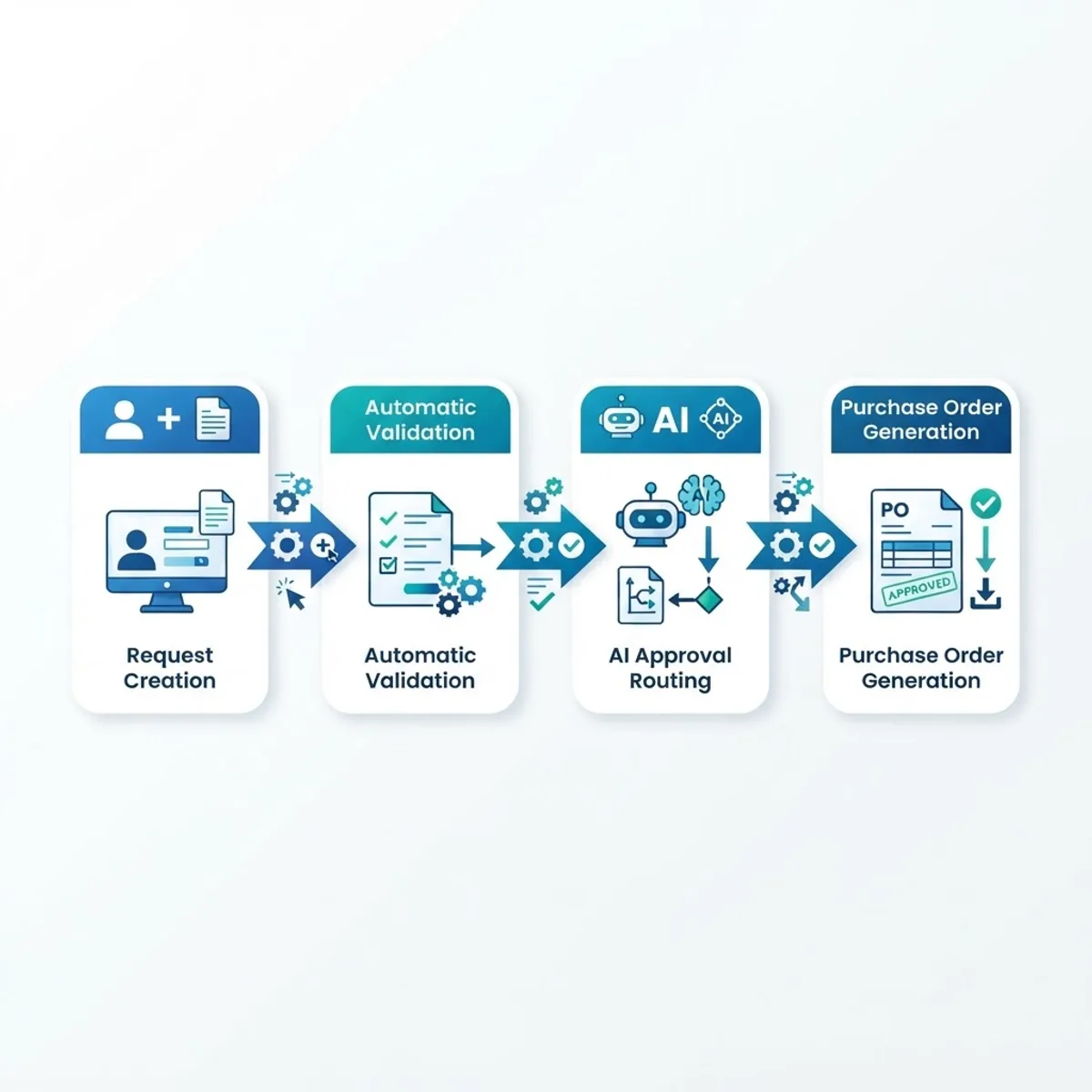
Instead of relying on static forms and manual review, the system reads the request, understands what is being bought, checks it against budgets and policies, predicts the right approver, and surfaces anything unusual. It combines optical character recognition, natural language processing, and predictive analytics to turn a paperwork-heavy task into a near-instant workflow. In short, it is the difference between a digital form and a digital assistant that actually thinks about the request.
How AI Transforms the Purchase Requisition Process
Traditional requisition tools digitize forms but still depend on humans to move each request forward. AI changes the process at every stage:
- Intelligent intake: The system auto-fills fields, categorizes the item, and matches it to the correct general ledger code using historical data.
- Automated policy checks: It instantly compares the request against spending limits, preferred vendor lists, and compliance rules.
- Smart approval routing: Machine learning predicts the correct approval chain based on amount, department, and past behavior, then escalates only when needed.
- Continuous learning: Every approved or rejected request trains the model, so accuracy improves over time.
The result is a shift from reactive processing to proactive management. According to McKinsey, organizations that apply automation to procurement and supply-chain functions can reduce operational process costs by up to 30%, largely by eliminating repetitive manual review.
Key Features to Look For
Not every tool labeled "AI" delivers real intelligence. When evaluating an artificial intelligence purchase requisition software system, prioritize these capabilities:
- Automated approval workflows that adapt routing rules dynamically instead of using rigid, hard-coded chains.
- Budget and policy enforcement that blocks non-compliant requests before they reach an approver.
- Vendor recommendation engine that suggests the best supplier based on price, delivery history, and contract terms.
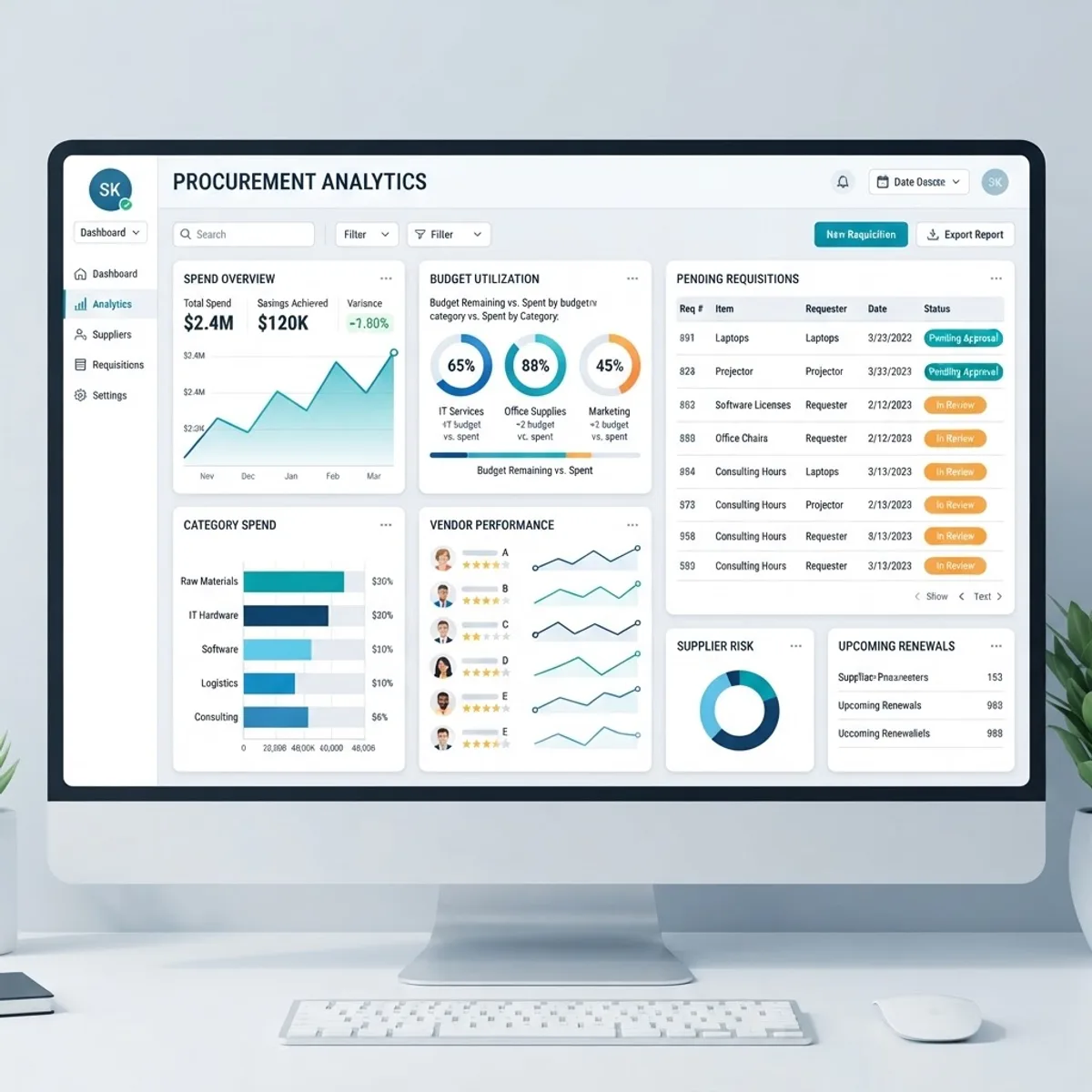
- Spend analytics dashboards offering real-time visibility into pending, approved, and rejected requisitions.
- Anomaly and fraud detection that flags duplicate, inflated, or off-policy requests automatically.
- ERP and accounting integration with systems like SAP, Oracle NetSuite, or QuickBooks for seamless data flow.
- Mobile approvals so managers can clear requests from anywhere without slowing the cycle.
A tool missing three or more of these is likely a workflow app with an AI label rather than a genuine intelligent system.
Traditional vs AI-Powered Purchase Requisition
The gap between legacy procurement software and AI-driven systems becomes obvious when you compare them side by side.
| Capability | Traditional System | AI-Powered System |
|---|---|---|
| Data entry | Manual, form-based | Auto-filled and categorized |
| Approval routing | Fixed rules | Predictive and adaptive |
| Policy compliance | Checked manually | Enforced automatically |
| Vendor selection | Chosen by requester | AI-recommended |
| Fraud detection | Rare, after the fact | Real-time flagging |
| Cycle time | Days to weeks | Minutes to hours |
| Reporting | Static exports | Live analytics |
The practical takeaway: AI does not just speed up existing steps, it removes entire steps that used to require human attention.
How AI Automates Approvals
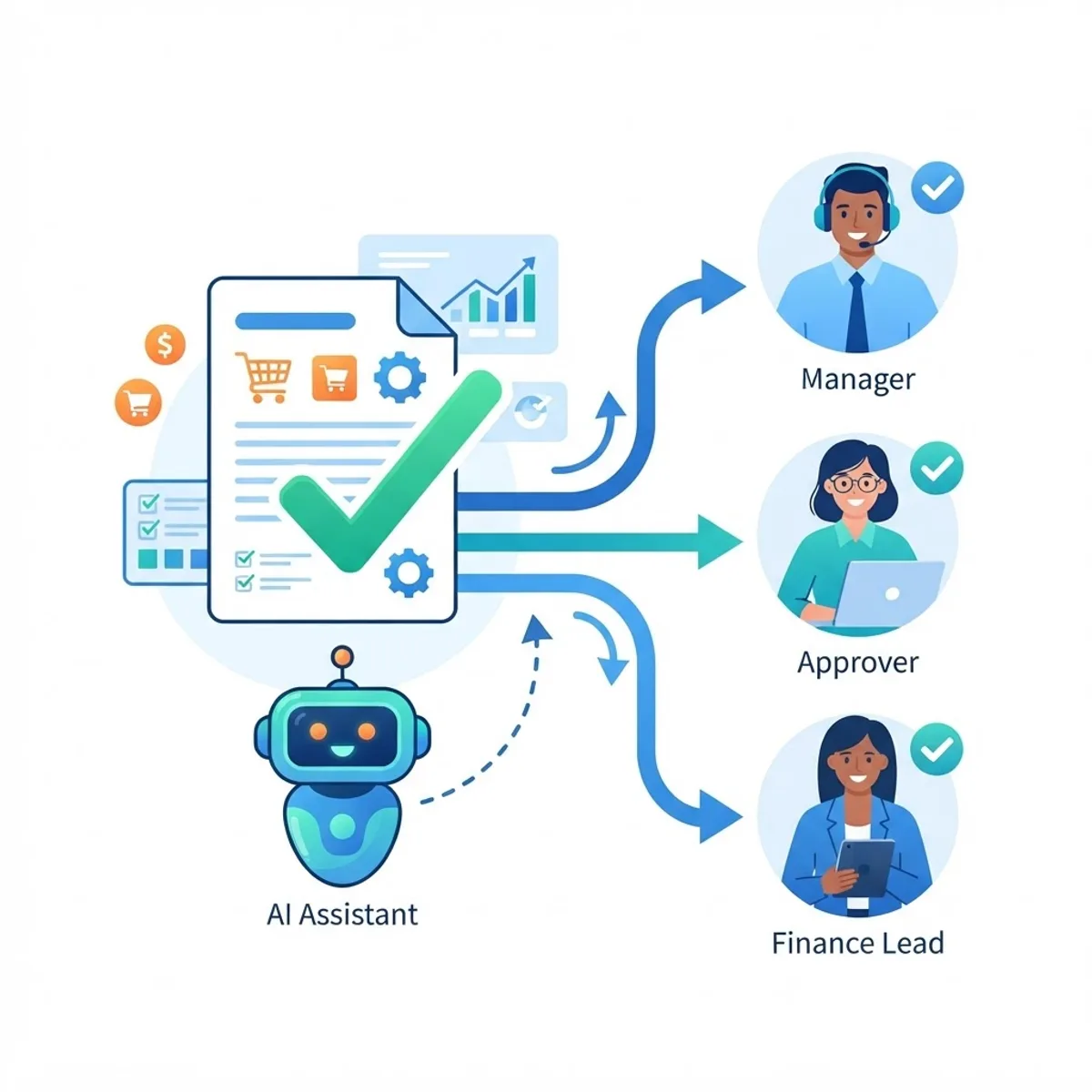
Approval bottlenecks are the number one complaint I hear from procurement leads. An AI system solves this by learning who actually approves what. If requests under a certain amount from the marketing team are always approved by the same director, the software routes them there automatically and escalates only exceptions.
It also enables touchless approvals for low-risk, policy-compliant requests, meaning routine purchases clear instantly while human reviewers focus only on high-value or unusual cases. This selective attention is where the real time savings come from.
Smarter Vendor Selection
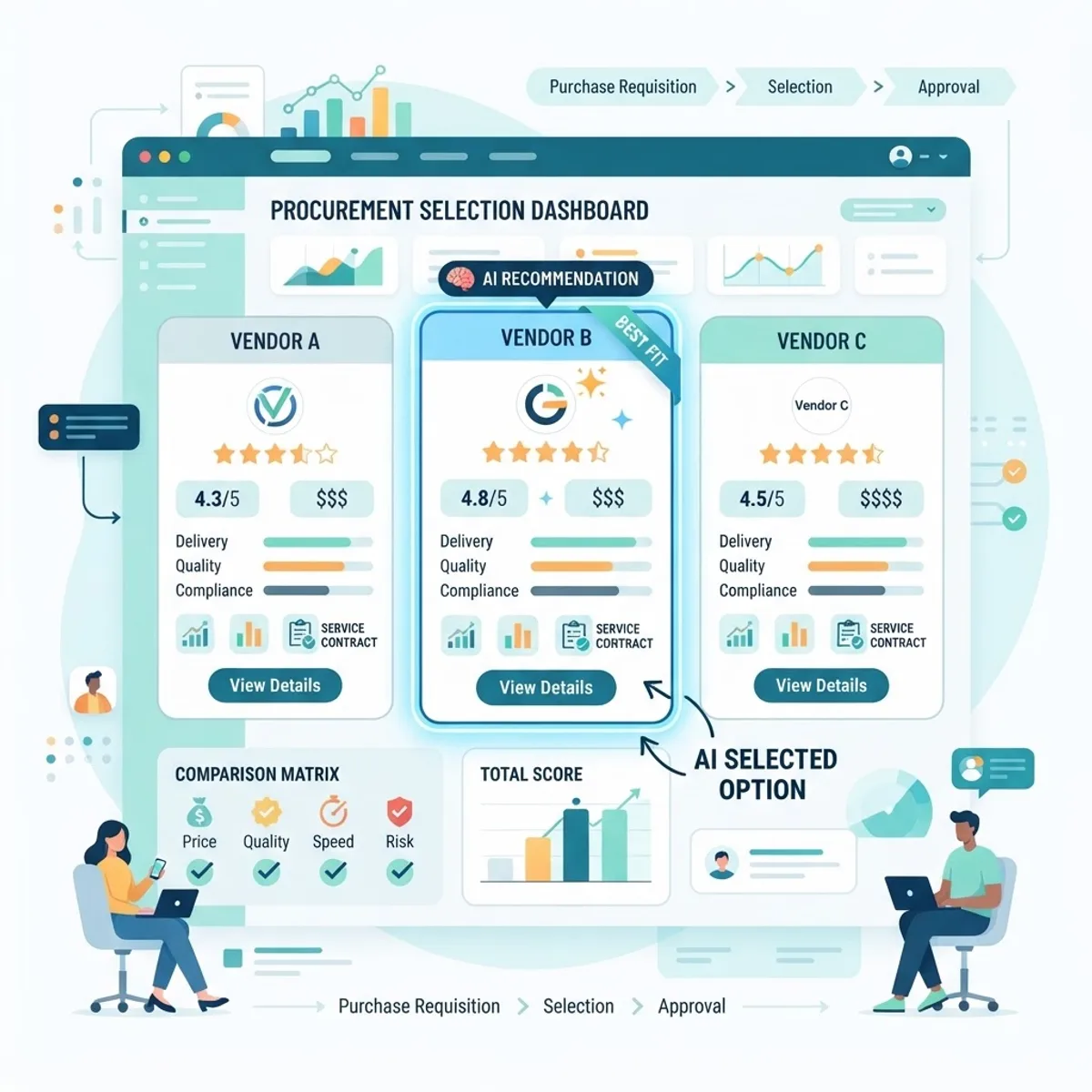
Choosing the right supplier is often guesswork in manual procurement. AI removes the guesswork by analyzing historical pricing, delivery reliability, contract compliance, and quality ratings, then recommending the optimal vendor for each request.
This prevents maverick spending, the practice of buying outside approved contracts, which Gartner has estimated can account for a significant share of uncontrolled corporate spend. By steering requesters toward pre-negotiated suppliers, the system protects negotiated discounts and improves budget predictability.
Cost Savings and Efficiency Gains
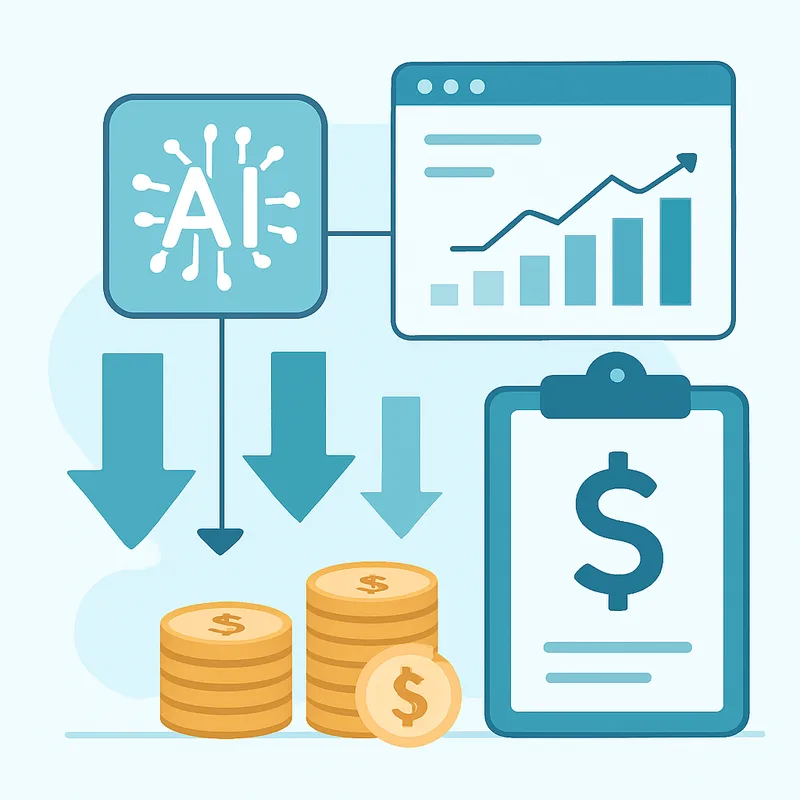
The financial case for AI requisition software is straightforward. Manual purchase order processing can cost significant staff hours per transaction, and errors add rework costs on top. Automation compresses that dramatically.
Key efficiency gains include:
- Faster cycle times, turning multi-day approvals into same-day clearances.
- Lower processing cost per requisition through reduced manual handling.
- Fewer errors, since auto-populated data eliminates typos and miscoding.
- Better cash management, because real-time visibility prevents duplicate and rushed purchases.
Businesses that treat procurement as a strategic function, rather than back-office paperwork, consistently capture more of these savings. Partnering with an experienced team such as ZoneTechify's AI automation services can accelerate that shift.
Built-In Fraud and Anomaly Detection
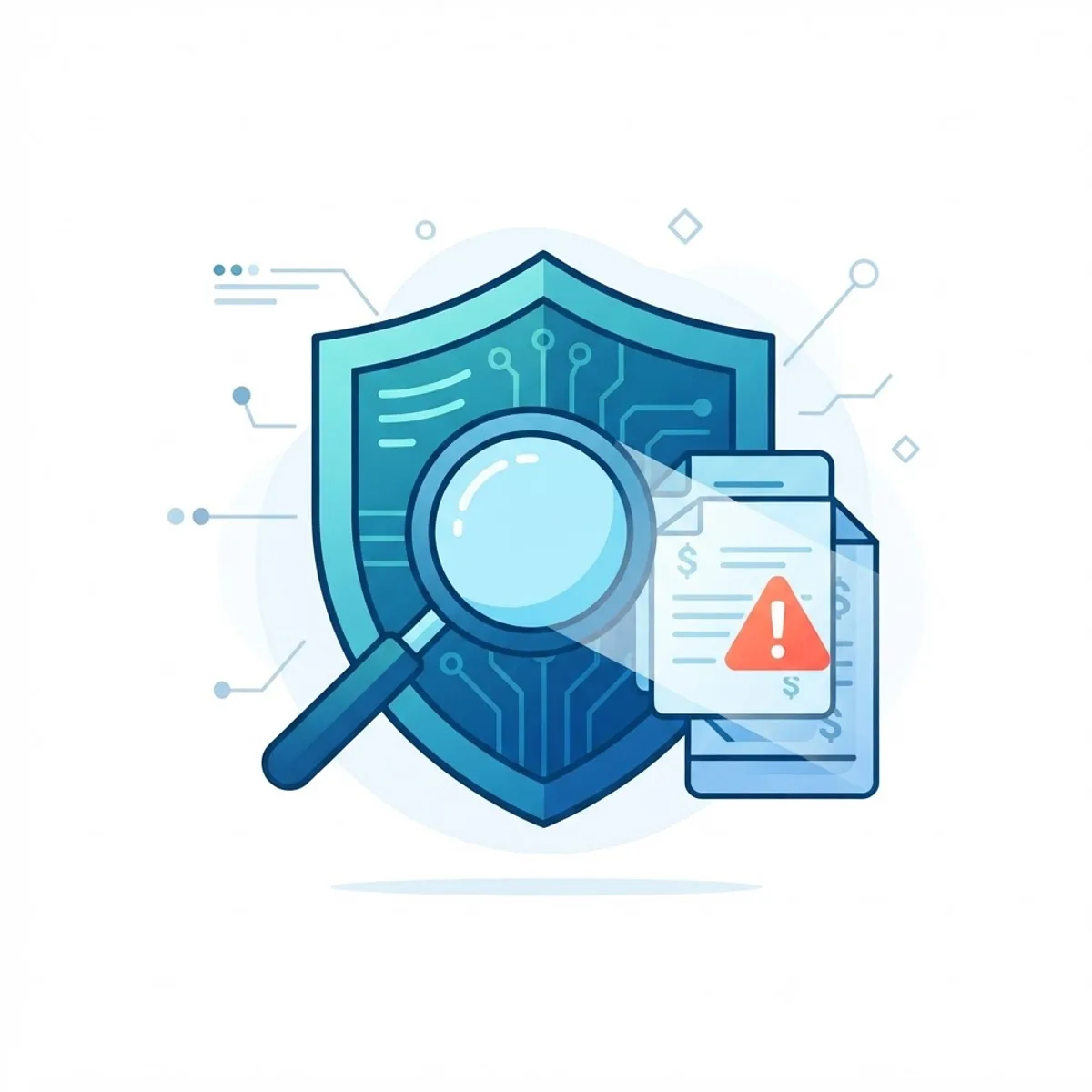
Procurement fraud is a costly and often invisible risk. The Association of Certified Fraud Examiners consistently reports that organizations lose roughly 5% of annual revenue to fraud, with billing and purchasing schemes among the most common categories.
An AI system monitors every requisition for red flags: duplicate invoices, split purchases designed to dodge approval thresholds, prices well above market rate, or vendors that do not exist in approved records. Because the model understands normal patterns, it catches deviations a human reviewer would likely miss, and it does so in real time rather than during an annual audit.
How to Implement an AI Requisition System
A successful rollout depends far more on process discipline than on the software itself. Follow these steps:
- Map your current process. Document every approval step, threshold, and exception before automating anything.
- Clean your data. AI is only as good as the vendor records, budgets, and category codes it learns from.
- Start with a pilot. Automate one department or spend category first, then measure cycle-time improvements.
- Integrate with your ERP. Ensure the system syncs with accounting and inventory tools to avoid data silos.
- Train the team. Show approvers how touchless approvals and dashboards save them time.
- Review and refine. Feed rejected and adjusted requests back into the model to improve accuracy.
Most failures come from skipping the data-cleaning stage, so treat it as non-negotiable.
The Future of AI in Procurement
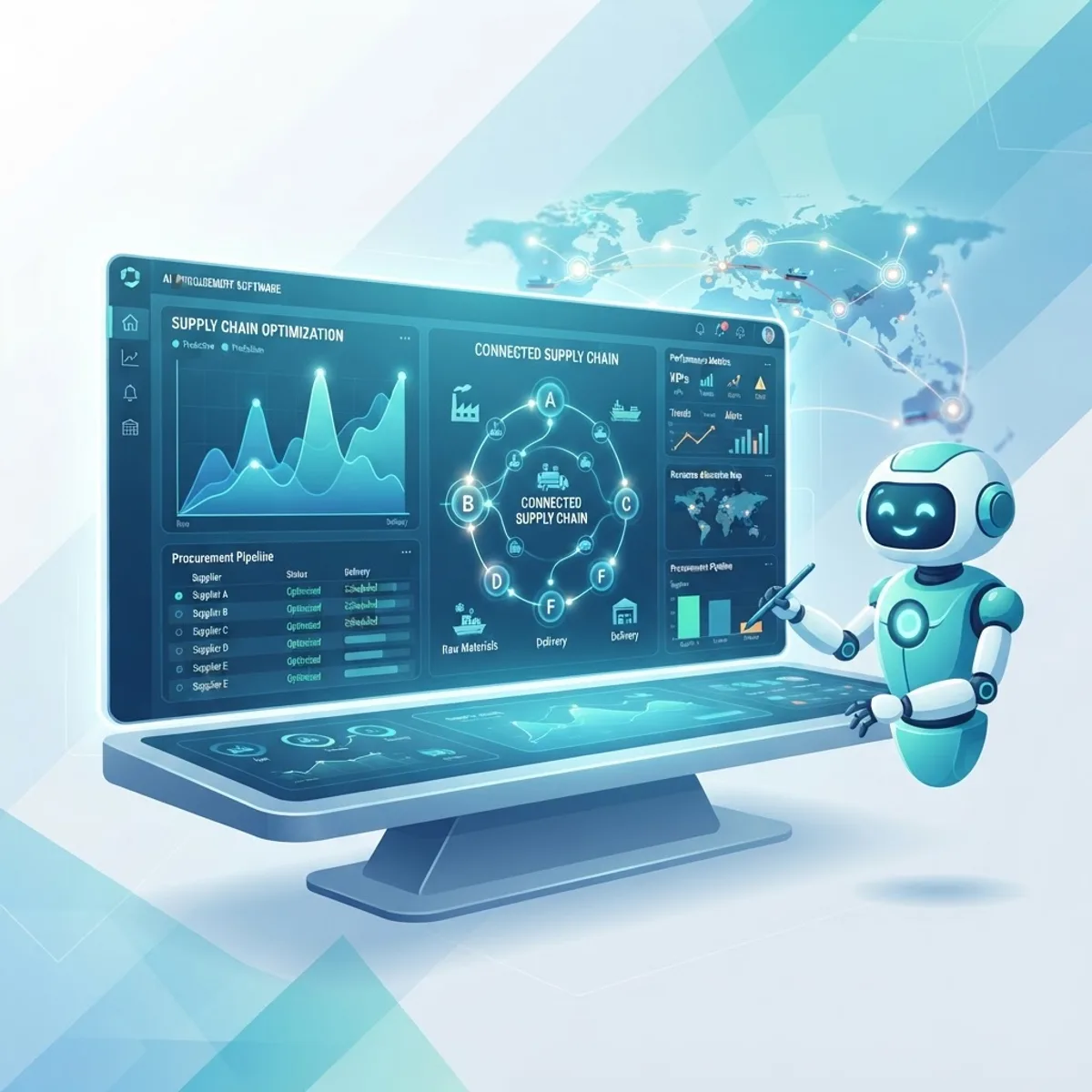
The next wave is autonomous procurement, where AI does not just recommend but acts within defined guardrails, replenishing routine supplies, renegotiating recurring contracts, and predicting demand before a human even submits a request. Generative AI is already helping teams draft requisitions in plain language and query spend data conversationally. Organizations that adopt intelligent requisition systems now will be far better positioned as these autonomous capabilities mature.
Key Takeaways
- An AI purchase requisition software system automates intake, approvals, vendor selection, and fraud detection using machine learning.
- Automation can reduce procurement process costs by up to 30%, according to McKinsey.
- Touchless approvals clear low-risk requests instantly while humans focus on exceptions.
- AI vendor recommendations curb maverick spending and protect negotiated discounts.
- Real-time anomaly detection helps counter the roughly 5% of revenue that fraud costs organizations annually.
- Clean data and a phased pilot are the most important success factors for implementation.
Frequently Asked Questions (FAQ)
What is an AI purchase requisition software system?
It is a procurement tool that uses machine learning to automate purchase requests. It reads requisitions, checks budgets and policies, routes approvals to the right people, recommends vendors, and flags fraud, turning a slow manual process into a fast, intelligent workflow with real-time visibility for finance teams.
How does AI speed up purchase approvals?
AI predicts the correct approver based on amount, department, and past behavior, then enables touchless approvals for low-risk, policy-compliant requests. Routine purchases clear instantly while reviewers focus only on high-value or unusual cases, cutting approval cycles from days down to minutes or hours.
Is AI requisition software worth the cost for small businesses?
Yes, for most growing businesses. Even modest transaction volumes benefit from fewer errors, faster cycles, and better spend visibility. Many platforms offer scalable pricing, so you pay for what you use. Start with a single department pilot to prove the return before expanding company-wide.
Can it integrate with our existing ERP or accounting system?
Most quality AI requisition systems integrate with popular ERPs and accounting tools such as SAP, Oracle NetSuite, and QuickBooks. Integration keeps vendor records, budgets, and purchase orders synchronized, preventing data silos. Always confirm supported integrations during evaluation, since this is critical for accurate automation.
How does AI prevent procurement fraud?
The system learns normal purchasing patterns and monitors every requisition in real time. It flags duplicate invoices, split purchases that dodge approval limits, inflated prices, and unapproved vendors. Because it detects anomalies instantly rather than during an annual audit, suspicious requests are caught before money leaves the organization.
Final Thoughts
An artificial intelligence purchase requisition software system is no longer a luxury for large enterprises, it is becoming standard for any organization serious about controlling spend and reclaiming time. The teams that win are the ones that pair good software with clean data and clear processes. Automate the routine, focus humans on judgment, and let the system handle the rest.