
A practical, expert guide to artificial intelligence software engineer jobs, covering skills, salaries, tools, interviews, and the real career outlook for 2026.
Artificial Intelligence Software Engineer Jobs

Artificial intelligence software engineer jobs have moved from niche research roles to some of the most in-demand positions in the entire technology sector. Every industry, from healthcare to finance to logistics, now wants engineers who can build, deploy, and maintain intelligent systems. If you are trying to understand what these roles actually involve, what they pay, and how to break into one, this guide gives you a clear, experience-based answer without the hype.
I have hired, mentored, and worked alongside AI engineers for years, and the biggest misconception I see is that you need a PhD to get started. You do not. What you need is a specific, learnable stack of skills and the ability to ship working software. Let's break down exactly what that looks like.
Quick Answer: An artificial intelligence software engineer builds and deploys machine learning systems into production software. These jobs require strong programming (usually Python), machine learning fundamentals, data handling, and cloud deployment skills. Demand is high across industries, salaries are well above average, and roles are accessible without a PhD.
What Does an AI Software Engineer Actually Do?
An AI software engineer designs, builds, and ships software that uses machine learning or artificial intelligence to make predictions, decisions, or generate content. Unlike a pure data scientist who focuses on experimentation, an AI engineer owns the full lifecycle: they turn a model into a reliable, scalable feature that real users depend on.

On a typical week, the work includes writing production code, cleaning and preparing data, training or fine-tuning models, integrating models through APIs, and monitoring performance after deployment. The job blends traditional software engineering discipline with applied machine learning. That combination is exactly why these roles are so valuable and so well compensated.
AI Engineer vs. Data Scientist vs. ML Engineer
These titles overlap, but the distinctions matter when you apply for jobs. A clear understanding helps you target the right roles and avoid mismatched interviews.
| Role | Primary Focus | Core Output | Typical Tools |
|---|---|---|---|
| AI Software Engineer | Building production AI features | Deployed, scalable software | Python, APIs, cloud, ML frameworks |
| Data Scientist | Analysis and experimentation | Insights, models, reports | Python, SQL, Jupyter, statistics |
| ML Engineer | Model pipelines and scaling | Automated training/serving | MLOps, Docker, Kubernetes |
The practical takeaway: if you enjoy shipping software that people use, AI software engineering is the strongest fit. If you prefer research and analysis, data science may suit you better.
The Skills You Actually Need in 2026
The skills roadmap for artificial intelligence software engineer jobs is more predictable than most people assume. You do not need to master everything at once; you need depth in a few core areas and working familiarity with the rest.
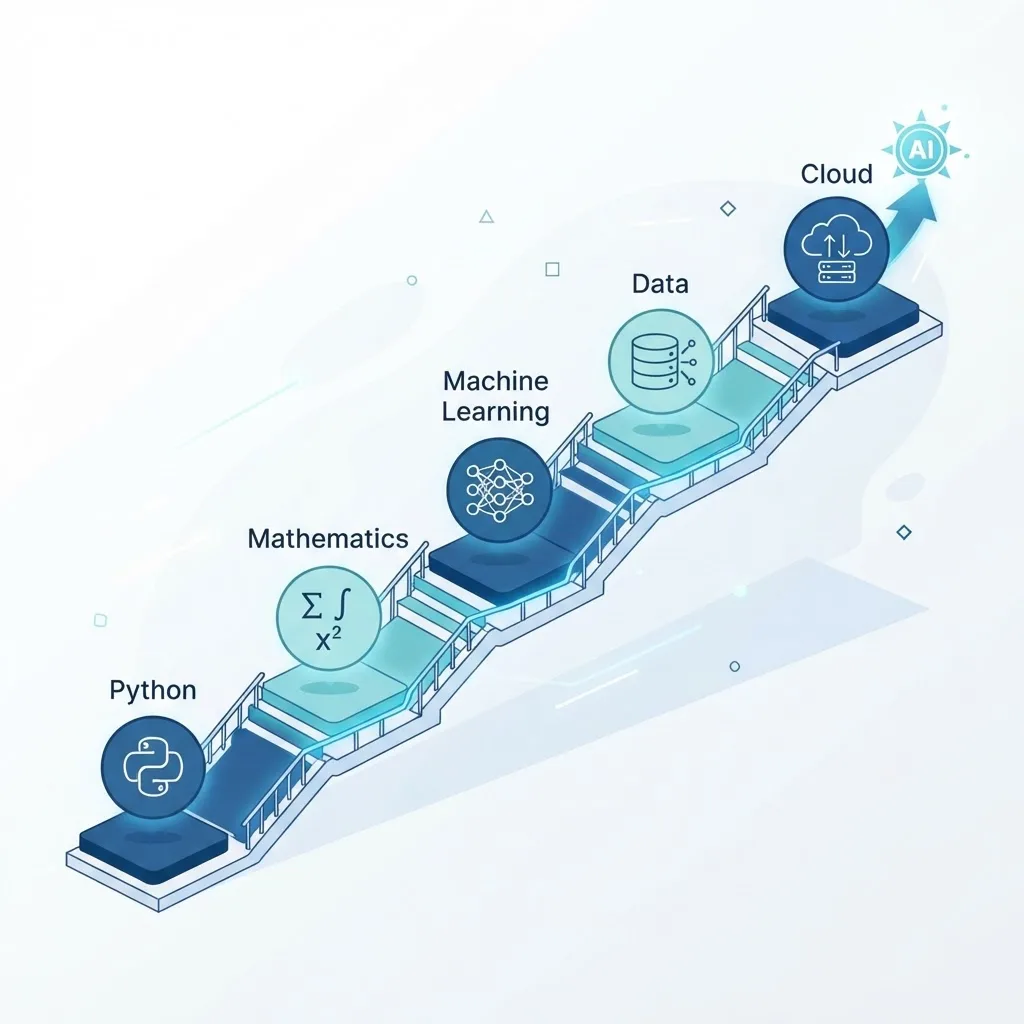
Here are the foundational skills, ordered by priority:
- Programming (Python first): Python remains the dominant language for AI, used in the vast majority of machine learning projects. Strong Python fundamentals are non-negotiable.
- Machine learning fundamentals: Understand supervised and unsupervised learning, model evaluation, overfitting, and how neural networks work at a conceptual level.
- Data skills: Real AI work is mostly data work. You need SQL, data cleaning, and the ability to build reliable data pipelines.
- Frameworks: Practical experience with PyTorch or TensorFlow, plus modern libraries like Hugging Face Transformers for working with large language models.
- Cloud and deployment: Knowing how to containerize a model with Docker and deploy it on AWS, Google Cloud, or Azure separates hobbyists from hireable engineers.
- Software engineering discipline: Version control, testing, and clean architecture. AI code still has to be maintainable production code.
According to the U.S. Bureau of Labor Statistics, employment for software developers and related roles is projected to grow much faster than the average for all occupations through the early 2030s, and AI specializations are among the fastest-growing subsets within that category.
Do You Need a Degree?
A degree helps but is not strictly required. Many successful AI engineers come from bootcamps, self-study, or adjacent engineering roles. What employers consistently value is demonstrable ability: a portfolio of real projects, contributions to open source, and the capacity to explain your technical decisions clearly. If you want structured help building an AI product or feature, teams like the specialists at ZoneTechify and WebPeak show how applied AI translates into shipped, business-ready software.
How Machine Learning Engineers Work Day to Day
Understanding the actual workflow demystifies the role and helps you prepare for interviews. The AI development lifecycle follows a repeatable pattern, even across very different companies.
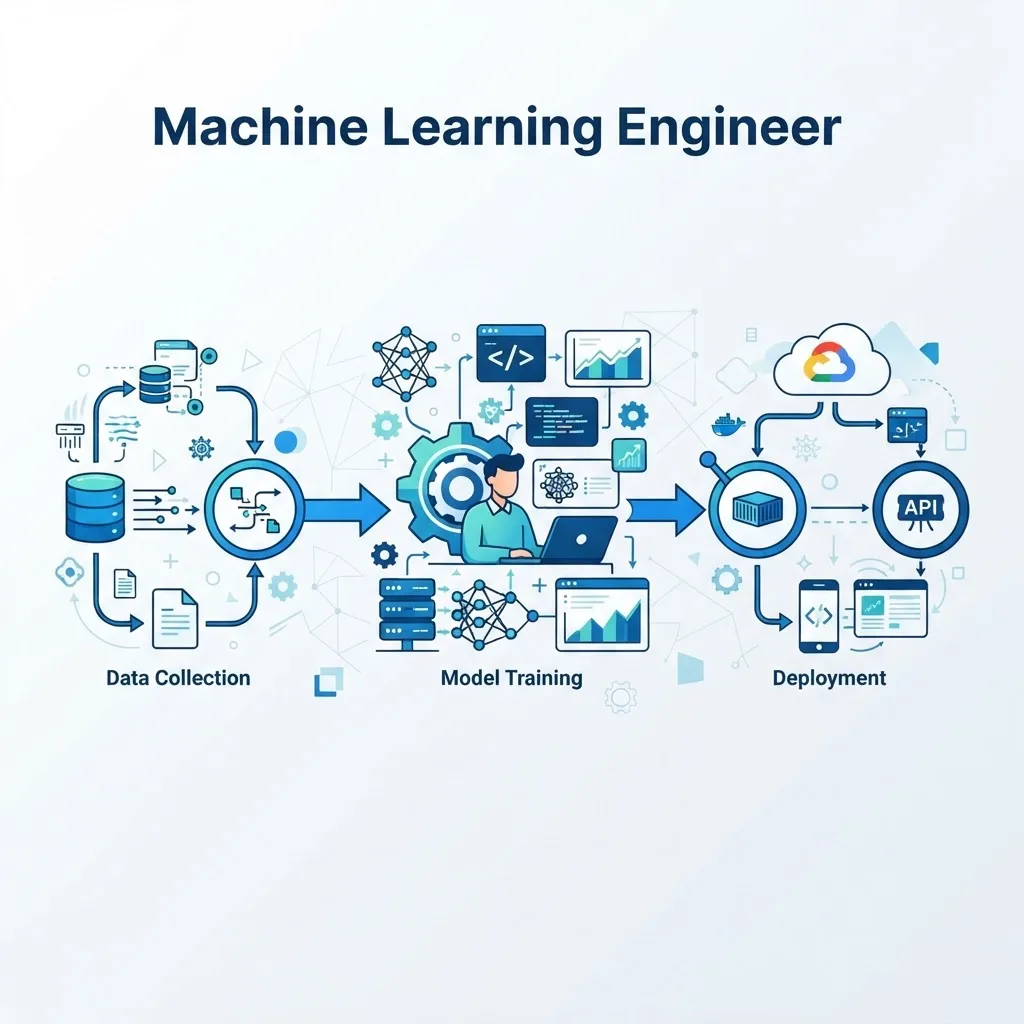
The typical workflow looks like this:
- Problem framing: Translate a business need into a machine learning problem with measurable success criteria.
- Data collection and preparation: Gather, clean, and label data. This is often 60 to 70 percent of the total effort.
- Model development: Select an approach, train the model, and evaluate it against clear metrics.
- Integration: Wrap the model in an API or service so the rest of the product can use it.
- Deployment and monitoring: Ship to production, then track drift, latency, and accuracy over time.
The part beginners underestimate most is monitoring. Models decay as real-world data shifts, so maintaining an AI system is an ongoing responsibility, not a one-time launch. This is precisely why companies value engineers, not just researchers.
AI Engineer Salaries and Demand
Compensation is one of the strongest reasons people pursue artificial intelligence software engineer jobs, and the numbers back up the interest. AI and machine learning roles consistently rank among the highest-paid engineering positions.

In the United States, AI and machine learning engineers commonly earn well into six figures, with senior specialists at leading companies exceeding that significantly. Even entry-level roles typically pay above the median for general software developers because the required skill combination is scarce.
Demand is driven by a simple reality: the number of companies deploying AI far exceeds the number of engineers who can build production systems. According to industry workforce reports, AI-related job postings have grown substantially year over year, while the qualified talent pool has not kept pace. That imbalance keeps salaries elevated and gives skilled candidates strong negotiating leverage.
What Influences Your Salary
Several concrete factors determine where you land in the salary range:
- Specialization: Expertise in large language models, computer vision, or MLOps commands premium pay.
- Production experience: Proof you have shipped and maintained real systems matters more than credentials.
- Location and remote scope: Remote roles at well-funded companies can pay top-market rates regardless of location.
- Domain knowledge: Combining AI skills with a field like healthcare or finance increases your value.
The Modern AI Engineer Tools Stack
Knowing the standard toolset helps you focus your learning and speak the language during interviews. The stack has consolidated significantly in recent years.
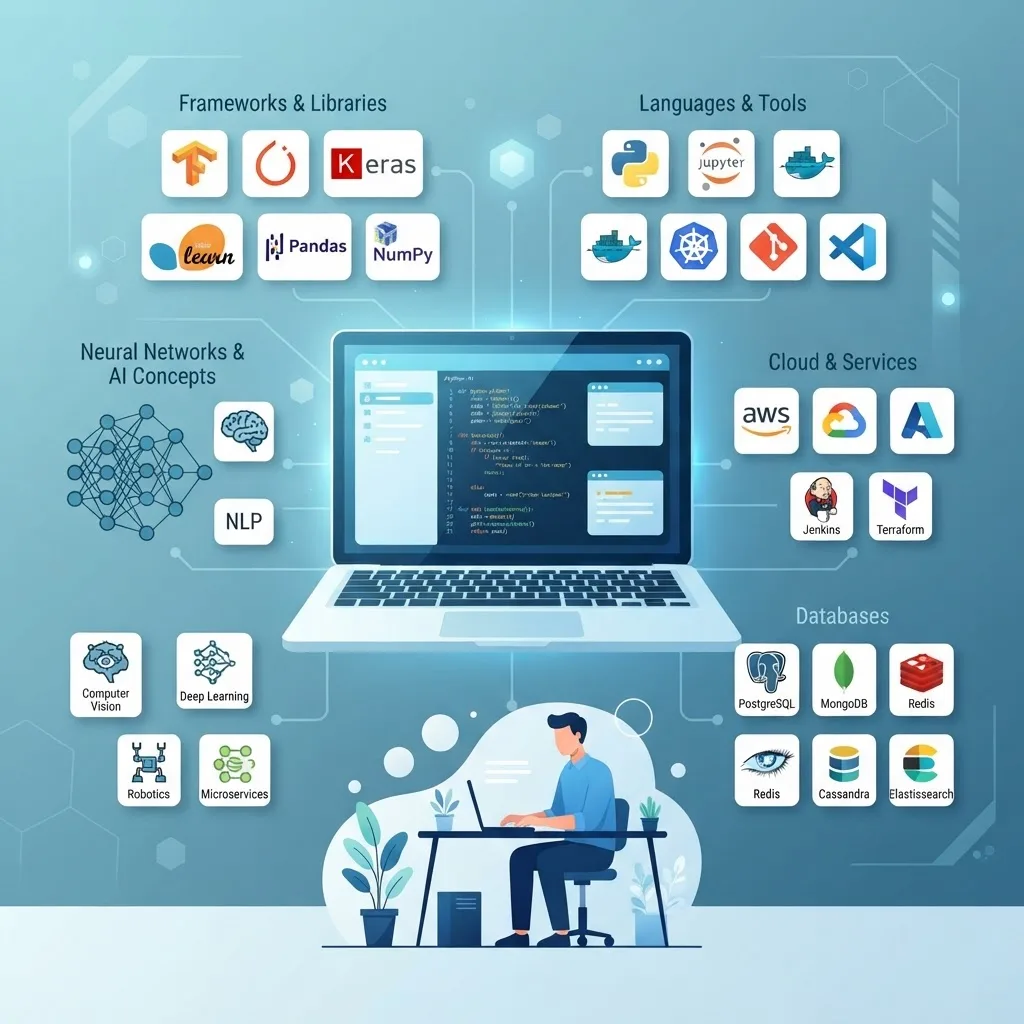
A representative 2026 stack includes Python as the core language, PyTorch for model development, Hugging Face for pretrained models and transformers, and frameworks like LangChain for building applications on top of large language models. For infrastructure, engineers rely on Docker for packaging, cloud platforms for hosting, and vector databases such as Pinecone or pgvector for retrieval-augmented generation. Version control through Git and experiment tracking round out the essentials.
You do not need every tool on day one. Employers care that you understand the concepts and can learn the specific stack quickly. Depth in Python and machine learning fundamentals transfers across almost every toolset.
How to Prepare for AI Engineering Interviews
AI engineering interviews test both software engineering ability and applied machine learning knowledge. Preparing for the right mix is the key to success.

Expect three broad categories of questions:
- Coding: Standard data structures and algorithms problems, usually in Python.
- Machine learning: Conceptual questions on model selection, evaluation metrics, bias-variance tradeoff, and handling imbalanced data.
- System design: How you would design and deploy an end-to-end AI system, including data pipelines, serving, and monitoring.
The most effective preparation is building and documenting two or three real projects. Being able to walk an interviewer through a system you shipped, the tradeoffs you made, and how you handled failures demonstrates genuine experience that no amount of memorized theory can match.
The Future of AI Software Engineer Jobs
The long-term outlook for these roles is strong, though the nature of the work is evolving. AI tools now write code, which raises a fair question: will AI replace AI engineers?

The realistic answer is that AI is changing the job, not eliminating it. Engineers who use AI tools to build faster are becoming far more productive, while the demand for people who can architect, validate, and safely deploy intelligent systems keeps rising. The premium is shifting toward judgment, system design, and responsible AI practices, areas where human expertise remains essential.
My honest advice after years in this field: focus on fundamentals and shipping real work. Tools will keep changing, but engineers who understand how systems work end to end will always be in demand.
Key Takeaways
- AI software engineers build and deploy production machine learning systems, blending software engineering with applied AI.
- Python, machine learning fundamentals, data skills, and cloud deployment are the core hireable skills.
- A PhD is not required; a strong project portfolio often matters more than credentials.
- AI and machine learning roles rank among the highest-paid engineering positions, driven by a talent shortage.
- AI tools are reshaping the role toward judgment and system design rather than replacing engineers.
Frequently Asked Questions (FAQ)
What qualifications do I need for AI software engineer jobs?
You need strong programming skills in Python, a solid grasp of machine learning fundamentals, and experience deploying software. A computer science degree helps but is not mandatory. Many engineers succeed through bootcamps, self-study, and a portfolio of real, shipped AI projects that prove practical ability.
How much do artificial intelligence software engineers earn?
AI software engineers typically earn well above the general software developer median, often reaching six figures in the United States. Salaries depend on specialization, production experience, location, and domain knowledge. Senior engineers at leading companies can earn significantly more, especially in areas like large language models and MLOps.
Do I need a PhD to become an AI engineer?
No, most AI software engineering roles do not require a PhD. Research-heavy positions may prefer advanced degrees, but the majority of production-focused jobs value demonstrable skills. A portfolio showing you can build, deploy, and maintain real machine learning systems usually matters more than formal academic credentials.
Which programming language is best for AI engineering?
Python is the clear leader for AI engineering, used in the vast majority of machine learning projects because of its libraries and ecosystem. Learning Python thoroughly, along with frameworks like PyTorch and Hugging Face, gives you the strongest foundation for landing and succeeding in AI software engineer jobs.
Will AI replace AI software engineers?
No, AI is changing the role rather than eliminating it. AI coding tools make engineers more productive, but human expertise is still essential for architecting systems, validating outputs, and deploying AI responsibly. Demand for engineers who understand full systems end to end continues to grow across nearly every industry.
How long does it take to become an AI engineer?
With consistent effort, most people can become job-ready in roughly one to two years, especially if they already have programming experience. The timeline depends on your starting point. Focusing on Python, machine learning fundamentals, and building real deployed projects is the fastest proven path to employment.