A clear, current breakdown of robotic dog prices across toy, hobbyist, developer, and industrial tiers, plus the hidden ownership costs most buyers miss.
How Much Is the Robotic Dog
Robotic dogs no longer live only in research labs. They patrol substations, inspect construction sites, entertain children, and teach robotics students how legged locomotion works. But when people ask how much a robotic dog costs, they usually get a useless answer: it depends. That is technically true and practically worthless. This guide gives you real price bands, explains exactly what drives cost up or down, and shows you which tier actually matches your use case.
Quick Answer: Robotic dogs cost between $50 and $150,000 depending on capability. Toy robot dogs run $50 to $500, hobbyist and educational quadrupeds cost $1,600 to $10,000, developer-grade units run $16,000 to $40,000, and industrial inspection robots such as Boston Dynamics Spot start near $75,000 fully equipped.
The Four Real Price Tiers of Robotic Dogs
Every robotic dog on the market falls into one of four tiers, and the jump between tiers is driven by actuator quality, sensor payload, and software maturity rather than by branding.

| Tier | Typical Price | Payload | Autonomy | Best For |
|---|---|---|---|---|
| Toy / companion | $50 - $500 | None | Scripted tricks | Kids, gifts, casual fun |
| Hobbyist / education | $1,600 - $10,000 | 1 - 3 kg | Basic follow and obstacle avoidance | Students, makers, STEM labs |
| Developer / research | $16,000 - $40,000 | 5 - 10 kg | SDK-driven autonomy, lidar mapping | Universities, R&D teams |
| Industrial / enterprise | $75,000 - $150,000 | 14 kg plus | Autonomous route repetition, docking | Utilities, energy, construction |
The single most important insight: price scales with actuator torque density and sensor integration, not with how much the robot looks like a dog. A $200 toy and a $90,000 inspection platform can share a silhouette and share almost nothing else.
Toy Robot Dogs: $50 to $500
Toy-class robotic dogs use hobby servos, have no real perception stack, and execute pre-programmed routines triggered by remote control or clap detection. Units in the $50 to $150 range typically offer 30 to 60 minutes of runtime, walk on flat indoor surfaces only, and cannot carry a payload.
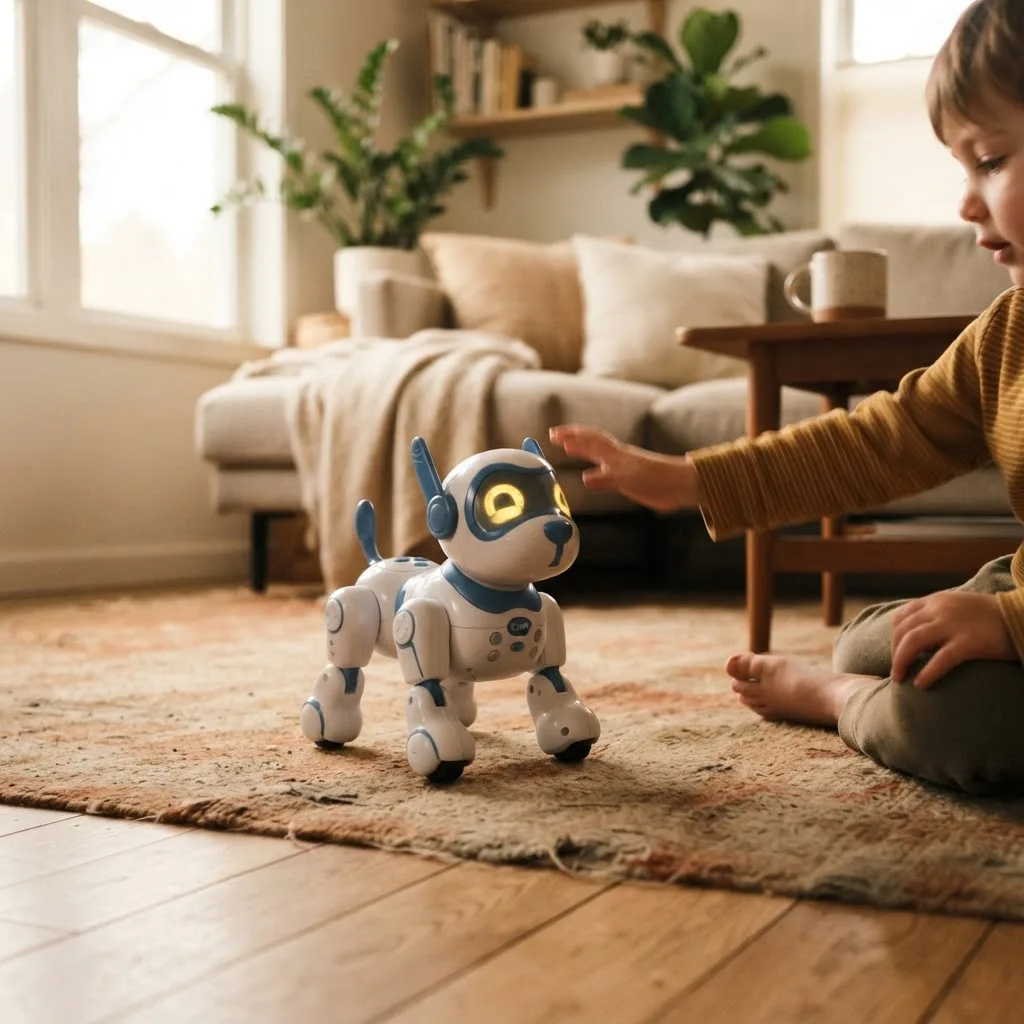
At the top of this tier, $300 to $500 buys voice recognition, touch sensors, app control, and simple emotional-response behavior. Sony Aibo, the outlier in this category, launched at roughly $2,900 plus a subscription for cloud features, which shows how quickly companion pricing escalates once cloud AI and long-term software support enter the equation.
Buy this tier if: you want entertainment, a gift, or a first exposure to robotics for a child. Skip it if: you need the robot to carry, sense, or navigate anything.
Hobbyist and Educational Quadrupeds: $1,600 to $10,000
This is where robotic dogs become genuinely programmable. Entry-level Unitree Go series units start around $1,600 for the most basic configuration, with better-equipped versions landing between $2,800 and $5,000. Add lidar, longer-life batteries, and an onboard compute module and you are near $10,000.
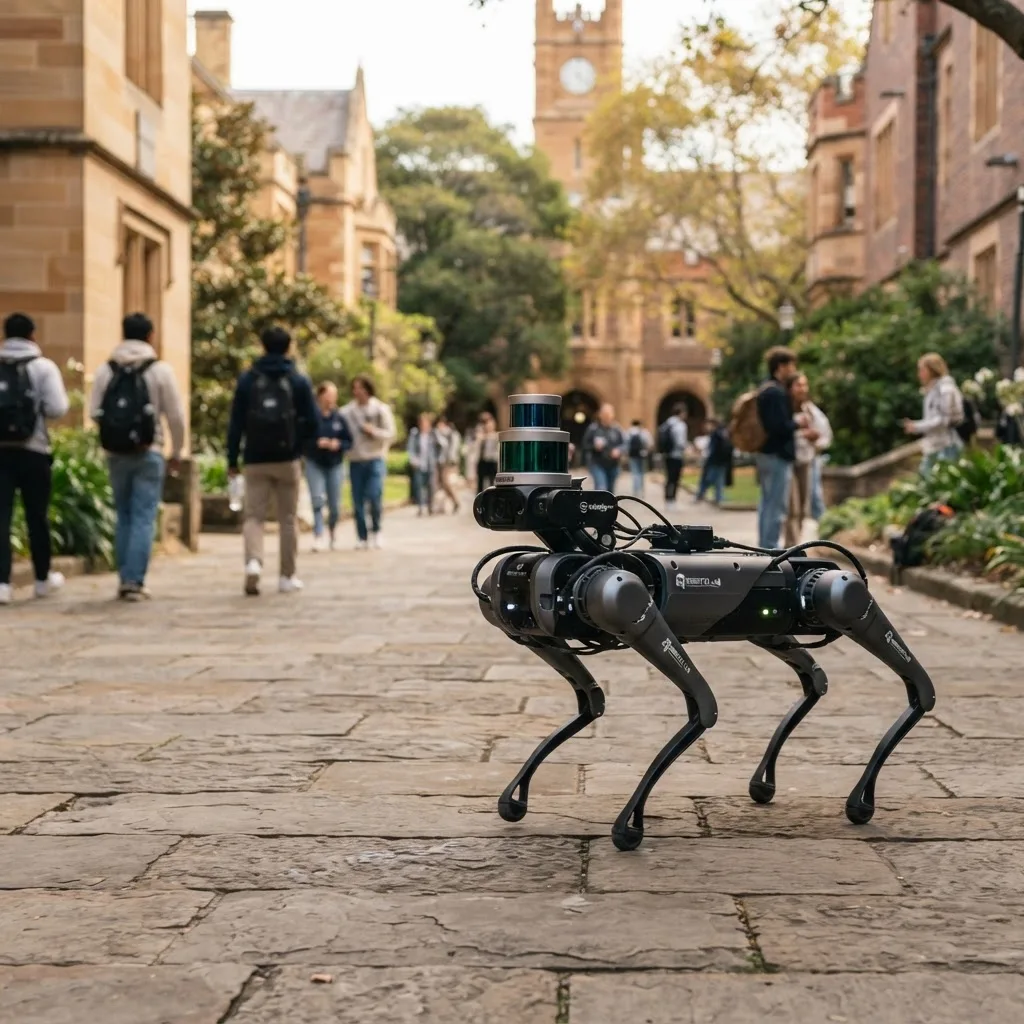
What you actually get for that money:
- Real brushless actuators with position, velocity, and torque control instead of hobby servos.
- An SDK in Python, C++, or ROS 2 so you can write your own gait, navigation, or vision code.
- 1 to 3 kg payload capacity, enough for a depth camera or small compute board.
- 45 to 90 minutes of runtime with swappable batteries.
- Outdoor capability on grass, gravel, and shallow stairs.
This tier delivers the highest capability-per-dollar in the entire market, which is why robotics courses and independent developers cluster here. Teams building demos, prototypes, or content around robotics almost always start at this price point before committing to enterprise hardware. If you are documenting that build process for an audience, our team at ZoneTechify has seen technical build logs outperform generic product reviews consistently, because readers searching for hardware prices want first-hand evidence.
Developer and Research Units: $16,000 to $40,000
Developer-grade quadrupeds add industrial-grade joint encoders, IP-rated enclosures, integrated lidar, and onboard GPUs capable of running perception models in real time. Unitree B-series and Go2 EDU-class platforms and comparable units from Deep Robotics sit in this band.
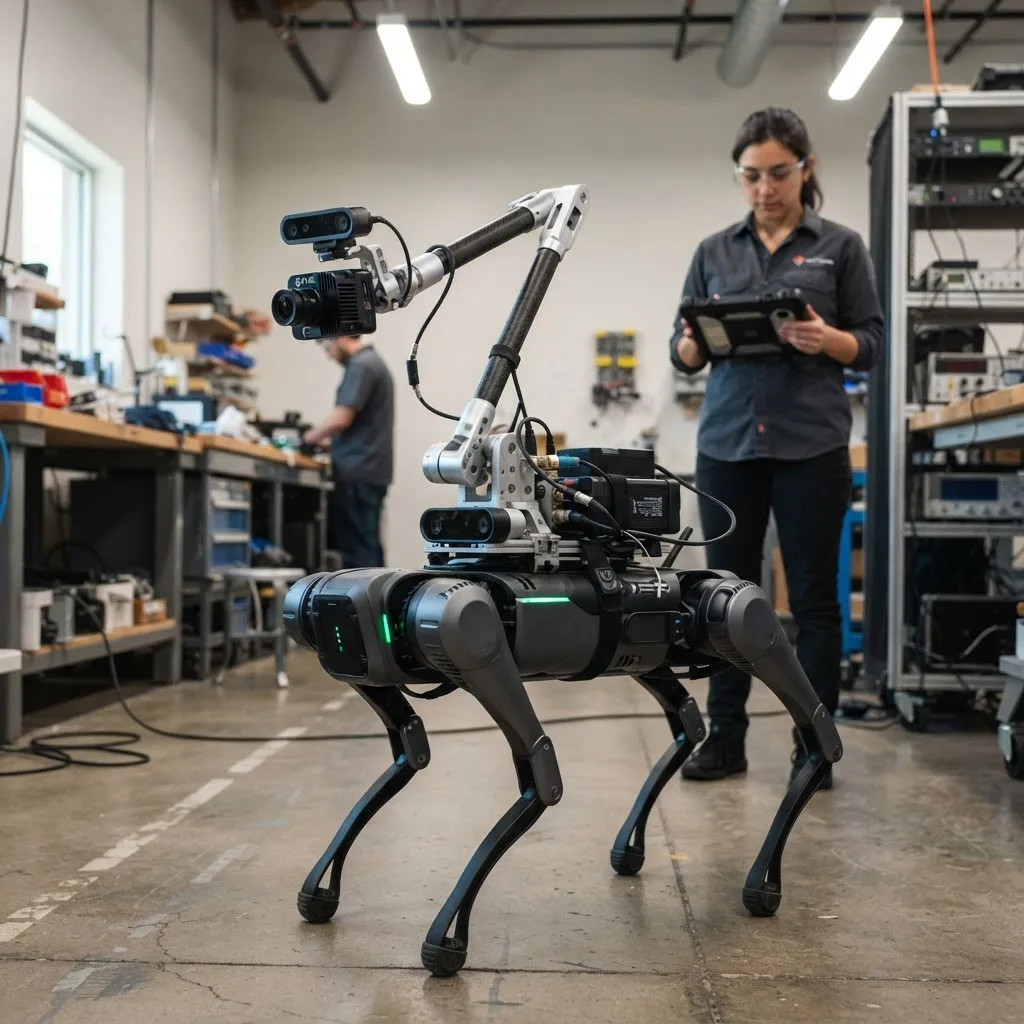
The cost jump from the hobbyist tier is not about walking better. It is about three things:
- Payload and power delivery. These robots supply regulated power and Ethernet to top-mounted sensors, so you can bolt on thermal cameras, gas detectors, or LTE modems without custom wiring.
- Environmental sealing. IP54 to IP67 ratings let the robot operate in rain and dust, which is mandatory for field research.
- Support and spares. Documented service intervals, replacement leg assemblies, and firmware update paths.
A realistic research budget is the base unit plus 25 to 40 percent for sensors, spare batteries, and a rugged transport case. A $24,000 robot becomes a $32,000 program almost immediately.
Industrial Robotic Dogs: $75,000 to $150,000
Boston Dynamics Spot is the reference point. The base Spot Explorer configuration was publicly priced at $74,500, and a production deployment with Spot Arm, Spot CAM+IR, autonomous docking, and Orbit fleet software commonly reaches $150,000 or more. ANYbotics ANYmal, built for oil, gas, and utility inspection, sits in a similar or higher range and is often sold as an annual subscription instead of a purchase.
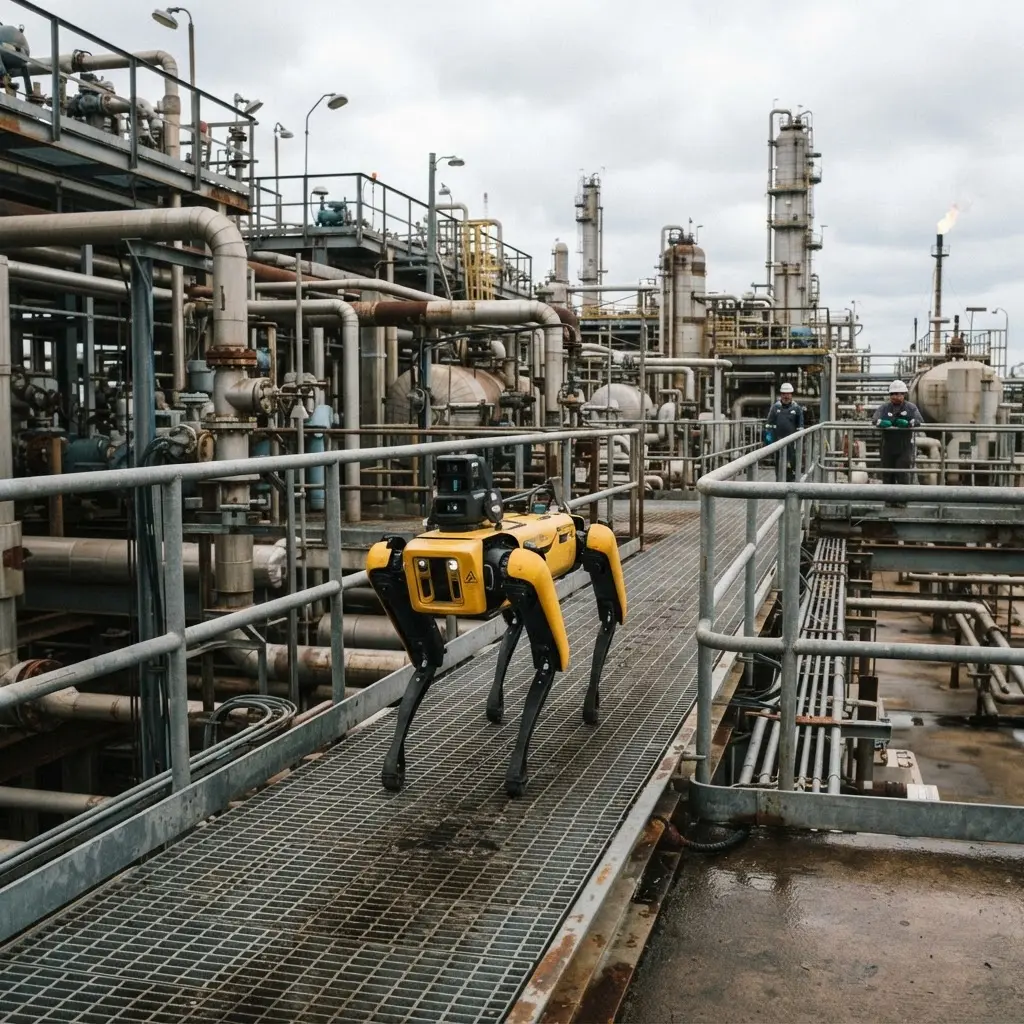
What justifies six figures is not the legs. It is the autonomy loop: the robot records an inspection route once, then repeats it unattended, reads analog gauges, captures thermal images, detects abnormal sound signatures, uploads findings to a dashboard, and returns to its dock to charge. According to Boston Dynamics customer reporting, industrial sites use these robots to replace manual rounds in areas that are hot, confined, or hazardous, and the business case is measured in avoided downtime rather than in labor savings alone.
The global service robotics market illustrates why these prices hold. Industry analysts including the International Federation of Robotics have tracked professional service robot sales growing at double-digit annual rates through the 2020s, with inspection and maintenance among the fastest-expanding categories. Demand at the enterprise tier is not price-sensitive in the way consumer hardware is.
The Hidden Costs Nobody Quotes You
Sticker price is roughly 60 to 75 percent of the first-year cost of owning a capable robotic dog. Budget for these line items explicitly.
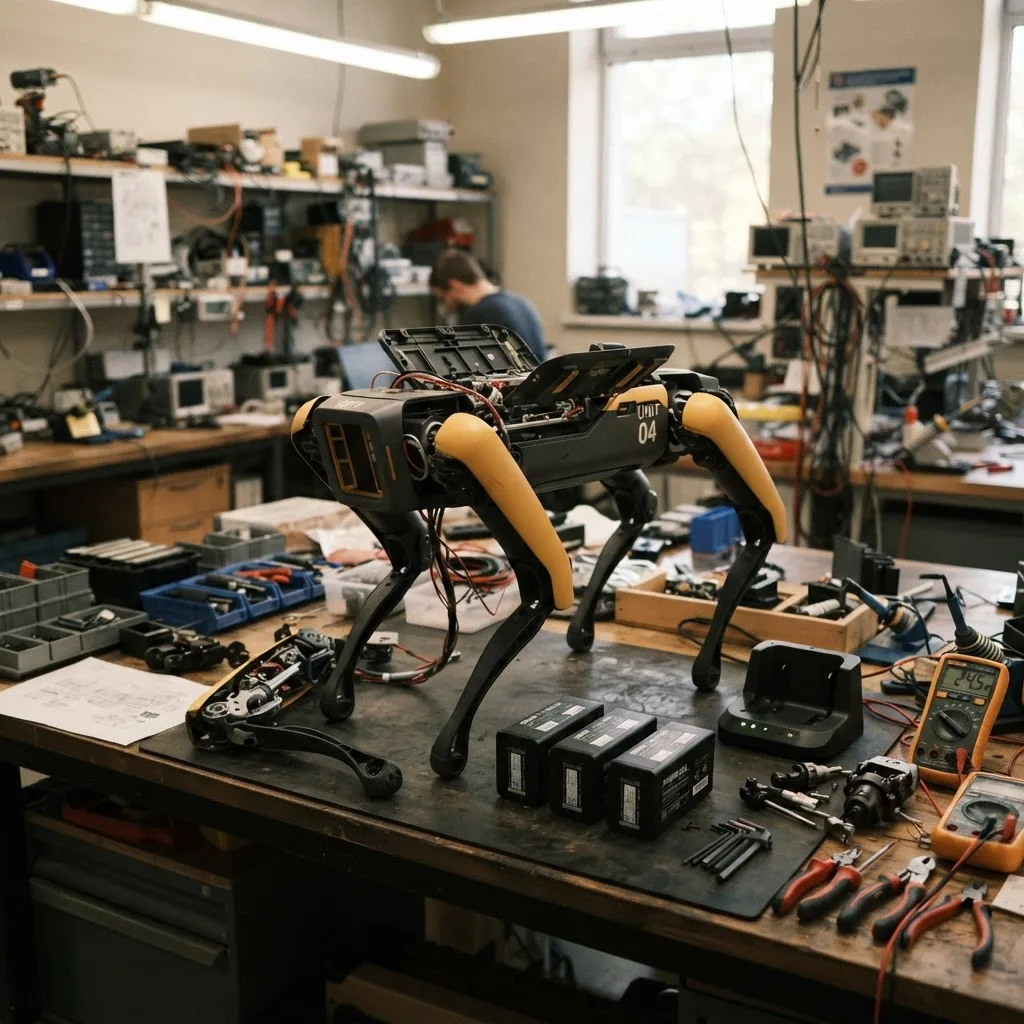
- Spare batteries: $300 to $4,500 each depending on tier. You need at least two for continuous operation.
- Charging dock or autonomous dock: $1,000 to $6,000 on enterprise platforms.
- Software and fleet licensing: $2,000 to $15,000 per year for enterprise autonomy and data dashboards.
- Sensor payloads: a decent thermal camera adds $3,000 to $12,000.
- Repairs: leg and knee actuators are the most common failure point. A single replacement assembly runs $800 to $6,000.
- Training and integration: two to four engineering weeks to get a research unit doing useful autonomous work.
- Insurance and compliance: required on most industrial sites before a robot is allowed to operate unattended.
A practical rule from field deployments: multiply the base hardware price by 1.4 for research use and by 1.8 for industrial use to estimate a realistic first-year total.
Should You Buy, Rent, or Subscribe?
Renting is the most underused option. Several integrators rent industrial quadrupeds for $3,000 to $8,000 per week including an operator, which makes sense for a one-off survey, a shutdown inspection, or a film shoot. Subscription models from ANYbotics and some Spot resellers bundle hardware, software, and maintenance into an annual fee, converting a capital expense into an operating expense.

Use this decision sequence:
- Fewer than 4 deployment weeks per year? Rent.
- Need the robot for software development or a research grant? Buy the hobbyist or developer tier outright.
- Running scheduled inspections on a fixed site? Subscribe or buy industrial, because the autonomy software is the actual product.
- Just curious about legged robotics? Start at $1,600 to $3,000 and learn the SDK before spending more.
Organizations building the data pipelines, dashboards, and vision models that sit on top of these robots often underestimate the software side entirely. The hardware walks; the software creates value. Teams at WebPeak regularly see robotics projects stall not because the robot failed but because nobody planned how the captured inspection data would be stored, reviewed, and acted on.
Key Takeaways
- Robotic dog prices span $50 to $150,000, split into four distinct capability tiers.
- Toy robot dogs cost $50 to $500 and offer no payload or real autonomy.
- Hobbyist and educational quadrupeds start near $1,600 and deliver the best capability per dollar.
- Developer and research units cost $16,000 to $40,000 and add sealing, payload power, and lidar.
- Boston Dynamics Spot Explorer was publicly priced at $74,500, with full deployments exceeding $150,000.
- Actuators, sensors, and autonomy software drive cost, not appearance.
- Expect total first-year cost to be 1.4x to 1.8x the hardware price.
- Renting at $3,000 to $8,000 per week is often cheaper than buying for occasional use.
Frequently Asked Questions (FAQ)
How much does a Boston Dynamics robot dog cost?
Boston Dynamics Spot starts at approximately $74,500 for the base Explorer configuration. Adding the Spot Arm, thermal and pan-tilt-zoom cameras, an autonomous charging dock, and Orbit fleet management software commonly pushes a real deployment past $150,000, plus annual software licensing fees.
What is the cheapest robot dog that can actually be programmed?
Entry-level Unitree Go series quadrupeds start around $1,600 and include a software development kit for Python or C++. Below that price you are buying a toy with scripted tricks, no payload capacity, and no ability to run your own navigation, vision, or gait control code.
Are robot dogs worth the money for a business?
They are worth it when they replace repetitive manual inspections in hazardous, hot, or confined areas. The return comes from earlier fault detection and avoided unplanned downtime, not from headcount reduction. If your inspection rounds are already infrequent and safe, renting is the smarter choice.
How long do robotic dog batteries last and what do replacements cost?
Runtime ranges from 30 minutes on toy units to 90 minutes on industrial platforms under load. Replacement batteries cost $300 for hobbyist models and up to $4,500 for enterprise packs. Most operators buy at least two spares to maintain continuous field operation.
Can I rent a robot dog instead of buying one?
Yes. Integrators rent industrial quadrupeds for roughly $3,000 to $8,000 per week, often including a trained operator and sensor payload. Renting makes financial sense for one-off surveys, plant shutdown inspections, film production, or proof-of-concept trials before committing capital.
What makes robot dogs so expensive compared to wheeled robots?
Legged locomotion requires twelve or more high-torque actuators with precise force control, plus real-time balance computation. Each actuator is a costly precision assembly. Wheeled robots need two to four cheap motors, so a quadruped carries far more hardware and software complexity for the same payload.