Learn how Mahjong artificial intelligence works, how Suphx beats top human players, how it is trained, and why this imperfect-information AI matters far beyond the game.
Mahjong Artificial Intelligence
Mahjong has been played for over a century, yet teaching a machine to master it remained one of the hardest problems in game AI. Unlike chess or Go, Mahjong hides most of the board from every player, involves four competitors, and mixes luck with deep strategy. When Microsoft Research built an AI called Suphx that reached the top 0.01% of human players, it proved that machines can now reason under genuine uncertainty. This guide explains how Mahjong artificial intelligence actually works, how it is trained, and why it matters far beyond the table.
Quick Answer: Mahjong artificial intelligence uses deep reinforcement learning and self-play to make winning decisions despite hidden tiles, randomness, and multiple opponents. Systems like Microsoft's Suphx evaluate probabilities, predict rival hands, and balance risk, reaching expert human skill in this imperfect-information game.
What Is Mahjong Artificial Intelligence?
Mahjong artificial intelligence refers to computer systems that play Mahjong at a competitive level by learning strategy from data rather than relying on fixed rules. Unlike a simple bot that follows scripted moves, a true Mahjong AI evaluates millions of possible outcomes, estimates what opponents are holding, and chooses the discard or call that maximizes its expected long-term score.
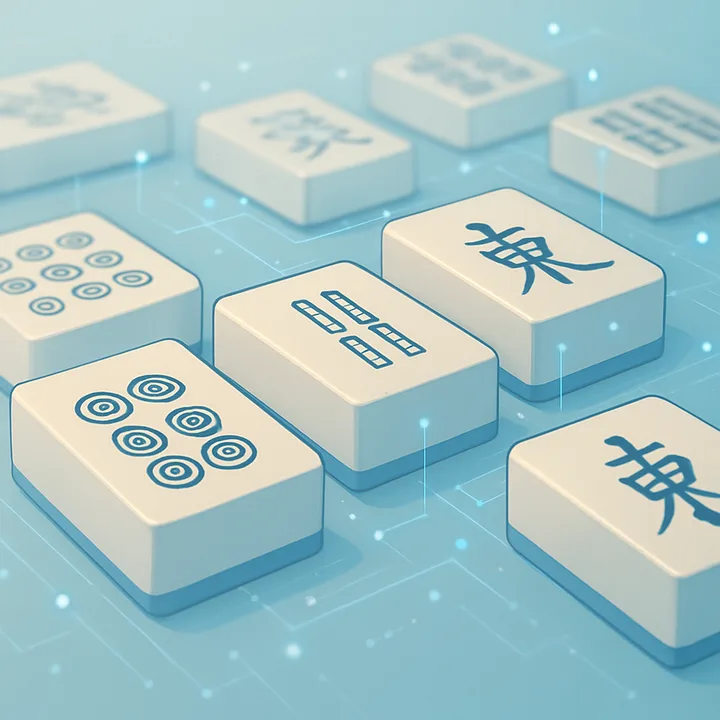
The defining challenge is imperfect information. In chess, both players see the entire board. In Mahjong, each player sees only their own 13 tiles plus the discard pile, leaving roughly three-quarters of the game state hidden. The AI must therefore reason about probabilities and intentions, not certainties. This makes Mahjong a closer model of real-world decision-making, where we rarely have complete information before acting.
Why Mahjong Is Harder for AI Than Chess or Go
Google DeepMind's AlphaGo famously beat world champion Lee Sedol in 2016, and chess engines surpassed humans decades earlier. So why did Mahjong resist AI for so long? The answer lies in three structural differences.
- Hidden information: Players cannot see opponents' hands or the live wall, so the AI must infer the unknown.
- High randomness: Tiles are drawn randomly, meaning a perfect decision can still lose a single round.
- Multiplayer dynamics: Four players interact at once, so the AI must model several rivals simultaneously rather than one.
- Complex scoring: Many Mahjong variants reward specific tile combinations, forcing long-term planning across an entire match, not just one hand.
These factors create a search space and a noise level that traditional game-tree algorithms struggle to handle. Solving Mahjong required new training methods rather than faster brute-force calculation.
How Mahjong AI Works
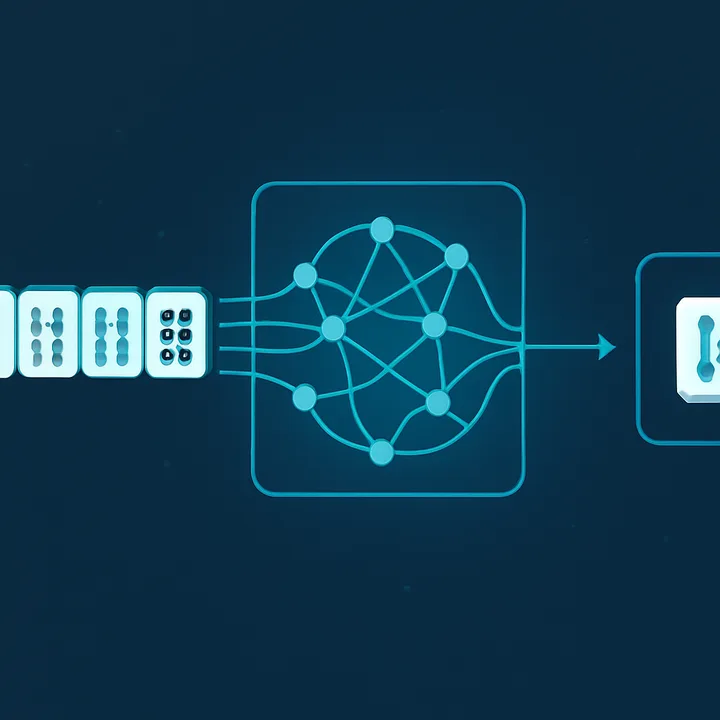
Modern Mahjong AI combines deep neural networks with reinforcement learning. At its core, the system learns a policy: given the current visible state, what is the best action to take? It also learns to estimate value: how favorable is this position likely to be in the end?
Reading the Game State
The AI encodes everything it can observe, its own tiles, every discard, called melds, the round wind, and the remaining tile count, into a numerical representation. Convolutional and recurrent neural networks then process this data to detect patterns that correlate with winning, much like an experienced player recognizes a developing hand at a glance.
Handling Imperfect Information
Because hidden tiles cannot be observed directly, the AI builds probability distributions over what opponents likely hold based on their discards and calls. If a rival discards a tile late that they could have used, the model updates its beliefs about their strategy. This Bayesian-style reasoning lets the AI play cautiously when danger is likely and aggressively when the path is clear.
Balancing Risk and Reward
A strong Mahjong AI does not simply chase the highest-scoring hand. It weighs the chance of dealing into an opponent's win against the reward of completing its own. This nuanced risk management is exactly what separates expert humans from beginners, and it is one of the hardest behaviors to encode. Teams building advanced systems like these often partner with specialists in artificial intelligence services to design models that reason reliably under uncertainty.
Suphx: The Breakthrough Mahjong AI
The most significant milestone came in 2020 when Microsoft Research Asia introduced Suphx (Super Phoenix). According to Microsoft, Suphx was the first AI to reach the 10 dan rank on Tenhou, one of the most popular online Mahjong platforms, placing it above 99.99% of the platform's human players.
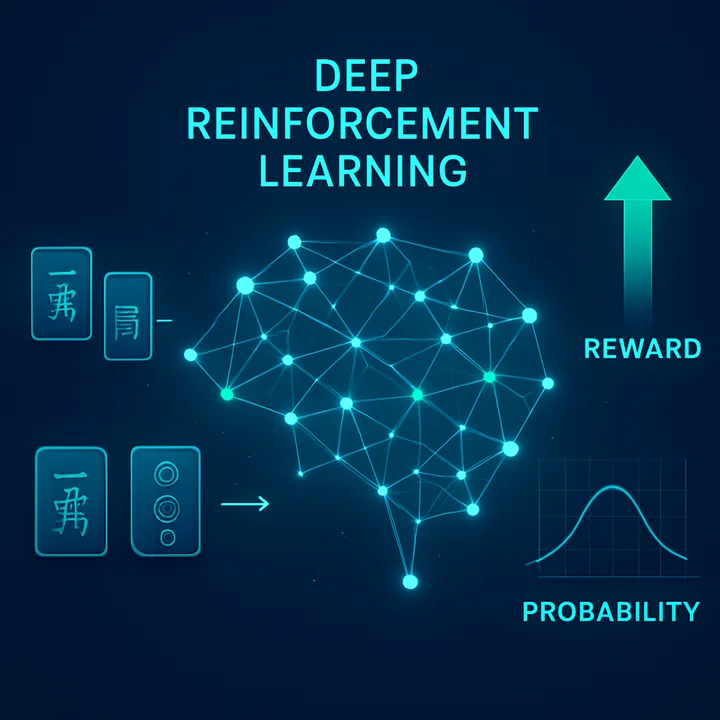
Suphx introduced several innovations that addressed Mahjong's unique difficulties:
- Global reward prediction that connected single-round decisions to the outcome of a full multi-round match.
- Oracle guiding, where the AI was first trained with access to hidden information, then gradually weaned off it so it could perform with realistic, limited visibility.
- Run-time policy adaptation that adjusted strategy mid-game based on the specific situation rather than playing a fixed style.
These techniques produced a system whose defensive instincts and patience surprised even professional players, demonstrating genuinely human-like strategic depth.
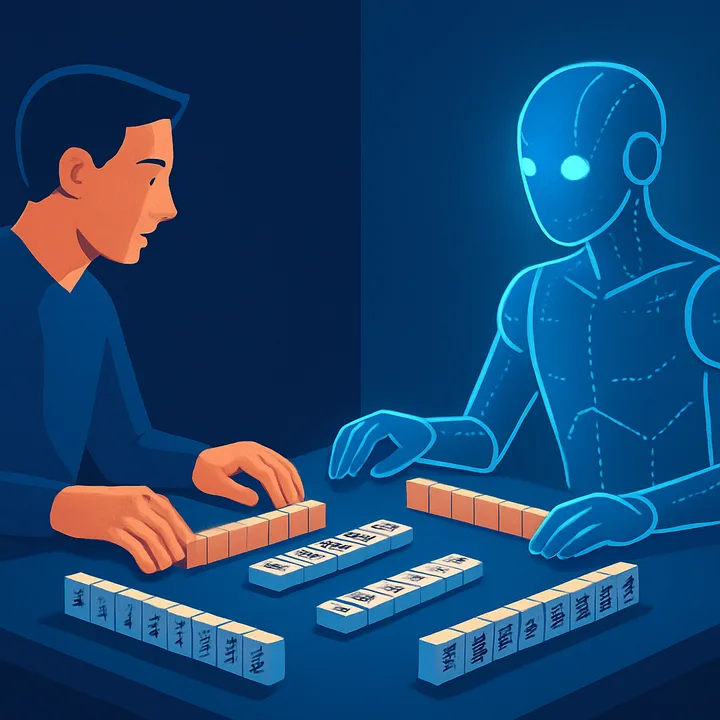
Mahjong AI vs. Human Players
How does a top Mahjong AI compare with a skilled human? The table below summarizes the practical differences observed across competitive play.
| Factor | Mahjong AI | Human Players |
|---|---|---|
| Probability calculation | Near-instant and precise | Approximate and intuitive |
| Emotional tilt | None | Common after losses |
| Defensive consistency | Very high every hand | Varies with fatigue |
| Reading opponents | Statistical inference | Experience and psychology |
| Adaptation to new styles | Requires retraining | Fast and flexible |
| Stamina over long sessions | Unlimited | Declines over time |
The key insight is that AI excels at disciplined, probability-driven decisions and never gets emotionally rattled, while humans still hold an edge in creative adaptation and reading subtle social cues in live play.
How Mahjong AI Is Trained
Training a Mahjong AI is a data-intensive process that blends imitation with experience. The journey typically follows three stages.
- Supervised learning from human games. The model first studies large logs of expert matches to imitate reasonable play, giving it a strong starting policy.
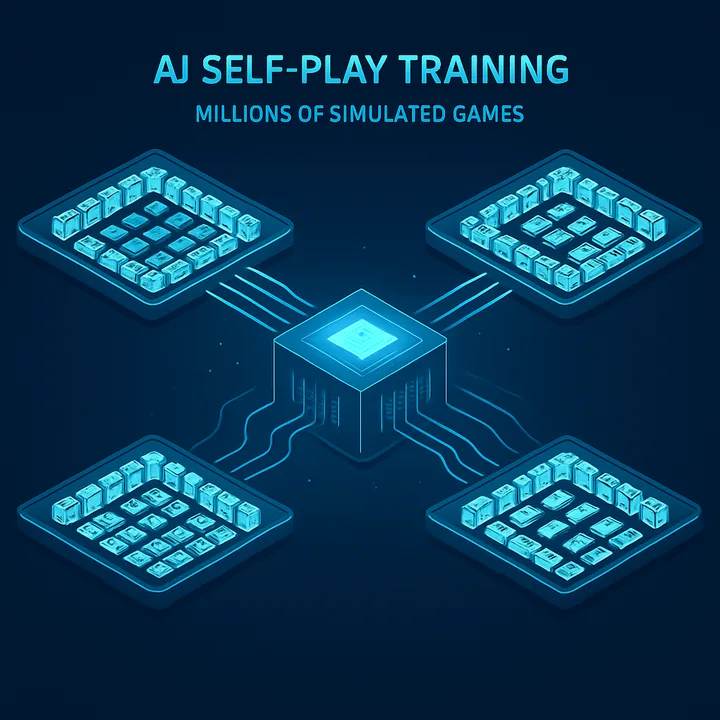
- Reinforcement learning through self-play. The AI then plays millions of games against versions of itself, receiving rewards for winning and penalties for losing, refining strategy far beyond what humans demonstrated.
- Fine-tuning and evaluation. Engineers test the model against benchmarks and ranked human players, then adjust reward functions and network architecture to fix weaknesses.
This self-play loop is powerful because the AI generates its own training data. Suphx, for example, was trained on the equivalent of years of continuous play compressed into weeks of computation. Businesses that want to apply similar machine-learning pipelines to their own products can explore dedicated AI services from WebPeak to move from concept to deployment.
Real-World Applications Beyond the Game
Mahjong AI is not just about winning tiles. The methods used to conquer imperfect-information games transfer directly to high-value real-world problems where decisions must be made without full data.
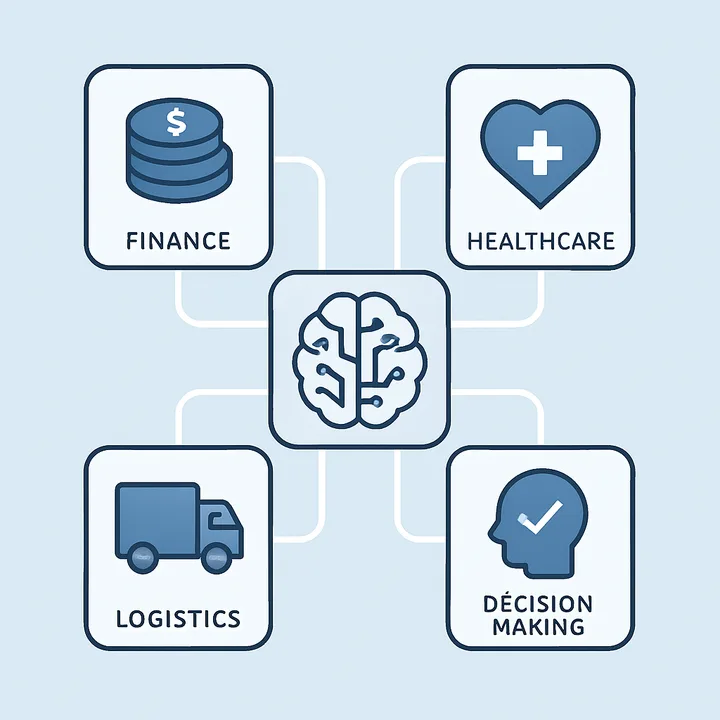
- Finance: Portfolio and trading decisions are made under uncertainty, partial information, and competing actors, mirroring Mahjong's structure.
- Logistics: Routing and inventory planning require risk-weighted choices when future demand is hidden.
- Healthcare: Treatment planning involves probabilistic reasoning with incomplete patient data.
- Cybersecurity: Defending systems means anticipating an adversary's hidden moves, much like predicting an opponent's concealed hand.
This is why research labs invest in games like Mahjong. They are controlled laboratories for building AI that performs well in messy, uncertain environments that resemble real business and scientific challenges.
Challenges Mahjong AI Still Faces
Despite remarkable progress, Mahjong AI is not finished. Regional rule variants, such as Riichi, Hong Kong, and Sichuan Mahjong, each demand different strategies, and a model trained on one may struggle with another. Real-time human deception, table talk, and unconventional play can still create scenarios the AI has not optimized for. Computational cost also remains high, since training competitive models requires significant hardware and energy investment that smaller teams cannot always afford.
Key Takeaways
- Mahjong artificial intelligence solves an imperfect-information, multiplayer game using deep reinforcement learning and self-play.
- Microsoft's Suphx reached 10 dan on Tenhou, surpassing 99.99% of human players, according to Microsoft Research.
- Mahjong is harder for AI than chess or Go because roughly three-quarters of the game state is hidden and randomness is high.
- The same techniques apply to finance, healthcare, logistics, and cybersecurity, where decisions are made under uncertainty.
- Training combines learning from human games, millions of self-play matches, and careful fine-tuning.
The Future of Mahjong AI
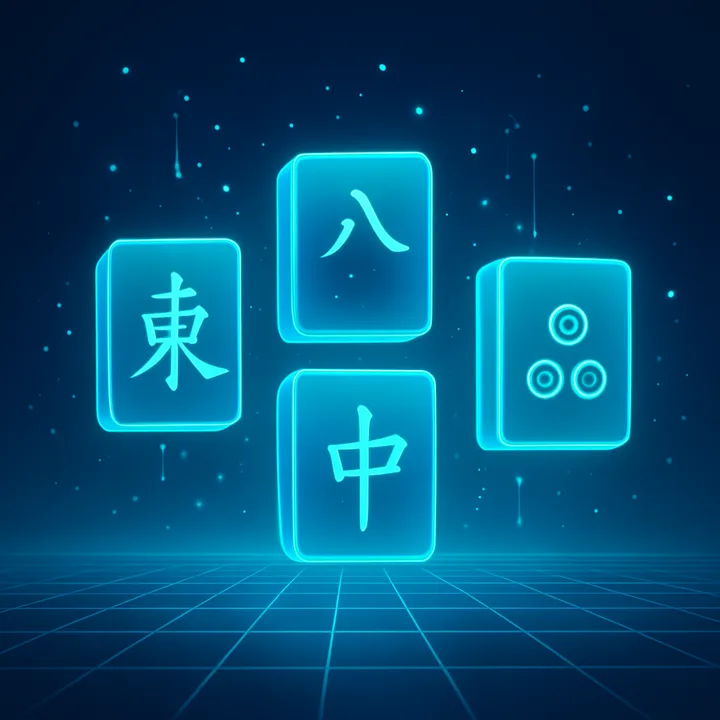
The next frontier is generalization, building one model that masters every Mahjong variant and adapts instantly to new rules and opponents. We can also expect Mahjong AI to become a coaching tool, analyzing a player's discards and suggesting better decisions in real time, similar to how chess engines now train grandmasters. As these systems grow more efficient, the strategic lessons learned at the Mahjong table will keep flowing into the AI that powers everyday decision-making tools. To follow more practical AI insights, visit ZoneTechify and WebPeak.
Frequently Asked Questions (FAQ)
What is Mahjong artificial intelligence?
Mahjong artificial intelligence is software that plays Mahjong at expert level by learning strategy through deep reinforcement learning and self-play. Instead of fixed rules, it estimates probabilities, predicts hidden opponent tiles, and balances risk to maximize its long-term score across a full match.
Can AI beat humans at Mahjong?
Yes. Microsoft's Suphx reached the 10 dan rank on the Tenhou platform, placing it above 99.99% of human players. AI excels at precise probability calculations and never tilts emotionally, though skilled humans still adapt creatively and read live social cues better.
Why is Mahjong harder for AI than chess?
Mahjong is harder because it is an imperfect-information game where about three-quarters of the state is hidden, it includes random tile draws, and four players compete at once. Chess is fully observable with no luck, so traditional search algorithms work far more easily there.
How is a Mahjong AI trained?
A Mahjong AI is trained in three stages: it first imitates expert human game logs, then improves through millions of self-play matches using reinforcement learning, and finally gets fine-tuned against benchmarks. This loop lets the AI generate its own data and surpass human strategy.
What is Suphx in Mahjong AI?
Suphx, short for Super Phoenix, is a Mahjong AI built by Microsoft Research Asia in 2020. It introduced global reward prediction, oracle guiding, and run-time policy adaptation, becoming the first AI to reach 10 dan on Tenhou and play with human-like strategic depth.
Conclusion
Mahjong artificial intelligence represents one of the most impressive achievements in game AI precisely because the game refuses to give away its secrets. By mastering hidden information, randomness, and multiplayer competition, systems like Suphx have shown that machines can reason intelligently in conditions that closely resemble real life. The strategies refined at the Mahjong table are already shaping smarter tools in finance, healthcare, and beyond, making this far more than a game.