
Rock Content Cloud review 2026: an honest look at features, real pros and cons, pricing tiers, and who this content marketing platform actually fits best.
Rock Content Cloud Review 2026: Features, Pros, and Pricing
Content teams in 2026 are not short on tools. They are short on systems. Most marketing departments now run some mix of an AI writing assistant, a keyword tool, a project tracker, a CMS, and a spreadsheet nobody fully trusts. Rock Content Cloud positions itself as the layer that replaces that stack with one governed workflow, from strategy through publication and performance reporting.
This review is written from the perspective of a team that evaluates content platforms for clients every quarter. It covers what Rock Content Cloud does well, where it frustrates buyers, what it realistically costs, and the specific type of organization that earns a return from it.
Quick Answer: Rock Content Cloud is an enterprise-leaning content marketing platform that combines strategy planning, AI-assisted writing, a vetted freelance writer marketplace, interactive content, and performance analytics in one workspace. It fits mid-market and enterprise teams publishing roughly 20 or more assets monthly, with custom quoted pricing that usually starts in the four-figure monthly range.
What Is Rock Content Cloud?
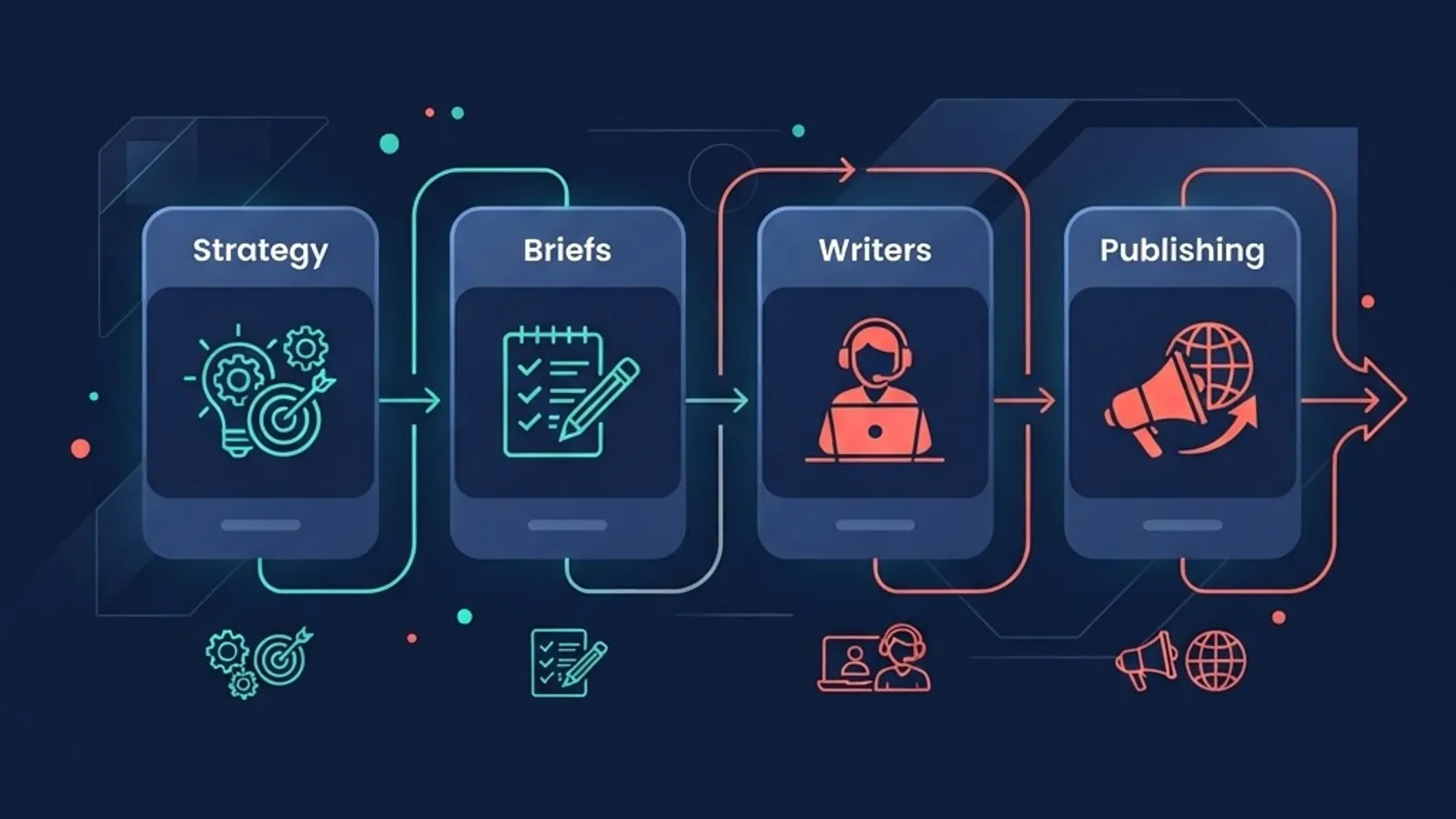
Rock Content Cloud is the unified platform from Rock Content, the company behind WriterAccess (a freelance writer marketplace) and Ion (an interactive content builder). Rather than selling those products in isolation, the Cloud connects them around a single content plan. A brief created in the planning module can be routed to a marketplace writer, drafted with AI assistance, reviewed in the same thread, published, and then measured, without leaving the workspace.
Definition worth knowing: content operations, often shortened to ContentOps, is software that manages the process around content rather than only the writing. It governs briefs, approvals, roles, deadlines, asset storage, and reporting. Rock Content Cloud belongs in that category. It is far closer to Contently or Welcome than to a standalone AI writer such as Jasper.
Two numbers frame the value. Rock Content publicly reports serving more than 2,000 brands, and WriterAccess advertises a pool of over 15,000 vetted freelance writers across industry specialisms. That second figure is the most defensible part of the whole offering, because very few platforms give you both the workflow and the humans to fill it.
Who It Is Built For
The product assumes a team, not a solo operator. You get the most value when at least three roles exist: someone owning strategy, someone producing, and someone approving. If one person does all three, the governance features become overhead rather than leverage.
Core Features Reviewed
1. Content Strategy and Planning
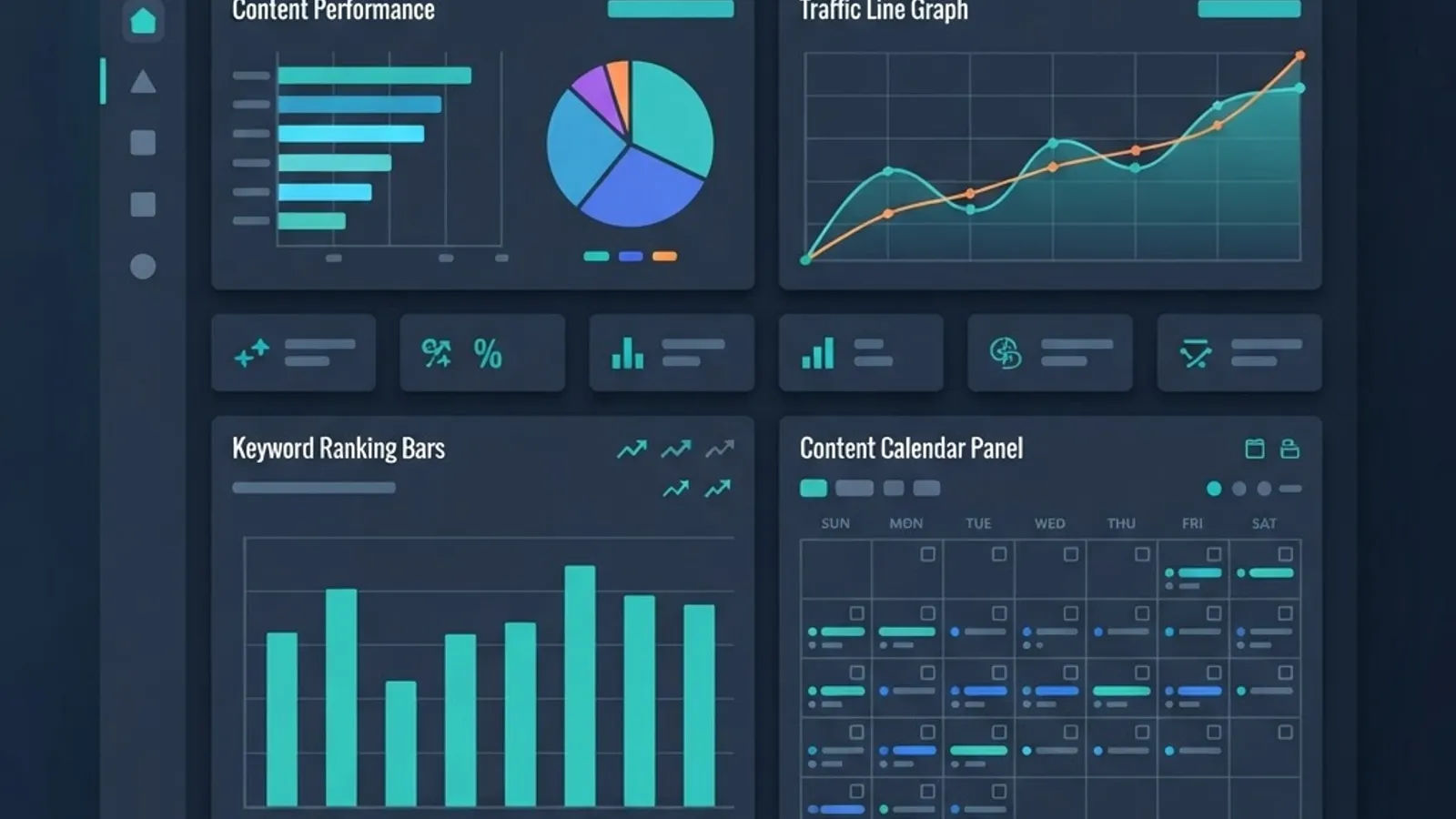
The planning module builds an editorial calendar tied to personas, funnel stages, and target keywords. The practical benefit is traceability: every asset carries a reason for existing. When a stakeholder asks why a piece was commissioned, the brief already documents the persona, the stage, and the target query.
The useful detail here is the brief template system. You can lock required fields (search intent, primary keyword, internal links, tone) so freelancers cannot start work on an underspecified request. In our experience reviewing content programs, unclear briefs cause more rewrite cycles than weak writing does.
2. AI-Assisted Drafting and Editing
Rock Content Cloud includes generative AI for outlines, first drafts, meta descriptions, headline variants, and translation. It is competent rather than category-leading. Output quality lands in the same range as most 2026 general-purpose assistants, which means it still needs a subject-matter human on top.
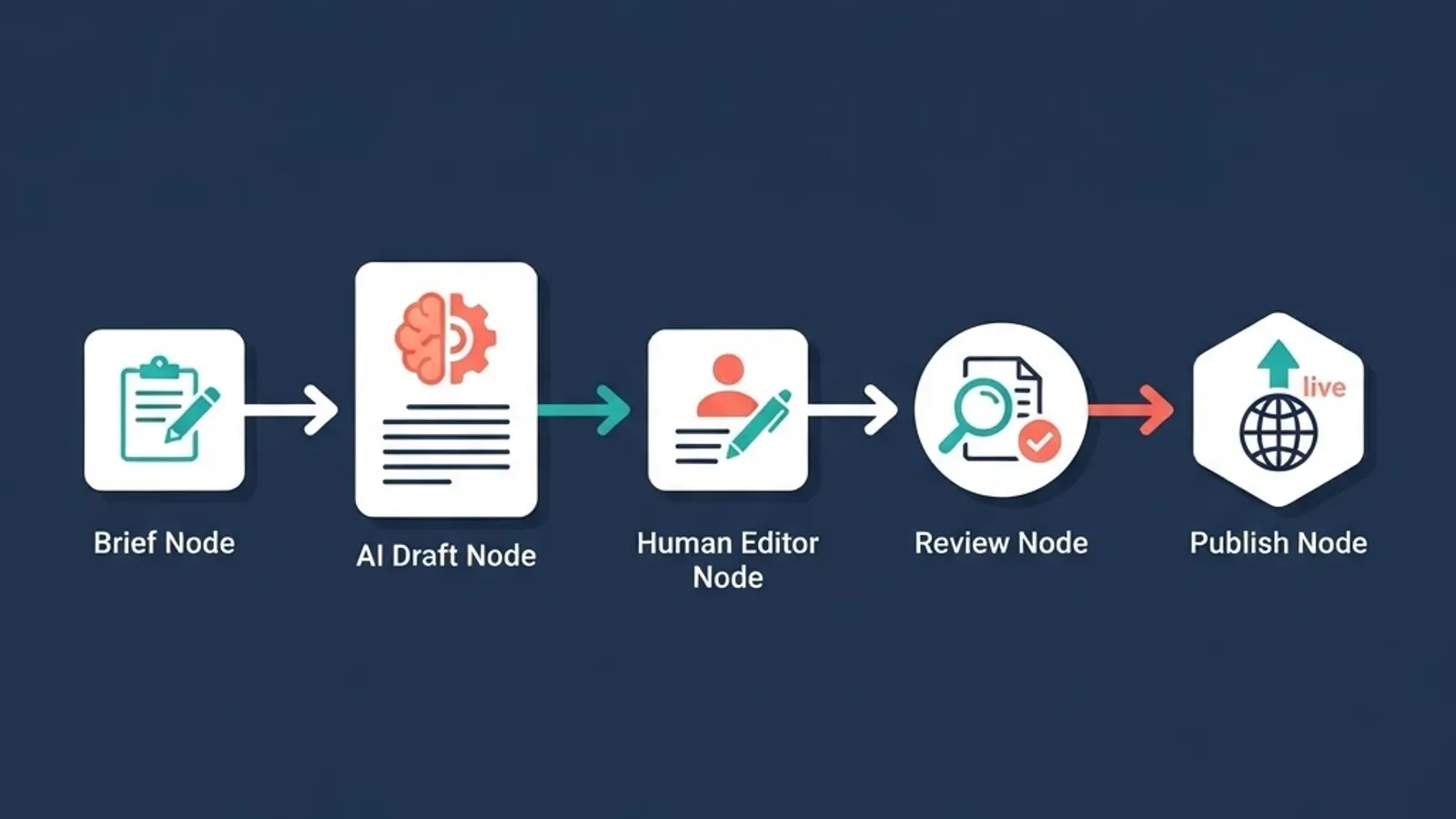
The smarter design choice is that AI sits inside the approval flow instead of beside it. Drafts inherit the brief, so generated text is constrained by the documented intent, and every AI-touched asset still passes a named human reviewer. That single structural decision is why AI output from a ContentOps platform tends to survive editorial review better than output from a standalone chat window.
3. The WriterAccess Talent Marketplace
This is the differentiator. You can commission writers, editors, designers, and translators by industry expertise and star rating, with rates set per word or per project. Ordering a piece from a healthcare-specialist writer takes minutes rather than a three-week hiring cycle.
One caution from real usage: talent quality varies with the tier you pay for. Budget-tier writers produce serviceable copy that needs heavy editing. Top-tier writers cost several times more but genuinely reduce editing load. Teams that treat the marketplace as a cheap-content vending machine are usually the ones who report disappointment.
4. Interactive Content With Ion
Ion builds calculators, quizzes, assessments, and interactive infographics without developer involvement. This matters more in 2026 than it did five years ago, because interactive assets generate first-party data at a moment when third-party tracking keeps shrinking. A ROI calculator that captures inputs is a lead-scoring asset, not just a page.
If your content program is purely blog-led, this module is dead weight you are still paying for. If you sell considered-purchase B2B products, it can be the highest-converting thing on the site.
5. Analytics and Attribution
Reporting connects published assets back to traffic, engagement, and pipeline influence through integrations with Google Analytics, Search Console, HubSpot, and Salesforce. Dashboards are clean and export well for executive reporting, which is a genuine time saver during quarterly reviews.
The honest limitation: attribution depends entirely on how disciplined your CRM hygiene is. The platform cannot invent signal your systems never captured.
Collaboration and Workflow in Practice
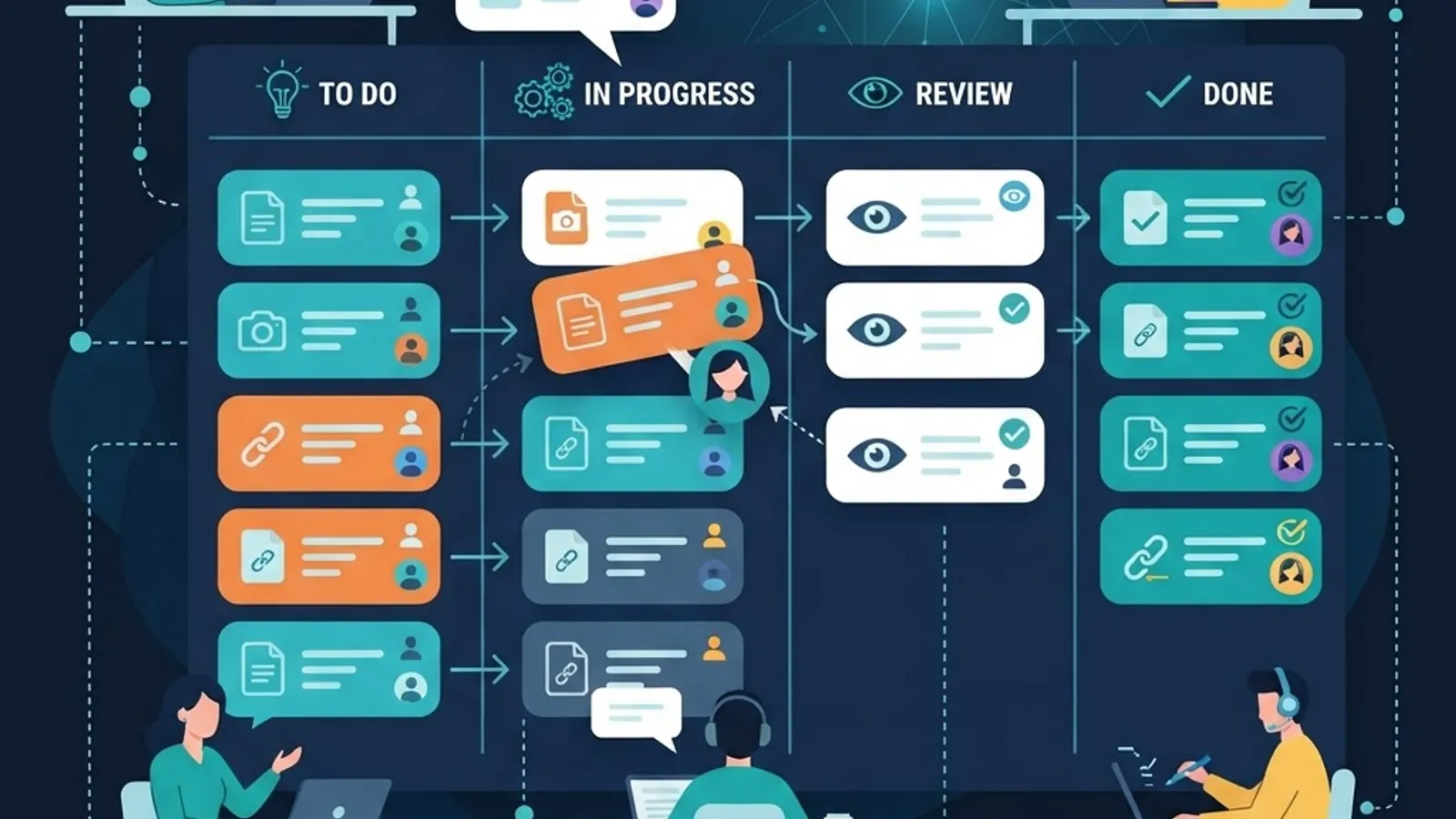
Workflow is where the platform quietly earns its cost. Multi-stage approvals, role permissions, deadline alerts, version history, and an asset library replace the usual email plus shared-drive chaos. Legal and compliance reviewers get scoped access instead of edit rights on everything, which regulated industries need.
The measurable win is cycle time. Teams that move from ad hoc coordination to a defined pipeline typically compress the brief-to-publish window substantially, because handoffs stop waiting on someone noticing an email. Agencies running structured pipelines, including the process we document for clients in our own SEO content writing work, consistently find the bottleneck is approval latency rather than writing speed.
Pros and Cons

Pros
- One system for strategy, production, publishing, and reporting, which removes most tool-switching overhead.
- On-demand access to vetted freelance talent, filterable by industry expertise.
- Strong governance: approvals, permissions, and version history that hold up in regulated environments.
- Interactive content generation without engineering resources.
- Executive-ready reporting that ties assets to funnel stages.
Cons
- Pricing is quote-based and opaque, which slows procurement and makes comparison hard.
- Onboarding is real work. Expect several weeks before the workflow feels natural.
- The AI writer is solid but not best in class as a standalone tool.
- Overpowered and overpriced for solo creators and small teams publishing a handful of posts monthly.
- Some modules, notably Ion, are irrelevant to blog-only programs yet still shape the bundle price.
Rock Content Cloud Pricing in 2026

Rock Content does not publish a self-serve price list for the full Cloud. Pricing is quoted per organization based on seats, modules, content volume, and contract length. Based on market-reported ranges and vendor conversations, the practical picture looks like this.
| Tier | Typical monthly cost | What is included | Best fit |
|---|---|---|---|
| WriterAccess only | Low hundreds plus per-word writer fees | Talent marketplace, briefs, basic workflow | Teams that just need writers |
| Cloud Growth | Roughly 1,000 to 3,000 USD | Planning, AI assist, workflow, analytics, limited seats | Mid-market teams, 20 to 50 assets monthly |
| Cloud Enterprise | 3,000 USD and up, annual contract | All modules, Ion interactive, SSO, custom integrations, strategist support | Enterprise and regulated industries |
Three things to negotiate before signing. First, seat count, since read-only reviewer seats should not cost the same as producer seats. Second, module unbundling if you will never use interactive content. Third, an onboarding and migration allowance, because the first sixty days determine whether adoption sticks.
Rock Content Cloud vs Competitors
| Platform | Core strength | Talent marketplace | Interactive content | Ideal buyer |
|---|---|---|---|---|
| Rock Content Cloud | End to end ContentOps plus talent | Yes, 15,000 plus writers | Yes, via Ion | Mid-market to enterprise |
| Contently | Premium editorial and brand storytelling | Yes, curated | No | Enterprise brand teams |
| Semrush Content Toolkit | SEO data depth and topic research | No | No | SEO-led teams |
| Jasper | Fast AI copy generation | No | No | Small teams and solo marketers |
| Notion plus AI | Flexible low-cost workspace | No | No | Startups building their own process |
The pattern is clear. If your constraint is writing speed, a cheaper AI tool wins. If your constraint is coordinating many contributors under review requirements, Rock Content Cloud wins. Buying it to solve a speed problem is the most common misfit we see. For teams that would rather outsource the entire pipeline than administer one, working with a partner like WebPeak Digital is often the cheaper path to the same output.
Who Should Buy It, and Who Should Not
Buy it if you publish at scale across multiple brands, regions, or languages, you have compliance review requirements, and content freelancer sourcing is currently a bottleneck. Skip it if one or two people produce everything, your monthly output is under ten assets, or your primary need is keyword research rather than production governance.
Key Takeaways
- Rock Content Cloud is a content operations platform, not an AI writing tool, and should be evaluated on workflow and governance.
- Its WriterAccess network of over 15,000 vetted freelancers is the strongest competitive moat in the product.
- Pricing is quote-based, realistically starting around 1,000 USD monthly and rising for enterprise contracts.
- Ion interactive content builds first-party data assets, which matters as third-party tracking declines.
- The platform pays off for teams of three or more with defined approval stages, and underdelivers for solo creators.
Frequently Asked Questions (FAQ)
Is Rock Content Cloud worth the money in 2026?
It is worth it if you publish more than 20 assets a month across multiple contributors and need approval governance. The savings come from fewer tools, faster approvals, and on-demand writers. For small teams under ten assets monthly, cheaper standalone tools deliver better value per dollar.
How much does Rock Content Cloud cost per month?
Rock Content quotes pricing per organization rather than publishing a list. Market-reported ranges put mid-market plans between roughly 1,000 and 3,000 USD monthly, with enterprise contracts starting above 3,000 USD annually committed. WriterAccess alone costs far less but adds per-word writer fees on top.
Does Rock Content Cloud include AI content generation?
Yes. It generates outlines, first drafts, headlines, meta descriptions, and translations inside the existing brief and approval workflow. Quality is comparable to mainstream 2026 assistants rather than superior, so plan for human subject-matter editing before anything reaches publication or client review.
What is the difference between Rock Content Cloud and WriterAccess?
WriterAccess is the freelance talent marketplace and can be bought on its own. Rock Content Cloud is the wider platform that wraps strategy planning, AI assistance, workflow approvals, interactive content, and analytics around that marketplace. Cloud customers get WriterAccess access as one module among several.
Is Rock Content Cloud good for SEO?
It supports SEO through keyword-linked briefs, on-page guidance, and Search Console reporting, but it is not a replacement for a dedicated SEO research suite. Most teams pair it with Semrush or Ahrefs, using Rock Content Cloud for production discipline and the SEO tool for opportunity discovery.
Can small businesses use Rock Content Cloud?
Small businesses can, but usually should not. The governance features assume multiple contributors and review stages that a two-person team does not need. A better path is buying writers through WriterAccess directly, or hiring an agency, and revisiting the full platform once output exceeds twenty assets monthly.
Final Verdict
Rock Content Cloud is a strong 7.5 out of 10 for its intended buyer and a poor fit for everyone else. It solves coordination, accountability, and talent sourcing better than almost anything else in its price band, and it will not fix a content program that lacks strategy. Buy it when the bottleneck is your process, not your prose.