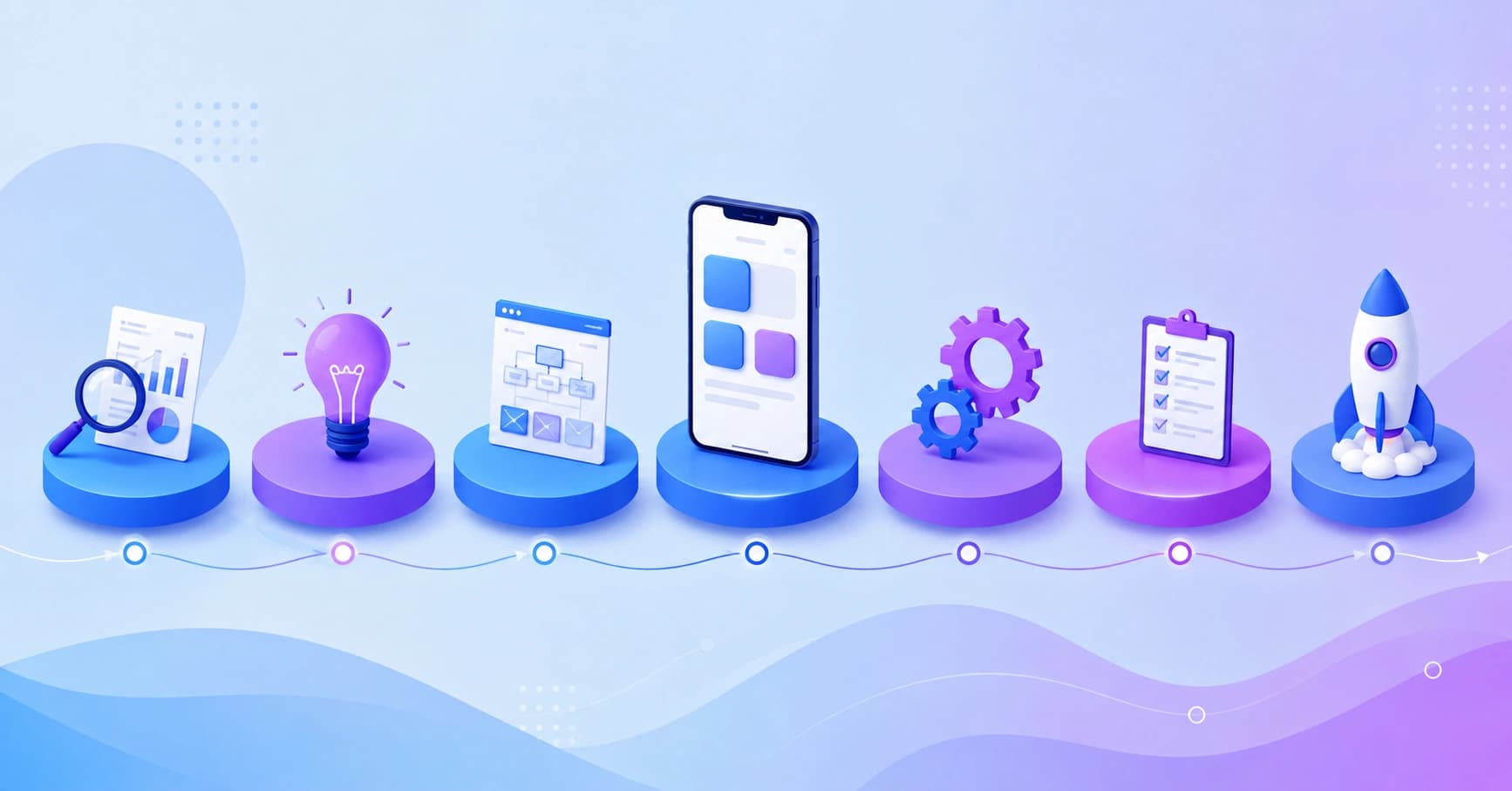
Learn what the 7 stages of app development are, what happens in each phase, how long they take, and how to avoid the mistakes that derail app launches.
What Are the 7 Stages of App Development
Most failed apps are not killed by bad code. They are killed by a stage someone decided to skip. Teams compress discovery and testing to save three weeks, then spend three months repairing the damage in production. The seven-stage model is not bureaucracy. It is a sequence of decisions, each one dramatically cheaper to make early than late. This guide breaks down all seven stages, the deliverable that proves a stage is genuinely finished, realistic timelines, and the specific errors that quietly inflate budgets.
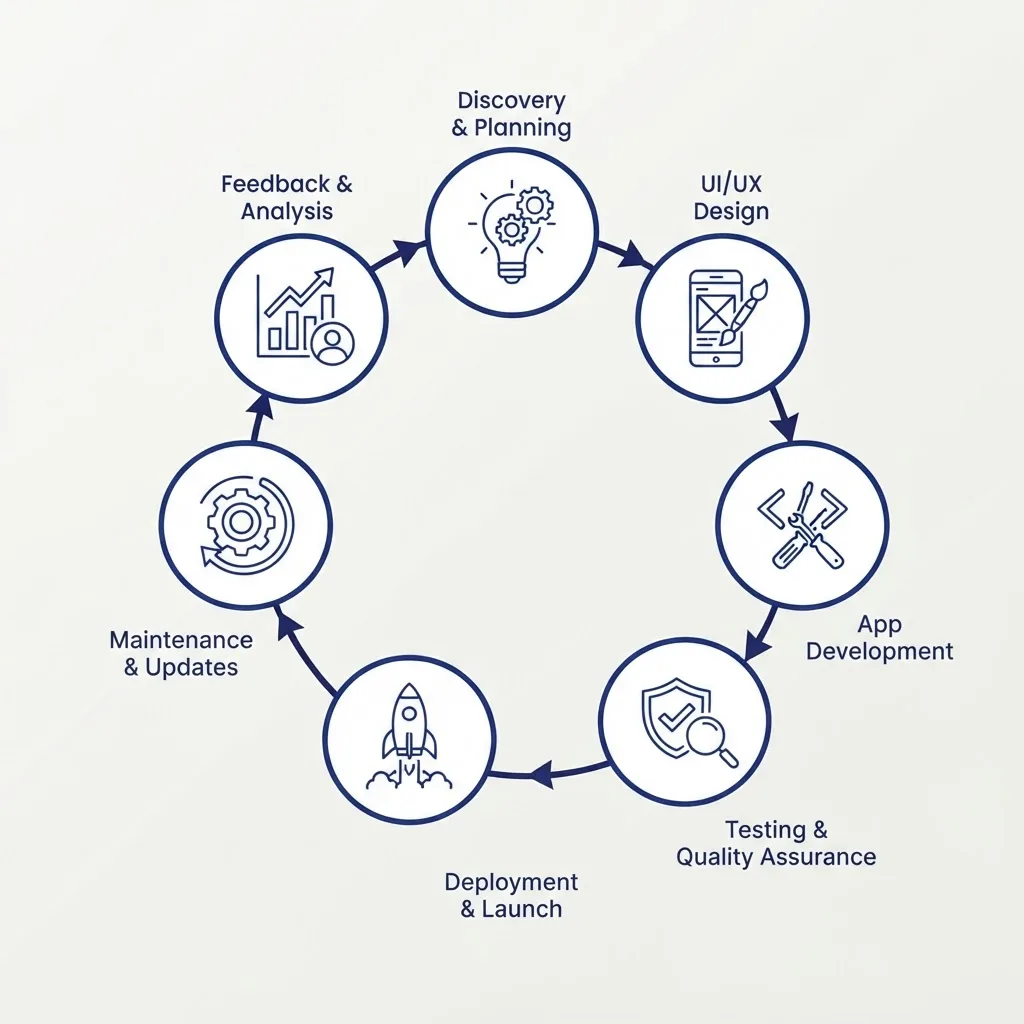
Quick Answer: The 7 stages of app development are discovery and strategy, requirements and planning, UI/UX design, development, testing and quality assurance, deployment and launch, and post-launch maintenance. Each stage ends with a concrete deliverable, and skipping any stage simply pushes its cost forward into a later, far more expensive stage.
The 7 Stages of App Development at a Glance
The app development lifecycle is the repeatable sequence of stages that turns a product idea into a live, maintained application. The table below shows what each stage owns and roughly how much of a typical project timeline it consumes.
| Stage | Main Goal | Key Deliverable | Share of Timeline |
|---|---|---|---|
| 1. Discovery and strategy | Validate the problem | Signed-off product brief | 10 percent |
| 2. Requirements and planning | Define scope and architecture | Spec, backlog, stack decision | 10 percent |
| 3. UI/UX design | Make it usable | Clickable prototype, design system | 15 percent |
| 4. Development | Build it | Installable build each sprint | 35 percent |
| 5. Testing and QA | Prove it works | Test report, zero critical defects | 15 percent |
| 6. Deployment and launch | Ship it safely | Approved store release, rollback plan | 5 percent |
| 7. Maintenance | Keep and grow users | Monitored, updated app | Ongoing |
Stage 1: Discovery and Strategy
Discovery answers one question: should this app exist at all? The work is research, not design. That means user interviews, competitor teardowns, and a written definition of the single job your app must do better than the current alternative, including the alternative of doing nothing. The deliverable is a product brief naming the target user, the primary use case, one success metric, and the revenue model.
The commercial stakes justify the rigour. Statista reports global mobile app revenue heading toward roughly 673 billion dollars by 2027, which means almost every category already has funded competitors. Two weeks of discovery on a four-month project is not a delay. It removes the single largest source of rework later, which is building the wrong feature well.
Stage 2: Requirements, Architecture, and Planning
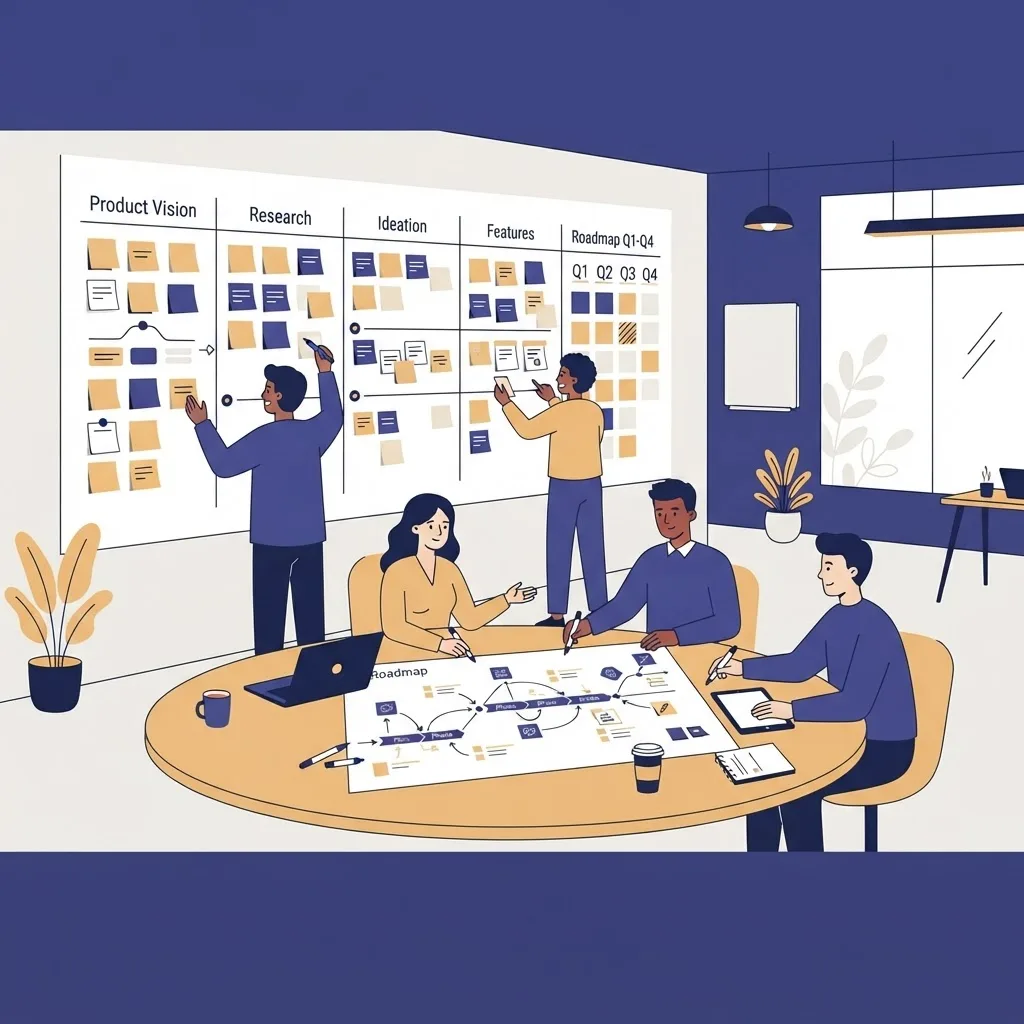
This stage converts a validated idea into something engineers can actually build. Three artefacts matter: functional requirements written screen by screen, a data model with integration points, and non-functional requirements covering expected load, offline behaviour, and acceptable latency. Vague requirements are the most common root cause of scope disputes, because nobody agreed what finished meant.
Stack selection belongs here too, not in week six. Decide native versus cross-platform, pick your backend, and document why. If your product is browser-first, our breakdown of the best web application framework covers the trade-offs in detail. Delivery model is a parallel decision, and teams weighing internal capacity against an external partner should read this guide to outsource web application development before committing headcount.
Stage 3: UI/UX Design and Prototyping
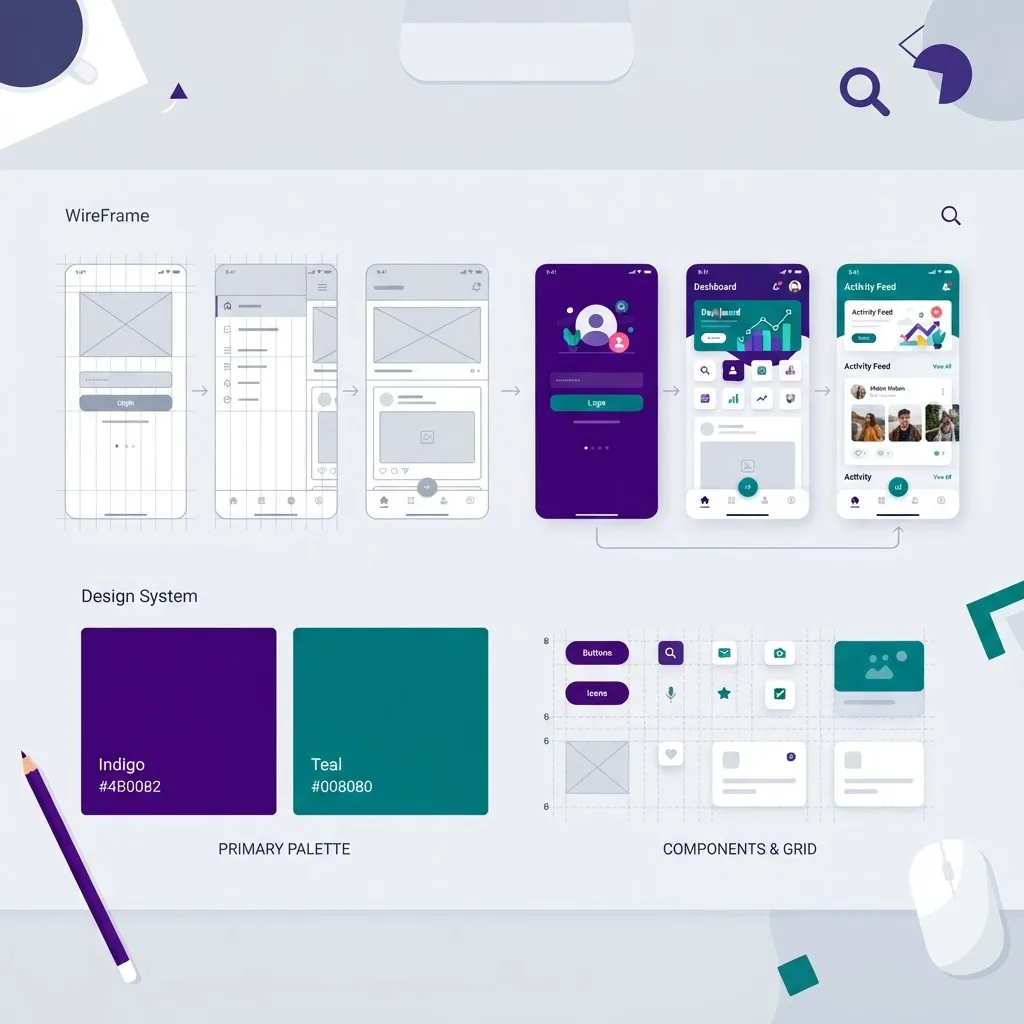
Design moves in three passes: wireframes to settle structure, a clickable prototype to test the critical path, and a design system so engineers stop reinventing components. Test the prototype with five real users before writing production code. Nielsen Norman Group research established that testing with five participants surfaces roughly 85 percent of usability problems, which makes this the cheapest quality gate in the whole lifecycle.
Accessibility is decided here as well: minimum 44 by 44 pixel tap targets, 4.5 to 1 text contrast, and readable type at default system sizes. Teams that want this handled as a specialist workstream often bring in dedicated web application design services rather than asking developers to improvise layouts. The exit deliverable is a prototype a stakeholder can tap through without narration.
Stage 4: Development
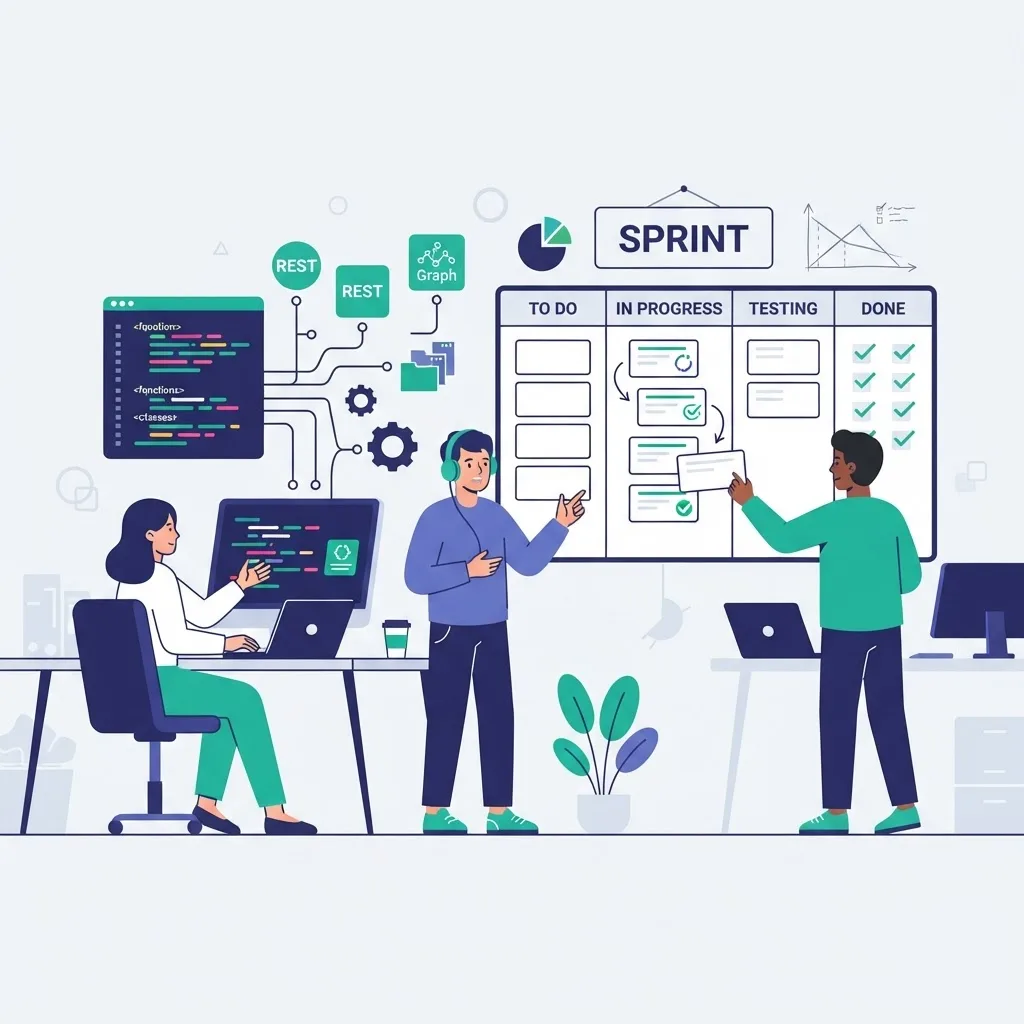
Development is the longest stage and the one most often measured wrongly. Progress is not lines of code, it is working vertical slices: one feature complete from interface to database, testable by a non-developer. Agree the API contract before frontend and backend work in parallel, otherwise integration week becomes integration month.
Four practices separate predictable builds from chaotic ones: continuous integration on every commit, mandatory code review, feature flags so unfinished work can ship dark, and a staging environment that mirrors production. Sprints of one or two weeks each ending in an installable build give stakeholders real evidence instead of status decks. Engineering-led teams such as WebPeak Digital structure delivery this way specifically so a missed estimate is visible in week two rather than month four.
Stage 5: Testing and Quality Assurance
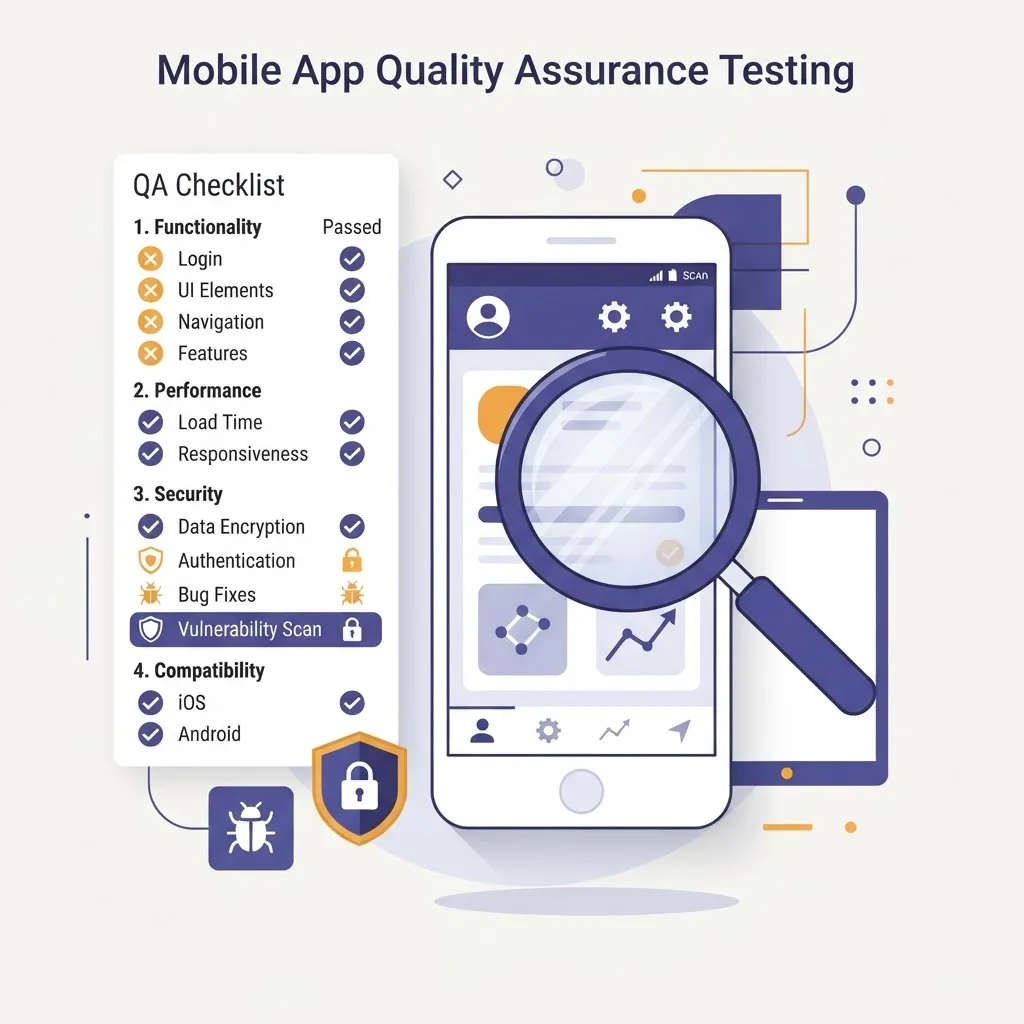
QA is not one activity. A complete pass includes functional testing against acceptance criteria, regression testing, a device and OS matrix covering your real analytics distribution, performance testing under expected concurrency, and security testing. The economics here are unambiguous: research popularised by the IBM Systems Sciences Institute found a defect discovered after release costs up to 30 times more to fix than the same defect caught during design.
Security deserves its own checklist rather than a passing glance, and the fundamentals are covered in these web application security best practices. For anything handling payments, health data, or authentication, commission penetration testing for your web application before launch, not after your first incident. Exit criteria should be explicit: zero critical defects and a crash-free session rate above 99.5 percent.
Stage 6: Deployment and Launch
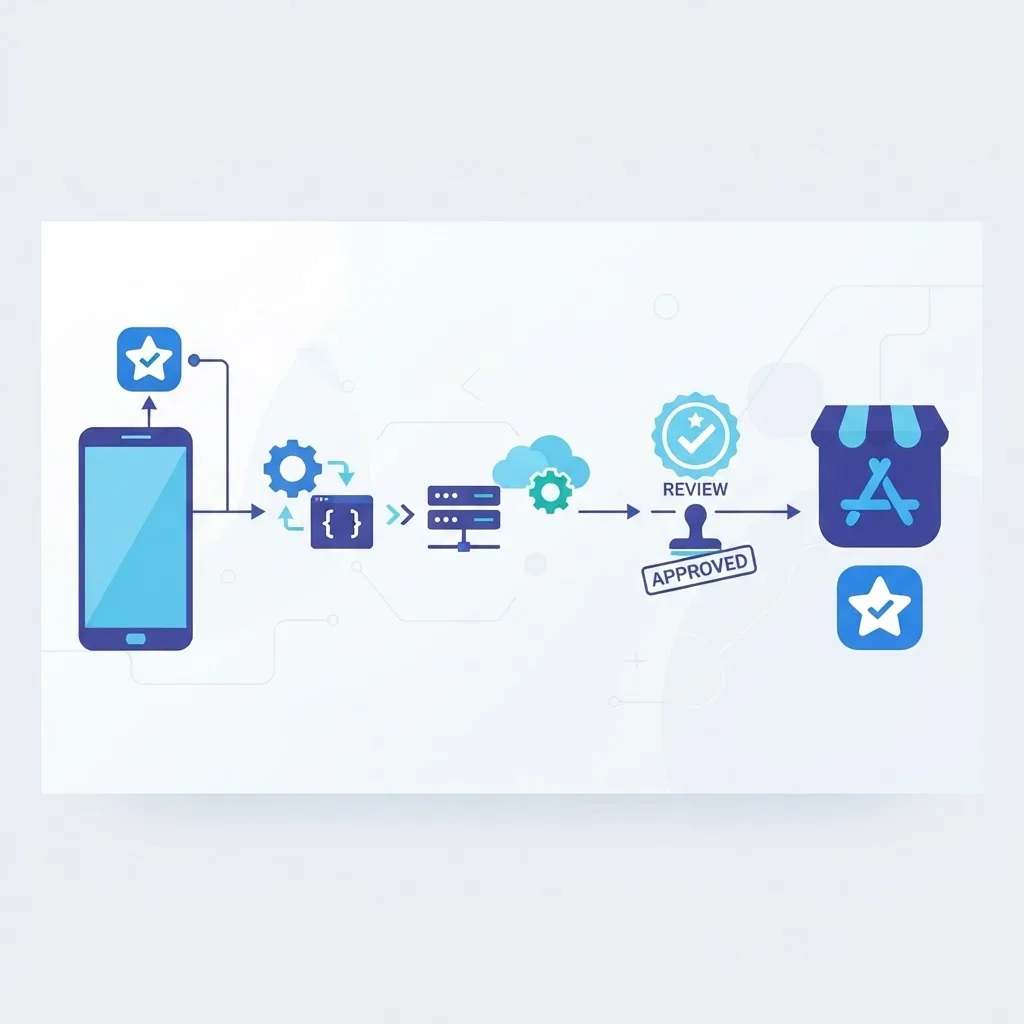
Launch is an operations exercise. Prepare store metadata, screenshots, and keyword-optimised descriptions, then submit early enough to absorb a rejection. Apple states that most App Store submissions are reviewed within 24 hours, but policy rejections for privacy disclosures and login requirements are routine, so treat first submission as a dress rehearsal.
Use a phased rollout. Release to 10 percent of users, watch crash rate and key conversion events for 24 to 48 hours, then widen. Three things must exist before you press publish: production monitoring with alerting, a documented rollback or hotfix path, and someone on call who owns the response. A launch without a rollback plan is a gamble, not a release.
Stage 7: Maintenance, Monitoring, and Iteration
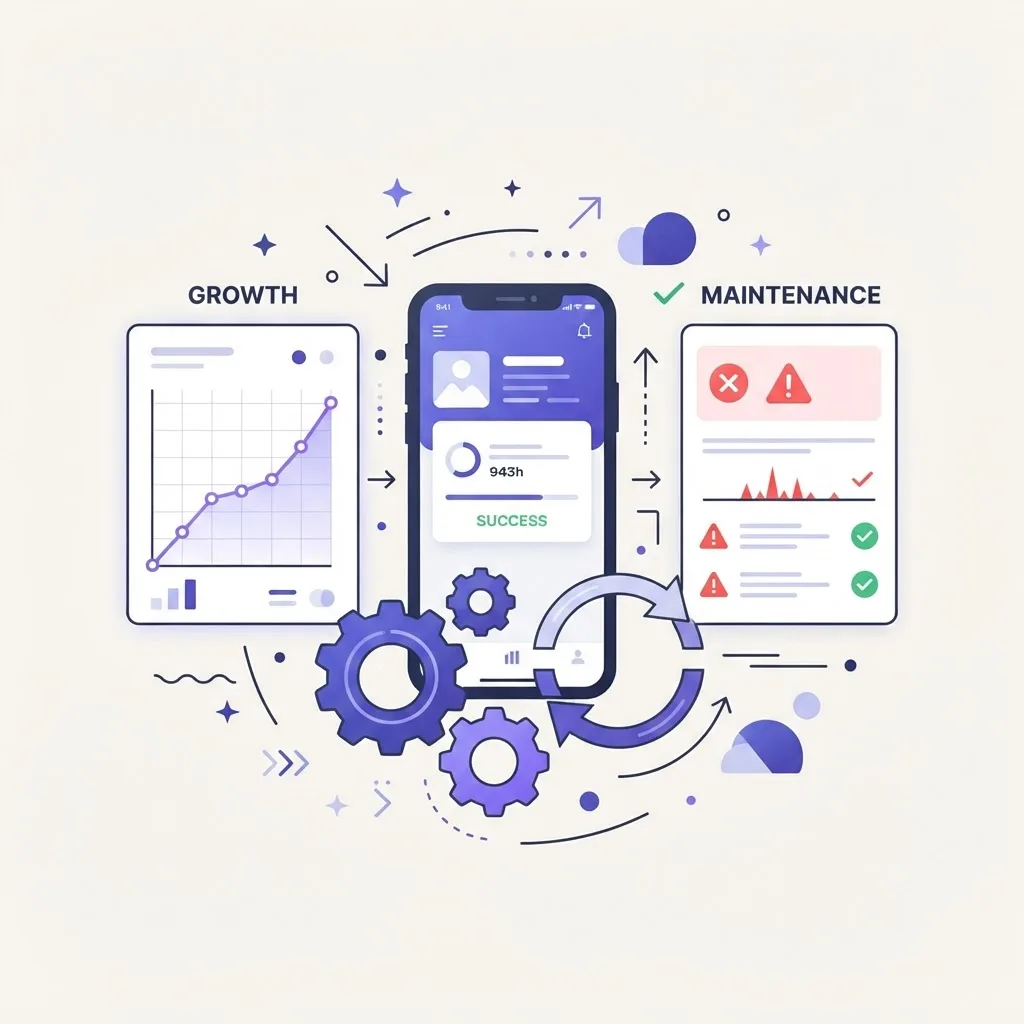
The app is now a product with running costs. Apple and Google both ship major OS releases annually, so a maintained app needs compatibility work every year regardless of new features. Budget 15 to 20 percent of the original build cost per year for updates, dependency patching, infrastructure, and support. For planning that number honestly against your build figure, see this analysis of custom web application development cost.
Instrument what matters: day 1, day 7, and day 30 retention, activation rate, crash-free sessions, and funnel drop-off. These metrics feed the next iteration, which is why the seven stages behave as a loop rather than a line. Product teams at a specialised web application agency usually run this loop in six to eight week cycles so learning compounds instead of stalling.
How Long Each Stage Takes
A realistic first release of a focused app with authentication, a core workflow, and payments runs 12 to 20 weeks. Discovery and planning take two to four weeks combined, design two to three weeks, development six to ten weeks, QA two to three weeks, and launch one week. Compressing the plan rarely compresses the project, it just relocates the work into QA and support.
Common Mistakes That Break the Process
- Treating design as decoration instead of a testable specification.
- Starting development before the API contract and data model are agreed.
- Defining an MVP by feature count rather than by one complete user journey.
- Running QA only at the end, so defects arrive in a single unmanageable batch.
- Budgeting the build and forgetting the first year of maintenance.
- Measuring downloads instead of retention after launch.
Key Takeaways
- The seven stages are discovery, planning, design, development, testing, launch, and maintenance.
- Development consumes roughly 35 percent of the timeline, but discovery and design decisions determine most of its cost.
- Defects found after release can cost up to 30 times more than defects caught during design.
- Testing a prototype with five users surfaces about 85 percent of usability issues.
- Plan 15 to 20 percent of build cost annually for maintenance and OS compatibility.
- Every stage should end with a deliverable someone can inspect, not a status update.
Frequently Asked Questions (FAQ)
What are the 7 stages of app development in order?
The order is discovery and strategy, requirements and planning, UI/UX design, development, testing and quality assurance, deployment and launch, then maintenance and iteration. Each stage produces a deliverable that the next stage depends on, which is why reordering them usually creates rework rather than saving time.
How long does it take to build an app from start to finish?
A focused first release typically takes 12 to 20 weeks with a small dedicated team. Simple utility apps can ship in six to eight weeks, while products with complex integrations, regulated data, or multiple user roles commonly run six months or longer before their first public release.
Which stage of app development costs the most?
Development absorbs the largest share of budget, usually 35 to 45 percent, because it consumes the most engineering hours. However, the most expensive mistakes originate in discovery and design, since a wrong requirement is built, tested, launched, and then rebuilt at several times the original price.
Can I skip the testing stage to launch faster?
No. Skipping structured testing moves defects to your users, where fixes cost far more and reviews suffer permanently. If time is short, reduce scope instead: ship fewer features tested properly rather than more features tested casually. One-star reviews from launch bugs are extremely hard to reverse.
What is the difference between app development stages and agile sprints?
Stages describe what must happen across the lifecycle, while sprints describe how work is scheduled inside those stages. Agile teams still perform discovery, design, testing, and release, just in shorter overlapping cycles. Stages are the checklist, sprints are the cadence, and mature teams use both together.
Do the same 7 stages apply to web apps?
Yes, with two differences. Web apps skip app store review, so launch is faster and rollbacks are simpler. In exchange, browser and device compatibility testing plus security hardening carry more weight, because a web application is publicly reachable the moment it is deployed.