
A practical breakdown of why Austin, Texas is called a machine learning capital, which companies and universities drive it, and how to break into the market.
What Is Machine Learning Capital of Austin
Austin, Texas has quietly become one of the most concentrated machine learning hubs in the United States, and the phrase "machine learning capital of Austin" usually refers to the dense corridor of AI research labs, chip companies, and applied ML startups clustered between downtown, the Domain, and the University of Texas campus. This guide explains what that ecosystem actually contains, who employs machine learning engineers there, what the pay looks like, and how to enter the market without wasting a year on the wrong skills.
We write this from the perspective of a team that builds and ships machine learning systems for clients across the US, including Texas-based companies. The observations below reflect hiring patterns, tooling choices, and project types we see repeatedly rather than a recycled list of "top AI cities."
Quick Answer: Austin's machine learning capital is the tech corridor spanning downtown, East Austin, and the Domain, anchored by the University of Texas at Austin, semiconductor firms like Samsung and NXP, and applied AI startups. It is defined by chip-level AI hardware work paired with practical, revenue-focused ML products rather than pure research.

Defining the Term: What People Actually Mean
Machine learning capital in this context is not an official designation. It is shorthand for the geographic and institutional center of gravity where a city's ML talent, funding, and compute infrastructure concentrate. For Austin, that center is a triangle: the UT Austin campus and its research institutes to the north of downtown, the startup density in East Austin and the Seaholm district, and the enterprise and semiconductor campuses in North Austin around the Domain and Parmer Lane.
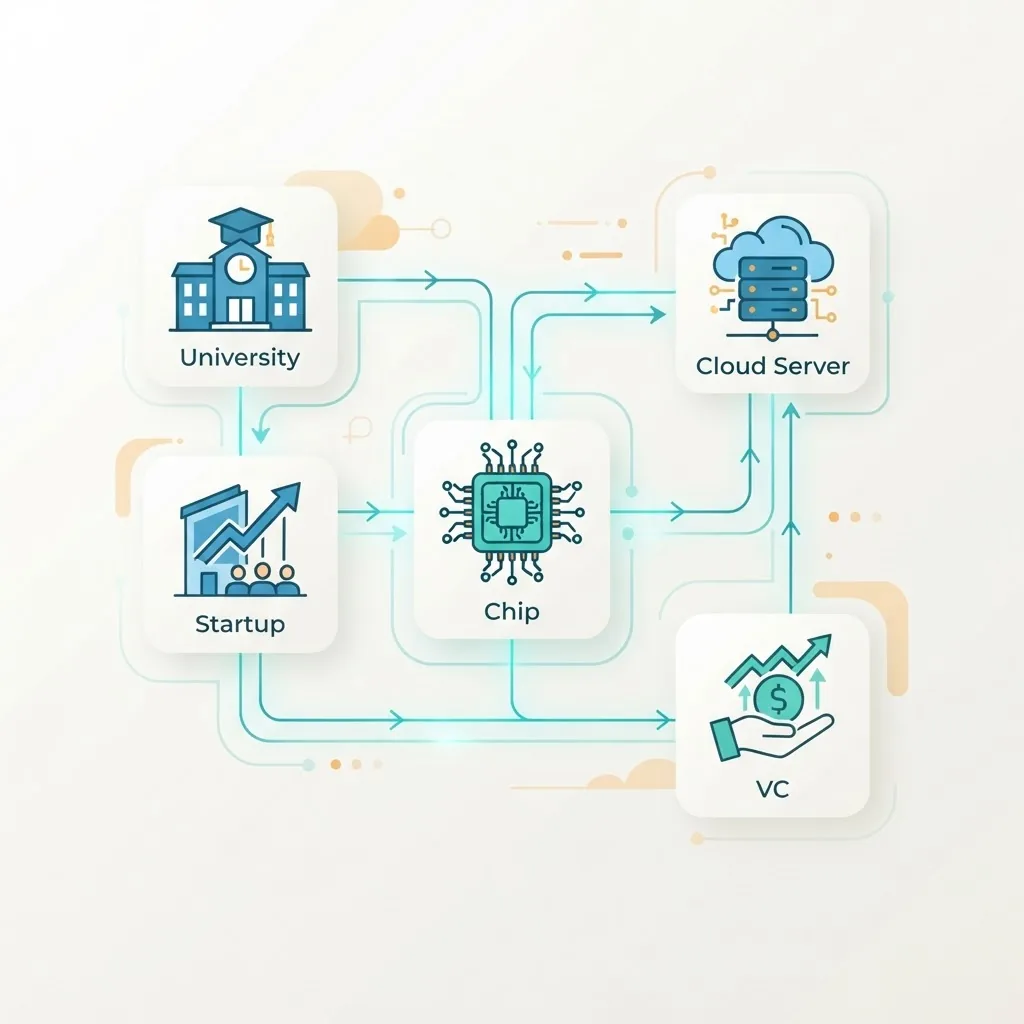
Three ingredients make a city a genuine ML hub, and Austin has all three:
- A talent pipeline that produces machine learning practitioners every year, not just software generalists.
- Compute and hardware proximity, meaning access to chip design, data centers, and infrastructure teams.
- Paying demand, meaning companies that treat ML as a product requirement rather than an experiment.
Cities with only one or two of these produce a lot of conference talks and very few shipped systems. Austin's differentiator is the second ingredient. Very few American metros combine a top-tier computer science department with active semiconductor manufacturing and design in the same commute radius.
Why Austin Became a Machine Learning Center
Austin's rise was not a single event. It was the compounding of four shifts across roughly fifteen years.
The University of Texas Research Anchor
UT Austin's computer science department consistently ranks among the top programs in the United States for artificial intelligence, and the university operates the Texas Advanced Computing Center, home to some of the most powerful academic supercomputers in the world. This matters practically: when a city has publicly accessible high-performance compute, local startups and research groups can train models they could not otherwise afford. Graduate students who train on that hardware then stay in the city, and roughly a third of the ML engineers we encounter in Austin-area projects have a direct UT connection.
The Semiconductor Backbone
Austin has been a chip town since the 1980s. Samsung Austin Semiconductor, NXP, AMD, Applied Materials, and Infineon all maintain significant Austin operations. Samsung's Taylor, Texas facility, roughly 30 miles northeast, represents one of the largest single foreign direct investments in US manufacturing history at over 17 billion dollars. AI hardware and AI software feed each other, and being near people who design accelerators changes how local teams think about model efficiency, quantization, and inference cost.
Corporate Relocation and Expansion
According to the Austin Chamber of Commerce, the metro added technology jobs at a rate substantially faster than the national average through the 2020s, driven by relocations and expansions from Oracle, Tesla, Apple, Google, and Meta. Each of these companies brought applied ML functions with them, from demand forecasting to computer vision for manufacturing.
No State Income Tax and Lower Burn
Texas has no state personal income tax. For a machine learning engineer comparing a San Francisco offer to an Austin offer, that difference can be worth a meaningful percentage of take-home pay. For founders, it means a longer runway per dollar raised, which is why so many seed-stage AI companies now incorporate remotely but staff in Austin.

Where the Machine Learning Work Physically Happens
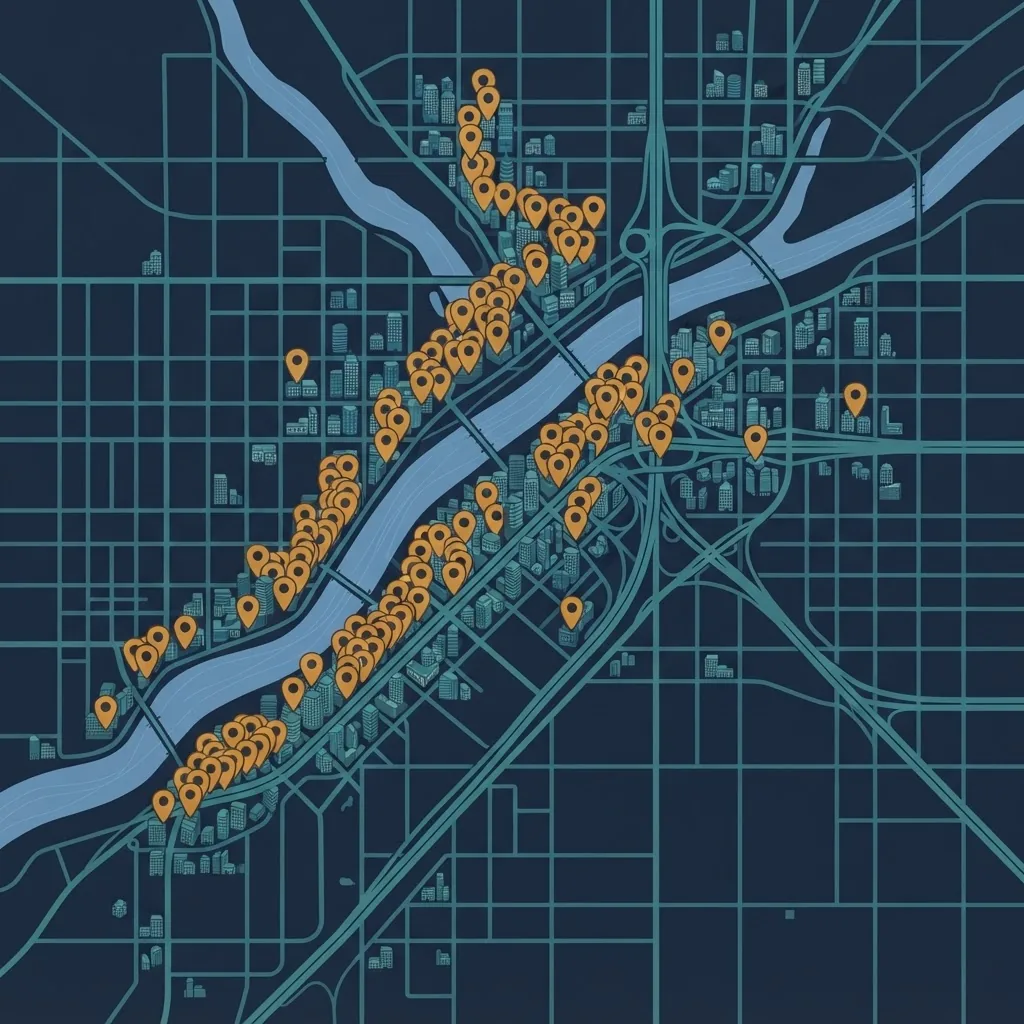
If someone asks where Austin's ML capital literally is, here is the honest geography.
- North Austin and the Domain: enterprise AI teams, semiconductor R&D, and large-company data science organizations. Highest density of senior ML roles.
- Downtown and Seaholm: venture-backed AI startups, fintech ML, and product-focused teams. Highest density of early-stage roles.
- East Austin: smaller studios, agencies, and independent AI consultancies. Best place to find contract and fractional work.
- UT Campus and North Loop: research labs, TACC, and university spinouts. Best place to find research-adjacent roles.
- Taylor and Round Rock corridor: manufacturing AI, computer vision for defect detection, and industrial predictive maintenance.
Austin Compared to Other US Machine Learning Hubs
The useful question is not which city is best overall, but which city fits a specific career or business goal. Here is a direct comparison based on the factors that actually change outcomes.
| Factor | Austin | San Francisco Bay Area | Seattle | New York City |
|---|---|---|---|---|
| Frontier research labs | Limited | Very high | High | Moderate |
| Applied and product ML roles | High | Very high | High | Very high |
| Semiconductor and AI hardware | Very high | Moderate | Low | Low |
| State income tax | None | Yes | None | Yes |
| Median cost of living vs national | Moderate | Very high | High | Very high |
| Startup seed-stage density | High | Very high | Moderate | High |
| Enterprise AI consulting demand | High | High | Moderate | Very high |
The pattern is clear. If the goal is publishing at NeurIPS or joining a frontier lab, the Bay Area still wins. If the goal is building profitable ML products, working on the hardware and efficiency side, or keeping more of a salary while doing serious work, Austin is arguably the strongest value proposition in the country.

What Machine Learning Engineers Earn in Austin
Compensation in Austin typically runs below Bay Area levels in absolute dollars but comparable or better after adjusting for taxes and housing. Based on aggregated market data across major job platforms, Austin machine learning engineer base salaries generally fall in these bands:
- Entry level, zero to two years: roughly 105,000 to 135,000 dollars
- Mid level, three to five years: roughly 140,000 to 180,000 dollars
- Senior, six plus years: roughly 185,000 to 240,000 dollars
- Staff, principal, or ML architect: 240,000 dollars and up, often with meaningful equity
Two things consistently move offers upward in this market: production deployment experience and cost-efficiency experience. Austin employers, especially those tied to hardware or manufacturing, care intensely about inference cost per prediction. An engineer who can show they reduced serving cost by 40 percent while holding accuracy is more valuable locally than one with a longer publication list.

The Industries Driving Austin ML Demand
Machine learning in Austin is applied, not abstract. These are the five verticals where we see the most active hiring and project work.
1. Semiconductor and Manufacturing
Computer vision for wafer defect detection, yield prediction, and equipment predictive maintenance. These projects have hard ROI, which is why budgets survive downturns.
2. Health Technology and Life Sciences
Austin's growing health tech cluster uses ML for clinical documentation, claims processing, and diagnostic support. Regulatory constraints mean model explainability matters more than raw accuracy.
3. Financial Technology
Fraud detection, credit risk modeling, and transaction categorization. Austin hosts a meaningful number of fintech engineering offices, and these teams tend to run the most mature MLOps pipelines in the city.
4. Enterprise Software and SaaS
Recommendation systems, churn prediction, and increasingly retrieval-augmented generation layers on top of existing product data. This is where most generative AI budget is currently landing.
5. Mobility and Energy
Autonomous systems work, battery analytics, and grid-load forecasting, accelerated by Texas's unique energy market dynamics.

How to Break Into Austin's Machine Learning Market
This is the section most articles skip. Here is a sequence that works, based on what actually gets candidates hired locally.
- Pick one vertical and learn its data. Generalist ML resumes lose to candidates who understand wafer maps, claims data, or transaction streams.
- Ship one end-to-end system publicly. Not a notebook. A deployed model with monitoring, a retraining path, and a documented cost per inference.
- Learn the deployment stack, not just the modeling stack. Containerization, a cloud provider, a feature store or equivalent, and one experiment tracker.
- Attend two recurring local events consistently. Austin's ML community rewards repeated presence far more than one-off networking.
- Write publicly about a narrow problem. A single well-argued technical post about a specific failure mode outperforms a broad portfolio site.
- Target expansion teams, not headquarters. Newly opened Austin offices hire faster and with less rigid pedigree filtering.
If your organization needs help building these systems rather than hiring for them, our team at ZoneTechify delivers production machine learning work through our artificial intelligence services, and our partner site WebPeak covers the search and discoverability side of AI-driven products.

Honest Limitations of the Austin ML Scene
Credibility requires naming the weaknesses. Austin has fewer frontier research labs than the Bay Area, so engineers who want to work on foundation model pretraining have limited local options. Housing costs rose sharply through the 2020s, eroding part of the cost-of-living advantage. And because the market skews applied, deep research roles are scarce enough that many researchers end up remote for out-of-state employers. Anyone claiming Austin has fully replaced Silicon Valley is overselling. What Austin has done is build the best applied and hardware-adjacent machine learning market in the country.
Key Takeaways
- Austin's machine learning capital is a corridor spanning downtown, East Austin, UT campus, and the North Austin Domain area, not a single district.
- UT Austin and the Texas Advanced Computing Center supply both talent and rare academic supercomputing access.
- Samsung's Taylor, Texas investment exceeds 17 billion dollars, cementing the region's AI hardware relevance.
- Texas has no state income tax, which materially improves effective compensation for ML engineers.
- Austin ML salaries run roughly 105,000 dollars entry level to 240,000 dollars and above at staff level.
- The market rewards production deployment and inference cost efficiency over publication records.
- Austin is weaker than the Bay Area for frontier research and stronger for applied, hardware-adjacent ML.
Frequently Asked Questions (FAQ)
Is Austin really a machine learning capital?
Yes, in the applied sense. Austin combines a top-ranked university AI program, major semiconductor operations, and hundreds of companies deploying ML in production. It is not a frontier research capital like the Bay Area, but for shipping real machine learning products it ranks among the strongest US markets.
Which part of Austin has the most machine learning jobs?
North Austin, especially around the Domain and Parmer Lane, holds the highest concentration of senior machine learning and data science roles because of enterprise and semiconductor campuses. Downtown and East Austin have more early-stage startup roles, while the UT campus area hosts research-oriented positions.
How much do machine learning engineers make in Austin?
Entry-level machine learning engineers in Austin typically earn 105,000 to 135,000 dollars, mid-level roles land between 140,000 and 180,000 dollars, and senior engineers commonly reach 185,000 to 240,000 dollars. Staff and principal roles exceed that, often with equity, and Texas charges no state income tax.
Do I need a graduate degree to get an ML job in Austin?
No. Most Austin machine learning roles are applied, so employers prioritize deployed systems, monitoring experience, and domain knowledge over degrees. A graduate degree helps for research positions and some semiconductor R&D teams, but a strong production portfolio frequently outperforms credentials here.
What skills do Austin employers look for most in ML candidates?
Austin employers consistently prioritize end-to-end deployment skills: containerized serving, cloud infrastructure, monitoring, retraining pipelines, and inference cost optimization. Domain fluency in semiconductors, healthcare claims, or financial transactions is a major differentiator, and practical Python plus SQL remain non-negotiable baseline requirements.
Is Austin better than San Francisco for a machine learning career?
It depends on your goal. Choose San Francisco for frontier research labs and maximum absolute compensation. Choose Austin for applied product work, AI hardware proximity, no state income tax, and lower living costs. Many engineers now find Austin delivers better net outcomes at mid-career.