A practical guide to Why Machines Learn by Anil Ananthaswamy: what the book covers, where to legally read it in PDF or ebook form, and how to actually study it.
Why Machines Learn PDF
If you searched for a "why machines learn PDF," you are almost certainly looking for Why Machines Learn: The Elegant Math Behind Modern AI by Anil Ananthaswamy, published by Dutton (Penguin Random House) in July 2024. It has become one of the most recommended bridges between popular AI writing and real machine learning mathematics. This guide explains exactly what is inside the book, where you can legally get a PDF or digital copy, how it compares to the other books people usually consider alongside it, and how to study it so the math actually sticks.
We write about AI and applied engineering every week at ZoneTechify, and this is the title we hand to developers who say they can call an API but cannot explain what their model is doing. So this is not a summary scraped from a bookstore page. It is a working reader's guide.
Quick Answer: Why Machines Learn by Anil Ananthaswamy explains the linear algebra, calculus, probability, and optimization behind modern AI for general readers. There is no free official PDF. Legal digital access comes from Google Play Books, Kindle, Apple Books, Kobo, Everand, or a library app such as Libby or your university's O'Reilly subscription.
Is There a Free Official Why Machines Learn PDF?
No. Why Machines Learn is a commercially published trade book under active copyright, and the publisher has never released a free PDF edition. Any site offering a "free full PDF download" is distributing a pirated scan, and those pages are the single most common vector for malware-laced downloads and credit-card phishing forms in the ebook niche.
There is one important exception worth knowing: the author has publicly shared supplementary appendices and errata related to the book's math sections, and the publisher's page hosts sample chapters. Those legitimate excerpts are usually enough to decide whether the book's difficulty level matches yours before you buy.
Legal Ways to Read It Digitally
- Buy the ebook on Kindle, Google Play Books, Apple Books, or Kobo. Google Play Books lets you download a DRM-protected file and read offline, which is the closest legitimate equivalent to a PDF.
- Borrow it free through Libby or Hoopla if your public library carries it. Most large library systems in the US, UK, Canada, and Australia do.
- Use a subscription such as Everand (formerly Scribd) or your university's O'Reilly Learning access, both of which carry technical trade titles.
- Audiobook editions exist, though they are a poor fit here because the book leans on equations and diagrams.
- Interlibrary loan for the print edition if you prefer paper and margin notes, which is genuinely the better format for this particular book.

What the Book Actually Covers
The book's thesis is direct: modern machine learning is not magic, and it is not new. It is roughly two centuries of accumulated mathematics — vectors, matrices, derivatives, probability distributions, and optimization — assembled into systems that adjust their own parameters from data. Ananthaswamy tells that story chronologically through the people who built it, and he does not hide the equations. He explains them.
The arc moves through recognizable landmarks:
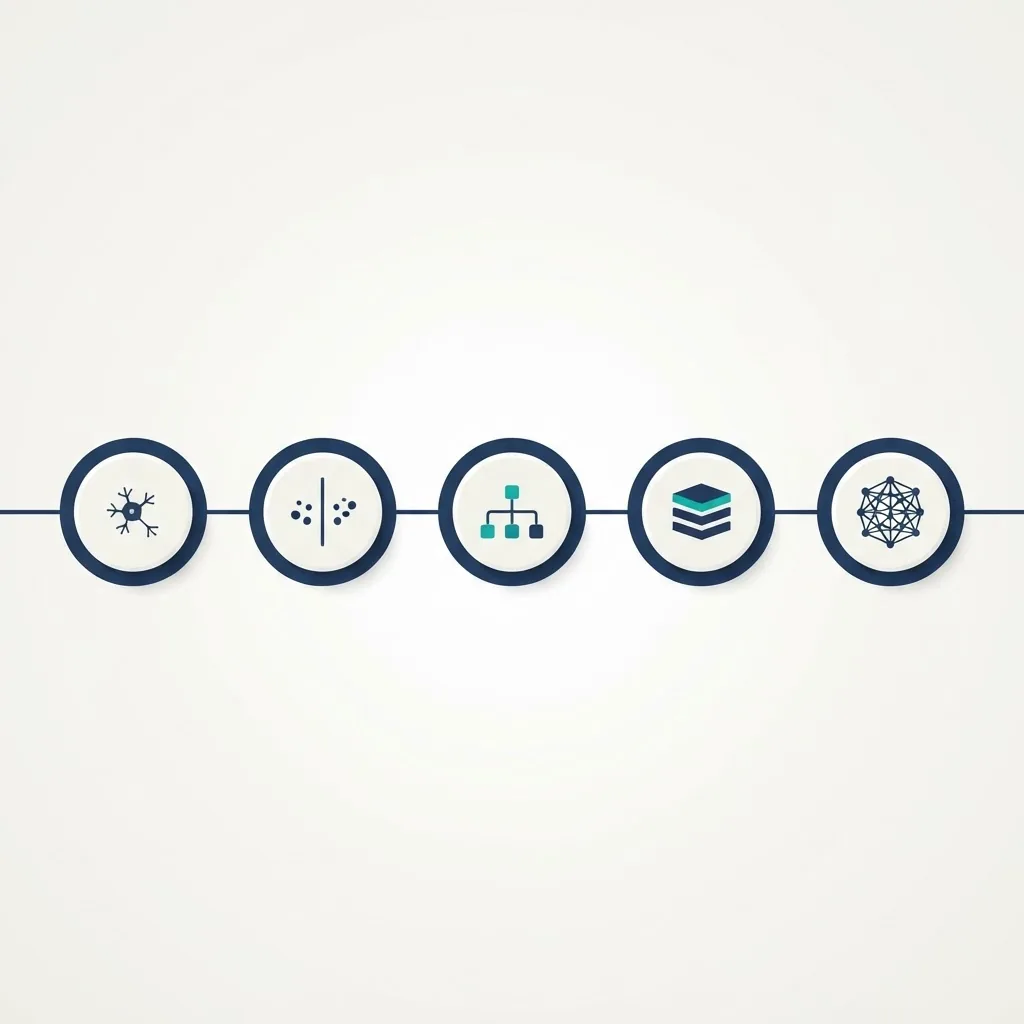
- The perceptron and Frank Rosenblatt's 1958 machine, including why its failure on the XOR problem stalled the field.
- Nearest neighbours and clustering, the simplest useful learning algorithms and the geometry of distance.
- Bayes' theorem and probabilistic reasoning as the foundation of naive Bayes classifiers.
- Least squares and linear regression, traced back to Gauss and Legendre.
- Support vector machines and the kernel trick, the technique that dominated the 1990s and early 2000s.
- Hopfield networks and Boltzmann machines, whose authors later won the 2024 Nobel Prize in Physics.
- Backpropagation and gradient descent, the engine that makes deep learning trainable.
- The universal approximation theorem, and why depth beats width in practice.
The Mathematics You Are Expected to Meet
This is where readers either commit or bounce. The book uses real notation, and pretending otherwise wastes your time.
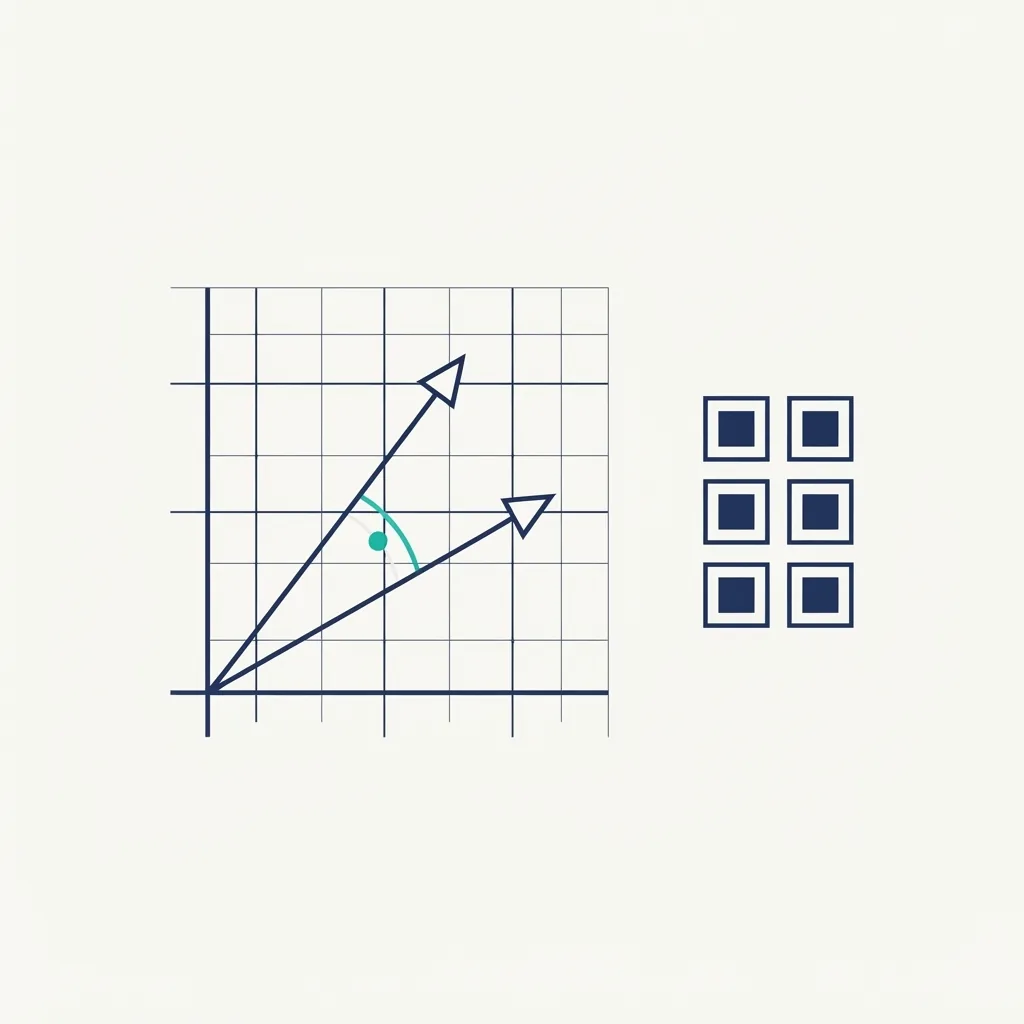
Linear algebra carries most of the weight. Data points become vectors, datasets become matrices, and learning becomes a search through a space of weight vectors. The dot product does the heavy lifting: it measures similarity, and it is the single operation that a perceptron, an SVM, and a transformer attention head all share.
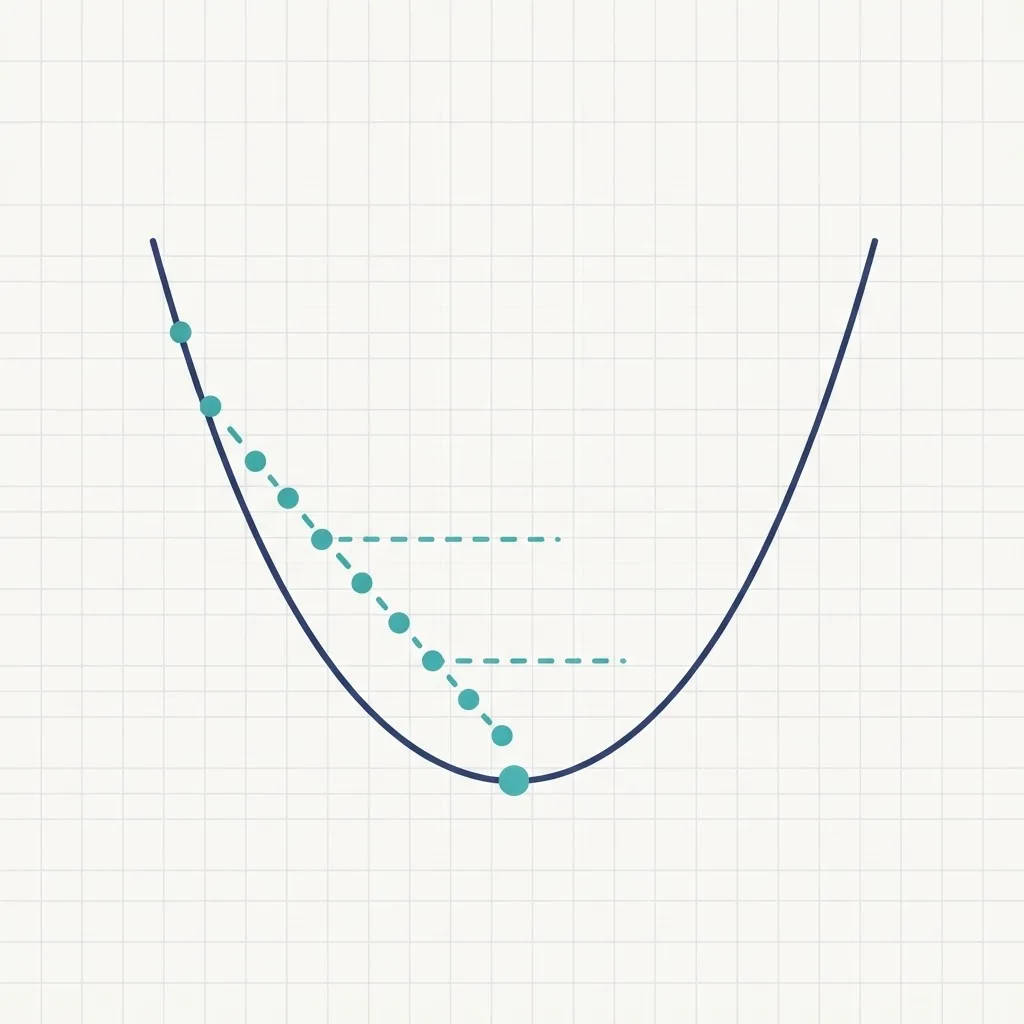
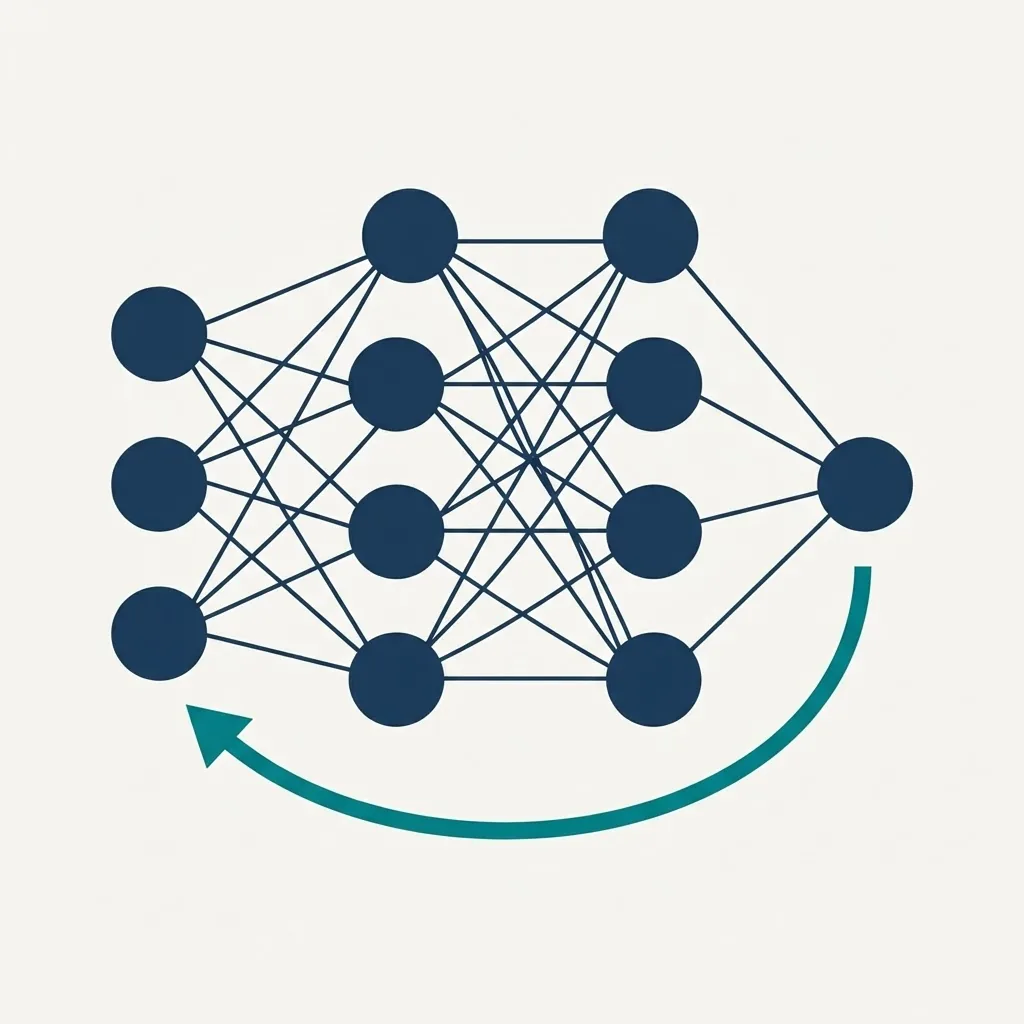
Calculus appears as partial derivatives and the chain rule. Gradient descent is nothing more than repeatedly computing the slope of an error surface and stepping downhill. Backpropagation is the chain rule applied efficiently backwards through layers.
Probability frames the entire premise that data is drawn from a distribution, which is why models generalize at all and also why they fail when that distribution shifts.
Who Should Read It, and Who Should Skip It
The book fits a specific reader: someone comfortable with high-school algebra who wants to understand mechanisms rather than metaphors. Based on how our team has used it internally, here is the honest fit assessment.
Read it if you are: a software developer shipping AI features without understanding them, a student deciding whether to specialise in ML, a technical product manager who needs to evaluate vendor claims, or a career switcher who found pure textbooks impenetrable.
Skip it if you are: looking for prompt engineering tactics, wanting business strategy for AI adoption, expecting production MLOps guidance, or hoping to avoid equations entirely. It is a mathematics book wearing a narrative jacket.
How It Compares to the Usual Alternatives
| Book | Math Depth | Best For | Code Included | Free Legal PDF |
|---|---|---|---|---|
| Why Machines Learn (Ananthaswamy) | Moderate, explained | Understanding the why | No | No |
| Mathematics for Machine Learning (Deisenroth) | High, formal | Rigorous foundations | No | Yes, author site |
| Hands-On Machine Learning (Geron) | Low to moderate | Building working models | Yes, extensive | No |
| The Hundred-Page ML Book (Burkov) | Moderate, terse | Fast reference | Minimal | Read-first draft |
| Deep Learning (Goodfellow) | Very high | Research-level theory | No | Yes, official site |
The practical takeaway: if you want a free and fully legal PDF right now, Mathematics for Machine Learning and Deep Learning both have publisher-sanctioned free versions. If you want the narrative that makes those two readable afterwards, buy Why Machines Learn. That sequence works better than either book alone.
How to Study It So the Math Sticks
Reading a math book like a novel produces the illusion of understanding. Testing confirms this repeatedly: research on the testing effect, summarised across decades of cognitive psychology studies, shows that retrieval practice consistently outperforms rereading for long-term retention. Apply that here.
- Read each chapter twice. First pass with no pausing, to get the story. Second pass with a pen, working the notation line by line.
- Re-derive one equation per chapter on blank paper without looking. If you cannot, you have not learned it yet.
- Implement the algorithm in about 30 lines of NumPy. A perceptron, a k-nearest-neighbour classifier, and a gradient descent loop for linear regression are each an afternoon's work and permanently change how you read the chapter.
- Keep a notation sheet. Track every symbol as it is introduced. Notation confusion, not conceptual difficulty, is what stops most readers.
- Pair it with a visual course. 3Blue1Brown's linear algebra and neural network series map almost directly onto the book's chapters and are free.
A Realistic Reading Schedule
The hardcover runs roughly 480 pages. At a genuine study pace of one chapter per week with implementation, plan on about three months. At a narrative-only pace, two weeks. We have watched both approaches; only the first one changes how people write code afterwards.
Why This Book Matters More in 2026 Than in 2024
The gap between using AI and understanding AI has widened sharply. According to Stanford HAI's AI Index, private AI investment and enterprise adoption both continued climbing through 2024 and 2025, with a majority of surveyed organisations reporting AI use in at least one business function. Meanwhile, the number of practitioners who can explain what a loss function does has not grown at anywhere near the same rate.
That asymmetry has a cost we see directly in client work. Teams that do not understand gradient behaviour cannot diagnose why fine-tuning degraded their model. Teams that do not understand distributions cannot explain why accuracy collapsed after a data source changed. Teams that do not understand embeddings ship retrieval systems that return confidently irrelevant results. Every one of those failures traces to a concept this book explains in plain language.
This is also why we treat mathematical literacy as a delivery requirement rather than an academic nicety on our AI and machine learning projects. When something breaks in production, the person who understands the derivative fixes it, and the person who only knows the API files a ticket.
Turning Reading Into Capability
A book gives you vocabulary and intuition. Capability comes from building. After finishing the perceptron and gradient descent chapters, pick one small end-to-end project: classify something you personally care about, from your own data, with a model you wrote rather than imported. Then measure it, break it deliberately, and explain the failure using the book's language.
That loop — read, implement, break, explain — is what separates people who have read about machine learning from people who can do it. For teams that want structured guidance while building that muscle, our engineering and research notes at WebPeak cover the applied side of the same material.
Key Takeaways
- Why Machines Learn: The Elegant Math Behind Modern AI was written by Anil Ananthaswamy and published by Dutton in July 2024.
- No free official PDF exists; legal digital access is via Kindle, Google Play Books, Apple Books, Kobo, Everand, or library apps like Libby.
- The book covers perceptrons, nearest neighbours, Bayes' theorem, least squares, SVMs and kernels, Hopfield networks, backpropagation, and the universal approximation theorem.
- Required math is high-school algebra plus willingness to engage with vectors, matrices, partial derivatives, and probability.
- Mathematics for Machine Learning and Deep Learning both offer publisher-approved free PDFs and pair well as follow-ups.
- Retrieval practice beats rereading: re-derive one equation and implement one algorithm per chapter.
Frequently Asked Questions (FAQ)
Is there a free PDF of Why Machines Learn?
No legitimate free PDF exists. The book is under active copyright and the publisher has not released a free edition. Sites advertising a full free download are hosting pirated scans and frequently carry malware. Borrow it free through Libby or Hoopla instead, which is legal and costs nothing.
How much math do I need before reading Why Machines Learn?
Comfortable high-school algebra is enough to start. The author introduces vectors, matrices, derivatives, and probability as they become necessary. You will read faster with prior exposure to basic calculus, but the book is deliberately structured so a motivated reader without a university math background can follow every argument.
Is Why Machines Learn good for complete beginners in AI?
Yes, provided you accept real equations. It is the strongest available bridge between popular AI journalism and technical textbooks. Absolute beginners who want zero mathematics should start elsewhere, but anyone willing to work through notation will finish understanding mechanisms rather than metaphors.
How long does it take to read Why Machines Learn?
Roughly two weeks at a narrative pace, reading without working the math. Plan about three months if you study properly by re-deriving equations and implementing algorithms. The slower path is worth it: the implementation work is what converts reading comprehension into usable skill.
Should I read Why Machines Learn or Hands-On Machine Learning first?
Read Why Machines Learn first if you want to understand why algorithms work, then Hands-On Machine Learning to build production models. Reversing the order also works if you learn best from code. The two are complementary rather than competing, covering theory and implementation respectively.
Does Why Machines Learn cover large language models and transformers?
Partly. The book builds the foundations that transformers rest on, including dot products, embeddings, gradient descent, and backpropagation, and discusses modern deep learning. It is not a dedicated LLM book, so pair it with current papers or documentation if transformer architecture is your specific goal.