
A practical guide to reading and using the 2026 ATAR Course Examination Report for Computer Science from SCSA, including exam structure, common marker feedback, and a study plan that lifts marks.
2026 ATAR Course Examination Report Computer Science SCSA
Every year, the School Curriculum and Standards Authority (SCSA) in Western Australia publishes an examination report for each ATAR course. For Computer Science students, this document is the single most undervalued study resource available. It tells you, in the markers' own words, exactly where candidates lost marks, which questions were answered poorly, and what a full-mark response actually looks like. Most students never open it. The ones who do gain an unfair advantage.
This guide explains what the 2026 ATAR Course Examination Report for Computer Science contains, how to interpret its statistics, and how to convert its feedback into a concrete revision plan.

Quick Answer: The 2026 ATAR Course Examination Report for Computer Science is an official SCSA document that summarises candidate performance on the written exam. It lists question-by-question mean marks, examiner comments, and advice for future candidates, helping students and teachers identify weak syllabus areas and correct recurring response errors before the next exam.
What Is an SCSA Examination Report?
An SCSA examination report is a post-exam analysis document written by the examining panel after marking is complete. It is published on the SCSA website alongside the exam paper and the marking key.
Each report typically contains four components:
- Overall candidate statistics — the number of candidates who sat the exam, the exam mean, and the standard deviation.
- Section-level analysis — mean percentage marks for each section of the paper.
- Question-by-question comments — the examiners' observations about how candidates approached specific questions.
- Advice for candidates — direct, prescriptive guidance on how to improve responses.
The report is not a syllabus and it is not a textbook. Its value is diagnostic: it shows the gap between what the syllabus expects and what candidates actually produced under exam conditions.
Structure of the Computer Science ATAR Written Examination
The SCSA Computer Science ATAR examination is a written paper divided into two sections. Understanding the weighting is essential before you interpret any report data, because a two-mark loss in Section Two costs more than a two-mark loss in Section One.
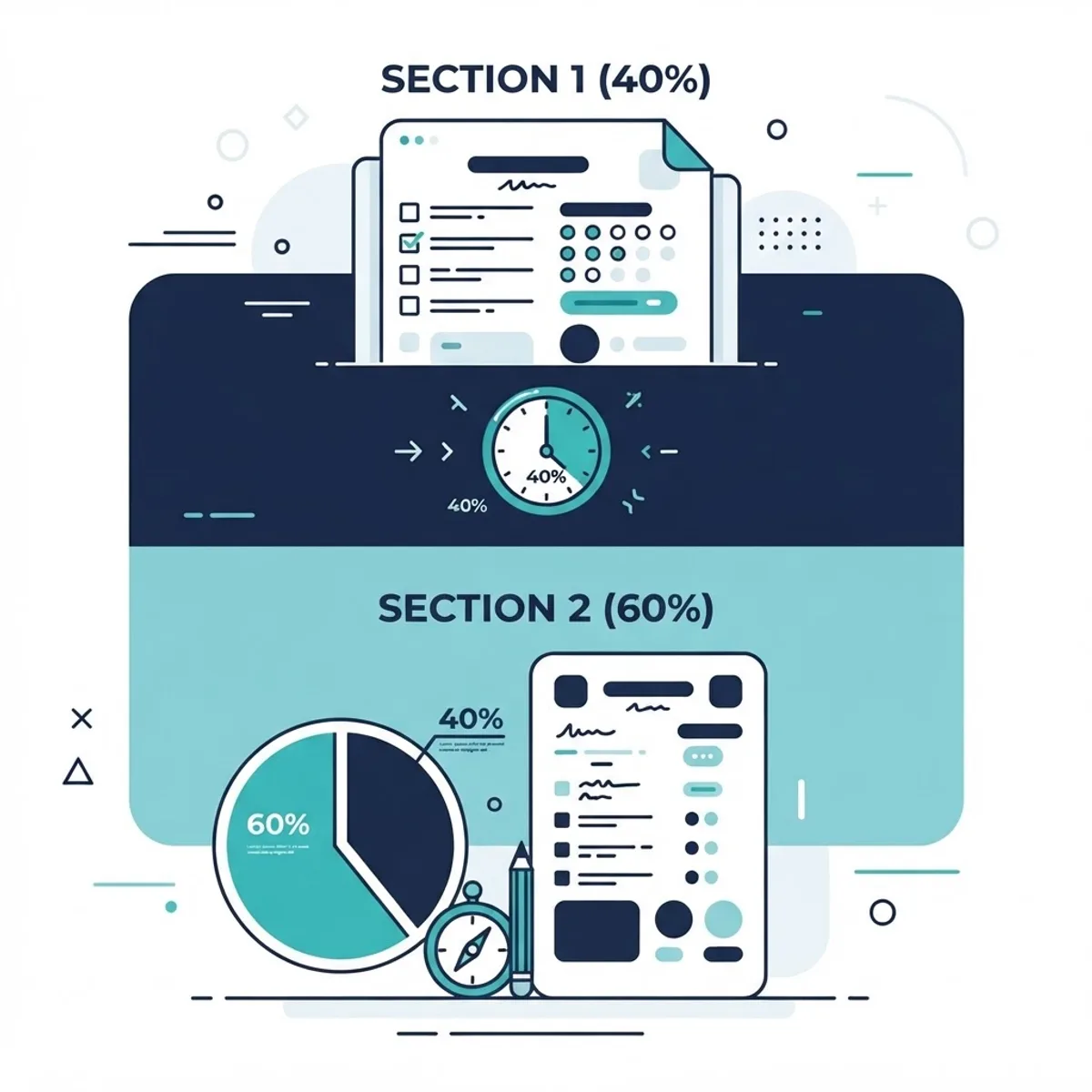
| Feature | Section One: Short Answer | Section Two: Extended Answer |
|---|---|---|
| Weighting of exam | 40 per cent | 60 per cent |
| Question style | Short, targeted, single-concept | Multi-part, scenario-based, applied |
| Typical question count | Around 20 questions | Around 4 to 6 questions |
| Skills tested | Recall, definitions, small calculations | Analysis, design, justification, evaluation |
| Common failure mode | Vague one-word answers | Describing instead of justifying |
In the 2024 paper, for example, Section One contained 21 questions worth 108 marks, while Section Two contained 5 questions worth 87 marks. The exact counts change each year, but the 40/60 split has remained stable. Always confirm the current year's design brief on the SCSA website rather than relying on last year's paper.
Why the Weighting Changes Your Revision Priority
Because Section Two carries 60 per cent of the exam, extended-response technique is worth more than raw content recall. A student who memorises every definition but cannot structure a justified design decision will plateau. Practising two full extended-answer questions per week under timed conditions produces a larger mark gain than re-reading notes for the same number of hours.
How to Read the Statistics in the Report
Examination reports give a mean mark for each question. This is the most actionable data in the entire document, and it is frequently misread.
Use these three rules:
- A low mean does not mean the question was unfair. It usually means the question tested a syllabus point that was taught superficially across the state.
- Compare your own performance to the mean, not to your class. If a question had a mean of 45 per cent and you scored 40 per cent, you are near the state average — not failing.
- Look for clusters. If three questions on the same topic all sit below 50 per cent, that topic is a statewide weakness and a high-probability target for the next exam.
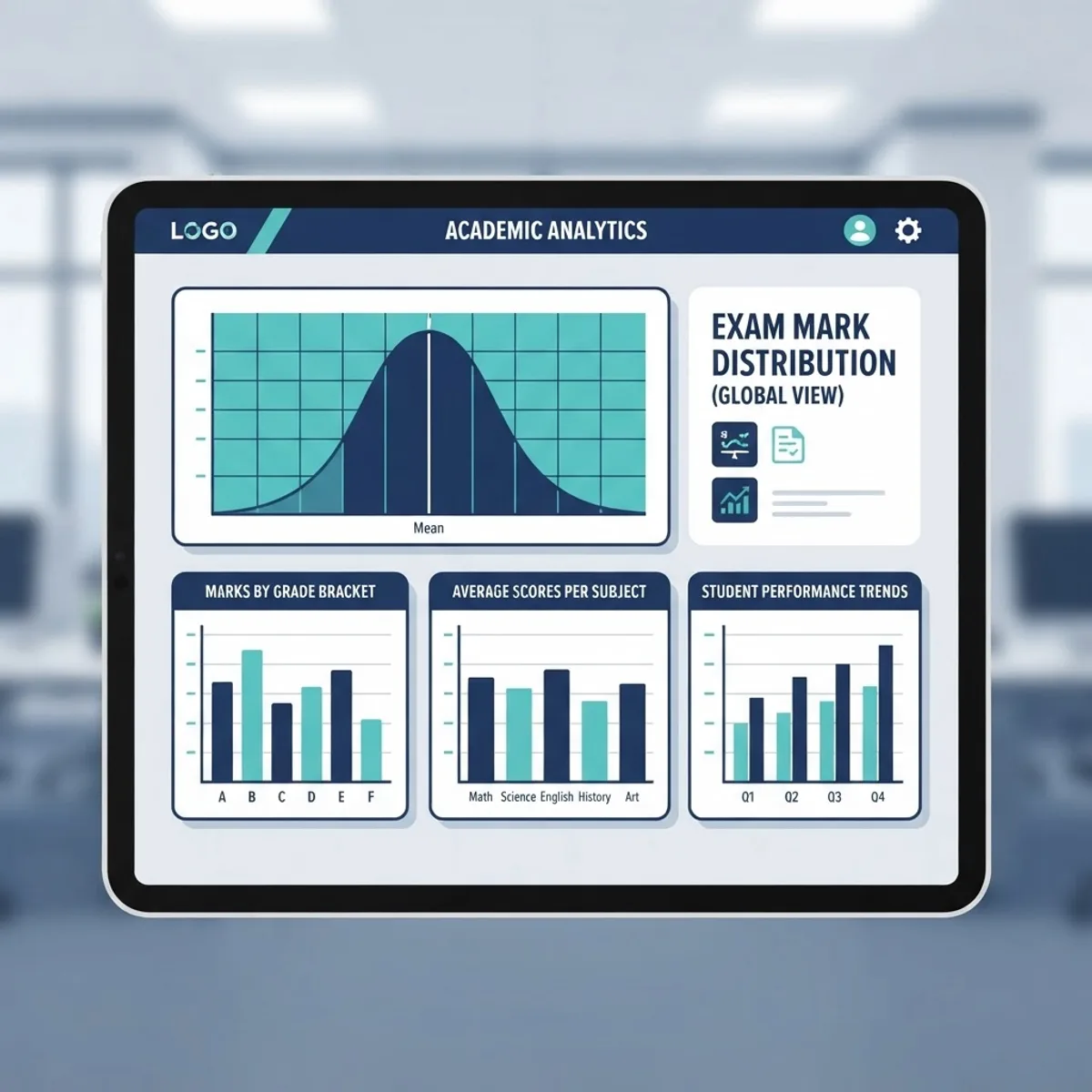
A useful benchmark: questions with means above 70 per cent are generally recall-based and should be treated as non-negotiable marks. Questions with means between 30 and 50 per cent are almost always applied design, security, or justification questions. That is where the top ATAR bands are decided.
Recurring Weak Areas Flagged Across Reports
Across multiple years of Computer Science examination reports, the same themes reappear in examiner commentary. Treat these as a permanent checklist.
1. Database Design and Normalisation
Candidates consistently lose marks by drawing entity relationship diagrams without cardinality, omitting foreign keys, or normalising to third normal form without showing intermediate steps. Examiners want to see the working, not just the final tables.
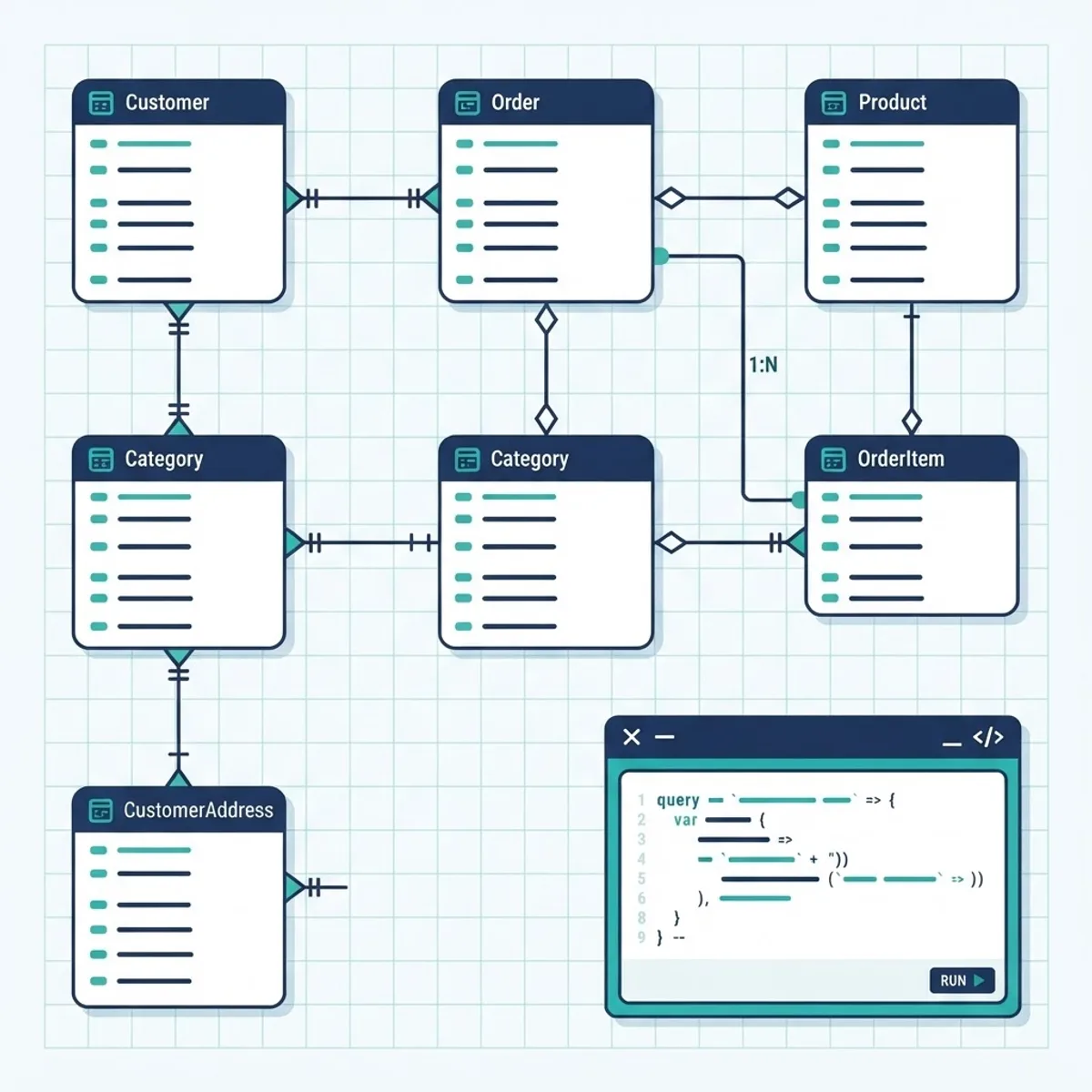
What to practise: convert three unnormalised tables to 3NF and write the SQL to create them. Include primary keys, foreign keys and data types every single time, even when the question does not explicitly ask.
2. Networking, Protocols and Hardware
Students often confuse the roles of switches, routers and access points, or describe subnetting without performing the calculation. Reports repeatedly note that candidates named a protocol but did not explain its function in the given scenario.
3. Cyber Security and Ethics
Security questions attract some of the lowest means. The typical error is listing threats without linking them to a control. If a question describes a small business network, the answer must name the specific threat, the specific mitigation, and why that mitigation addresses that threat in that context.

4. Programming and Algorithm Design
Examiners note that pseudocode responses often lack initialisation, loop termination conditions, or output statements. Handwritten code under time pressure degrades quickly, which is why deliberate practice on paper matters more than practice in an IDE.

5. Systems Analysis and the Development Cycle
This content is easy to underestimate because it feels non-technical. It is also where well-prepared students bank easy marks, because the terminology is fixed and the marking keys reward precise vocabulary such as feasibility, scope creep, and functional requirement.
Turning the Report Into a Study Plan
Reading the report is passive. The mark gain comes from converting it into scheduled work. Here is a five-step method that mirrors how professional teams run post-incident reviews — identify, categorise, prioritise, remediate, verify.
- Download the paper, the marking key and the report together. Never read one without the others.
- Attempt the paper cold under real timing before reading any commentary.
- Mark yourself against the marking key and record the mark lost per syllabus topic in a simple spreadsheet.
- Read the examiner comments only for questions you lost marks on, and write a one-line correction in your own words.
- Re-attempt those questions two weeks later. If you score full marks without notes, the topic is closed.

This loop works because it forces retrieval practice. According to widely replicated cognitive science research, testing yourself on material produces substantially better long-term retention than re-reading it — a finding known as the testing effect.
Command Words Decide Your Mark
SCSA questions use precise command words. Mapping them correctly is the fastest technique fix available:
- State / Name — one short answer, no explanation needed.
- Describe — features plus characteristics, no opinion required.
- Explain — cause and effect, use because or therefore.
- Justify — a decision plus supporting reasons, plus why alternatives are weaker.
- Evaluate — weigh strengths against limitations, then reach a conclusion.
A student who writes a description when asked to justify can lose half the available marks while still writing accurate content. That is the single most common preventable loss in Section Two.
Advice for Teachers and Tutors
Examination reports are a curriculum audit tool. If your cohort underperformed on a topic that also sat below the state mean, the issue is likely sequencing or time allocation rather than student effort. Build a three-year comparison table of question means by syllabus strand, and reallocate teaching weeks accordingly.
Digital teams solve similar problems with structured documentation and clear technical explanation. If you produce study resources, revision sites or learning platforms for students, the same clarity principles apply — well-structured, genuinely useful content outperforms volume. Teams at ZoneTechify and WebPeak apply that same evidence-first approach when building digital learning experiences.
Key Takeaways
- The SCSA Computer Science ATAR examination is split into Section One short answer (40 per cent) and Section Two extended answer (60 per cent).
- The 2024 paper contained 21 Section One questions worth 108 marks and 5 Section Two questions worth 87 marks; counts vary annually.
- Question mean marks are the most actionable data in any examination report — cluster low means to find statewide weak topics.
- Database normalisation, cyber security controls, and pseudocode completeness are recurring examiner concerns.
- Command words such as justify and evaluate determine mark allocation more than content knowledge alone.
- Always read the exam paper, marking key, and examination report as a set, never in isolation.
Frequently Asked Questions (FAQ)
Where can I find the 2026 ATAR Computer Science examination report?
SCSA publishes examination reports on its official website under the Computer Science ATAR course materials section, usually alongside the past exam paper and marking key. Reports are released after marking and moderation are finalised, so check the syllabus and support materials page rather than third-party sites for the authentic version.
Is the examination report the same as the marking key?
No. The marking key lists the acceptable answers and how marks are allocated for each question. The examination report analyses how candidates actually performed, including mean marks and examiner commentary. You need both: the key shows the target, and the report shows the common mistakes to avoid.
How much of the Computer Science ATAR exam is programming?
Programming and algorithm design form one strand of the syllabus rather than the whole exam. Questions typically require pseudocode, trace tables, or code interpretation instead of running working software. Networking, databases, systems analysis and security carry substantial mark weight, so a programming-only revision plan is risky.
What is the fastest way to improve my Computer Science ATAR mark?
Practise Section Two extended responses under timed conditions, because that section carries 60 per cent of the exam. Then fix command word technique so descriptions are not submitted where justifications are required. These two changes usually deliver more improvement than additional content memorisation for the same study hours.
Do examiners repeat questions from previous years?
Examiners do not copy questions, but they do revisit syllabus points that were previously answered poorly. Topics with consistently low mean marks across reports are strong candidates for reappearance in a reworded scenario. Reviewing three to five years of reports reveals these patterns clearly and reliably.
Should I study from the report before or after attempting the paper?
Always attempt the paper first under exam timing, then mark it against the key, then read the report. Reading examiner commentary beforehand contaminates your attempt and inflates your perceived readiness. The diagnostic value of the report depends on having genuine, unassisted performance data to compare against.