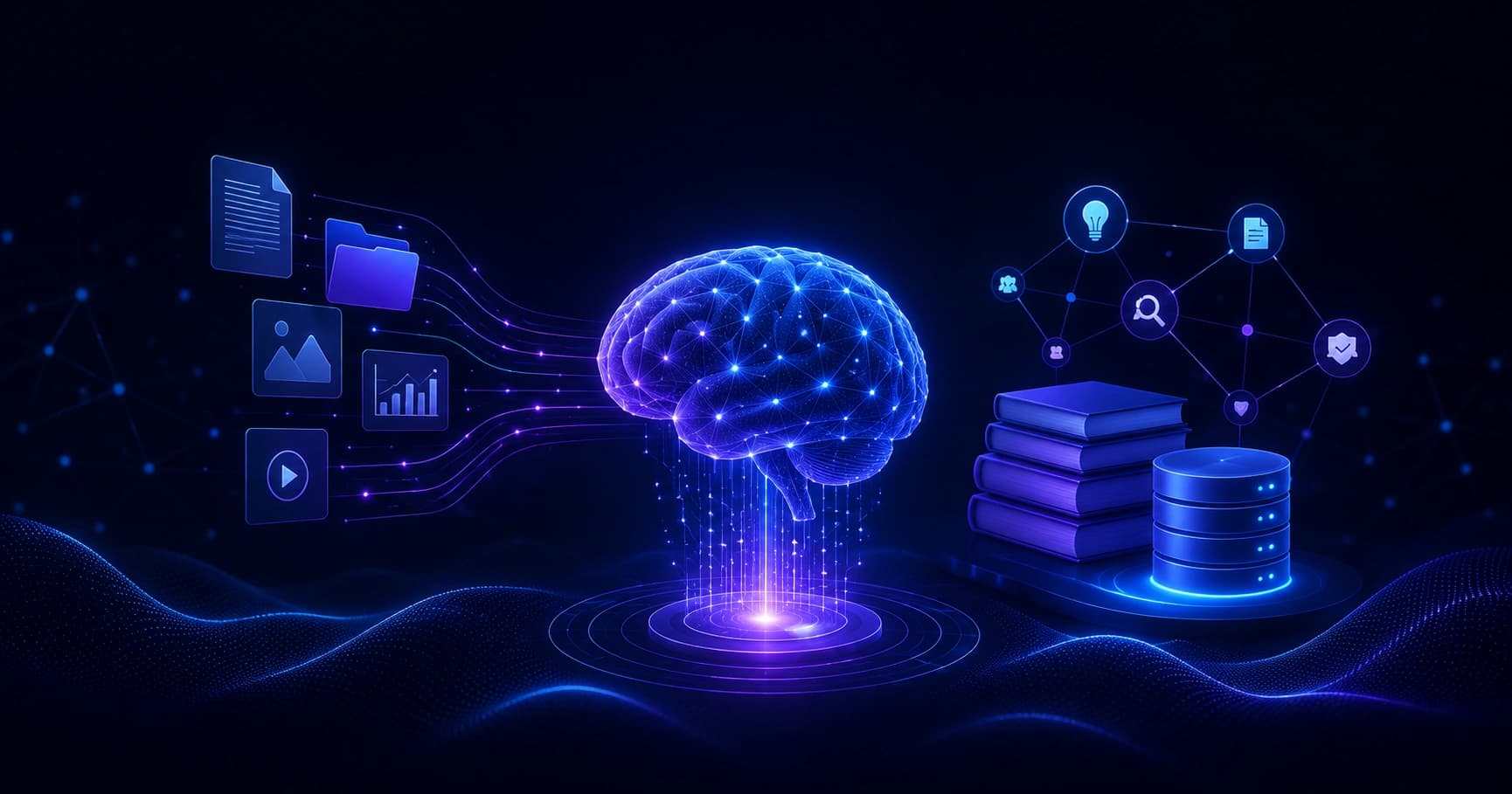
Explore how generative AI reshapes knowledge management, from capturing tacit knowledge to building smarter enterprise knowledge bases and driving better decisions.
A Knowledge Management Perspective of Generative Artificial Intelligence
Generative artificial intelligence has quietly rewritten the rules of how organizations create, store, and reuse what they know. For decades, knowledge management (KM) was treated as a filing problem: capture documents, tag them, and hope someone finds them later. Generative AI changes that equation entirely. Instead of merely storing knowledge, it can now synthesize, summarize, and surface it on demand, turning static archives into living, conversational systems.
In this article, I draw on hands-on experience helping teams deploy AI-assisted knowledge systems to explain what actually changes when you view generative AI through a knowledge management lens, where the real value lives, and the traps that quietly derail projects.
Quick Answer: From a knowledge management perspective, generative AI transforms static information into dynamic, retrievable knowledge. It captures tacit expertise, summarizes vast content, and answers questions in natural language, turning knowledge bases into interactive systems that accelerate decisions, onboarding, and organizational learning across every team.
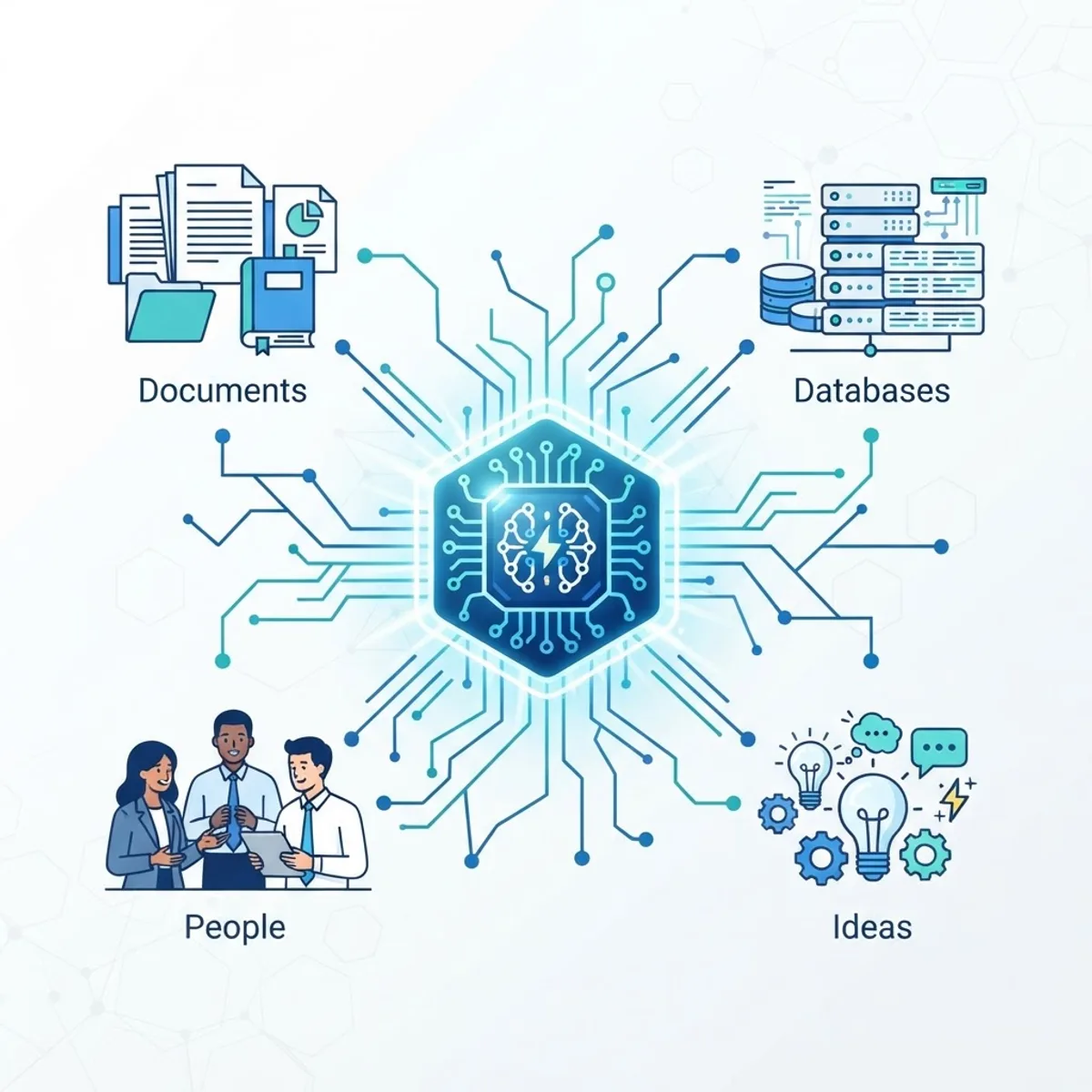
What Knowledge Management Really Means in the AI Era
Knowledge management is the structured process of creating, capturing, organizing, sharing, and applying an organization's collective knowledge to improve performance. Traditionally, it centered on explicit knowledge: manuals, wikis, and documented procedures. The hard part was always tacit knowledge, the undocumented expertise living in people's heads.
Generative AI expands KM in three concrete ways. First, it lowers the cost of capturing knowledge by turning messy conversations and notes into structured records. Second, it makes retrieval conversational rather than keyword-based. Third, it can generate new artifacts, such as summaries, drafts, and answers, from existing knowledge assets. The result is a shift from knowledge storage to knowledge activation.
Defining Generative AI in a KM Context
Generative AI refers to models that produce new content, such as text, code, or images, by learning patterns from large datasets. Within knowledge management, its most valuable capability is synthesis: reading across thousands of documents and returning a coherent, context-aware answer instead of a list of links.
How Generative AI Captures Tacit Knowledge
The single biggest KM challenge, capturing tacit knowledge before it walks out the door, is where generative AI shines. When a senior engineer explains a fix in a chat thread or a support agent resolves a tricky case, that expertise historically vanished. AI systems can now transcribe, summarize, and index these interactions automatically.

In practice, teams connect generative models to meeting transcripts, ticketing systems, and internal chats. The model extracts decisions, rationales, and reusable patterns, then files them as searchable knowledge. According to McKinsey, employees spend roughly 1.8 hours every day, about 9.3 hours per week, searching for and gathering information. Automating capture and retrieval directly attacks that lost time.
The strategic point is subtle: generative AI does not just store what people say, it can infer the reasoning behind it. That converts fragile tacit knowledge into durable organizational memory. Teams building these systems often partner with specialists in artificial intelligence services to design capture pipelines that respect privacy and context.
Building an AI-Powered Enterprise Knowledge Base
A modern knowledge base is no longer a folder of PDFs, it is a retrieval system that understands intent. The dominant architecture is retrieval-augmented generation (RAG), where the AI first fetches relevant internal documents, then generates an answer grounded in those sources.

This grounding matters enormously for trust. A model answering purely from memory can hallucinate; a model answering from your verified documents, with citations, becomes auditable. From a KM perspective, RAG reunites two things that were always separated: the answer and its source.
Core Components of an AI Knowledge Base
- Ingestion: Documents, tickets, and transcripts are collected and cleaned.
- Chunking and embedding: Content is split into passages and converted into vectors that capture meaning.
- Vector search: A user question retrieves the most semantically relevant passages.
- Generation: The model composes a grounded answer with citations.
- Feedback loop: User ratings refine future retrieval quality.
Each layer is a KM discipline in disguise, and skipping any one of them, especially cleaning and feedback, is where quality quietly collapses.
Traditional KM vs. Generative AI KM
The difference between old and new knowledge management is best seen side by side. The table below compares how each approach handles the core KM functions.
| KM Function | Traditional Approach | Generative AI Approach |
|---|---|---|
| Search | Keyword matching | Natural language and intent-based |
| Capture | Manual documentation | Automated from conversations |
| Answers | List of documents | Synthesized, cited response |
| Tacit knowledge | Rarely captured | Extracted from interactions |
| Onboarding speed | Weeks of reading | On-demand guided answers |
| Maintenance | Manual updates | Continuous, feedback-driven |
The pattern is clear: generative AI does not replace KM principles, it removes the friction that always made them hard to sustain.
Driving Knowledge Sharing and Organizational Learning
Knowledge that is captured but never shared has no value. Generative AI accelerates sharing by meeting people where they work, inside chat tools, help desks, and internal portals, and answering in plain language.
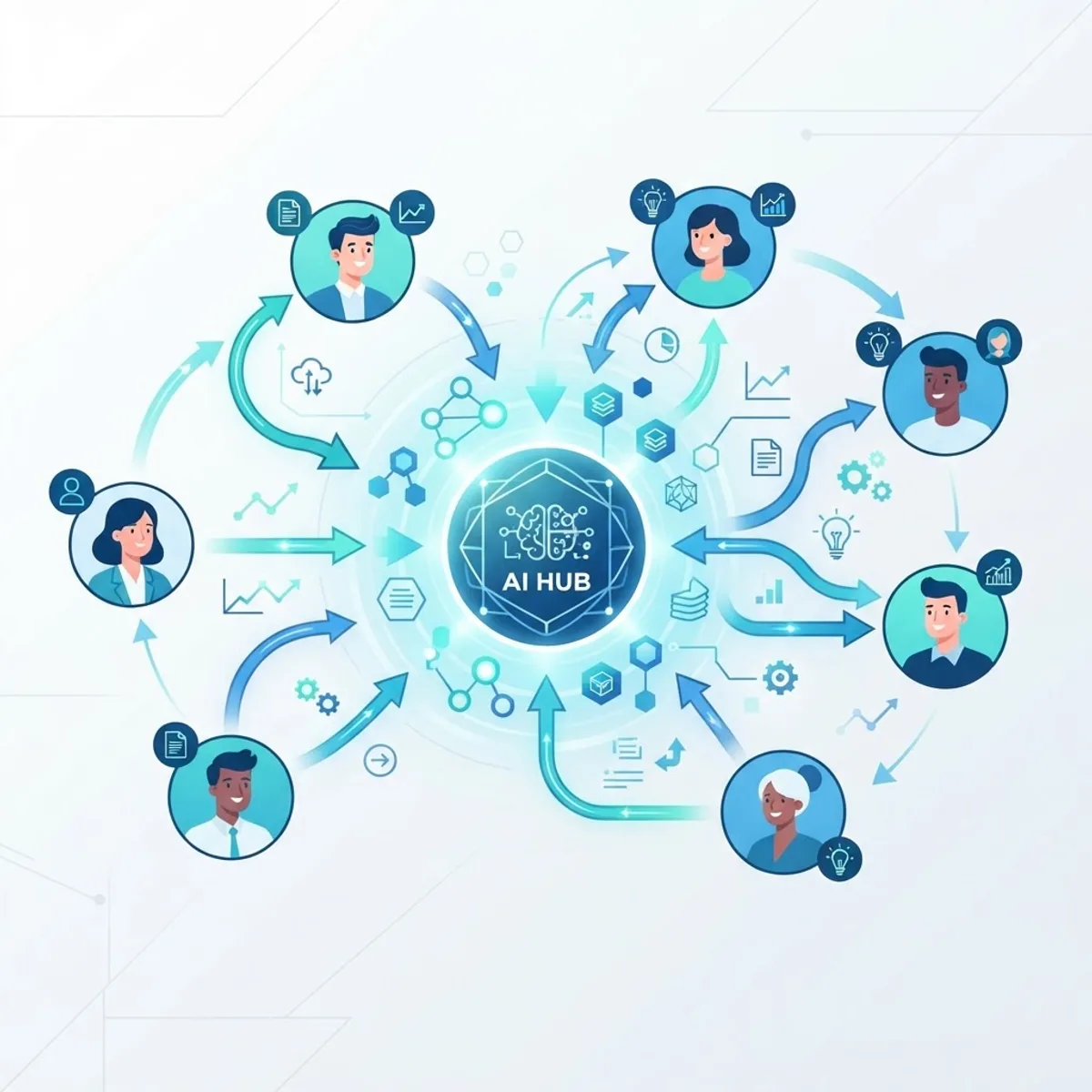
This has a democratizing effect. A new hire can ask the same nuanced question a ten-year veteran would, and receive a grounded answer instantly. Organizational learning stops depending on who you happen to know. According to a Stanford and MIT study of over 5,000 support agents, access to a generative AI assistant increased productivity by 14 percent on average, with the largest gains, around 34 percent, going to less experienced workers.
That data point reveals the deeper KM story: generative AI transfers expertise from top performers to everyone else. It effectively encodes best practices and distributes them at scale, which is the entire purpose of knowledge management.
Tacit vs. Explicit Knowledge: Where AI Fits
Understanding the boundary between knowledge types clarifies where AI helps most. Explicit knowledge is documented and easy to transfer. Tacit knowledge is experiential, intuitive, and hard to articulate.
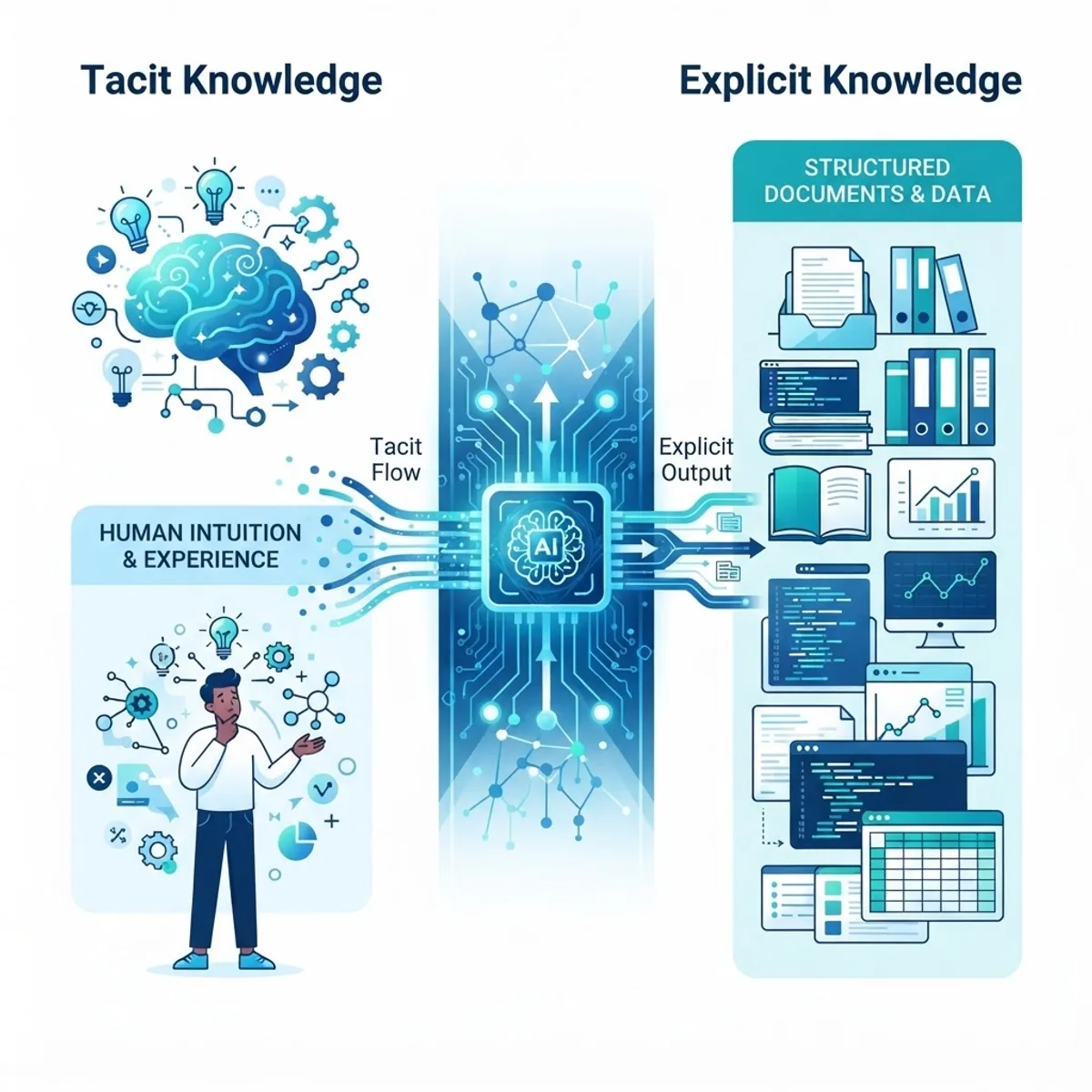
Generative AI acts as a bridge between the two. It converts explicit knowledge into instant answers, and it partially externalizes tacit knowledge by analyzing patterns in behavior, communication, and outcomes. It cannot fully replicate human judgment, but it can approximate and document enough of it to reduce single-point dependencies. Recognizing this bridge role prevents unrealistic expectations while still capturing real value.
Challenges and Risks You Must Manage
Generative AI in knowledge management is powerful, but it is not plug-and-play. Ignoring the risks below is the fastest route to a stalled project.

- Hallucination: Models may fabricate confident but false answers without proper grounding.
- Data quality: Garbage in, garbage out; outdated documents produce outdated answers.
- Security and access: Sensitive knowledge must respect existing permission boundaries.
- Governance: Someone must own accuracy, review, and lifecycle of AI-surfaced knowledge.
- Over-reliance: Teams may stop documenting, assuming AI will figure it out.
The organizations that succeed treat AI as a KM amplifier, not a replacement for stewardship. Strong governance, source citations, and human review loops separate reliable systems from risky ones. If you are planning a rollout, resources at ZoneTechify and WebPeak cover practical governance frameworks worth reviewing before you scale.
The Future of AI-Driven Knowledge Management
The trajectory points toward autonomous knowledge agents, systems that not only answer questions but proactively identify gaps, flag outdated content, and suggest documentation. Knowledge management will shift from a reactive discipline to a continuous, self-maintaining process.

Expect multimodal knowledge bases that reason across text, diagrams, audio, and video. Expect personalized knowledge delivery tuned to each role. And expect KM metrics to evolve from how much is stored to how effectively knowledge is applied. The winners will be organizations that treat knowledge as a strategic asset and build the disciplined pipelines to keep it accurate, accessible, and alive.
Key Takeaways
- Generative AI shifts knowledge management from storage to activation, making knowledge conversational and instantly retrievable.
- Retrieval-augmented generation grounds AI answers in verified internal sources, adding citations and auditability.
- McKinsey found employees spend about 1.8 hours daily searching for information, a cost AI directly reduces.
- A Stanford and MIT study showed generative AI boosted support productivity by 14 percent, with less experienced workers gaining up to 34 percent.
- Governance, data quality, and human review are non-negotiable for trustworthy AI knowledge systems.
Frequently Asked Questions (FAQ)
What is the role of generative AI in knowledge management?
Generative AI turns static information into dynamic knowledge. It captures tacit expertise from conversations, summarizes large document sets, and answers questions in natural language with citations. This activates organizational knowledge, speeds decisions, and makes retrieval conversational instead of relying on manual keyword searches.
How does generative AI capture tacit knowledge?
Generative AI captures tacit knowledge by transcribing and analyzing meetings, chats, and support interactions. It extracts decisions, reasoning, and reusable patterns, then indexes them as searchable records. This converts fragile, undocumented expertise into durable organizational memory that survives employee turnover and scales across teams.
What is retrieval-augmented generation in a knowledge base?
Retrieval-augmented generation, or RAG, is an architecture where AI first retrieves relevant internal documents, then generates an answer grounded in those sources. This reduces hallucination, adds citations, and makes responses auditable, reuniting the answer with its verified source for trustworthy enterprise knowledge management.
Can generative AI replace human knowledge managers?
No. Generative AI amplifies knowledge management rather than replacing it. It automates capture, retrieval, and synthesis, but humans still own governance, accuracy review, and strategic decisions. Judgment, context, and ethical oversight remain human responsibilities, making AI a powerful assistant rather than a substitute for stewardship.
What are the biggest risks of using AI in knowledge management?
The biggest risks are hallucinated answers, poor data quality, security gaps, and weak governance. Outdated documents produce wrong answers, and sensitive knowledge must respect access permissions. Successful systems use source citations, human review loops, and clear ownership to keep AI-surfaced knowledge accurate and trustworthy.
How does generative AI improve organizational learning?
Generative AI improves organizational learning by distributing expert-level answers to everyone instantly. New hires access the same depth of knowledge as veterans, reducing dependence on individuals. Research shows the largest productivity gains go to less experienced workers, effectively transferring best practices across the entire organization at scale.