Explore the best artificial intelligence trivia, from surprising AI history and fun facts to famous milestones, everyday uses, and a quick knowledge quiz.
Artificial Intelligence Trivia
Artificial intelligence is everywhere, yet most people know surprisingly little about where it came from or how it actually works. That gap is exactly why artificial intelligence trivia has become such a fun and educational way to learn. Whether you are hosting a tech quiz night, prepping for a classroom activity, or simply curious about the machines shaping your daily life, the right trivia turns dense computer science into memorable, bite-sized facts.
In this guide, we have gathered accurate, well-sourced AI trivia covering history, breakthroughs, everyday technology, and a short quiz to test yourself. Every fact here is verified and put in context, so you learn the story behind the answer, not just the answer itself. As a team that builds AI-driven products at ZoneTechify, we care about getting the details right.
Quick Answer: Artificial intelligence trivia is a collection of fun, factual questions about AI history, breakthroughs, and everyday uses. The term "artificial intelligence" was coined in 1956 at Dartmouth, and today AI powers search engines, voice assistants, recommendations, and self-driving cars used by billions worldwide.
What Is Artificial Intelligence Trivia?
Artificial intelligence trivia refers to short, fact-based questions and answers about the field of AI: its origins, pioneers, landmark achievements, and real-world applications. Unlike dry textbook material, trivia is designed to be engaging and easy to remember, making it ideal for quizzes, icebreakers, and self-testing.
Good AI trivia does two things at once. It entertains, and it teaches. When you learn that a computer beat the world chess champion in 1997, you also absorb a milestone in computing history. That blend of fun and knowledge is why trivia works so well as a learning tool for students, professionals, and curious minds alike.
The Surprising History of AI
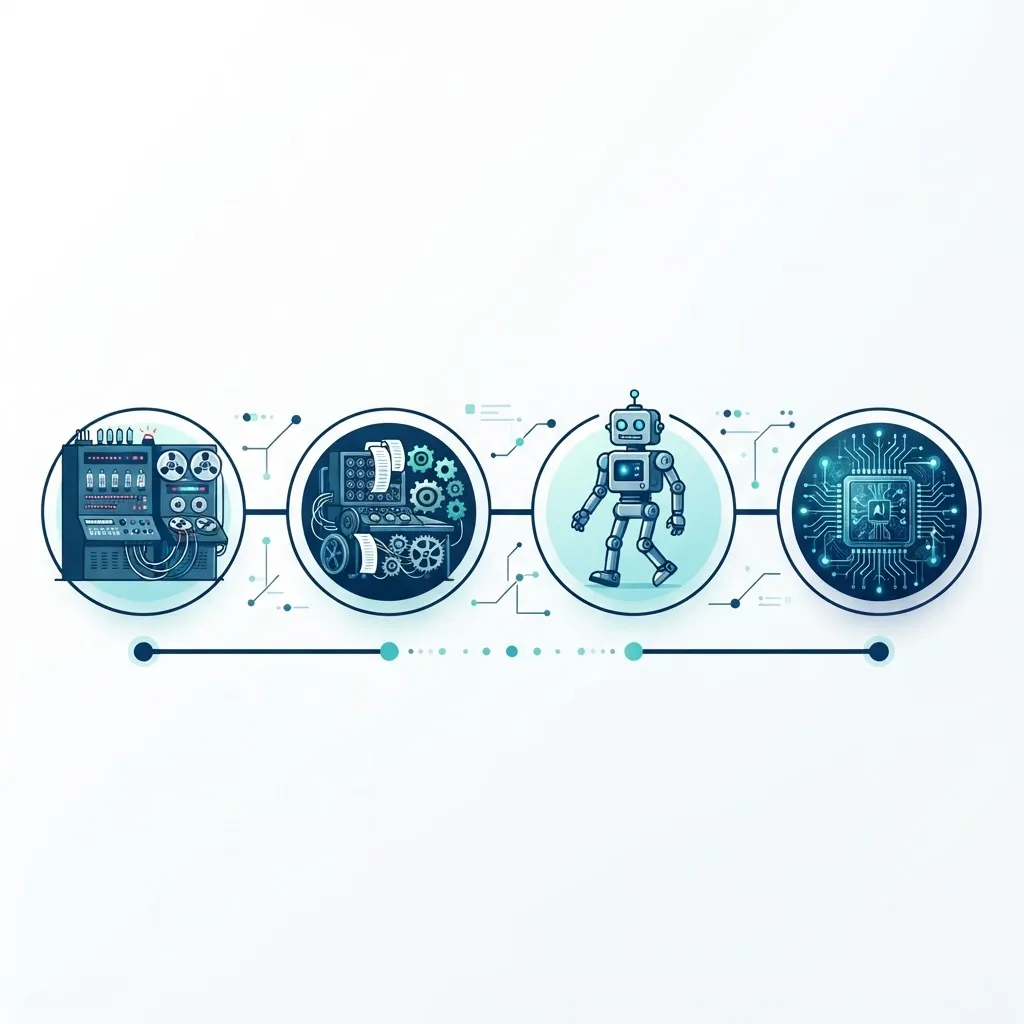
Artificial intelligence is older than most people assume. The dream of thinking machines stretches back to ancient myths, but the modern field has a clear starting point. In 1956, computer scientist John McCarthy organized the Dartmouth Summer Research Project and officially coined the term "artificial intelligence." That workshop is widely regarded as the birth of AI as a formal discipline.
Before that, in 1950, British mathematician Alan Turing published his landmark paper "Computing Machinery and Intelligence," which introduced the Turing Test, a way to measure whether a machine can imitate human conversation convincingly. Turing's question, "Can machines think?", still frames debates today.
Here are a few history facts that make excellent trivia:
- The first AI program, the Logic Theorist, was created in 1956 by Allen Newell and Herbert Simon and could prove mathematical theorems.
- ELIZA, built in 1966 at MIT, was one of the first chatbots and mimicked a psychotherapist.
- The phrase "machine learning" was coined by Arthur Samuel in 1959 while he built a program that learned to play checkers.
Why the History Matters
Understanding AI history helps you separate hype from reality. Today's tools feel sudden, but they rest on nearly seventy years of research, setbacks known as "AI winters," and gradual breakthroughs. Knowing this context makes you a sharper, more critical observer of every new AI headline.
Fun AI Facts That Surprise Most People
Some of the best trivia comes from facts that challenge assumptions. AI is not magic, and these tidbits reveal how it really behaves.
- AI does not truly "understand" language. Large language models predict the next most likely word based on patterns in data, not human comprehension.
- The term "robot" predates modern AI. It comes from the 1920 Czech play "R.U.R." by Karel Capek, derived from a word meaning forced labor.
- AI can generate art, music, and code, but it learns entirely from human-created examples first.
- Training a single large AI model can require enormous energy, which is why efficiency and sustainability are now major research goals.
According to Stanford's AI Index Report, private investment in AI reached hundreds of billions of dollars globally in recent years, reflecting how quickly the field has moved from research labs to mainstream business. That scale of investment is a reminder that AI is no longer experimental; it is foundational infrastructure.
Famous AI Milestones You Should Know
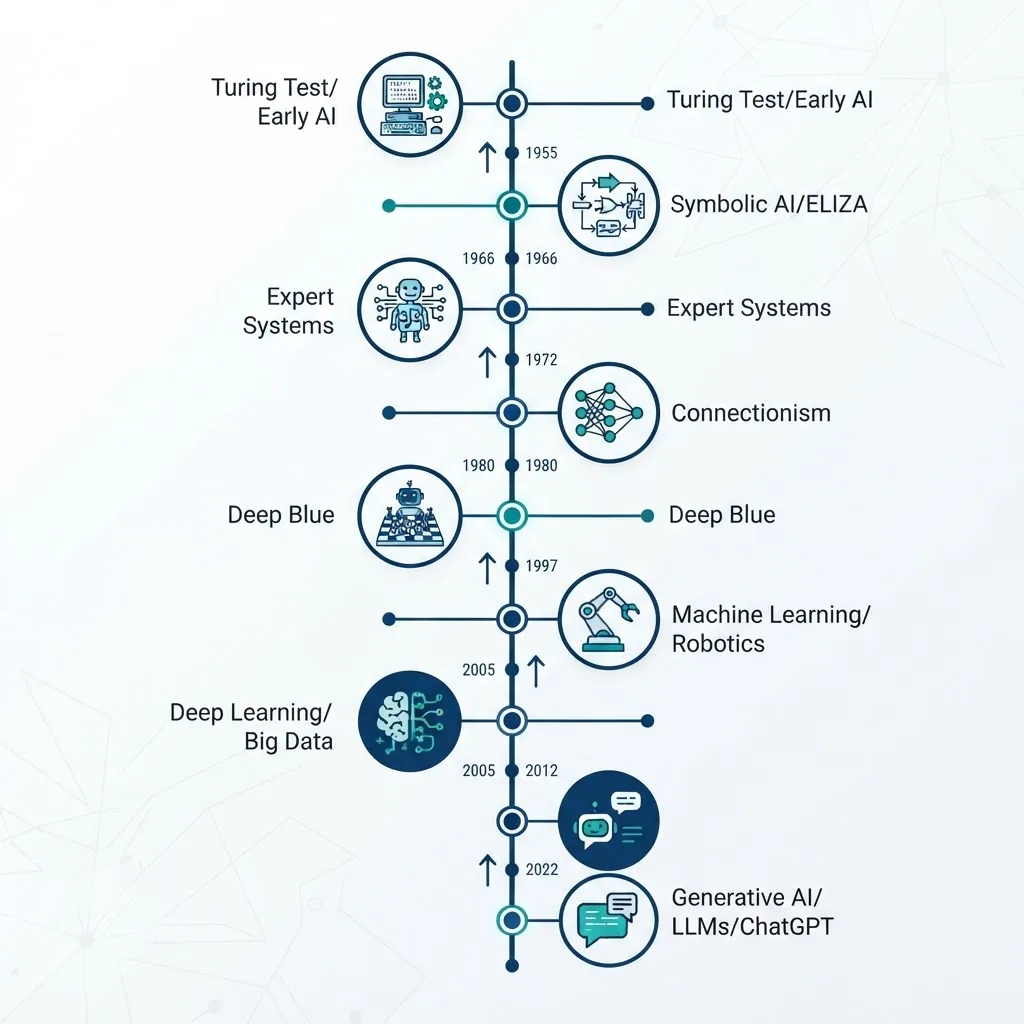
Milestones make some of the most satisfying trivia because they mark clear turning points. Here is a comparison of landmark achievements that changed public perception of AI.
| Year | Milestone | Why It Mattered |
|---|---|---|
| 1997 | IBM Deep Blue beats chess champion Garry Kasparov | First time a computer beat a reigning world champion at chess |
| 2011 | IBM Watson wins Jeopardy! | Showed AI could handle natural language and trivia |
| 2016 | DeepMind AlphaGo beats Go champion Lee Sedol | Solved a game long thought too complex for machines |
| 2022 | Public generative AI chatbots go mainstream | Brought conversational AI to hundreds of millions of users |
Each of these moments taught the public something new about what machines could do. AlphaGo's win was especially significant because the game of Go has more possible board positions than there are atoms in the observable universe, making brute-force calculation impossible and forcing the system to learn strategy.
Machine Learning Milestones and How AI Learns
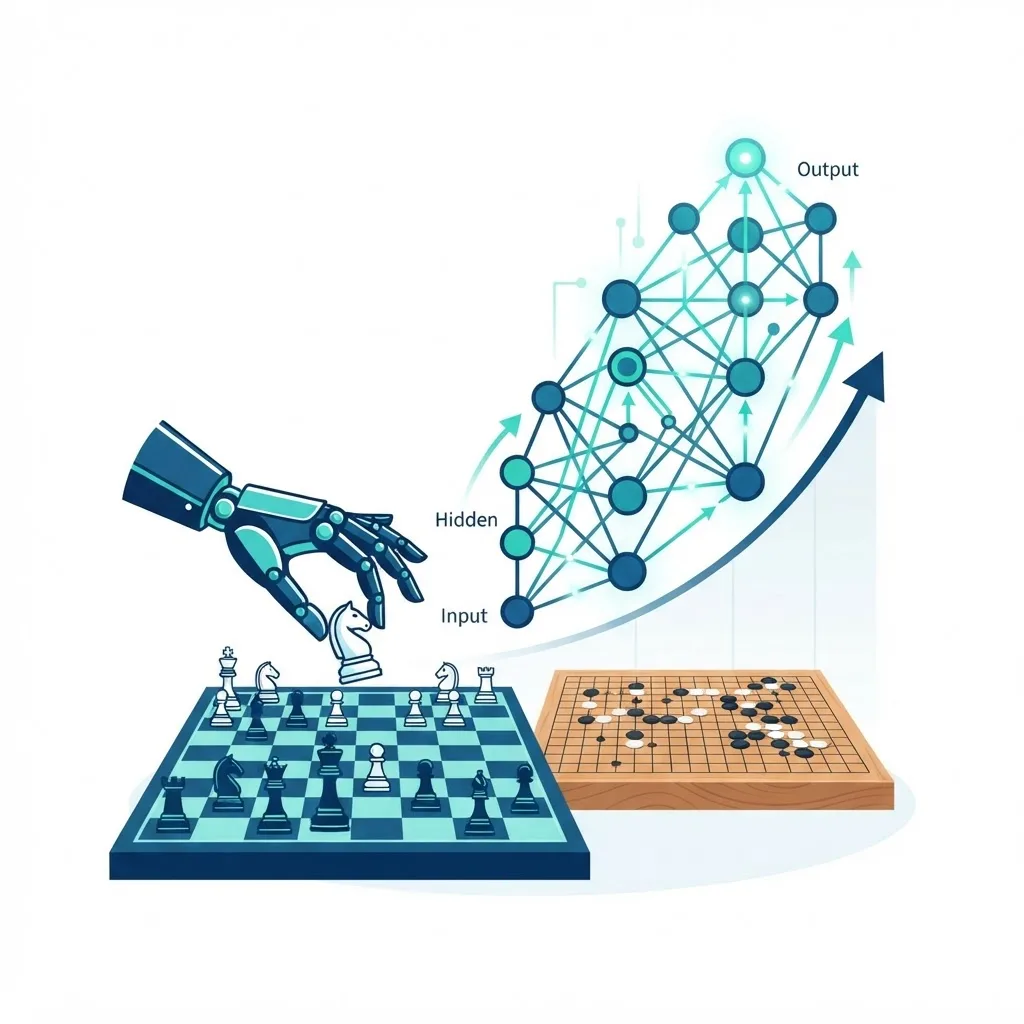
Machine learning is the engine behind most modern AI, and it makes for great trivia because the concepts are intuitive once explained. Machine learning is a method where computers improve at a task by learning from data, rather than following hand-coded rules.
There are three core types worth knowing:
- Supervised learning: The model learns from labeled examples, such as photos tagged "cat" or "dog."
- Unsupervised learning: The model finds patterns in data without labels, useful for grouping similar customers.
- Reinforcement learning: The model learns by trial and error using rewards, the approach that powered AlphaGo.
Deep learning, a subset that uses layered neural networks, drove the biggest leaps of the last decade. The 2012 ImageNet competition was a turning point when a deep neural network dramatically cut image-recognition error rates, proving these methods could outperform older techniques. If you want to apply these ideas in real products, our artificial intelligence services help businesses turn machine learning into practical tools.
AI in Everyday Life
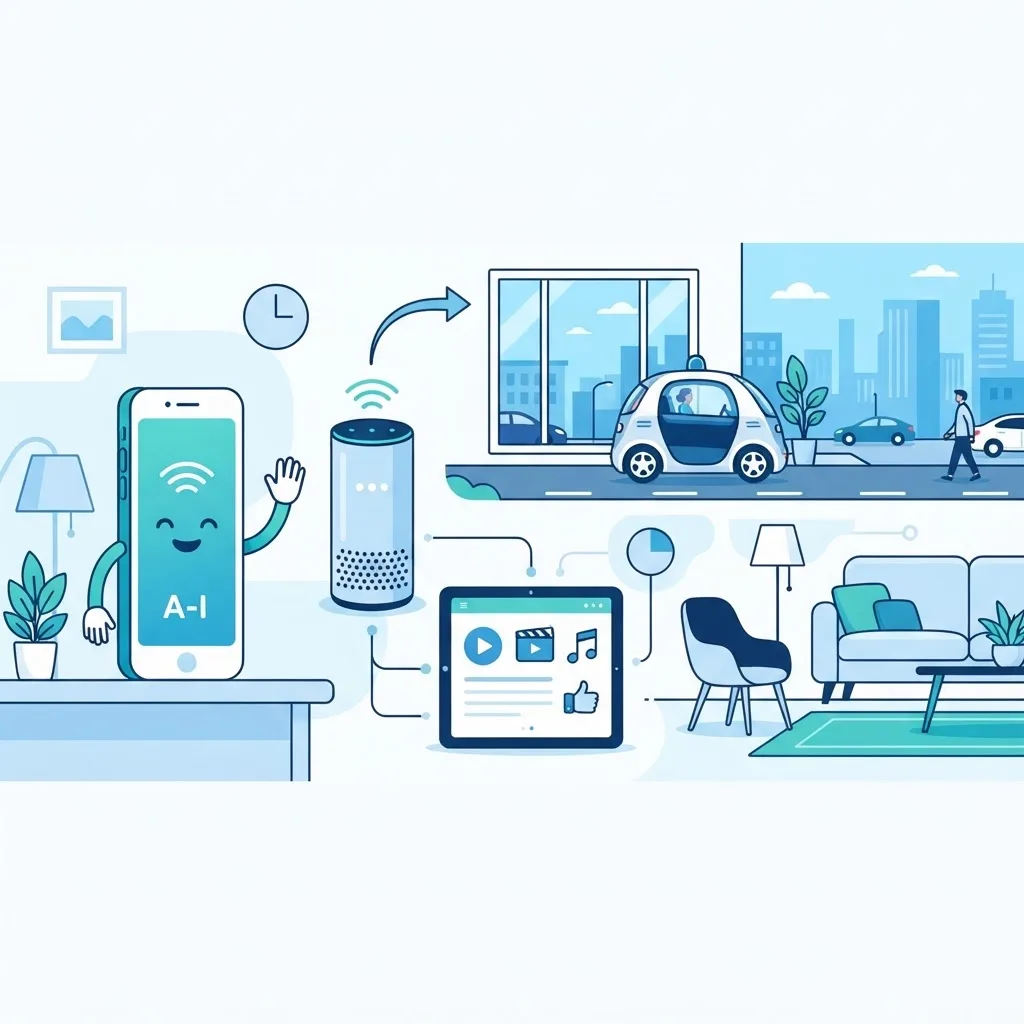
The most relatable trivia connects AI to things people use daily without realizing it. You interact with artificial intelligence far more often than you might think.
- Search engines use AI to rank and understand your queries.
- Streaming platforms recommend shows using pattern-matching algorithms.
- Email filters rely on machine learning to block spam.
- Voice assistants convert speech to text and generate replies with AI.
- Navigation apps predict traffic and reroute you in real time.
According to research widely cited by Google, more than half of website visits come from mobile devices, and AI-driven personalization increasingly shapes what those users see. This is why teams focused on modern web experiences, like the specialists at WebPeak, treat AI as a core part of building fast, relevant digital products. For businesses wanting to add intelligent features to their platforms, WebPeak's artificial intelligence services offer a practical starting point.
Test Yourself: A Quick AI Trivia Quiz
Ready to check your knowledge? Try answering these before reading the answers below.
- Who coined the term "artificial intelligence" and in what year?
- What test measures a machine's ability to imitate human conversation?
- Which IBM computer defeated chess champion Garry Kasparov?
- What game did DeepMind's AlphaGo master in 2016?
- What word gave us the term "robot," and where did it come from?
Answers: (1) John McCarthy, in 1956. (2) The Turing Test. (3) Deep Blue. (4) The board game Go. (5) It came from the 1920 play "R.U.R." by Karel Capek. Score four or five correct and you are officially an AI trivia expert.
The Future of AI Trivia
AI trivia keeps evolving because the field moves so fast. Topics that did not exist a few years ago, such as generative image tools and AI coding assistants, are now common quiz material. Staying current means treating AI knowledge as a living subject rather than a fixed list of facts.
The next wave of trivia will likely focus on responsible AI, energy efficiency, and how societies regulate these tools. Being informed on these themes is not just fun; it prepares you to participate in one of the most important conversations of our time.
Key Takeaways
- The term "artificial intelligence" was coined by John McCarthy in 1956 at the Dartmouth workshop.
- Alan Turing introduced the Turing Test in 1950 to gauge machine intelligence.
- IBM Deep Blue (1997), Watson (2011), and DeepMind AlphaGo (2016) are three landmark AI milestones.
- Machine learning has three main types: supervised, unsupervised, and reinforcement learning.
- AI already powers search, streaming, email filtering, navigation, and voice assistants used daily by billions.
Frequently Asked Questions (FAQ)
What is artificial intelligence trivia?
Artificial intelligence trivia is a set of fun, factual questions and answers about AI, including its history, key milestones, pioneers, and everyday applications. It makes complex computer science approachable and is popular for quizzes, classrooms, and casual learning about how intelligent machines actually work.
Who invented artificial intelligence?
No single person invented AI, but John McCarthy coined the term in 1956 and is often called a founding father of the field. Alan Turing, Marvin Minsky, Allen Newell, and Herbert Simon also made foundational contributions that shaped modern artificial intelligence research.
What was the first AI to beat a human champion?
IBM's Deep Blue was the first computer to defeat a reigning world chess champion, beating Garry Kasparov in 1997. This landmark event proved machines could outperform top humans in complex strategic games and remains one of the most cited moments in AI history.
Is artificial intelligence really intelligent?
Not in the human sense. Modern AI recognizes patterns in large datasets and predicts likely outputs, but it does not truly understand meaning, emotion, or context the way people do. It simulates intelligent behavior effectively without possessing genuine consciousness or awareness.
How is AI used in everyday life?
AI powers many daily tools, including search engine rankings, streaming recommendations, spam email filters, voice assistants, navigation and traffic predictions, and online shopping suggestions. Most people interact with artificial intelligence dozens of times a day, often without even noticing it working.
Final Thoughts
Artificial intelligence trivia is more than a party game; it is a gateway to understanding the technology reshaping our world. By learning the real history, milestones, and everyday uses behind the fun facts, you build genuine literacy that helps you evaluate AI news critically. Bookmark this guide, share the quiz, and keep exploring, because in AI, there is always another surprising fact waiting to be discovered.