A practical guide to custom .NET software development: when it pays off, how the build process works, what it costs, and how to avoid the mistakes that sink projects.
Custom NET Software Development

Most companies do not need another off-the-shelf tool. They need software that matches the way they already work. Custom .NET software development is how mid-size and enterprise teams close that gap: a purpose-built application, written in C# on the modern .NET platform, that models your actual workflow instead of forcing your workflow into someone else's dropdown menus.
This guide is written from hands-on delivery experience, not from a feature sheet. It covers when custom .NET makes financial sense, what the modern stack looks like in 2026, how a serious build is sequenced, what it realistically costs, and the specific failure patterns that turn promising projects into abandoned code.
Quick Answer: Custom .NET software development is the process of building tailor-made applications on Microsoft's open-source .NET platform using C#. It suits businesses with unique workflows, strict compliance needs, or heavy system integration, delivering long-term ownership, cross-platform deployment, and lower licensing costs than packaged software.
What Custom .NET Software Development Actually Means
Definition: Custom .NET software development is the design, engineering, and maintenance of bespoke applications built on the .NET runtime, primarily written in C#, and deployed as web apps, APIs, desktop tools, background services, or cloud-native microservices.
The word that matters is custom. You are not configuring a product. You are defining a data model, business rules, integrations, and interfaces from scratch, and you own the source code at the end.
.NET is no longer the Windows-only framework many decision makers remember. Since .NET Core unified into modern .NET, the platform is open source, runs on Linux, macOS, and Windows, and ships in containers. That single change is why .NET is now a mainstream choice for cloud-native builds rather than a legacy commitment.

Why .NET Still Wins Enterprise Builds
According to the Stack Overflow Developer Survey, .NET has consistently ranked as one of the most-used "other frameworks and libraries" among professional developers, with roughly a third of respondents reporting use of .NET or .NET Core in recent years. That matters commercially: a large, stable talent pool means you can staff and re-staff a project over a decade, not scramble for niche specialists.
Three practical advantages come up in almost every project we deliver:
- One language across the stack. C# handles the API, background jobs, data access, and even the browser via Blazor WebAssembly. Fewer context switches means fewer defects at the boundaries.
- First-class tooling. Visual Studio, Rider, Entity Framework Core migrations, and built-in dependency injection remove weeks of setup work that other ecosystems leave to third-party packages.
- Long-term support cadence. Microsoft ships even-numbered LTS releases with three years of support, which lets you plan upgrades on a calendar instead of reacting to breaking changes.
Custom .NET vs Off-the-Shelf Software: The Honest Comparison
Custom is not automatically better. It is better when your process is a competitive advantage or a compliance obligation. If your need is generic accounting or email, buy the product.

| Factor | Custom .NET Software | Off-the-Shelf SaaS |
|---|---|---|
| Upfront cost | High | Low |
| Cost at 5 years | Predictable, no per-seat growth | Rises with headcount |
| Workflow fit | Exact | Partial, requires workarounds |
| Integration depth | Full control of APIs and data | Limited to vendor connectors |
| Data ownership | Complete, self-hosted option | Vendor-controlled |
| Time to first value | 8 to 16 weeks typical | Days |
| Vendor lock-in | None, you own the code | High |
| Compliance customization | Yes | Rarely |
The decision usually turns on per-seat pricing. A 300-user SaaS licence at 45 USD per user per month is 162,000 USD annually. A custom .NET platform that replaces it often pays back inside 18 to 30 months while removing the workarounds that were quietly costing staff hours. Run that arithmetic before anything else.
When You Should Not Build Custom
Skip custom development if any of these are true: your process is genuinely industry-standard, you have no internal product owner who can make decisions weekly, your budget covers a build but not two years of maintenance, or the requirement will likely change direction within six months. Honest scoping advice like this is part of what teams at ZoneTechify provide before a line of code is written.
The Modern .NET Stack in 2026
A current custom .NET build rarely looks like a monolithic Windows application. Here is the stack we use for most business platforms.

- Runtime: .NET 8 or later, on an LTS release only for production systems.
- API layer: ASP.NET Core Minimal APIs for lightweight services, controllers for larger domains, with OpenAPI generated automatically.
- Data access: Entity Framework Core for domain models plus Dapper for high-throughput read queries. Mixing both is a pragmatic default, not a compromise.
- Frontend: React or Next.js when you need a rich public-facing UI, Blazor when the team is C#-first and the app is internal.
- Database: PostgreSQL or SQL Server. PostgreSQL is increasingly the default for cost reasons on Linux hosting.
- Background work: Hosted services, Hangfire, or a queue-backed worker for anything that must survive a restart.
- Testing: xUnit with Testcontainers so integration tests run against a real database, not an in-memory fake that hides bugs.
Architecture Choices That Age Well
Start modular, not micro. A well-layered modular monolith with clear domain boundaries deploys simply and can be split later. Teams that jump straight to microservices for a 20-person company usually spend their first year building infrastructure instead of features.
Use Clean Architecture or vertical slice organization, keep business rules independent of the database, and enforce that boundary in code review. This is the single highest-leverage decision for maintainability over a five-year horizon.
How a Serious .NET Project Is Sequenced
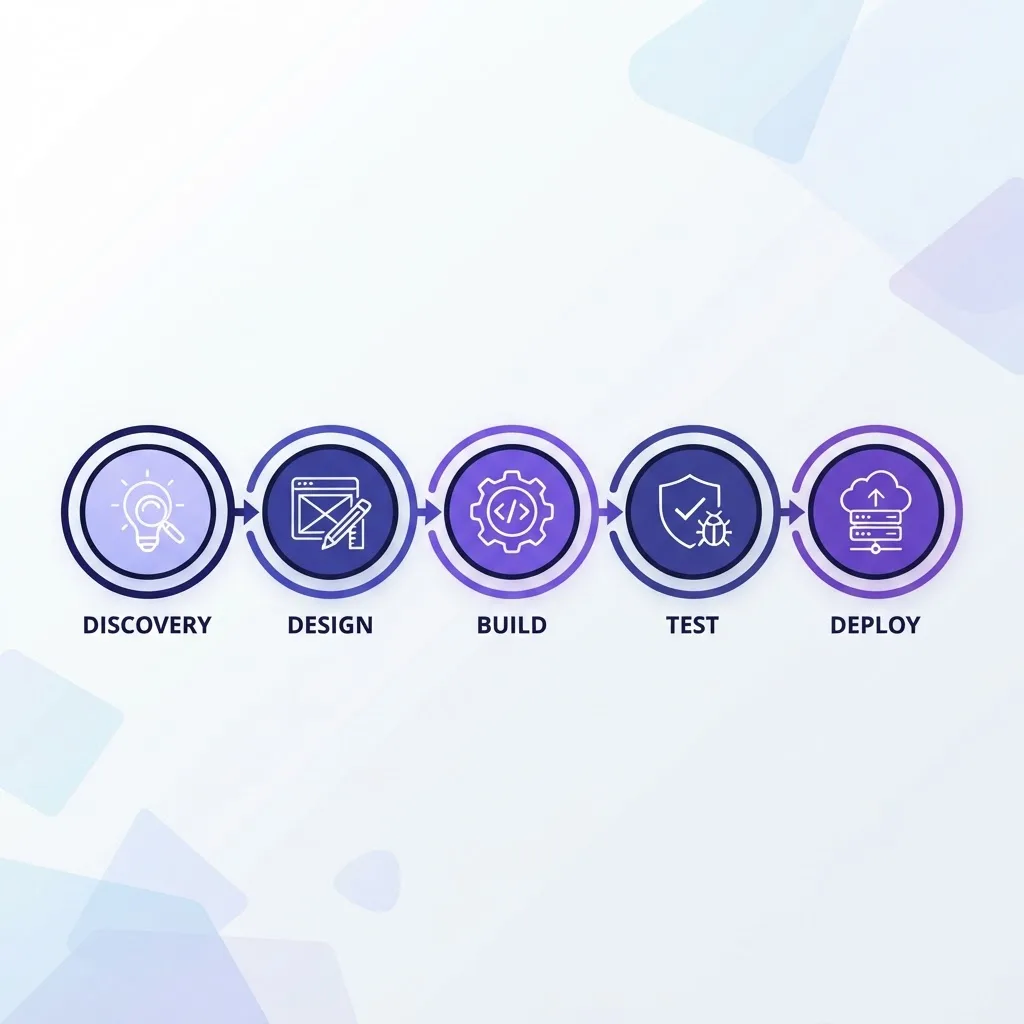
- Discovery and process mapping (1 to 3 weeks). Interview the people doing the work, document the current workflow including the spreadsheets nobody admits to, and define success metrics in numbers.
- Architecture and data modelling (1 to 2 weeks). Produce the domain model, integration inventory, hosting plan, and a written non-functional specification covering load, uptime, and retention.
- Prototype the riskiest slice first. Build the hardest integration or the most uncertain workflow in week one of development, not month four. Risk deferred is risk multiplied.
- Iterative delivery in two-week increments. Ship working software to a staging environment every sprint, demo it to actual users, and adjust. Requirements written six months ago are hypotheses, not facts.
- Hardening and migration. Load testing, security review, data migration rehearsals, and a documented rollback plan.
- Deploy and operate. Blue-green or canary release, structured logging, and alerting that pages a human before customers notice.
One detail teams skip: rehearse data migration at least twice with production-scale volume. Migration failures, not code defects, cause most launch delays we have seen.
Cloud Deployment and Cost Control
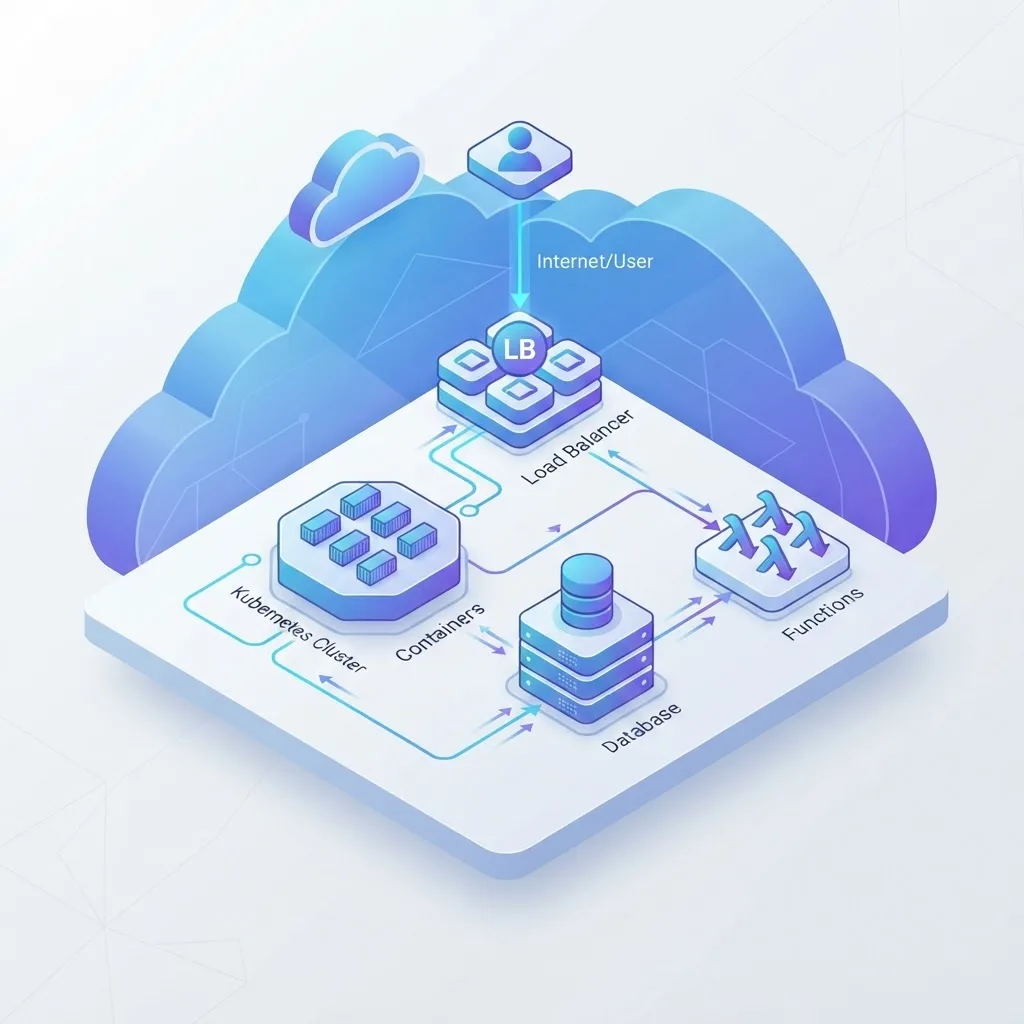
Modern .NET containerizes cleanly, so you are not locked into Azure. Azure App Service and Azure SQL remain the lowest-friction path for Microsoft-centric organizations, but AWS ECS, Google Cloud Run, and Kubernetes all run .NET containers without special handling.
Three cost controls that consistently pay off:
- Right-size before you scale. ASP.NET Core is fast. The TechEmpower benchmarks have repeatedly placed ASP.NET Core among the highest-throughput mainstream web frameworks, so a single modest instance often handles far more traffic than teams assume.
- Run on Linux containers. You avoid Windows Server licensing costs entirely, typically reducing compute spend by 20 to 40 percent for the same workload.
- Cache deliberately. Output caching plus a distributed cache such as Redis removes the majority of repeated database reads in reporting-heavy applications.
If you need a partner that handles architecture, build, and deployment end to end, WebPeak and ZoneTechify's web application development service both work on this class of platform.
Security, Compliance, and Trust

Custom software makes you responsible for security. That is a real trade, and it should be planned, not assumed.
Non-negotiables for any custom .NET application handling business or personal data:
- Identity: Use a proven provider such as Microsoft Entra ID, Auth0, or ASP.NET Core Identity with Duende IdentityServer. Never hand-roll password hashing or session handling.
- Authorization: Enforce permissions server-side on every endpoint. Hiding a button is not access control.
- Data protection: TLS everywhere, encryption at rest, secrets in Azure Key Vault or AWS Secrets Manager, and parameterized queries only.
- Auditability: Append-only audit logs of who changed what and when. Regulated clients will ask for this in month one of an audit.
- Dependency hygiene: Automated vulnerability scanning on every build, because most breaches exploit known, unpatched packages.
- Backups you have restored. An untested backup is a belief, not a control.
What Custom .NET Development Costs
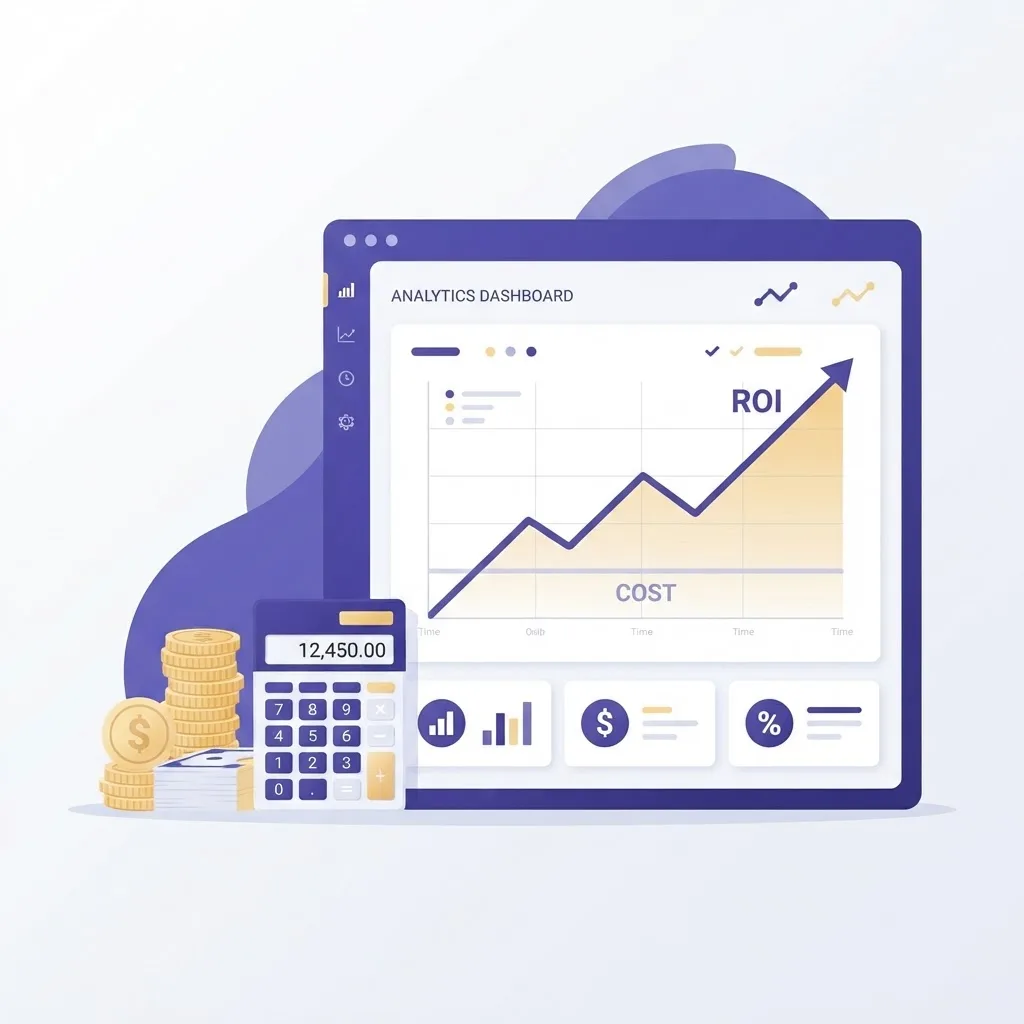
Realistic 2026 ranges for a competent team, based on typical scope tiers:
| Project Tier | Typical Scope | Indicative Range (USD) | Timeline |
|---|---|---|---|
| Internal tool | One workflow, 1 to 2 integrations | 25,000 to 60,000 | 6 to 10 weeks |
| Business platform | Multi-role app, reporting, 3 to 5 integrations | 70,000 to 180,000 | 3 to 6 months |
| Enterprise system | Multi-module, high compliance, migration | 200,000+ | 6 to 12 months |
Budget an additional 15 to 20 percent of build cost annually for maintenance, dependency upgrades, and small enhancements. Projects that skip this line item are the ones that feel obsolete in three years.
Key Takeaways
- Custom .NET software development means building bespoke C# applications on Microsoft's open-source, cross-platform .NET runtime.
- .NET is consistently among the most-used frameworks in the Stack Overflow Developer Survey, giving you a durable hiring pool for long-lived systems.
- ASP.NET Core ranks among the fastest mainstream web frameworks in TechEmpower benchmarks, so most business apps need far less infrastructure than expected.
- Custom usually beats SaaS financially once per-seat licensing crosses roughly 100,000 USD per year, with typical payback in 18 to 30 months.
- Use LTS .NET releases, start with a modular monolith, and prototype the riskiest integration in the first sprint.
- Running Linux containers eliminates Windows licensing and commonly cuts compute costs 20 to 40 percent.
- Reserve 15 to 20 percent of build cost per year for maintenance, and rehearse data migration twice before launch.
Frequently Asked Questions (FAQ)
Is .NET still a good choice for new software in 2026?
Yes. Modern .NET is open source, cross-platform, and container-native, with annual releases and three-year LTS support. It performs at the top tier of web frameworks, has a large hiring pool, and is backed by Microsoft, making it a low-risk foundation for software you expect to run for a decade.
How long does custom .NET software development take?
A focused internal tool typically takes 6 to 10 weeks. A multi-role business platform with reporting and integrations runs 3 to 6 months. Enterprise systems with compliance requirements and data migration take 6 to 12 months. Delivering in two-week increments means you see working software within the first month.
What is the difference between .NET Framework and .NET?
.NET Framework is the legacy Windows-only platform, now receiving security fixes only. Modern .NET, starting from .NET Core and continuing through .NET 8 and later, is open source, runs on Linux, macOS, and Windows, supports containers, and receives all new features. Build new projects on modern .NET.
Should I choose Blazor or React for my .NET application?
Choose Blazor for internal applications when your team is C#-first and you want one language across the stack. Choose React or Next.js for public-facing products needing rich interactivity, SEO, and access to the largest frontend component ecosystem. Both consume the same ASP.NET Core API without any change.
Do I own the source code of custom .NET software?
You should. Any reputable development partner assigns full intellectual property rights and source code ownership to you in the contract, along with repository access, documentation, and deployment credentials. Confirm this in writing before starting, and require the code to live in a repository your company controls.
How do I avoid a failed custom software project?
Assign one empowered internal product owner, define success in measurable numbers, build the riskiest technical slice first, demo to real users every two weeks, and budget for maintenance from day one. Most failures come from absent decision makers and frozen requirements, not from engineering mistakes.