A practical, expert guide to gov AI jobs: real roles, required skills, salaries, and a step-by-step path to landing an AI career in the public sector.
Gov AI Jobs
Governments are hiring for artificial intelligence faster than most people realize. From federal agencies deploying fraud-detection models to city halls automating permit reviews, the public sector has quietly become one of the largest employers of AI talent. If you have searched "gov AI jobs" hoping to understand what these roles actually involve, what they pay, and how to get one, this guide answers those questions directly and honestly.
Having reviewed dozens of public-sector AI postings and advised technical professionals moving from private to government work, I have seen the same confusion repeat: candidates assume government AI work means outdated tools and endless red tape. The reality is more nuanced. The mission is meaningful, the job security is strong, and the technical work is increasingly modern. Let us break it all down.
Quick Answer: Gov AI jobs are public-sector roles building, deploying, and governing artificial intelligence for agencies. They include AI engineers, data scientists, ML specialists, and policy analysts. They typically require Python, data skills, and often security clearance, offering stable pay, strong benefits, and mission-driven work.
What Are Gov AI Jobs?
Gov AI jobs are positions within government agencies focused on the design, deployment, oversight, and regulation of artificial intelligence systems. These roles exist at federal, state, and local levels, as well as within defense, healthcare, transportation, and public safety departments.
Unlike commercial AI roles that optimize for revenue or engagement, government AI work prioritizes accuracy, fairness, transparency, and public accountability. A model that denies a benefits claim or flags a tax return must be explainable and auditable, which shapes how these teams build and test their systems.
The field spans two broad tracks. The technical track builds and maintains AI systems. The governance track writes the rules, evaluates risk, and ensures compliance. Many professionals move between both over a career, which makes public-sector AI unusually versatile.

Why Government AI Roles Are Growing Fast
Demand is being driven by policy, budget, and necessity. According to the U.S. Bureau of Labor Statistics, employment for data scientists is projected to grow 36% from 2023 to 2033, far faster than the average for all occupations, and government agencies are competing directly for that talent pool.
There is also a structural push. The 2023 U.S. Executive Order on AI directed federal agencies to appoint Chief AI Officers and expand their AI workforce, creating hundreds of new roles almost overnight. Similar mandates are appearing across the UK, EU, Canada, and Australia.
The practical driver is simple: governments sit on enormous datasets and aging manual processes. AI offers a way to reduce backlogs, detect fraud, and improve citizen services without proportionally increasing headcount. That efficiency argument is why AI budgets survive political cycles that cut elsewhere. For organizations helping agencies modernize, specialized artificial intelligence services have become a core part of digital transformation contracts.
Common Types of Gov AI Jobs
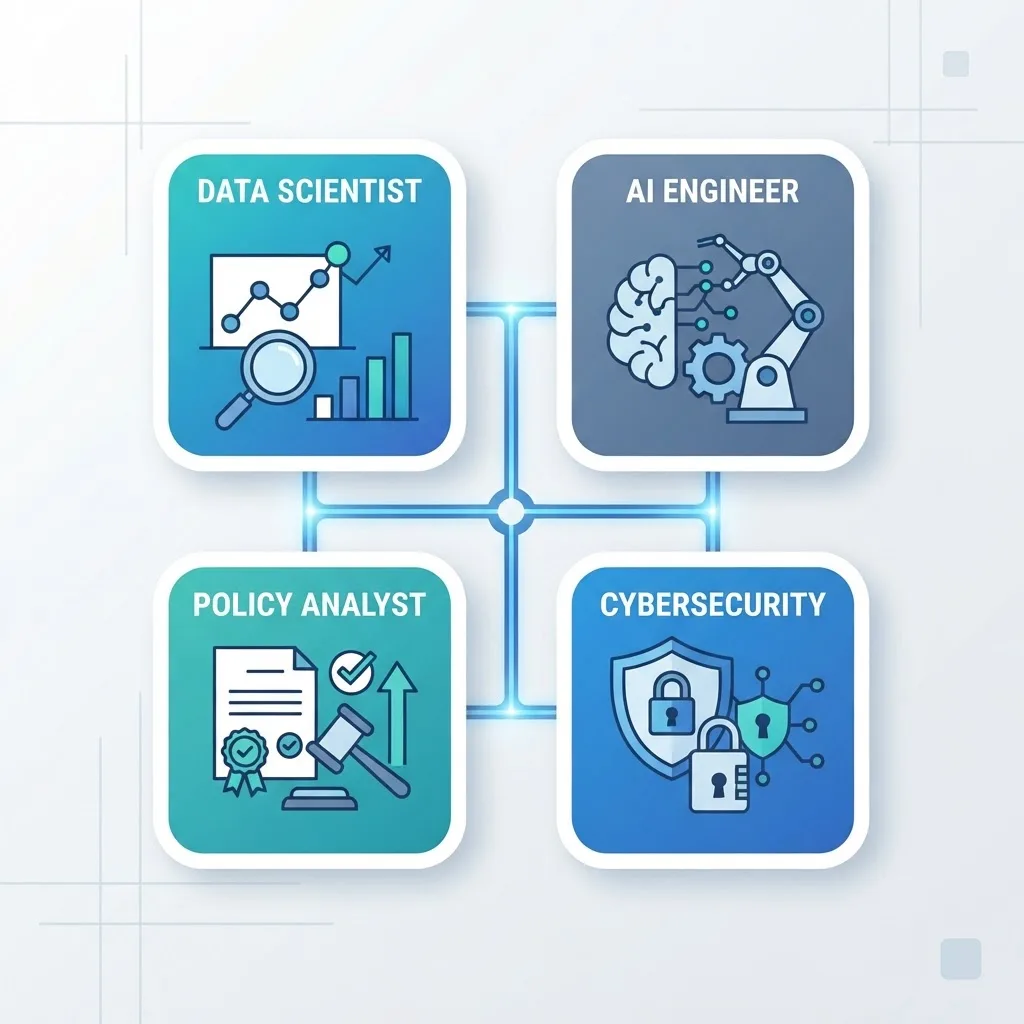
Government AI hiring covers a wide spectrum of specialties. The most common roles include:
- AI/ML Engineer — Builds, trains, and deploys machine learning models into production government systems.
- Data Scientist — Analyzes large public datasets to surface patterns, forecasts, and decision support.
- AI Policy Analyst — Evaluates the ethical, legal, and societal impact of AI deployments.
- Chief AI Officer (CAIO) — Sets agency-wide AI strategy, governance, and risk frameworks.
- NLP Specialist — Powers chatbots, document processing, and translation for citizen services.
- AI Security Engineer — Protects models from adversarial attacks and ensures data integrity.
- MLOps Engineer — Manages the infrastructure and pipelines that keep AI systems reliable.
Contractor roles are equally important. A large share of government AI work is delivered by private firms on federal contracts, so consultancies and technology partners are a legitimate and often faster entry point into the public-sector ecosystem.
Skills and Qualifications You Actually Need

The core technical foundation for gov AI jobs is Python, statistics, and machine learning fundamentals. Beyond that, the requirements depend heavily on whether you sit on the technical or governance side.
For technical roles, agencies typically expect:
- Programming — Python is dominant; SQL and sometimes R are valuable.
- ML frameworks — TensorFlow, PyTorch, or scikit-learn.
- Cloud platforms — AWS GovCloud, Azure Government, or Google Cloud.
- MLOps and data engineering — pipelines, versioning, and deployment.
- Responsible AI knowledge — bias testing, explainability, and model documentation.
For governance and policy roles, the emphasis shifts to risk frameworks such as the NIST AI Risk Management Framework, regulatory literacy, and clear technical writing.
Two credentials carry outsized weight in government hiring: a relevant degree (computer science, statistics, data science, or public policy) and, frequently, eligibility for security clearance. Clearance requirements can be the single biggest gatekeeper, so citizenship and background factors matter more than in private tech.
Gov AI Jobs vs Private Sector AI Jobs
Understanding the trade-offs helps you decide whether public-sector work fits your goals. The comparison below reflects patterns I consistently see across postings and candidate conversations.
| Factor | Gov AI Jobs | Private Sector AI Jobs |
|---|---|---|
| Base salary | Moderate, standardized pay scales | Higher, with equity upside |
| Job security | Very high | Variable |
| Work-life balance | Generally strong | Often demanding |
| Mission impact | High, public benefit | Business and profit focused |
| Clearance required | Often yes | Rarely |
| Pace of change | Slower, process-heavy | Fast, experimental |
| Benefits and pension | Excellent | Company dependent |
The honest summary: private tech usually wins on raw compensation, while government wins on stability, benefits, and the sense that your work serves the public. Many senior engineers make the switch precisely for that balance later in their careers.
Salary Expectations for Gov AI Jobs

In the United States, most federal AI roles fall within the GS-12 to GS-15 pay grades, roughly translating to salaries between $90,000 and $190,000 depending on grade, locality, and specialty. Senior roles like Chief AI Officer or specialized positions using special pay authorities can exceed these ranges.
State and local salaries tend to run lower than federal ones, while government contractors often pay closer to private-sector rates to attract cleared talent. Locality pay is significant: the same grade in Washington, D.C. or San Francisco pays notably more than in a lower-cost region.
While you may sacrifice some upside compared to a top AI lab, the total compensation picture, including pension contributions, healthcare, and paid leave, is frequently stronger than the headline number suggests.
How to Apply for Gov AI Jobs
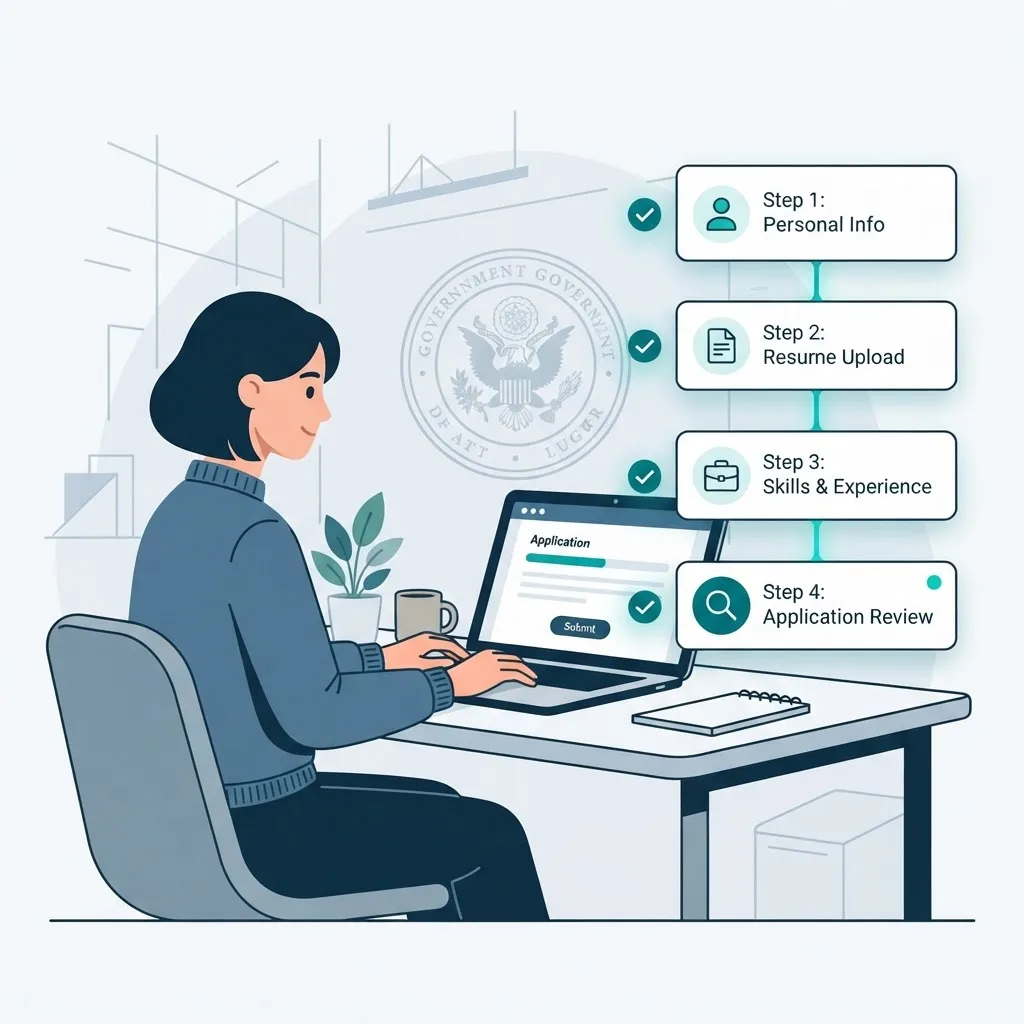
The most reliable path is to apply directly through official government hiring portals and tailor every application to the posting. Government resume screening is rigid, so generic resumes fail quickly.
Follow this proven sequence:
- Find the right portal — USAJOBS in the U.S., or equivalent national portals elsewhere.
- Mirror the language — copy keywords from the job announcement into your resume where they honestly apply.
- Write a detailed federal resume — these are longer than private resumes and must quantify results.
- Address the qualifications — respond to every listed requirement explicitly.
- Prepare for clearance — be transparent about your background if the role requires it.
- Consider contractor routes — firms delivering agency AI projects hire year-round.
A strong professional web presence also helps recruiters and contracting firms find you. If you need a polished portfolio or personal site, agencies like ZoneTechify and WebPeak build modern, credible professional profiles that reinforce your expertise.
The Role of AI Governance and Policy
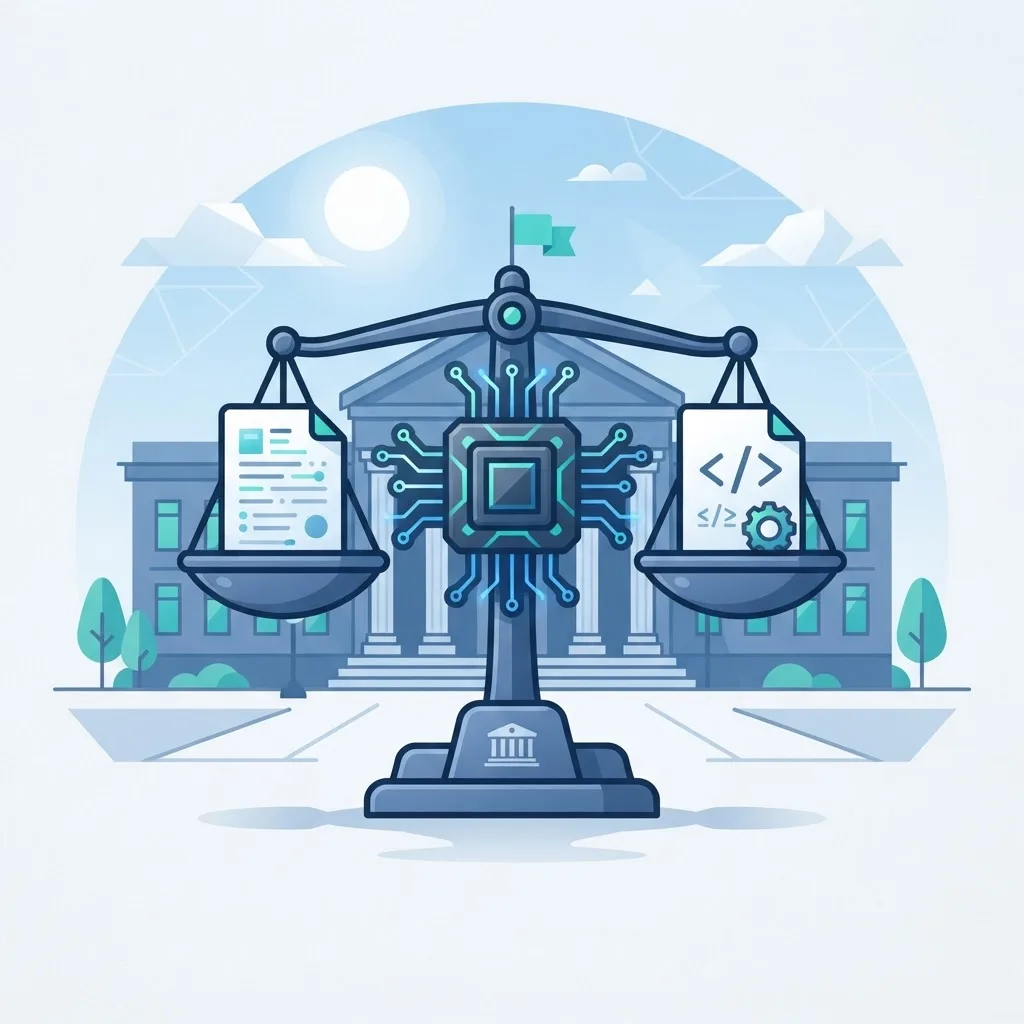
Governance is not a side function in government AI; it is central to it. Every deployed model must withstand legal, ethical, and public scrutiny, which creates sustained demand for professionals who bridge technical and policy worlds.
This is where public-sector AI diverges most from commercial work. A private company might ship a model and iterate. A government agency must document how the model decides, prove it does not discriminate, and provide recourse to affected citizens. Frameworks like the NIST AI RMF exist precisely to standardize that accountability.
If you enjoy the intersection of technology, ethics, and law, governance roles offer durable, meaningful careers that are difficult to automate away, an increasingly attractive quality in the AI era itself.
The Future of Gov AI Careers

Government AI hiring is shifting from experimentation to institutionalization. Chief AI Officer roles, dedicated AI offices, and permanent budget lines signal that these are lasting careers, not temporary initiatives.
Expect growth in three areas: applied AI for citizen services, AI assurance and auditing, and AI procurement expertise. As agencies buy more AI from vendors, professionals who can evaluate and manage those systems will be in high demand. The combination of technical fluency and public-interest judgment will define the most valuable candidates for the next decade.
Key Takeaways
- Gov AI jobs span technical roles (engineers, data scientists) and governance roles (policy analysts, Chief AI Officers).
- Data science employment is projected to grow 36% from 2023 to 2033 (U.S. Bureau of Labor Statistics), fueling public-sector demand.
- Most U.S. federal AI roles sit in the GS-12 to GS-15 range, roughly $90,000 to $190,000.
- Python, machine learning fundamentals, and often security clearance are the biggest requirements.
- Government contractors are a fast, legitimate entry point into public-sector AI.
- Governance and responsible AI skills are becoming as valuable as pure engineering skills.
Frequently Asked Questions (FAQ)
What qualifications do I need for gov AI jobs?
Most gov AI jobs require a degree in computer science, data science, statistics, or public policy, plus Python and machine learning skills. Many technical roles also require eligibility for security clearance. Governance roles emphasize risk frameworks, regulatory knowledge, and clear technical writing over deep coding ability.
Do government AI jobs pay well compared to private companies?
Government AI jobs usually pay less in base salary and lack equity, but offer strong pensions, healthcare, and job security. U.S. federal roles typically range from $90,000 to $190,000. Contractor positions often pay closer to private-sector rates, especially for cleared, specialized AI talent.
Where can I find and apply for gov AI jobs?
Apply through official portals like USAJOBS in the United States or your country's national hiring site. Tailor your resume to each posting, mirror its keywords, and address every listed qualification. Government contracting firms also hire AI talent year-round and can be a faster entry route.
Is security clearance always required for government AI roles?
No, but it is common, especially in defense, intelligence, and federal agencies handling sensitive data. Clearance eligibility often depends on citizenship and background checks. Many state, local, and civilian roles do not require clearance, so filter postings by requirement if clearance is a barrier for you.
Are gov AI jobs a good long-term career choice?
Yes. Government AI hiring is becoming permanent through Chief AI Officer roles, dedicated AI offices, and stable budgets. Demand is rising for applied AI, AI auditing, and procurement expertise. The mix of technical skill and public-interest judgment offers durable, meaningful, and automation-resistant career paths.