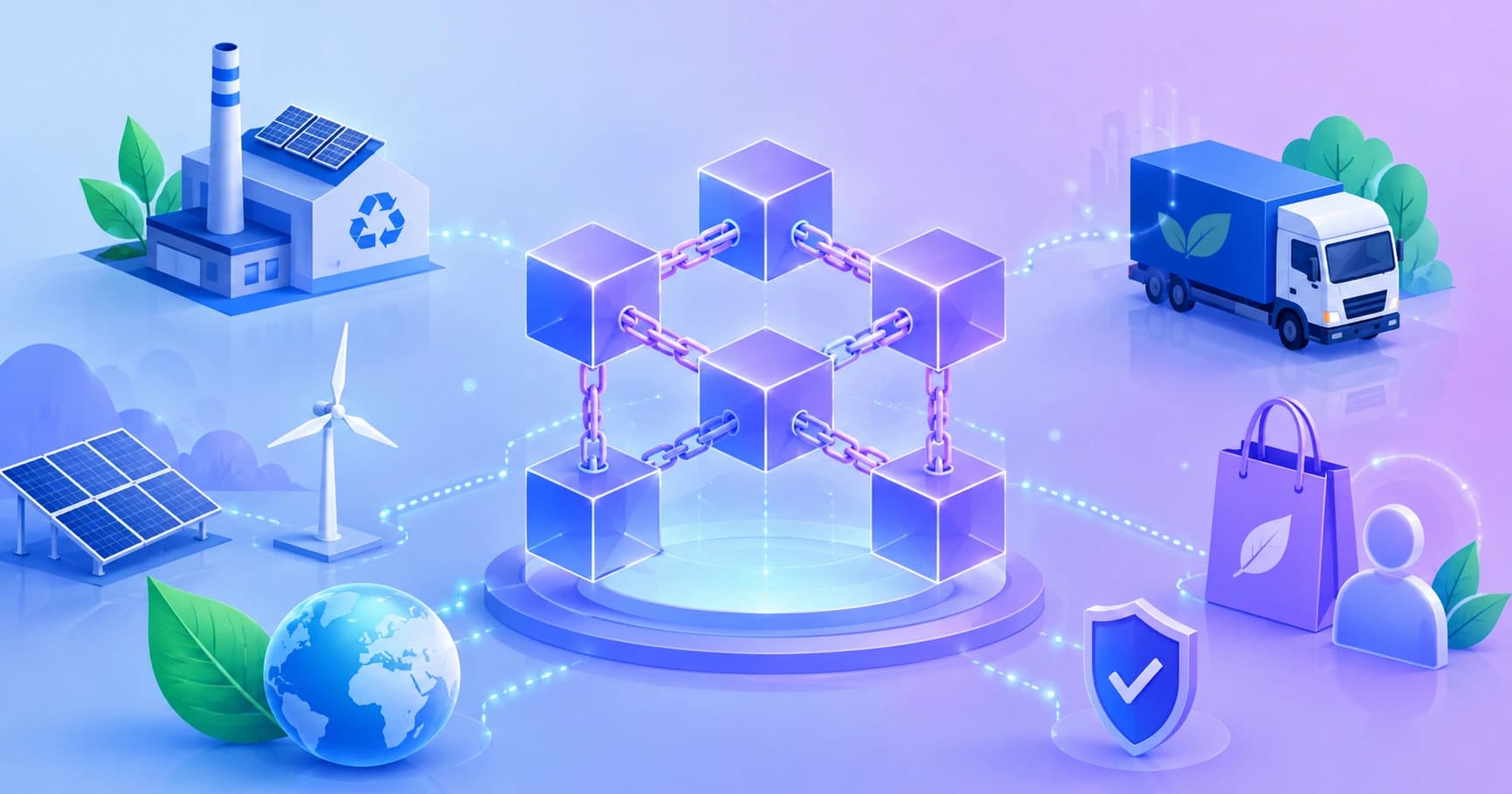
A practical guide to how blockchain supports sustainable business practices through supply chain traceability, carbon credit tokenization, energy trading, and verifiable ESG reporting.
How Can Blockchain Be Used to Support Sustainable Business Practices
Sustainability claims are cheap to make and expensive to prove. That gap is exactly where blockchain earns its place in a modern business stack. When a company says its cotton is organic, its emissions dropped 18 percent, or its plastic is genuinely recycled, the evidence usually sits in disconnected spreadsheets owned by suppliers who have every incentive to round numbers in their own favor. Blockchain does not fix sustainability by itself, but it fixes the trust layer underneath it: a shared, timestamped, tamper-evident record that multiple parties can write to and none can quietly rewrite.
This guide explains the specific, working use cases, the honest limitations, and a realistic implementation path for teams that want measurable outcomes rather than a press release.
Quick Answer: Blockchain supports sustainable business practices by creating tamper-evident records that make environmental claims verifiable. Companies use it for supply chain traceability, carbon credit tokenization that prevents double counting, peer-to-peer renewable energy trading, circular economy product passports, and audit-ready ESG reporting that regulators and buyers can independently confirm.
What Blockchain Actually Adds to Sustainability
Blockchain is a distributed ledger: a database replicated across multiple independent parties where entries are cryptographically chained, so altering an old record breaks every record after it. For sustainability work, three properties matter.
Shared truth without a central owner. A brand, three suppliers, a shipper, and an auditor can all write to the same record without one of them controlling the database.
Immutability with attribution. Every entry carries a timestamp and a signing identity. You can prove who claimed what, and when, years later.
Programmable rules. Smart contracts are self-executing code stored on the ledger. A payment can release automatically only when a verified emissions threshold or certification is recorded.
What blockchain does not do is validate whether an input is true. If a supplier enters false data, the ledger faithfully preserves a lie. This is the garbage-in problem, and it is why serious deployments pair the ledger with IoT sensors, satellite imagery, or third-party attestation.
Use Case 1: Supply Chain Traceability That Survives an Audit
Supply chains are where most sustainability claims break down, because visibility usually stops at tier one. Blockchain-based traceability assigns each batch a digital identity that accumulates verified events as it moves.
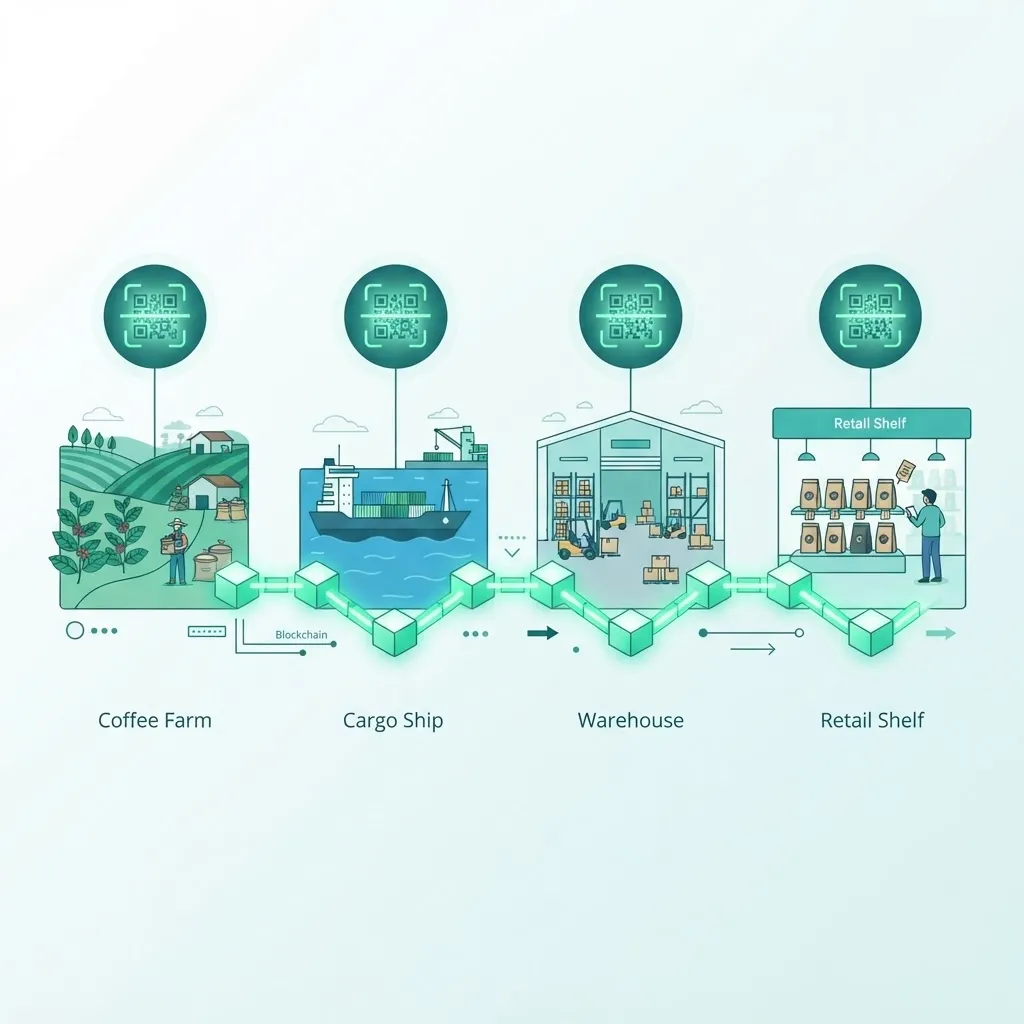
A working setup typically records:
- Origin data captured at source, such as farm GPS coordinates and harvest date
- Certification documents hashed and anchored to the ledger so tampering is detectable
- Custody transfers signed by each handler, creating an unbroken chain
- Condition data from sensors, including temperature and humidity, to reduce spoilage waste
- A consumer-facing QR code that resolves to the verified journey
The measurable business value is rarely marketing. It is faster recalls, fewer failed audits, and lower compliance cost under regimes like the EU Deforestation Regulation, which requires geolocation evidence for commodities such as coffee, cocoa, soy, and timber. According to the World Economic Forum, digital traceability can materially reduce the cost of verifying provenance compared with manual, document-based auditing, largely by eliminating repeated data reconciliation between parties.
One underrated benefit: traceability data doubles as waste analytics. Once you can see where spoilage and rework concentrate, you can cut material loss, which is usually the fastest emissions reduction available to a physical business.
Use Case 2: Carbon Credits and the Double-Counting Problem
Voluntary carbon markets have a credibility problem, and much of it is bookkeeping. The same tonne of avoided emissions can be sold twice, retired credits can quietly reappear, and buyers often cannot inspect the underlying project data.
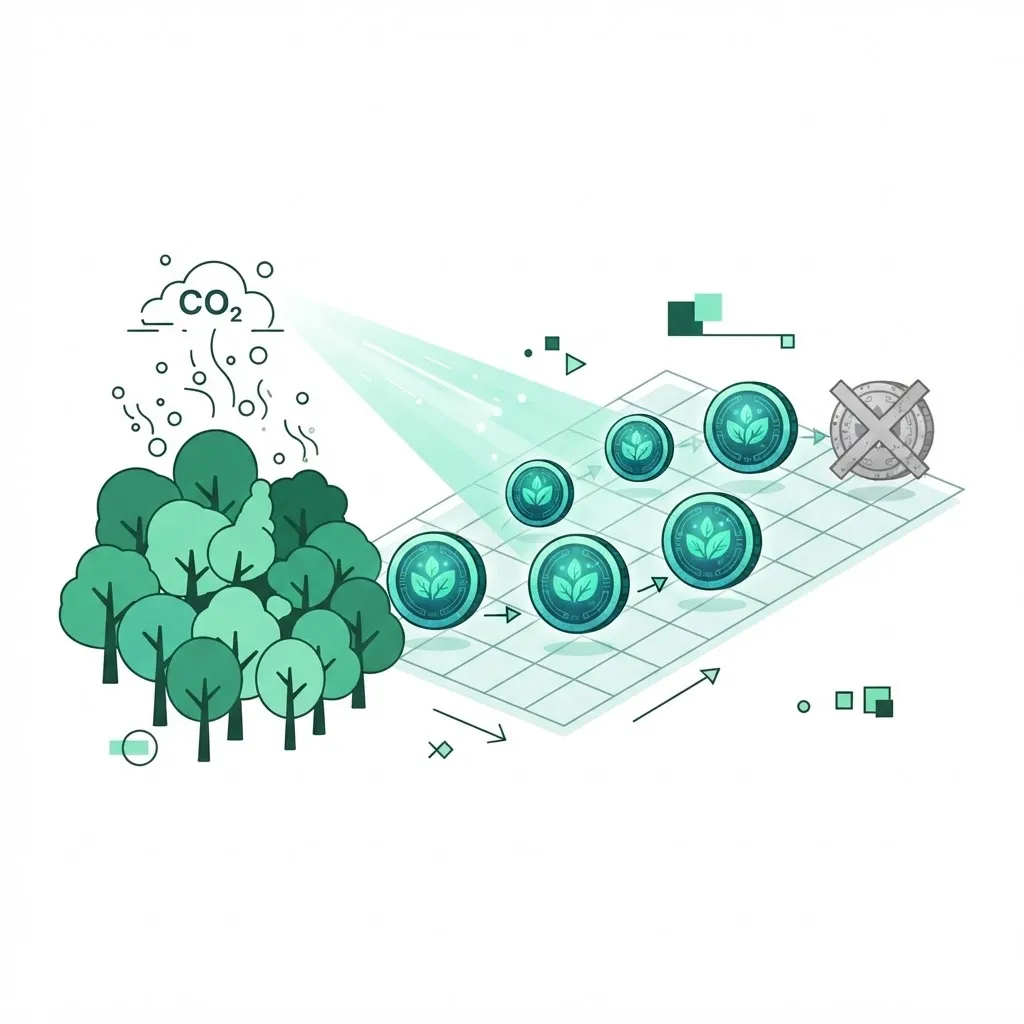
Tokenization addresses the mechanics. Each credit becomes a unique digital asset with a permanent history, so:
- Retirement is final and publicly verifiable, which prevents resale
- Ownership transfers are traceable to the originating project
- Project documentation, monitoring reports, and satellite verification can be hashed and linked to the token
- Fractional purchases become viable, opening high-quality projects to smaller buyers
The honest caveat is that tokenizing a low-quality credit produces a transparently traceable low-quality credit. Blockchain fixes ledger integrity, not additionality. Buyers should still demand project-level methodology review, and any procurement policy should require both on-chain retirement proof and independent verification of the underlying reductions.
Use Case 3: Renewable Energy Tracking and Peer-to-Peer Trading
Energy is the clearest technical fit, because generation and consumption are already metered in machine-readable units.
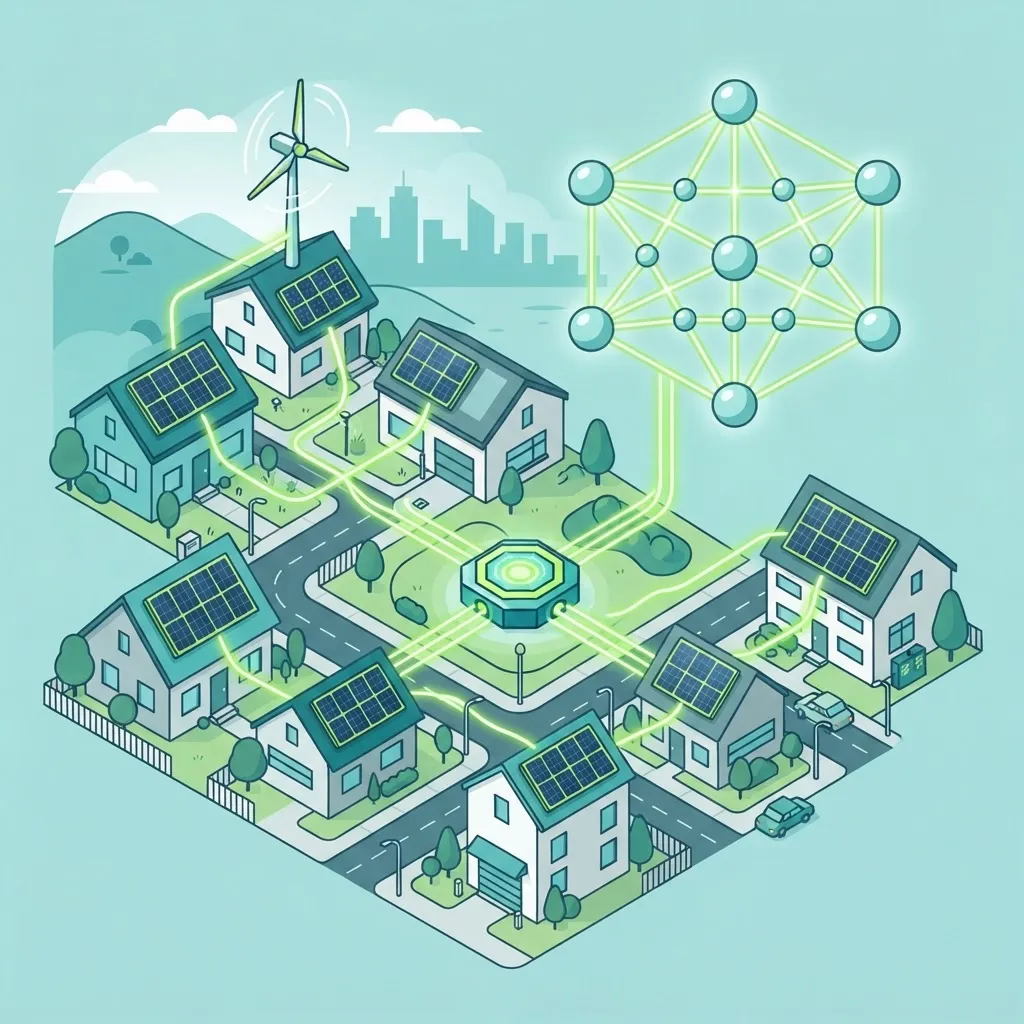
Two patterns dominate. First, granular renewable energy certificates. Traditional certificates are annual and coarse, which lets a company claim clean power it consumed at 2 a.m. when only fossil generation was running. Hourly certificates recorded on a ledger match consumption to generation in time, making a genuine 24/7 clean energy claim possible rather than an accounting average.
Second, peer-to-peer trading. Buildings with surplus rooftop solar sell directly to neighbors, with smart meters feeding readings to smart contracts that handle settlement automatically. This raises the return on distributed generation and reduces transmission loss, since power is consumed close to where it is produced.
For businesses with warehouses, retail estates, or campuses, the practical entry point is metering infrastructure. Without trustworthy hourly meter data, none of the ledger benefits materialize.
Use Case 4: Circular Economy and Digital Product Passports
Circularity fails when nobody knows what a product is made of at end of life. A digital product passport is a machine-readable record of materials, components, repair history, and recycling instructions that travels with the item.
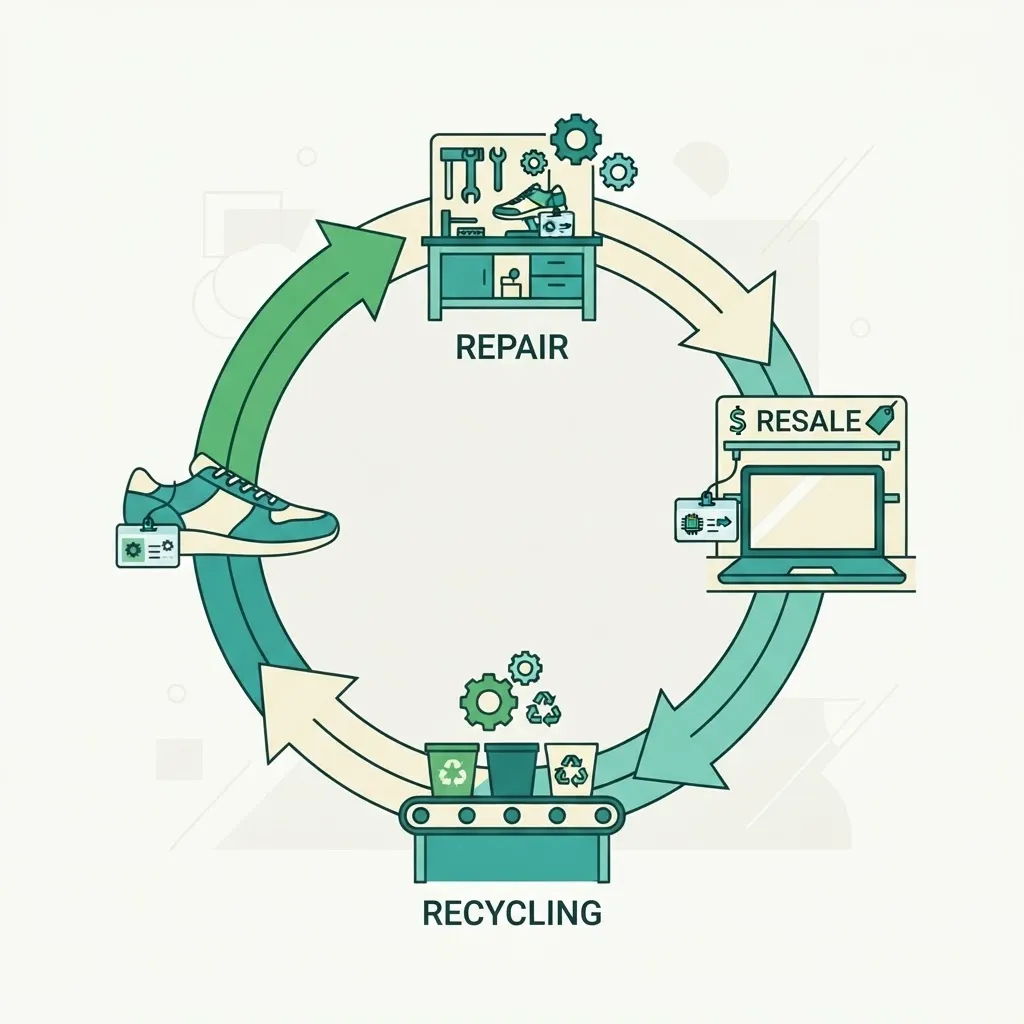
The passport unlocks four concrete behaviors:
- Recyclers identify material composition instead of guessing and defaulting to landfill
- Repair shops access authentic parts data, extending product lifespan
- Resale platforms verify authenticity, which strengthens secondary markets
- Manufacturers reclaim high-value materials from their own products
Regulation is the forcing function here. The EU is phasing in digital product passport requirements for categories including batteries, textiles, and electronics, so early implementation is compliance preparation rather than experimentation. Teams building these systems typically need durable APIs, offline-capable scanning, and long-lived data schemas, which is why this work usually pairs a ledger with conventional web app development rather than living entirely on-chain.
Use Case 5: ESG Reporting Regulators and Investors Can Trust
ESG stands for environmental, social, and governance performance. Most ESG reporting today is retrospective, manually assembled, and difficult to audit. Blockchain changes the workflow from annual reconstruction to continuous recording.
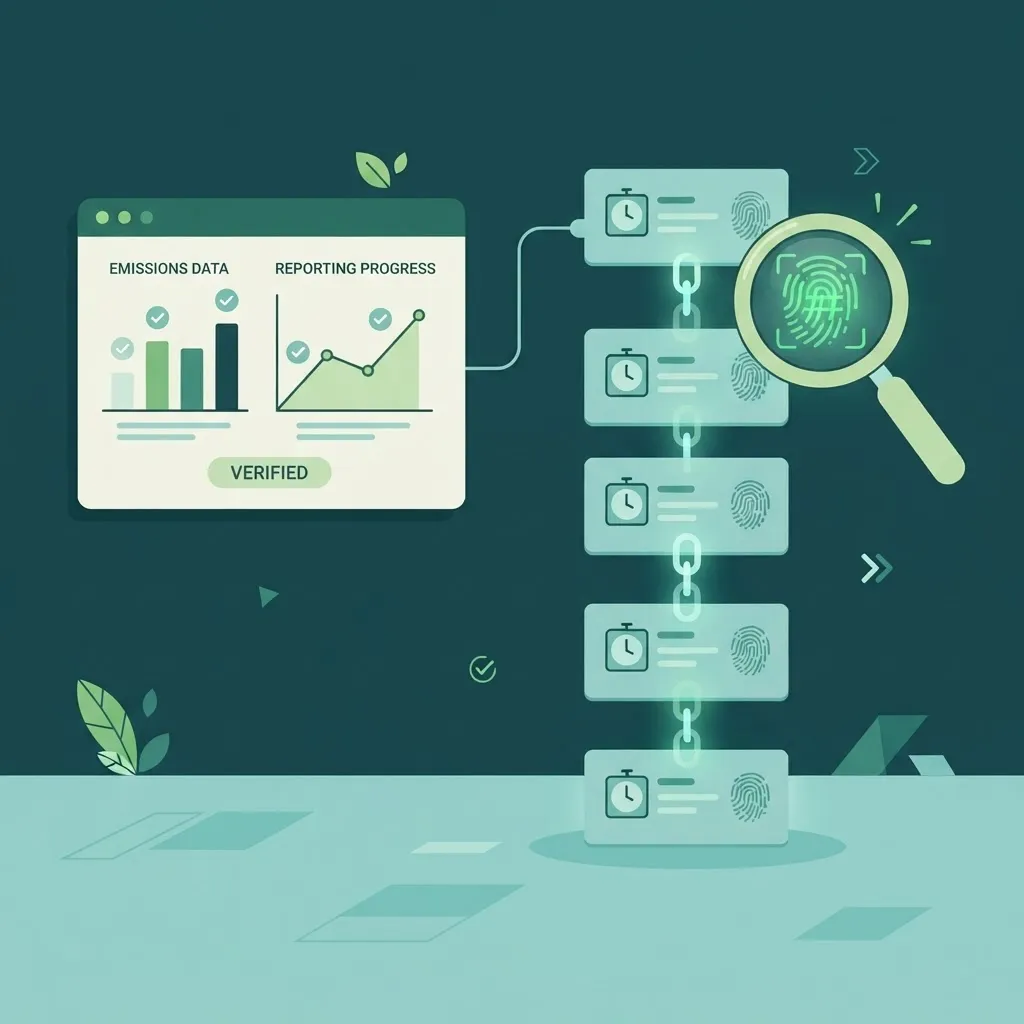
In a ledger-anchored model, emissions readings, water usage, safety incidents, and supplier attestations are written as they occur. Auditors verify a cryptographic trail instead of sampling PDFs, which shortens assurance cycles and reduces restatement risk. As mandatory sustainability disclosure expands under frameworks such as the EU Corporate Sustainability Reporting Directive and IFRS S2, the cost of unverifiable data rises sharply.
The reporting layer is where most companies feel value first, because it converts a recurring internal cost into an automated pipeline. A well-structured dashboard on top of that data is also a genuine competitive asset, and teams like ZoneTechify Team and KPI-driven web agency partners are increasingly asked to build these interfaces because the hard part is not the ledger but the usable software around it.
The Energy Objection, Answered Honestly
The most common pushback is that blockchain itself is environmentally harmful. That criticism was fair for proof-of-work systems and is largely outdated for the networks used in enterprise sustainability.
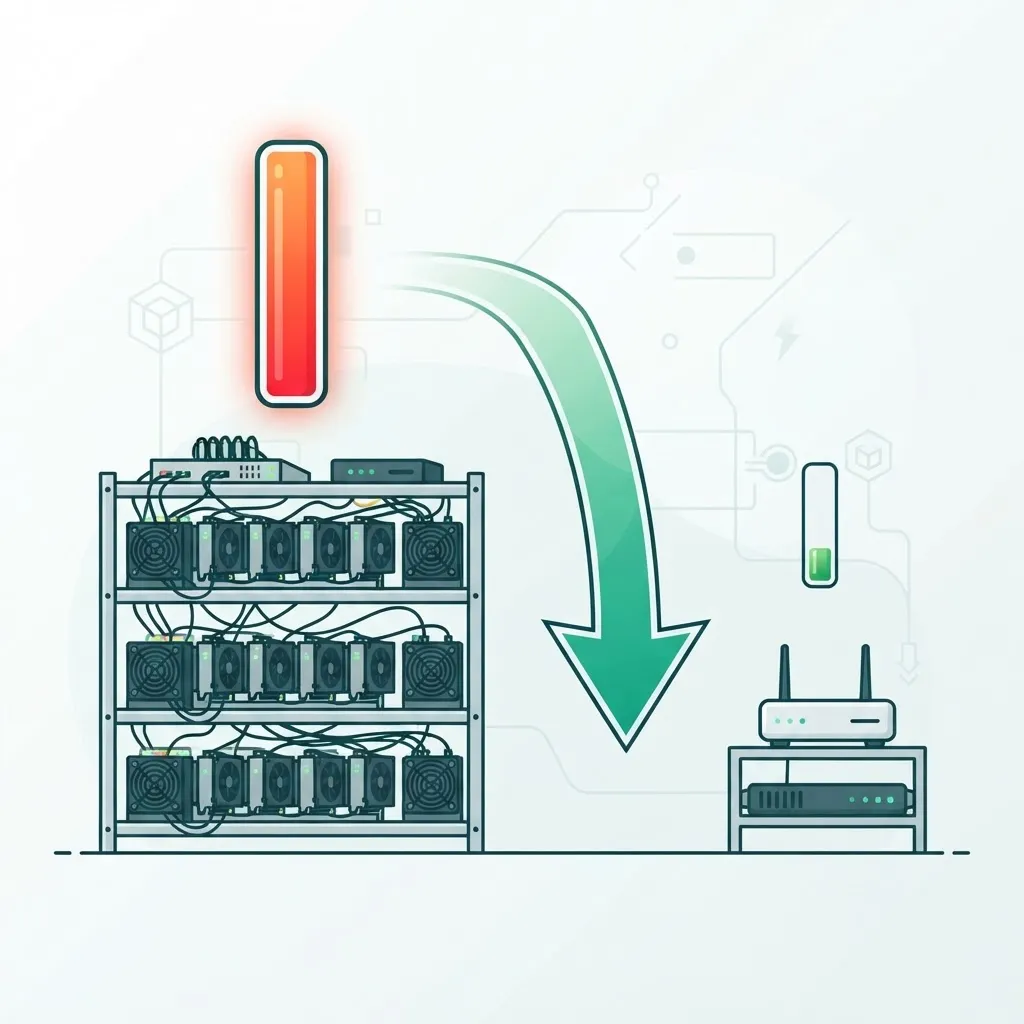
Ethereum's 2022 transition from proof of work to proof of stake reduced its energy consumption by more than 99 percent, according to the Ethereum Foundation and independent researchers at the Crypto Carbon Ratings Institute. Permissioned enterprise ledgers, which most supply chain deployments use, consume energy comparable to ordinary database infrastructure because they have no mining competition at all.
| Approach | Consensus | Relative Energy Use | Best Fit |
|---|---|---|---|
| Public proof of work | Mining competition | Very high | Not recommended for ESG use |
| Public proof of stake | Staked validators | Low | Carbon markets, open verification |
| Permissioned ledger | Approved validators | Very low | Supply chain, ESG reporting |
| Layer 2 rollup | Batched settlement | Very low per transaction | High-volume product passports |
The practical rule: if a vendor proposes proof of work for a sustainability project, that is a signal to walk away.
A Realistic Implementation Roadmap
Most failed blockchain sustainability projects fail for the same reason. They start with the ledger instead of the data.

- Pick one claim you cannot currently prove. Single product line, single supplier tier, single metric. Scope discipline beats ambition.
- Fix data capture first. Install sensors, standardize supplier data formats, and define who signs what. If the input is manual and unverified, the ledger adds nothing.
- Choose the network to match the trust model. Permissioned for supply chain and internal ESG data, public proof of stake when external parties must verify independently.
- Anchor documents, do not upload them. Store large files off-chain and write only cryptographic hashes on-chain. This protects privacy and controls cost.
- Design the human interface. Adoption dies when suppliers face a complicated portal. Mobile-first, offline-tolerant, minimal fields.
- Measure against a baseline. Track audit hours saved, spoilage reduced, verification cost per shipment, and disclosure preparation time.
Run a pilot for one or two quarters before expanding. If it cannot show a measurable operational number, the problem was never the technology choice.
Key Takeaways
- Blockchain supports sustainability primarily by making claims verifiable, not by reducing emissions directly.
- The five proven use cases are supply chain traceability, carbon credit tokenization, renewable energy tracking, circular economy product passports, and continuous ESG reporting.
- Ethereum's move to proof of stake cut its energy use by over 99 percent, and permissioned ledgers use energy comparable to standard databases.
- Immutability preserves bad data as faithfully as good data, so sensors, satellite verification, or third-party attestation are mandatory companions.
- Regulations including the EU Deforestation Regulation, CSRD, and digital product passport rules are turning traceability into a compliance requirement.
- Store hashes on-chain and documents off-chain to protect privacy and manage cost.
Frequently Asked Questions (FAQ)
How does blockchain actually help the environment?
Blockchain helps indirectly by making environmental data verifiable. It exposes false sustainability claims, prevents carbon credit double counting, enables hourly renewable energy matching, and supports recycling through product passports. The emissions reduction comes from better decisions and reduced waste, not from the ledger technology itself.
Is blockchain bad for the environment because of energy use?
Proof-of-work mining was genuinely energy intensive. Modern alternatives are not. Ethereum reduced its energy consumption by more than 99 percent after switching to proof of stake in 2022, and permissioned enterprise ledgers use roughly the same energy as conventional cloud databases, making them viable for sustainability programs.
Can small businesses use blockchain for sustainability?
Yes, and increasingly cheaply. Shared industry platforms, layer 2 networks, and traceability software-as-a-service remove the need to run infrastructure. A practical starting point is joining an existing consortium platform used by your buyers rather than building a custom ledger, which keeps costs and integration effort low.
What stops suppliers from entering false data on the blockchain?
Nothing technical prevents false entries, which is the honest limitation. Strong systems reduce the risk by using IoT sensors, satellite monitoring, third-party audits, and cryptographic signatures tied to real identities. Because entries are permanent and attributable, deliberate falsification becomes evidence rather than a deniable clerical error.
Which blockchain is best for ESG and supply chain projects?
Match the network to the trust requirement. Permissioned ledgers such as Hyperledger Fabric suit supply chain and internal ESG data where privacy matters. Public proof-of-stake networks or layer 2 rollups suit carbon markets and product passports where outside parties must verify records without trusting you.
How long does a blockchain sustainability pilot take?
A focused pilot covering one product line and one metric typically runs one to two quarters. Most of that time goes to data capture, supplier onboarding, and interface design rather than ledger development. Expanding scope before proving a measurable operational result is the most common cause of failure.