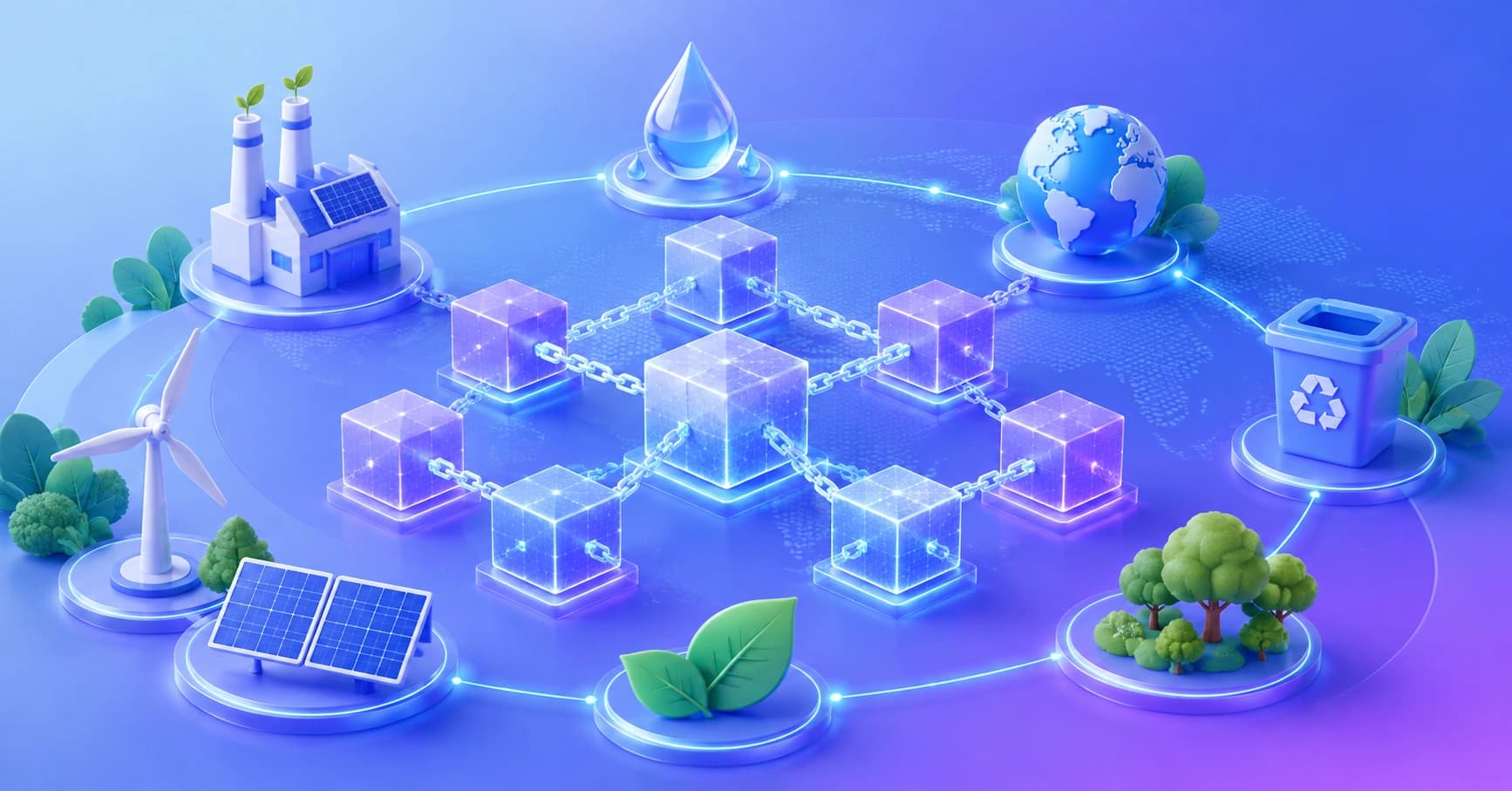
A practical breakdown of how blockchain features such as immutability, transparency, tokenization, and smart contracts strengthen sustainability programs. Includes real use cases, energy data, and an implementation roadmap.
How Can Features of Blockchain Support Sustainability Efforts
Sustainability programs fail for a boring reason: nobody can prove the numbers. A company reports Scope 3 emissions from a spreadsheet a supplier emailed in March, an auditor cannot verify the source, and a buyer three tiers down the chain has no idea whether the cotton in a shirt came from a certified farm. Blockchain does not fix pollution. What it fixes is the trust gap in sustainability data, and that gap is where most greenwashing lives.
This guide explains exactly which blockchain features map to which sustainability problems, where the technology genuinely outperforms a database, and where it is the wrong tool. No hype, no token pitches.
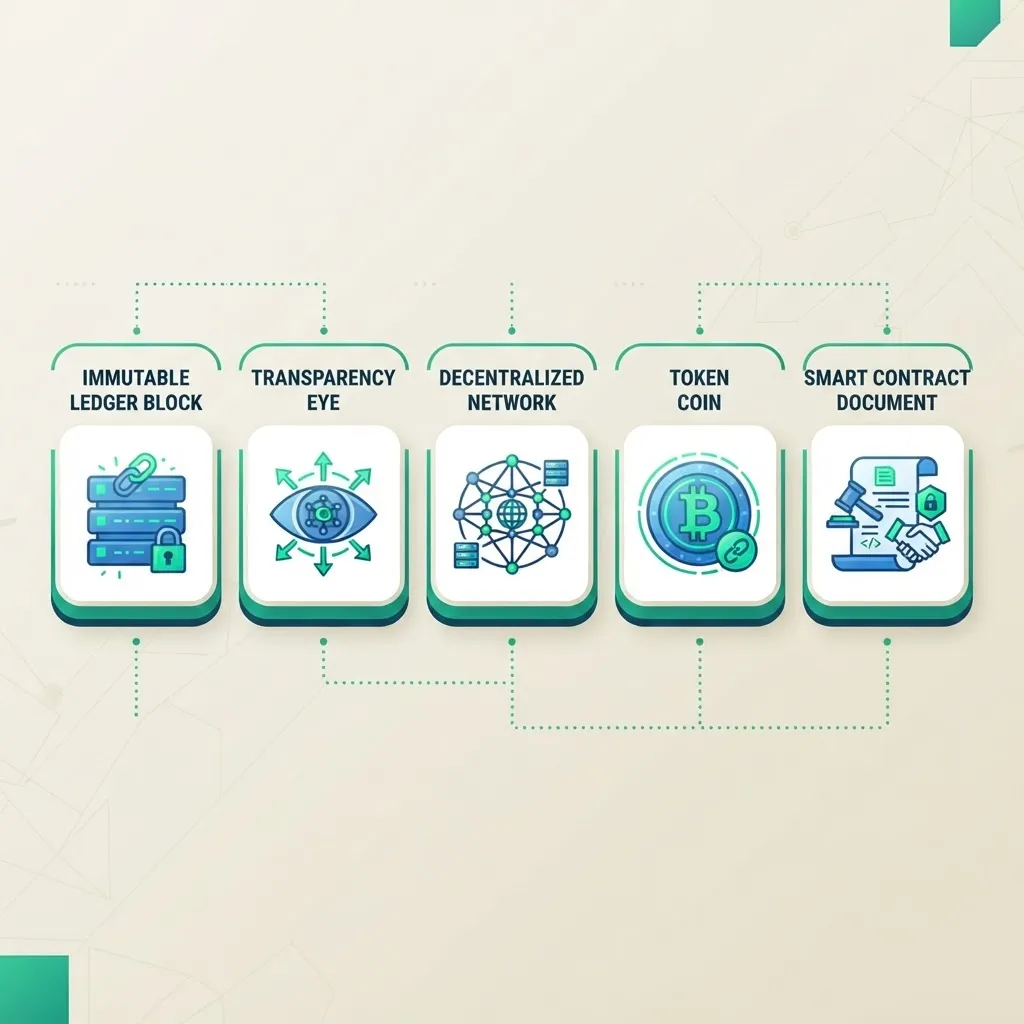
Quick Answer: Blockchain supports sustainability through five features: immutable records that prevent tampering with emissions data, shared transparency across supply chains, tokenization that turns carbon credits and energy units into traceable assets, smart contracts that automate verification and payouts, and decentralization that removes single-owner control of environmental claims.
What Sustainability Problem Is Blockchain Actually Solving
The core problem is unverifiable claims. Environmental data travels through many hands, each with an incentive to round in its own favor, and traditional systems let any single party edit history quietly.
A blockchain is a shared, append-only ledger replicated across many independent participants. Two properties matter here:
- Immutability: once a record is confirmed, altering it would require rewriting every subsequent block across the network, which is economically impractical.
- Shared state: competitors, regulators, and NGOs can read the same record without any one of them hosting the database.
That combination produces something a normal system cannot: a claim that stays credible even when the party who made it has a reason to lie.
Key Terms Defined
- Tokenization: representing a real-world unit, such as one tonne of avoided CO2, as a unique digital asset with a traceable history.
- Smart contract: self-executing code that releases a payment or certificate only when predefined conditions are met.
- Double counting: the same environmental benefit being claimed by two parties, historically the biggest credibility problem in voluntary carbon markets.
- Retirement: permanently removing a carbon credit from circulation so it cannot be resold.
Feature 1: Transparency and Traceability in Supply Chains
Supply chain traceability is the most mature and least speculative sustainability use of blockchain. Each handoff from farm to factory to retailer writes a timestamped entry, so a product's origin story becomes auditable rather than marketing copy.
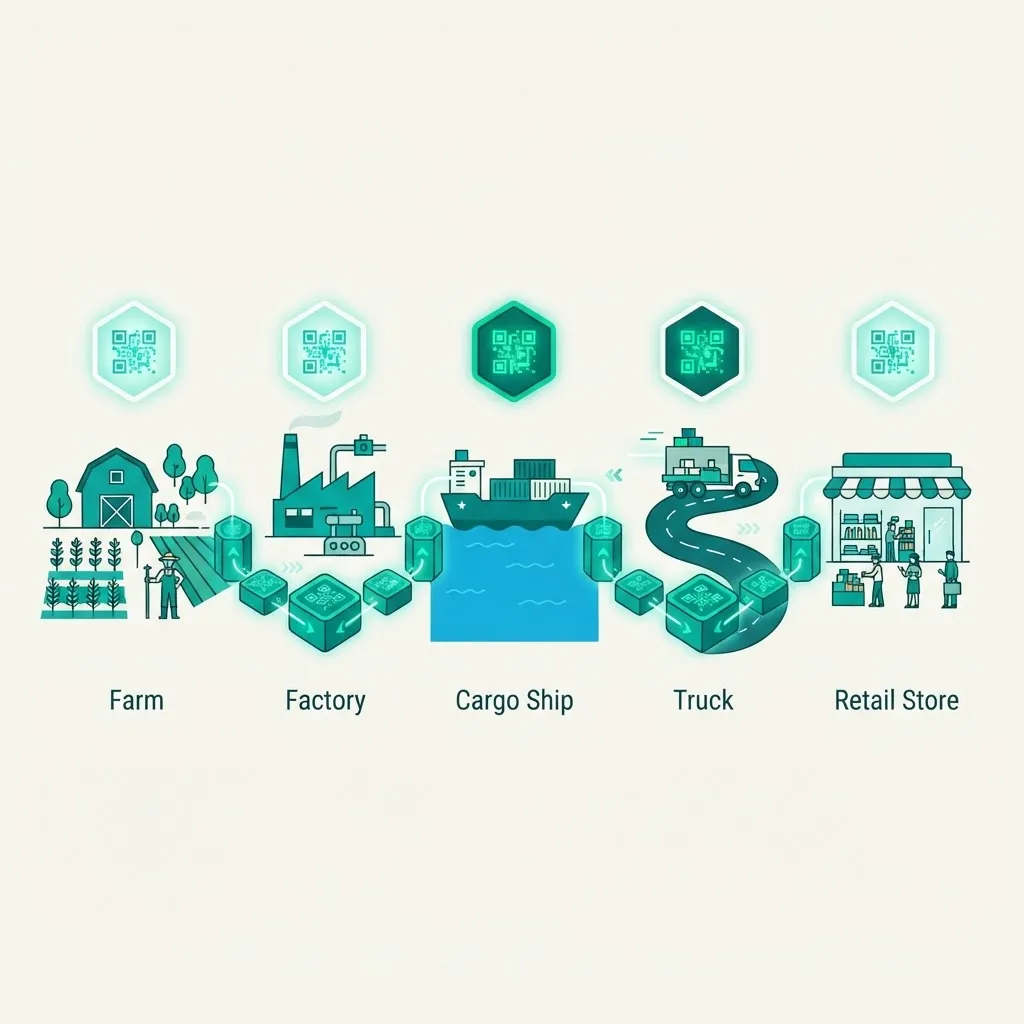
What this changes in practice:
- Origin verification. A recycled polyester claim can be tied to a specific recycler batch instead of a certificate PDF.
- Faster recalls. Walmart's widely documented food traceability work reduced the time to trace a mango's origin from roughly seven days to about 2.2 seconds, which matters for waste reduction as much as safety.
- Deforestation screening. Geotagged sourcing records let buyers exclude plots that overlap protected land before a purchase order is issued.
- Labor and ethics audits. Certification bodies can attach signed attestations to a batch instead of a company.
My honest read after seeing several of these programs: the blockchain is the easy part. The hard part is data capture at the first mile. If a farmer's yield is typed in by hand, immutability only guarantees you cannot edit a bad number later. Pair the ledger with sensors, weighbridges, or satellite data, or you have built a tamper-proof record of a guess.
Feature 2: Smart Contracts for Energy and Automated Compliance
Smart contracts turn sustainability rules into code that executes without a middleman. This is where blockchain moves from record keeping to operations.
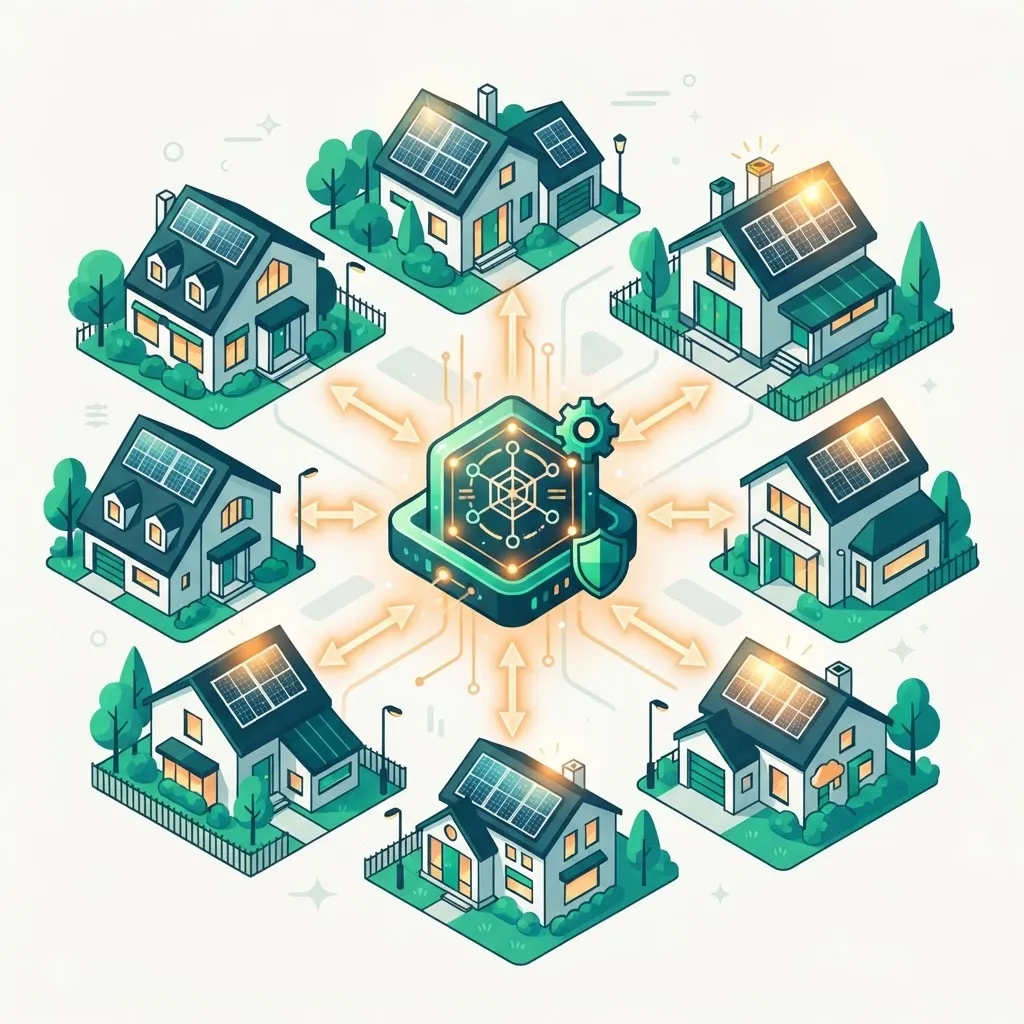
Three concrete applications:
- Peer-to-peer energy trading. Rooftop solar owners sell surplus kilowatt-hours to neighbors, with a contract matching supply, metering output, and settling payment automatically. Brooklyn's early microgrid trials and Australia's Power Ledger pilots both proved the mechanics work at neighborhood scale.
- Renewable energy certificates. Instead of an annual reconciliation, generation can be certified hourly, which closes the loophole where a company matches night-time consumption with mid-day solar.
- Conditional climate finance. A reforestation grant can release funds in tranches when satellite-verified canopy cover hits agreed thresholds, cutting the monitoring overhead that makes small projects uneconomic.
The automation benefit is measurable: verification and settlement costs, not the environmental work itself, consume a large share of small project budgets. Removing manual reconciliation is what makes sub-scale projects viable.
Teams that need this logic wrapped in a usable dashboard rather than a raw contract interface typically pair the ledger with a custom internal tool, which is where a focused web app development engagement pays for itself. The contract enforces the rule; the interface is what gets operations staff to actually use it.
Feature 3: Tokenized Carbon Credits and Environmental Assets
Tokenization attacks double counting, the flaw that has damaged trust in voluntary carbon markets more than any other. When a credit exists as a unique token, its issuance, every transfer, and its final retirement are publicly visible.
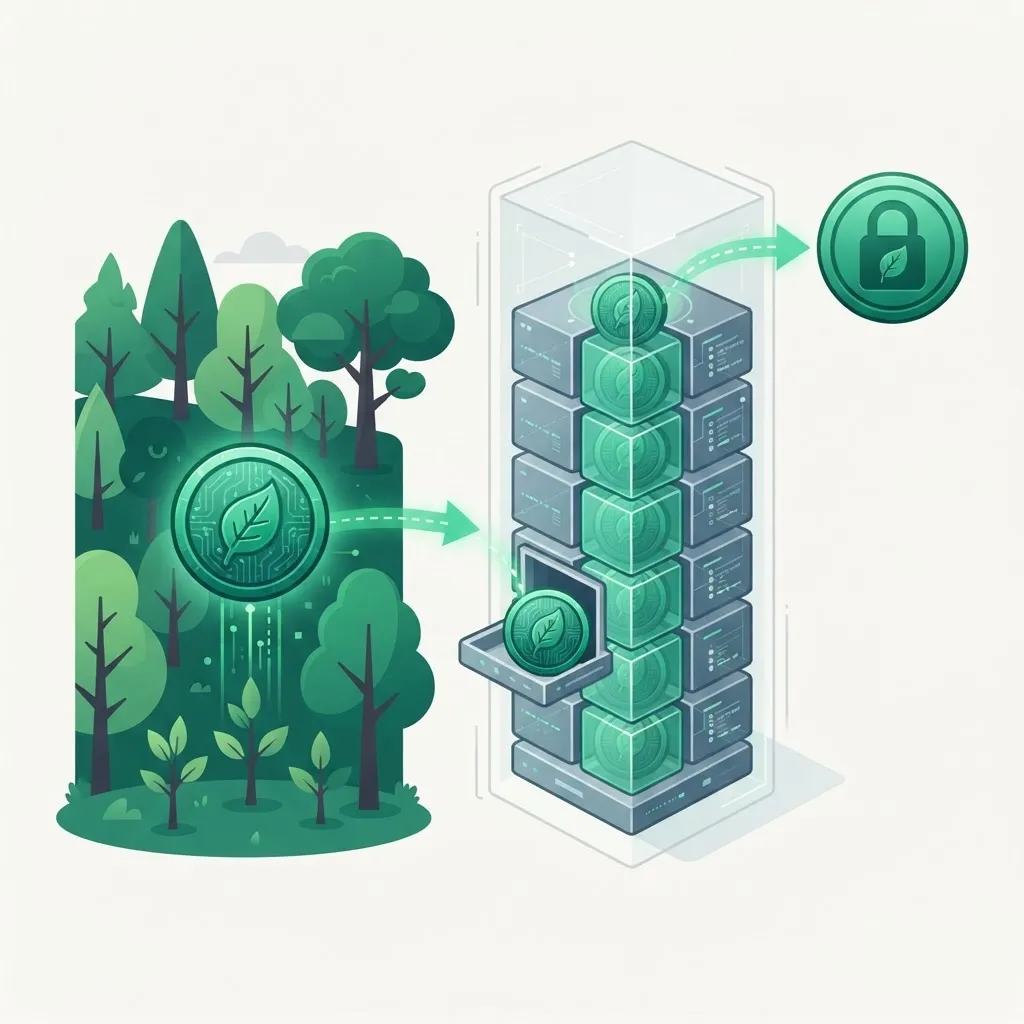
Why this matters commercially: analyses of the voluntary carbon market have repeatedly flagged that a large share of legacy credits were low quality or unverifiable, and buyers responded by pulling back. A transparent registry does not make a bad project good, but it makes a bad project visible and traceable to the issuer, which shifts reputational risk onto the party that deserves it.
Beyond carbon, the same pattern applies to plastic credits, water rights, biodiversity units, and battery passports. The European Union's battery regulation, for example, requires a digital passport carrying material origin and recycled content, exactly the kind of multi-party record that suits a shared ledger.
One caution grounded in experience: tokenizing a credit does not verify it. Verification still depends on the methodology and the auditor. Any vendor implying the token itself proves additionality is selling the wrapper as the product.
Feature 4: Consensus Design and the Energy Objection
The fair criticism is that some blockchains consume enormous energy. The relevant fact is that this depends entirely on consensus design, not on blockchain as a category.
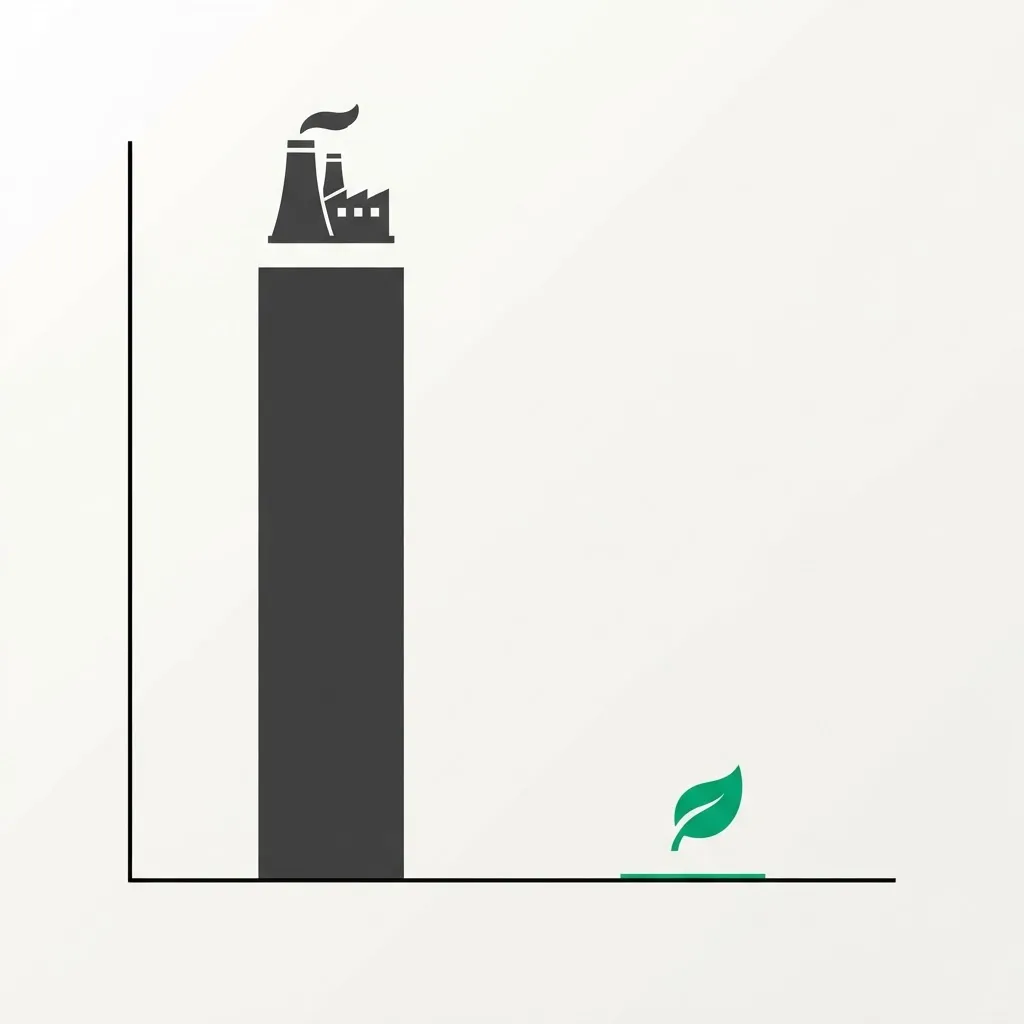
Ethereum's 2022 shift from proof of work to proof of stake cut its energy use by roughly 99.9 percent, according to the Ethereum Foundation and subsequent independent analyses. Bitcoin, still proof of work, continues to consume electricity comparable to a mid-sized country. Any credible sustainability deployment in 2026 runs on proof of stake, a permissioned network, or a layer-2 rollup.
| Consensus Approach | Relative Energy Use | Typical Sustainability Fit |
|---|---|---|
| Proof of work | Very high | Not appropriate for ESG workloads |
| Proof of stake | About 0.1 percent of proof of work | Public carbon registries, tokenized assets |
| Permissioned or private | Very low, similar to standard cloud infrastructure | Supply chain consortia, regulated reporting |
| Layer-2 rollups | Very low per transaction | High-volume sensor and metering data |
Use this table as a procurement filter. If a vendor cannot state the consensus mechanism and the per-transaction energy profile, the sustainability claim is unfinished.
Feature 5: Immutable Audit Trails for ESG Reporting
Regulated disclosure is where immutability creates the clearest financial value. Frameworks such as the EU's CSRD and the ISSB standards demand assurance-ready data, and assurance is expensive precisely because provenance is unclear.
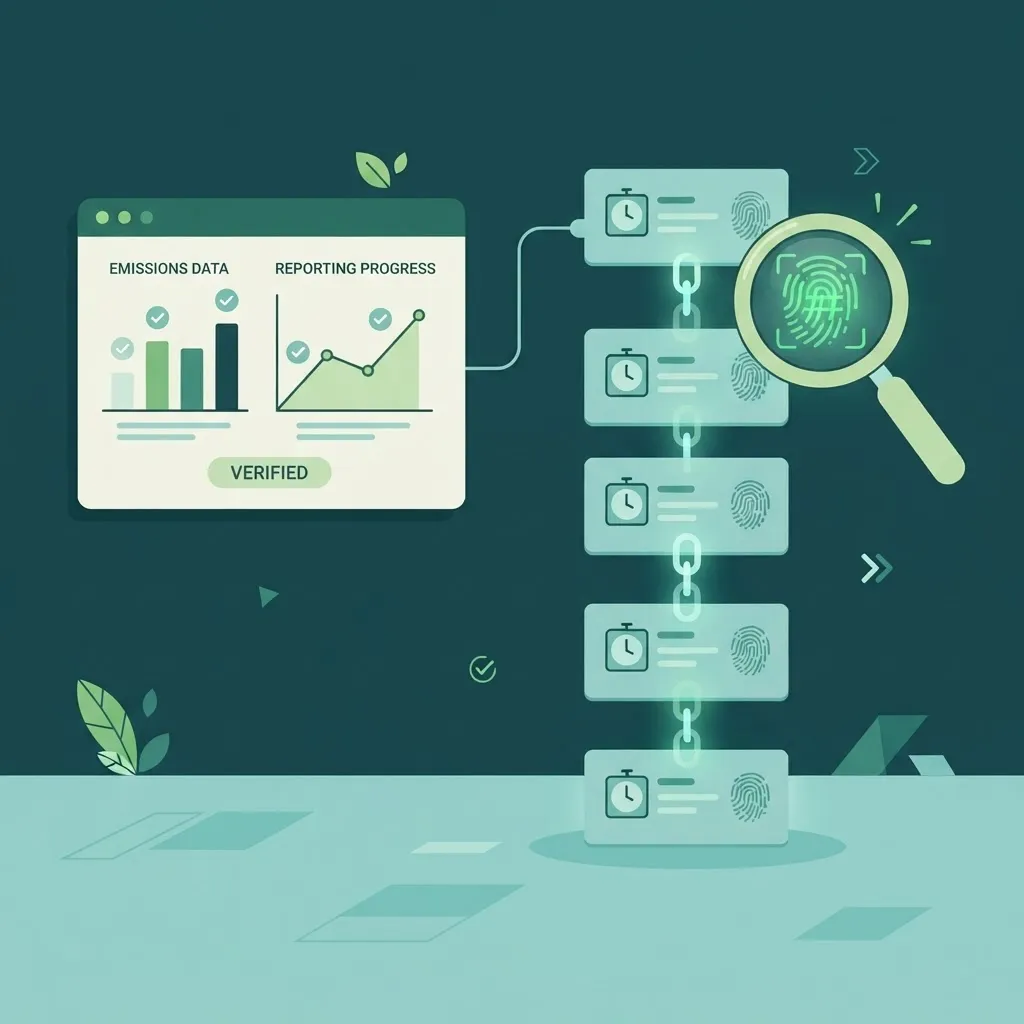
A hash-anchored audit trail delivers three specific advantages:
- Provenance per data point. Every emissions figure links to its source device, supplier, and timestamp.
- Restated-figure defense. When a number changes, the correction is recorded alongside the original rather than replacing it, which is exactly what an auditor wants to see.
- Lower assurance cost. Sampling shrinks when the sample is verifiable at source.
A useful pattern that keeps costs and privacy sane: store the actual data off-chain in your existing systems and anchor only cryptographic hashes on-chain. You get tamper evidence without publishing commercially sensitive supplier terms. Teams at ZoneTechify tend to favor this hybrid approach because it integrates with the ERP a client already runs instead of asking them to replace it.
A Realistic Implementation Roadmap
Start with the data problem, not the ledger. The projects that succeed are the ones that already know which claim they need to prove and to whom.

- Name the disputed claim. Recycled content, renewable sourcing, or credit retirement. If no one disputes it, you do not need a shared ledger.
- Fix first-mile data capture. Meters, IoT sensors, weighbridges, or satellite feeds before anything else.
- Pick a low-energy network. Proof of stake or permissioned, decided and documented up front.
- Anchor hashes, not raw data. Keep sensitive records in existing systems.
- Run a single-lane pilot. One product line, one supplier tier, one metric, with a defined success measure.
- Build the interface people will use. Adoption dies on command-line tooling; an experienced web development company can turn contract calls into a workflow an operations team accepts.
- Bring the auditor in early. Their acceptance criteria should shape the schema, not review it afterward.
When to skip blockchain entirely: if one organization owns all the data and no external party disputes it, a well-governed database with strong logging is cheaper, faster, and equally credible.
Key Takeaways
- Blockchain improves the verifiability of sustainability data, not sustainability outcomes directly.
- Immutability plus shared access lets competing parties trust one record without a central owner.
- Walmart's traceability work cut mango origin tracing from around seven days to about 2.2 seconds.
- Ethereum's move to proof of stake reduced its energy use by roughly 99.9 percent, removing the blanket energy objection.
- Tokenization prevents double counting of carbon credits but does not verify project quality.
- Anchoring hashes on-chain while keeping data off-chain balances auditability with confidentiality.
- Blockchain is unnecessary when a single trusted party owns the data end to end.
Frequently Asked Questions (FAQ)
Does blockchain actually reduce carbon emissions?
Not directly. Blockchain reduces emissions indirectly by making reduction claims verifiable, exposing inefficiency in supply chains, and enabling automated renewable energy trading. The technology is an accounting and coordination layer. Actual reductions come from operational changes that better data makes possible and provable.
Is blockchain bad for the environment?
It depends on the consensus mechanism. Bitcoin's proof of work consumes electricity comparable to a mid-sized country, while proof-of-stake and permissioned networks use a tiny fraction of that. Ethereum cut energy use by about 99.9 percent in 2022, so modern sustainability deployments carry a negligible energy footprint.
How does blockchain stop carbon credit double counting?
Each credit becomes a unique token with a public history covering issuance, every transfer, and final retirement. Once retired, the token cannot be resold or reclaimed by another buyer. Anyone can verify a credit's status independently, which makes silently selling the same benefit twice detectable.
Do I need blockchain to track my supply chain?
Only if multiple independent parties must trust the same records and none of them should control the database. If your company owns every data source and no external party disputes your figures, a conventional database with strong audit logging is cheaper and equally reliable.
What sustainability data should go on-chain?
Store only what needs independent verification: cryptographic hashes of emissions reports, certificate identifiers, credit retirements, and handoff events. Keep raw operational data, supplier pricing, and personal information in your existing systems. This hybrid pattern preserves tamper evidence without exposing commercially sensitive details publicly.
How long does a blockchain sustainability pilot take?
A focused pilot covering one product line and one metric typically runs three to six months, with most of that time spent on first-mile data capture and supplier onboarding rather than the ledger itself. Broader multi-tier rollouts realistically take twelve to eighteen months.