
Learn how to do a competitive analysis in digital marketing B2B with a proven 7-step framework covering SEO, content, social media, paid ads, and SWOT.
How to Do a Competitive Analysis in Digital Marketing B2B

Most B2B marketing teams lose deals long before a sales call ever happens. Gartner research shows that B2B buyers spend only about 17% of their purchase journey meeting with potential suppliers, which means the majority of the evaluation happens through independent online research where your competitors are fighting for the same attention. If you do not know exactly what those competitors are publishing, ranking for, and promoting, you are effectively marketing blind.
After running competitive audits for SaaS, manufacturing, and professional services clients at ZoneTechify, we have refined a repeatable 7-step process that turns scattered competitor observations into a prioritized action plan. This guide walks through that exact process, including the tools, metrics, and reporting cadence we use in real client engagements.
Quick Answer: To do a competitive analysis in B2B digital marketing, identify 5 to 10 direct and indirect competitors, then audit their SEO keywords, content strategy, LinkedIn presence, and paid ads using tools like Semrush and Meta Ad Library. Compile findings into a SWOT matrix, extract 3 to 5 opportunity gaps, and refresh the analysis quarterly.
What Is a Competitive Analysis in B2B Digital Marketing?
A B2B competitive analysis is the structured process of evaluating how rival companies attract, engage, and convert business buyers across digital channels, including organic search, content, social media, email, and paid advertising. The goal is not imitation. The goal is identifying gaps your competitors have left open so you can win demand they are missing.
A useful analysis answers four concrete questions: which keywords and topics competitors own, which content formats drive their engagement, where they invest ad budget, and how they position their value proposition against yours. Anything that does not feed one of those four answers is noise.
Why B2B Competitive Analysis Differs From B2C
B2B buying cycles run 3 to 12 months, involve buying committees of 6 to 10 stakeholders according to Gartner, and rely heavily on bottom-of-funnel proof like case studies and comparison pages. That changes what you analyze. In B2C, you might track discount cadence and influencer campaigns. In B2B, the highest-value intelligence lives in competitor comparison pages, gated assets, webinar programs, LinkedIn thought leadership, and review platforms like G2 and Capterra.
Practically, this means a B2B analysis must weight long-tail commercial keywords, sales enablement content, and account-based advertising far more heavily than raw follower counts or viral reach.
Step 1: Identify and Tier Your Competitors
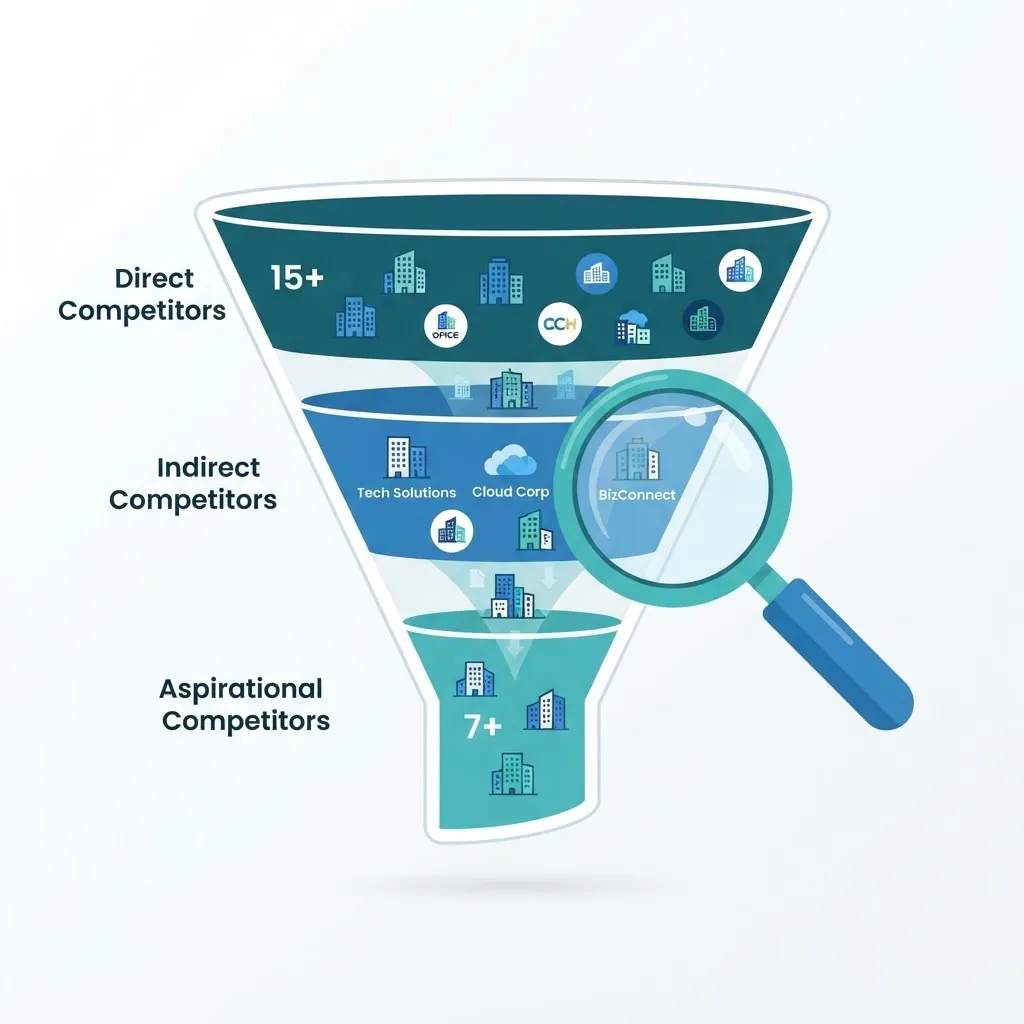
Start by building a list of 15 to 20 candidate competitors from four sources: companies your sales team loses deals to, brands ranking on page one for your top 10 commercial keywords, alternatives listed beside you on G2 or Capterra, and companies bidding on your brand name in Google Ads.
Then tier them so your analysis stays focused:
- Direct competitors sell a similar solution to the same buyer. Analyze 3 to 5 deeply.
- Indirect competitors solve the same problem differently, such as an agency competing with a software product. Track 3 to 5 at a lighter level.
- Aspirational competitors are market leaders one tier above you. Study 1 or 2 for strategic direction, not head-to-head benchmarking.
A common mistake is analyzing only the biggest brand in the category. That company often has budgets and brand equity you cannot match, so its playbook may be irrelevant to yours. Your direct tier should reflect who actually appears in your deals.
Step 2: Run an SEO and Keyword Gap Analysis

Organic search is where B2B research begins, so start your channel audits here. Use Semrush or Ahrefs to pull each direct competitor's top 100 organic keywords, then filter for commercial intent terms containing words like software, platform, services, pricing, alternatives, and vs.
The single highest-leverage report is the keyword gap: terms where two or more competitors rank in the top 10 and you do not rank at all. In our audits, this report alone typically surfaces 30 to 80 realistic keyword targets. Prioritize them by scoring each on three factors: search intent match with your offer, keyword difficulty relative to your domain authority, and estimated pipeline value rather than raw volume.
Also record structural signals: how many comparison pages each competitor maintains, whether they own an alternatives page targeting your brand, and how aggressively they build backlinks. If a competitor publishes a page titled with your brand plus the word alternatives, you should have an equivalent asset defending that query.
Step 3: Audit Competitor Content Marketing
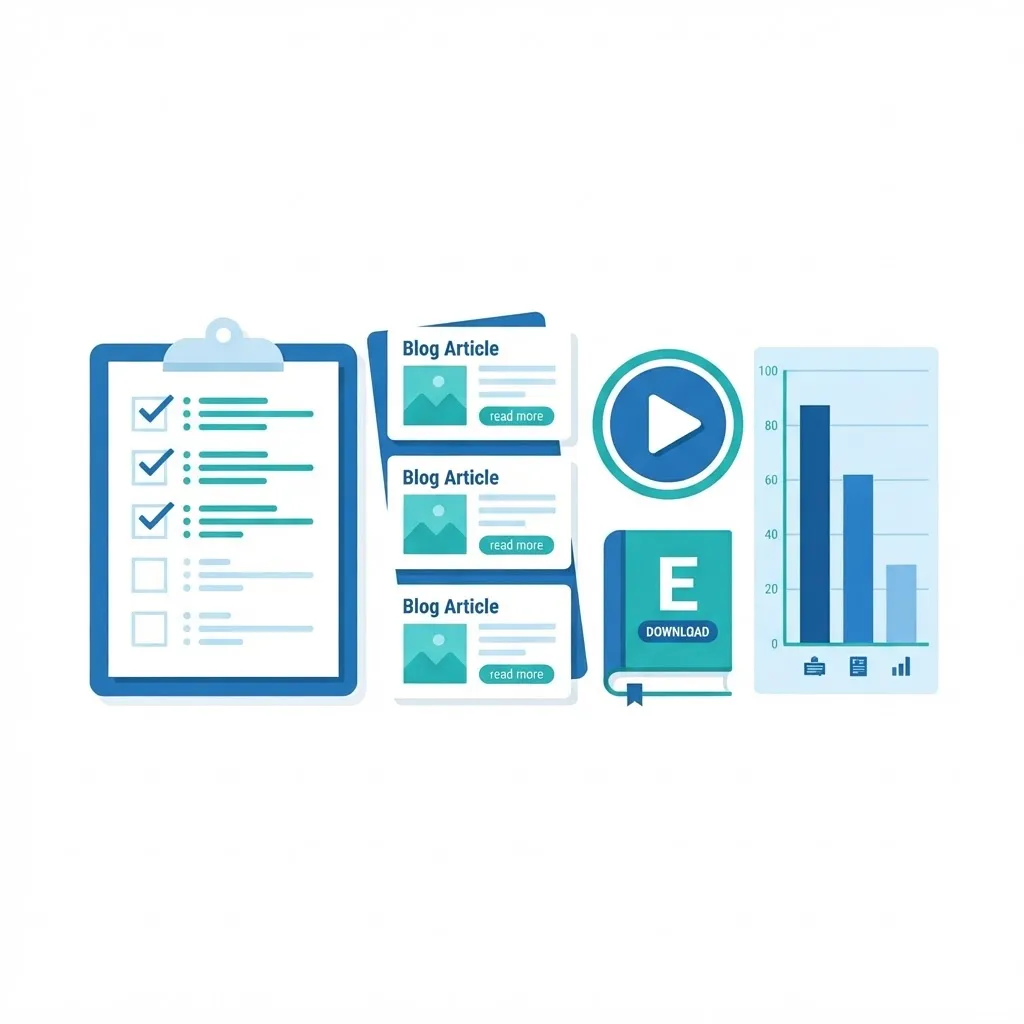
Content is the engine of B2B demand generation, and a content audit reveals a competitor's strategy more honestly than any press release. For each direct competitor, catalog their publishing cadence, dominant formats, funnel coverage, and gated versus ungated mix.
Specific things to log in your audit spreadsheet:
- Cadence: posts per month over the last 6 months, which signals team size and investment.
- Funnel distribution: the ratio of educational top-of-funnel posts to bottom-of-funnel assets like case studies, ROI calculators, and pricing explainers.
- Format bets: webinars, original research reports, podcasts, or video series that indicate where they expect returns.
- Engagement proxies: estimated organic traffic per post, backlinks earned, and social shares.
The most valuable output is the topic gap list: subjects your buyers care about that no direct competitor has covered with depth. Original research and data-driven content are especially powerful gaps because AI answer engines and journalists cite primary data, which compounds visibility. If your internal team lacks bandwidth to close these gaps, a specialist partner like the ZoneTechify digital marketing team can operationalize the content roadmap your audit produces.
Step 4: Benchmark Social Media, Especially LinkedIn
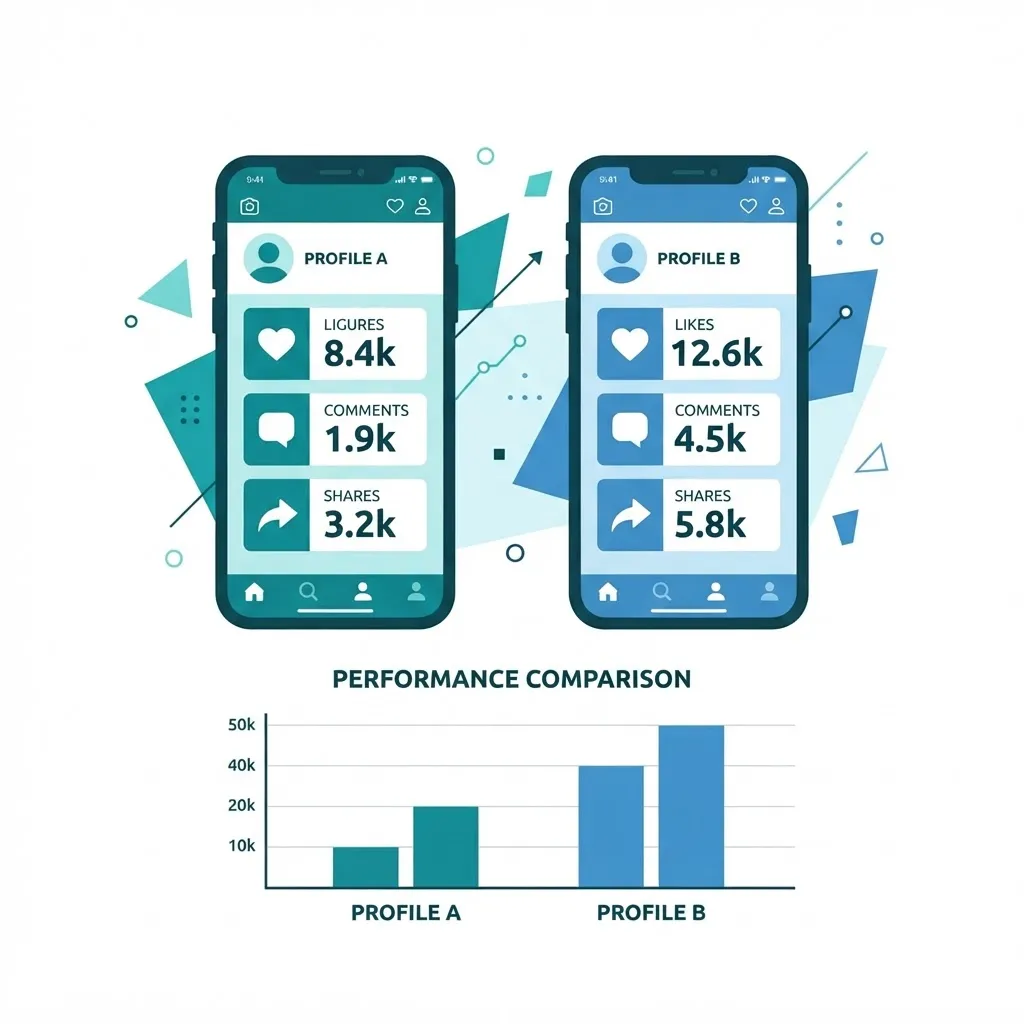
For most B2B categories, LinkedIn is the only social platform that materially influences pipeline, so weight your benchmarking accordingly. For each competitor, track posting frequency, average engagement per post relative to follower count, and the split between company page content and executive personal posts.
Pay special attention to employee advocacy. In nearly every audit we run, a competitor's founders and sales engineers generate 5 to 10 times more engagement than the company page itself. If your rivals have no active executive voices on LinkedIn, that is one of the cheapest competitive gaps to exploit, because personal authority takes months to build and cannot be bought with ad spend.
Also note community plays: private Slack or Discord groups, LinkedIn newsletters, and recurring live events. These signal a retention-oriented strategy that keeps competitors in front of buyers between purchase cycles.
Step 5: Analyze Paid Advertising and Messaging
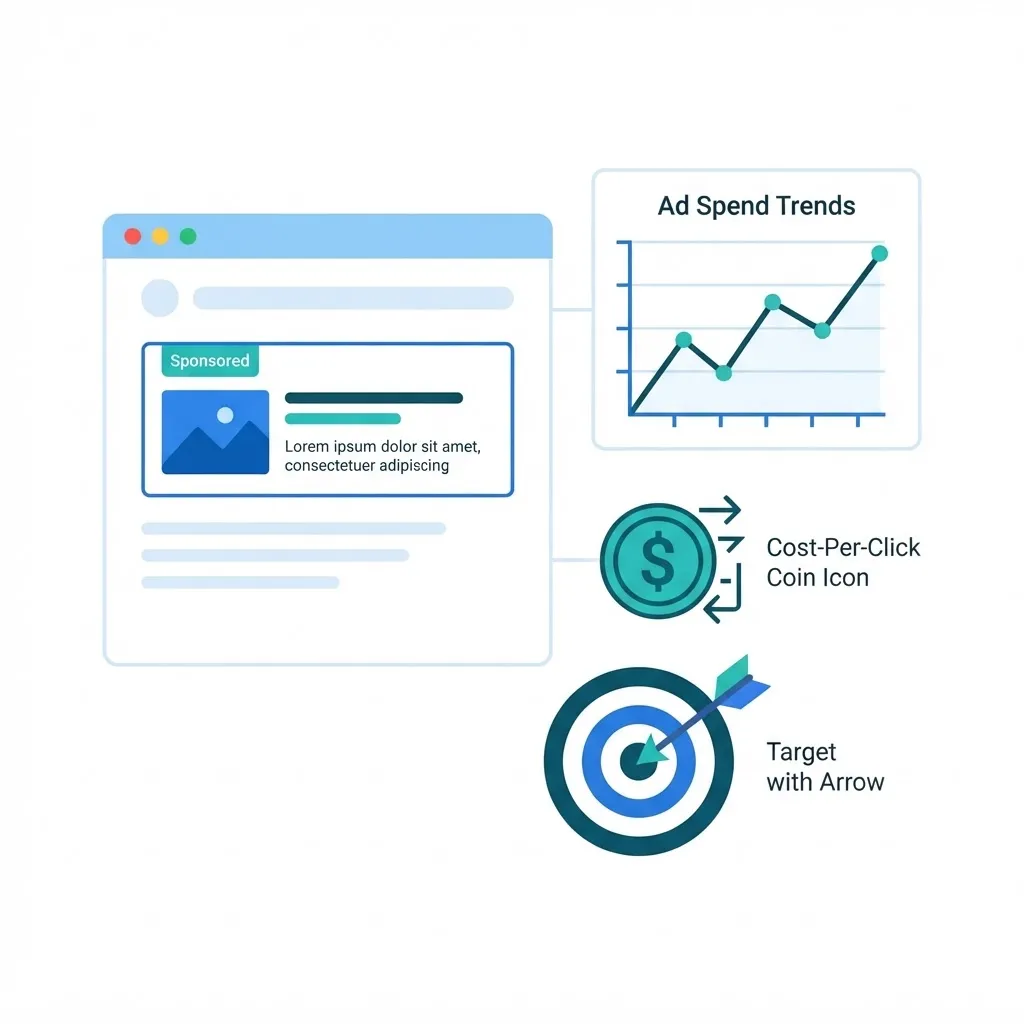
Paid channels expose what competitors believe converts, because nobody sustains spend on messaging that fails. Two free libraries make this transparent: the Google Ads Transparency Center shows active search and display ads by advertiser, and the Meta Ad Library reveals every active Facebook and Instagram ad. LinkedIn exposes active ads on each company page under the Ads tab.
For each competitor, document three things: which offers they promote most, such as demos, free trials, or gated reports; which pain points their headlines lead with; and how long specific ads have been running. Ad longevity is the key signal, since an ad active for 90 or more days is almost certainly profitable, and its hook is worth studying.
Finally, run your top 10 commercial keywords through manual searches and note who bids on them. If a competitor bids on your brand name, calculate whether defending it is cheaper than the deals you lose from their ad sitting above your organic listing. In most B2B categories, brand defense costs under a dollar per click and is worth it.
Step 6: Build a SWOT Matrix and Choose Your Battles

Raw data does not change strategy; synthesis does. Consolidate every channel finding into a SWOT matrix per direct competitor, then roll those up into one market-level view. Keep each quadrant to 3 to 5 evidence-backed bullets, each citing a specific data point from your audit rather than a vague impression.
Here is a simplified example of how the channel comparison feeds the SWOT:
| Channel | Competitor A | Competitor B | Your Brand | Opportunity |
|---|---|---|---|---|
| Organic keywords (top 10) | 420 | 180 | 95 | Target 60-keyword gap list |
| Blog cadence per month | 8 | 2 | 4 | Outpublish Competitor B |
| Comparison pages | 12 | 0 | 3 | Build 9 vs pages |
| LinkedIn engagement rate | 1.1% | 0.3% | 0.8% | Launch executive posting |
| Active paid ads | 25 | 6 | 10 | Defend brand keywords |
From the full matrix, select only 3 to 5 opportunity gaps to act on this quarter. Competitive intelligence fails most often from trying to respond to everything, which converts insight into distraction. This need for focus is real: Crayon's State of Competitive Intelligence report found that over 90% of businesses say their industry has grown more competitive in recent years, so disciplined prioritization is what separates useful analysis from busywork.
Step 7: Turn Findings Into a Living Dashboard

A competitive analysis delivered as a one-time slide deck is obsolete within a quarter. Instead, build a lightweight dashboard tracking 8 to 12 metrics per direct competitor: organic keyword count, estimated traffic, referring domains, publishing cadence, LinkedIn engagement, active ad count, G2 review velocity, and share of voice for your top terms.
Set a review rhythm that matches your market speed. For most B2B companies, a monthly 30-minute metric review plus a quarterly deep-dive refresh of Steps 2 through 6 is sufficient. Assign one owner, because shared ownership of competitive intelligence reliably means no ownership. Teams that want an outside benchmark for their web presence and technical SEO baseline can also use resources from WebPeak, which publishes practical guidance on site performance and search visibility.
Key Takeaways
- B2B buyers spend roughly 17% of their journey with sales reps, per Gartner, so digital channels decide most of the evaluation.
- Tier competitors into direct, indirect, and aspirational groups, and deeply analyze only 3 to 5 direct rivals.
- The keyword gap report typically surfaces 30 to 80 actionable keyword targets in a single audit.
- Ad longevity beats ad creativity as a signal: ads running 90 or more days indicate proven messaging.
- Executive LinkedIn posts commonly earn 5 to 10 times the engagement of company pages, making advocacy a low-cost gap to exploit.
- Over 90% of businesses report rising competition per Crayon, so refresh your analysis quarterly, not annually.
Frequently Asked Questions
How often should I do a competitive analysis in B2B marketing?
Run a full deep-dive analysis quarterly and a lightweight metrics review monthly. B2B search rankings, ad strategies, and content programs shift meaningfully within 90 days, so annual audits go stale. A monthly 30-minute dashboard check catches sudden moves like new comparison pages or brand bidding early.
What tools do I need for a B2B competitive analysis?
A practical stack includes Semrush or Ahrefs for SEO and keyword gaps, the Google Ads Transparency Center and Meta Ad Library for paid ads, LinkedIn company pages for social benchmarking, and G2 or Capterra for review intelligence. Free tiers cover early-stage needs; paid SEO tools become essential at scale.
How many competitors should I analyze in digital marketing?
Deeply analyze 3 to 5 direct competitors, lightly monitor 3 to 5 indirect ones, and study 1 or 2 aspirational market leaders for direction. Analyzing more than 10 total dilutes focus and produces reports nobody acts on. Depth on a few rivals beats shallow coverage of many.
What is the difference between direct and indirect competitors in B2B?
Direct competitors sell a similar product or service to the same buyer persona and appear in your sales deals. Indirect competitors solve the same underlying problem through a different approach, such as an in-house tool, a consultancy, or a spreadsheet workaround competing against your software.
What metrics matter most in a B2B competitive analysis?
Prioritize commercial keyword rankings, organic traffic trends, referring domains, publishing cadence, LinkedIn engagement rate, active ad count and longevity, and review velocity on G2 or Capterra. These metrics reflect pipeline influence. Vanity metrics like total followers or raw pageviews rarely correlate with B2B revenue outcomes.
Can I do a competitive analysis without paid tools?
Yes, for a baseline version. Manual Google searches reveal keyword winners, the Meta Ad Library and Google Ads Transparency Center are free, LinkedIn pages expose social activity, and G2 profiles are public. Paid tools mainly add scale and historical data, so start free and upgrade when gaps appear.
Final Thoughts
A B2B competitive analysis is not a document; it is an operating rhythm. Identify the right rivals, audit their search, content, social, and paid footprints, synthesize everything into a SWOT, and commit to only a handful of gaps per quarter. Teams that follow this cycle consistently stop reacting to competitors and start setting the pace they have to react to.