A practical guide to what a Java product development firm actually does, how to evaluate one, what engagement models cost, and which technical signals predict long-term product success.
Java Product Development Firm
Choosing a Java product development firm is one of the highest-leverage technical decisions a company makes, because the architecture written in the first three months usually survives for the next seven years. Java remains the backbone of banking cores, insurance claim engines, logistics platforms, and healthcare systems precisely because it is boring in the best possible way: predictable performance, mature tooling, and a 30-year backward-compatibility record. The risk is never the language. The risk is hiring a team that writes Java the way it was written in 2011.
Quick Answer: A Java product development firm designs, builds, and maintains production software products on the JVM, typically using Java 17 or 21 with Spring Boot, PostgreSQL, and cloud infrastructure. Choose one based on architecture depth, test coverage discipline, JVM performance expertise, and proven ownership of live products rather than headcount or hourly rate.
What a Java Product Development Firm Actually Does
A Java product development firm is an engineering organization that owns the full lifecycle of a JVM-based software product: discovery, domain modeling, architecture, implementation, automated testing, deployment pipelines, observability, and post-launch iteration. This differs sharply from staff augmentation, where you rent developers and retain all architectural risk yourself.
The distinction matters commercially. A staffing vendor is measured on hours delivered. A product development firm is measured on whether the product works under load, passes audit, and can be changed cheaply in year three. In practice, the second group refuses requirements they consider technically unsound, and that refusal is the value you are buying.

Key terms defined:
- JVM (Java Virtual Machine): The runtime that executes compiled Java bytecode, providing garbage collection, JIT compilation, and platform independence.
- Spring Boot: An opinionated framework that removes most Java configuration boilerplate and is the de facto standard for new enterprise Java services.
- Product development firm: A vendor accountable for delivered outcomes and system quality, not for billable hours.
Why Java Still Wins for Serious Products
Java is not a legacy choice, and the data supports that. According to the 2024 Stack Overflow Developer Survey, roughly 30% of professional developers work with Java, keeping it among the most widely used languages worldwide. Oracle's own JDK adoption reporting shows Java 17 overtook Java 11 as the most-used LTS release within roughly two years of launch, which means the ecosystem is modernizing far faster than its reputation suggests.
Three concrete technical advantages drive that staying power:
- Predictable performance at scale. Modern garbage collectors like ZGC and Shenandoah hold pause times under ten milliseconds even on multi-gigabyte heaps, which is why trading and payments systems stay on the JVM.
- Genuine long-term maintainability. Static typing plus mature refactoring tooling means a 400,000-line Java codebase can be restructured safely, something that becomes painful in loosely typed stacks.
- Deep hiring liquidity. You can staff a Java team in almost any market, which reduces the key-person risk that kills products built on niche stacks.
Where Java Is the Wrong Answer
An honest firm will tell you when to walk away. Java is a poor fit for tiny short-lived marketing microsites, extremely memory-constrained edge functions, and single-founder MVPs that need to ship in three weeks. If your product is a content-driven website rather than a transactional system, a lighter web development approach will get you to market faster and cheaper.
The Modern Java Stack a Competent Firm Uses in 2026
Ask any prospective partner to name their default stack. Vague answers are a red flag. A current, defensible answer looks close to this:
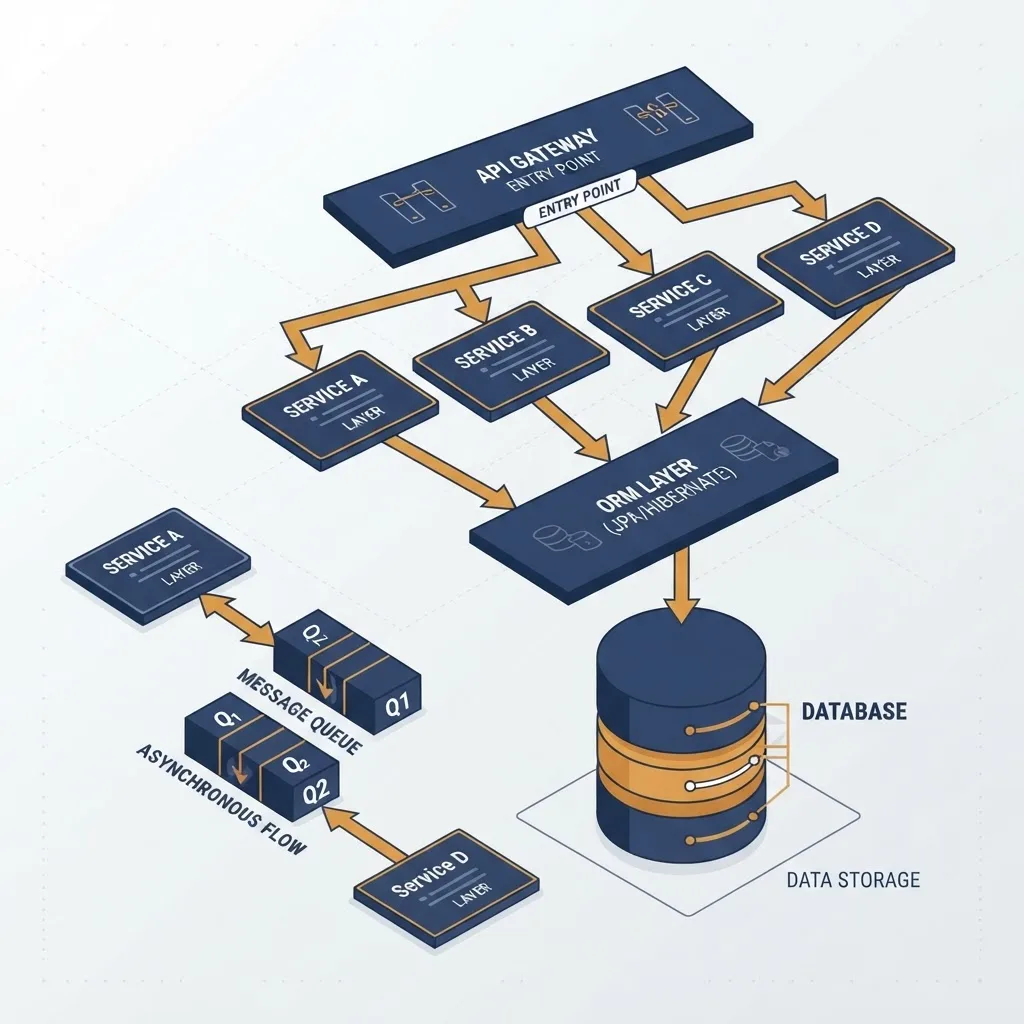
- Language level: Java 21 LTS, using records, sealed interfaces, pattern matching, and virtual threads.
- Framework: Spring Boot 3.x, or Quarkus when sub-second cold starts and low memory footprints matter.
- Persistence: PostgreSQL with JPA/Hibernate for aggregates, plus plain JDBC or jOOQ for reporting queries where ORM abstraction hurts.
- Build and quality: Gradle or Maven, JUnit 5, Testcontainers for real database tests, and static analysis via SpotBugs or SonarQube.
- Runtime: Docker images on Kubernetes or a managed container platform, with OpenTelemetry traces and Micrometer metrics.
Virtual threads, finalized in Java 21, are the single biggest recent shift. They allow blocking-style code to handle tens of thousands of concurrent requests without reactive complexity. A firm still insisting every I/O path must be written reactively in 2026 is optimizing for a constraint the platform already solved.
Microservices Versus a Well-Built Monolith
The most expensive mistake in Java product work is premature microservice decomposition. Splitting a domain you do not yet understand into twelve services multiplies your deployment surface, distributed transaction problems, and debugging cost without delivering business value.

The defensible pattern is a modular monolith: one deployable artifact, strict internal module boundaries, no cross-module database access, and clean interfaces at every seam. When one module genuinely needs independent scaling or a separate release cadence, you extract it. A firm that recommends this sequencing is demonstrating experience, not caution.
How Java Product Development Firms Actually Deliver
Strong firms follow a repeatable sequence, and each stage produces an artifact you can review and challenge.
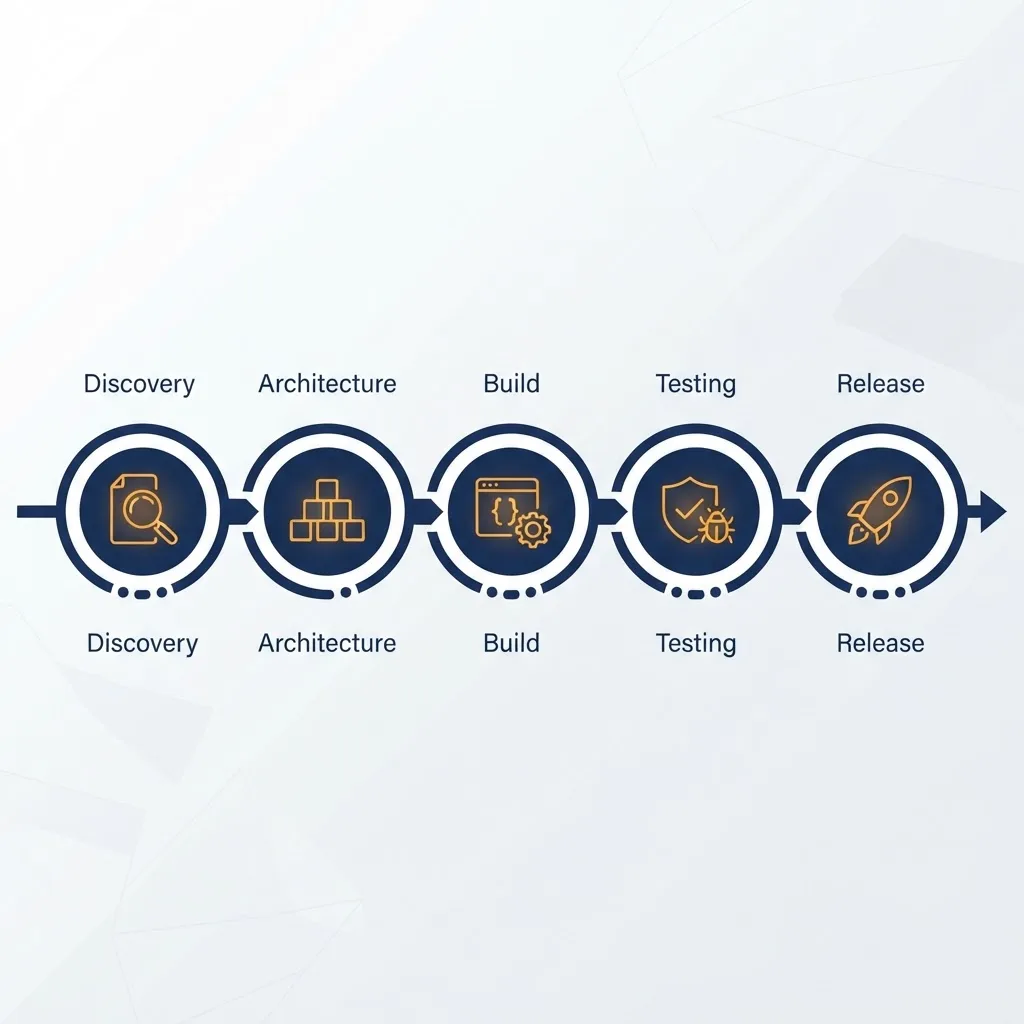
- Discovery and domain modeling (1-3 weeks). Event storming sessions produce a bounded-context map and a glossary. Skipping this is the root cause of most rewrites.
- Architecture decision records. Every significant choice, such as database engine or messaging approach, is written down with alternatives considered and trade-offs stated.
- Walking skeleton. Before feature work begins, a thin end-to-end slice runs through CI and deploys to a real environment. This proves the pipeline early.
- Iterative delivery. Two-week increments, each ending in a deployable artifact, with automated tests gating merges.
- Hardening and handover. Load testing, security review, runbooks, and documented onboarding for your internal team.
The walking skeleton step is the strongest predictor of project health. Teams that cannot deploy a trivial endpoint to production in week two will not deploy a complex product in month six.
How to Vet a Java Product Development Firm
Vetting should be technical, specific, and uncomfortable. Marketing pages tell you nothing.
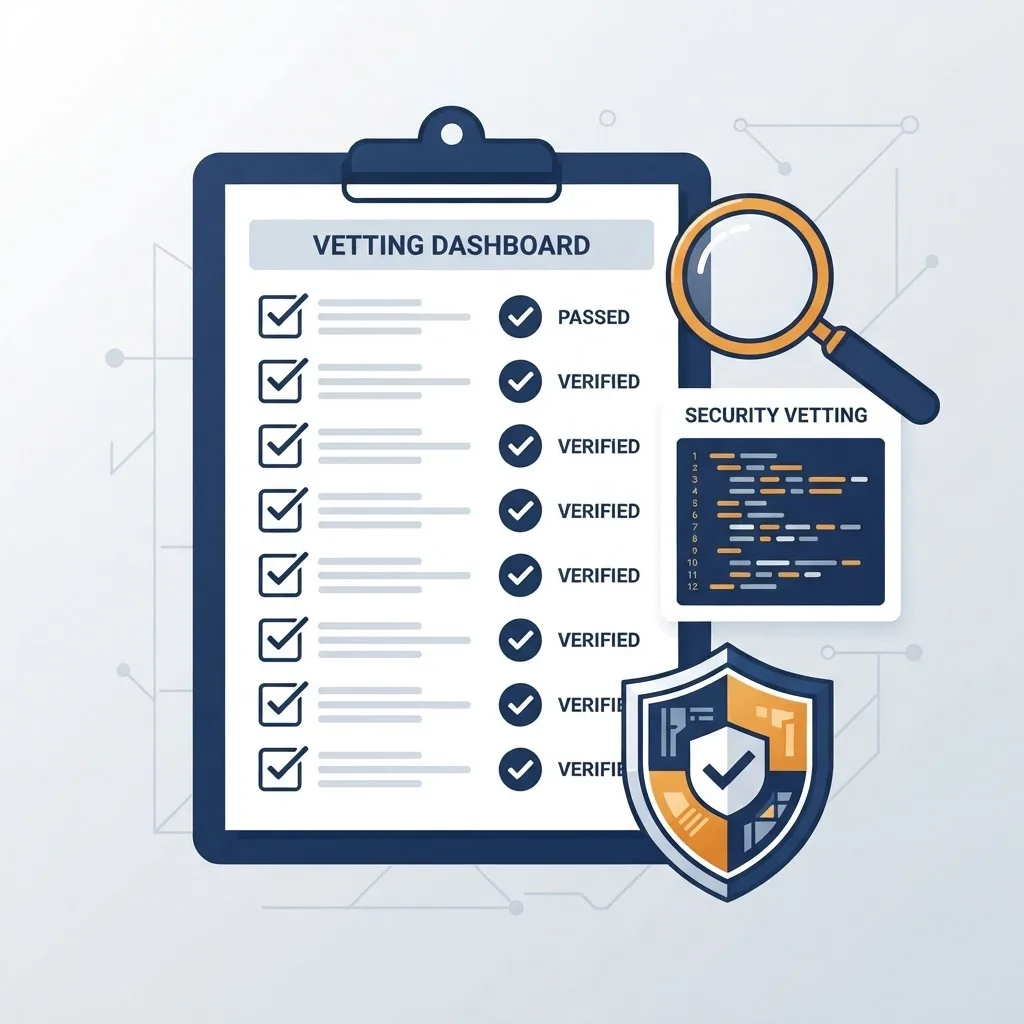
Ask these seven questions:
- What Java version do your last three production projects run, and why that version?
- What is your line and branch coverage target, and how is it enforced in CI?
- Show me an architecture decision record from a real project, redacted as needed.
- How do you test database behavior: mocks, an in-memory database, or Testcontainers?
- What is your mean time from merge to production deployment?
- How do you handle schema migrations with zero downtime?
- Who owns the code, the CI configuration, and the cloud accounts after handover?
The answer to question seven is non-negotiable. You should own everything. Any firm holding your repository, container registry, or DNS hostage has structured the relationship against your interest.
Warning Signs Worth Walking Away From
- No automated tests in the sample repository, or tests that only assert getters and setters.
- Business logic embedded in controllers rather than in a domain or service layer.
- Passwords, tokens, or connection strings committed to source control.
- A quoted fixed price and fixed scope for a product nobody has specified yet.
- Inability to discuss garbage collection behavior, connection pool sizing, or index strategy.
Engagement Models and Realistic Cost Ranges
Engagement structure changes incentives more than any contract clause. Here is how the common models compare.
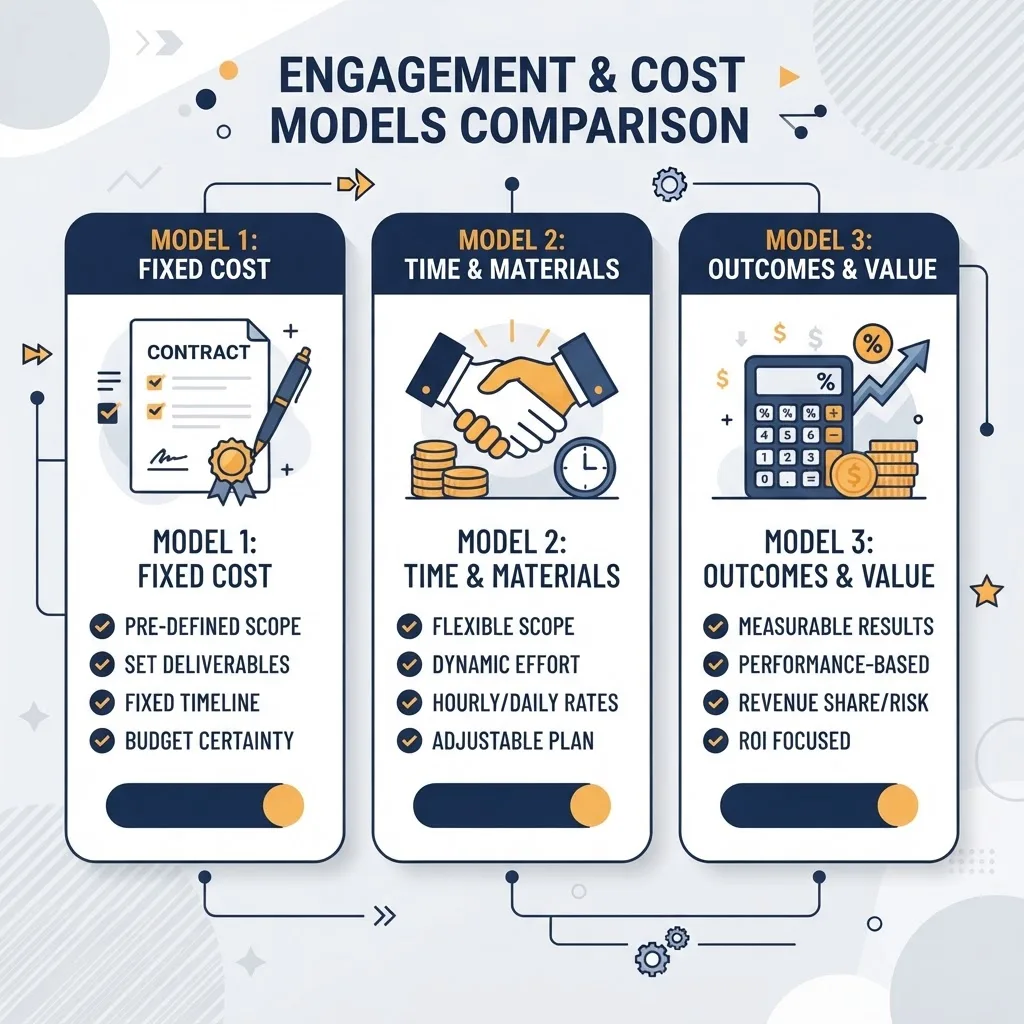
| Model | Best For | Cost Predictability | Flexibility | Quality Risk |
|---|---|---|---|---|
| Dedicated product team | Multi-year platforms | Medium | High | Low |
| Time and materials | Evolving scope | Low | High | Low |
| Fixed price, fixed scope | Well-specified integrations | High | Very low | High |
| Staff augmentation | Filling a known skill gap | Medium | Medium | Medium |
| Outcome-based milestones | Defined product phases | High | Medium | Medium |
Global blended rates for senior Java engineers typically run 90 to 180 USD per hour in North America and Western Europe, and 35 to 75 USD per hour in Eastern Europe, South Asia, and Latin America. A realistic first production release of a moderately complex Java product with authentication, a payment integration, an admin console, and reporting lands between 120,000 and 400,000 USD depending on compliance requirements.
Budget separately for operations. Cloud infrastructure, monitoring, and maintenance commonly cost 15 to 25 percent of the original build cost annually. Firms that omit this from proposals are setting up an unpleasant conversation in month nine.
Performance and Scalability Expectations
Set numeric targets before development starts, because untested assumptions become production incidents.
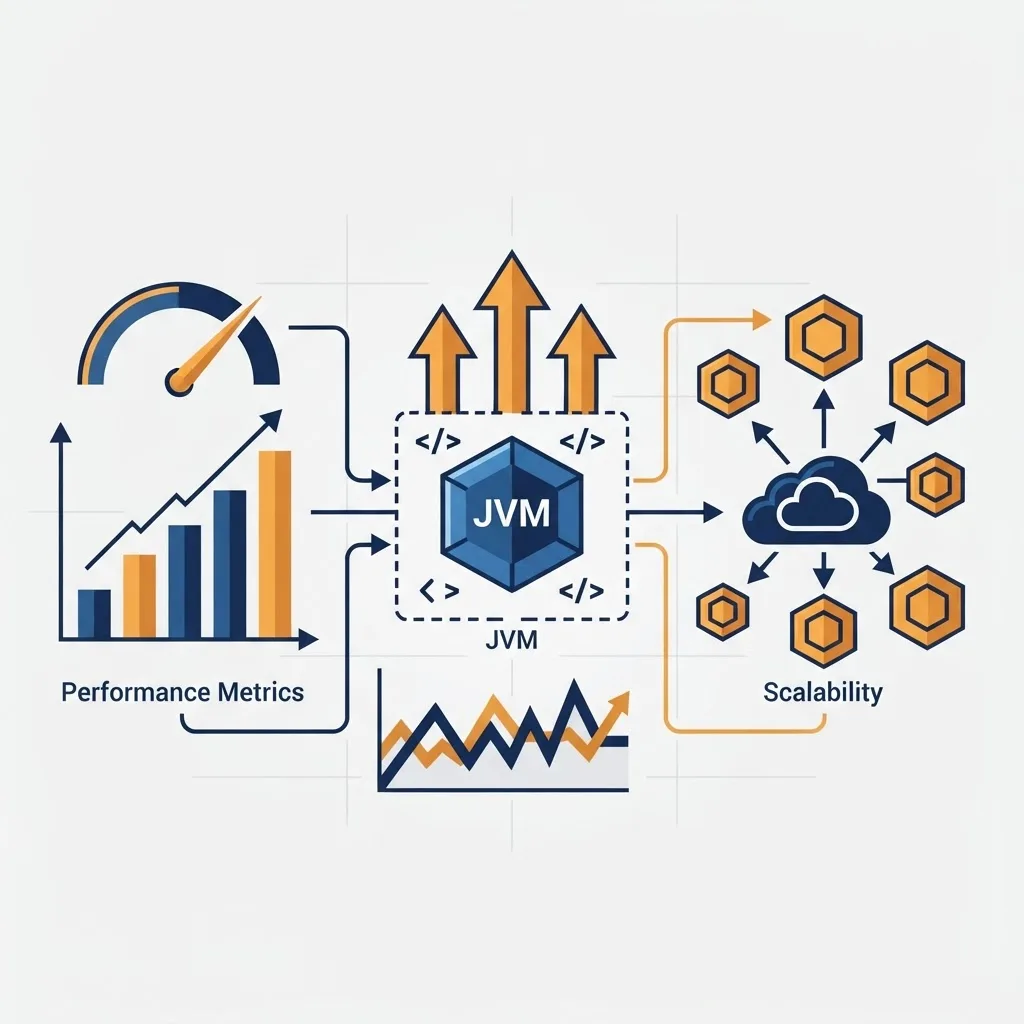
Reasonable baselines for a well-built Spring Boot service on modest cloud hardware: p95 API latency under 300 milliseconds, database query p99 under 100 milliseconds, and JVM heap usage stable across a 24-hour soak test with no upward drift. Google's research on web performance found that as page load time goes from one to three seconds, the probability of bounce increases 32%, and that user impatience applies equally to the APIs behind your interface.
Insist on a documented load test before launch, run against production-like data volumes. Testing with a thousand rows when production will hold ten million reveals nothing about index behavior. For AI-augmented features layered onto a Java backend, such as document classification or intelligent search, specialist teams like the ones described at WebPeak's AI services typically handle model integration while the Java firm owns the transactional core.
Key Takeaways
- Java remains among the most-used professional languages, with roughly 30% developer adoption per the 2024 Stack Overflow survey.
- Java 21 LTS with virtual threads removes most historical reasons to adopt reactive programming complexity.
- Start with a modular monolith and extract services only when scaling or release cadence demands it.
- A firm should deploy a walking skeleton to a real environment within the first two weeks.
- You must own the repository, CI pipeline, and cloud accounts from day one.
- Expect annual maintenance and infrastructure to cost 15 to 25 percent of the initial build.
- Reject fixed-price contracts for unspecified scope; they trade quality for schedule certainty.
Frequently Asked Questions (FAQ)
What does a Java product development firm do?
It designs, builds, tests, deploys, and maintains software products on the JVM. Responsibilities include domain modeling, architecture decisions, automated testing, CI/CD pipelines, cloud deployment, observability, and ongoing iteration. Unlike a staffing vendor, it is accountable for the working system rather than for hours billed against your specification.
Is Java still a good choice for new products in 2026?
Yes, for transactional, data-heavy, long-lived systems. Java 21 delivers virtual threads, low-pause garbage collectors, and strong static typing that keeps large codebases maintainable for a decade. It is a weaker fit for tiny marketing sites, memory-constrained edge functions, or products needing a three-week MVP turnaround.
How much does Java product development cost?
Senior Java engineers bill roughly 90 to 180 USD hourly in North America and Western Europe, and 35 to 75 USD in Eastern Europe, South Asia, and Latin America. A first production release of a moderately complex product typically costs 120,000 to 400,000 USD, plus 15 to 25 percent annually for maintenance and infrastructure.
Should I choose microservices or a monolith for my Java product?
Start with a modular monolith: one deployable artifact with strict internal module boundaries and no cross-module database access. Extract a microservice only when a module genuinely needs independent scaling or release cadence. Premature decomposition multiplies deployment, debugging, and distributed transaction costs without delivering business value.
How do I know if a Java development firm is technically strong?
Ask for their last three projects' Java versions, their enforced test coverage threshold, a real architecture decision record, and their mean time from merge to production. Strong firms use Testcontainers for database tests, keep business logic out of controllers, and hand over full ownership of code and infrastructure.
What should be in the contract with a Java product development firm?
Specify code and IP ownership transferring to you, repository and cloud account control, documented test coverage minimums, deployment frequency expectations, security review scope, handover documentation requirements, and a defined exit clause. Also define who pays for defects discovered within a warranty window after release.
Final Word
The firms that consistently ship durable Java products share one habit: they slow down for two weeks at the start to model the domain and prove the deployment pipeline, then move faster than everyone else for the following year. Evaluate on that discipline. If you are scoping a JVM-based platform and want engineering, design, and go-to-market handled together, the teams at ZoneTechify and WebPeak work across that full range.