A practical, experience-based guide to evaluating and hiring the top WordPress web development agencies in the United States, including pricing models, vetting criteria, and red flags.
Top WordPress Web Development Agencies in the United States
Hiring a WordPress agency in the United States is less about finding a famous name and more about matching a specific engineering capability to a specific business problem. WordPress powers roughly 43% of all websites according to W3Techs, which means the talent pool is enormous — and wildly uneven. The same platform runs a $40 brochure site and a nine-figure publishing operation, so "WordPress agency" tells you almost nothing on its own.
This guide is written from the perspective of teams who audit, rebuild, and maintain WordPress properties for US clients. Instead of a paid-placement list, you get the evaluation framework agencies themselves use internally, the pricing reality, and the questions that separate a genuine engineering partner from a template reseller.
Quick Answer: The top WordPress web development agencies in the United States fall into three tiers: enterprise firms handling multisite and headless builds, mid-market studios building custom themes and plugins, and boutique shops focused on speed and design. Choose based on your traffic, compliance needs, and whether you require ongoing engineering support.
What Actually Defines a Top WordPress Agency
A top-tier WordPress agency writes custom code, not just configuration. The clearest technical signal is whether they build custom themes and plugins in PHP, or assemble sites from purchased multipurpose themes and 25 third-party plugins. The second approach works until it doesn't — then every update becomes a risk.
Definition: A custom WordPress build is a site where the theme, critical functionality, and content models are written specifically for the client, using WordPress core APIs rather than a page-builder abstraction layer.
In our audits of underperforming WordPress sites, the most common root cause is plugin sprawl — sites carrying 30 or more active plugins where four or five overlap in function. Each one adds database queries, HTTP requests, and an independent security surface. A strong agency reduces that count deliberately, replacing plugins with a few hundred lines of maintained code.
The non-negotiable markers of a genuine engineering agency:
- Version control on every project. If they cannot show you a Git repository and commit history, they are editing files on production.
- Staging and deployment pipeline. Changes go staging to production through an automated deploy, never by FTP.
- Custom post types and taxonomies modeled around your content, not shoehorned into blog posts.
- Documented handoff. You should be able to hire someone else to maintain the site without a rescue project.
- Accessibility baseline. WCAG 2.1 AA is the practical US standard given ADA-related web litigation volume.
The Three Tiers of US WordPress Agencies
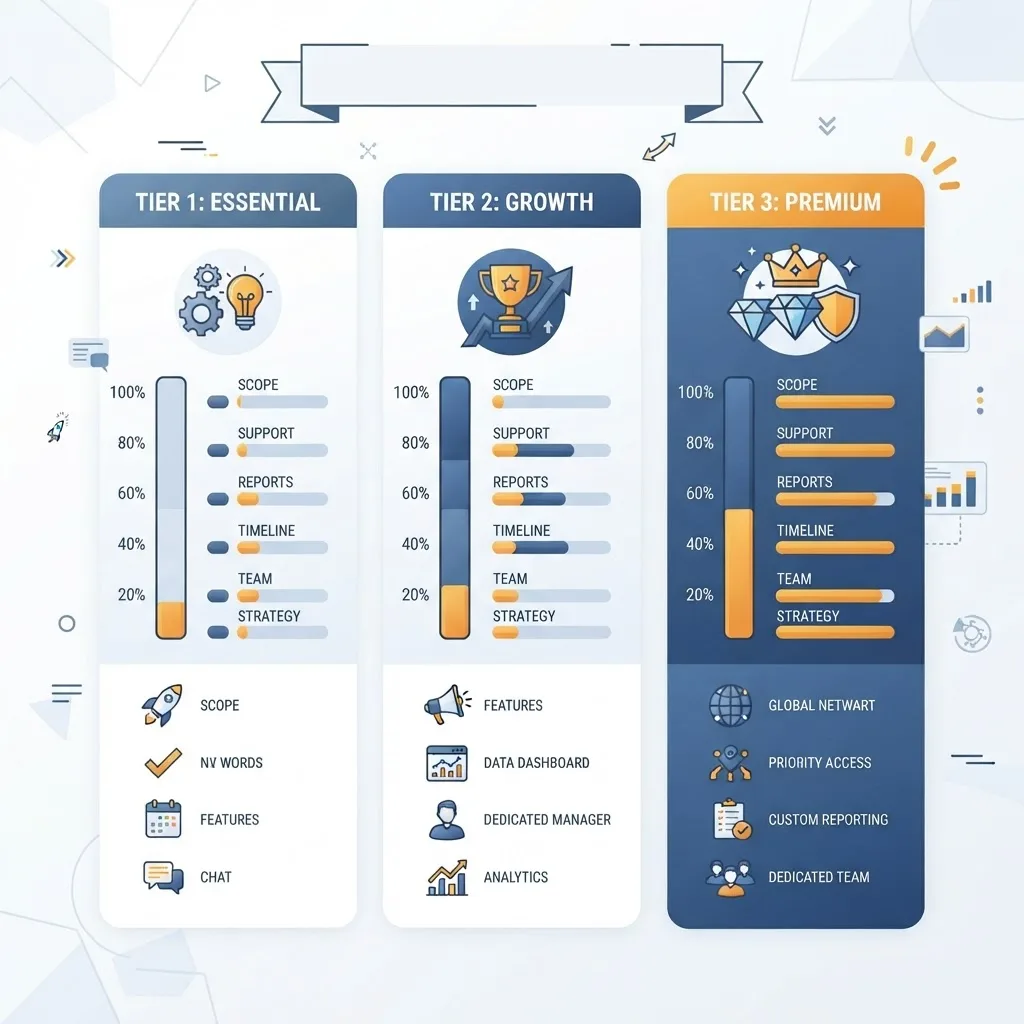
US WordPress agencies cluster into three distinct tiers with very different economics. Knowing which tier fits you prevents the most expensive mistake in this market: buying enterprise process for a marketing site, or hiring a boutique studio to run a 200-site network.
Tier 1: Enterprise and Headless Specialists
These firms — typically 50 to 300 people, concentrated in New York, San Francisco, Chicago, and Portland — handle WordPress VIP deployments, multisite networks, headless builds with the WordPress REST API or WPGraphQL feeding a React or Next.js frontend, and complex content migrations. They serve publishers, universities, healthcare systems, and Fortune 1000 marketing organizations. Engagements start in the low six figures and include SOC 2 questionnaires, formal QA, and load testing.
You need this tier if you have more than about two million monthly pageviews, regulated content, multiple brands on one codebase, or an internal dev team that needs a counterpart who speaks CI/CD.
Tier 2: Mid-Market Custom Development Studios
This is where most US businesses should be looking. These agencies — usually 8 to 40 people — build custom themes, write bespoke plugins, integrate CRMs and payment systems, and offer retainers for ongoing work. Projects typically run $25,000 to $120,000. Full-service technology partners such as ZoneTechify and WebPeak operate in this space, combining WordPress engineering with design, content, and search strategy under one roadmap rather than splitting the work across three vendors.
The advantage of this tier is direct access to the people writing your code. The risk is capacity: a 12-person studio with one senior PHP developer is a single point of failure. Ask specifically how many developers could pick up your project if the lead left.
Tier 3: Boutique and Specialist Shops
Two to seven people, often remote, frequently exceptional at one thing — WooCommerce performance, Gutenberg block development, membership sites, or design-led marketing sites. Projects run $8,000 to $30,000. For a well-defined build with a clear scope, this tier delivers the best value in the market. For anything requiring 24/7 uptime guarantees or multi-workstream coordination, it usually doesn't.
Comparison: Which Tier Fits Your Project
| Factor | Enterprise Firms | Mid-Market Studios | Boutique Shops |
|---|---|---|---|
| Typical project cost | $100,000+ | $25,000-$120,000 | $8,000-$30,000 |
| Team size | 50-300 | 8-40 | 2-7 |
| Headless / REST API builds | Yes | Sometimes | Rarely |
| Custom plugin development | Yes | Yes | Sometimes |
| Dedicated QA engineer | Yes | Sometimes | No |
| SLA with uptime guarantee | Yes | Yes | Rarely |
| Direct access to developers | No | Yes | Yes |
| Best for | Publishers, enterprise, multisite | Growing businesses, B2B, ecommerce | Defined single-site builds |
Custom Theme Development: The Real Differentiator
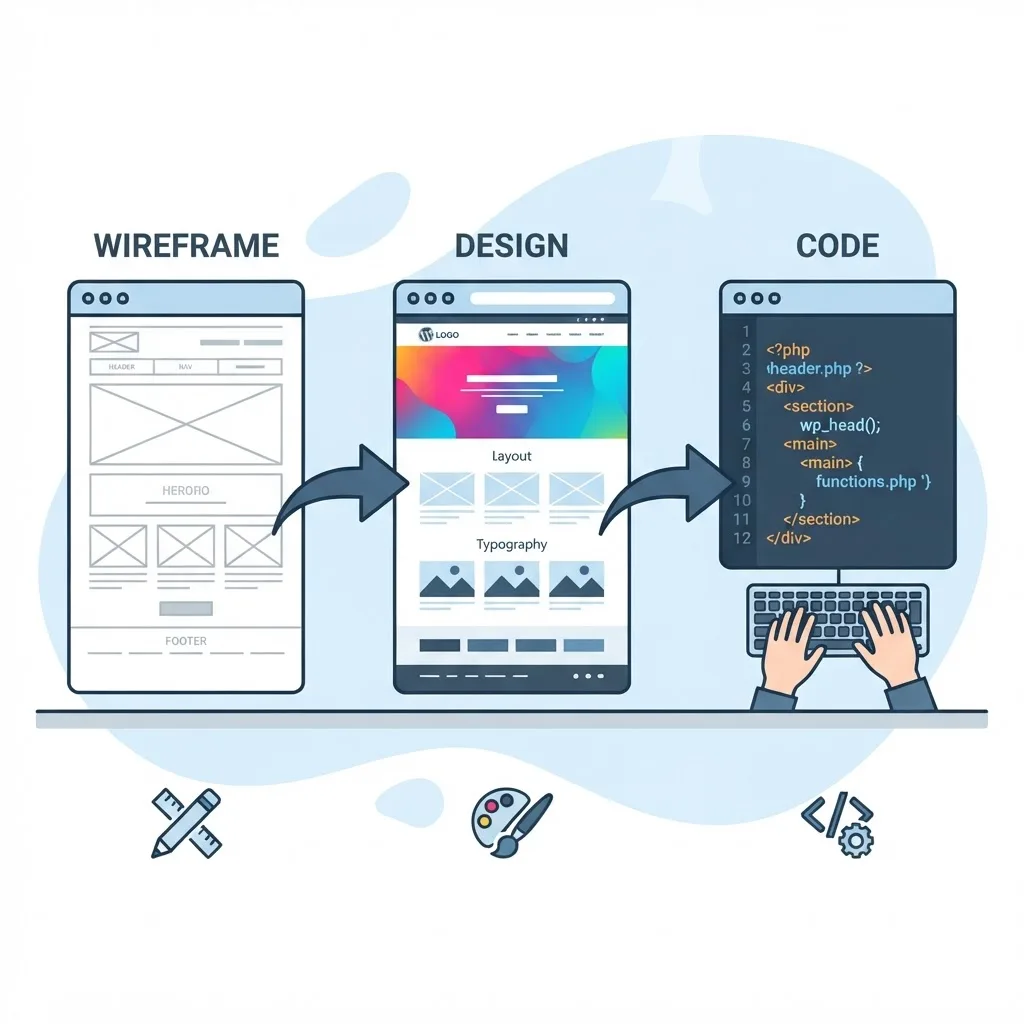
Custom theme development is the clearest place to judge technical quality, because you can inspect the output. Ask any shortlisted agency for a live URL of a site they built from scratch, then check three things yourself.
First, view source and count the stylesheets and scripts loading on the homepage. A well-built custom theme typically loads under 15 requests before images. A bloated builder site loads 60 or more. Second, check whether the site uses native Gutenberg blocks or a proprietary page builder — builder lock-in means your content is stored as shortcodes that become unreadable if you ever leave. Third, resize the browser to 375px wide and look for horizontal scroll or overlapping elements.
A strong agency will also model your content properly. If your business has services, locations, team members, and case studies, those should be custom post types with defined fields — not blog posts with categories. That decision determines whether your site is still editable in three years.
Agencies offering full web development services should be able to walk you through their content modeling decisions in plain language. If they can't explain why a piece of content is a post type versus a page, they didn't make a decision — they used a default.
Performance: The Metric Most Agencies Quietly Fail
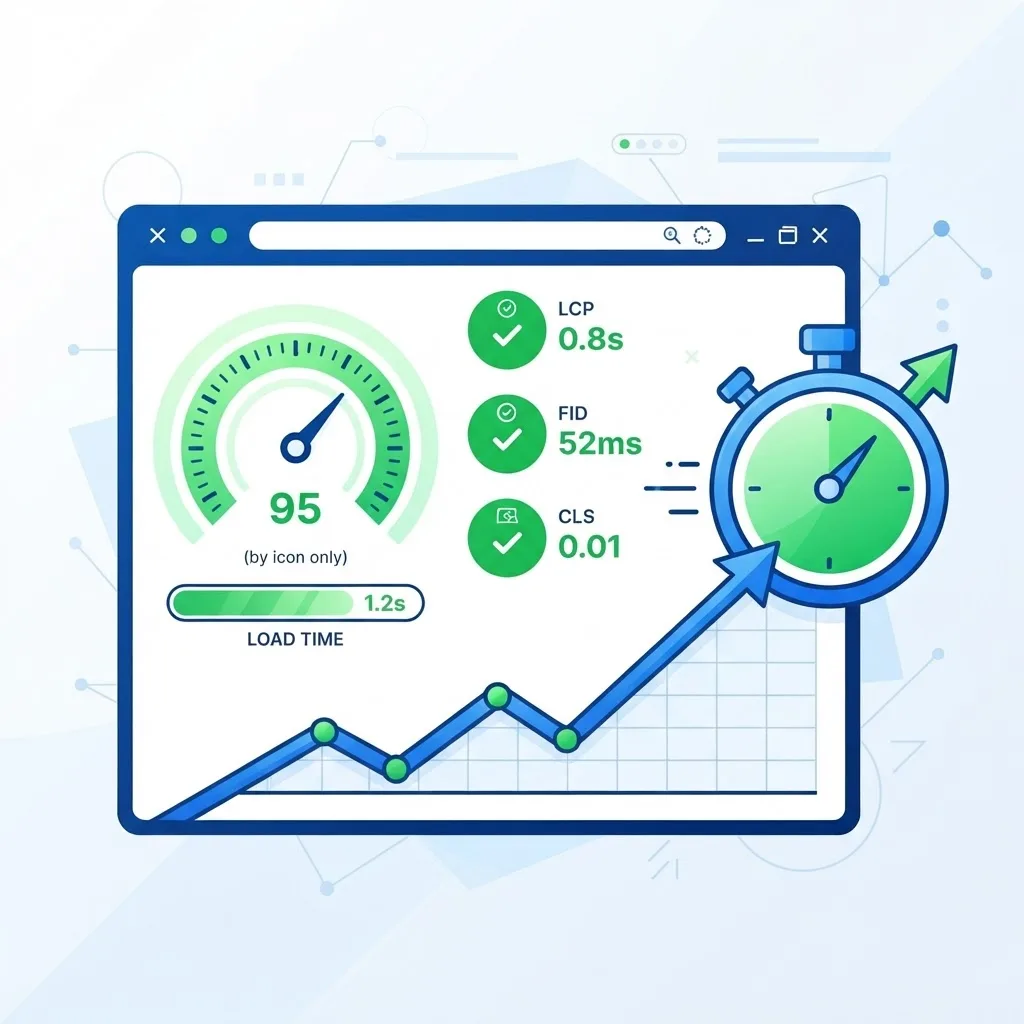
WordPress performance is an engineering discipline, and it is where the tier gap shows most. Google reports that as page load time goes from one second to three seconds, the probability of a mobile visitor bouncing increases 32%. On WordPress, slow sites are almost never caused by WordPress itself — they are caused by unoptimized queries, uncached pages, oversized images, and render-blocking third-party scripts.
When evaluating agencies, run their own portfolio sites through PageSpeed Insights before your first call. An agency that ships a 4-second homepage for itself will ship one for you.
Ask these four performance questions:
- What is your caching strategy? The answer should include page caching, object caching (Redis or Memcached), and a CDN — not just "we install a caching plugin."
- How do you handle images? WebP or AVIF conversion, responsive srcset, and lazy loading below the fold should be automatic.
- What Largest Contentful Paint do you target? Under 2.5 seconds on mobile 4G is the credible answer.
- How do you audit database queries? Query Monitor or New Relic, with a specific example of something they fixed.
Security, Hosting, and Maintenance
Security is where agency quality has the highest downside risk. The overwhelming majority of WordPress compromises trace back to outdated plugins and themes rather than core, which makes maintenance a security function, not an optional add-on.
A competent US agency will insist on managed WordPress hosting or a properly configured cloud environment, and will include:
- Automated daily offsite backups with a tested restore procedure
- Staged plugin and core updates with visual regression checks before production
- Web application firewall and rate limiting on login and REST endpoints
- Two-factor authentication enforced for all editor-level accounts and above
- An uptime monitor with a defined escalation path and response time
Be direct about who owns what. Ask in writing: who owns the code, who owns the hosting account, and who owns the domain. Agencies that hold hosting or domains hostage are a recurring problem in the low end of this market. The correct answer is that you own all three, and they have access.

Understanding US Agency Pricing Models
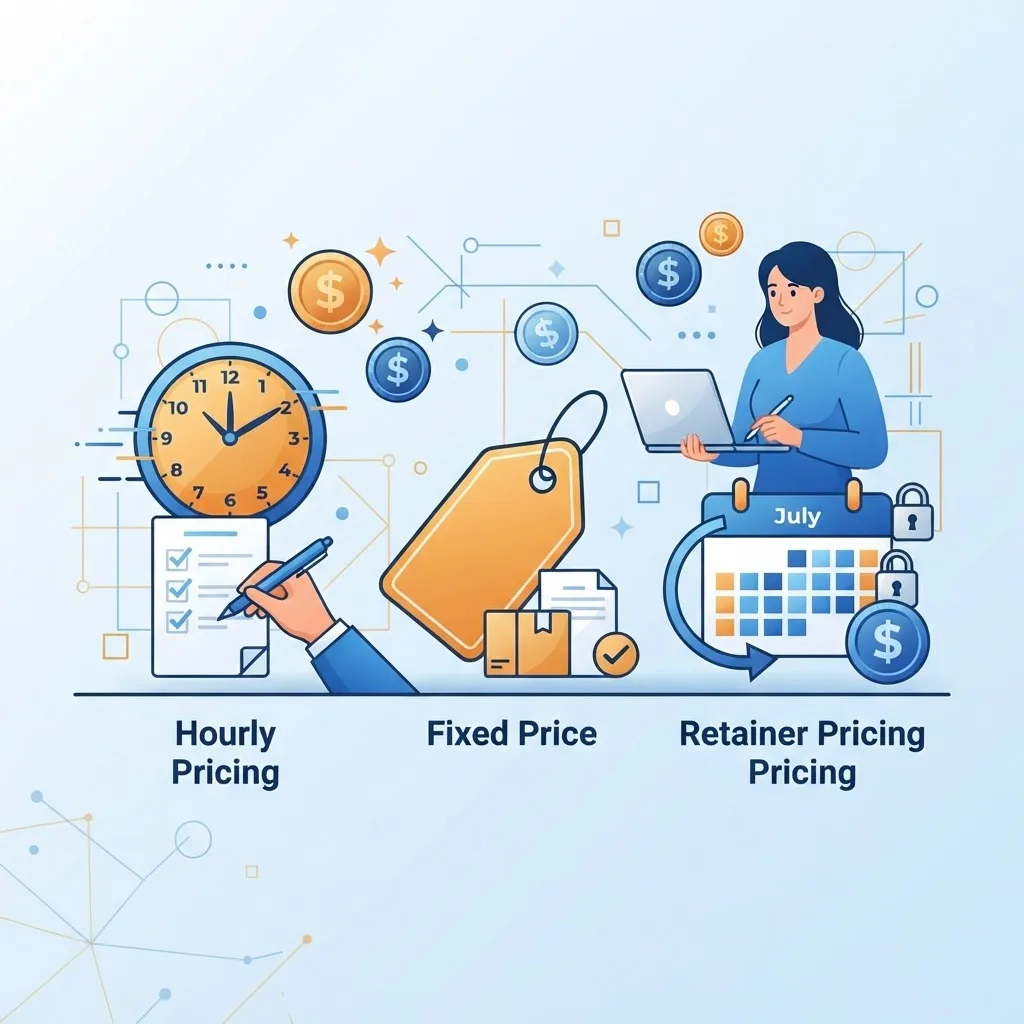
US WordPress agency rates typically run $85 to $250 per hour depending on tier and location, with senior developers at established studios clustering around $150 to $185. Three models dominate.
Fixed-price projects work when the scope is genuinely fixed — a marketing site rebuild with a known page count. Ask what the change-order rate is, because scope will move.
Time and materials suits discovery-heavy or integration-heavy work. Require weekly burn reports and a not-to-exceed ceiling.
Monthly retainers ($2,500 to $15,000 typical) buy a set number of hours plus maintenance. This is the right model once the site is live and you have a continuous roadmap. Verify that unused hours roll over at least one month and that maintenance tasks are billed separately from feature work — otherwise updates consume your entire retainer.
The cheapest quote is frequently the most expensive outcome. A $6,000 builder site that needs a $30,000 rebuild in 18 months cost $36,000.
WooCommerce and Ecommerce Considerations
If you are selling, WooCommerce capability must be evaluated separately from general WordPress skill. WooCommerce is a heavy, uncacheable-in-parts application, and agencies that build brochure sites well often struggle with it.
Ask for the largest product catalog they have shipped and the peak concurrent checkout volume it handled. Then ask how they handle cart fragments, order table performance beyond 50,000 orders, tax and shipping integrations, and payment gateway PCI scope. Vague answers here predict expensive problems on your first high-traffic sales day.
Red Flags That Should End the Conversation
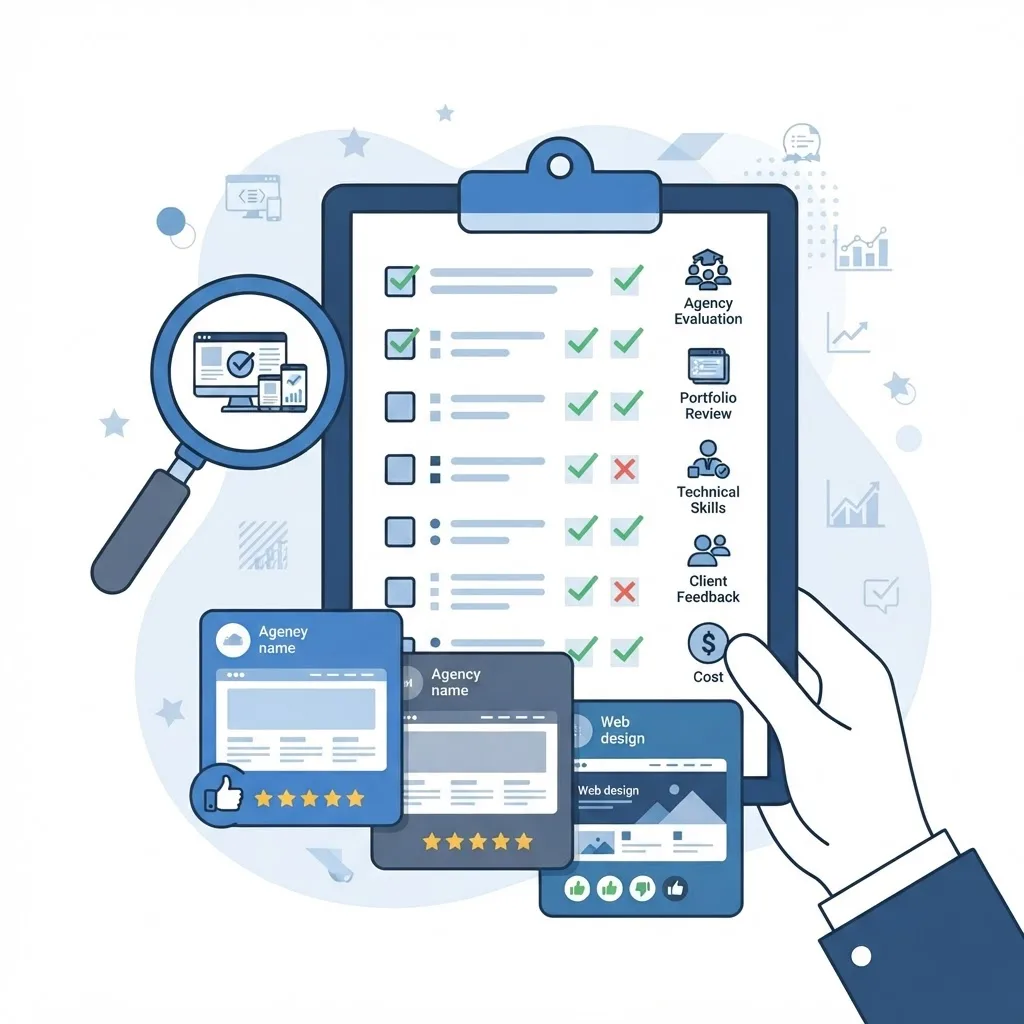
- No live portfolio URLs, only screenshots or mockups
- Unwilling to provide references you can actually call
- Proposes a purchased multipurpose theme for a custom requirement
- Cannot describe their deployment process
- Guarantees specific Google rankings
- Refuses to hand over Git access or code ownership
- Timeline of under three weeks for a full custom build
Key Takeaways
- WordPress powers approximately 43% of all websites (W3Techs), so agency quality varies enormously within the platform.
- Google data shows bounce probability rises 32% as load time moves from one to three seconds — performance is a revenue metric.
- US WordPress agency rates run $85-$250 per hour; senior mid-market developers cluster at $150-$185.
- Custom theme and plugin development, version control, and a staging pipeline are the three minimum markers of a real engineering agency.
- Plugin sprawl above roughly 30 active plugins is the most common root cause of slow, insecure WordPress sites.
- Always confirm in writing that you own the code, hosting account, and domain.
Frequently Asked Questions (FAQ)
How much does it cost to hire a WordPress agency in the United States?
Expect $8,000 to $30,000 from boutique shops, $25,000 to $120,000 from mid-market studios, and $100,000 or more from enterprise firms. Hourly rates run $85 to $250. Ongoing maintenance retainers typically cost $2,500 to $15,000 per month depending on traffic and complexity.
Is WordPress still a good choice for a business website in 2026?
Yes. WordPress powers about 43% of all websites and has a mature ecosystem, strong content editing, and full data ownership. It remains an excellent choice for content-heavy marketing sites, publishers, and ecommerce — provided it is built with custom code rather than assembled from stacked plugins.
How long does a custom WordPress website take to build?
A custom marketing site typically takes eight to fourteen weeks from discovery to launch. Complex builds with integrations, migrations, or headless frontends run four to eight months. Any agency promising a full custom build in under three weeks is using a purchased template.
What is the difference between a WordPress agency and a freelancer?
An agency provides multiple specialists — design, development, QA, project management — plus continuity if one person leaves. A freelancer offers lower cost and direct communication but represents a single point of failure. Agencies suit multi-workstream projects; freelancers suit narrow, well-defined tasks.
Should I choose a local US agency or work remotely?
For most projects, remote works well and widens your talent pool significantly. Choose a local agency when you need frequent in-person workshops, on-site stakeholder interviews, or content production like photography. Prioritize timezone overlap and communication cadence over physical proximity.
How do I verify a WordPress agency's technical skill before signing?
Run their portfolio sites through PageSpeed Insights, view page source to count loaded assets, check for page-builder lock-in, and test on mobile. Then ask for a Git repository walkthrough and two client references you can call. Real engineering teams welcome all four requests.