A practical comparison of rollup services for blockchain projects, covering optimistic and ZK stacks, data availability costs, decentralization trade-offs, and how to pick the right one for your use case.
Which Rollup Service Is Best for Blockchain Projects
Choosing a rollup service is now the single most consequential infrastructure decision a blockchain team makes. It determines your transaction cost per user, your withdrawal experience, your exposure to a single sequencer operator, and how easily you can migrate later. The market has matured past the point where one provider wins on merit alone. The right answer depends on whether you are shipping a consumer app, a perpetuals exchange, a gaming economy, or an enterprise settlement rail.
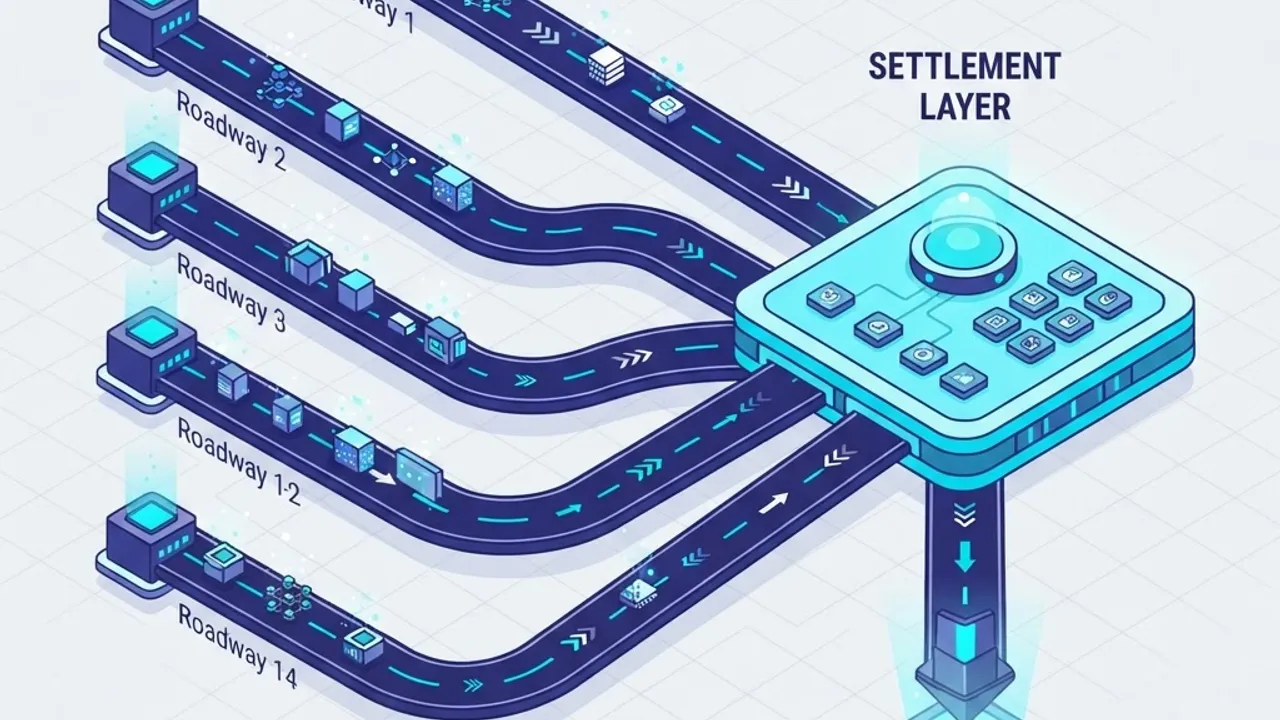
Quick Answer: There is no single best rollup service. For general apps needing EVM parity and fast launch, an OP Stack rollup-as-a-service is the safest default. For payments and exchanges needing fast finality, choose a ZK stack. For high-throughput gaming, pair any stack with an external data availability layer to cut costs.
What a Rollup Service Actually Provides
A rollup service, often called rollup-as-a-service or RaaS, is a managed platform that deploys and operates the components of a layer-2 chain for you. Those components are the sequencer that orders transactions, the batcher that posts data to a base layer, the prover or fraud-proof system that secures state, the data availability target, and the bridge contracts.
Running these yourself is possible and fully open source. The reason teams pay for a service is operational: a production rollup needs monitoring, upgrade key management, chain reorg handling, gas top-ups for the batcher wallet, and an on-call rotation. Most teams underestimate this by an order of magnitude. Treat RaaS pricing as a substitute for two to three infrastructure engineers, not as a hosting fee.
Key Terms Defined
- Rollup: A chain that executes transactions off the base layer but publishes its data to that layer so anyone can reconstruct and verify state.
- Optimistic rollup: Assumes batches are valid and allows a challenge window, typically seven days, during which fraud proofs can revert bad state.
- ZK rollup: Publishes a validity proof with each batch, so correctness is verified cryptographically rather than assumed.
- Validium: Uses validity proofs but keeps data off the base layer, trading data availability guarantees for lower cost.
- Data availability layer: The system that guarantees transaction data can be retrieved, either the base layer itself or an external network.
Optimistic Versus ZK: The Decision That Comes First
Pick your proof system before you pick a vendor, because the vendor list narrows immediately afterward.

Optimistic rollups are cheaper to operate and have the deepest tooling maturity. Their weakness is the challenge window: native withdrawals to the base layer take about seven days unless users pay a liquidity provider to front the funds. For a social app or a game, that delay is invisible to most users. For a treasury moving eight figures, it is a real capital cost.
ZK rollups compress the withdrawal wait to the proof cadence, often minutes to a few hours. The cost is proving overhead and a more constrained development surface, though ZK EVM implementations have closed most of the compatibility gap since 2024. If your application touches unusual precompiles or heavy cryptography in Solidity, test it on a ZK devnet before committing.
My honest read after watching launches across both camps: teams that chose ZK primarily for marketing rather than for finality requirements spent more engineering time on debugging tooling than they gained in user trust. Choose ZK when fast finality or proof-based bridging is a product requirement, not a badge.
Comparison of Rollup Service Approaches
| Approach | Finality to Base Layer | Relative Cost | EVM Compatibility | Best Fit |
|---|---|---|---|---|
| OP Stack optimistic RaaS | About 7 days native | Low | Very high | Consumer apps, social, general DeFi |
| Arbitrum Orbit optimistic | About 7 days native | Low to medium | Very high, plus Stylus languages | DeFi with custom gas token needs |
| ZK Stack or ZK EVM RaaS | Minutes to hours | Medium to high | High, some edge gaps | Payments, exchanges, fintech rails |
| Validium or volition | Minutes, off-chain data | Very low | Medium | Gaming, high-frequency low-value actions |
| Sovereign rollup on modular DA | Depends on settlement choice | Low | Varies by VM | App chains wanting maximum control |
Use this table as a shortlist generator, then evaluate two vendors per row. Do not evaluate eight providers at once; teams that do usually stall for a quarter.
Data Availability Is Where Your Cost Actually Lives
After the March 2024 Dencun upgrade introduced blob transactions through EIP-4844, layer-2 data posting costs fell dramatically, and many rollups reported average fees dropping below one cent per transaction during normal blob demand. That single change reshaped the economics of every rollup service.
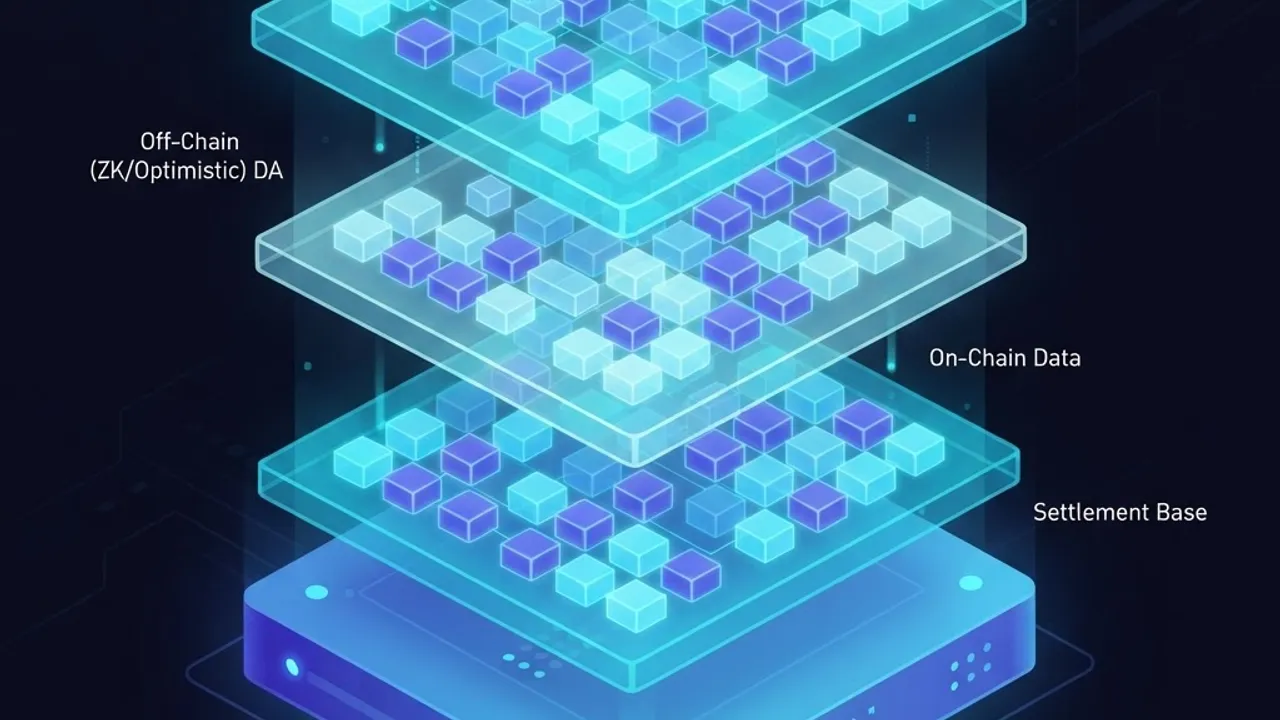
The important nuance is that blob space is a market. When blob demand spikes, fees rise sharply because blob pricing uses its own fee mechanism. Projects with extremely high transaction counts, such as onchain games writing state every few seconds, often move data to an external availability layer or an availability committee. That cuts cost further but changes your security assumption: users now trust that a separate network keeps data retrievable.
Ask any prospective service three specific questions:
- What is my projected monthly data cost at 100,000 daily transactions and at 5 million daily transactions?
- Which data availability targets can I switch to without redeploying my bridge?
- Who pays and monitors the batcher wallet, and what happens when it runs dry at 3 a.m.?
A vendor that cannot answer question three with a specific runbook is not production ready.
Evaluating Providers Beyond the Marketing Page
The strongest signal of provider quality is not throughput claims. It is the honesty of their decentralization roadmap and the clarity of their exit path.
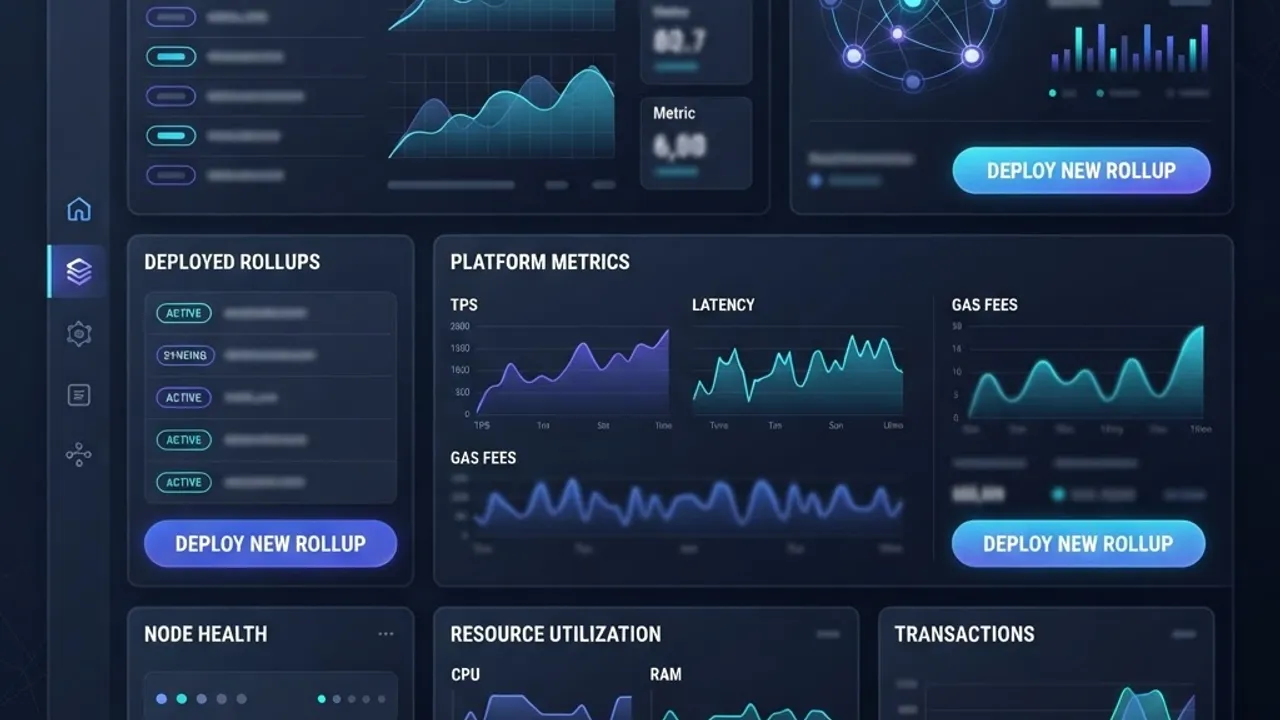
Most rollups today, including the largest ones, still run a single sequencer and retain upgrade keys behind a multisig with a timelock. That is a normal starting point, not a scandal. What matters is whether the provider documents it plainly. Independent trackers such as L2BEAT categorize rollups by stage, where Stage 0 means training wheels are fully on and Stage 2 means the system is governed by proofs rather than operators. Check your prospective stack's stage before you publish security claims to your users.
Run this checklist during vendor evaluation:
- Sequencer control: Can you self-host the sequencer later, and is there a documented failover?
- Escape hatch: Can users force-include transactions or withdraw if the sequencer censors or halts?
- Upgrade keys: Who holds them, what is the timelock, and can you take custody?
- Data portability: Can you export full chain history and re-run it under a different operator?
- Contract audits: Are the bridge and settlement contracts audited, and are reports public?
- Pricing model: Flat monthly, revenue share on sequencer fees, or usage-based, and does the vendor keep MEV revenue?
That last point surprises teams repeatedly. Sequencer fee revenue and ordering rights are real assets. Negotiate them explicitly in the contract rather than discovering the split after launch.
Proving Costs and Why ZK Quotes Vary So Widely
ZK proof generation is a compute workload, and quotes differ because vendors amortize proving differently.

Some providers prove every batch on a fixed cadence, which gives predictable finality but costs money even when your chain is idle. Others prove only when a batch fills, which is cheaper for low-traffic chains but makes withdrawal latency variable. For a payments product, pay for the fixed cadence. For an internal enterprise chain with bursty usage, the fill-based model saves substantially.
Also ask whether proving is a shared prover network or dedicated hardware. Shared networks reduce cost but introduce queueing during network-wide demand spikes. Dedicated proving costs more and behaves predictably. Neither is wrong; the mismatch happens when a team buys shared proving and then promises sub-minute finality in its documentation.
Deployment Path: What the First 60 Days Look Like
A rollup launch fails on operations far more often than on cryptography. Sequence the work like this.
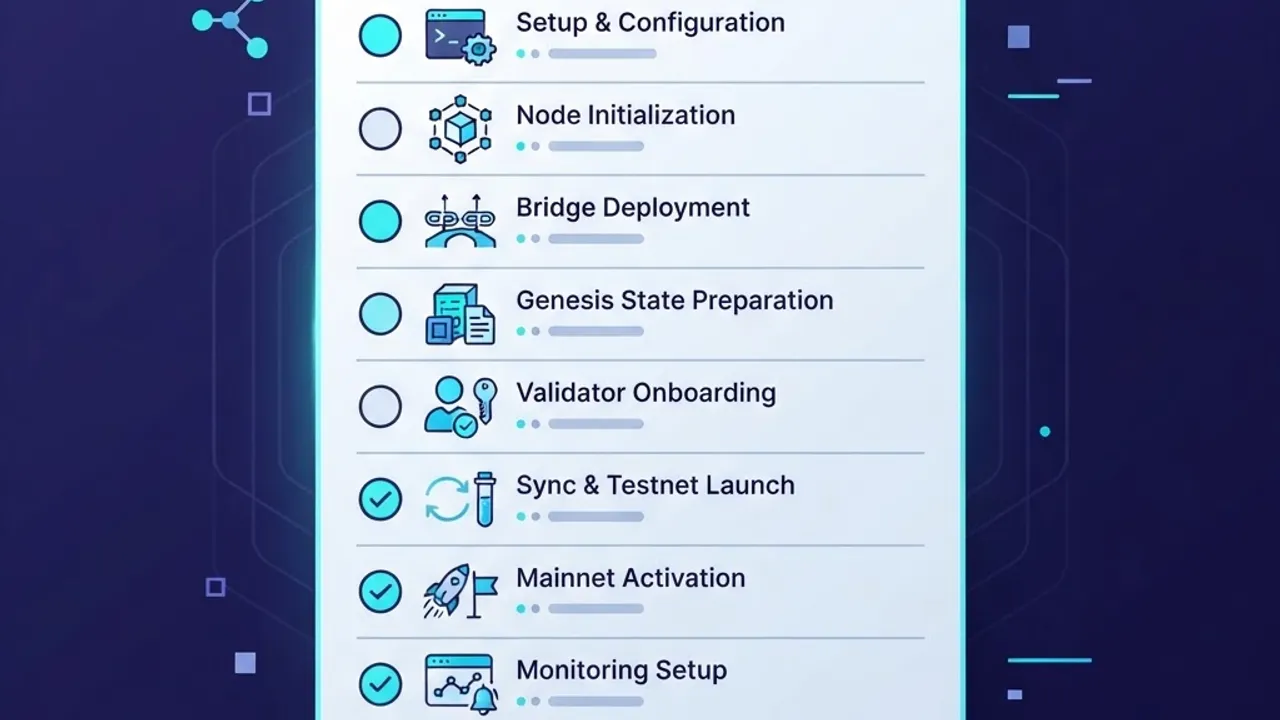
- Define the non-negotiables. Write down required finality, target cost per transaction, gas token, and whether the chain must be permissionless from day one.
- Deploy two devnets. One optimistic, one ZK, using the same contracts. Measure real gas and real developer friction rather than reading benchmarks.
- Load test with production shapes. Replay your expected transaction mix, including the worst case contract call, not simple transfers.
- Wire the ecosystem early. Block explorer, indexer, oracle feeds, bridge liquidity, fiat on-ramp, and wallet chain registration all have lead times measured in weeks.
- Write the incident runbook. Sequencer halt, batcher out of funds, proof failure, DA outage, and bridge pause each need a named owner.
- Audit the app, not just the stack. Your contracts are the likeliest attack surface, since the stack itself is shared and heavily reviewed.
Teams that build the supporting web layer in parallel ship faster than teams that treat the dashboard and docs as an afterthought. If your in-house capacity is thin, a partner experienced in production grade web apps can run the explorer integrations, admin tooling, and user dashboards while your protocol engineers stay on chain work. For the contract, indexer, and dashboard layer itself, purpose-built web app development support keeps the launch timeline realistic.
Matching the Service to Your Use Case
The correct choice becomes obvious once you state the product constraint clearly.
- Consumer social or loyalty app: Optimistic RaaS on an established stack. Withdrawal delay is irrelevant, ecosystem tooling matters most.
- Perpetuals or spot exchange: ZK rollup with a fixed proving cadence. Fast finality reduces bridge risk and market maker capital lockup.
- Onchain game: Optimistic or validium with external data availability. Optimize for cost per action, and accept a weaker DA assumption for non-financial state.
- Enterprise settlement: Permissioned sequencer with a public settlement layer and documented upgrade governance. Auditability outranks throughput.
- New DeFi primitive: Deploy on an existing shared layer 2 first. Launch your own rollup only after you have provable demand and fee revenue.
That last recommendation is the one teams resist most. A dedicated rollup fragments liquidity and forces you to bootstrap bridges, oracles, and wallets alone. Validate the product on a shared chain, then migrate when your own fee revenue justifies the operational burden.
Key Takeaways
- No rollup service is universally best; the decision follows from finality needs, cost targets, and decentralization requirements.
- EIP-4844 blob transactions, live since the March 2024 Dencun upgrade, cut layer-2 data costs to fractions of a cent under normal blob demand.
- Optimistic rollups impose roughly a seven day native withdrawal window; ZK rollups reduce that to minutes or hours at higher proving cost.
- Most production rollups still operate a single sequencer with upgrade keys held by a multisig, so verify a stack's maturity stage on an independent tracker before making security claims.
- Negotiate sequencer fee and MEV revenue splits in writing before launch.
- Data availability choice, not proof system, is usually the largest lever on per-transaction cost at scale.
- Launching on an existing layer 2 first is often cheaper than running a dedicated rollup with no proven demand.
Frequently Asked Questions (FAQ)
What is the best rollup service for a small blockchain startup?
For most small teams, an OP Stack optimistic rollup-as-a-service is the best starting point. It offers near-total EVM compatibility, the widest tooling support, and the lowest operating cost. You can migrate to a ZK stack later if fast finality becomes a genuine product requirement rather than a preference.
How much does it cost to run a rollup per month?
Expect two cost lines: the service fee and the onchain data cost. Managed services commonly range from a few thousand dollars monthly to enterprise pricing, while data costs scale with transaction volume and blob market conditions. Always request projections at both your current and ten times your expected volume.
Are ZK rollups better than optimistic rollups?
ZK rollups are better for fast finality and proof-based bridging, not universally better. Optimistic rollups remain cheaper to operate and have more mature tooling. Choose ZK when withdrawal speed, capital efficiency, or cryptographic validity guarantees are core to your product. Otherwise the optimistic path ships sooner with less friction.
Can I switch rollup providers after launch?
Yes, but only if you plan for it. Confirm before signing that you can export full chain history, take custody of upgrade keys, and self-host the sequencer. Migrating an optimistic stack between providers is routine. Migrating across proof systems usually means a new chain and a user bridge.
Do I need my own rollup or can I deploy on an existing layer 2?
Most projects should deploy on an existing layer 2 first. A dedicated rollup only pays off when you need custom gas tokens, dedicated blockspace, guaranteed throughput, or the sequencer fee revenue. Validate product demand on a shared chain, then launch your own once volume justifies the operational load.
What happens to my rollup if the service provider shuts down?
The stack itself is open source, so the chain can continue if you hold the upgrade keys, have the full state export, and can run the sequencer and batcher. Verify all three capabilities during vendor selection. Without them, a provider shutdown becomes a chain halt rather than a migration.