Follow a working graphic designer through a real day: morning briefs, design sprints, client feedback calls, and evening portfolio updates, hour by hour.
A Day in the Life Graphic Designer
Most people picture graphic design as eight uninterrupted hours of drawing logos. The reality, based on years of working alongside designers at ZoneTechify, is far more structured and far more interesting. A working designer splits the day between creative production, client communication, file management, and continuous learning. Understanding that rhythm matters whether you are considering design as a career, hiring a designer, or trying to collaborate with one more effectively. This walkthrough follows a realistic weekday, hour by hour, and explains what actually happens at each stage, why it happens, and what separates productive designers from burned-out ones.
Quick Answer: A graphic designer's day typically runs from about 8 AM to 6 PM and blends 3 to 4 hours of hands-on design work with briefings, client feedback calls, revisions, file preparation, and admin. Mornings are usually reserved for deep creative work, afternoons for meetings and revisions, and evenings for portfolio updates and skill-building.
What Does a Graphic Designer Actually Do All Day?
A graphic designer is a visual problem-solver who translates business goals into images, layouts, typography, and color systems. On any given day, that means producing deliverables such as logos, social media graphics, packaging, web layouts, or marketing collateral, then defending and refining those decisions with clients or stakeholders.
The surprising part for outsiders is the ratio. In my experience managing design teams, pure creative execution rarely exceeds half the workday. The rest goes to briefs, feedback loops, versioning files, and communication. According to the U.S. Bureau of Labor Statistics, graphic designers earned a median annual salary of $58,910 as of May 2023, and the field is projected to see roughly 22,100 job openings per year through 2033 — a reminder that this is a real profession with real operational demands, not just an artistic hobby.
7:30 AM — Morning Routine and Inbox Triage
The day starts before any design software opens. Experienced designers spend the first 20 to 30 minutes triaging email and project management tools like Asana, Trello, or Notion. The goal is simple: identify anything that changes today's priorities before committing to a plan.
Three things get checked in a specific order:
- Client emails — has any feedback arrived overnight that unblocks or reshuffles work?
- Project deadlines — which deliverables are due today or tomorrow?
- Team messages — did a developer, copywriter, or account manager flag anything?
Designers who skip triage and dive straight into creative work often discover at 2 PM that they spent the morning on the wrong file. Triage first, create second.
9:00 AM — Reviewing the Creative Brief

Every serious project starts with a brief, and every serious designer re-reads it before touching pixels. A creative brief is a short document defining the project's objective, target audience, deliverables, brand constraints, and deadline. Re-reading it daily sounds redundant, but it prevents the most expensive mistake in design: producing beautiful work that answers the wrong question.
During this window, designers also assemble or revisit mood boards — curated collections of reference imagery, type samples, and color palettes. A strong mood board cuts revision rounds dramatically because it aligns designer and client on direction before production begins. At ZoneTechify's graphic design team, we treat an approved mood board as a contract: it is the shared visual language both sides agree to before detailed work starts.
10:00 AM — Deep Work: The First Design Sprint
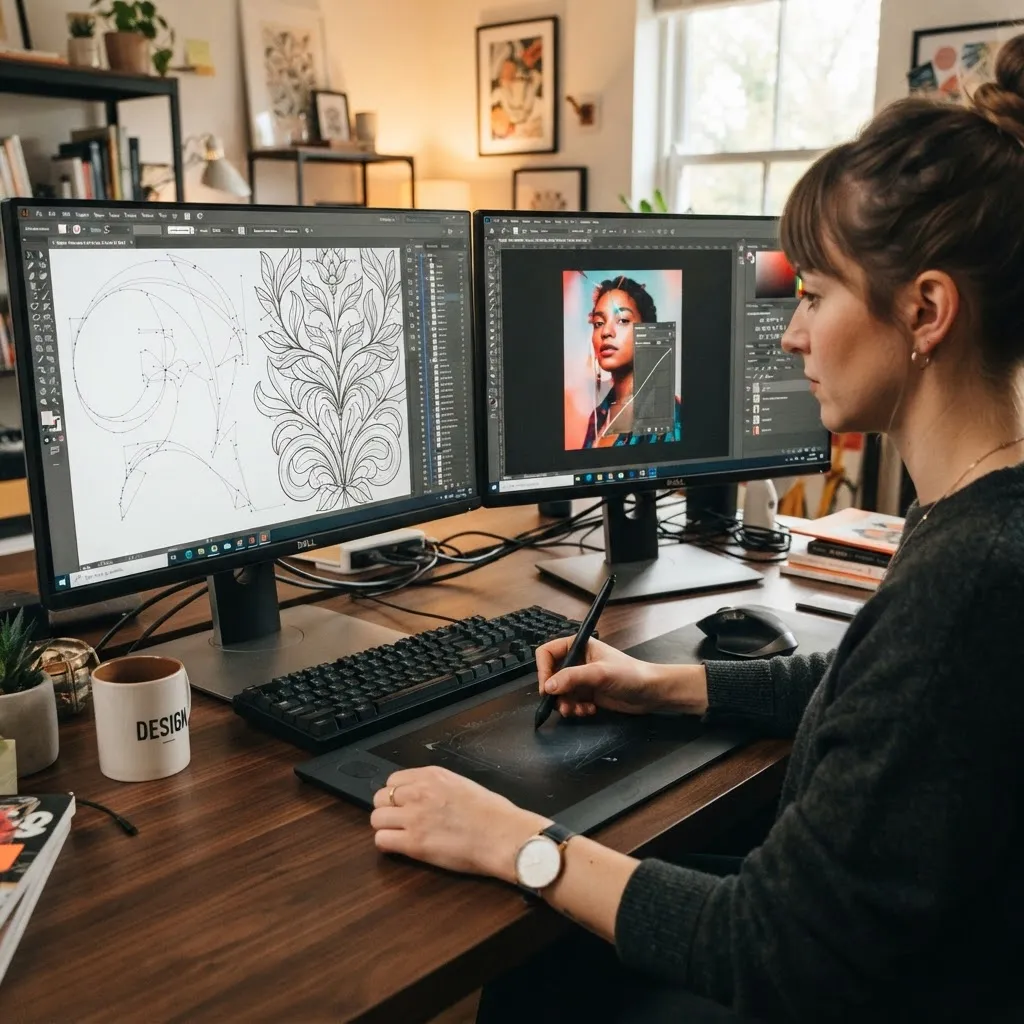
Mid-morning is prime creative time, and disciplined designers protect it fiercely. Notifications go off, headphones go on, and the next two to two-and-a-half hours belong to production work in tools like Adobe Illustrator, Photoshop, Figma, or Affinity Designer.
What deep work looks like depends on the project stage:
- Concepting: rough thumbnails and low-fidelity explorations, often 10 to 20 quick variations
- Refinement: tightening the two or three strongest directions into presentable comps
- Production: building final files at correct dimensions, resolutions, and color profiles
A practical rule I teach junior designers: never present more than three options to a client. More options invite committee thinking and Frankenstein feedback. Fewer, stronger options produce faster, cleaner decisions.
12:30 PM — Lunch, and Why Breaks Actually Matter
This is not filler advice. Visual work causes a documented phenomenon called design fatigue — after staring at the same layout for hours, your eye stops seeing problems. Stepping away for 45 minutes resets perception. Many designers return from lunch, glance at the morning's work, and instantly spot a kerning issue or unbalanced composition that was invisible an hour earlier. Treat the break as part of the quality-control process, not a pause from it.
1:30 PM — Client Feedback and Revision Rounds

Afternoons belong to communication. Feedback calls, stakeholder presentations, and revision walkthroughs cluster here because clients are more available after lunch and because designers have fresh work to show from the morning sprint.
Handling feedback well is a genuine professional skill. The best designers do three things consistently:
- Translate vague feedback into specifics. "Make it pop" becomes "increase contrast between the headline and background."
- Explain decisions without being defensive. "I chose this typeface because your audience skews mobile, and it stays legible at small sizes."
- Document everything in writing. Verbal feedback gets summarized in a follow-up message so scope stays controlled.
Revision rounds are where budgets and timelines live or die. Agencies typically contract two to three rounds; anything beyond that signals a broken brief, not a broken designer.
3:00 PM — The Afternoon Design Sprint

With feedback in hand, the second production block begins. This sprint is usually revision-focused rather than exploratory: implementing client notes, adjusting layouts, and preparing alternate sizes or formats. A single social campaign, for example, might need the same visual adapted to eight aspect ratios across Instagram, LinkedIn, X, and display ads.
This is also when designers batch repetitive tasks. Building templates, setting up shared color and type styles, and automating exports can reclaim hours every week. The teams at WebPeak apply the same batching principle to broader digital projects: systematize the repeatable work so human attention stays on the judgment calls machines cannot make.
Freelance vs. In-House vs. Agency: How the Day Differs
The daily rhythm above shifts significantly depending on employment model. Here is an honest comparison drawn from designers I have worked with in all three settings:
| Factor | Freelance | In-House | Agency |
|---|---|---|---|
| Schedule control | High | Medium | Low |
| Client variety | High | Low | High |
| Admin and invoicing time | High | Low | Low |
| Creative range per week | Varies | Narrow | Wide |
| Deadline pressure | Self-managed | Steady | Intense |
| Income predictability | Low | High | High |
No model is objectively better. Freelancers trade stability for autonomy, in-house designers trade variety for depth in one brand, and agency designers trade calm for range and speed. Knowing which trade suits your temperament matters more than chasing whichever looks glamorous online.
5:30 PM — Wrapping Up: File Handoff and Admin
The final work hour is unglamorous and essential. Designers package final files with correct naming conventions, export deliverables in every required format (SVG, PNG, PDF, print-ready CMYK), archive project folders, and log hours. Sloppy handoff is the fastest way to lose a client's trust; a developer who receives an unlabeled 400-layer file remembers it. Freelancers also use this slot for invoicing and proposal writing — the business side that keeps the creative side funded.
7:00 PM — Evening: Portfolio, Learning, and Side Projects

Career growth in design happens largely outside billable hours. Two or three evenings a week, working designers update portfolio case studies, study emerging tools, or run passion projects that keep creative muscles loose. This is not optional busywork: design tools and trends turn over quickly, and the BLS notes that keeping software skills current is a core expectation across the occupation. A portfolio refreshed quarterly consistently outperforms one refreshed annually when it comes to landing new clients or roles.
A Typical Graphic Designer Daily Schedule at a Glance
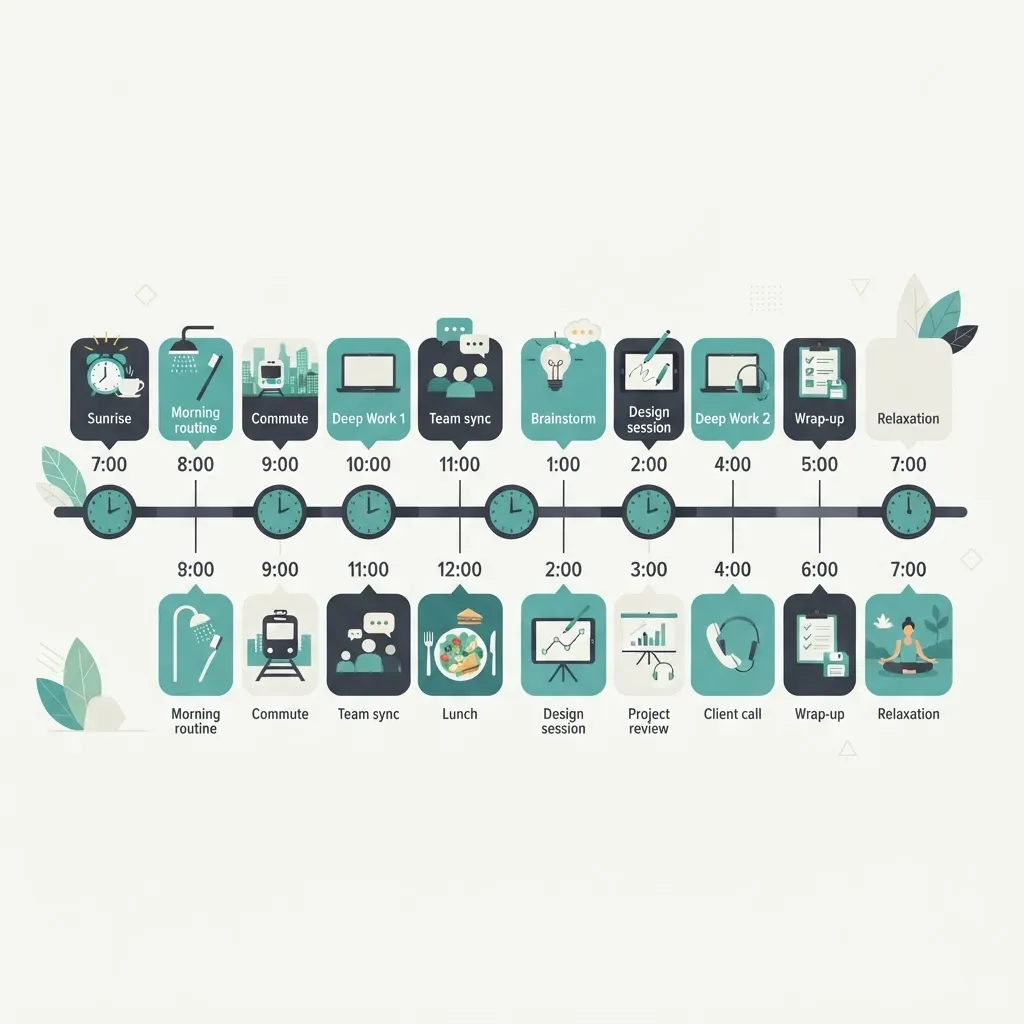
- 7:30 AM — Inbox triage and priority planning
- 9:00 AM — Brief review and mood board alignment
- 10:00 AM — Deep-work design sprint (concepting or production)
- 12:30 PM — Lunch and perceptual reset
- 1:30 PM — Client feedback calls and revision notes
- 3:00 PM — Second sprint: revisions and format adaptation
- 5:30 PM — File handoff, archiving, and admin
- 7:00 PM — Portfolio updates and skill development (2-3 evenings weekly)
Key Takeaways
- Graphic designers spend roughly 3 to 4 hours of an 8-to-10-hour day on hands-on design; the rest goes to briefs, feedback, and file management.
- The U.S. Bureau of Labor Statistics reports a median graphic designer salary of $58,910 (May 2023) with about 22,100 annual job openings projected through 2033.
- Mornings are best protected for deep creative work; afternoons naturally suit client communication and revisions.
- Presenting a maximum of three design options per round produces faster, cleaner client decisions.
- Two to three contracted revision rounds is the professional standard; more usually indicates a weak creative brief.
- Career growth — portfolio updates, new tools, side projects — happens mostly outside billable hours.
Frequently Asked Questions (FAQ)
How many hours a day does a graphic designer actually design?
Typically 3 to 4 hours of hands-on creative work within an 8-to-10-hour day. The remaining time goes to briefings, client feedback, revisions, file preparation, and administration. Designers who protect uninterrupted morning blocks for creative work consistently produce more and revise less than those who design in scattered fragments.
Is being a graphic designer stressful?
It can be, mainly from deadline pressure and subjective feedback rather than the work itself. Agency roles carry the most intensity, in-house roles the least. Stress drops sharply when designers set clear revision limits, document feedback in writing, and keep briefs specific. Most working designers describe the job as demanding but genuinely satisfying.
What software do graphic designers use every day?
Adobe Illustrator, Photoshop, and InDesign remain the industry core, with Figma dominating digital and UI-adjacent work. Many designers add Affinity tools as a lower-cost alternative and Procreate for illustration. Daily workflows also rely on project management tools like Notion, Trello, or Asana to track briefs, deadlines, and feedback.
Do graphic designers work from home?
Yes, very commonly. Design is one of the most remote-friendly creative professions because deliverables are digital and feedback happens over video calls and shared files. Freelancers work almost entirely remotely, while many agencies and in-house teams now operate hybrid schedules with two or three office days per week.
How do I start a career in graphic design?
Build foundational skills in typography, layout, and color theory, then learn Illustrator, Photoshop, and Figma through structured projects. Create 4 to 6 strong portfolio case studies — real or self-initiated — showing your process, not just final images. Entry paths include junior agency roles, in-house positions, and freelance marketplaces.
Final Thoughts
A day in the life of a graphic designer is a negotiation between creativity and logistics: protect the morning for deep work, spend the afternoon communicating clearly, and invest evenings in the career itself. If you are exploring design as a profession, shadow that rhythm for a week and see how it fits. And if your business needs that discipline applied to your brand, the design team at ZoneTechify does this every working day.