
A practical, expert framework for combining human marketers and AI into one collaborative system that drives better campaigns, content, and measurable ROI.
A Framework for Collaborative Artificial Intelligence in Marketing
Most marketing teams adopt AI the wrong way. They buy a tool, automate a few tasks, and expect transformation. Instead they get disconnected outputs, brand-voice drift, and tired teams babysitting bots. The real opportunity is not automation for its own sake. It is collaboration: a deliberate operating model where human marketers and artificial intelligence each do what they do best, inside a shared system. This guide gives you a complete, field-tested framework for collaborative AI in marketing, built from real implementation experience across content, paid media, and lifecycle teams.

Quick Answer: A framework for collaborative AI in marketing pairs human judgment with machine speed across five pillars: shared goals, clear human-AI roles, connected data, feedback loops, and governance. Humans set strategy, creativity, and ethics while AI handles scale, prediction, and personalization, producing faster, safer, and measurably better marketing.
What Is Collaborative AI in Marketing?
Collaborative AI in marketing is an operating model where humans and AI systems work as one team on shared objectives, rather than AI simply replacing manual tasks. In this model, AI is treated as a capable teammate with defined responsibilities, not a vending machine for content. Humans own strategy, brand voice, emotional nuance, and ethical decisions. AI owns scale, pattern detection, prediction, and rapid iteration.
The distinction matters. A team using AI in isolation generates a thousand ad variations no one trusts. A team using collaborative AI generates those variations, then applies human judgment to select, refine, and approve the few that protect the brand and convert. The difference is not the technology. It is the framework around it.

Why Marketing Needs a Collaboration Framework
Marketing now produces more content, across more channels, at a higher tempo than any human team can sustain alone. According to McKinsey, marketing and sales is one of the business functions expected to gain the most economic value from generative AI, with estimates running into hundreds of billions of dollars annually. Yet value only materializes when adoption is structured.
The risk of unstructured adoption is real. A widely cited Gartner prediction warned that a large share of generative AI projects would be abandoned after proof of concept due to poor data quality, unclear value, and weak governance. Marketing is not immune. Teams that bolt AI onto broken processes simply produce broken outputs faster.
A collaboration framework solves this by answering three questions before a single prompt is written: What are we trying to achieve? Who is responsible for what? And how do we keep quality, brand safety, and trust intact at scale?
The Five Pillars of a Collaborative AI Marketing Framework
The framework rests on five pillars. Skip one and the system becomes fragile.
1. Shared Goals and Guardrails
Every collaborative AI initiative starts with a measurable goal tied to business outcomes, not vanity metrics. Define the target (for example, reduce content production time by 40 percent while holding conversion rate steady), then set guardrails: brand voice rules, claims that require legal review, and topics AI must never touch unsupervised. Goals give direction; guardrails make speed safe.
2. Clear Role Division Between Humans and AI
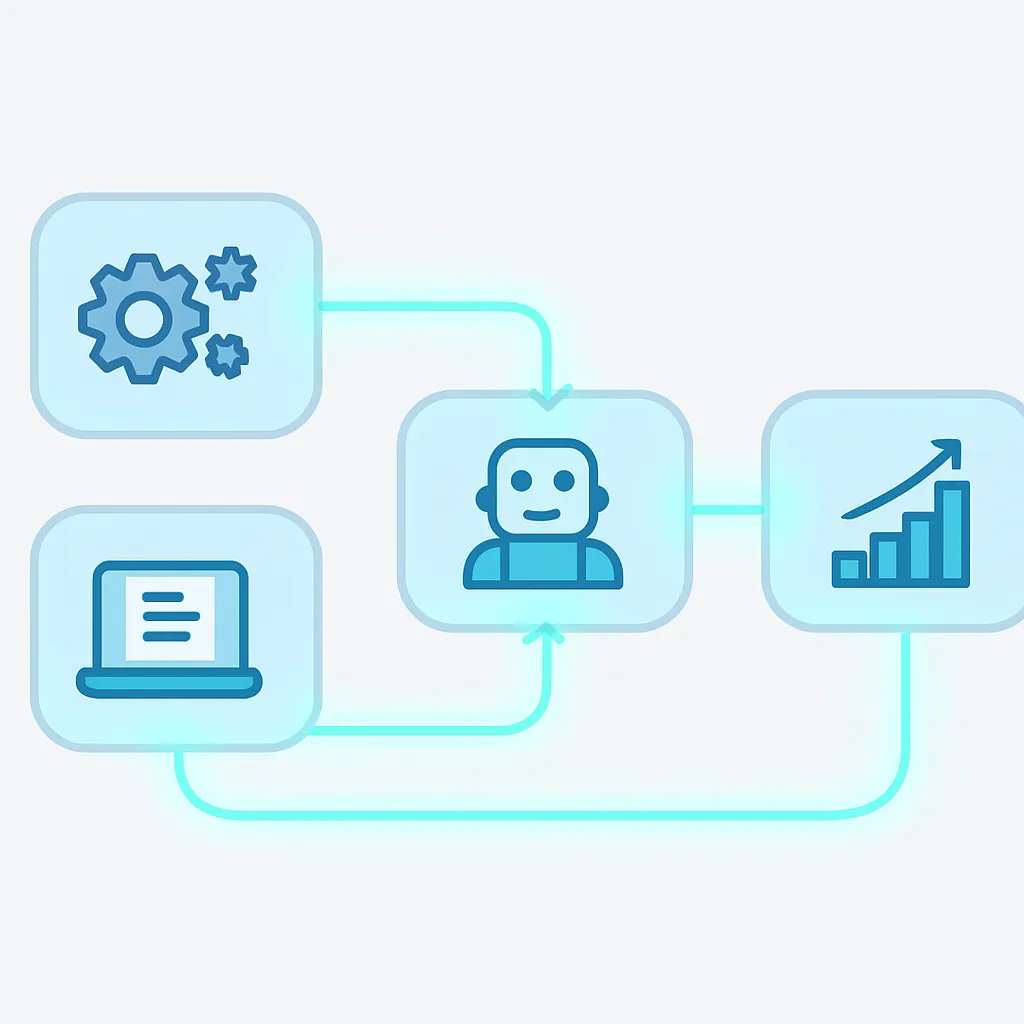
The most common failure is ambiguity about who does what. A collaborative framework assigns explicit ownership. AI drafts, clusters, predicts, and personalizes. Humans decide, edit, empathize, and approve. When roles are written down, accountability is obvious and quality stops slipping through the cracks.
3. A Connected Data Foundation
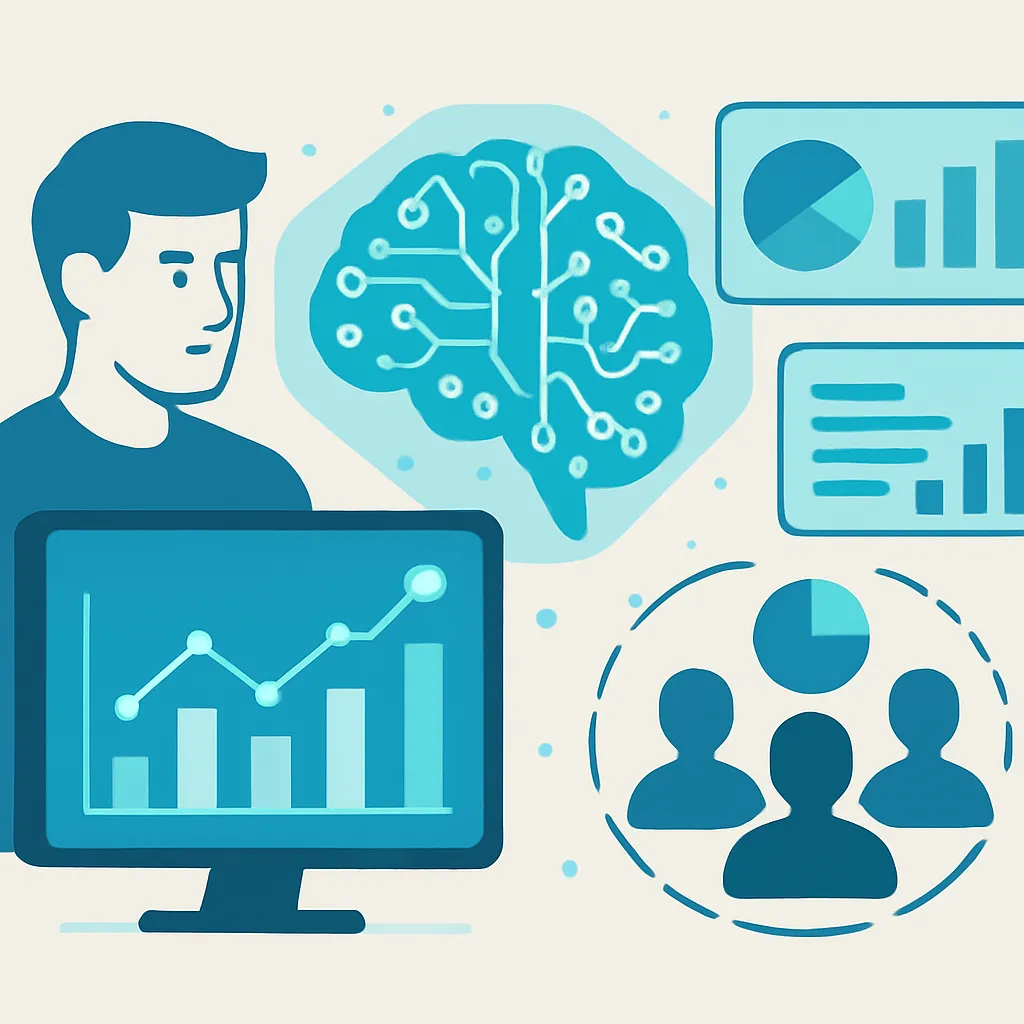
AI is only as smart as the data it can reach. Collaborative AI requires clean, connected first-party data: customer behavior, campaign performance, CRM records, and brand guidelines all accessible in one place. Fragmented data produces generic output. A unified foundation lets AI personalize accurately and lets humans trust the recommendations they receive.
4. Continuous Feedback Loops
Collaboration is iterative. Every human edit, approval, or rejection is a signal that should improve future AI output. Capture these signals systematically: maintain prompt libraries, log what was changed and why, and feed performance data back into your models and briefs. Teams that treat AI like a learning colleague compound their advantage over time.
5. Governance and Trust
The final pillar protects everything else. Governance covers disclosure (when AI is used), human review thresholds, bias checks, data privacy compliance, and a clear escalation path when AI produces something off-brand or inaccurate. Trust is the currency of marketing, and governance is how you keep it intact while moving fast.
Human Versus AI: Who Owns What
The table below shows how responsibilities split inside a healthy collaborative framework.
| Marketing Task | Best Owner | Why |
|---|---|---|
| Brand strategy and positioning | Human | Requires judgment, vision, and market empathy |
| Audience segmentation at scale | AI | Detects patterns in large datasets fast |
| First-draft copy and variations | AI | Generates volume quickly for human refinement |
| Final editing and brand voice | Human | Protects tone, nuance, and credibility |
| Predictive bid and budget shifts | AI | Reacts to data faster than any person |
| Ethical and legal review | Human | Accountability and compliance must be human-owned |
| Personalization across channels | AI | Tailors content to thousands of profiles instantly |
| Campaign concept and storytelling | Human | Creativity and emotional resonance lead here |
How to Implement the Framework in Six Steps
Use this sequence to move from theory to a working collaborative system.
- Audit your workflows. Map every recurring marketing task and tag it as creative, analytical, or repetitive. Repetitive and analytical tasks are your first AI candidates.
- Define goals and guardrails. Write one measurable objective and the non-negotiable brand and compliance rules around it.
- Assign human and AI roles. Document ownership for each task using the split above so accountability is unambiguous.
- Connect your data. Centralize customer, campaign, and brand data so AI has accurate context to work from.
- Pilot on one channel. Choose a single high-volume use case, such as email subject lines or ad variations, and run a controlled test against a human-only baseline.
- Measure, refine, and expand. Compare results, capture feedback into prompt libraries, and roll the proven pattern out to the next channel.
Teams that need help designing or operationalizing this system often partner with specialists in artificial intelligence services to accelerate setup and avoid common pitfalls.

Real-World Applications
Collaborative AI shows its value most clearly in three areas.
Content production. AI generates briefs, outlines, and first drafts; writers and editors shape voice, accuracy, and originality. The result is more content without sacrificing the human quality search engines and readers reward.
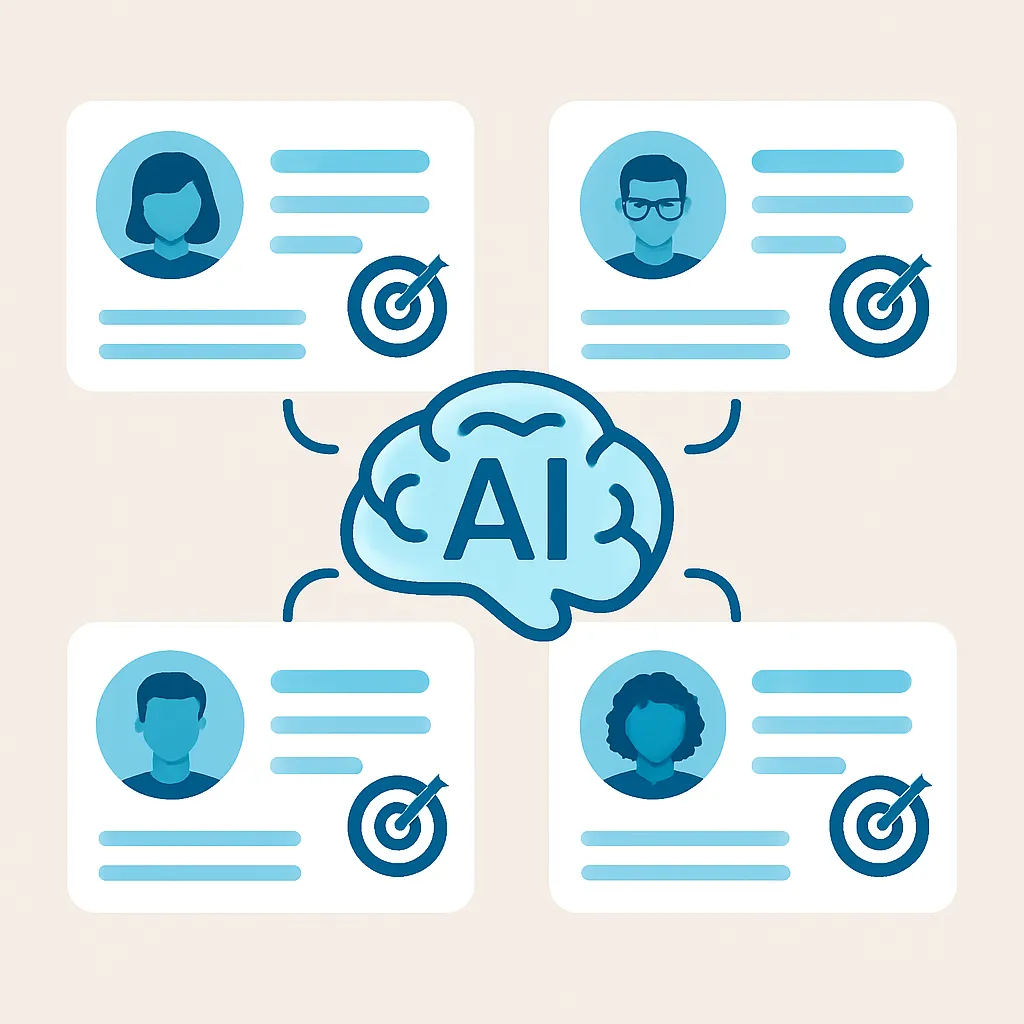
Personalization at scale. AI tailors messaging to thousands of micro-segments while marketers design the strategy and approve the creative direction. This is where one-to-one marketing finally becomes practical.
Performance media. AI continuously tests and reallocates budget across creatives and audiences, while humans set strategy, define limits, and interpret why results move. Specialist teams offering artificial intelligence services frequently build these closed-loop optimization systems for advertisers.
Measuring Success
A collaborative AI framework must prove its value with numbers, not enthusiasm. Track four categories: efficiency (time and cost per asset), quality (conversion rate, engagement, brand-voice consistency), output (volume of approved assets), and trust (error rate and review pass rate).
The goal is balanced improvement. If output triples but quality and trust scores drop, the framework is failing. Healthy collaborative AI raises efficiency and output while holding or improving quality and trust. Review these metrics monthly and feed the findings back into your prompts, briefs, and role definitions.

Common Mistakes to Avoid
Even well-intentioned teams stumble. Avoid these recurring errors:
- Automating before defining goals. Speed without direction multiplies waste.
- Removing humans from approval. Unreviewed AI output erodes brand trust quickly.
- Feeding AI fragmented data. Poor inputs guarantee generic, inaccurate outputs.
- Treating AI as a one-time setup. Without feedback loops, performance plateaus.
- Ignoring disclosure and ethics. Hidden or biased AI use creates long-term reputational risk.
You can explore more practical marketing and technology guidance at ZoneTechify and WebPeak.

Key Takeaways
- Collaborative AI in marketing pairs human judgment with machine scale inside a shared operating model, rather than using AI to replace people.
- The framework rests on five pillars: shared goals, clear human-AI roles, connected data, feedback loops, and governance.
- McKinsey identifies marketing and sales as among the functions set to gain the most economic value from generative AI.
- Gartner has warned that many generative AI projects are abandoned after proof of concept due to weak data and governance, making structure essential.
- Humans should own strategy, creativity, and ethics; AI should own segmentation, prediction, drafting, and personalization.
- Success requires balanced measurement across efficiency, quality, output, and trust, not speed alone.
Frequently Asked Questions (FAQ)
What does collaborative AI in marketing actually mean?
It means humans and AI work together as one team with defined roles, instead of AI simply replacing tasks. Humans handle strategy, creativity, and ethics, while AI handles scale, prediction, and personalization. The collaboration produces faster, safer, and higher-quality marketing than either could deliver alone.
Will AI replace marketers?
No. AI replaces repetitive and analytical tasks, not human judgment, creativity, or accountability. In a collaborative framework, marketers become more valuable because they direct AI, protect brand voice, and make ethical decisions. The most successful teams treat AI as a teammate that amplifies human work, not a substitute for it.
How do I start implementing collaborative AI in my team?
Start by auditing your workflows and tagging tasks as creative, analytical, or repetitive. Define one measurable goal with clear guardrails, assign human and AI roles, connect your data, then pilot on a single channel. Measure against a human-only baseline before expanding to other channels.
What are the biggest risks of using AI in marketing?
The biggest risks are brand-voice drift, inaccurate or biased output, data privacy issues, and loss of customer trust. These are managed through governance: human review thresholds, disclosure policies, bias checks, and clean data. Without governance, AI scales mistakes as quickly as it scales good work.
How do I measure the ROI of collaborative AI?
Measure four categories: efficiency (time and cost per asset), quality (conversion and engagement), output (approved asset volume), and trust (error and review pass rates). Healthy collaborative AI improves efficiency and output while holding or raising quality and trust. Review monthly and feed insights back into your process.
Conclusion
The winners in modern marketing will not be the teams with the most AI tools. They will be the teams with the best collaboration between humans and machines. By grounding your adoption in shared goals, clear roles, connected data, feedback loops, and governance, you turn AI from a risky experiment into a dependable teammate. Build the framework first, and the results follow.