
A people-first look at Artificial Intelligence Hell, the chaos of unmanaged AI, and the practical strategies teams use to stay in control and sane.
Artificial Intelligence Hell
There is a moment many teams reach after adopting too many smart tools too quickly. Dashboards multiply, chatbots answer in circles, automations fire at the wrong time, and nobody is quite sure which system made which decision. That tangled, exhausting state is what people now informally call Artificial Intelligence Hell. It is not a sci-fi nightmare of rogue robots. It is the very human mess that happens when powerful technology is deployed without strategy, oversight, or clear purpose.
This article takes an honest, people-first look at how organizations stumble into this situation, what it actually costs, and how to climb back out. The goal is not to scare you away from AI. It is to help you use it deliberately so the tools serve your goals instead of quietly running your day.

What Artificial Intelligence Hell Really Means
Artificial Intelligence Hell is the gap between the promise of automation and the chaos of poor implementation. Vendors sell speed, savings, and superhuman accuracy. What teams often get instead is a sprawl of disconnected tools that each demand attention. One model writes marketing copy, another scores leads, a third routes support tickets, and none of them share context. The result feels less like a helpful assistant and more like managing a room full of confident interns who never talk to each other.
The pain is rarely one big failure. It is a thousand small ones. A pricing bot quotes the wrong number. A recommendation engine pushes irrelevant products. A summarizer drops the one detail that mattered. Individually these glitches look minor. Together they erode trust, waste hours, and create the nagging sense that the technology is in charge rather than the people. Recognizing this pattern early is the first step toward avoiding it.
How Teams Fall Into the Trap
Nobody plans to build a confusing system. They drift into it. A common path starts with enthusiasm: a free trial here, a plugin there, a clever prompt that saves an afternoon. Each addition seems harmless. But without a guiding architecture, these tools accumulate like browser tabs nobody closes. Companies like ZoneTechify and WebPeak often meet clients at exactly this point, when the novelty has worn off and the maintenance burden has arrived.
The second driver is pressure. When leadership demands an AI strategy by next quarter, teams ship something fast rather than something sound. Speed without design creates technical debt that compounds. The third driver is misplaced trust. People assume the model understands their business, when in reality it only predicts plausible text or numbers based on patterns. That misunderstanding leads to overreliance, and overreliance leads straight into the heart of Artificial Intelligence Hell.

The Data Problem Underneath It All
Most AI misery traces back to data. Models are only as good as the information they learn from and the context they receive. Feed them messy, outdated, or biased data and they will confidently produce messy, outdated, or biased results. The famous phrase garbage in, garbage out has never been more relevant. A support bot trained on three-year-old documentation will cheerfully give customers instructions that no longer work.
Worse, data problems are invisible until they are not. An automation can run smoothly for months, then break the moment an edge case appears. Because the logic lives inside an opaque model rather than readable rules, debugging becomes guesswork. Teams that invest early in clean, well-labeled, and governed data spend far less time later untangling mysterious failures. Good data hygiene is the single most effective vaccine against AI chaos.
The Automation Spiral
Automation is supposed to remove busywork. In an unmanaged setup, it often manufactures new busywork instead. When automations trigger other automations, small errors cascade. An incorrectly tagged email launches the wrong campaign, which updates the wrong record, which triggers a follow-up to the wrong audience. By the time a human notices, the cleanup costs more than the original task ever did.
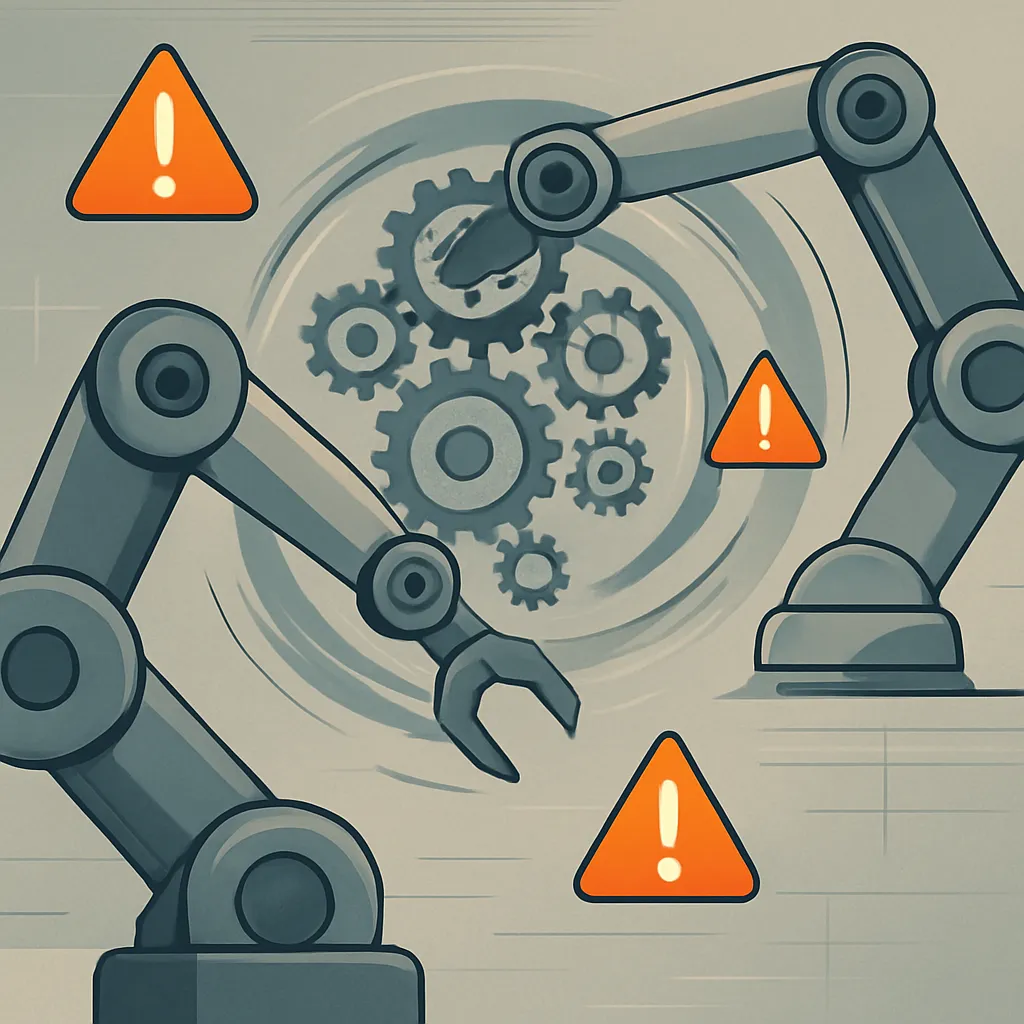
This is the automation spiral, and it thrives in the dark. The fix is not less automation but more visibility. Every automated action should be logged, attributable, and reversible. Teams should be able to answer three questions at any moment: what did the system do, why did it do it, and how do we stop it. If you cannot answer those questions quickly, you are not running the automation. It is running you. Building those guardrails is exactly the kind of work that specialized artificial intelligence services are designed to handle, turning a fragile patchwork into a maintainable system.
The Ethical and Trust Dimension
Beyond efficiency lies a deeper issue: trust. When AI makes decisions that affect people, hiring screens, loan approvals, content moderation, the stakes rise sharply. A model that quietly encodes bias can cause real harm at scale and far faster than any human reviewer could. Once customers or employees suspect that an unaccountable algorithm is deciding their fate, goodwill evaporates quickly.

Ethical AI is not a luxury add-on. It is the foundation of sustainable use. That means being transparent about where AI is involved, giving people a way to appeal automated decisions, and regularly auditing outputs for fairness. Organizations that treat ethics as a checklist after launch tend to discover problems publicly and painfully. Those that bake fairness and transparency into the design earn durable trust, which is far more valuable than any short-term efficiency gain.
Signs You Are Already in Trouble
It helps to name the warning signs clearly. The table below contrasts a healthy AI setup with one sliding into Artificial Intelligence Hell.
| Signal | Healthy AI Use | Artificial Intelligence Hell |
|---|---|---|
| Ownership | Clear owner per system | Nobody knows who manages it |
| Visibility | Actions are logged and traceable | Decisions happen in a black box |
| Data quality | Clean, governed, current | Messy, outdated, unverified |
| Human control | Easy to pause or override | Hard to stop once running |
| Purpose | Tied to a measurable goal | Added because it seemed trendy |
| Trust | Users understand the role of AI | Users feel confused or surveilled |
If your organization lands in the right-hand column on three or more rows, it is time to slow down and rebuild your approach. The good news is that recovery is very achievable with a structured plan.

How to Escape Artificial Intelligence Hell
Getting out is less about new technology and more about discipline. The teams that recover share a few consistent habits. First, they audit everything. They list every AI tool and automation in use, who owns it, what data it touches, and whether it still serves a real purpose. Tools that fail this test are retired without sentiment. A smaller, well-understood stack always beats a sprawling one.

Second, they keep humans in the loop for consequential decisions. AI drafts, suggests, and accelerates, but a person reviews anything that affects money, safety, or reputation. This human-in-the-loop model captures most of the speed benefit while filtering out the worst mistakes. Third, they measure outcomes rather than activity. Saving time means nothing if quality drops. Tracking real business results keeps the focus on value instead of novelty.
A Practical Recovery Checklist
For teams ready to act, a simple sequence works well. Start by freezing new AI adoption for a short period so you can map what already exists. Next, consolidate overlapping tools and shut down anything redundant. Then improve the data feeding your remaining systems, because clean inputs solve more problems than clever models. After that, add logging and clear ownership so nothing operates in the shadows. Finally, train your people, since the most powerful safeguard against AI chaos is a team that understands both the strengths and the limits of the technology they use every day.
This methodical approach turns a frightening tangle into an ordinary engineering project. The fear fades once the system becomes legible and controllable again.
Building a Healthier Relationship With AI
The deepest lesson hidden inside Artificial Intelligence Hell is about expectations. AI is extraordinary at pattern recognition, drafting, and handling repetitive volume. It is poor at judgment, context, and accountability. Trouble begins the moment we ask it to be something it is not. When we treat AI as a capable assistant rather than an infallible decision-maker, the relationship becomes productive instead of stressful.

A healthy future with AI is not about using the most tools or automating the most tasks. It is about using the right tools for the right reasons, with people firmly in charge. The organizations that thrive will be those that pair ambition with restraint, enthusiasm with governance, and speed with oversight. They will treat each new capability as a decision to be justified, not a button to be pressed reflexively.
Final Thoughts
Artificial Intelligence Hell is real, but it is entirely avoidable and recoverable. It springs from haste, neglected data, invisible automation, and misplaced trust, not from the technology itself. By auditing your stack, cleaning your data, keeping humans in control, and demanding transparency, you transform a chaotic burden into a dependable advantage.
The future does not belong to those who adopt AI the fastest. It belongs to those who adopt it the most thoughtfully. Slow down just enough to design intentionally, and the tools that once felt like a curse will quietly become the quiet, reliable partners they were always meant to be. If you approach AI with clarity and care, you never have to visit that hell at all.