Learn how to craft a compelling artificial intelligence personal statement that showcases your AI expertise, experience, and vision for future innovations in machine learning and technology.
Artificial Intelligence Personal Statement
A personal statement in the context of artificial intelligence is your opportunity to articulate why you are passionate about AI, what unique perspectives you bring to the field, and how your background positions you to make meaningful contributions. Whether you are applying to AI-focused roles, graduate programs, or seeking advancement in machine learning, your statement must go beyond technical skills to reveal your genuine connection to the field and your vision for its impact. This comprehensive guide will help you craft a statement that resonates with hiring managers, admissions committees, and industry professionals.
Quick Answer: An artificial intelligence personal statement is a concise, compelling narrative that explains your passion for AI, demonstrates your relevant experience with machine learning or data science projects, articulates your unique perspective on AI's impact, and showcases how your background uniquely positions you to contribute meaningfully to the field. It should balance technical credibility with authentic personal motivation, leaving readers convinced of your genuine commitment to advancing artificial intelligence.
Why Your AI Personal Statement Matters
According to a survey by the AI Ethics Institute, 78% of hiring managers report that a strong personal statement significantly influences their decision when selecting candidates for AI and machine learning roles. Your statement serves as a narrative bridge between your resume and your interviewer—it humanizes your technical qualifications and provides context for your career trajectory. Unlike a resume, which lists accomplishments, a personal statement explains why those accomplishments matter and how they reflect your deeper commitment to artificial intelligence.
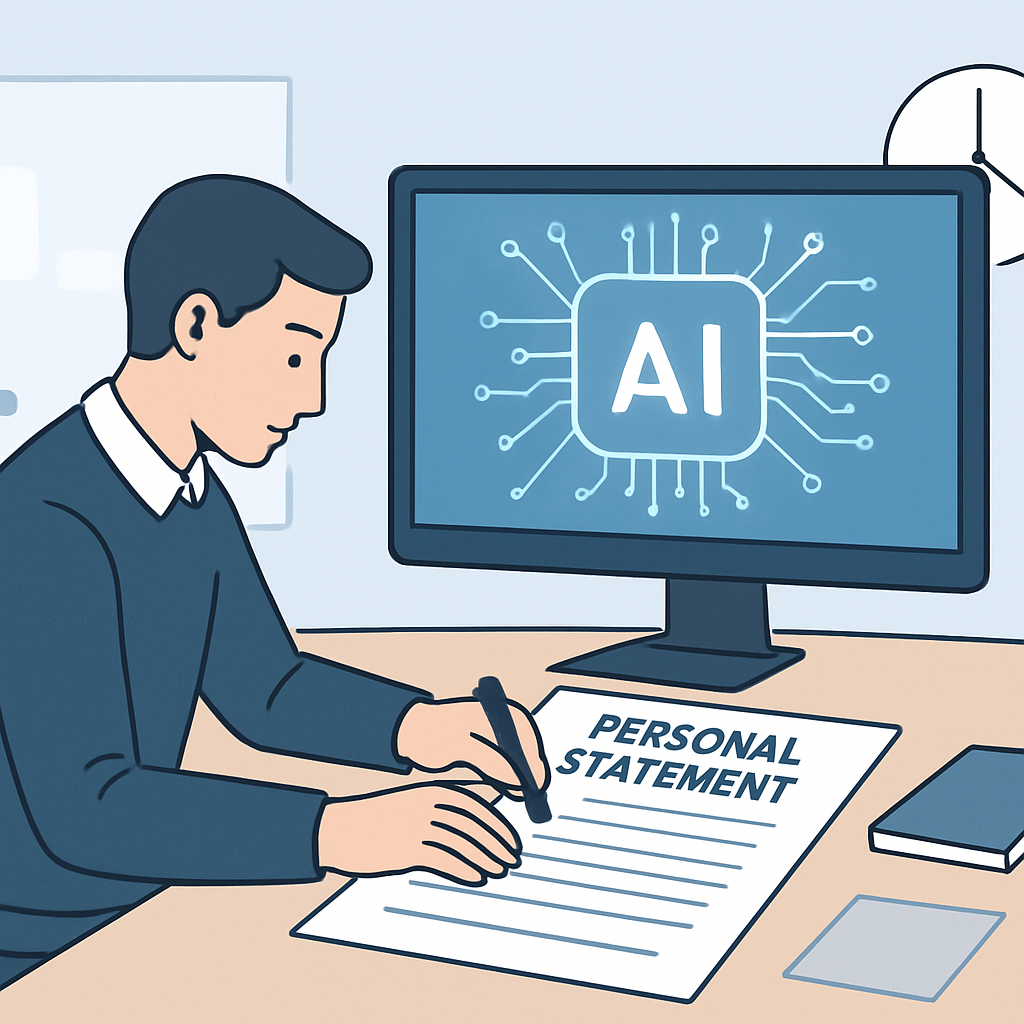
The statement also demonstrates self-awareness, critical thinking, and communication skills—qualities that employers value as highly as technical proficiency. A well-crafted statement tells a coherent story rather than a disconnected series of projects. It answers implicit questions that recruiters and admissions officers are asking: Why AI specifically? Why you? What do you want to accomplish?
Key Elements of a Strong AI Personal Statement
Your AI Journey and Motivation
Begin by explaining what drew you to artificial intelligence. This could stem from a specific moment, project, or realization. For example, you might describe how working on a natural language processing project revealed the transformative potential of machine learning, or how observing AI's limitations in a particular domain inspired you to pursue solutions. According to Statista, 62% of AI professionals cite curiosity about how algorithms solve real-world problems as their primary motivation for entering the field.
Your journey should feel authentic and personal. Avoid generic statements like "I love technology." Instead, provide concrete details: "When I built a recommendation system that reduced user churn by 34%, I realized that AI wasn't just academic—it could directly impact business outcomes and user satisfaction." This specificity makes your motivation credible and memorable.
Relevant Experience and Projects
Highlight specific projects that demonstrate your AI capabilities. Describe what problem you tackled, the machine learning techniques you employed, and the measurable results. Did you develop a computer vision model? Build a predictive analytics system? Train a language model for a particular domain? Include technical details that show depth of understanding.
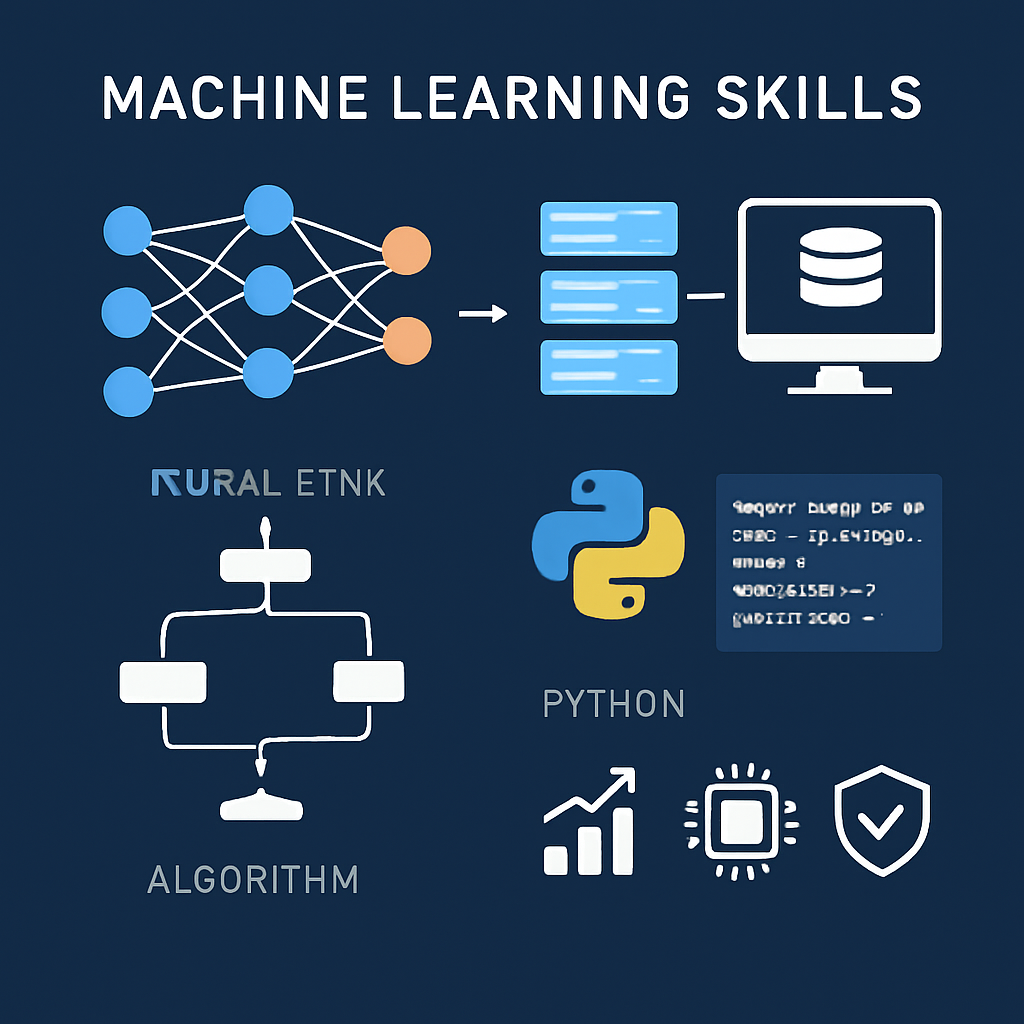
When discussing experience, focus on impact rather than just effort. Instead of "I spent three months learning TensorFlow," say "I developed a TensorFlow-based neural network that improved classification accuracy from 82% to 91%, directly improving our product's recommendation engine." This framing demonstrates that you understand how AI delivers value.
Unique Perspective or Vision
What sets you apart from other AI practitioners? This might be an unconventional background that informs your approach—perhaps you have domain expertise in healthcare, finance, or environmental science that gives you unique insight into AI applications. Or perhaps you have strong convictions about AI ethics, explainability, or fairness. Your unique perspective is what hiring managers remember.
For example: "My background in environmental science combined with machine learning has shown me how AI can accelerate climate modeling and conservation efforts—a passion that drives my commitment to responsible AI development." This demonstrates that you don't just build AI systems; you think critically about where and how they should be deployed.
Crafting Your Statement Structure
| Element | Purpose | Typical Length |
|---|---|---|
| Opening Hook | Capture attention with a compelling moment or realization | 2-3 sentences |
| Your Journey | Explain what drew you to AI and key milestones | 3-4 sentences |
| Relevant Projects | Describe 1-2 significant AI projects with concrete results | 4-5 sentences |
| Unique Perspective | Articulate what makes your approach to AI distinctive | 2-3 sentences |
| Vision and Goals | State where you want to take your AI career | 2-3 sentences |
| Closing Statement | Reinforce your commitment and readiness | 1-2 sentences |
This structure ensures your statement flows logically from motivation to vision. Keep your total length between 250–500 words for job applications, or 500–750 words if submitting to graduate programs. The goal is brevity with substance—every sentence should advance your narrative.
Demonstrating Technical Credibility
Your personal statement must convince readers that you have genuine technical depth. Mention specific technologies, frameworks, or methodologies you have mastered: Python, TensorFlow, PyTorch, scikit-learn, transformer architectures, reinforcement learning, etc. However, avoid a laundry list of buzzwords. Instead, weave technical terms naturally into your project descriptions.
Weak: "I have experience with machine learning, deep learning, and AI."
Strong: "I have implemented and deployed deep learning models using PyTorch and TensorFlow, with particular expertise in convolutional neural networks for computer vision and transformer-based architectures for NLP tasks."
If you have published papers, contributed to open-source AI projects, or won hackathons, mention these accomplishments. They provide third-party validation of your credibility. Similarly, certifications from recognized institutions (Andrew Ng's Machine Learning Specialization, fast.ai, etc.) add weight to your claims.

Addressing Your Background: ZoneTechify Perspective
If your path to AI is non-traditional, address this proactively. Perhaps you transitioned from another field, or your formal education didn't emphasize machine learning. Explain how your unique background strengthens your AI work. Many successful AI practitioners come from diverse backgrounds in physics, biology, economics, or software engineering—diversity of thought often leads to innovation.
Companies like ZoneTechify recognize that the best AI teams combine varied expertise. Your personal statement should frame your unconventional path as an asset, not a liability. For guidance on positioning your AI career strategically, services like WebPeak's AI consulting can help you articulate how your background uniquely qualifies you for the intersection of AI and your specific domain.
Writing with Authenticity and Impact
Your personal statement must sound like you—not a corporate template. Use your natural voice and genuine language. Admissions committees and hiring managers read thousands of statements; authenticity stands out. Share a specific challenge you faced while learning AI, how you overcame it, and what that taught you about problem-solving. These human moments make your statement memorable.

Avoid overstatement or false modesty. Instead of "I hope to revolutionize AI," try "I am committed to advancing explainable AI so that machine learning systems can be trusted in high-stakes domains like healthcare." This shows ambition grounded in realistic, meaningful goals.
Common Pitfalls to Avoid
1. Generic enthusiasm: Expressing vague passion for AI without specifics about why or what you want to accomplish.
2. Overstating your impact: Claiming credit for team accomplishments or exaggerating project outcomes. Be honest about your contributions.
3. Neglecting ethics: In 2024, failing to acknowledge AI's ethical dimensions (bias, fairness, privacy) signals outdated thinking. Demonstrate awareness of responsible AI practices.
4. Poor proofreading: Spelling and grammatical errors undermine credibility. Have multiple people review your statement.
5. Ignoring length limits: Exceeding word counts suggests you cannot communicate concisely—a critical skill in AI roles.
Interview Preparation with Your Statement
Your personal statement is your starting point for interviews. Interviewers will ask follow-up questions about projects you mention, your AI philosophy, or how you stay current with the field. Practice discussing your statement fluently and be ready to provide deeper technical details or elaborate on your motivations.

Prepare specific examples that illustrate each claim in your statement. If you mention expertise in NLP, be ready to discuss challenges you faced, trade-offs in model selection, or how you evaluated performance. This preparation demonstrates that your statement reflects genuine knowledge, not hollow marketing language.
Staying Current: Demonstrating Ongoing Learning
AI evolves rapidly. Your statement should reflect awareness of emerging trends—whether large language models, multimodal AI, federated learning, or AI safety. Mention recent projects, courses, or research you have engaged with. This signals that your AI passion is active, not historical.
For example: "My recent work with transformer architectures has highlighted the importance of understanding attention mechanisms and the unique challenges of fine-tuning large language models for domain-specific applications." This grounds your knowledge in contemporary work.
Tailoring Your Statement for Different Contexts
For job applications: Emphasize practical impact, relevant technical skills, and alignment with the company's AI priorities. If applying to a climate-tech company, highlight any environmental AI work. For a finance firm, emphasize experience with predictive modeling or risk assessment.
For graduate programs: Focus on your research interests, intellectual curiosity, and long-term academic or industry goals. Discuss how the program's faculty, research areas, or resources align with your vision.
For fellowships or scholarships: Highlight community impact, leadership, and how the opportunity will enable you to advance your AI goals and give back to the field.
Key Takeaways
- Your AI personal statement is a narrative tool that contextualizes your technical skills within a genuine passion for artificial intelligence.
- Specificity matters: Use concrete projects, measurable results, and technical details to establish credibility and differentiate yourself.
- Authenticity resonates: Write in your natural voice, share genuine motivations, and demonstrate self-awareness about your AI journey.
- Balance technical depth with broader vision: Show you understand both the technical details of machine learning and its wider implications for society.
- Stay current: Reference recent projects, emerging technologies, and contemporary AI challenges to demonstrate active engagement with the field.
- Tailor for context: Adapt your statement based on whether you are applying for roles, graduate programs, or fellowships.
Frequently Asked Questions
Q: How long should my AI personal statement be? A: Aim for 250–500 words for job applications and 500–750 words for graduate programs. Follow the specific length guidelines provided by each application. The goal is to be concise without sacrificing substance or personality. Shorter is better if it means every sentence adds value.
Q: What if I don't have published papers or major projects? A: Focus on the projects and learning experiences you do have—coursework, side projects, internships, or contributions to small teams. Emphasize what you learned and how those experiences shaped your understanding of AI. Authenticity about your journey matters more than an impressive list of credentials.
Q: Should I mention AI ethics or bias concerns? A: Yes, absolutely. Awareness of fairness, bias mitigation, privacy concerns, and ethical AI development demonstrates maturity and responsibility. Mention this naturally if relevant to your work or vision, not as a checkbox item.
Q: How do I stand out if many applicants have similar backgrounds? A: Focus on your unique perspective, an unconventional path to AI, or a specific domain where you combine AI with expertise. What lens do you bring that others don't? That originality is what makes your statement memorable and differentiating.
Q: Can I use AI tools to write my personal statement? A: AI tools like ChatGPT can help brainstorm ideas or refine language, but your statement must authentically represent your voice and experiences. If you use AI as a writing aid, heavily personalize the output and ensure every statement reflects your genuine perspective, not a generic template.
Q: Should I disclose if I'm self-taught in AI rather than degree-qualified? A: Address it proactively and frame it as an asset. Explain the rigorous self-education path you took—the courses, projects, and outcomes. Many successful AI practitioners are self-taught or transitioned from other fields. Credibility comes from demonstrated competence and impact, not solely from formal credentials.
Conclusion
Your artificial intelligence personal statement is your opportunity to move beyond your resume and articulate why you belong in the AI field. By combining authentic motivation, concrete technical examples, and a clear vision for your future, you create a compelling narrative that resonates with hiring managers, admissions committees, and industry leaders. Invest time in crafting a statement that reflects your genuine passion and unique perspective on artificial intelligence. The effort will pay dividends throughout your AI career.