Deciding between AI consultants and in-house teams? This guide breaks down costs, speed, expertise, and long-term value to help you make the right choice.
Artificial Intelligence Implementation Consultants vs In-House Teams
Artificial intelligence is no longer a future investment — it is a present-day business necessity. Whether you are automating customer support, building predictive analytics, or deploying machine learning pipelines, one question stops most organizations in their tracks: Should we hire AI consultants or build an in-house AI team?
This decision affects your budget, timeline, knowledge retention, and long-term competitive advantage. There is no one-size-fits-all answer, but there is a right answer for your specific situation — and this guide will help you find it.
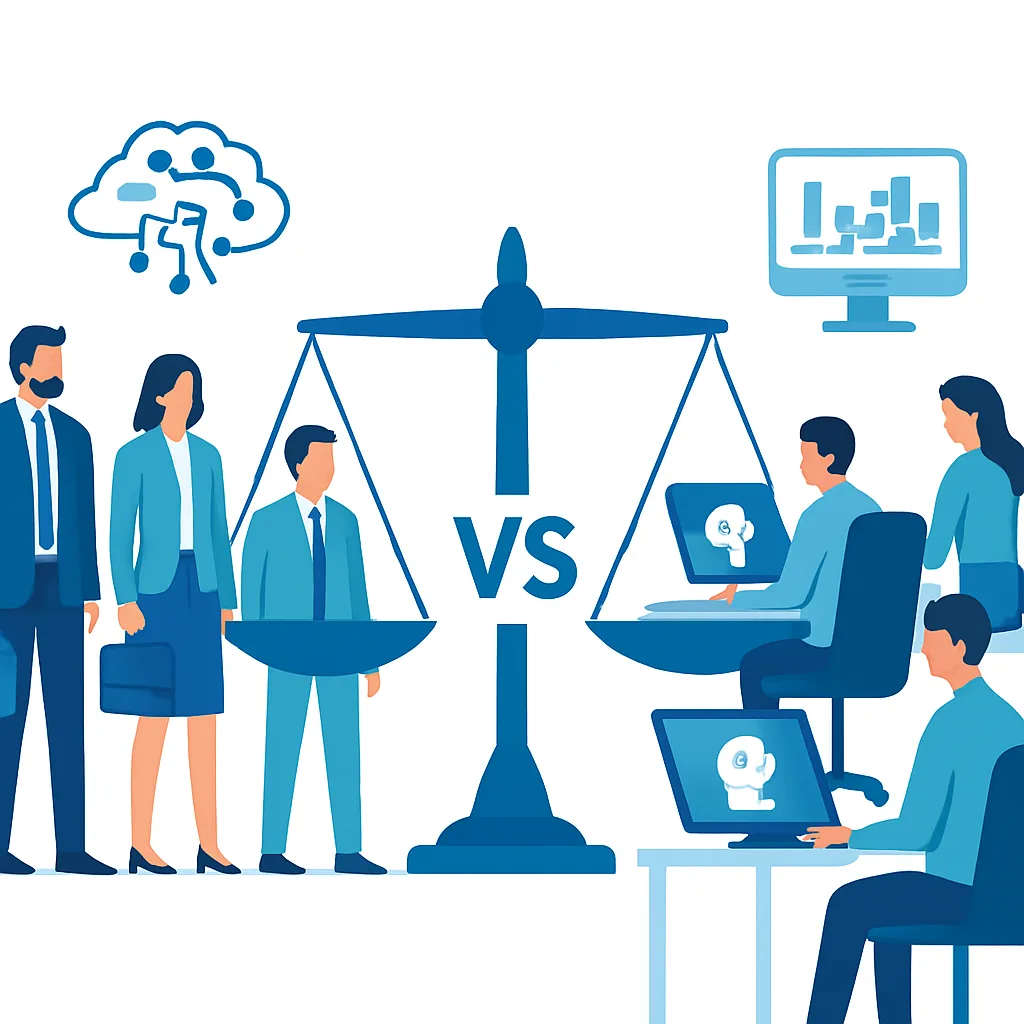
Quick Answer: AI consultants offer faster deployment, specialized expertise, and lower upfront costs, making them ideal for short-term or complex projects. In-house teams provide deeper business context, long-term cost efficiency, and full control — best for organizations with ongoing, evolving AI needs. The right choice depends on your budget, timeline, and strategic goals.
What Is an AI Implementation Consultant?
An AI implementation consultant is an external expert or agency hired to design, build, and deploy artificial intelligence solutions for a business. These professionals bring pre-built frameworks, cross-industry experience, and a dedicated team of data scientists, ML engineers, and AI strategists.
Consultants typically work on a project basis or retainer model. They enter, solve a defined problem, and exit — leaving behind a working system and (ideally) documentation. Companies like those behind WebPeak and ZoneTechify represent the growing ecosystem of tech-focused firms helping businesses navigate AI adoption efficiently.
For businesses exploring professional AI implementation support, ZoneTechify's AI services offer structured, scalable solutions tailored to real business problems.
What Is an In-House AI Team?
An in-house AI team consists of full-time employees — data scientists, ML engineers, AI product managers, and data engineers — hired directly by your organization. They work exclusively on your products, your data, and your long-term roadmap.
Building in-house means investing in recruitment, salaries, infrastructure, and ongoing training. However, it also means your team accumulates deep institutional knowledge and can iterate faster on internal systems over time.
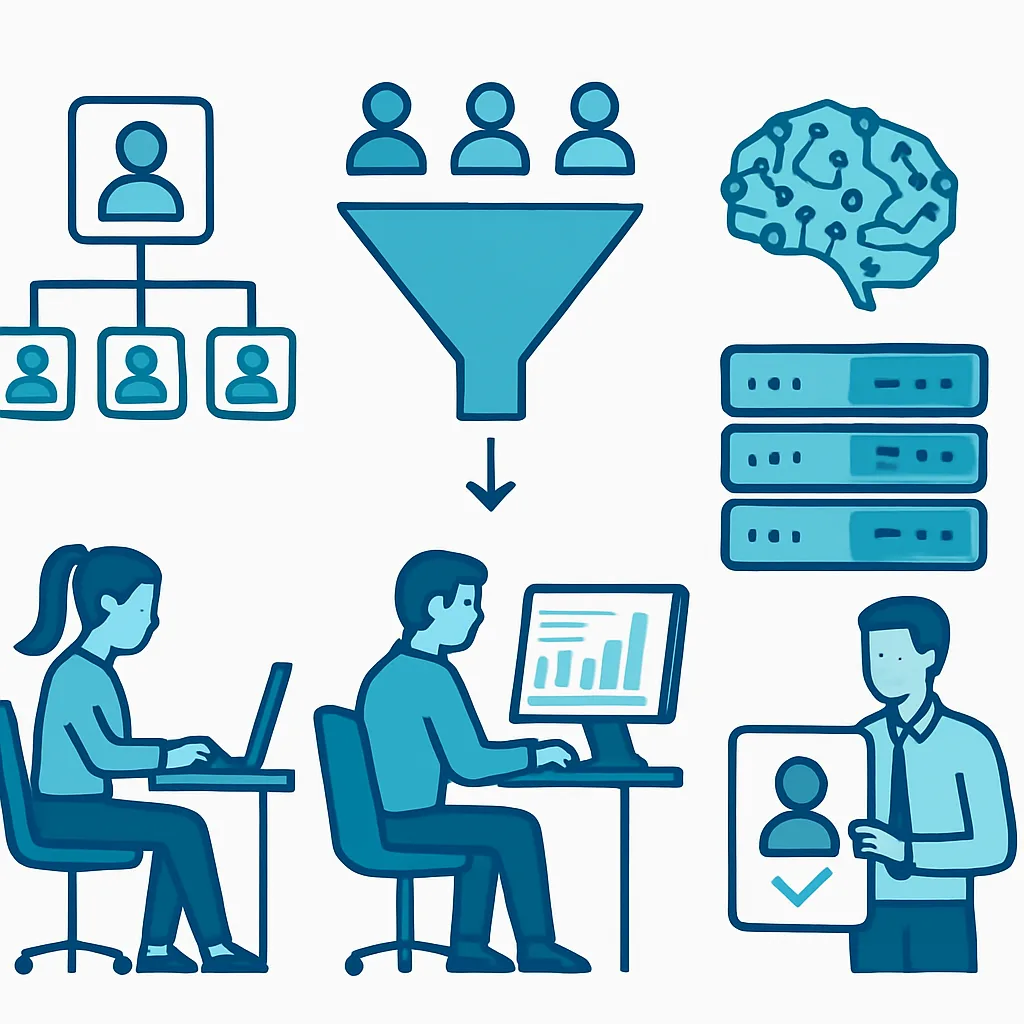
Key Differences: Consultants vs In-House Teams
Understanding the structural differences helps frame the decision clearly.
| Factor | AI Consultants | In-House Team |
|---|---|---|
| Speed to start | Fast (weeks) | Slow (months) |
| Upfront cost | Lower | Higher |
| Long-term cost | Higher (ongoing fees) | Lower (salaries only) |
| Domain expertise | Broad, cross-industry | Deep, company-specific |
| Knowledge retention | Risk of loss at contract end | Stays with company |
| Scalability | Flexible | Requires hiring |
| Control | Shared | Full |
| Data security | Moderate risk | Lower risk |
According to a 2024 McKinsey report, organizations that used external AI consultants for initial implementation were 2.3x more likely to reach production deployment within six months compared to those relying solely on internal resources. However, long-term ROI favored in-house teams for companies with sustained AI workloads.
When to Choose AI Consultants
AI consultants are the stronger choice in specific scenarios.
You Need Speed
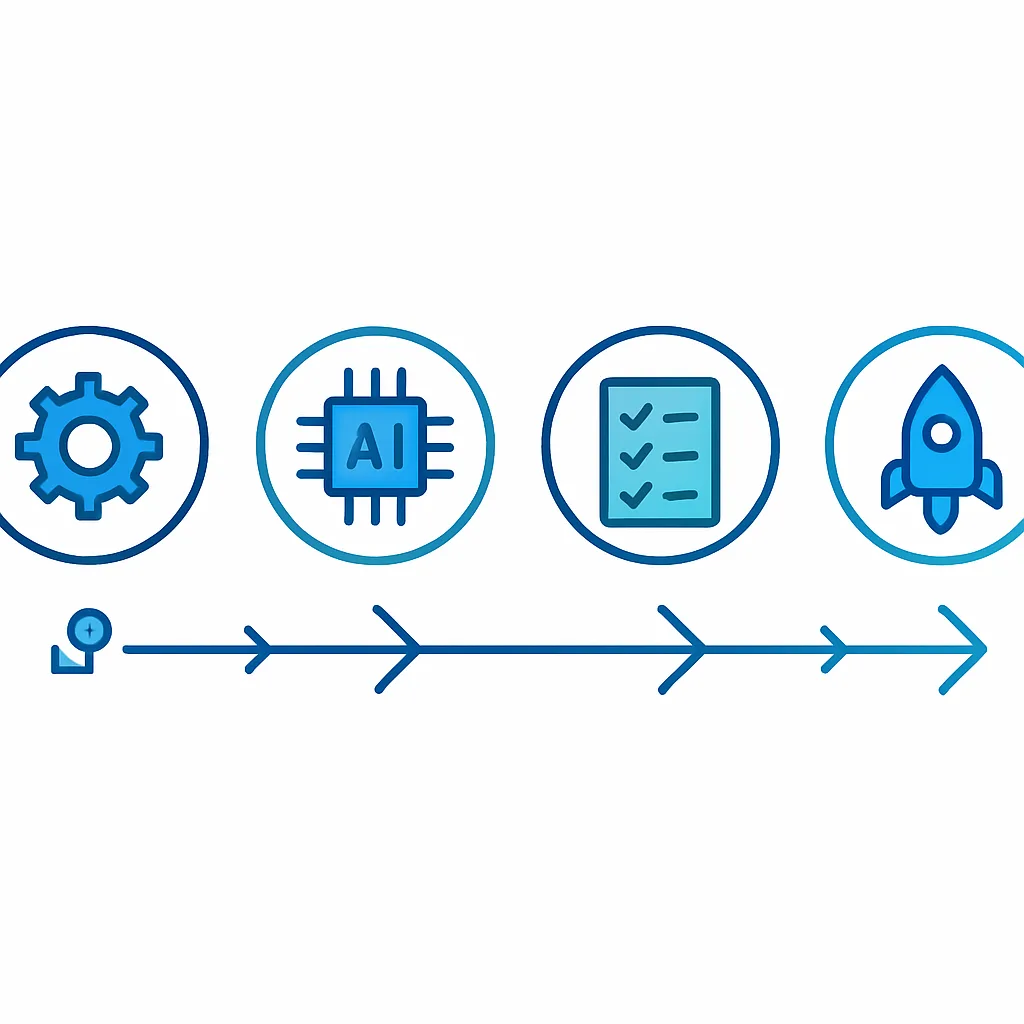
If your business has an immediate need — a product launch, a competitive threat, or a regulatory deadline — consultants can mobilize in weeks. They arrive with pre-built toolkits, established workflows, and experienced teams ready to execute.
You Lack Internal Expertise
Most small to mid-sized businesses do not have data scientists on staff. Hiring a senior ML engineer in 2025 costs between $150,000 and $220,000 annually in the US market. Consultants let you access that expertise without the hiring overhead.
The Project Is Defined and Finite
If you need a one-time solution — a churn prediction model, an NLP-based document classifier, or a computer vision quality control system — a consultant is cost-effective. You pay for the outcome, not the headcount.
You Want to Test AI Before Committing
Consultants allow organizations to pilot AI without a long-term commitment. If the pilot fails, you have not built a department around it. If it succeeds, you have proof of concept to justify building in-house capacity.
When to Choose an In-House AI Team
In-house teams win in different circumstances.
AI Is Core to Your Business Model
If artificial intelligence is not a feature but the product — think recommendation engines, fraud detection systems, or personalization at scale — you need people who live and breathe your data every day. External consultants cannot replicate that depth.
You Have Sensitive or Proprietary Data
Sharing customer data, financial records, or trade secrets with an external firm introduces compliance and security risks. In-house teams operate under your data governance policies without contractual grey zones.
Long-Term Cost Efficiency Matters
According to Gartner, companies that transition to in-house AI teams after an initial consultant-led implementation reduce their annual AI operational costs by an average of 34% over three years. Salaries are predictable; consultant retainers compound.
You Want Institutional Knowledge
Every model your team builds, every dataset they clean, and every failure they learn from becomes organizational capital. When a consultant leaves, they take context with them. When an employee grows, they reinvest that growth into your company.
The Hybrid Model: Best of Both Worlds
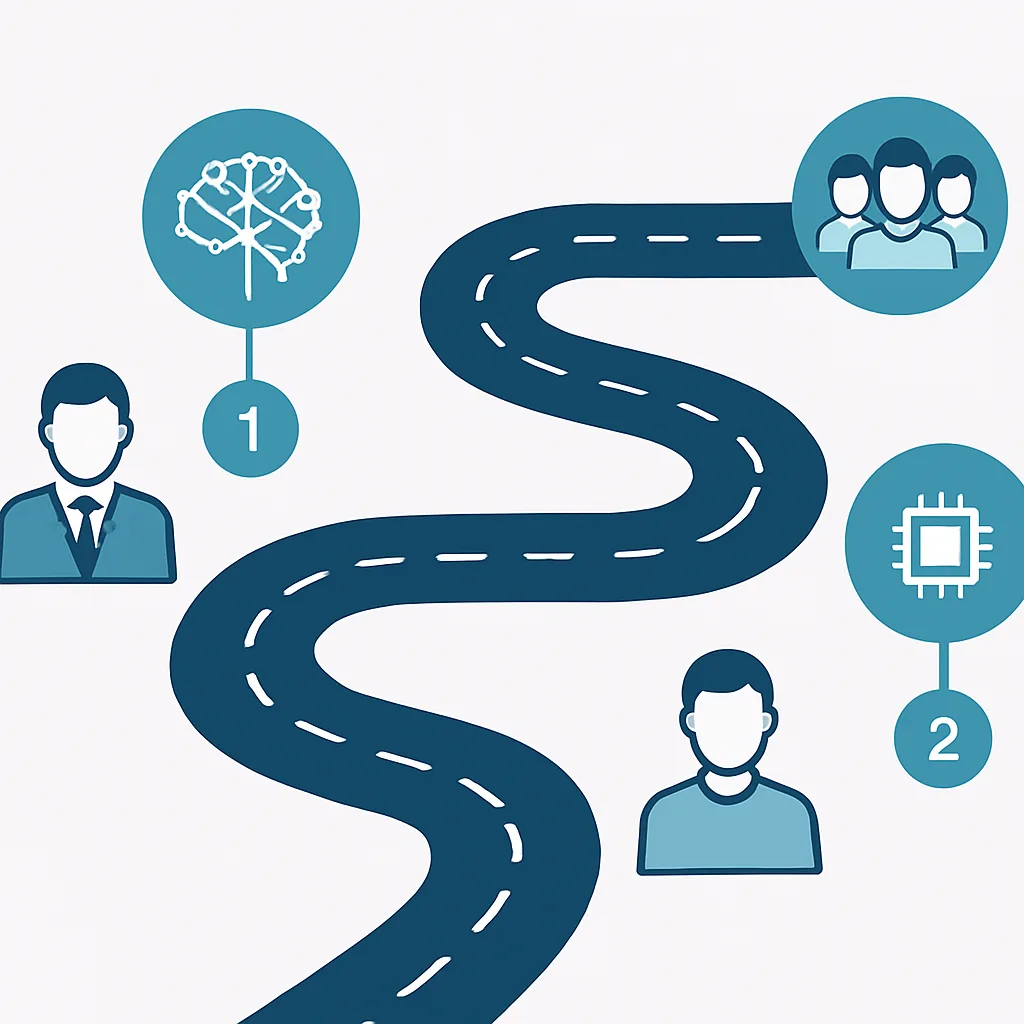
Many mature organizations adopt a hybrid approach — using consultants to bootstrap AI capabilities while simultaneously building internal talent.
The typical hybrid roadmap looks like this:
- Phase 1 (0–6 months): Engage consultants to assess AI readiness, identify use cases, and build the first production model.
- Phase 2 (6–12 months): Hire 1–2 internal AI leads who work alongside consultants, absorbing methodology and tooling.
- Phase 3 (12–24 months): Internal team takes ownership of existing systems; consultants shift to advisory roles.
- Phase 4 (24+ months): In-house team drives innovation; consultants brought in only for specialized spikes.
This approach reduces risk, accelerates time-to-value, and builds sustainable internal capability without betting everything on a single strategy.
Cost Breakdown: What to Actually Expect
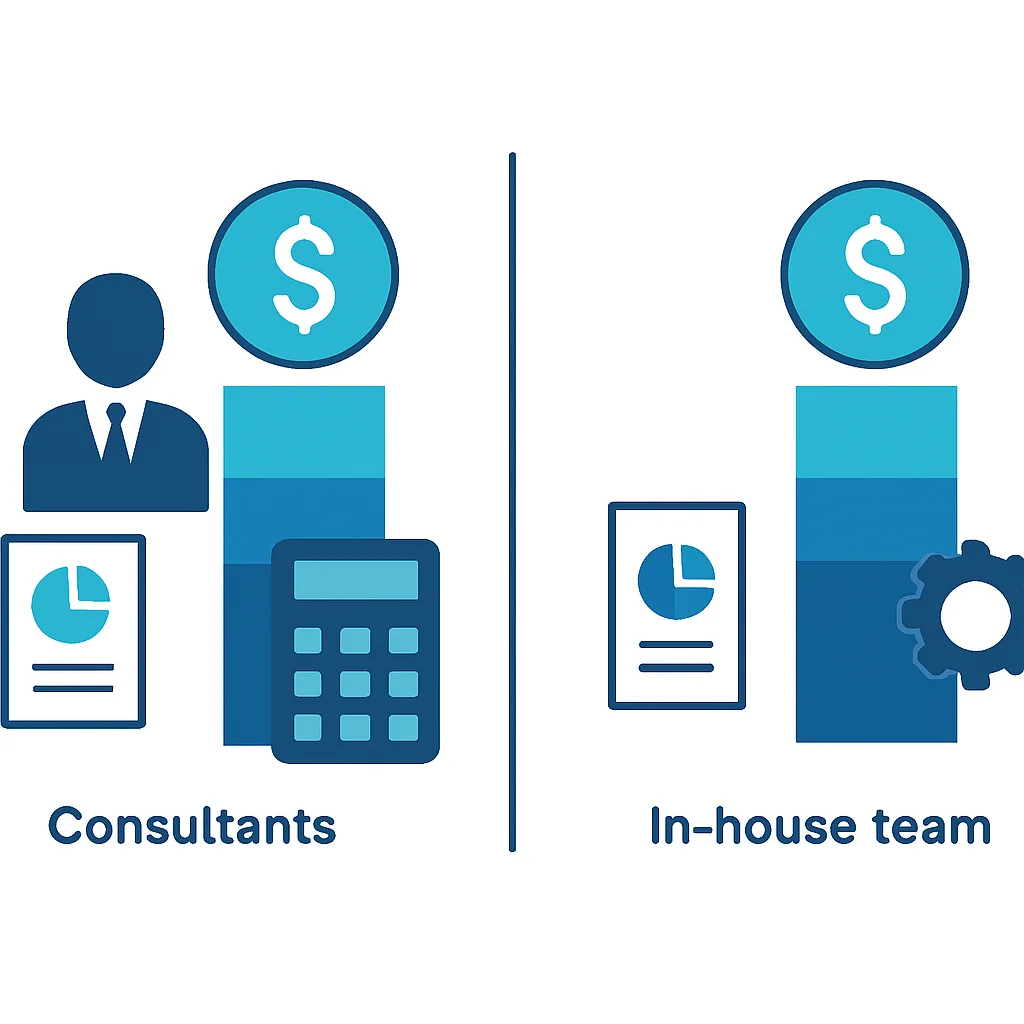
Budget is often the deciding factor. Here is a realistic cost comparison for a mid-sized company implementing a single AI use case.
AI Consultant Route:
- Initial project fee: $80,000 – $250,000
- Ongoing support retainer: $10,000 – $30,000/month
- Total Year 1 cost: $200,000 – $610,000
In-House Team Route:
- Senior ML Engineer salary: $160,000 – $220,000/year
- Data Scientist salary: $130,000 – $180,000/year
- Infrastructure and tooling: $20,000 – $60,000/year
- Total Year 1 cost: $310,000 – $460,000
The numbers converge in Year 1, but by Year 3, in-house teams typically cost 25–40% less annually — assuming you retain the talent.
Key Takeaways
- AI consultants are faster and lower risk for defined, short-term projects. They bring expertise without the overhead of full-time hiring.
- In-house teams deliver better ROI over 3+ years for companies where AI is a core function, not a one-off initiative.
- The hybrid model is increasingly the standard among enterprises successfully scaling AI — start with consultants, build in-house capacity in parallel.
- Data sensitivity and compliance requirements often make in-house the only viable option for regulated industries like healthcare and finance.
- Speed vs. control is the central trade-off. Consultants optimize for speed; in-house teams optimize for control and compounding knowledge.
- According to McKinsey, companies with mature in-house AI teams are 3x more likely to sustain AI performance improvements year over year compared to those relying on external vendors.
Frequently Asked Questions
Is it cheaper to hire AI consultants or build an in-house team?
In Year 1, costs are often similar. AI consultants typically charge $80,000–$250,000 per project, while building even a two-person in-house team costs $300,000+ including salaries and infrastructure. However, in-house teams become significantly cheaper by Year 3 if staff retention is strong.
How long does it take to build an in-house AI team?
Building a functional in-house AI team typically takes 6 to 18 months. This includes recruiting data scientists and ML engineers, setting up infrastructure, and onboarding team members to your specific data environment. Consultant-led projects can go live in 4 to 12 weeks.
Can a small business afford AI consultants?
Yes. Many AI consultancies offer tiered pricing, fixed-scope projects, or fractional AI advisory services starting at $5,000–$15,000 per month. For small businesses without the budget to hire full-time AI staff, consultants are often the only practical entry point into AI implementation.
What risks come with using AI consultants?
The primary risks include knowledge loss when the contract ends, data privacy concerns when sharing proprietary information with third parties, and dependency on external timelines. Mitigate these by requiring thorough documentation, clear data agreements, and a knowledge transfer plan as part of the contract.
When should a company switch from consultants to an in-house AI team?
Switch when AI becomes a recurring, core business function rather than a project. Signs include spending more than $30,000/month on consultant retainers, needing daily model updates, or having compliance requirements that restrict external data access. At that point, in-house investment delivers faster returns.
Do AI consultants work with small datasets?
Experienced AI consultants can work with limited data by applying transfer learning, synthetic data generation, or pre-trained models. However, results improve substantially with larger, cleaner datasets. A good consultant will assess your data maturity before proposing a solution rather than overpromising outcomes.
Making the Final Decision
The right choice between AI implementation consultants and in-house teams is not about which option is objectively better — it is about which one aligns with your current resources, timeline, and strategic horizon.
If you need AI working in production within six months and do not have a data science team, hire consultants. If AI is central to your three-year product roadmap and you can absorb 12 months of ramp-up, invest in building internal talent. If you are uncertain, start with a consultant-led pilot and use it as a foundation for hiring.
For expert guidance on AI strategy and implementation, explore what WebPeak offers in terms of AI-driven digital solutions, and visit ZoneTechify to see how structured technology partnerships accelerate real business outcomes.
Artificial intelligence rewards organizations that make deliberate, well-informed decisions. The team you choose to implement it is the first and most consequential one.