Learn how to open a graphic design business in 2026: choosing a niche, legal setup, pricing models, portfolio building, and landing your first paying clients.
How to Open a Graphic Design Business
Opening a graphic design business is one of the most accessible ways to turn creative skill into recurring income, but most new studios fail for business reasons, not creative ones. Weak pricing, no niche, and inconsistent client acquisition sink more design businesses than bad portfolios ever do. This guide walks you through the exact sequence we recommend at ZoneTechify after years of building brands and creative systems for startups and small businesses: pick a niche, plan lean, register properly, build a portfolio that sells, price with intent, win your first clients, and then systemize so you can scale.
Quick Answer: To open a graphic design business, choose a profitable niche, register a legal entity (an LLC is the most common choice in the US), build a 4–6 project portfolio targeted at that niche, set project-based pricing, and land your first three clients through referrals, local outreach, and one marketing channel you can sustain consistently.
What Does It Take to Open a Graphic Design Business?
A graphic design business is a legally registered company that sells visual communication services — branding, logos, packaging, marketing collateral, social media graphics, or digital product design — to paying clients. Unlike freelancing under your own name, a business has a registered entity, contracts, defined service packages, and repeatable systems for finding and serving clients.
The market supports this move. According to the U.S. Bureau of Labor Statistics, the median annual wage for graphic designers was $58,910 as of May 2023, while established studio owners routinely out-earn salaried designers because they capture the full project value instead of a wage. IBISWorld estimates the US graphic design industry generates over $14 billion in annual revenue, and demand keeps shifting toward specialists — brand identity, packaging, and digital-first design — rather than generalists.
Startup costs are low compared to almost any other business. A realistic minimum budget is $2,000–$5,000, covering software subscriptions, a capable computer you likely already own, entity registration, a portfolio website, and a small marketing buffer. That low barrier is exactly why differentiation matters so much: you will not win on price alone.
Step 1: Choose a Profitable Design Niche
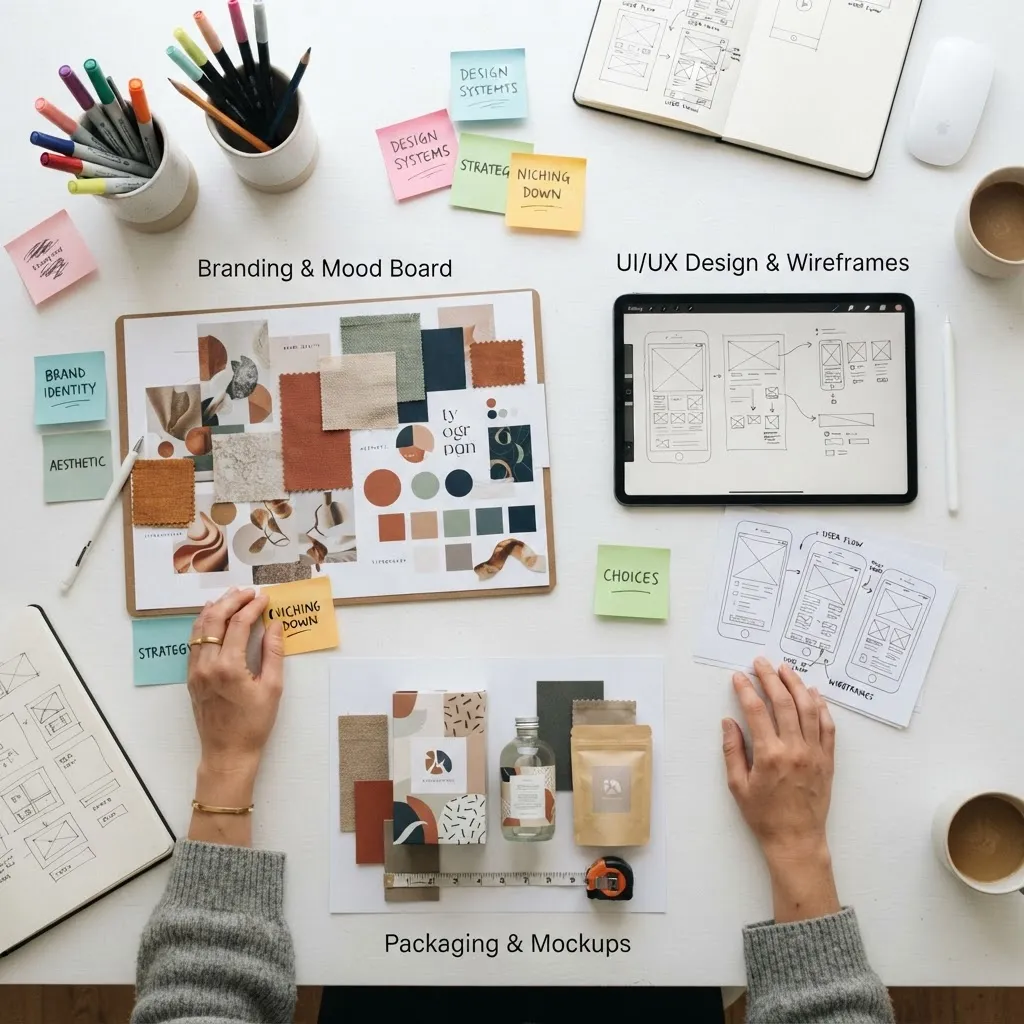
The single highest-leverage decision you will make is who you serve and what you make for them. A niche is a combination of a service specialty and a client industry — for example, brand identity for boutique fitness studios, or packaging design for DTC food brands. Specialists command 20–50% higher rates than generalists in our experience, because clients pay a premium for someone who already understands their market.
Use these three filters to pick your niche:
- Demand: Are businesses in this space actively hiring designers? Check job boards, Upwork postings, and agency case studies for proof of spend.
- Access: Can you reach these clients through communities, referrals, or outreach you can realistically sustain?
- Enjoyment: Will you still want this work in year three? Burnout is a real business risk for solo founders.
You do not need to niche forever. Start focused, dominate a small pond, and expand once referrals compound. Trying to serve everyone on day one is the fastest way to blend into the thousands of generalist designers competing on price.
Step 2: Write a Lean Business Plan

You do not need a 40-page document. You need a one-page plan that answers five questions with real numbers:
- Who do I serve? Your niche from Step 1, written as one sentence.
- What do I sell? Two or three productized packages, not an open-ended menu of everything.
- What must I earn? Your monthly personal minimum plus business costs, divided into a revenue target.
- How many projects is that? If you need $6,000 per month and your core package is $2,000, you need three projects monthly.
- Where will clients come from? Name one primary channel and one backup — not five channels you will abandon.
The math step is where most new owners get honest with themselves. If your target income requires ten $600 logo projects every month, your pricing is broken before you start. Fix the model on paper, where mistakes are free.
Step 3: Handle the Legal and Financial Setup

Register Your Entity
In the US, most solo design businesses choose between a sole proprietorship and an LLC. A sole proprietorship costs nothing to form but offers zero liability protection. An LLC typically costs $50–$500 depending on your state and separates your personal assets from business liabilities — worth it once you sign real contracts. Register your business name, get an EIN from the IRS (free, takes minutes online), and check whether your city requires a local business license.
Protect Yourself With Contracts
Every project needs a signed agreement covering scope, number of revisions, payment schedule, kill fees, and — critically — when intellectual property transfers to the client. The industry standard is that IP transfers only upon final payment. Add professional liability insurance (often $200–$500 per year for a solo designer) once you work with larger clients who require it.
Separate Your Finances
Open a dedicated business bank account on day one, and use accounting software from your first invoice. Set aside 25–30% of every payment for taxes if you are in the US, because quarterly estimated taxes catch nearly every new business owner off guard in year one.
Step 4: Build a Portfolio That Sells
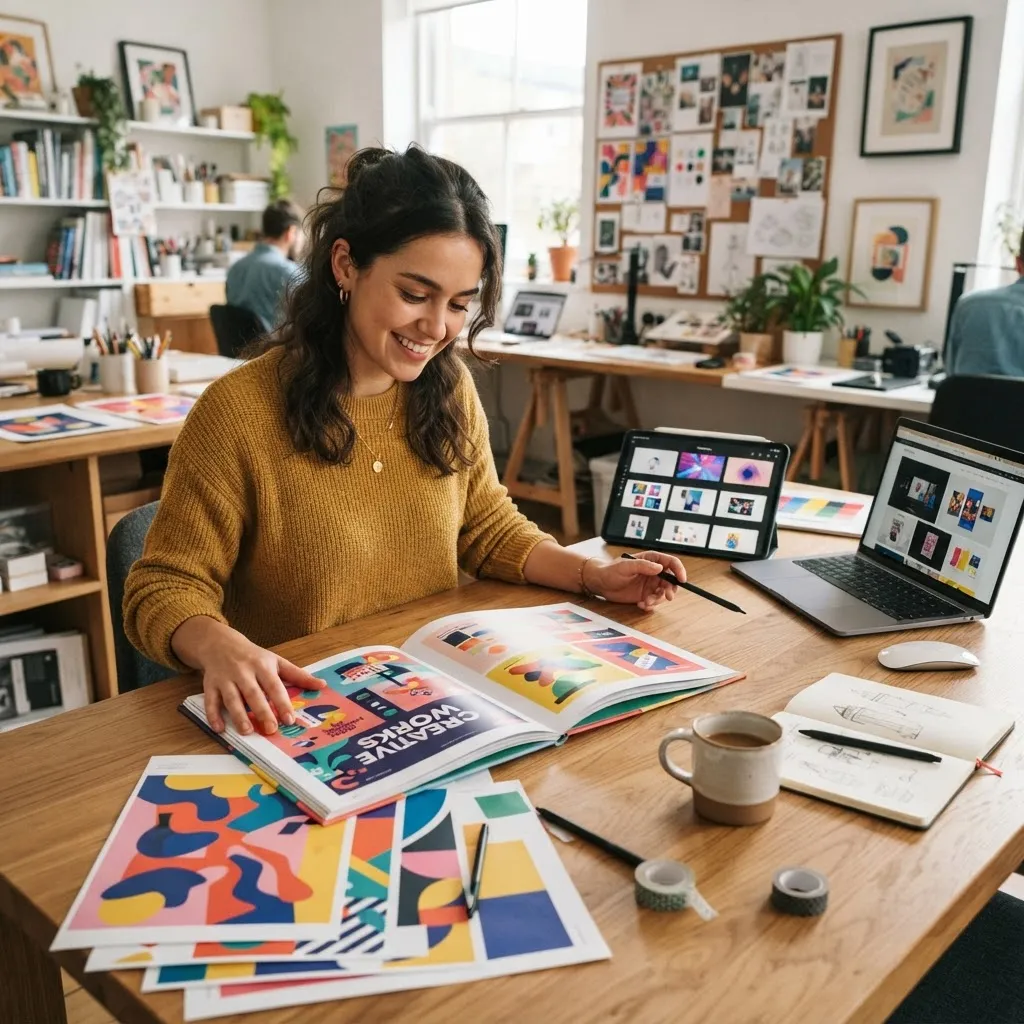
Clients do not buy pretty images; they buy outcomes. A portfolio that sells contains 4–6 deep case studies in your niche, each structured as problem, process, solution, and result. One documented case study with context outperforms twenty context-free logo thumbnails.
If you lack client work in your chosen niche, create it. Redesign the brand of a real (unaffiliated) business in your target industry and label it clearly as a concept project, or take one or two steeply discounted projects in exchange for a testimonial and full case-study rights. Spec work done strategically is an investment; spec work done randomly is procrastination.
Host the portfolio on your own domain rather than relying solely on Behance or Dribbble — you need a site you control, with your packages, process, and a clear contact path. If building a fast, professional site is outside your comfort zone, a partner like WebPeak specializes in exactly that kind of conversion-focused web presence.
Step 5: Set Your Pricing Structure

Pricing is a positioning decision, not just a math problem. New design business owners typically choose between three models:
| Pricing Model | How It Works | Best For | Main Risk |
|---|---|---|---|
| Hourly | Bill for time worked, e.g. $50–$150/hr | Undefined or exploratory scopes | Punishes you for getting faster |
| Project-Based | Fixed fee per defined deliverable | Branding, logos, packaging | Scope creep without a tight contract |
| Retainer | Monthly fee for ongoing capacity | Social graphics, marketing collateral | Underpricing unlimited-feeling demand |
Our recommendation: lead with project-based pricing for core work and layer retainers on top once clients trust you. Project pricing rewards efficiency and lets you anchor on value rather than hours. A workable starting benchmark for a new studio is $1,500–$4,000 for a small-business brand identity package, adjusted for your market and niche. Whatever you charge, collect a 50% deposit before work begins — it filters out non-serious clients and protects your cash flow.
Raise prices every three to five projects until you lose roughly one in four proposals on price. If you never lose on price, you are underpriced.
Step 6: Find Your First Clients

Your first three clients will almost certainly come from people who already know you. Work the sequence in this order:
- Announce your business to your entire network — former colleagues, classmates, family, and social contacts — with a clear one-line description of who you help.
- Do targeted local outreach: identify 20 businesses in your niche with visibly weak branding and send short, specific, personalized messages pointing to one concrete improvement.
- Join the rooms your clients are in: industry Facebook groups, local chambers of commerce, niche Slack communities, and trade events.
- Pick one content channel — LinkedIn, Instagram, or a blog — and publish consistently about your niche's design problems, not about design in general.
Consistency beats cleverness here. Ten personalized outreach messages a week for three months will outperform any single viral post. And treat every delivered project as a referral engine: ask directly, at the moment of delivery, whether they know one other business owner who needs design help. Structured referral asks convert far better than hoping clients mention you organically. This client-acquisition system is the same discipline we apply in our own graphic design services work — process wins over talent alone.
Step 7: Systemize and Scale

Once you are consistently booked, growth comes from systems, not more hustle. Document your onboarding, feedback, and delivery process so every client gets the same experience. Templatize proposals, contracts, and project kickoffs. Then scale along one of three paths:
- Raise prices and go premium: fewer clients, deeper engagements, higher margins.
- Productize: fixed-scope, fixed-price packages that are easy to sell and delegate.
- Build a team: subcontract overflow to trusted freelancers before hiring employees, keeping your risk low while you test demand.
Track three numbers monthly: revenue, effective hourly rate per project, and lead sources. What gets measured gets improved, and these three metrics tell you whether to fix pricing, efficiency, or marketing next.
Common Mistakes That Kill New Design Businesses
- Competing on price: cheap clients are the most demanding and least loyal segment.
- Skipping contracts: one scope-creep disaster costs more than a year of contract diligence.
- No niche: generalists get compared on price; specialists get hired on expertise.
- Ignoring taxes: set aside 25–30% of income from invoice one.
- Waiting for perfect: launch with 4 strong case studies, not 12 imaginary ones.
Key Takeaways
- The median US graphic designer wage was $58,910 (BLS, May 2023); studio owners can exceed this by capturing full project value.
- The US graphic design industry generates over $14 billion annually (IBISWorld), with demand favoring specialists.
- Realistic startup costs run $2,000–$5,000, making design one of the lowest-barrier professional businesses.
- An LLC ($50–$500 in most states) plus signed contracts and a separate bank account form the minimum legal foundation.
- Project-based pricing with a 50% deposit is the strongest starting model for new studios.
- A 4–6 case-study portfolio focused on one niche outperforms a large generalist gallery.
Frequently Asked Questions
How much does it cost to start a graphic design business?
Most designers can launch for $2,000–$5,000. That covers software subscriptions like Adobe Creative Cloud, LLC registration fees of $50–$500 depending on your state, a portfolio website, basic contracts, and a small marketing budget. If you already own a capable computer, your largest ongoing cost is simply software and your time.
Do I need a degree to open a graphic design business?
No. Clients hire based on your portfolio, case studies, and communication — not credentials. A degree can help with fundamentals, but self-taught designers with strong niche portfolios win contracts every day. What you do need is demonstrable skill, a professional process, and proof that your work solves real business problems.
How do graphic designers get their first clients?
First clients almost always come from your existing network, so announce your launch clearly and widely. Follow that with personalized outreach to local businesses with weak branding, participation in niche communities, and consistent posting on one platform. Ten targeted messages weekly typically produces conversations within the first month of consistent effort.
Should I register an LLC for my design business?
An LLC is worth it once you sign real client contracts, because it separates personal assets from business liability. It costs $50–$500 in most US states and takes under an hour to file online. Sole proprietorships are free but leave your personal finances exposed if a project dispute escalates legally.
How much should a new graphic designer charge?
Start with project-based pricing rather than hourly rates. A reasonable benchmark for a new studio is $1,500–$4,000 for a small-business brand identity package, with a 50% deposit collected upfront. Raise prices every three to five projects until roughly one in four prospects declines on price — that is healthy positioning.
Final Thoughts
Opening a graphic design business is not a talent contest — it is a systems game. Choose a niche, plan with real numbers, register properly, build a portfolio of outcomes, price for value, and show up consistently in front of the right clients. Do those seven steps in order and you will be ahead of the majority of designers who launch on enthusiasm alone. Start this week with Step 1: write down the one type of client you most want to serve, and build everything else around them.