A clear, expert guide to the iShares Artificial Intelligence ETF UCITS: how it works, its holdings, costs, risks, and how to invest in AI growth wisely.
iShares Artificial Intelligence ETF UCITS
Artificial intelligence has moved from science fiction to the single most influential force reshaping global business, and investors want a slice of that growth. The iShares Artificial Intelligence ETF UCITS is one of the vehicles European and international investors use to gain diversified exposure to companies building, powering, and profiting from the AI revolution. Instead of betting everything on one stock, you buy a professionally managed basket structured under strict European regulation.
This guide explains exactly what this type of fund is, how it works, what it holds, what it costs, and the risks you should weigh before investing. Whether you are a first-time investor or refining a tech-heavy portfolio, you will leave with a clear, practical understanding grounded in how these funds actually behave in the real market.

Quick Answer: The iShares Artificial Intelligence ETF UCITS is a European-regulated exchange-traded fund that gives investors diversified exposure to companies driving artificial intelligence, from chipmakers to software firms. It trades like a stock, spreads risk across many holdings, and follows strict UCITS investor-protection rules.
What Is the iShares Artificial Intelligence ETF UCITS?
An ETF (exchange-traded fund) is a pooled investment that holds many assets and trades on a stock exchange like a single share. The iShares brand is BlackRock's ETF family, the largest ETF provider in the world. When a fund carries the UCITS label, it complies with the European Union framework for Undertakings for Collective Investment in Transferable Securities, a set of rules designed to protect retail investors through diversification limits, transparency, and liquidity requirements.
Put simply, an iShares AI ETF under UCITS rules bundles dozens of AI-related companies into one tradable product that investors can buy through a normal brokerage account. You gain thematic exposure to artificial intelligence without needing to research and purchase each company individually.
Why Investors Are Drawn to AI ETFs
The appeal is rooted in scale. According to PwC, artificial intelligence could add up to $15.7 trillion to the global economy by 2030, more than the current combined output of China and India. Grand View Research valued the global AI market at roughly $196 billion in 2023 and forecasts a compound annual growth rate above 35% through the end of the decade.
Those numbers explain the investor rush, but a single-stock bet on that theme is risky. A thematic ETF spreads capital across the ecosystem, including semiconductor designers, cloud providers, data-infrastructure firms, and software developers, so no single failure sinks your position. For readers who follow emerging tech trends, resources like ZoneTechify and WebPeak regularly break down how AI adoption is shifting entire industries, which helps put fund holdings into real-world context.

How the Fund Works
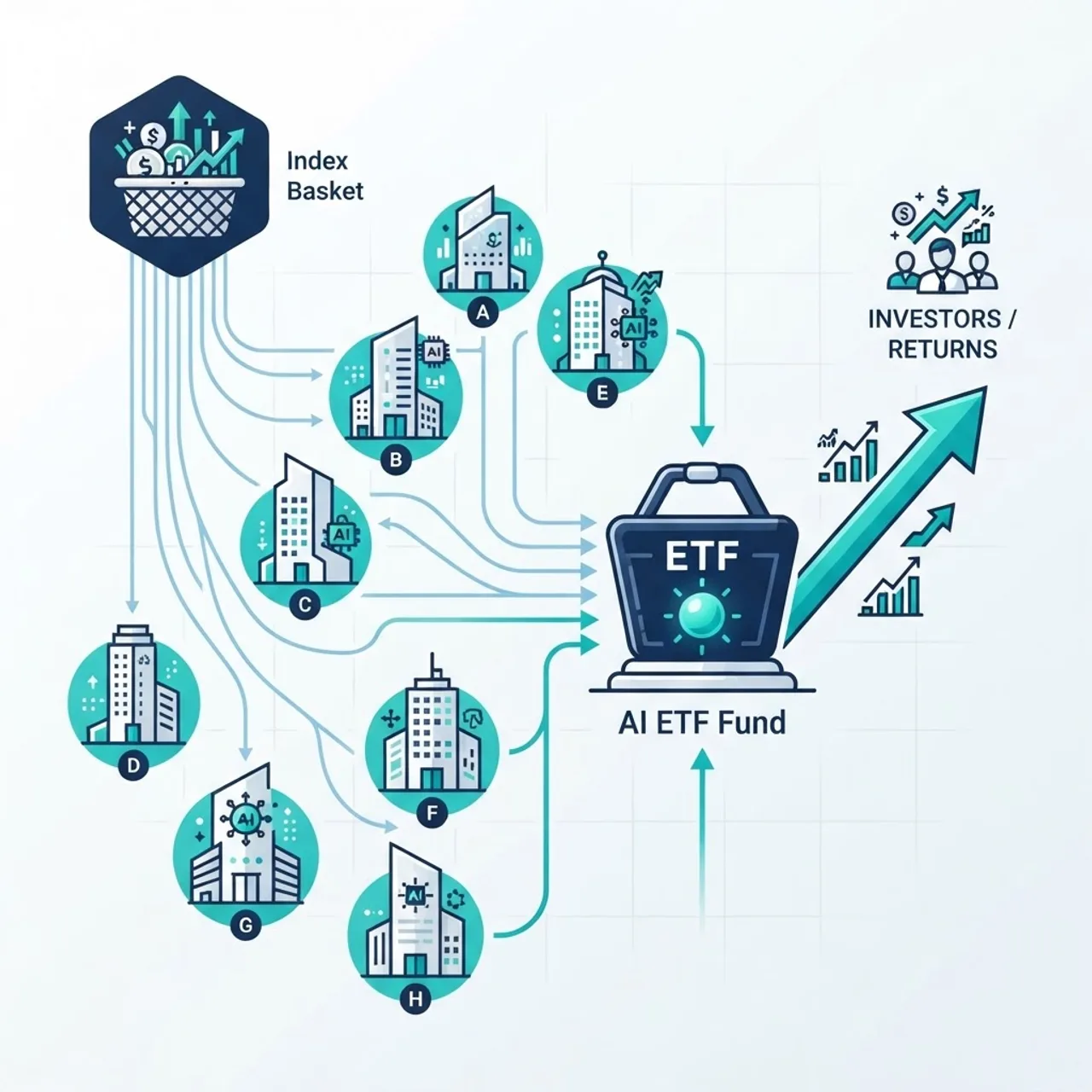
An iShares AI ETF typically tracks an index built around a defined artificial intelligence theme. The process follows a clear, repeatable structure:
- Index selection - An index provider defines the rules for which companies qualify as AI-related, often based on revenue exposure, patents, or business classification.
- Fund replication - BlackRock buys the underlying shares (physical replication) so the ETF mirrors the index composition as closely as possible.
- Rebalancing - The index is reviewed on a set schedule, often quarterly or semi-annually, to add rising players and drop those that no longer fit.
- Trading - Investors buy and sell ETF shares on an exchange throughout the day at live market prices.
This rules-based approach removes emotion and guesswork. You are not trying to time which AI startup wins; you own the qualifying leaders and let the index methodology handle changes automatically.
Key Holdings and Sector Exposure
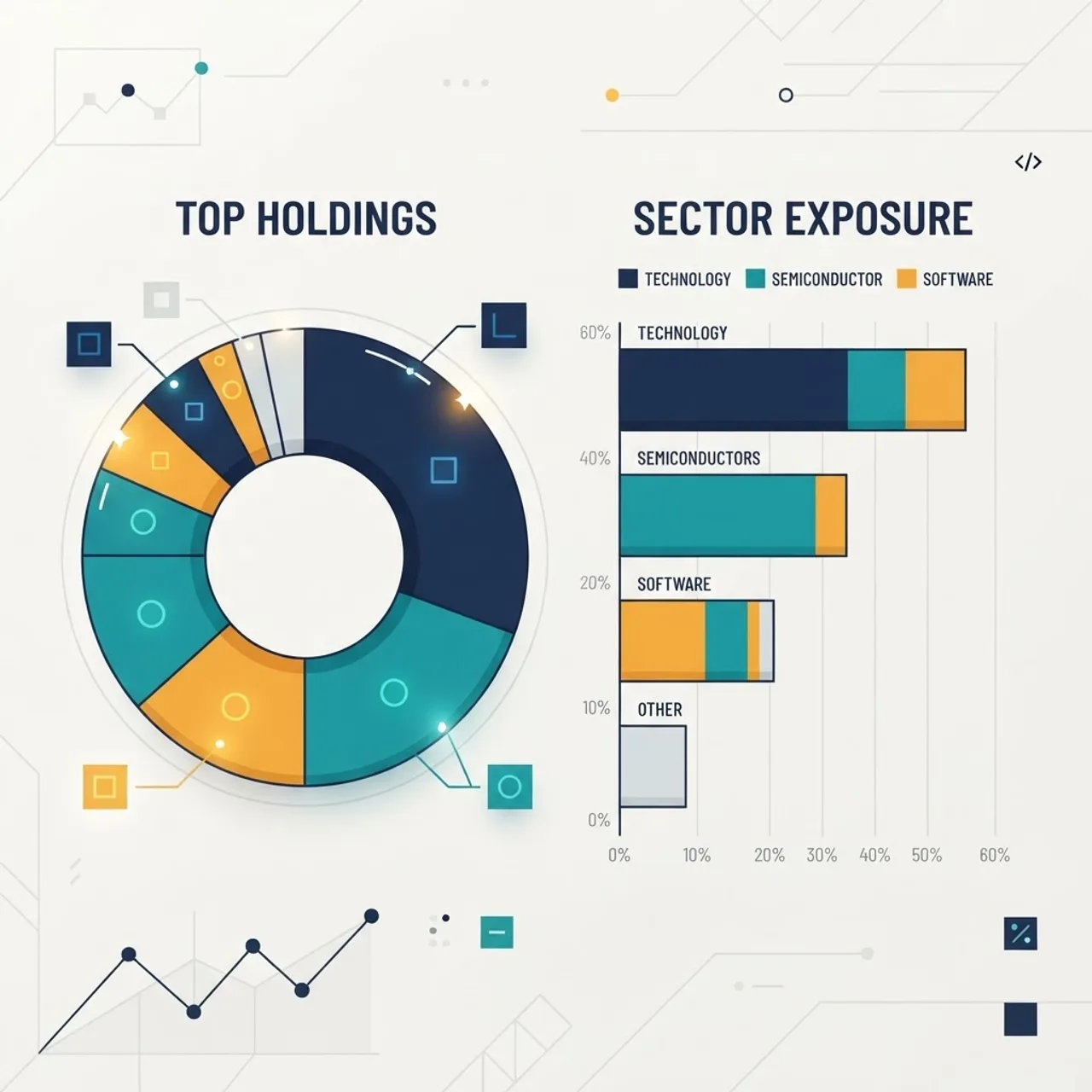
Most AI-focused ETFs concentrate heavily in the technology and communication-services sectors. Typical holdings include:
- Semiconductor firms that design the chips powering AI training and inference.
- Cloud and platform companies that host large-scale AI workloads.
- Software and data firms building AI models, analytics, and enterprise tools.
- Hardware and networking companies supplying the physical backbone.
Because AI infrastructure is dominated by a handful of giants, these funds can be top-heavy, meaning a small group of mega-cap stocks may make up a large share of assets. Always read the official factsheet and Key Information Document (KID) for the exact current holdings and weightings, since composition shifts at each rebalance.
Understanding the UCITS Structure
The UCITS wrapper is a major reason international investors favor these funds. UCITS (Undertakings for Collective Investment in Transferable Securities) is an EU regulatory standard that enforces investor protections most retail buyers never see but always benefit from:
- Diversification limits prevent excessive concentration in any single issuer.
- Liquidity rules require the fund to be redeemable regularly.
- Transparency requirements mandate clear cost and risk disclosure through the KID.
- Asset segregation keeps fund holdings separate from the provider's balance sheet.
For investors outside the United States, particularly in Europe, Asia, and the Middle East, UCITS ETFs are often more tax-efficient and accessible than US-domiciled funds. That is why iShares lists so many UCITS versions of its popular strategies.

Performance, Costs, and How It Compares
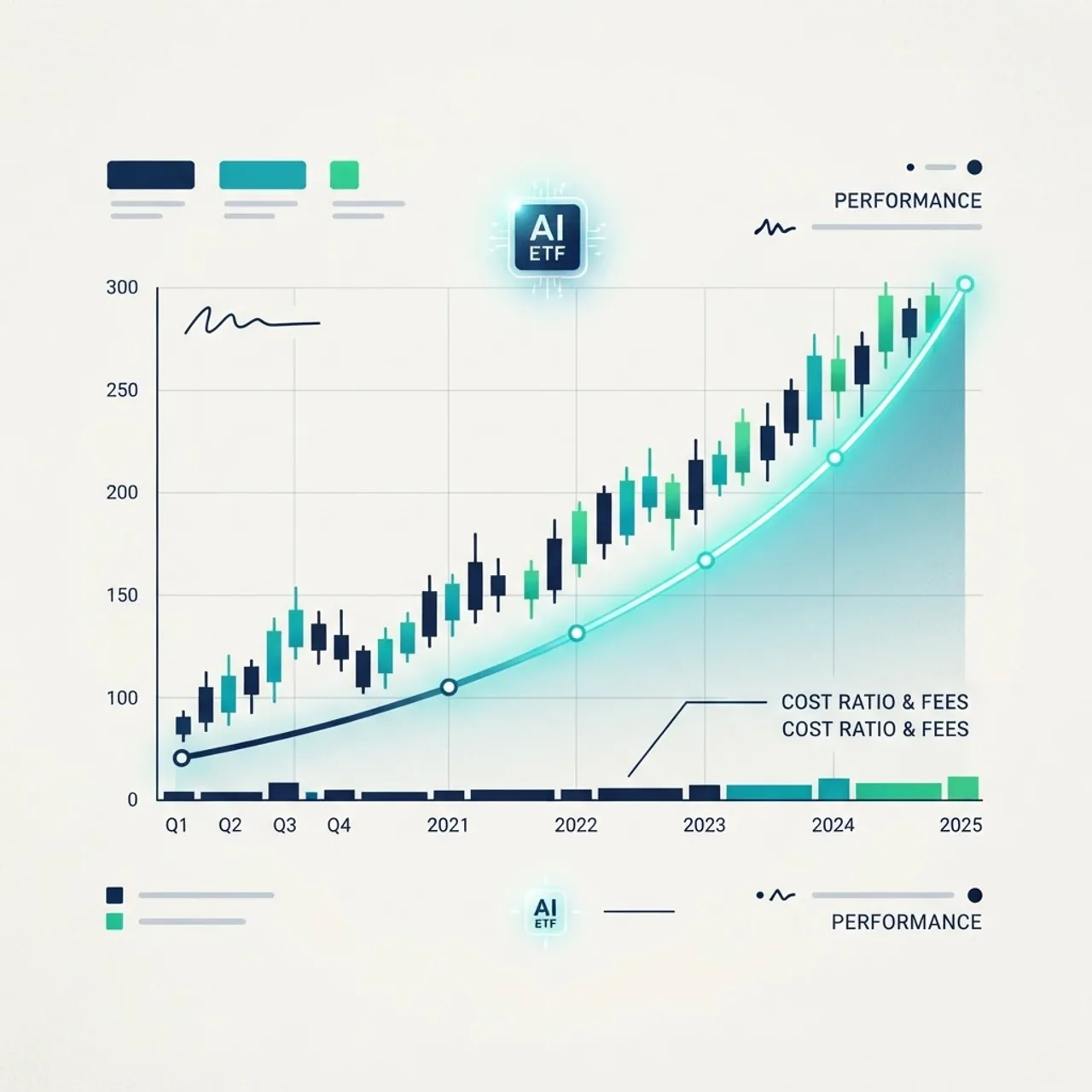
Thematic AI ETFs can deliver strong returns during technology rallies but also swing harder during downturns. Their total expense ratio (TER), the annual fee, is usually higher than broad-market ETFs because thematic strategies require specialized indexing. Over the long run, fees compound, so a difference of even 0.30% annually meaningfully affects your final returns.
Here is how an AI thematic UCITS ETF generally compares with a broad global equity ETF:
| Feature | AI Thematic UCITS ETF | Broad Global Equity ETF |
|---|---|---|
| Focus | Artificial intelligence companies | Entire global market |
| Diversification | Concentrated in tech | Broad across all sectors |
| Expected volatility | Higher | Lower |
| Typical cost (TER) | Higher | Lower |
| Growth potential | High, theme-driven | Steady, market-driven |
| Best suited for | Growth-seeking investors | Core long-term holdings |
A common expert approach is to treat an AI ETF as a satellite holding, a smaller, growth-focused slice around a diversified core, rather than the foundation of an entire portfolio.
Risks You Should Weigh
No thematic fund is a guaranteed win. The key risks include:
- Concentration risk - Heavy exposure to a few mega-cap tech names amplifies volatility.
- Valuation risk - AI enthusiasm can inflate stock prices beyond company fundamentals.
- Sector risk - A technology-sector downturn hits the whole fund at once.
- Currency risk - Holdings priced in other currencies affect your net returns.
- Theme risk - If AI adoption slows or regulation tightens, growth expectations may reset.
The disciplined response is diversification and a long time horizon. AI is a multi-decade trend, but its stock-market journey will be bumpy. Never invest money you may need in the short term.

How to Invest in an iShares AI ETF UCITS
Getting started is straightforward:
- Open a brokerage account that offers UCITS ETFs in your region.
- Find the fund using its name or ticker on your platform.
- Check the KID and factsheet for cost, holdings, and share class.
- Decide your allocation - most advisers suggest keeping a single thematic fund to a modest share of your portfolio.
- Buy shares and consider a regular investment plan to average out price swings over time.
Always confirm the exact fund details on BlackRock's official iShares page before buying, since several AI-related UCITS products exist with different strategies and fee levels.
Accumulating vs Distributing: Which Share Class?
Many iShares UCITS ETFs come in two versions. An accumulating share class automatically reinvests dividends back into the fund, helping your investment compound without extra effort, which is ideal for long-term growth investors. A distributing share class pays dividends to you as cash, suiting investors who want regular income. Your choice can affect taxation in some countries, so check your local rules. For an AI ETF, where most companies reinvest profits into research rather than paying large dividends, the difference is often modest, but accumulating classes remain popular for hands-off, long-horizon investors.

Key Takeaways
- The iShares Artificial Intelligence ETF UCITS offers diversified, regulated exposure to the AI economy through a single tradable fund.
- UCITS is an EU framework enforcing diversification, transparency, and investor protection.
- PwC estimates AI could add $15.7 trillion to the global economy by 2030, fueling strong investor demand.
- These funds are often concentrated in mega-cap tech, carrying higher volatility and fees than broad-market ETFs.
- Treat an AI ETF as a growth-focused satellite holding, not your entire portfolio.
Frequently Asked Questions (FAQ)
What is the iShares Artificial Intelligence ETF UCITS?
It is a European-regulated exchange-traded fund from BlackRock's iShares brand that gives investors diversified exposure to companies involved in artificial intelligence. It trades like a stock, follows strict UCITS investor-protection rules, and bundles many AI-related firms into one convenient, transparent, and accessible investment product.
Is an AI ETF a good investment for beginners?
It can be, if used carefully. An AI ETF spreads risk across many companies, which is safer than picking single stocks. However, it is concentrated in technology and can be volatile, so beginners should keep it as a small part of a diversified, long-term portfolio.
What does UCITS mean in an ETF name?
UCITS stands for Undertakings for Collective Investment in Transferable Securities. It is an EU regulatory framework that enforces diversification limits, liquidity, and transparency. UCITS funds are widely trusted by international investors and are often more accessible and tax-efficient than US-domiciled ETFs outside America.
How much does it cost to invest in an AI ETF?
Costs come mainly from the total expense ratio (TER), an annual fee usually higher than broad-market ETFs because thematic strategies cost more to run. You may also pay brokerage commissions. Always check the fund's Key Information Document for the exact current fee before investing.
What are the main risks of AI ETFs?
The biggest risks are concentration in a few large tech companies, stretched valuations, sector-wide downturns, and currency exposure. AI is a long-term trend, but its share prices can swing sharply. Investing gradually and holding for the long term helps you manage this volatility more comfortably.
Can I lose money in an iShares AI ETF UCITS?
Yes. Like all equity investments, the value can fall as well as rise, and you may get back less than you invested. AI ETFs can be especially volatile due to tech concentration. Only invest money you can leave untouched for several years to ride out market cycles.