
A complete expert guide to the journal of artificial intelligence, machine learning, and data science, covering scope, peer review, metrics, and how to publish.
Journal of Artificial Intelligence Machine Learning and Data Science
A journal of artificial intelligence, machine learning, and data science is where the most important ideas in modern computing are stress-tested, validated, and shared with the world. If you are a researcher, graduate student, or industry practitioner trying to understand how these publications work, which topics they prioritize, and how to get your own work accepted, this guide gives you a clear, experience-based roadmap. Having tracked and contributed to technical publishing workflows for years, our team at ZoneTechify has seen how a well-chosen journal can accelerate a career, while a poor fit can bury excellent research. Below, we break down exactly how these journals operate and how you can navigate them with confidence.
Quick Answer: A journal of artificial intelligence, machine learning, and data science is a peer-reviewed publication that validates and shares original research across AI theory, ML models, and data-driven methods. It uses expert review to confirm accuracy, then publishes findings so the global research community can build on them.

What Is a Journal of Artificial Intelligence, Machine Learning, and Data Science?
A journal in this field is a curated, peer-reviewed venue that publishes original studies, reviews, and technical reports across three tightly connected disciplines. Artificial intelligence is the broad science of building systems that perform tasks requiring human-like reasoning. Machine learning is the subset of AI where algorithms improve automatically from data. Data science is the discipline of extracting insight from raw data using statistics, engineering, and domain knowledge.
The purpose of such a journal is simple but demanding: to confirm that a claimed result is genuinely new, methodologically sound, and reproducible before it becomes part of the permanent scientific record. Unlike a blog post or preprint, a journal article carries the weight of independent expert scrutiny, which is why hiring committees, grant boards, and engineering teams treat it as a credible signal of quality.
Why These Three Fields Belong in One Journal
These disciplines are published together because they feed one another in a continuous loop. Data science supplies the clean, structured datasets that machine learning models need. Machine learning delivers the predictive engines that power modern AI systems. Artificial intelligence, in turn, sets the ambitious goals that push data pipelines and algorithms to improve.
Separating them would fragment the conversation. A breakthrough in data preprocessing, for example, can directly change how a deep learning model performs, so reviewers benefit from evaluating the full chain in one place. This integrated view is also why interdisciplinary journals often attract higher readership and stronger citation counts than narrow, single-topic outlets.
How the Peer Review Process Works
Peer review is the backbone of every credible journal, and understanding it removes much of the anxiety around submission. Most reputable AI and ML journals follow a structured pipeline that protects quality and fairness.
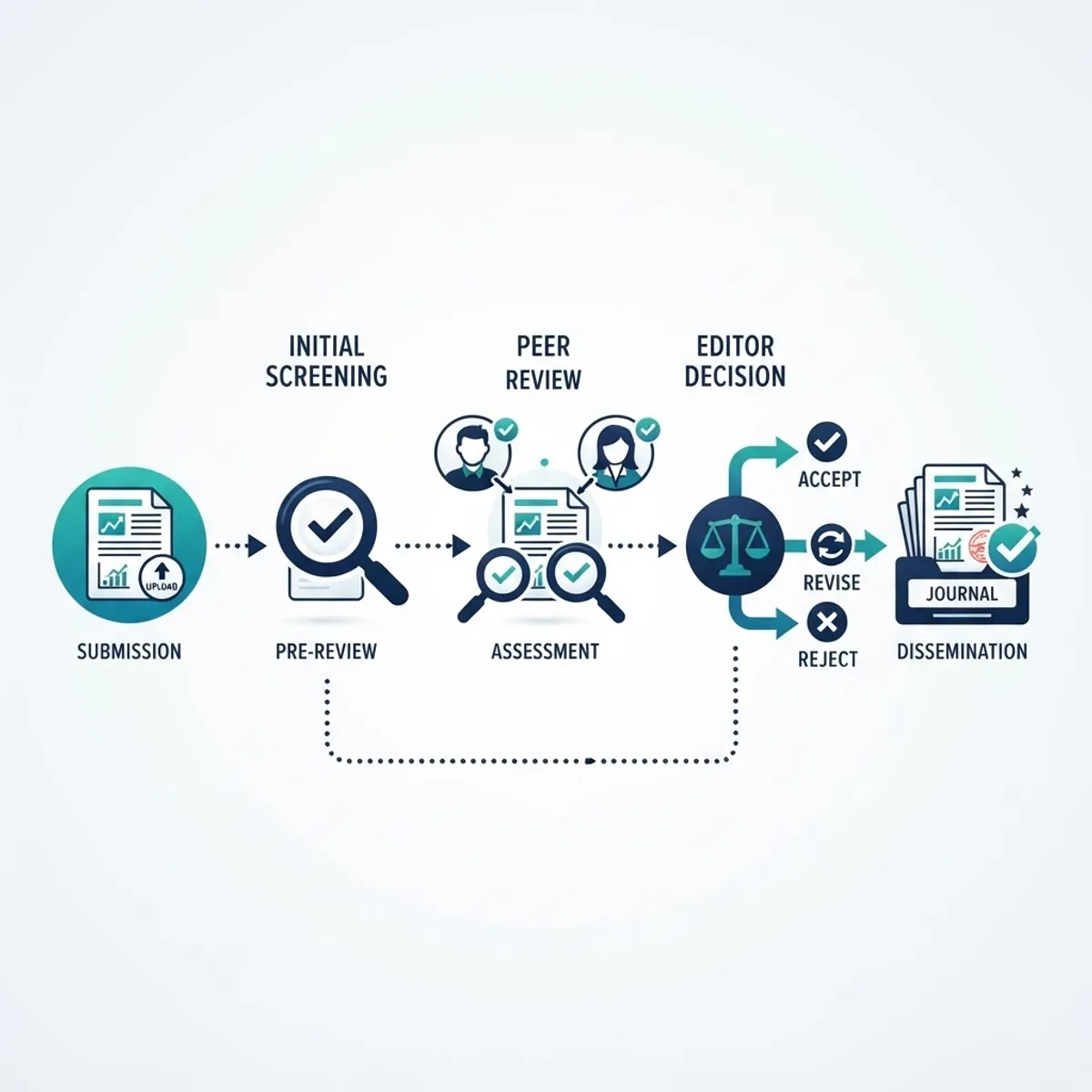
- Submission and desk check. An editor screens your manuscript for scope, formatting, and basic novelty before it reaches reviewers.
- Assignment to reviewers. Two to four subject experts evaluate your methods, results, and reproducibility, usually under single-blind or double-blind conditions.
- First decision. You receive one of four outcomes: accept, minor revisions, major revisions, or reject.
- Revision rounds. You address every comment point by point, often resubmitting with a detailed response letter.
- Final decision and production. Once reviewers are satisfied, the paper is copyedited, assigned a DOI, and published.
This process can take anywhere from a few weeks at fast open-access venues to several months at top-tier journals. According to Nature's own reporting on peer review, median times from submission to acceptance frequently exceed 100 days, so planning your timeline early is essential.
Core Research Topics Covered
Strong journals define a clear scope so authors know whether their work fits. The best AI, ML, and data science journals typically welcome research across a recognizable set of themes.
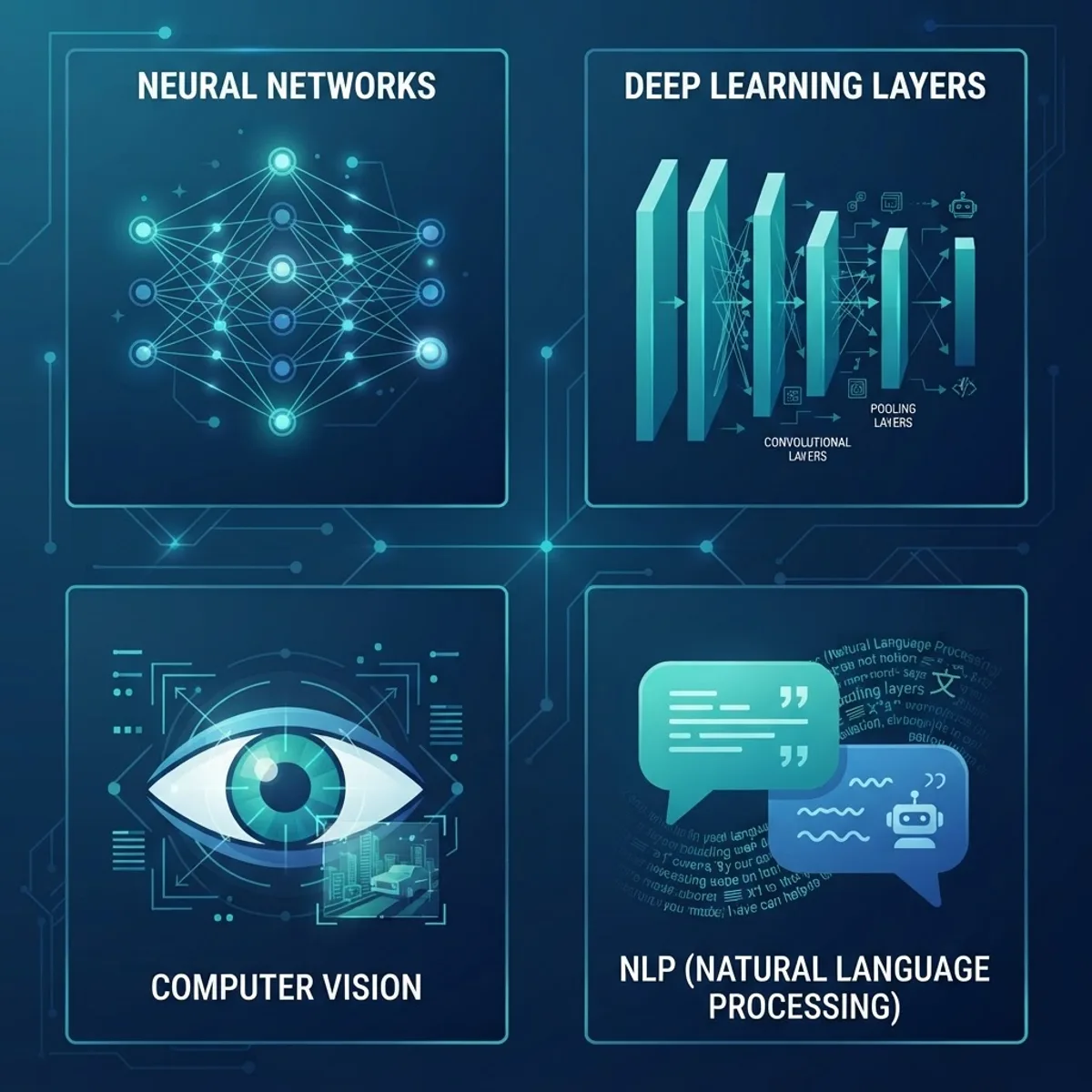
- Deep learning architectures such as transformers, convolutional networks, and diffusion models
- Natural language processing, including large language models and multilingual systems
- Computer vision for image recognition, segmentation, and generative imagery
- Reinforcement learning and decision-making under uncertainty
- Data engineering and MLOps, covering pipelines, feature stores, and deployment
- Responsible AI, including fairness, explainability, privacy, and safety
- Applied data science in healthcare, finance, climate, and manufacturing
Before submitting, read a journal's three most recent issues. This single habit tells you more about real acceptance patterns than any published scope statement, because it reveals what editors are actually choosing to print.
How Publication Metrics Are Measured
Journal quality is often summarized through metrics, and knowing what they mean helps you choose wisely. The impact factor measures the average number of citations articles receive over a two-year window. The h-index captures both productivity and citation impact. CiteScore offers a broader citation window than impact factor and is freely available.

Metrics matter, but they should never be your only filter. A specialized journal with a modest impact factor may reach exactly the audience you need, while a high-metric generalist venue might bury your niche contribution. According to Clarivate, only a small fraction of journals maintain an impact factor above 10, so realistic targeting matters far more than chasing prestige alone. For teams building AI products alongside their research, pairing publication strategy with strong engineering support from WebPeak's artificial intelligence services helps translate academic findings into deployable systems.
Comparing Journal Types at a Glance
Different journal models suit different goals. The table below compares the most common options so you can match a venue to your priorities.
| Journal Type | Review Speed | Access Model | Best For |
|---|---|---|---|
| Elite closed-access | Slow | Subscription | Career-defining, high-citation work |
| Reputable open-access | Moderate | Open, author pays | Fast, wide, cite-friendly reach |
| Society journal | Moderate | Mixed | Community trust and networking |
| Specialized niche | Fast | Varies | Deep domain-specific findings |
| Conference-linked journal | Fast | Often open | Timely, applied ML results |

Use this comparison as a starting filter, then verify each candidate against your budget, timeline, and target readers. Open-access fees, known as article processing charges, can range from a few hundred to several thousand dollars, so factor cost into your decision early.
How to Publish Your Research Successfully
Getting published is a skill you can learn, not a matter of luck. The following steps reflect what consistently works for authors who move from rejection to acceptance.
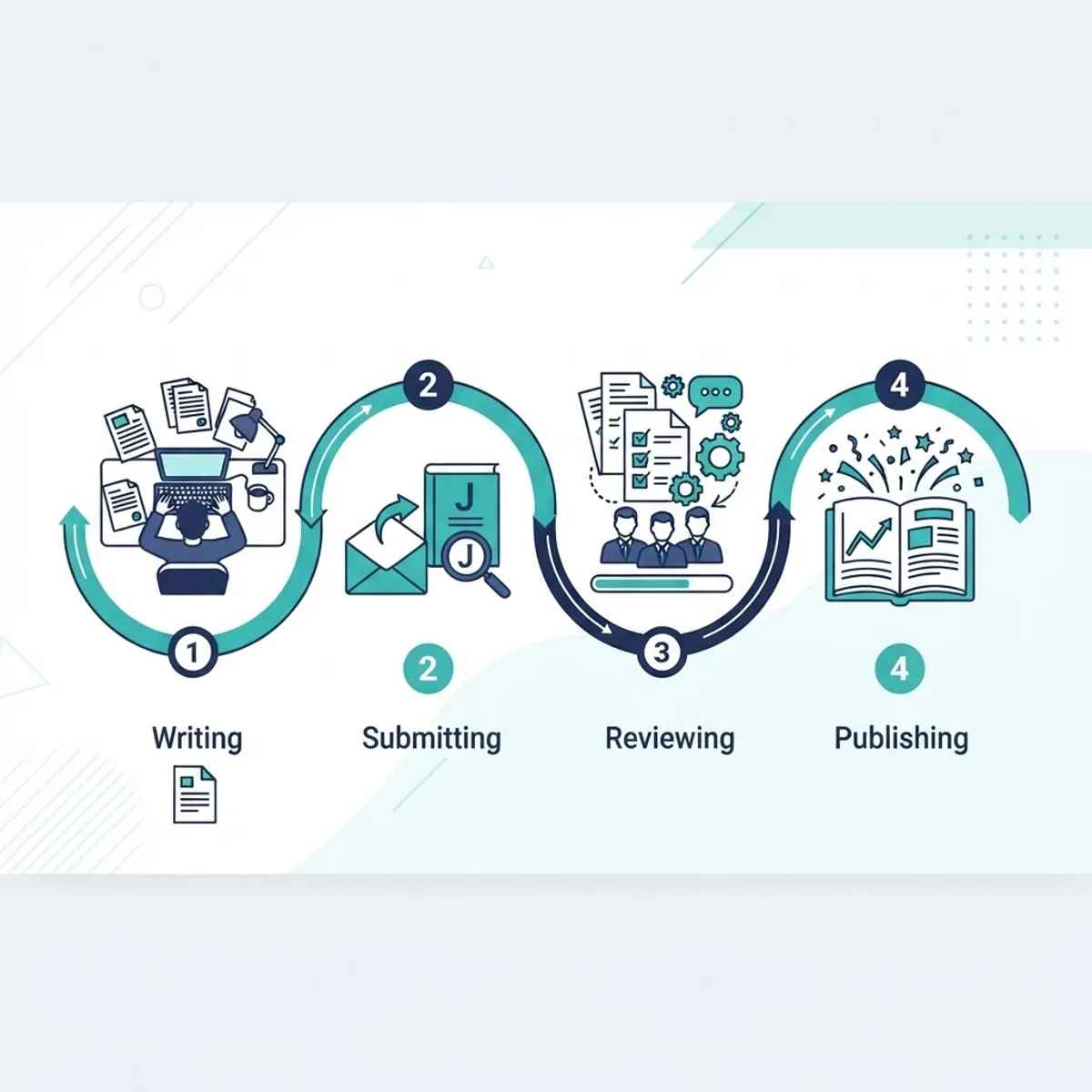
- Choose the right venue first. Match your topic and novelty level to the journal before you write the final draft.
- Write a sharp, testable claim. Reviewers reward clear contributions over vague ambition.
- Prioritize reproducibility. Share code, datasets, and hyperparameters; reproducible papers are accepted far more often.
- Benchmark honestly. Compare against strong, current baselines, not outdated ones.
- Follow the author guidelines exactly. Formatting errors trigger desk rejections that never reach reviewers.
- Respond to reviews professionally. Treat every comment as a chance to strengthen the paper, even when you disagree.
Authors who treat rejection as feedback rather than failure tend to publish more over time. A rejected paper with detailed reviews is often just one focused revision away from acceptance at a better-fitting venue.
The Future of AI Research Publishing
Academic publishing in AI is changing quickly, and staying ahead of these shifts is a competitive advantage. Open-access models are expanding, preprint servers now shape conversations before formal publication, and AI-assisted tools increasingly support literature review, editing, and even reviewer matching.

We expect reproducibility standards to tighten, with more journals requiring executable code and shared datasets as a condition of acceptance. Transparency around model training data and energy usage is also becoming a formal review criterion. Researchers and organizations that build strong documentation habits now, whether through internal processes or expert partners like the teams at ZoneTechify and WebPeak, will adapt to these standards with far less friction.
Key Takeaways
- A journal of artificial intelligence, machine learning, and data science publishes peer-reviewed, reproducible research across three interconnected fields.
- Peer review typically involves desk checks, expert evaluation, and revision rounds that can exceed 100 days at leading venues.
- Metrics like impact factor, CiteScore, and h-index help compare journals but should not be your only selection criteria.
- Only a small fraction of journals hold an impact factor above 10, so realistic venue targeting beats prestige chasing.
- Reproducibility, honest benchmarking, and precise formatting are the biggest levers for acceptance.
Frequently Asked Questions (FAQ)
What is the difference between a journal and a conference in AI?
A journal publishes fully reviewed, polished articles with no strict page limits and often multiple revision rounds. A conference emphasizes speed and community discussion, with shorter papers and fixed deadlines. In AI specifically, top conferences carry prestige comparable to journals, so many researchers pursue both throughout their careers.
How long does it take to publish in an AI or ML journal?
Timelines vary widely by venue. Fast open-access journals may accept work within a few weeks, while elite journals often take several months due to multiple review rounds. According to Nature, median submission-to-acceptance times frequently exceed 100 days, so plan your research and career timeline accordingly.
Do I need to pay to publish my research?
It depends on the model. Open-access journals usually charge an article processing charge, ranging from a few hundred to several thousand dollars. Subscription-based journals typically publish for free but place articles behind paywalls. Many institutions and funders provide grants specifically to cover open-access publication fees.
What makes a research paper more likely to be accepted?
Acceptance improves when your contribution is clearly stated, your experiments are reproducible, and your comparisons use strong current baselines. Following author guidelines exactly prevents desk rejection. Responding to reviewer comments thoroughly and professionally during revisions is often the deciding factor between rejection and publication.
Are AI-generated papers allowed in these journals?
Most reputable journals now require authors to disclose any AI assistance and remain fully responsible for accuracy. AI tools may support writing or editing, but fabricated data, undisclosed generation, or unverifiable results lead to rejection. Always check each journal's specific policy on generative AI before submitting your manuscript.