A practical, experience-based breakdown of whether to learn JavaScript or Python first, comparing job demand, salaries, learning curve, and real career outcomes.
Should I Learn JavaScript or Python
Every beginner developer eventually hits the same wall: two languages, both hugely popular, both promising jobs, and no obvious winner. After a decade of hiring developers and running technical training for teams building websites, dashboards, and AI tools, we have watched hundreds of people make this exact choice. The pattern is clear: the people who succeed do not pick the "better" language. They pick the language that matches the work they actually want to do.
This guide gives you a real decision framework, not a popularity contest.
Quick Answer: Learn JavaScript if you want to build websites, web apps, or front-end interfaces, since it is the only language browsers run natively. Learn Python if you want data analysis, AI, machine learning, scripting, or automation. Both are beginner-friendly, both pay well, and most senior developers eventually learn both.
The Honest One-Line Difference
JavaScript is the language of the browser. Python is the language of data and automation.
That single sentence resolves most of the confusion. JavaScript is the only programming language that runs natively inside every web browser on earth, so anything interactive you see on a web page passes through it. Python has no browser runtime at all, but it dominates data science, machine learning, DevOps scripting, and back-end services.
According to the Stack Overflow Developer Survey, JavaScript has been the most commonly used programming language for over ten consecutive years, while Python consistently ranks as the most wanted language among developers who do not yet use it. Those two facts tell you something important: JavaScript wins on volume of existing work, Python wins on where developers want to go next.
Choose JavaScript If This Sounds Like You

Pick JavaScript when your goal involves anything a user clicks, scrolls, or types into a browser.
- You want to see visual results fast. You can write JavaScript in your browser console today with zero installation. That feedback loop keeps beginners motivated.
- You want the largest number of entry-level openings. Front-end and full-stack roles consistently outnumber pure data roles at the junior level, because almost every company needs a website before it needs a machine learning model.
- You want one language for the whole stack. With Node.js, the same language runs your front end, your API, and your build tools. That is a genuine advantage when you are learning: one syntax, one package ecosystem, one mental model.
- You want to freelance early. Small business websites, landing pages, and e-commerce work are the fastest path to paid projects. This is exactly the kind of work handled by professional teams like ZoneTechify and WebPeak, and it is the market with the lowest barrier to entry for new developers.
If your ambition is to launch a product people use in a browser, JavaScript is not optional. You will need it eventually regardless of what else you learn. If you decide to go deeper into building production sites, structured web development services follow the same modern JavaScript stack you would be learning: HTML, CSS, JavaScript, then a framework such as React or Next.js.
Choose Python If This Sounds Like You
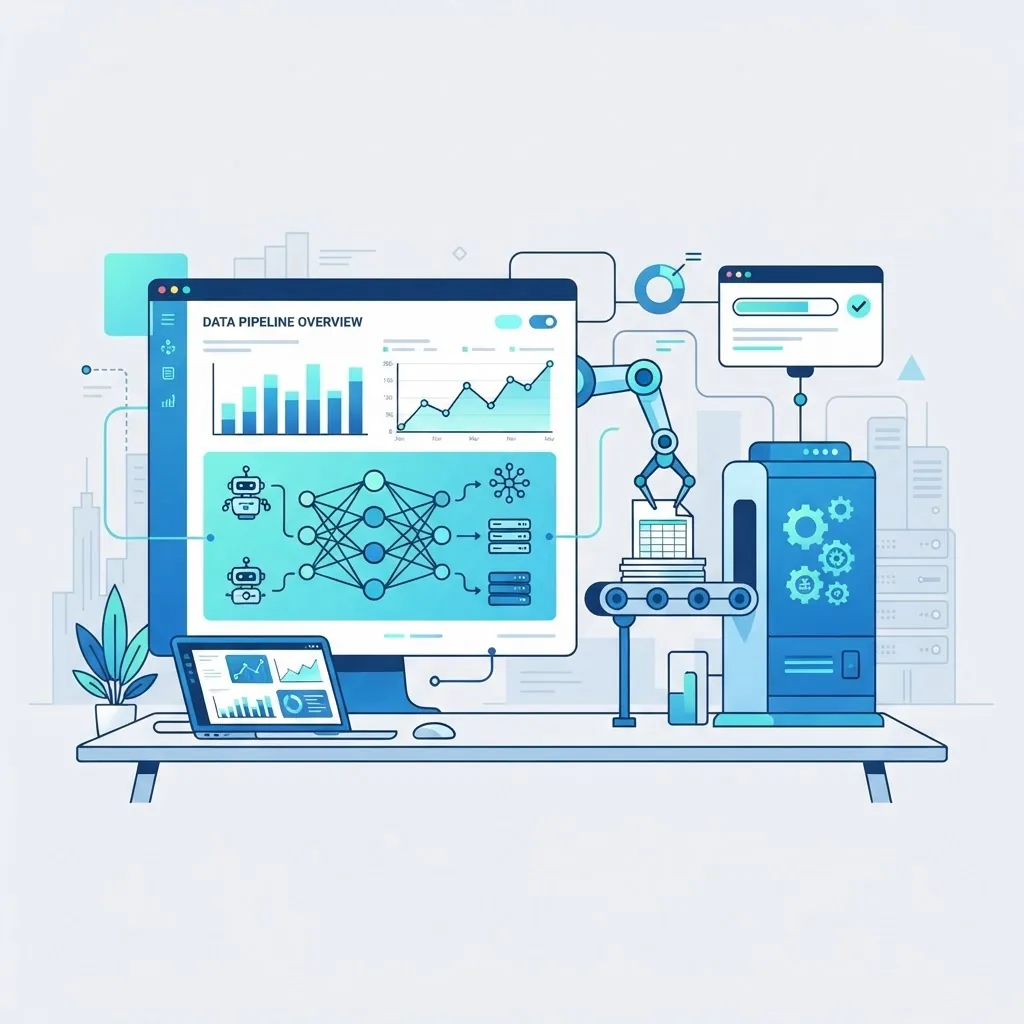
Pick Python when your goal involves numbers, models, or repetitive tasks you want a computer to handle.
- You work with data already. If you spend your day in spreadsheets, Python replaces hours of manual work in a fifteen-line script. This is the single highest-ROI reason to learn it.
- You want to work in AI or machine learning. The entire modern AI ecosystem, including PyTorch, TensorFlow, scikit-learn, pandas, and NumPy, is Python-first. There is no serious competitor here.
- You come from a non-programming background. Python syntax reads close to English. It uses indentation instead of curly braces, has no semicolons, and hides much of the ceremony that trips up beginners.
- You want to automate your job. File renaming, report generation, web scraping, email processing, API syncing: Python is the default glue language for internal automation.
A useful reality check from our own project work: Python scripts that automate reporting routinely save mid-sized teams 5 to 10 hours per week, and that time saving is usually easier to justify to a manager than a new website.
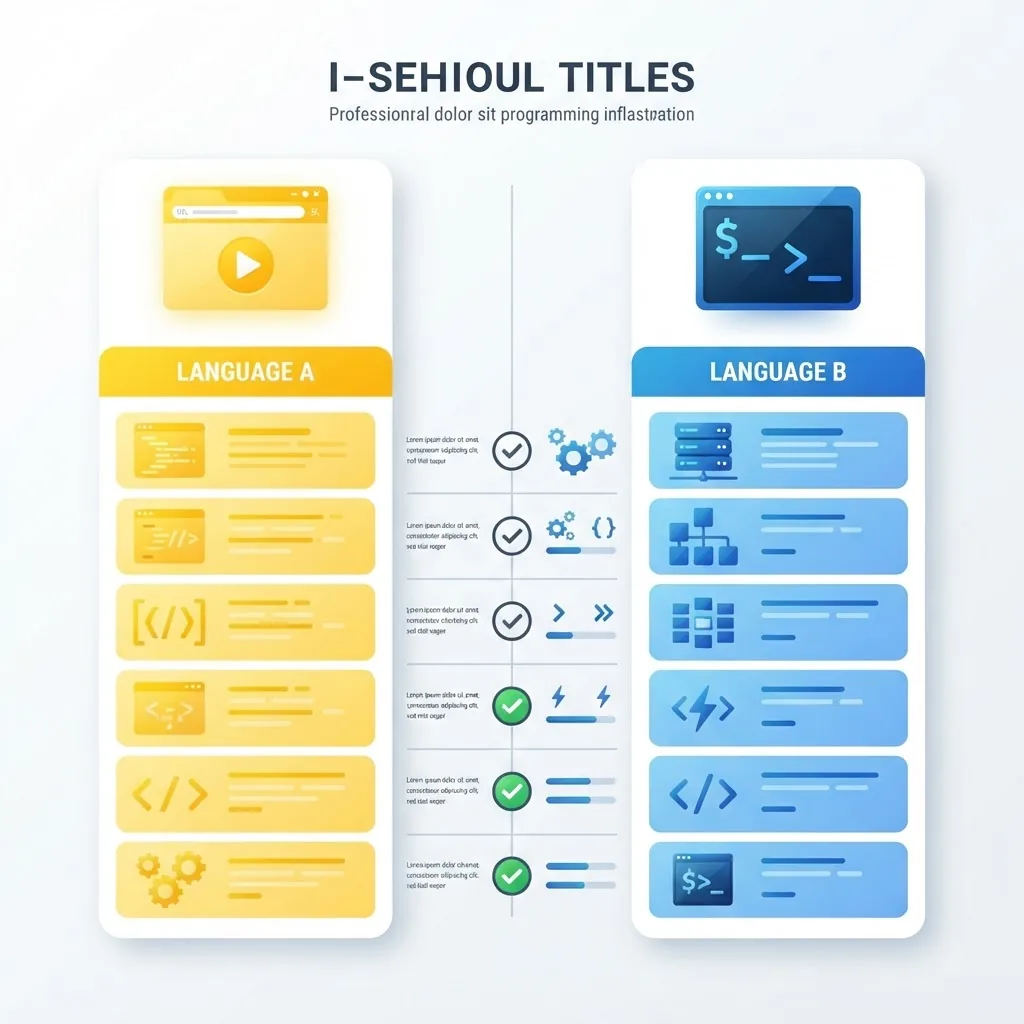
JavaScript vs Python: Side-by-Side Comparison
| Factor | JavaScript | Python |
|---|---|---|
| Runs in the browser | Yes, natively | No |
| Beginner-friendly syntax | Good | Excellent |
| Front-end web development | Yes, the only option | No |
| Back-end development | Yes, via Node.js | Yes, via Django or FastAPI |
| Data science and AI | Limited | Yes, industry standard |
| Mobile app development | Yes, via React Native | Rarely used |
| Automation and scripting | Possible | Yes, the default choice |
| Volume of junior job listings | Higher | High |
| Average salary ceiling | High | Slightly higher in AI and ML roles |
| Time to first working project | Days | Days |
| Confusing for beginners | Async behaviour and type coercion | Virtual environments and package setup |
Read that table as a routing device, not a scoreboard. There is only one row that is truly non-negotiable: if you need the browser, you need JavaScript.
Which Is Actually Easier to Learn?
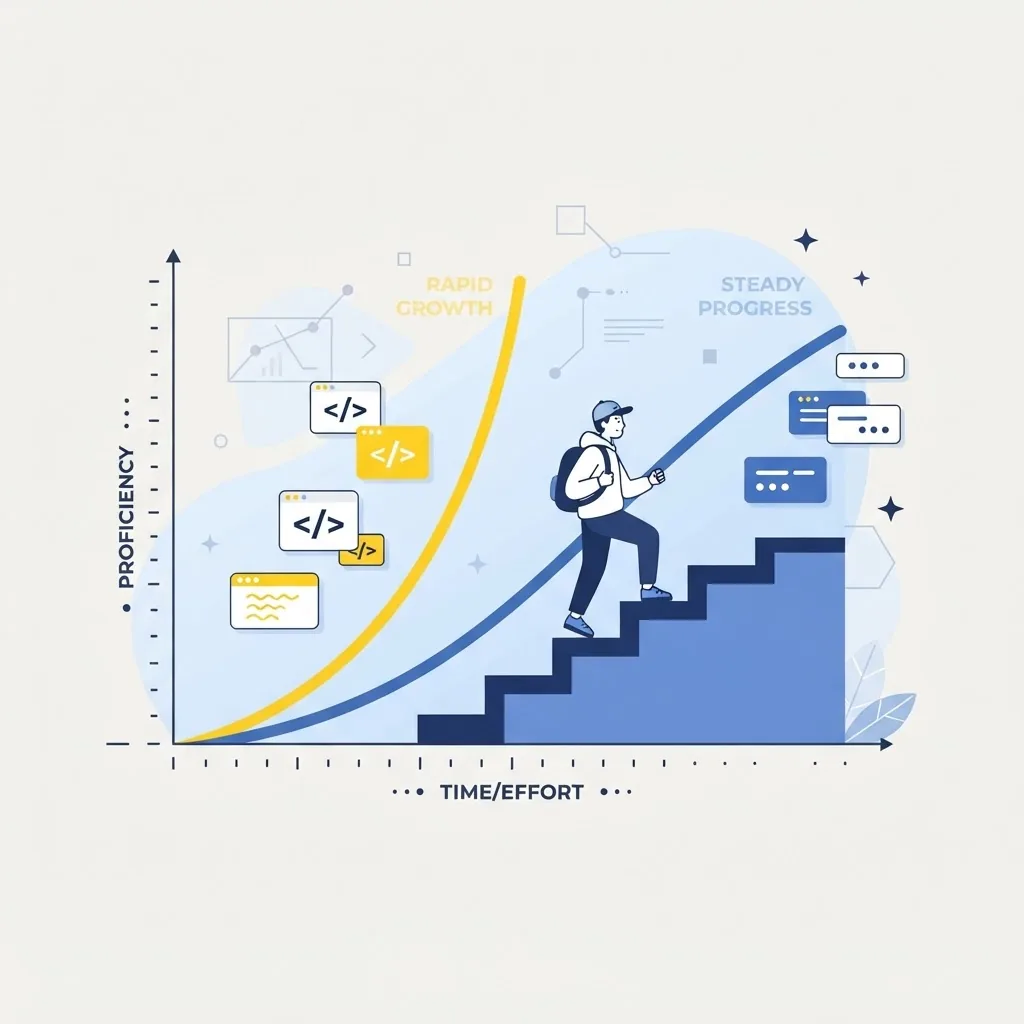
Python is easier to read. JavaScript is easier to start.
That distinction matters more than the generic claim that Python is easier. Python syntax is cleaner, but you must install it, understand virtual environments, and manage packages before writing anything meaningful. JavaScript requires nothing but a browser tab, yet it hands you three genuinely confusing concepts early: asynchronous callbacks and promises, the behaviour of the this keyword, and loose type coercion where the string 5 plus the number 3 produces 53 instead of 8.
In practical terms, most motivated learners reach basic competence in either language in roughly 3 to 6 months of consistent daily practice. The language rarely determines who finishes. Project consistency does. Learners who ship one small, real project every two weeks outperform those who complete twice as many tutorials without building anything.
The Concepts That Transfer Anyway
About 70 percent of what you learn first is language-agnostic: variables, conditionals, loops, functions, arrays and lists, dictionaries and objects, error handling, and debugging. Once you have those, your second language takes weeks rather than months. This is why arguing over the first choice for three weeks costs more than making the wrong choice and starting.
Jobs, Salaries, and Market Reality

Here is the market pattern we see repeatedly when reviewing junior hiring pipelines:
- JavaScript has more junior openings. Front-end and full-stack roles are the most common entry point into the industry because every business needs a web presence.
- Python has fewer but higher-ceiling roles. Data engineering, machine learning, and AI positions typically pay more, but they often expect a degree, statistics knowledge, or a portfolio of analytical work.
- Python junior data roles are more competitive. The data scientist title attracts enormous applicant volume relative to available junior seats, while front-end developer roles have steadier turnover.
- Full-stack JavaScript plus Python is a strong pairing. Developers who can build the interface and the data pipeline become disproportionately valuable, particularly on AI-powered products.
Google has reported that a one-second delay in mobile page load can cut conversions by up to 20 percent, a reminder that front-end JavaScript performance work has direct, measurable business value. That measurability is why JavaScript skills stay employable even as AI tooling improves.
If your interest leans toward building intelligent products rather than interfaces, Python is your entry point, and applied work in this area is exactly what specialist artificial intelligence services deliver: model integration, automation pipelines, and AI features embedded into real applications.
A 90-Day Starting Plan for Either Language
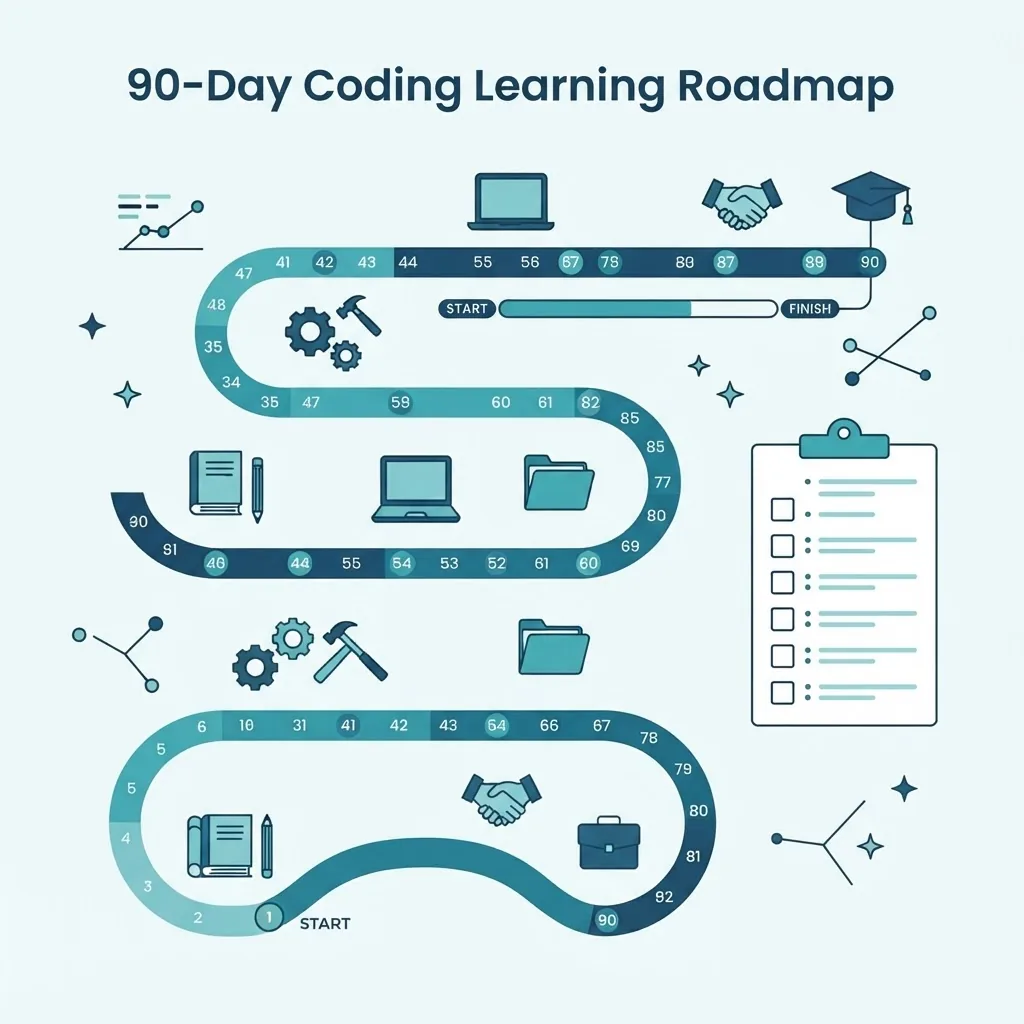
The plan is nearly identical regardless of which language you choose. That is deliberate.
- Days 1 to 14, fundamentals only. Variables, conditionals, loops, functions, and data structures. Type every example by hand. Do not copy and paste.
- Days 15 to 30, build three tiny projects. JavaScript: a to-do list, a calculator, a weather widget using a public API. Python: a CSV cleaner, a file organiser, a web scraper.
- Days 31 to 55, learn the ecosystem. JavaScript: npm, Git, and React or Next.js basics. Python: pip, virtual environments, pandas, and requests.
- Days 56 to 75, ship one real project. Something with a real user, even if that user is you. Deploy it publicly. A live URL is worth more than ten local projects.
- Days 76 to 90, portfolio and proof. Write a short case study for each project explaining the problem, your approach, and the result. Hiring managers read reasoning, not line counts.
One rule we enforce with every learner we mentor: stop tutorials at the 40 percent mark and start building. Tutorial dependency is the most common reason capable people never become employable developers.
The Decision Framework

Answer these in order and stop at your first yes:
- Do you want to build websites, web apps, or anything visual in a browser? Learn JavaScript.
- Do you want to work with data, AI, or machine learning? Learn Python.
- Do you want to automate boring tasks in your current job? Learn Python.
- Do you want the fastest route to freelance income? Learn JavaScript.
- Do you want mobile apps? Learn JavaScript and use React Native.
- Still unsure after all of that? Learn Python first, then JavaScript. The gentler syntax builds confidence, and JavaScript is easier to add later than the reverse.
Key Takeaways
- JavaScript is the only language that runs natively in web browsers, making it mandatory for front-end development.
- Python is the industry standard for data science, machine learning, AI, and automation scripting.
- JavaScript has been the most commonly used language in the Stack Overflow Developer Survey for over a decade, and Python is consistently the most wanted.
- Roughly 70 percent of core programming concepts transfer between languages, so your second language takes weeks, not months.
- Most learners reach basic competence in 3 to 6 months of consistent daily practice in either language.
- JavaScript typically offers more junior openings, while Python offers higher salary ceilings in AI and data roles.
- Shipping deployed projects matters more to employers than which language you chose first.
Frequently Asked Questions (FAQ)
Should I learn JavaScript or Python first as a complete beginner?
Learn Python first if you want the gentlest syntax and plan to work with data or automation. Learn JavaScript first if you want to build websites or see visual results in a browser immediately. Both are excellent first languages, and the concepts you learn transfer directly to the other.
Can I get a job knowing only JavaScript or only Python?
Yes. Thousands of developers are employed knowing one language well. Employers hire for demonstrated problem-solving and shipped projects, not language counts. Depth beats breadth early in your career, so master one language plus its ecosystem before adding a second to your portfolio.
Which pays more, JavaScript or Python?
Python roles in AI, machine learning, and data engineering generally have higher salary ceilings, while JavaScript has more available positions overall, especially at junior level. Your specialisation, location, and years of experience influence pay far more than your choice of language.
Is Python better than JavaScript for web development?
No. Python cannot run in a browser, so it can only handle the back end through frameworks like Django or FastAPI. JavaScript handles both front end and back end, making it the more complete choice for web development, particularly if you plan to work alone or freelance.
How long does it take to learn JavaScript or Python?
Expect 3 to 6 months of consistent daily practice to reach basic job-ready competence, and 12 to 18 months to become genuinely confident. Progress depends far more on how many real projects you build and deploy than on which language you selected at the start.
Will AI tools make learning these languages pointless?
No. AI assistants accelerate code writing but cannot replace understanding architecture, debugging production issues, or judging trade-offs. Developers who understand fundamentals use AI tools far more effectively, which makes learning a language more valuable now, not less.
Final Verdict
If you want to build things people see and use in a browser, start with JavaScript. If you want to work with data, models, or automation, start with Python. If you genuinely cannot decide, start Python this week and add JavaScript within the year, because you will almost certainly end up using both.
The worst outcome is not choosing the wrong language. It is spending another month researching instead of writing your first line of code.