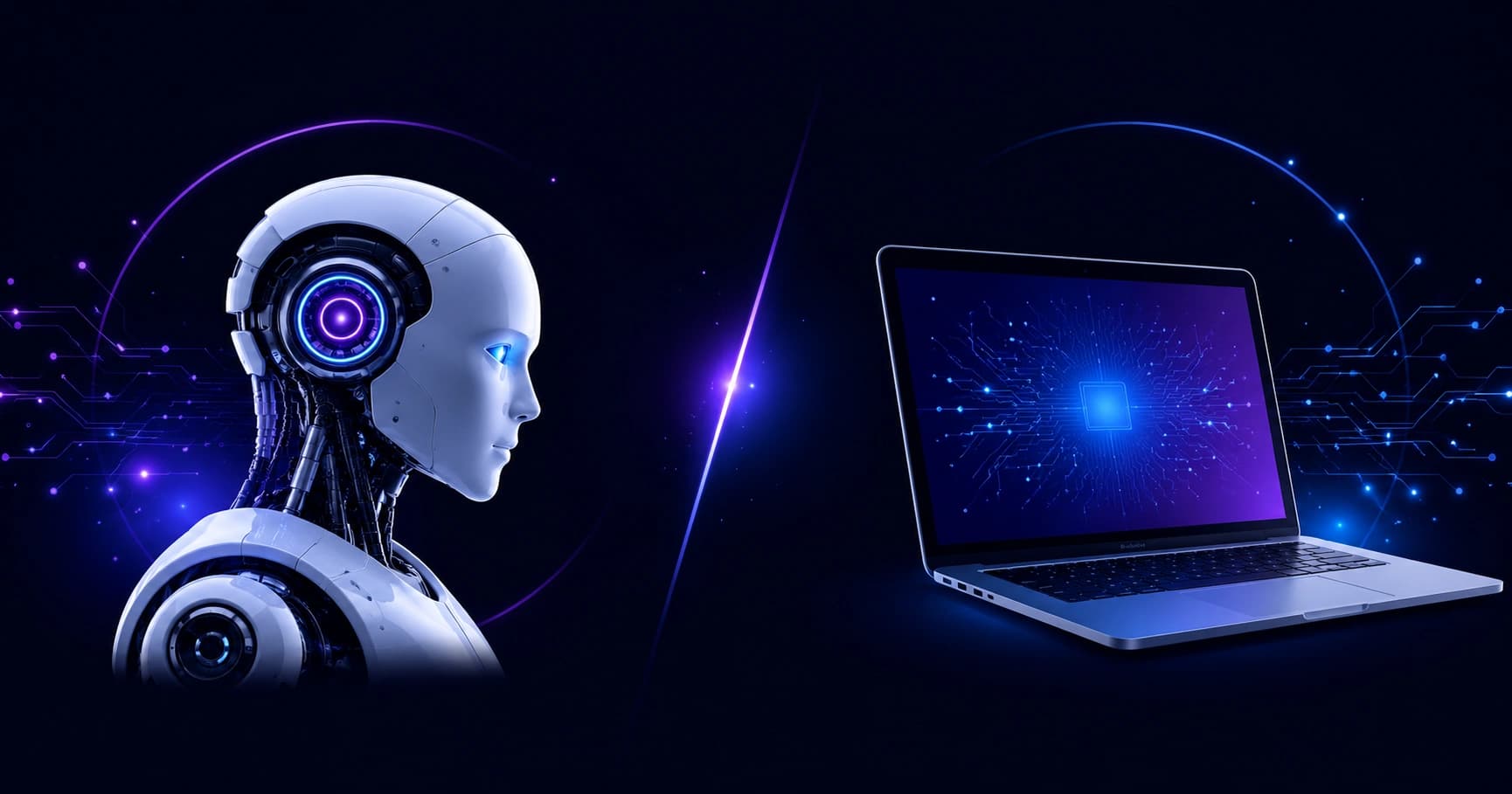
A clear, people-first guide explaining how robots and computers differ, how they work together, and where the line between the two actually sits.
What Is the Difference Between a Robot and a Computer
People often use the words "robot" and "computer" as if they mean the same thing, but they describe two very different ideas. A computer is a machine that processes information, while a robot is a machine that senses, thinks, and physically acts on the world around it. Understanding this difference helps you make better sense of the technology you use every day, from the laptop on your desk to the vacuum cleaning your floor.
In this guide, we will break down what each machine actually is, how they overlap, and why nearly every modern robot contains a computer inside it. By the end, the distinction will feel simple and obvious.
The Short Answer
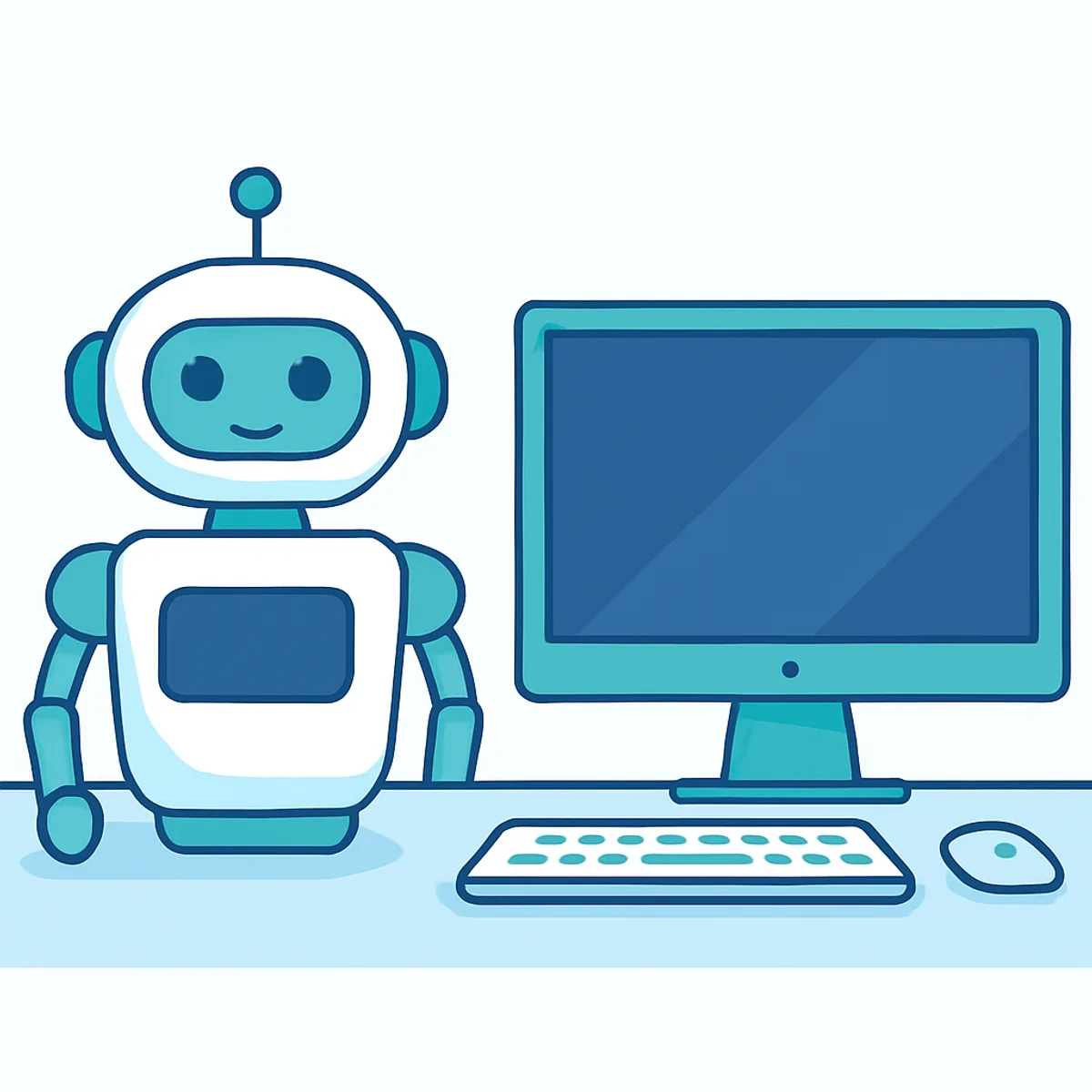
The simplest way to remember the difference is this: a computer thinks, but a robot thinks and moves. A computer takes in data, processes it, and produces output such as text, images, or calculations. A robot adds a physical layer on top of that processing. It uses sensors to perceive its surroundings and motors to take real-world action.
In other words, almost every robot has a computer at its core, but not every computer is a robot. The computer is the brain; the robot is the brain plus the body.
What Is a Computer?
A computer is an electronic device that accepts input, processes it according to a set of instructions, and produces output. It does not interact with the physical world on its own. It waits for a human to type, click, or feed it data, and then it responds on a screen or through connected devices.
Core Parts of a Computer
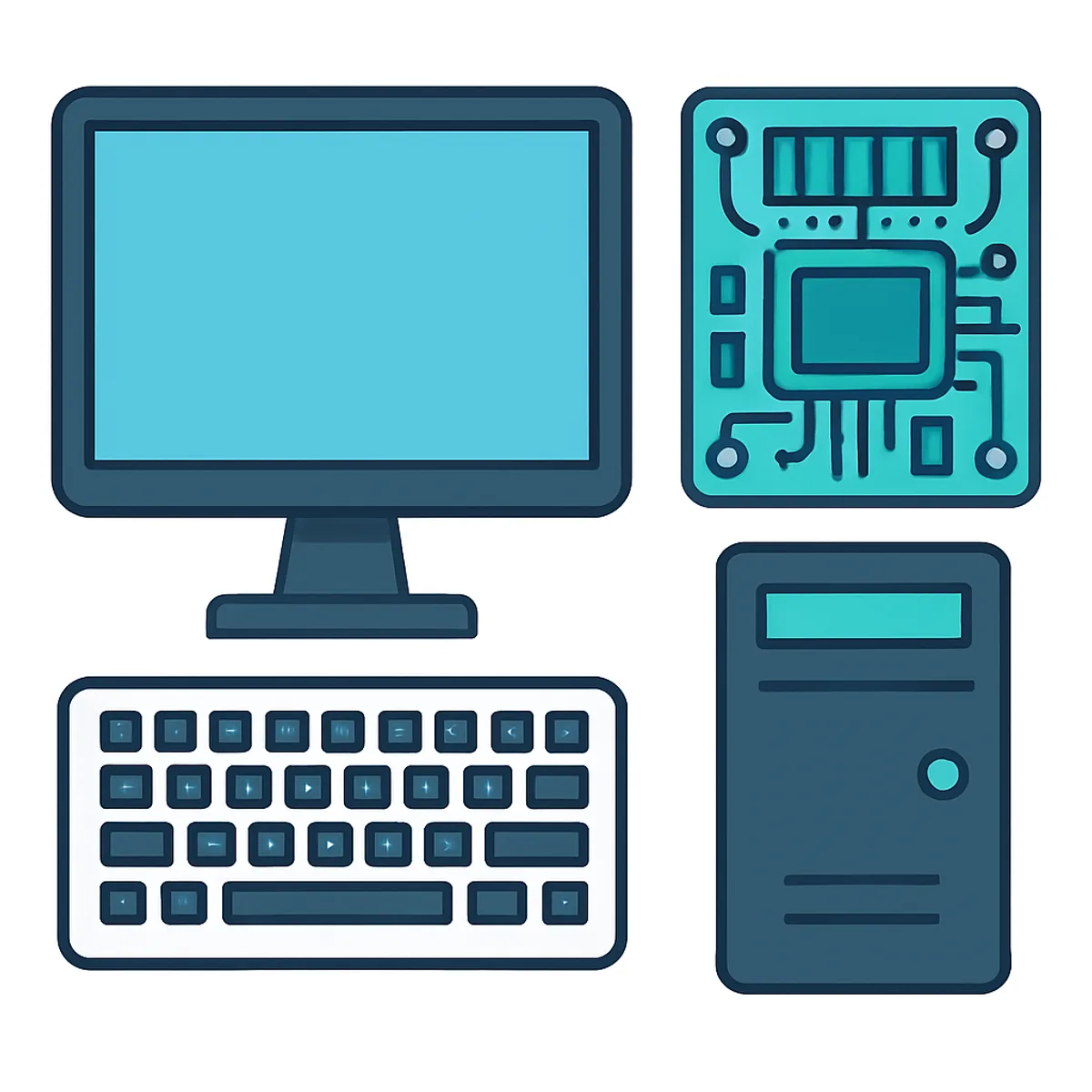
Every computer, whether it is a phone, a laptop, or a server, shares a few essential parts:
- Processor (CPU): the part that performs calculations and runs instructions.
- Memory (RAM): short-term storage that holds data while programs run.
- Storage: long-term storage for files, programs, and the operating system.
- Input devices: keyboards, mice, microphones, and touchscreens.
- Output devices: monitors, speakers, and printers.
A computer is incredibly flexible. The same machine can write an email, edit a video, run a spreadsheet, or browse the web. But it stays put. It cannot reach out and change anything in the physical world unless a human or another machine acts on its instructions. If you want to learn more about how digital tools are built and applied in business, resources from ZoneTechify are a helpful starting point.
What Is a Robot?
A robot is a programmable machine that can sense its environment, make decisions, and perform physical tasks, often without constant human control. The key word here is physical. A robot does not just calculate an answer; it acts on that answer in the real world.
Core Parts of a Robot
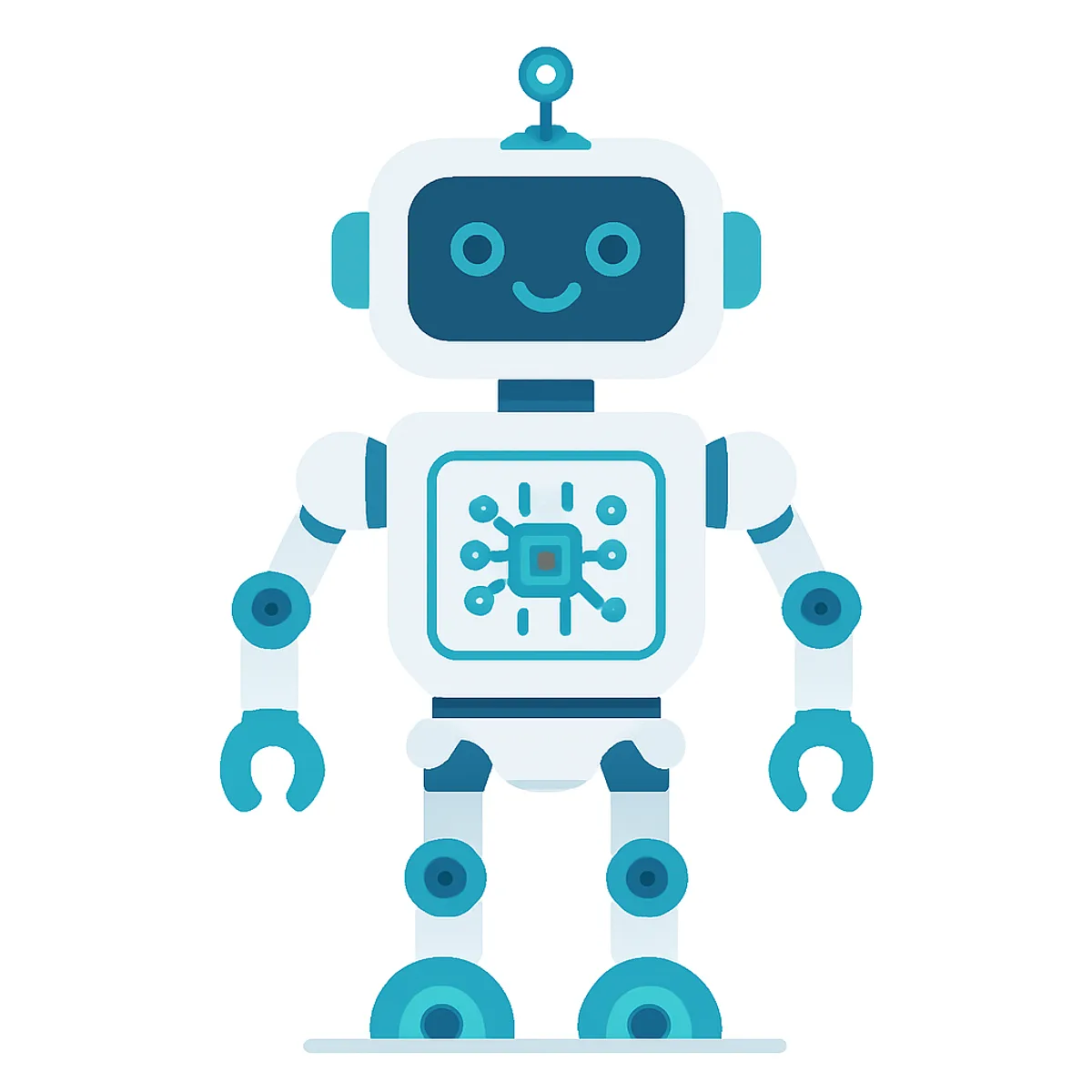
Robots are usually described as having three main capabilities, and each maps to a set of components:
- Sensing: cameras, microphones, touch sensors, and distance sensors let the robot perceive its surroundings.
- Thinking: an onboard computer or controller processes sensor data and decides what to do.
- Acting: motors, wheels, arms, and grippers let the robot move and manipulate objects.
This sense-think-act loop is what truly defines a robot. A robot vacuum, for example, senses walls and furniture, decides on a cleaning path, and then drives itself across the floor. A factory arm senses a part, calculates the correct angle, and welds or lifts it. None of that happens with a plain computer alone.
The Real Difference: Brain vs Body
The heart of the matter is the relationship between thinking and doing. A computer is pure information processing. A robot is information processing plus physical action. This is why engineers often say a robot is "a computer with a body."
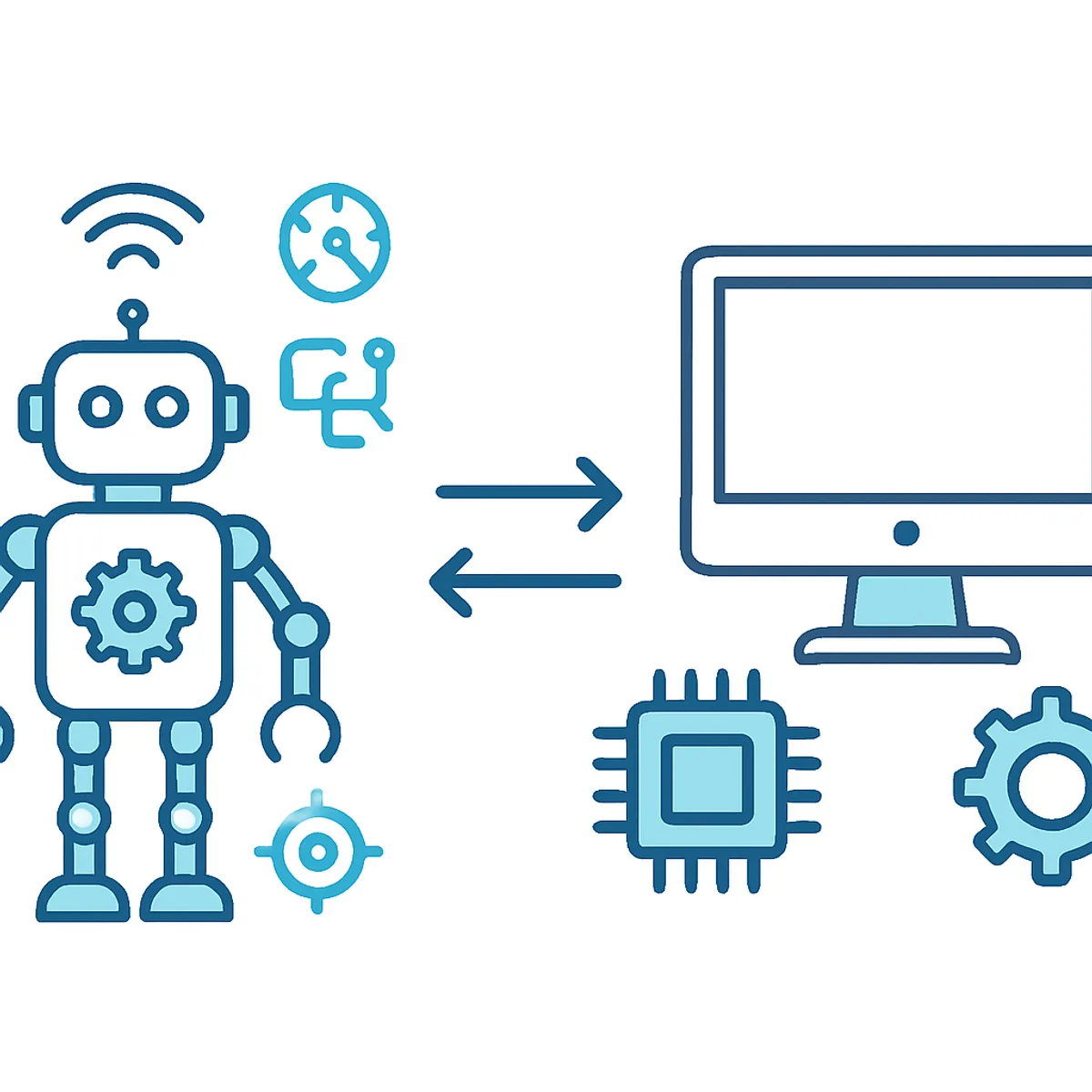
Consider these everyday distinctions:
- A laptop can show you a recipe. A kitchen robot can actually stir the pot.
- A computer can calculate the fastest route. A self-driving robot car can drive it.
- A desktop can display a 3D model. A robotic 3D printer can build the object.
In each pair, the computer handles the thinking, and the robot handles both thinking and movement. The added layers of sensors and actuators are what transform a computing device into a robot.
Side-by-Side Comparison
The table below summarizes the most important differences in plain terms.
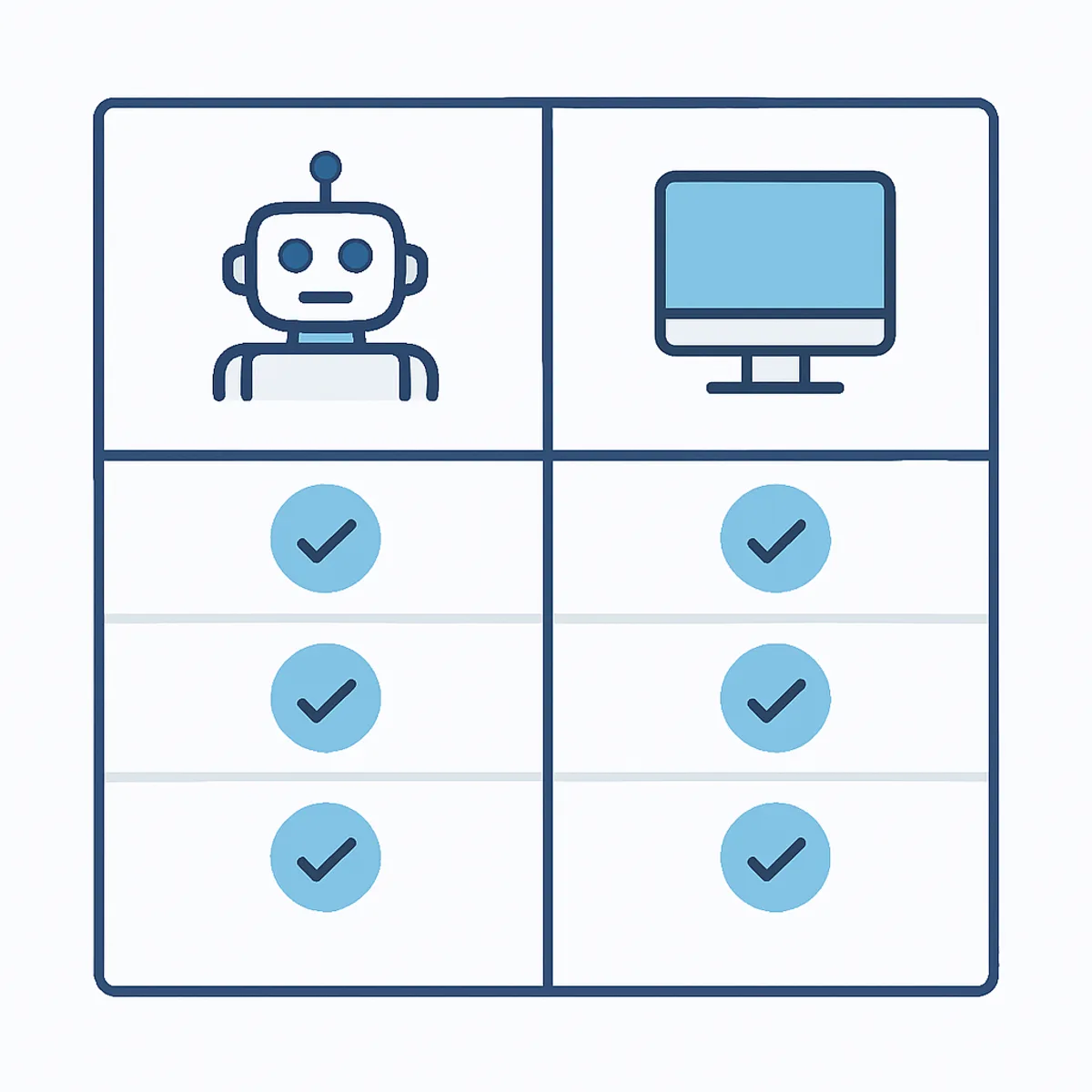
| Feature | Computer | Robot |
|---|---|---|
| Main purpose | Process data and information | Sense, think, and act physically |
| Physical movement | No | Yes |
| Sensors | Optional | Essential |
| Motors and actuators | No | Yes |
| Needs a computer inside | It is the computer | Yes, usually |
| Works without human input | Rarely | Often |
| Common examples | Laptop, phone, server | Robot vacuum, drone, factory arm |
As the table shows, the overlap is real. A robot contains a computer, but a computer becomes a robot only when you give it senses and the ability to move.
Where the Two Overlap
The line between robots and computers is not a wall; it is a spectrum. Many devices sit somewhere in the middle. A smart speaker, for instance, listens, processes language, and responds, yet it does not move, so most people consider it a computer rather than a robot. A drone, on the other hand, flies, avoids obstacles, and films video, so it clearly qualifies as a robot.
Artificial intelligence blurs the picture even further. Modern robots increasingly rely on AI software to recognize objects, understand speech, and adapt to new situations. That AI runs on computers, whether onboard the robot or in the cloud. So the smarter robots get, the more dependent they become on advanced computing. Teams that explore emerging technology, such as the specialists at WebPeak, often work at exactly this intersection of software intelligence and real-world application.
Robots in Everyday Life
Robots are no longer confined to science fiction or factory floors. They have quietly entered homes, hospitals, warehouses, and streets.
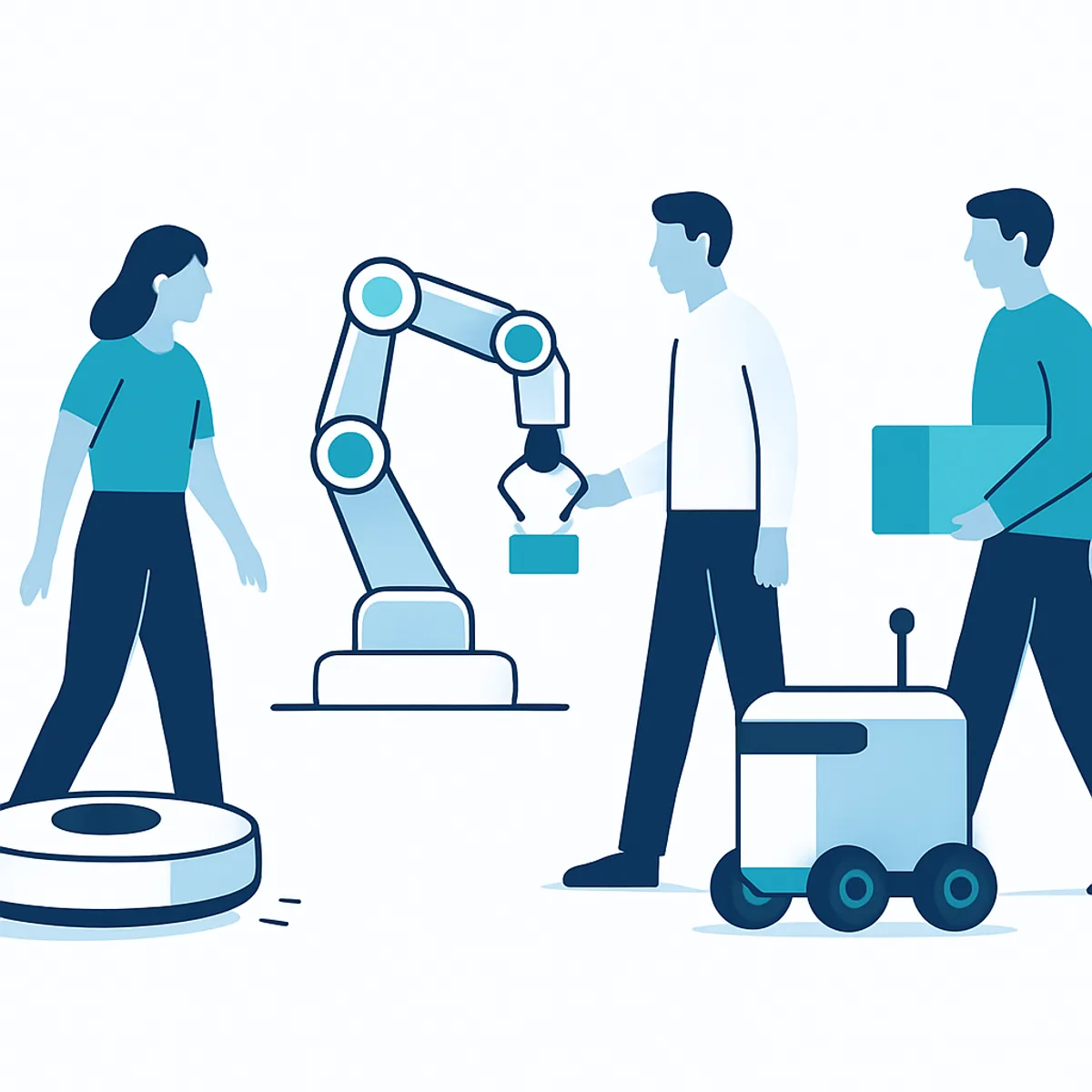
Here are common robots you may already encounter:
- Robot vacuums that map your home and clean without supervision.
- Warehouse robots that move shelves and sort packages.
- Surgical robots that help doctors operate with extreme precision.
- Delivery robots that roll along sidewalks carrying food or parcels.
- Industrial arms that assemble cars and electronics around the clock.
Meanwhile, computers remain everywhere too, often invisibly. Your phone, your car's dashboard, your bank's servers, and your smart TV are all computers. The difference is that these computers inform and entertain, while robots take physical action on your behalf.
Why the Distinction Matters
Understanding the difference is more than trivia. It shapes how we design, buy, and regulate technology. When a device only processes data, the main concerns are speed, accuracy, and privacy. When a device moves through the physical world, safety becomes critical. A software bug in a spreadsheet is annoying. A software bug in a self-driving car can be dangerous.
This is why robotics engineering combines several disciplines: computer science for the thinking, mechanical engineering for the body, and electrical engineering for the sensors and power. A computer scientist alone can build powerful software, but building a reliable robot requires bridging the digital and physical worlds.
How They Work Together
Rather than competing, robots and computers complement each other. A factory might use powerful servers to plan production, computers to design products, and robots to physically assemble them. The data flows from computer to robot and back again, creating a connected system that is far more capable than any single machine.
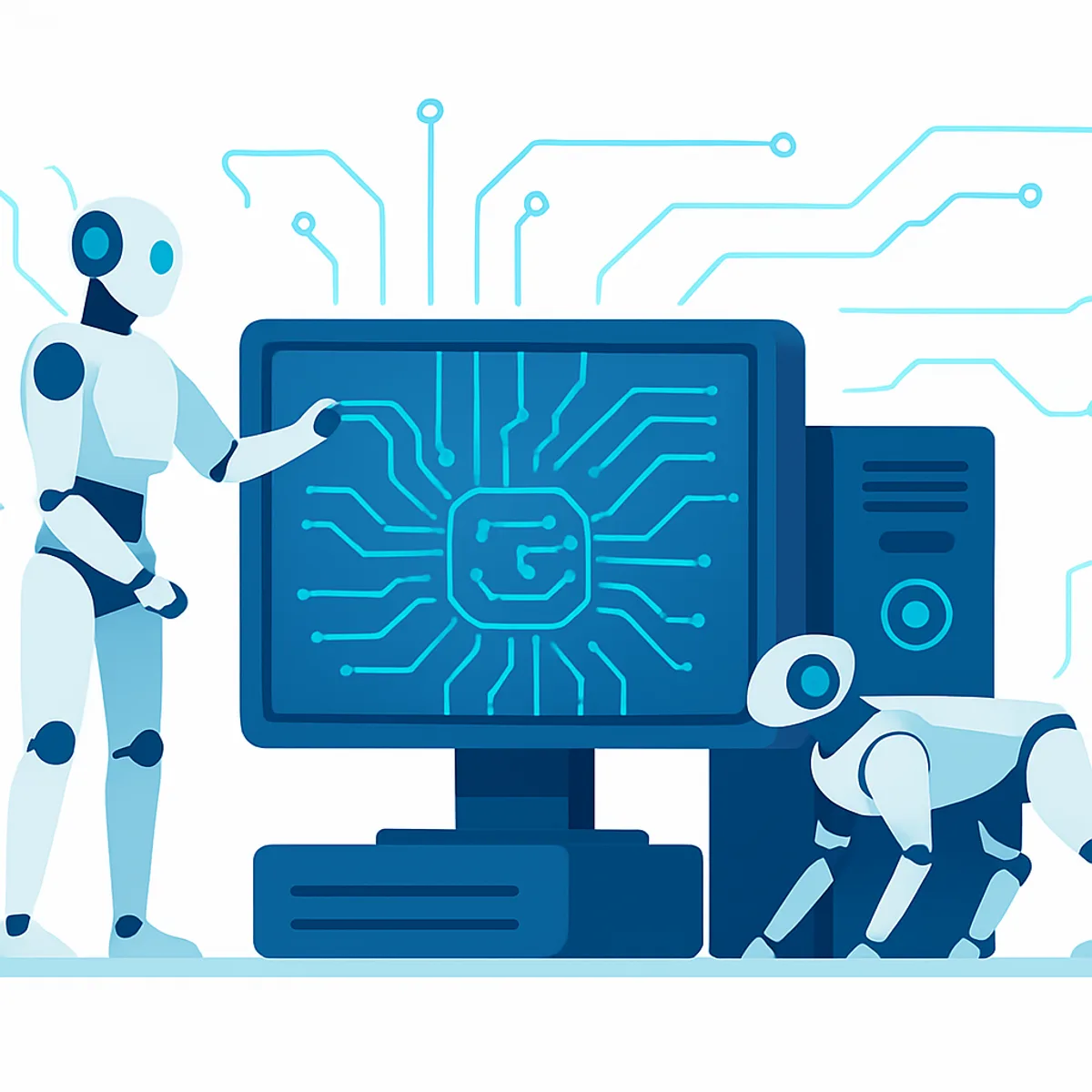
This partnership is accelerating. As computing becomes cheaper and AI becomes smarter, robots gain new abilities almost every year. Tasks that once required human hands, such as packing fragile items or inspecting bridges, are increasingly handled by robots guided by intelligent software.
Quick Recap
To lock in the difference, keep these points in mind:
- A computer processes information but does not physically act on the world.
- A robot senses, thinks, and moves, combining computing with physical action.
- Every robot contains a computer, but not every computer is a robot.
- The overlap grows as AI makes robots smarter and more independent.
- Safety and design priorities differ because robots interact with the real world.
Final Thoughts
The difference between a robot and a computer comes down to a single idea: action. A computer is a brilliant thinker that stays in the digital realm, while a robot takes that thinking and uses it to move, build, clean, or explore the physical world. One is the brain, and the other is the brain with a body.
As technology continues to advance, the boundary will keep shifting, and more devices will combine intelligence with movement. But the core principle will remain the same. Whenever you see a machine that perceives its surroundings and acts on them, you are looking at a robot. Whenever you see a machine that only crunches data and displays results, you are looking at a computer. Understanding that simple distinction gives you a clearer, more confident view of the connected world around you.