
A clear, expert guide to AI safety regulation today — covering the EU AI Act, U.S. and global rules, risk tiers, compliance steps, and what they mean for your business.
AI Safety Regulation Today
Artificial intelligence has moved out of research labs and into hiring decisions, medical diagnostics, credit scoring, fraud detection, and the apps on your phone. As that influence grows, governments are racing to answer one urgent question: how do we keep AI safe, fair, and accountable without crushing innovation? AI safety regulation today is no longer a theoretical debate — it is a fast-moving body of enforceable law that already affects developers, businesses, and everyday users.
This guide breaks down where AI regulation stands right now, who the major players are, and what you actually need to do to stay compliant. Whether you build AI systems or simply deploy off-the-shelf tools in your operations, understanding these rules has become a core business skill. At ZoneTechify we work with teams navigating exactly this shift, and the patterns below reflect what compliance looks like in practice.
Quick Answer: AI safety regulation today centers on risk-based frameworks like the EU AI Act, U.S. executive actions paired with the NIST AI Risk Management Framework, and a wave of new national laws. These rules demand transparency, human oversight, documented risk assessments, and clear accountability for high-risk AI systems used in critical decisions.
What Is AI Safety Regulation?
AI safety regulation refers to the laws, standards, and government policies designed to ensure artificial intelligence systems are built and used in ways that are safe, transparent, fair, and accountable. In plain terms, it sets rules for how AI can be trained, deployed, and monitored — especially when it affects people's rights, health, finances, or safety.
The defining feature of modern AI law is that it is risk-based. Instead of treating every algorithm the same, regulators classify systems by the harm they could cause. A spam filter faces almost no obligations, while an AI that screens job applicants or approves loans faces strict ones. This approach lets governments focus enforcement where the stakes are highest.
The Global AI Regulation Landscape in 2026
The global picture is fragmented but converging. According to Stanford's AI Index, the number of AI-related laws passed across major economies has risen sharply year over year, and more than 60 countries now have national AI strategies. No single global treaty governs AI, so companies must track multiple overlapping regimes at once.

Three blocs lead the conversation. The European Union sets the strictest binding rules. The United States favors a mix of executive guidance, sector regulators, and voluntary standards. China enforces targeted rules on recommendation algorithms and generative AI. For most businesses, the practical reality is simple: if you operate internationally, the strictest rule you touch tends to become your default standard.
Inside the EU AI Act: The World's First Comprehensive AI Law
The EU AI Act is the most important piece of AI legislation in force today. Adopted in 2024 and rolling out in phases through 2026 and beyond, it is the world's first comprehensive, horizontal AI law — meaning it applies across every industry rather than one sector at a time.
Its reach is extraterritorial. Like the GDPR before it, the AI Act applies to any company whose AI systems are used inside the EU, regardless of where that company is based. Penalties are severe: violations involving banned AI practices can trigger fines of up to 35 million euros or 7% of global annual turnover, whichever is higher. That financial exposure is why even U.S. and Asian firms are quietly redesigning products to meet EU expectations.
How AI Risk Tiers Work
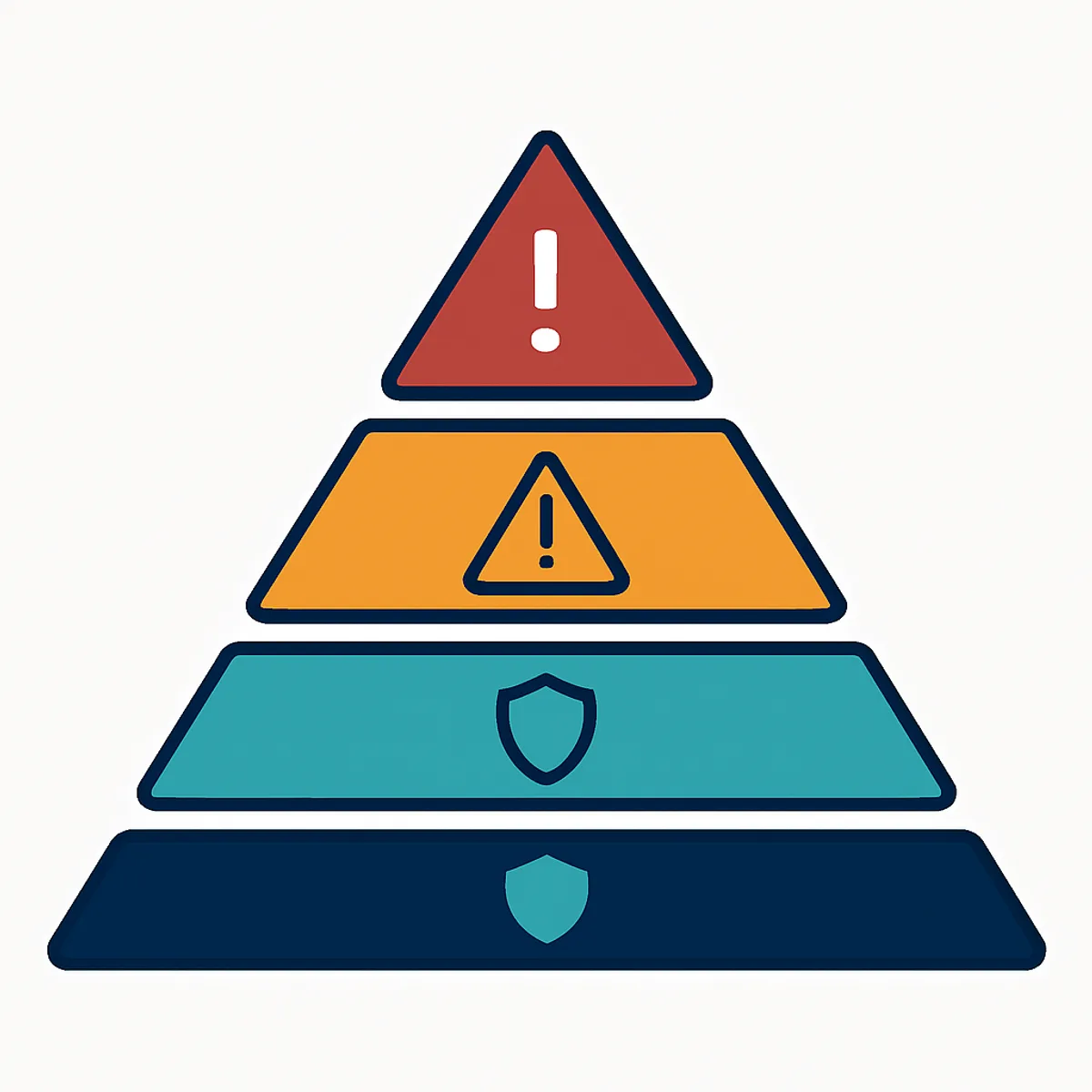
The EU AI Act sorts systems into four tiers, and this model is becoming a global reference point for how regulators think about AI safety.
| Risk Tier | Examples | Core Requirements |
|---|---|---|
| Unacceptable | Social scoring, manipulative or exploitative AI | Banned outright |
| High | Hiring, credit, medical devices, critical infrastructure | Risk assessments, human oversight, documentation, transparency |
| Limited | Chatbots, deepfakes, generative content | Disclosure that users are interacting with AI |
| Minimal | Spam filters, AI in video games | No mandatory obligations |
The key insight is that obligations scale with potential harm. Most everyday business tools fall into the limited or minimal categories, which means the compliance burden is lighter than many leaders fear. The real work concentrates on high-risk use cases that influence someone's livelihood, safety, or legal rights.
United States, UK, and Other Approaches
The United States has not passed a single federal AI law on the scale of the EU AI Act. Instead, it relies on the NIST AI Risk Management Framework — a voluntary but widely adopted standard — alongside existing agencies like the FTC enforcing rules against deceptive or discriminatory AI. Several states, including Colorado, have also passed their own AI accountability laws.
The United Kingdom takes a deliberately lighter, pro-innovation stance, asking existing regulators to apply five guiding principles rather than creating one central AI authority. Here is how the leading approaches compare:
| Region | Approach | Binding Law | Best For |
|---|---|---|---|
| European Union | Comprehensive, risk-based | Yes | Strong consumer protection |
| United States | Sectoral plus voluntary standards | Partial | Innovation flexibility |
| United Kingdom | Principles-based, regulator-led | Limited | Lightweight oversight |
| China | Targeted algorithm and content rules | Yes | State-aligned control |
For global teams, the takeaway is to design once for the strictest market you serve, then document how that baseline satisfies lighter regimes.
Building an AI Governance and Compliance Program
Good AI governance is not a one-time legal checkbox — it is an ongoing operational discipline. Based on what works for the teams we advise, here is a practical, repeatable approach.
- Inventory your AI systems. You cannot govern what you cannot see. List every AI tool you build or buy, including embedded features in SaaS products.
- Classify by risk. Map each system to a tier. Flag anything that affects hiring, credit, health, safety, or legal rights as high-risk.
- Document and assess. Keep records of training data sources, intended use, known limitations, and testing for bias and accuracy.
- Add human oversight. Ensure a qualified person can review, override, or halt automated decisions in high-risk contexts.
- Monitor continuously. Models drift over time. Schedule regular audits and retraining reviews rather than testing once at launch.
Teams that need help operationalizing this often pair internal policy with hands-on engineering support, such as our AI development and integration services, to bake compliance into the product itself.
What AI Safety Rules Mean for Your Business
AI regulation is frequently framed as a cost, but in practice it is also a trust advantage. Customers, partners, and enterprise buyers increasingly ask vendors how their AI is governed before signing contracts.

The most common pitfalls we see are avoidable. Companies deploy a third-party AI feature without checking its risk classification, skip documentation, or assume that buying a tool transfers legal responsibility — it usually does not. The deployer of an AI system frequently shares accountability with the developer. Treating governance as a feature, not a formality, protects you legally and strengthens your brand. The same principle applies to your wider digital presence; sound practices across WebPeak and your tech stack reinforce overall trust.
Transparency, Ethics, and Accountability
Transparency is the connective tissue of nearly every AROUND AI regulation. If an AI system makes or influences a consequential decision, people increasingly have the right to know it was involved and, in many cases, to understand why.
Three principles show up across almost every framework. Explainability means you can describe how a system reaches its outputs in understandable terms. Fairness means actively testing for and mitigating bias against protected groups. Accountability means a named human or team owns the system's behavior. Organizations that adopt these voluntarily — before they are forced to — tend to face fewer regulatory shocks and build deeper customer trust.
The Future of AI Regulation
AI law is still maturing, and several trends are clearly visible. Expect tighter rules on general-purpose and foundation models, stronger requirements to label AI-generated content, and more attention to AI's energy and data footprint.

We also expect more international alignment as bodies like the OECD and G7 push for shared definitions and standards. For businesses, the smart move is not to wait for perfect clarity. Building a flexible governance foundation now means new requirements become adjustments rather than emergencies. The organizations that treat AI safety as a continuous capability — not a deadline — will adapt fastest as the rules keep evolving.
Key Takeaways
- AI safety regulation today is risk-based: obligations scale with the potential harm a system can cause.
- The EU AI Act is the first comprehensive AI law, applies extraterritorially, and carries fines up to 35 million euros or 7% of global turnover.
- The United States relies on the NIST AI Risk Management Framework plus sector regulators rather than one federal law.
- High-risk AI — hiring, credit, health, safety — requires documentation, human oversight, and bias testing.
- Strong AI governance is an ongoing process: inventory, classify, document, oversee, and monitor continuously.
- Transparency, fairness, and accountability are the shared backbone of nearly every global framework.
Frequently Asked Questions (FAQ)
What is AI safety regulation in simple terms?
AI safety regulation is the set of laws and standards that make sure AI systems are safe, fair, and accountable. It mainly targets high-risk uses — like hiring or medical decisions — requiring transparency, human oversight, and documented testing, while leaving low-risk tools largely unregulated.
Is AI regulated right now?
Yes. The EU AI Act is already in force and rolling out in phases, China enforces rules on algorithms and generative AI, and the U.S. uses the NIST framework plus existing agencies. There is no single global law, so businesses must track several overlapping regimes at once.
Does the EU AI Act apply to companies outside Europe?
Yes. The EU AI Act is extraterritorial, much like GDPR. If your AI system is used by people inside the EU, the law applies regardless of where your company is headquartered. Non-compliance can trigger fines of up to 35 million euros or 7% of global annual turnover.
What counts as high-risk AI?
High-risk AI includes systems used in hiring, credit scoring, medical devices, critical infrastructure, education, and law enforcement — anywhere outputs affect people's rights, safety, or livelihood. These systems must meet strict requirements for documentation, bias testing, human oversight, and transparency before and after deployment.
How can a small business comply with AI rules?
Start by listing every AI tool you use, classify each by risk level, and document how the high-risk ones work. Add human review for important automated decisions and monitor performance over time. Most small-business tools are low-risk, so the realistic compliance burden is usually manageable.
Will AI regulation slow down innovation?
Not necessarily. Risk-based rules concentrate obligations on a small set of high-stakes systems, leaving most innovation free. Clear regulation can actually accelerate adoption by building user trust and giving companies a stable framework to build on, rather than reacting to scattered, unpredictable enforcement.