A practical, experience-based guide to the application development technologies that matter in 2026 — frontend, backend, databases, mobile, cloud, and AI tooling — plus how to choose the right stack.
Application Development Technologies
Every application you use today is the result of a series of technology decisions — some deliberate, many accidental. After building and auditing hundreds of production applications, one pattern is consistent: teams rarely fail because they picked the "wrong" framework. They fail because they picked technologies that did not match their team size, their data model, or their delivery timeline. This guide breaks down the application development technologies that actually matter, what each layer does, and how to choose between them with evidence rather than hype.
Quick Answer: Application development technologies are the languages, frameworks, databases, and infrastructure tools used to build software. A modern stack has four layers: frontend (React, Vue, Swift), backend (Node.js, Python, Go, Java), data (PostgreSQL, MongoDB, Redis), and cloud or DevOps tooling for deployment, scaling, and monitoring.
What Are Application Development Technologies?
Definition: Application development technologies are the combined set of programming languages, frameworks, libraries, databases, APIs, and infrastructure services used to design, build, test, deploy, and maintain a software application.
They are best understood as layers rather than a list. Each layer solves a distinct problem, and each can be swapped independently if the boundaries between them are clean. That is the real engineering goal: not choosing famous tools, but keeping the seams between layers replaceable.
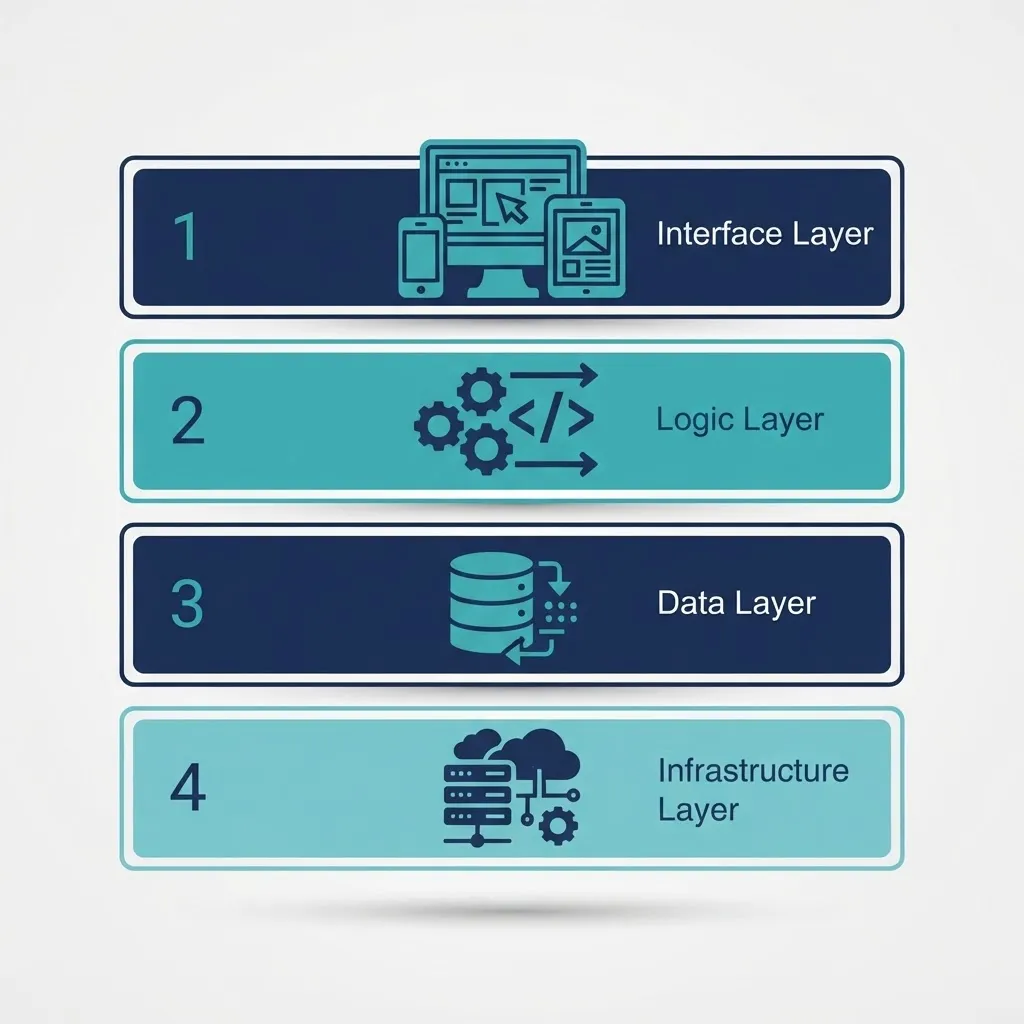
The Four Layers of a Modern Stack
- Presentation layer — what the user sees and touches: web UI, mobile app, desktop client.
- Application logic layer — business rules, authentication, workflows, and API endpoints.
- Data layer — relational databases, document stores, caches, search indexes, object storage.
- Infrastructure layer — hosting, CI/CD pipelines, containers, CDNs, observability tooling.
A useful rule from real projects: if a change to your UI forces a change to your database schema, your layers are leaking, and every future feature will cost more than it should.
Frontend Technologies: Where Perceived Quality Is Won
The frontend determines how fast your application feels, and speed is a business metric, not a vanity one. According to Google research on mobile behavior, 53% of mobile site visits are abandoned if a page takes longer than three seconds to load. That single statistic justifies most frontend architecture decisions.
The Frameworks Worth Knowing
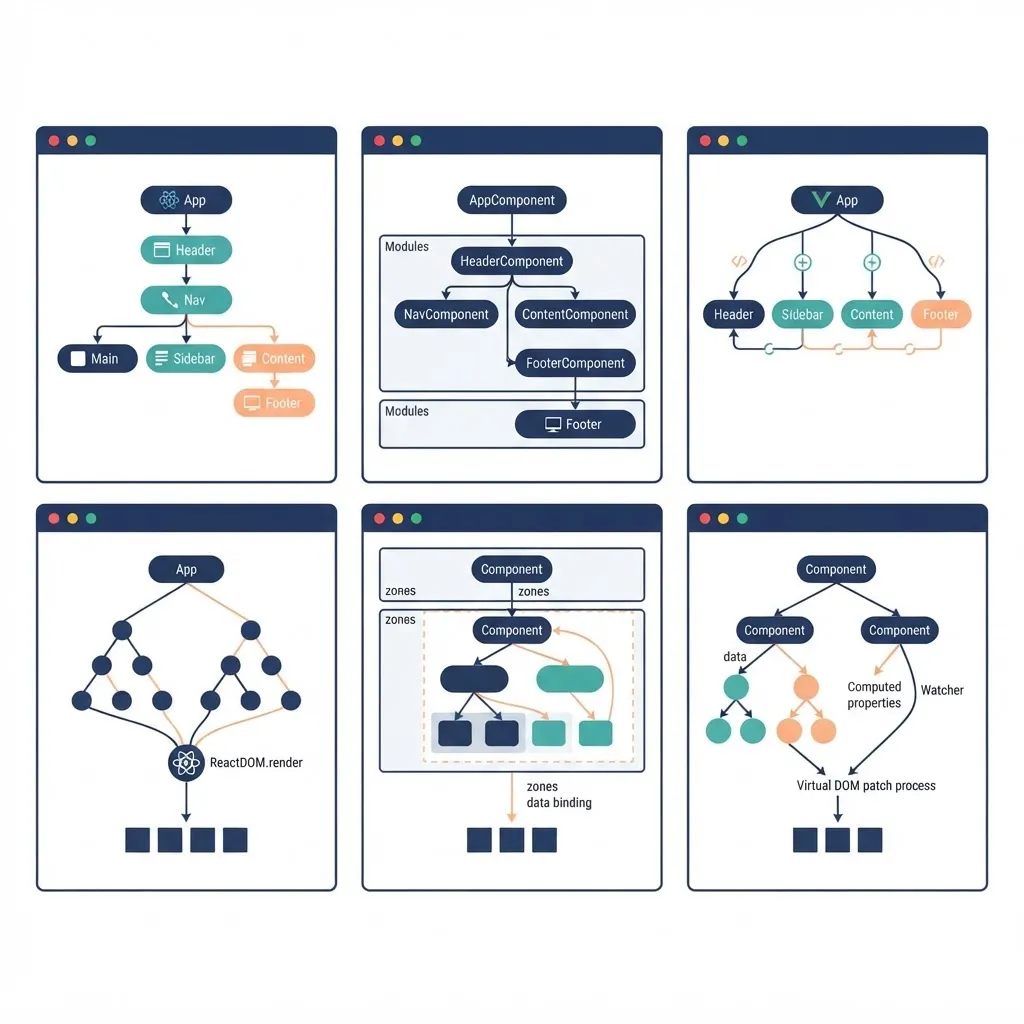
- React — the largest ecosystem and hiring pool. Best when you need long-term maintainability and third-party integrations. The Stack Overflow Developer Survey has consistently ranked React among the most-used web frameworks for years, which matters because ecosystem size predicts how quickly you can solve unusual problems.
- Next.js — React with server rendering, routing, and caching built in. The right default for content-heavy or SEO-sensitive applications because server-rendered HTML is indexable immediately.
- Vue — gentler learning curve and excellent documentation. Strong choice for smaller teams shipping internal tools.
- Angular — opinionated and batteries-included. Genuinely useful in large enterprises where consistency across dozens of developers matters more than flexibility.
- Svelte — compiles away the framework, producing very small bundles. Excellent for embedded widgets and performance-critical interfaces.
A Practical Frontend Checklist
- Ship under 200KB of JavaScript on your critical path.
- Server-render anything that needs to rank in search.
- Use a component library instead of hand-rolling accessible dropdowns and dialogs.
- Measure Core Web Vitals in production, not just in local development.
Backend Technologies: Correctness, Concurrency, and Cost
The backend is where correctness and cost live. Choosing here should be driven by workload shape, not language preference.
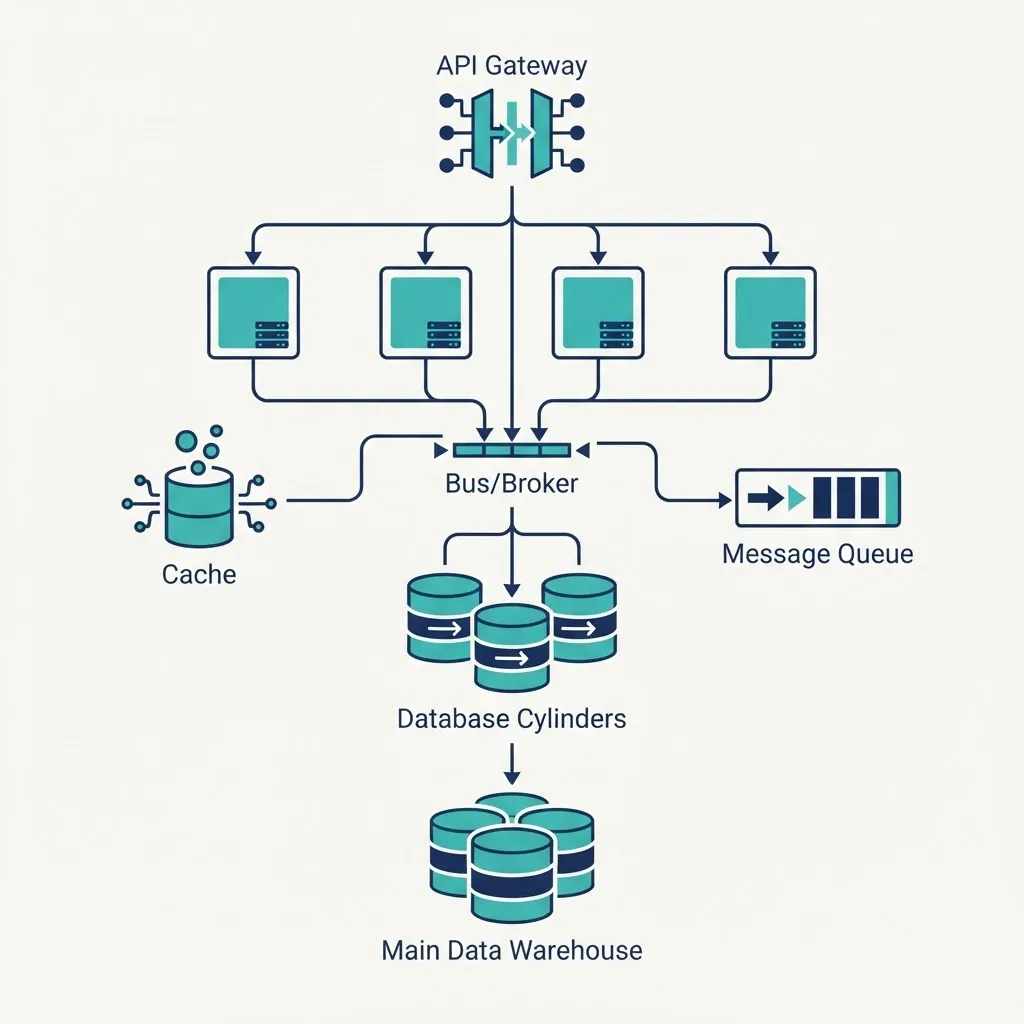
Matching Language to Workload
- Node.js / TypeScript — excellent for I/O-heavy APIs and real-time features. The biggest practical advantage is one language across frontend and backend, which reduces context switching and shared-type bugs.
- Python — the default for data-heavy applications, machine learning pipelines, and rapid internal tooling.
- Go — predictable performance and low memory usage. Ideal for high-throughput services, proxies, and infrastructure components.
- Java and C#/.NET — mature tooling, strong typing, and deep enterprise integration. Still the safest choice for regulated industries and long-lived systems.
- PHP (modern Laravel-era) — vastly better than its reputation, and extremely productive for content platforms and commerce.
API Styles Compared
| Technology | Best For | Learning Curve | Caching | Real-Time Support |
|---|---|---|---|---|
| REST | Public APIs, simple CRUD | Low | Excellent | No |
| GraphQL | Complex, nested client data needs | Medium | Harder | Partial (subscriptions) |
| gRPC | Internal service-to-service calls | High | Limited | Yes (streaming) |
| WebSockets | Chat, dashboards, collaboration | Medium | Not applicable | Yes |
| Server Actions / RPC | Tightly coupled full-stack apps | Low | Framework-managed | No |
In practice, most products should start with REST, add WebSockets only when live updates are a genuine requirement, and adopt GraphQL only when multiple client types demand very different data shapes.
Database Technologies: The Decision You Cannot Cheaply Reverse
Of all application development technologies, the database is the hardest to change later. Frameworks can be rewritten in a quarter; a migrated production data model can take a year.
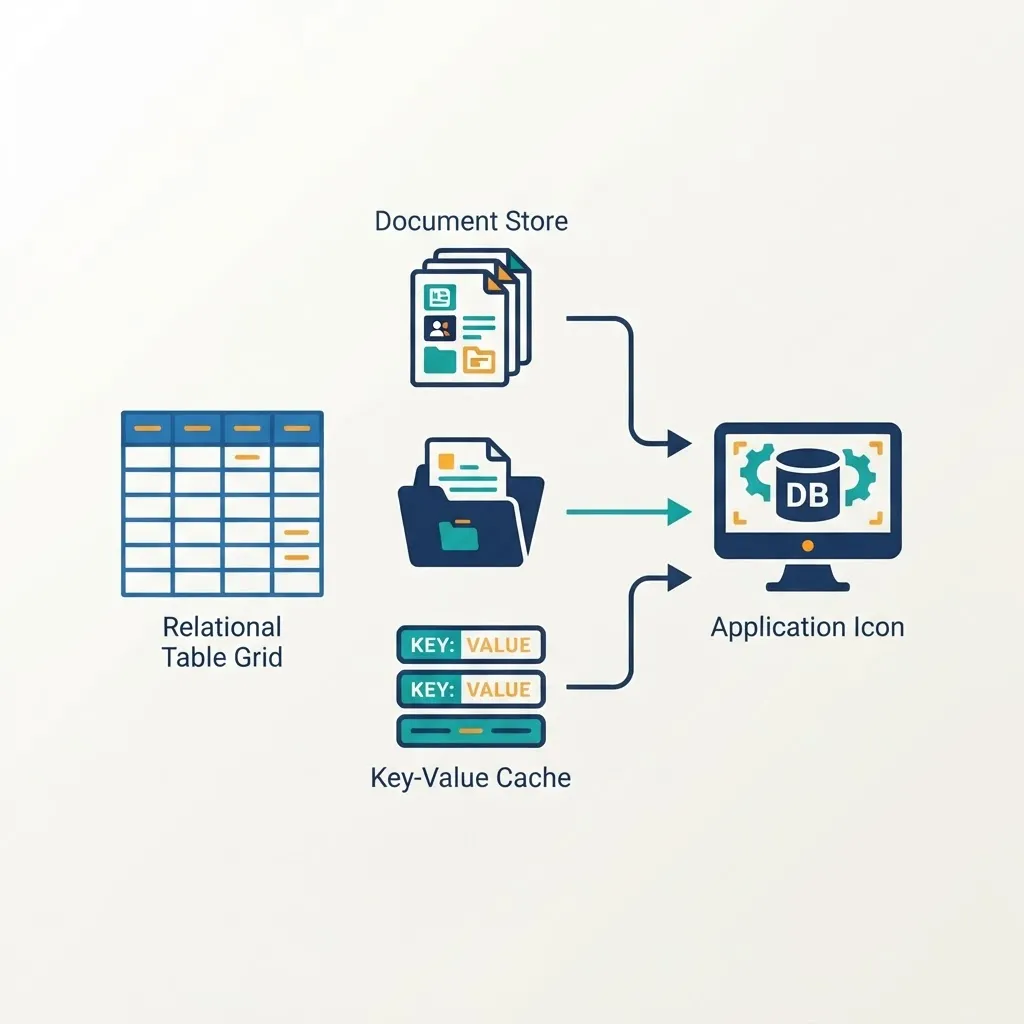
How to Choose
- Relational (PostgreSQL, MySQL) — pick this by default. If your data has relationships and you care about consistency, PostgreSQL handles JSON, full-text search, and geospatial queries well enough to delay adding specialized stores.
- Document (MongoDB, DynamoDB) — pick this when documents are genuinely self-contained and access patterns are known upfront and stable.
- Key-value cache (Redis) — never your primary store. Use it for sessions, rate limiting, queues, and caching expensive reads.
- Search (Elasticsearch, vector databases) — add when relevance ranking or semantic search becomes a core feature rather than a nice extra.
A hard-earned lesson: the most common cause of slow applications is not the language or the framework. It is a missing index, an N+1 query, or a query returning far more rows than the interface displays. Profile your queries before you rewrite your architecture.
Mobile and Cross-Platform Technologies
Mobile is where technology choice has the clearest cost implications, because the alternative to sharing code is maintaining two full codebases.
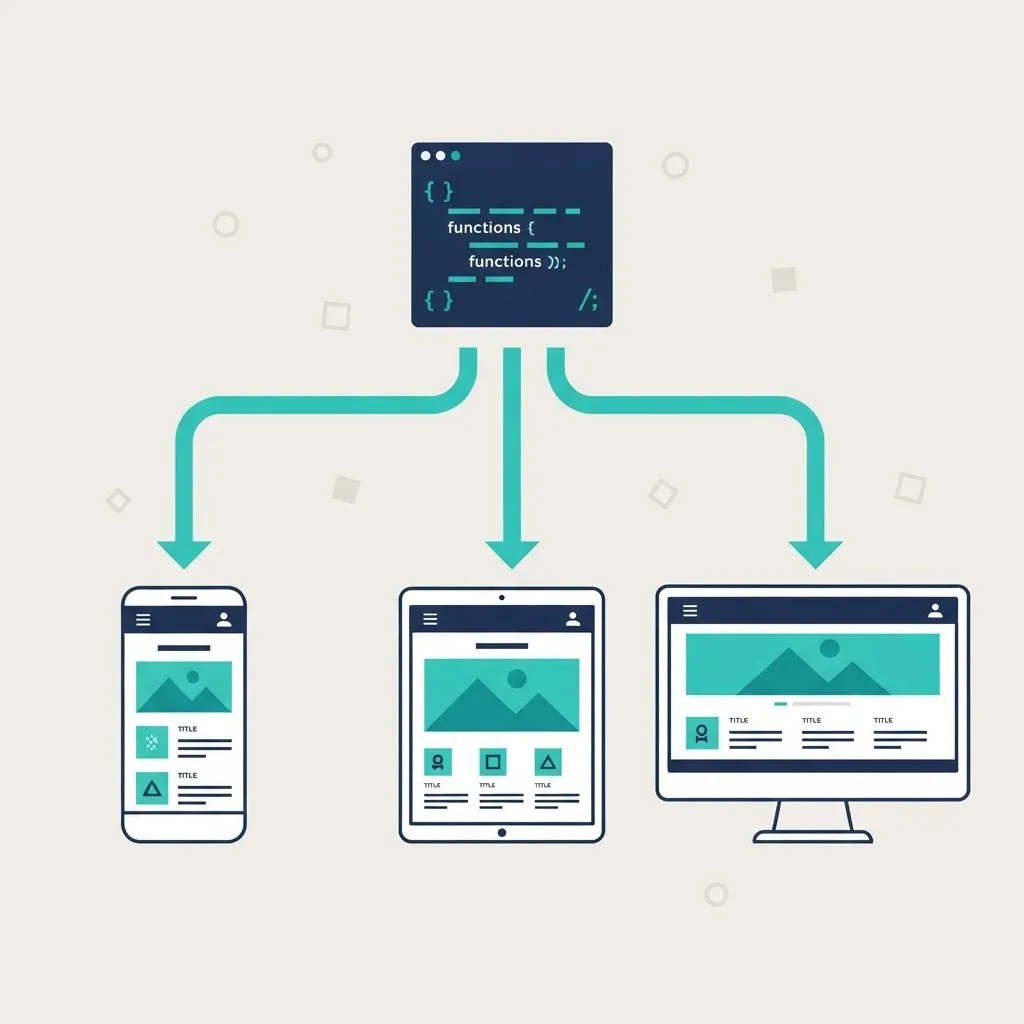
- Native (Swift, Kotlin) — best performance, immediate access to new OS features, and the highest platform polish. Choose it for camera-heavy, AR, or hardware-integrated apps.
- React Native — shares most logic across platforms and reuses React knowledge. Strong for content, commerce, and account-based apps.
- Flutter — consistent rendering across platforms and excellent animation performance, with a single Dart codebase.
- Progressive Web Apps — installable, indexable, and updatable without app store review. The cheapest way to reach mobile users when you do not need deep device APIs.
If your app is primarily forms, lists, and content, cross-platform is usually the rational choice. If your differentiation is a device capability, go native. Teams that need both a web platform and mobile presence often plan them together, which is how ZoneTechify's web application development service approaches architecture from the first sprint.
Cloud, DevOps, and Deployment Technologies
Modern applications are not "finished" and shipped once; they are continuously delivered. Your deployment technology directly determines how often you can safely release.
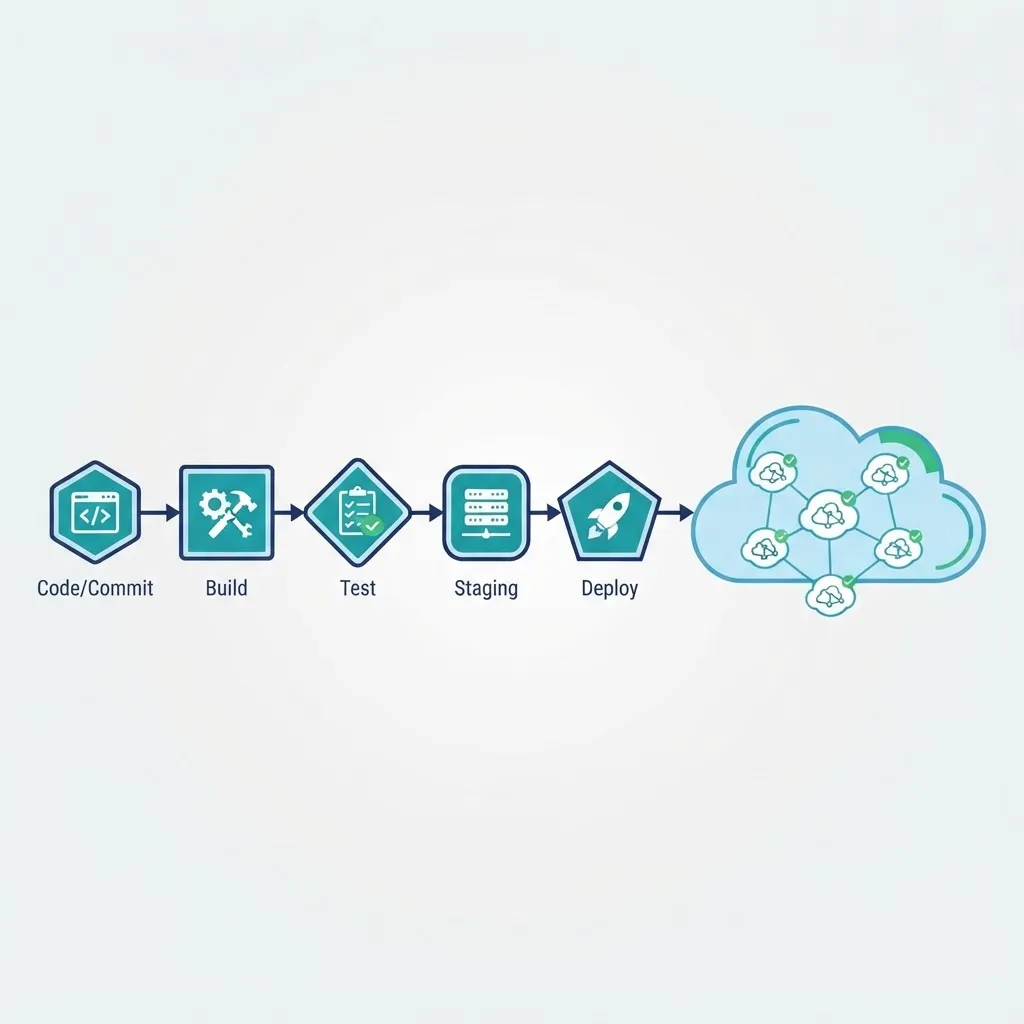
The Essential Tooling
- Version control and CI — Git plus automated pipelines that run tests on every commit. Non-negotiable.
- Containers (Docker) and orchestration (Kubernetes) — powerful, but Kubernetes is genuine overhead. Adopt it when you run many services, not your first one.
- Serverless and managed platforms — remove server maintenance entirely and scale automatically. The fastest path from prototype to production for most teams.
- Observability (logs, metrics, traces, error tracking) — add this before launch. Debugging production without traces is guesswork.
- Infrastructure as code (Terraform) — makes environments reproducible and reviewable.
The DORA research program has repeatedly found that elite-performing engineering teams deploy far more frequently and recover from incidents dramatically faster than low performers — and the differentiator is automation and small batch sizes, not headcount. Practical guides on aligning technical delivery with measurable outcomes are published regularly at WebPeak.
AI-Assisted Development: The Genuine Shift
AI has changed application development workflows more than any single framework release in the last decade — but not in the way headlines suggest.
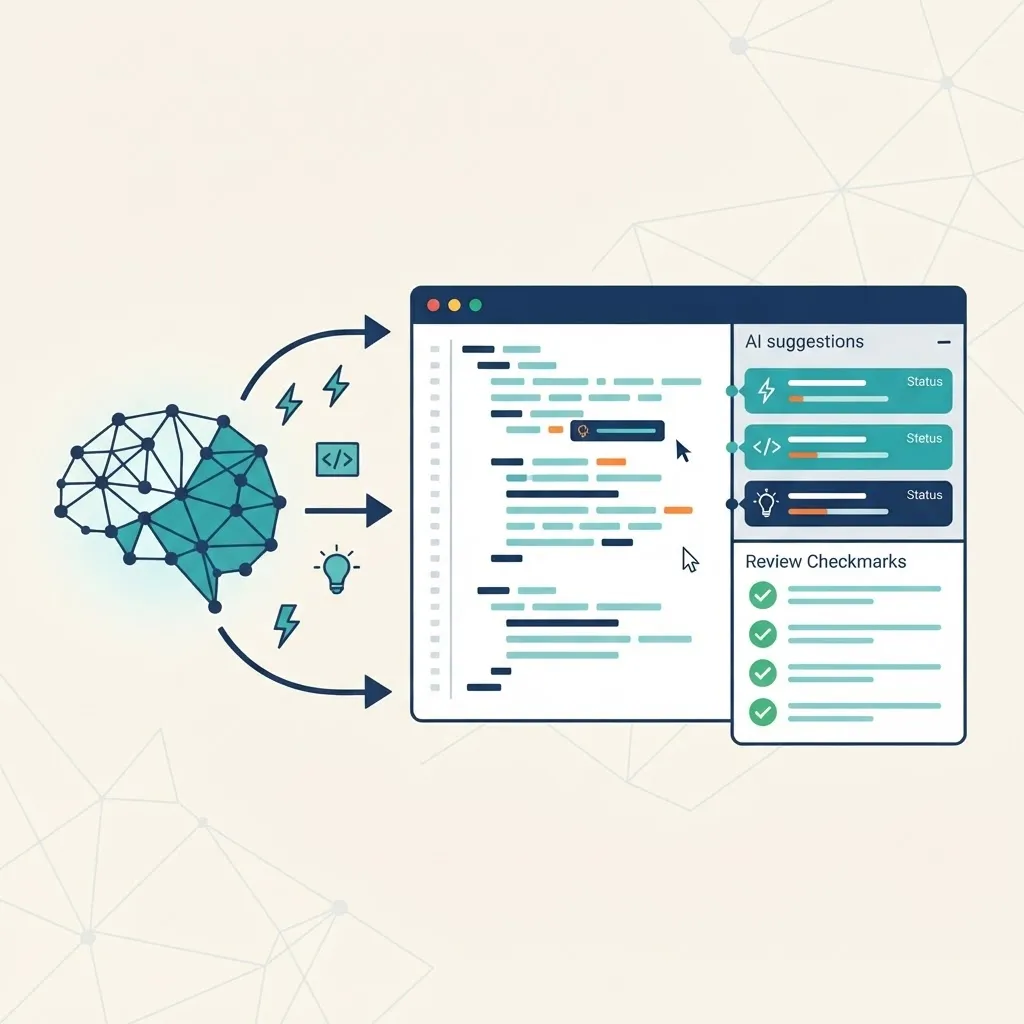
What AI reliably accelerates today:
- Scaffolding boilerplate: CRUD endpoints, forms, type definitions, test fixtures.
- Explaining unfamiliar codebases and translating between languages.
- Writing first-draft documentation and migration scripts.
What still requires human expertise:
- Data modeling and the trade-offs behind it.
- Security boundaries, authorization rules, and multi-tenant isolation.
- Performance work that depends on understanding real user behavior.
The most effective pattern we see is AI as a fast junior collaborator whose output is always reviewed. Teams that skip review ship security holes faster than they ship features. Applications that need genuine machine learning rather than AI-assisted coding are a different discipline, best handled with dedicated support such as WebPeak's artificial intelligence services.
How to Choose Your Stack Without Regret
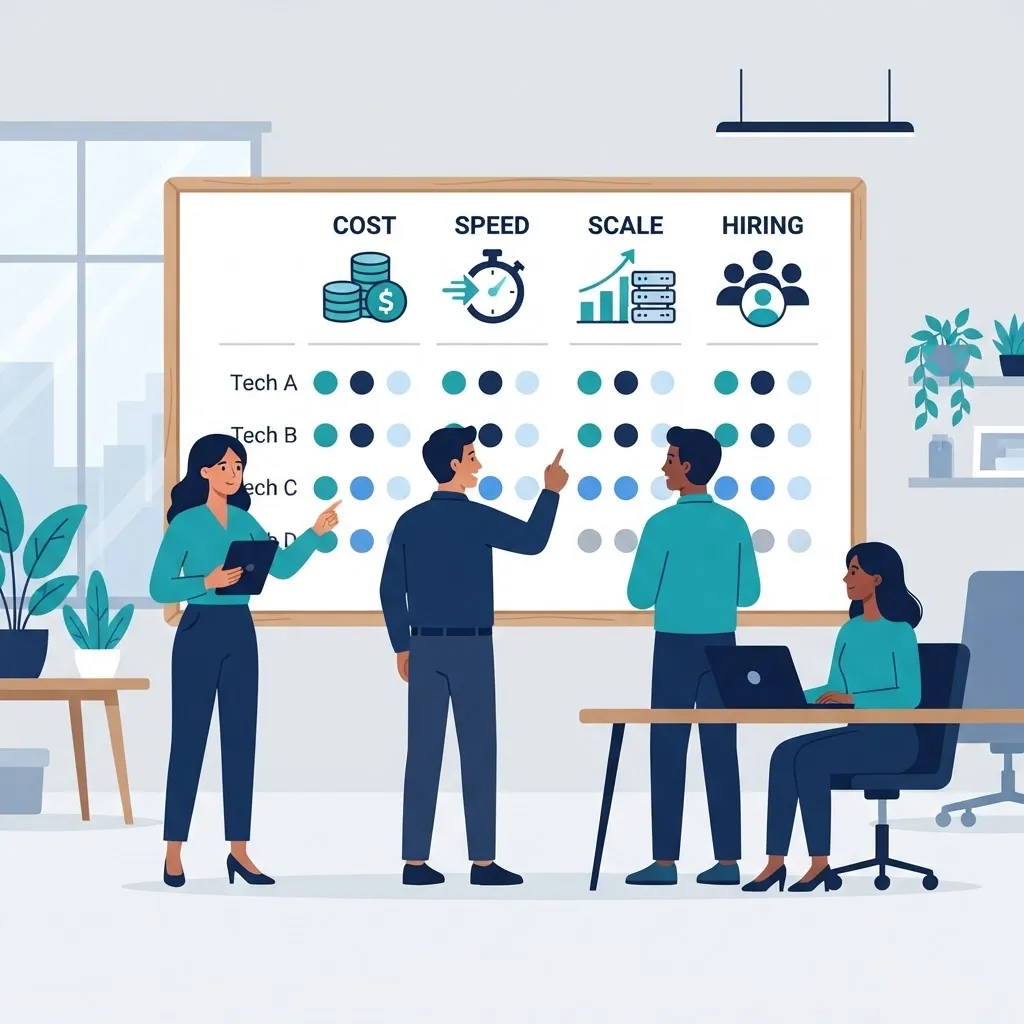
Use this evaluation order — it reflects what actually causes projects to succeed or stall:
- Requirements first. Write down expected users, data volume, real-time needs, and compliance rules before naming a single tool.
- Team skills second. A team shipping confidently in a boring stack beats a team learning a trendy one mid-project.
- Hiring and maintenance third. Can you hire for this in your market in three years?
- Ecosystem maturity fourth. Are there battle-tested libraries for auth, payments, and file handling?
- Performance ceiling last. Almost no application fails because a mainstream language was too slow. They fail from bad queries and unclear requirements.
One more original observation worth internalizing: technology cost is dominated by change, not by initial build. Optimize for how cheaply you can modify the application in month eighteen, not how quickly you can demo it in week two.
Key Takeaways
- Application development technologies span four layers: frontend, backend, data, and infrastructure — each independently replaceable when boundaries are clean.
- Google reports that 53% of mobile visits are abandoned after three seconds, making frontend performance a revenue issue.
- PostgreSQL is the safest default database; Redis should support it, never replace it.
- REST first, WebSockets when live data is required, GraphQL only for genuinely diverse client needs.
- Cross-platform frameworks fit content and account-based apps; native fits hardware-driven apps.
- DORA research links elite delivery performance to automation and small releases, not larger teams.
- AI accelerates boilerplate and comprehension but does not replace judgment on data models and security.
Frequently Asked Questions (FAQ)
What technologies are used in application development?
Application development uses frontend frameworks such as React, Vue, or Flutter; backend languages such as Node.js, Python, Go, Java, or C#; databases such as PostgreSQL, MongoDB, and Redis; and infrastructure tooling including Git, Docker, CI/CD pipelines, and cloud hosting platforms for deployment, scaling, and monitoring.
Which technology is best for application development in 2026?
There is no single best technology. For most web applications, a TypeScript stack with React or Next.js on the frontend, Node.js or Python on the backend, and PostgreSQL for data offers the strongest balance of ecosystem maturity, hiring availability, performance, and long-term maintainability across both startups and enterprises.
Should I choose native or cross-platform for my mobile app?
Choose cross-platform tools like React Native or Flutter when your app is mainly content, forms, lists, and accounts, since you maintain one codebase. Choose native Swift or Kotlin when performance, camera, AR, Bluetooth, or brand-new operating system features are central to your product experience.
How do I pick the right database for my application?
Start with a relational database like PostgreSQL unless you have a clear reason not to. It handles relationships, JSON, search, and analytics well. Add MongoDB for self-contained documents, Redis for caching and sessions, and a search or vector database only when relevance becomes a core feature.
Is AI replacing application developers?
No. AI reliably speeds up boilerplate code, documentation, tests, and codebase comprehension, but it cannot own data modeling, security boundaries, authorization logic, or architectural trade-offs. The productive pattern is treating AI as a fast collaborator whose output is always reviewed by an experienced engineer before it reaches production.
How much does the technology stack affect development cost?
The initial stack choice affects roughly the first few months of cost, but ongoing change dominates the total. Stacks with strong ecosystems, good documentation, and available talent reduce long-term cost far more than raw performance benchmarks, because most spending goes toward modifying existing features rather than building new ones.
Final Thoughts
Application development technologies are tools, not identities. The strongest engineering teams pick deliberately, document the reasoning, keep layers loosely coupled, and revisit decisions with data instead of loyalty. If you want a technology stack recommendation grounded in your actual requirements, explore the engineering resources at ZoneTechify and the delivery-focused analysis published at WebPeak.