
Discover how artificial intelligence digital asset management automates tagging, search, and workflows to help teams organize, find, and reuse media faster.
Artificial Intelligence Digital Asset Management
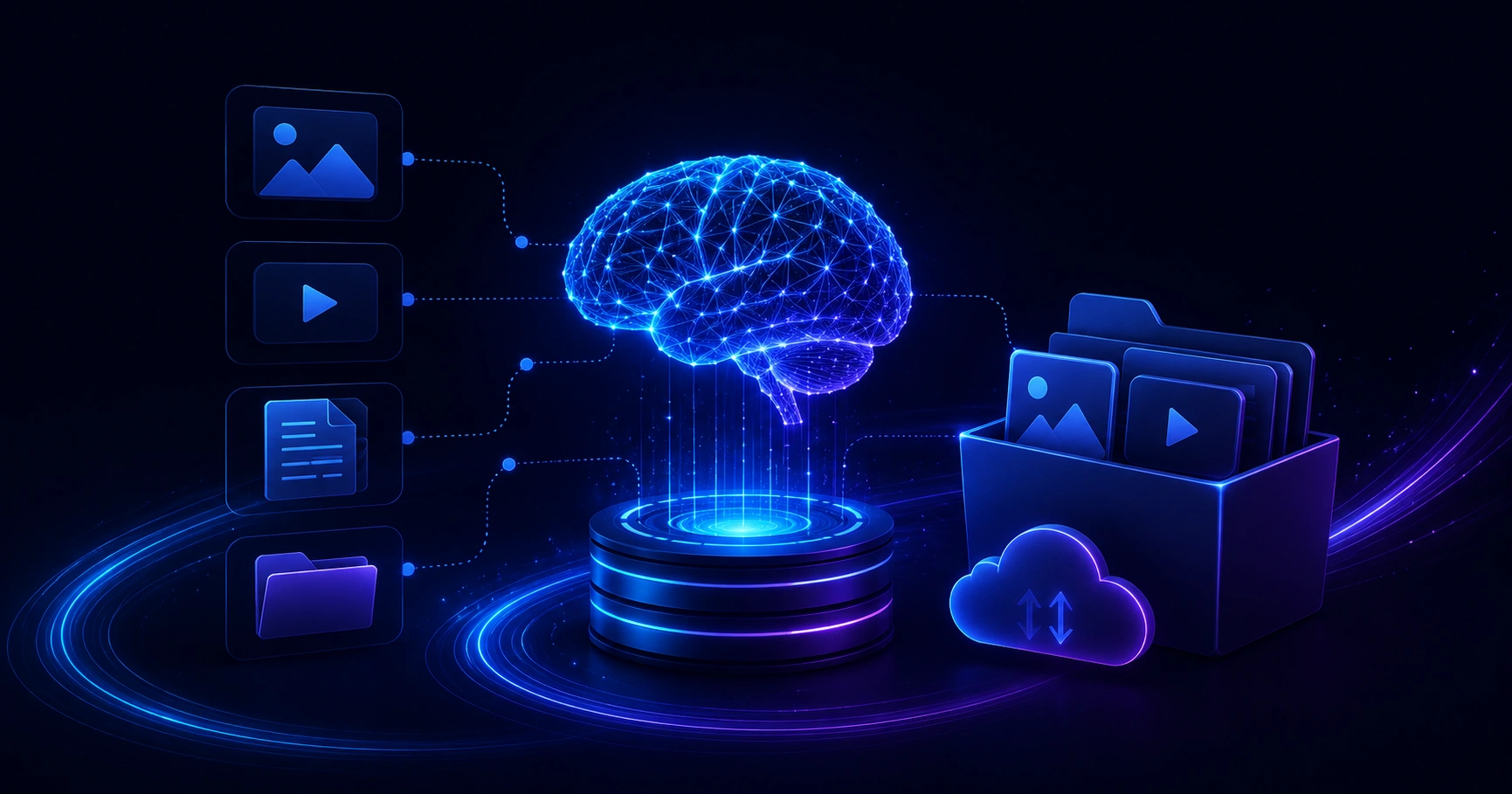
Every growing brand eventually drowns in its own content. Photos, videos, logos, product shots, and design files pile up across drives, inboxes, and cloud folders until nobody can find the right file when it matters. Artificial intelligence digital asset management (AI DAM) fixes that by using machine learning to automatically tag, organize, search, and govern your media library. After helping teams migrate from chaotic shared drives to intelligent libraries, we have seen first-hand how much faster creative work moves once AI does the sorting. This guide explains exactly how it works, what it costs you to ignore it, and how to adopt it well.
Quick Answer: Artificial intelligence digital asset management uses machine learning to automatically tag, categorize, search, and govern digital files like images and videos. It removes manual sorting, speeds up retrieval through visual and semantic search, and helps teams reuse approved assets, saving hours of repetitive work every week.
What Is AI Digital Asset Management?
Digital asset management (DAM) is a system for storing, organizing, and distributing digital files from one central location. Artificial intelligence digital asset management adds a layer of machine learning that performs the tedious work a human used to do: recognizing objects in images, transcribing video, generating keywords, and surfacing the right file on demand.
Traditional DAM platforms are essentially smart filing cabinets. They keep files safe but still rely on people to label everything correctly. AI DAM flips that model. Instead of asking employees to manually tag thousands of assets, the system analyzes the content itself and applies consistent, searchable metadata in seconds. The result is a library that organizes itself and gets smarter as it grows.

Why Manual Asset Management No Longer Scales
The core problem is volume. According to IDC research widely cited across the industry, knowledge workers spend roughly 2.5 hours per day searching for information they need to do their jobs. When that information is visual content scattered across systems, the waste compounds quickly. A designer who cannot find an approved logo simply recreates it, introducing brand inconsistency and duplicated effort.
Manual tagging also fails because it is subjective. One person tags a photo "meeting," another tags it "team," and a third leaves it blank. Six months later nobody can find it under any term. AI removes that inconsistency by applying the same recognition logic to every file, every time. For content-heavy organizations, this consistency is the difference between a usable archive and a digital junk drawer.
How AI Powers Modern Digital Asset Management
Artificial intelligence touches nearly every stage of the asset lifecycle. Below are the capabilities that deliver the most measurable value.
Automated Metadata Tagging
The single biggest time-saver is auto-tagging. Computer vision models scan each image or video frame, identify objects, scenes, colors, and even brand logos, then attach descriptive keywords automatically. A photo of a person drinking coffee at a desk might receive tags like "office," "laptop," "coffee," and "remote work" without anyone lifting a finger.

Visual and Semantic Search
AI DAM lets you search the way you actually think. Instead of remembering an exact filename, you can search "blue product shot on white background" or even upload a reference image to find visually similar assets. Semantic search understands intent, so "happy customers" returns relevant smiling-people photos even if those exact words never appear in the metadata.

Workflow Automation
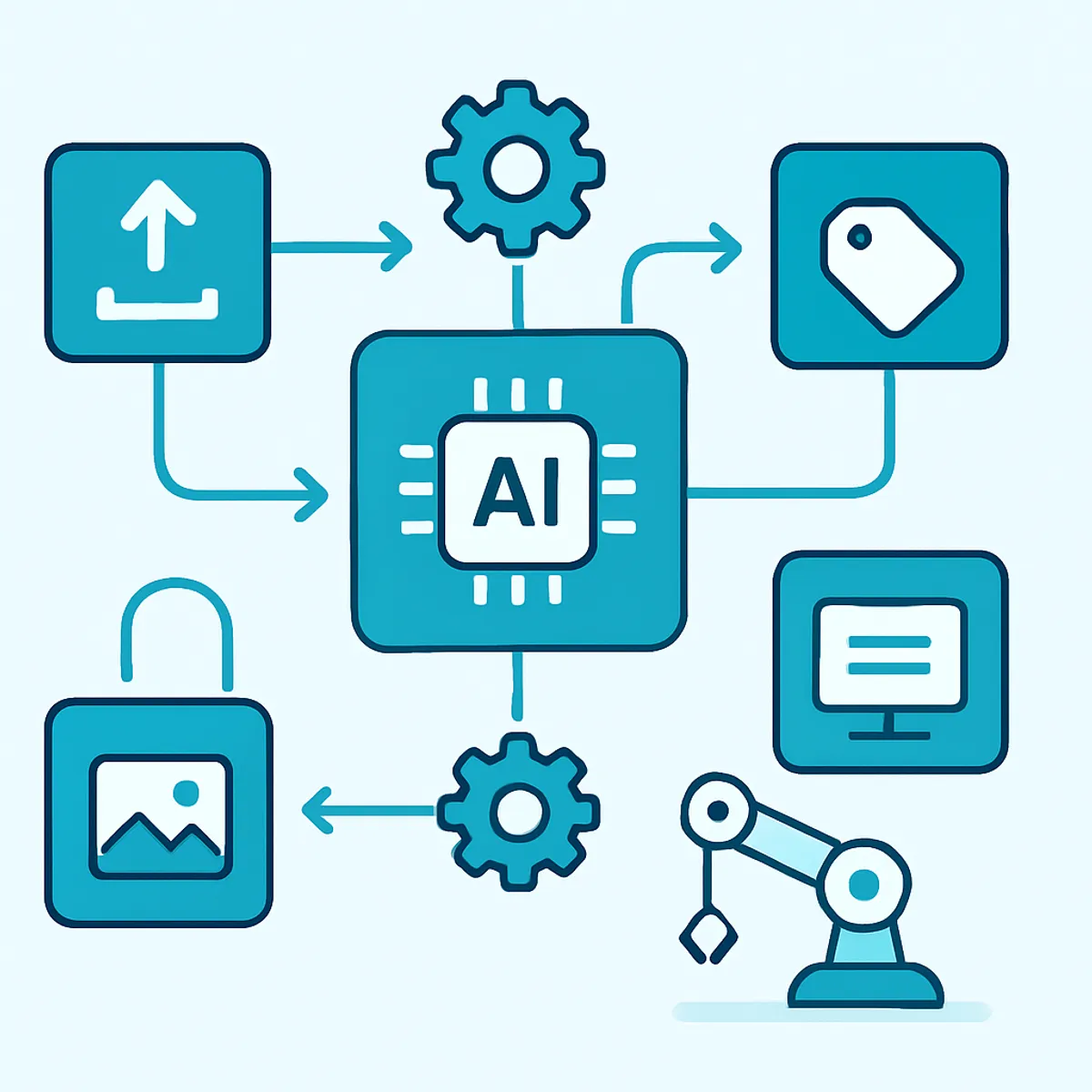
Beyond finding files, AI streamlines how they move through your organization. Assets can be automatically routed for approval, resized for each platform, watermarked, or flagged when usage rights are about to expire. This kind of automation is where AI-driven systems pay for themselves, and it is a core focus of modern artificial intelligence services that connect creative pipelines end to end.
Content Moderation and Governance
AI also protects your brand. It can detect off-brand imagery, identify duplicate files, transcribe spoken audio for accessibility and search, and recognize faces for rights management. This governance layer is critical for regulated industries where the wrong asset going public carries real legal and reputational cost.
AI DAM vs Traditional DAM: A Direct Comparison
The table below summarizes the practical differences teams notice within the first month of switching.
| Capability | Traditional DAM | AI Digital Asset Management |
|---|---|---|
| Metadata tagging | Manual, inconsistent | Automatic, consistent |
| Search method | Filename and keyword | Visual, semantic, and keyword |
| Duplicate detection | Manual review | Automated flagging |
| Video transcription | Outsourced or skipped | Built-in and searchable |
| Setup effort over time | Grows with library | Scales automatically |
| Time to find an asset | Minutes to hours | Seconds |
The Business Benefits That Actually Matter
The value of AI DAM is not abstract. It shows up in measurable ways across the business.
- Faster retrieval. Teams stop hunting for files and start using them, recovering hours each week.
- Lower production costs. Reusing approved assets reduces duplicate shoots, redesigns, and licensing fees.
- Stronger brand consistency. Everyone pulls from the same source of truth, so the brand stays uniform across channels.
- Better collaboration. Distributed teams access the same intelligent library regardless of location.
- Reduced compliance risk. Automated rights tracking prevents expired or unlicensed assets from being published.

Gartner has projected that AI augmentation will continue to drive significant business value as automation removes repetitive knowledge work. In creative operations specifically, the repetitive work being removed is exactly the manual tagging, sorting, and searching that AI DAM handles. That is why marketing, e-commerce, and media teams are adopting it fastest.
How to Implement AI Digital Asset Management
Adopting AI DAM is less about technology and more about process. Follow these steps to avoid a messy rollout.
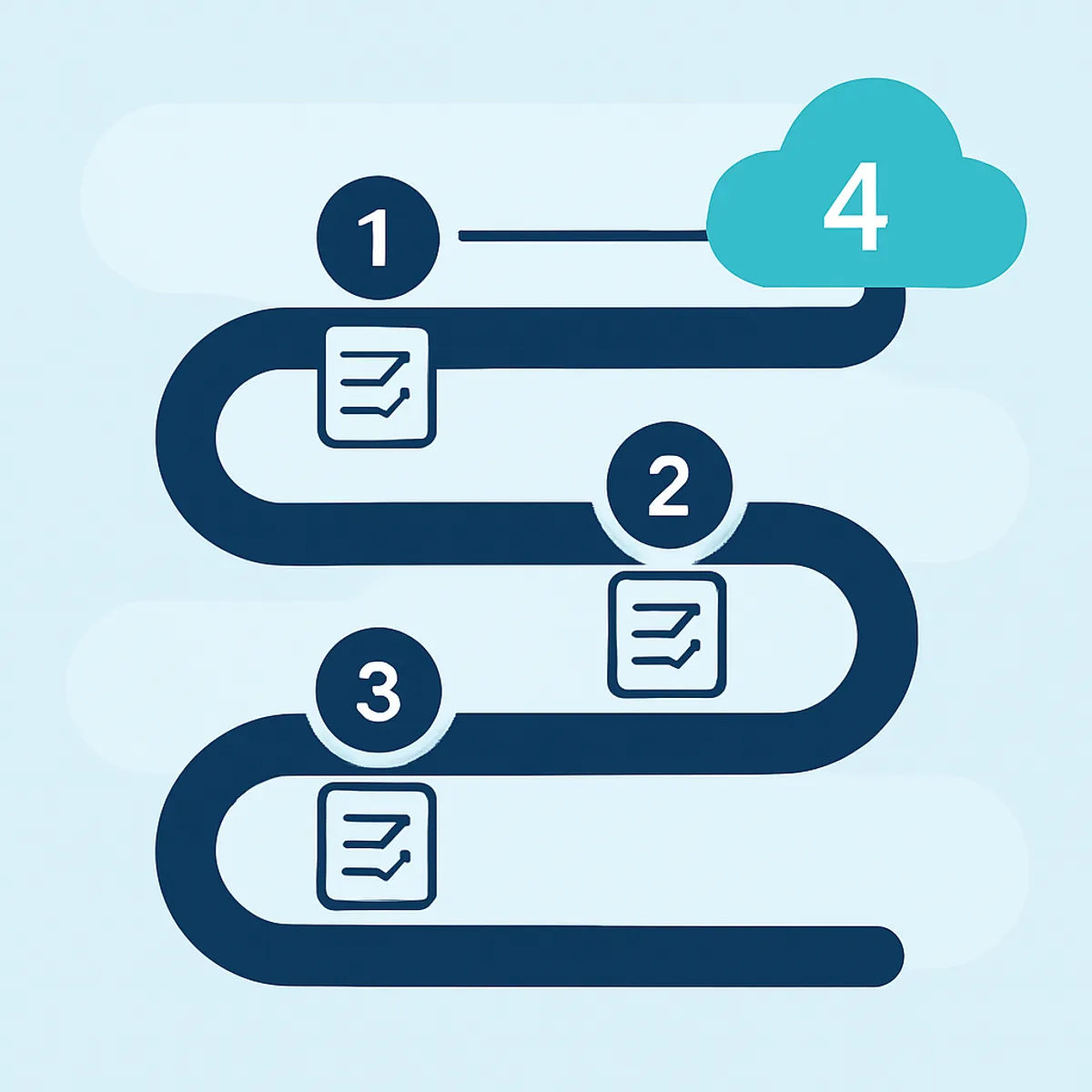
Step 1: Audit Your Existing Assets
Before migrating anything, take stock of what you have. Identify duplicates, outdated files, and your most-used assets. A clean migration produces a far more useful library than dumping years of clutter into a new system.
Step 2: Define a Taxonomy and Governance Rules
Even with AI doing the heavy lifting, you need a structure. Decide on naming conventions, access permissions, and approval flows. AI tags become exponentially more powerful when layered on top of a clear foundational taxonomy.
Step 3: Choose the Right Platform
Evaluate platforms based on your file types, integrations, and team size. Make sure the AI features genuinely fit your content rather than chasing the longest feature list. A focused tool that handles your formats well beats a bloated one that does not.
Step 4: Train Your Team
Adoption fails when people revert to old habits. Show your team how visual search and auto-tagging save them time, and the system sells itself. Pair the rollout with clear documentation and a single internal champion.
If you want expert help planning a rollout, our team at ZoneTechify regularly designs intelligent content systems, and you can explore tailored artificial intelligence services built around real business workflows.
The Future of AI Digital Asset Management
The next wave is generative. AI DAM platforms are beginning to create new asset variations on demand, automatically generating cropped, resized, and localized versions from a single master file. Predictive analytics will recommend which assets to use based on past performance, and natural-language interfaces will let anyone request "three lifestyle images for a summer campaign" and receive ready options instantly.

This shift turns the DAM from a storage tool into a creative partner. To keep up with practical guidance on these trends, resources like WebPeak track how AI continues to reshape content operations across industries.
Key Takeaways
- Artificial intelligence digital asset management automates tagging, search, and governance that humans previously did manually.
- Knowledge workers spend around 2.5 hours per day searching for information, a cost AI DAM directly reduces.
- Visual and semantic search lets users find files by appearance or intent, not just exact filenames.
- AI DAM improves brand consistency, lowers production costs, and reduces compliance risk.
- Successful adoption depends on a clean audit, a clear taxonomy, the right platform, and team training.
- The future of AI DAM is generative, producing and recommending assets, not just storing them.
Frequently Asked Questions (FAQ)
What is artificial intelligence digital asset management?
It is a content management approach that uses machine learning to automatically tag, organize, search, and govern digital files such as images, videos, and documents. It removes manual sorting, speeds up retrieval through visual and semantic search, and helps teams consistently reuse approved, on-brand assets.
How does AI tagging actually work in a DAM?
AI tagging uses computer vision and machine learning to analyze the content of each file. It identifies objects, scenes, colors, text, and logos, then automatically applies relevant keywords as metadata. This makes assets instantly searchable without anyone manually typing tags for every single file.
Is AI digital asset management worth it for small businesses?
Yes, often more so for small teams. Without dedicated librarians, small businesses lose the most time hunting for files. AI DAM automates that work, prevents duplicate production costs, and keeps branding consistent, delivering an outsized productivity return even with modest content volumes and limited staff.
Can AI DAM search videos and audio too?
Absolutely. Modern AI DAM platforms transcribe spoken audio, detect objects in individual video frames, and index that data. This means you can search inside videos for a spoken phrase or a visual element, making large media archives far more usable and discoverable than before.
How is AI DAM different from cloud storage like Google Drive?
Cloud storage holds files but offers no real intelligence about their content. AI DAM understands what is inside each asset, applies automatic tags, enables visual search, tracks usage rights, and enforces brand governance. It is purpose-built for managing creative content at scale, not just storing files.
Artificial intelligence digital asset management is no longer a luxury for enterprises with massive media libraries. As content volume explodes across every channel, AI is becoming the only practical way to keep that content organized, findable, and on-brand, freeing your team to create instead of search.