A practical, expert guide to artificial intelligence aesthetics: what AI-generated visual style is, how it works, and how designers can use it well.
Artificial Intelligence Aesthetics
Artificial intelligence aesthetics has quietly become one of the most influential design forces of the decade. From the smooth gradients on app onboarding screens to the uncanny realism of AI-generated portraits, machine-made visual style now shapes what we expect beauty, clarity, and "modern" to look like. But beneath the buzzwords sits a real, learnable discipline. After producing hundreds of AI-assisted assets for client campaigns, I have seen what separates forgettable output from work that genuinely moves people. This guide explains the principles, the limits, and the practical workflow behind it.
Quick Answer: Artificial intelligence aesthetics is the visual style and design language produced by or with AI systems. It emerges from training data, model architecture, and human prompting, and is judged by composition, color harmony, coherence, and emotional resonance, just like any traditional design discipline.
What Are Artificial Intelligence Aesthetics?
Artificial intelligence aesthetics refers to the distinctive look, feel, and visual logic of images, layouts, and graphics generated or refined by machine learning models. It is not a single style. Instead, it is a spectrum that ranges from hyper-real photography to dreamlike abstraction, all shaped by the data a model learned from and the instructions a human gives it.
The key insight is that AI does not invent taste. It statistically reconstructs patterns it has seen. When a diffusion model produces a balanced, golden-hour landscape, it is echoing thousands of well-composed photographs in its training set. Understanding this changes how you work: you are not asking a machine to be creative in a vacuum, you are steering a vast library of learned visual conventions toward a specific outcome.
How AI Creates a Visual Style
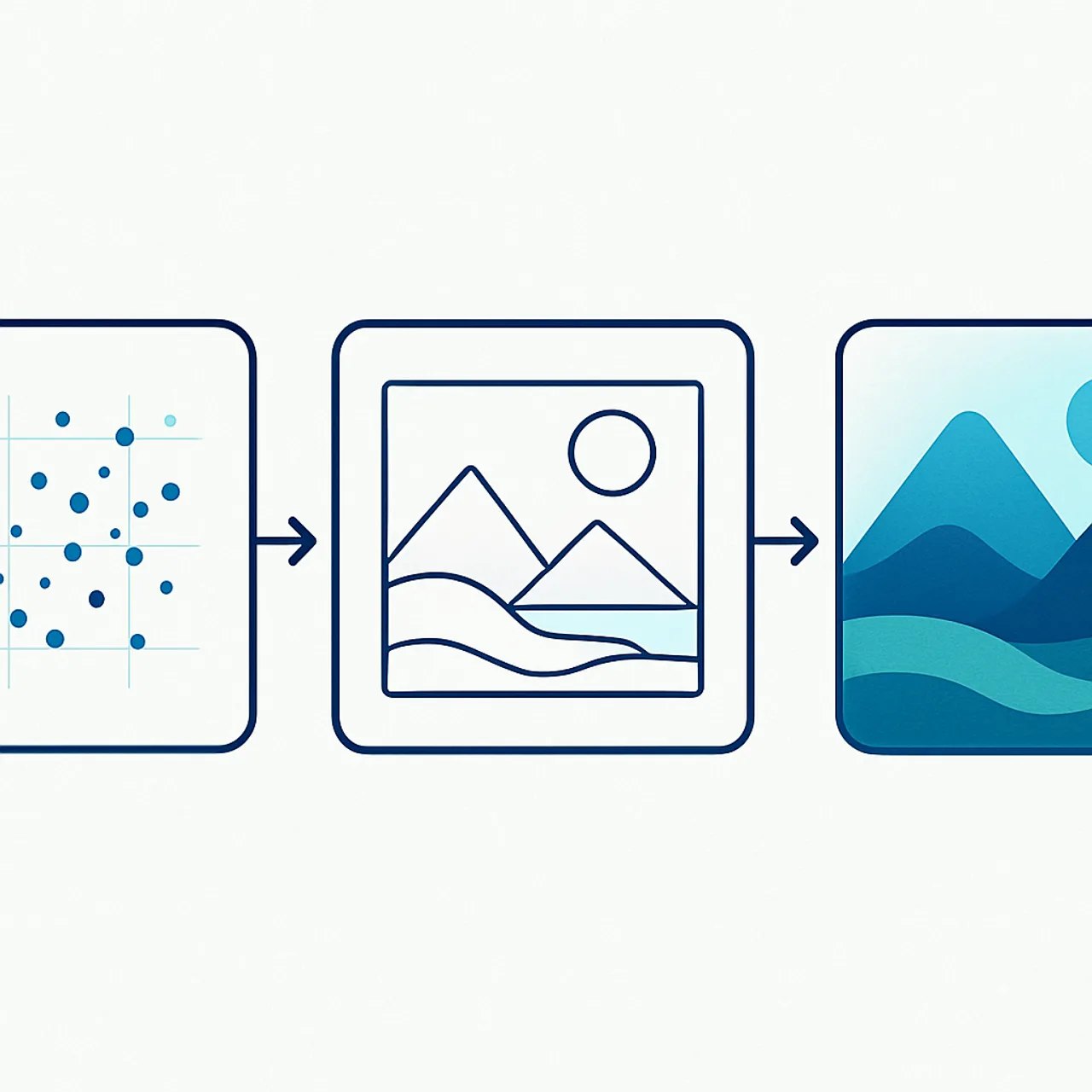
The aesthetics of any AI image are decided by three layers working together. Knowing each one lets you control results instead of gambling on them.
1. Training Data
Models learn from massive image-text datasets. The biases, quality, and cultural skew of that data become the default "taste" of the model. A model trained heavily on stock photography will lean polished and commercial; one trained on fine art will feel painterly.
2. Model Architecture
Diffusion models, the technology behind most modern image generators, build pictures by gradually removing noise. According to research published around Stable Diffusion and DALL-E, this denoising process is why AI images often have that characteristically smooth, slightly idealized surface quality.
3. Human Prompting
The prompt is your creative direction. Specific, intentional language about lighting, lens, mood, and composition produces dramatically better aesthetics than vague requests. This is where human expertise still dominates, and where most quality gains are won or lost.
Core Principles of Strong AI Aesthetics
Great AI visuals obey the same fundamentals as great human design. The technology changes the tool, not the rules. Focus on these pillars:
- Composition: Strong focal points, intentional negative space, and clear visual hierarchy.
- Color harmony: Limited, deliberate palettes outperform chaotic ones. Three to five colors usually read as more premium.
- Coherence: Lighting direction, perspective, and texture must agree across the whole image.
- Emotional resonance: The best output evokes a feeling, not just technical correctness.
- Restraint: Knowing when to stop refining is itself a skill; over-processed AI images quickly look generic.
In my own client work, the single biggest quality jump came from treating AI output as a first draft, not a final deliverable. Human curation and editing remain essential.
AI Aesthetics vs Traditional Design
Many teams ask whether AI replaces designers. The honest answer is that it changes their role. The table below compares the two approaches on the dimensions that matter most in real projects.
| Dimension | Traditional Design | AI-Assisted Aesthetics |
|---|---|---|
| Speed of ideation | Slow to moderate | Very fast |
| Cost per concept | High | Low |
| Originality | High, human-driven | Variable, prompt-driven |
| Consistency at scale | Labor-intensive | Strong with good systems |
| Emotional nuance | Excellent | Improving, still uneven |
| Final polish control | Total | Requires human editing |
The practical takeaway: AI wins on volume and speed, humans win on intent and nuance. The strongest studios combine both rather than choosing one.
The Human-Machine Creative Workflow
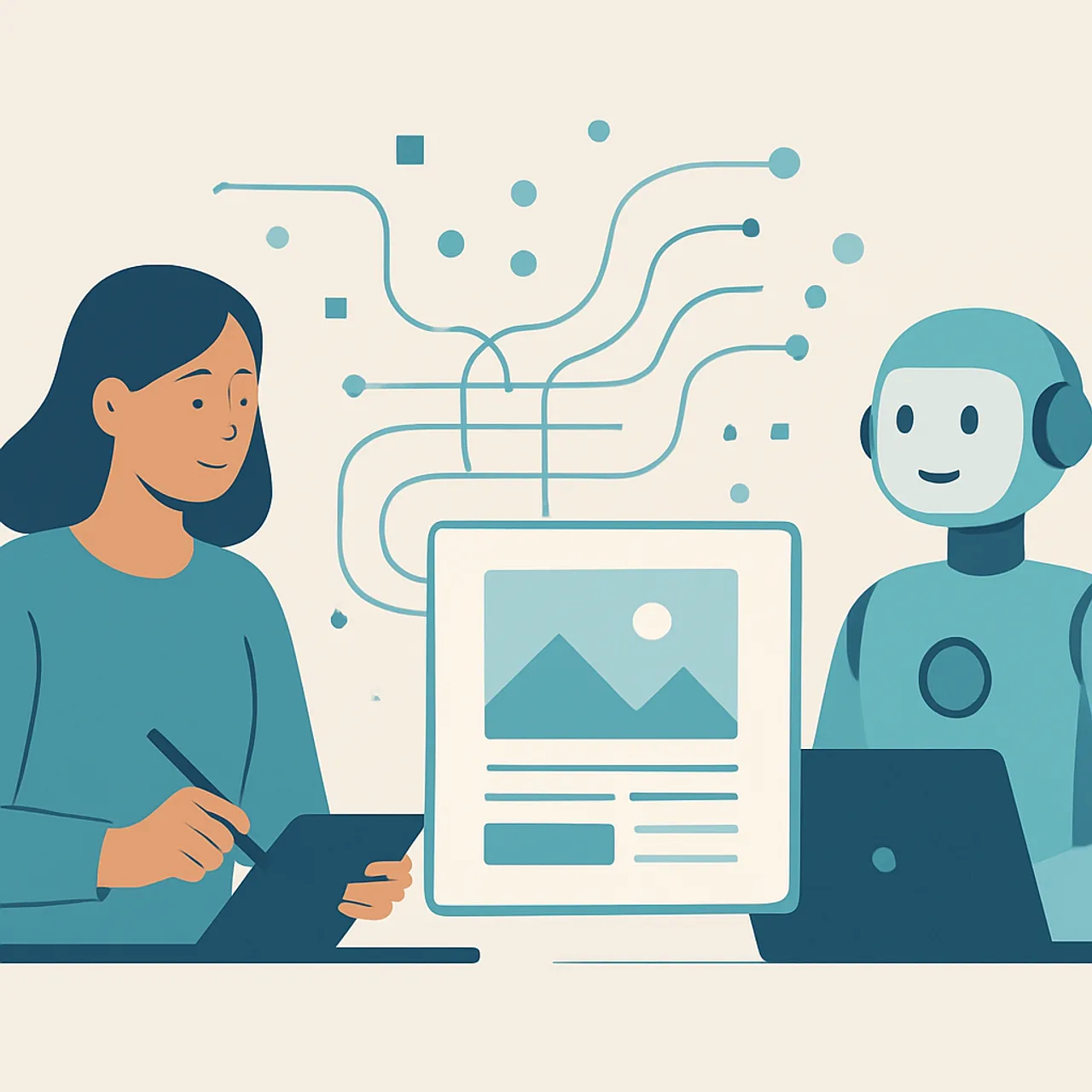
A reliable workflow turns unpredictable AI output into dependable brand assets. Here is the process I recommend after refining it across dozens of campaigns:
- Define the brief first. Decide the mood, palette, and message before generating anything.
- Prompt with specificity. Name the lighting, lens, style reference, and composition.
- Generate in batches. Produce many options and curate ruthlessly.
- Edit and refine. Use inpainting, upscaling, and manual color grading to fix weaknesses.
- Test in context. Place the asset in the real layout before approving it.
- Document what worked. Save winning prompts as reusable templates for brand consistency.
Teams that skip step one almost always produce attractive but off-brand images. Aesthetics without strategy is just decoration. If you want this workflow built into your marketing or product pipeline, the artificial intelligence services at WebPeak focus specifically on turning generative tools into repeatable brand systems.
Common Mistakes That Ruin AI Aesthetics
Knowing the failure patterns is as valuable as knowing the best practices. These are the issues I see most often in client audits:
- Over-reliance on default styles that make every brand look identical.
- Ignoring composition because the textures look impressive in isolation.
- Inconsistent lighting across a set of images meant to live together.
- Skipping post-processing, leaving telltale artifacts in hands, text, and edges.
- Chasing realism when a simpler illustrative style would serve the message better.
Fixing these rarely requires more advanced tools. It requires a more disciplined eye and a willingness to reject good-enough output.
Why AI Aesthetics Matter for Business
Visual quality is not a vanity metric. According to Google research, users form first impressions of a page in about 50 milliseconds, and design is a primary driver of those snap judgments. Meanwhile, Adobe has reported that the majority of consumers say well-designed content increases their trust in a brand. AI aesthetics, used well, let small teams produce that level of polish at a fraction of the traditional cost.
This is exactly why agencies like ZoneTechify and WebPeak treat generative design as a core capability rather than a novelty. The competitive edge now belongs to teams that can produce on-brand, emotionally resonant visuals quickly and consistently.

The Future of AI Aesthetics
The trajectory is clear: models are moving from impressive single images toward coherent visual systems. We are already seeing tools that maintain a consistent character, palette, and style across an entire campaign. The next frontier is controllability, giving designers fine-grained control over every element rather than re-rolling the dice.
My prediction is that taste, not technical access, becomes the scarce resource. When everyone can generate a thousand images per hour, the people who know which one is right will be the most valuable. Aesthetic judgment is becoming a premium human skill, not an obsolete one.

Building a Cohesive AI Brand Identity
The ultimate test of AI aesthetics is consistency across a full brand identity. A single striking image is easy; a logo system, social templates, and product visuals that all feel like one brand is hard. Achieving it requires locking down a style guide, reusing proven prompts, and applying the same post-processing recipe to every asset. Treat your prompts and editing steps like a brand kit, and your AI output will start to feel intentional rather than random.
Key Takeaways
- Artificial intelligence aesthetics is the visual style produced by AI, shaped by training data, model architecture, and human prompting.
- AI does not create taste; it reconstructs learned visual patterns, so human direction remains decisive.
- The same fundamentals, composition, color harmony, coherence, and emotion, still determine quality.
- Users judge design in roughly 50 milliseconds, making strong visuals a measurable business advantage.
- The future favors aesthetic judgment over raw generation access; taste is the scarce skill.
Frequently Asked Questions (FAQ)
What does artificial intelligence aesthetics actually mean?
It refers to the visual style, composition, and feel of images and designs created with AI. It is shaped by the data a model learned from, the model's architecture, and the prompts a human provides, and it is judged by the same standards as traditional design.
Can AI replace human designers?
No, but it changes their role. AI handles speed and volume, while humans provide strategy, taste, and emotional nuance. The strongest results come from designers directing AI tools, curating output, and refining it rather than accepting raw generations as finished work.
Why do AI images often look similar or generic?
Most generic results come from vague prompts and default model styles. Because models reconstruct common patterns from training data, weak direction produces average output. Specific prompts, limited palettes, and human post-processing are what make AI visuals feel distinctive and on-brand.
How do I improve the quality of AI-generated visuals?
Start with a clear brief, then prompt with specific details about lighting, lens, mood, and composition. Generate in batches, curate ruthlessly, and finish with editing such as upscaling and color grading. Testing the image in its real layout before approval prevents costly mistakes.
Are AI aesthetics good for branding?
Yes, when applied with consistency. Lock down a style guide, reuse proven prompts, and apply the same editing recipe across every asset. This turns unpredictable generations into a cohesive brand identity, letting small teams produce polished, trustworthy visuals affordably and at scale.