
A clear breakdown of Palantir artificial intelligence revenue growth, what drives it, how the segments compare, and the risks investors should weigh first.
Palantir Artificial Intelligence Revenue Growth
Palantir Technologies moved from a slow-growing government analytics vendor into one of the fastest-growing large software companies in the artificial intelligence cycle. That shift did not happen because of a single product launch. It happened because the company connected an existing data-integration layer to large language models and then sold the result through an unusually fast trial process. Understanding that mechanism matters more than tracking any single quarter, because the mechanism is what determines whether growth continues.
Quick Answer: Palantir artificial intelligence revenue growth is driven mainly by its US commercial segment, where its Artificial Intelligence Platform connects enterprise data to large language models. Total revenue growth accelerated from roughly 17 percent in 2023 to about 29 percent in 2024, with US commercial revenue growing far faster than the company average.
Table of Contents
- What Is Driving Palantir Artificial Intelligence Revenue Growth
- How Fast Is Palantir Actually Growing
- Why the Ontology Layer Is the Real Product
- Government Versus Commercial Revenue Compared
- How the Bootcamp Sales Motion Changed the Numbers
- Profitability and the Rule of 40
- What Could Slow the Growth
- How to Evaluate the Story Yourself
- Key Takeaways
- Frequently Asked Questions
What Is Driving Palantir Artificial Intelligence Revenue Growth
The primary driver is the Artificial Intelligence Platform, known as AIP, sold into US commercial customers who already struggled to use their own data. AIP is not a model. It is an orchestration layer that lets language models read, reason over, and act on governed enterprise data through Palantir Foundry.
That distinction explains the revenue pattern. Companies buying AIP are rarely buying intelligence. They are buying the plumbing that makes intelligence usable: permissions, lineage, write-back to operational systems, and an audit trail. Because that plumbing is difficult to build internally, deals expand once a first workflow succeeds.
Definition: What Counts as AI Revenue Here
Palantir does not report a separate AIP revenue line. Analysts infer AI-driven growth from segment disclosures, mainly US commercial revenue growth, customer count growth, and total contract value booked. Any claim about exact AIP revenue is an estimate, not a reported figure, and should be treated that way.
How Fast Is Palantir Actually Growing
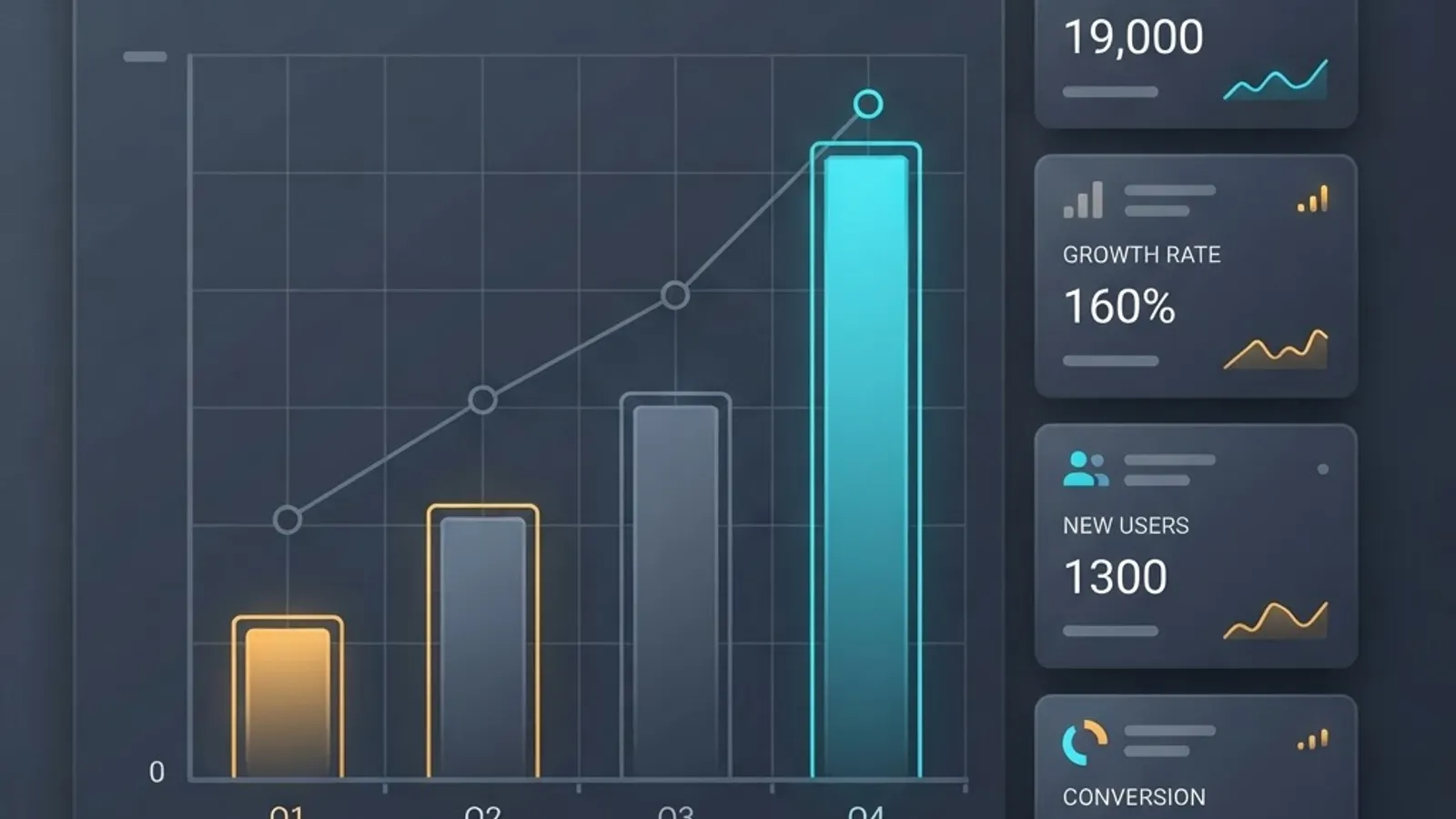
Growth reaccelerated after a clear slowdown. Palantir grew revenue about 24 percent in 2022 and roughly 17 percent in 2023, then approximately 29 percent in 2024 to about 2.87 billion dollars. Reacceleration in a company of that size is uncommon, because scale normally compresses percentage growth.
The more important number sits underneath the total. US commercial revenue grew far faster than the consolidated figure through 2024 and into 2025, at rates that exceeded 50 percent year over year in multiple quarters. When one segment grows at double the company average, that segment is the story.
Why Segment Growth Beats Total Growth as a Signal
Total revenue blends a mature, lumpy government business with an emerging commercial business. Blending hides the inflection. If you only watch the consolidated line, you will detect a change roughly two to four quarters after it becomes visible in the US commercial segment.

Why the Ontology Layer Is the Real Product
An ontology, in Palantir terms, is a structured map of an organization's real-world objects and their relationships: a pump, a shipment, a claim, a patient, a flight. Rather than querying tables, users and models query objects that carry meaning and permissions.
This matters commercially for one reason. A language model connected to raw databases produces plausible answers with no accountability. A model connected to an ontology can be constrained, logged, and allowed to trigger real actions. Enterprises pay premium prices for the second option because the first fails compliance review.
The Practical Limitation
Ontology construction is real work. It requires access to messy source systems and agreement on definitions across departments. That is why implementation timelines vary widely and why some customers stall at pilot stage. Organizations building similar internal data foundations often bring in outside engineering help, and firms such as the ZoneTechify Team work on comparable data and AI integration problems for companies that lack in-house platform teams.

Government Versus Commercial Revenue Compared
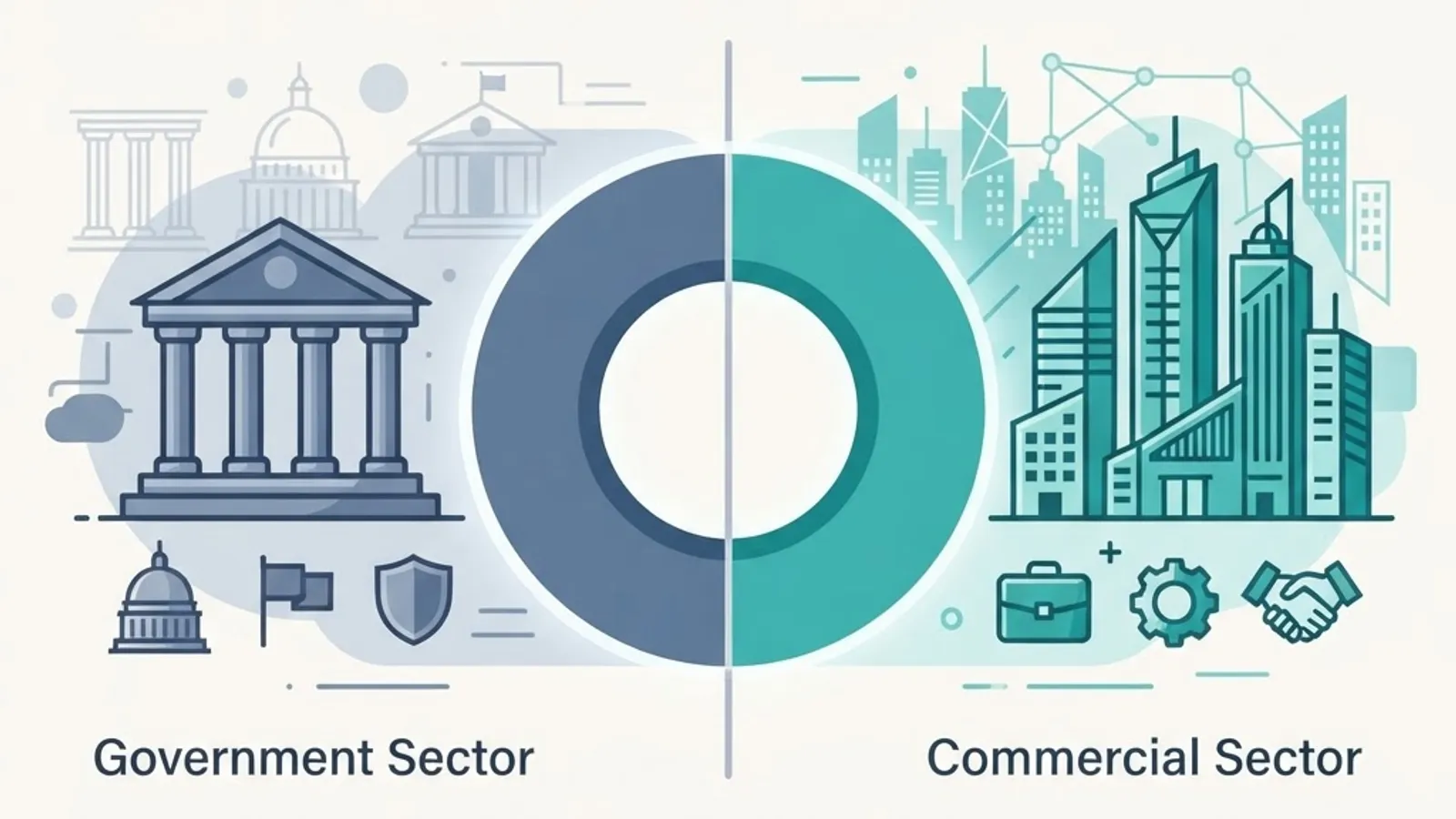
Both segments matter, but they behave differently. Government revenue is durable and slow to win. Commercial revenue is faster to win and faster to expand, but more exposed to budget cycles.
| Factor | Government Segment | US Commercial Segment |
|---|---|---|
| Typical growth rate | Lower to mid double digits | Frequently above 50 percent recently |
| Sales cycle length | Often 12 months or longer | Weeks to a few months after a bootcamp |
| Contract structure | Multi-year, milestone based | Shorter initial deal, then expansion |
| Revenue durability | High, renewal driven | Moderate, depends on proven value |
| Main risk | Procurement delays and budget timing | Discretionary AI spending cuts |
| Role in AI growth story | Supplies stable base and credibility | Supplies the growth acceleration |
The comparison leads to a specific conclusion. Government revenue funds the company and validates security claims. Commercial revenue sets the growth rate. Any forecast that treats the two as interchangeable will be wrong.
How the Bootcamp Sales Motion Changed the Numbers
Palantir replaced long enterprise sales cycles with short hands-on sessions where customer teams build a working use case on their own data, typically in one to five days. The change is structural, not cosmetic.
Three effects follow directly:
- Time to first value drops from months to days, which shortens the gap between first contact and first contract.
- The buying committee shrinks, because a working prototype answers technical objections that would otherwise require a procurement review.
- Expansion becomes the default path, since the first workflow exposes adjacent workflows in the same data foundation.
This motion also produced a visible metric: US commercial customer count rose sharply, expanding several times over from a small base within roughly two years. Customer count growth outpacing revenue growth indicates land-and-expand behavior rather than a few oversized deals.

Profitability and the Rule of 40
Growth alone is not the differentiator. Palantir reached GAAP profitability in 2023 and sustained it, which removed the most common bear argument against high-growth software companies.
The Rule of 40 states that a healthy software business should have revenue growth rate plus profit margin totaling at least 40. With growth near 30 percent and adjusted operating margins moving into the high 30s and 40s during 2024 and 2025, Palantir cleared that threshold comfortably. Free cash flow turned consistently positive as well.
Why Margin Expansion Accompanied Growth
Margins expanded because incremental AIP deployments reuse existing platform engineering rather than requiring proportional headcount. Bootcamps also shifted part of the implementation effort to customer teams, which lowers cost of acquisition per new logo.

What Could Slow the Growth
Balanced analysis requires naming the constraints. Four are material.
- Valuation risk. Palantir has traded at revenue multiples far above typical enterprise software peers, which means growth must persist for years to justify the price. High multiples amplify the impact of any single disappointing quarter.
- Customer concentration. A meaningful share of revenue still comes from a limited number of large contracts, so one non-renewal can move reported growth.
- Competitive pressure. Hyperscalers, data platform vendors, and model providers are all adding orchestration and governance features that overlap with parts of AIP.
- Implementation dependency. Value depends on data quality inside the customer. Where source systems are poor, pilots stall and expansion does not occur.
None of these invalidates the growth record. Each affects how much you should extrapolate from it.

How to Evaluate the Story Yourself
Use a short, repeatable checklist each quarter instead of reacting to headlines.
- Read US commercial revenue growth first, before total revenue.
- Compare customer count growth against revenue growth to detect land-and-expand versus deal concentration.
- Check remaining performance obligations and total contract value booked, which indicate future revenue already committed.
- Verify adjusted operating margin and GAAP net income together, since adjusted figures exclude stock compensation.
- Calculate the Rule of 40 yourself rather than accepting a summary.
- Note dilution from share issuance, which affects per-share results even when revenue grows.
Applied consistently, that sequence tells you whether the artificial intelligence revenue engine is still compounding or simply maintaining a previous level.
Key Takeaways
- Palantir total revenue grew roughly 17 percent in 2023 and about 29 percent in 2024, reaching approximately 2.87 billion dollars.
- US commercial revenue, driven by AIP, grew at rates above 50 percent year over year in multiple recent quarters.
- Palantir does not disclose a separate AIP revenue line, so AI revenue figures are estimates derived from segment data.
- The ontology layer, not the models, is the defensible asset, because it supplies governance, permissions, and audit trails.
- Bootcamps compressed sales cycles from months to days and drove sharp growth in commercial customer count.
- The company reached GAAP profitability in 2023 and has cleared the Rule of 40 threshold since.
- Valuation, customer concentration, hyperscaler competition, and customer data quality are the four main constraints on continued growth.
Frequently Asked Questions (FAQ)
How much revenue does Palantir make from AI?
Palantir does not report AI revenue separately. Its Artificial Intelligence Platform is bundled inside commercial and government contracts. Analysts estimate AI contribution using US commercial revenue growth, which exceeded 50 percent year over year in several recent quarters, against total 2024 revenue of about 2.87 billion dollars.
Why is Palantir revenue growth accelerating instead of slowing?
Acceleration came from a segment shift rather than pricing. The US commercial business, sold through short bootcamps that deliver a working use case in days, grew several times faster than the company average. That fast-growing segment became large enough to lift consolidated growth from roughly 17 percent to about 29 percent.
What is Palantir AIP and how is it different from ChatGPT?
AIP is an orchestration and governance layer, not a chatbot or a model. It connects large language models to an organization's governed data through Foundry, enforcing permissions, logging actions, and writing results back to operational systems. General assistants answer questions; AIP is designed to trigger auditable actions inside enterprise workflows.
Is Palantir profitable, or is growth funded by losses?
Palantir reached GAAP profitability in 2023 and has remained profitable since, with consistently positive free cash flow. Adjusted operating margins moved into the high 30s and 40s during 2024 and 2025. Growth is therefore self-funded, though stock-based compensation still dilutes shareholders over time.
What is the biggest risk to Palantir AI revenue growth?
Valuation is the largest practical risk. Shares have traded at revenue multiples far above enterprise software norms, so several years of strong growth are already priced in. Secondary risks include customer concentration in large contracts, expanding hyperscaler competition, and pilots stalling where customer data quality is poor.