A clear, expert breakdown of the latest artificial intelligence education policy updates today, covering classroom rules, data privacy, academic integrity, and global guidance for schools.
Artificial Intelligence Education Policy Updates Today
Artificial intelligence has moved from a classroom novelty to a core policy concern in a matter of months. School boards, universities, and national education ministries are now racing to publish formal guidance on how AI tools like ChatGPT, Gemini, and Claude should be used by students and teachers. If you are an educator, administrator, parent, or policymaker, keeping up with artificial intelligence education policy updates today is no longer optional, it directly shapes funding, grading, privacy, and accreditation.
This guide cuts through the noise. Drawing on recent government frameworks and real institutional rollouts, it explains what has actually changed, what is still being debated, and what you should do next. Our team at ZoneTechify and WebPeak works with education-focused organizations on AI strategy, so the recommendations here come from hands-on implementation, not theory.
Quick Answer: Artificial intelligence education policy updates today focus on four pillars: responsible classroom use, student data privacy, academic integrity, and mandatory teacher training. Governments worldwide are issuing voluntary frameworks rather than strict laws, urging schools to adopt AI transparently while protecting minors and ensuring human oversight of all decisions.
What Is Driving AI Education Policy Right Now
The surge in policy activity is driven by adoption outpacing regulation. According to the U.S. Department of Education's guidance on AI, the priority is to keep "humans in the loop" for any high-stakes decision affecting a learner. That single principle now anchors most published frameworks.
Three forces are accelerating updates:
- Rapid student adoption. A 2024 Pew Research Center study found that 26% of U.S. teens had used ChatGPT for schoolwork, double the share from the previous year. Schools cannot ignore a tool the majority of students will soon use.
- Equity concerns. Policymakers worry AI access could widen gaps between well-funded and under-resourced schools.
- Legal exposure. Data privacy laws like FERPA in the U.S. and GDPR in Europe apply directly to AI tools that process student information.
The result is a wave of guidance documents rather than rigid statutes, giving schools flexibility while signaling clear expectations.
The Four Pillars of Today's AI Education Policies
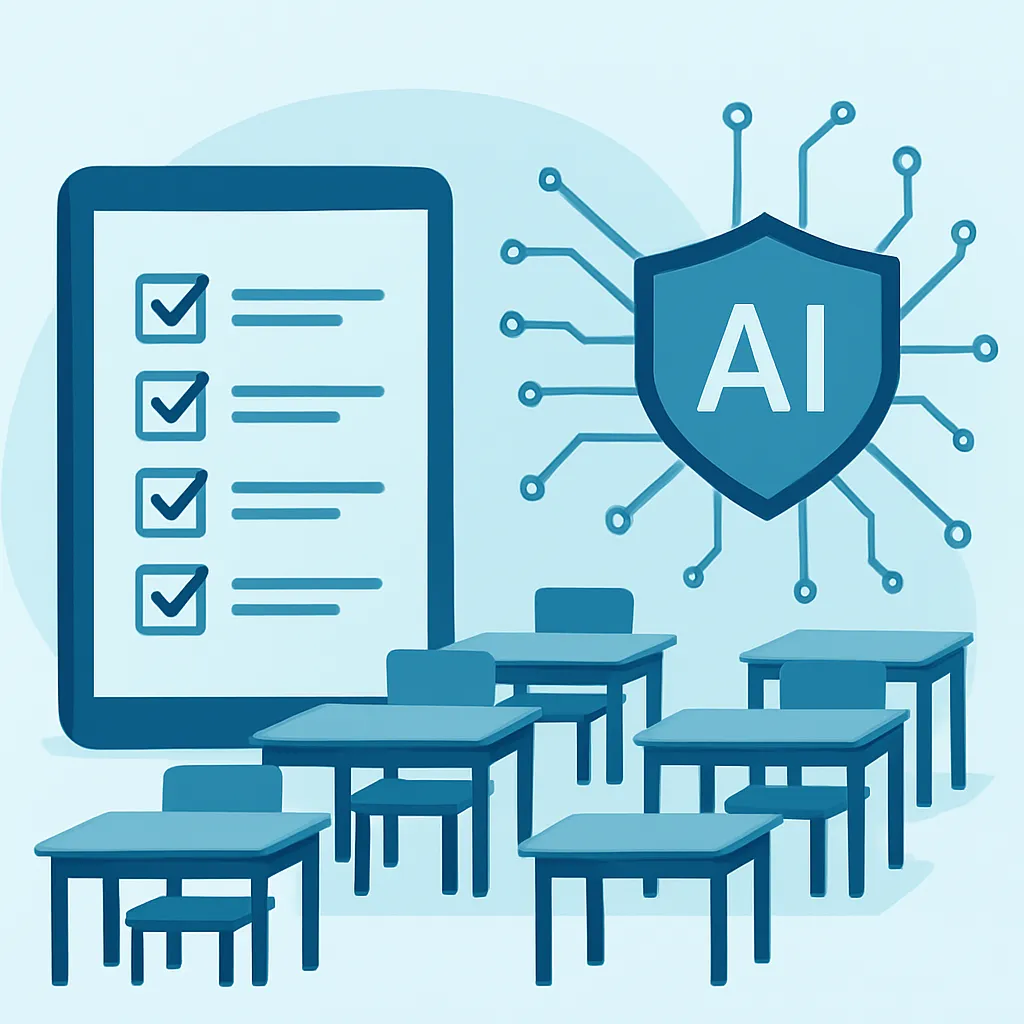
Almost every credible policy update released this year organizes itself around the same four pillars. Understanding them gives you a reliable lens for evaluating any new guidance.
1. Responsible Classroom Use
Policies now distinguish between AI as a learning aid and AI as a shortcut that replaces thinking. The consensus position is that AI should augment instruction, support personalized learning, and reduce administrative load, while teachers retain final authority. Most frameworks explicitly require disclosure when AI is used to generate teaching materials or assess students.
2. Student Data Privacy
This is the most legally sensitive pillar. New guidance requires that any AI tool used with minors must not train on student data without consent, must encrypt stored information, and must allow data deletion on request. Vendors that cannot meet these terms are increasingly banned from district procurement lists.
3. Academic Integrity
Rather than banning AI outright, updated honor codes now define acceptable versus unacceptable use. Submitting AI-generated work as your own is prohibited, but using AI to brainstorm or check grammar may be allowed if disclosed.
4. Teacher Training and AI Literacy
The newest and fastest-growing requirement is mandatory professional development. Policies recognize that staff cannot enforce rules they do not understand.
Student Data Privacy: The Non-Negotiable Update
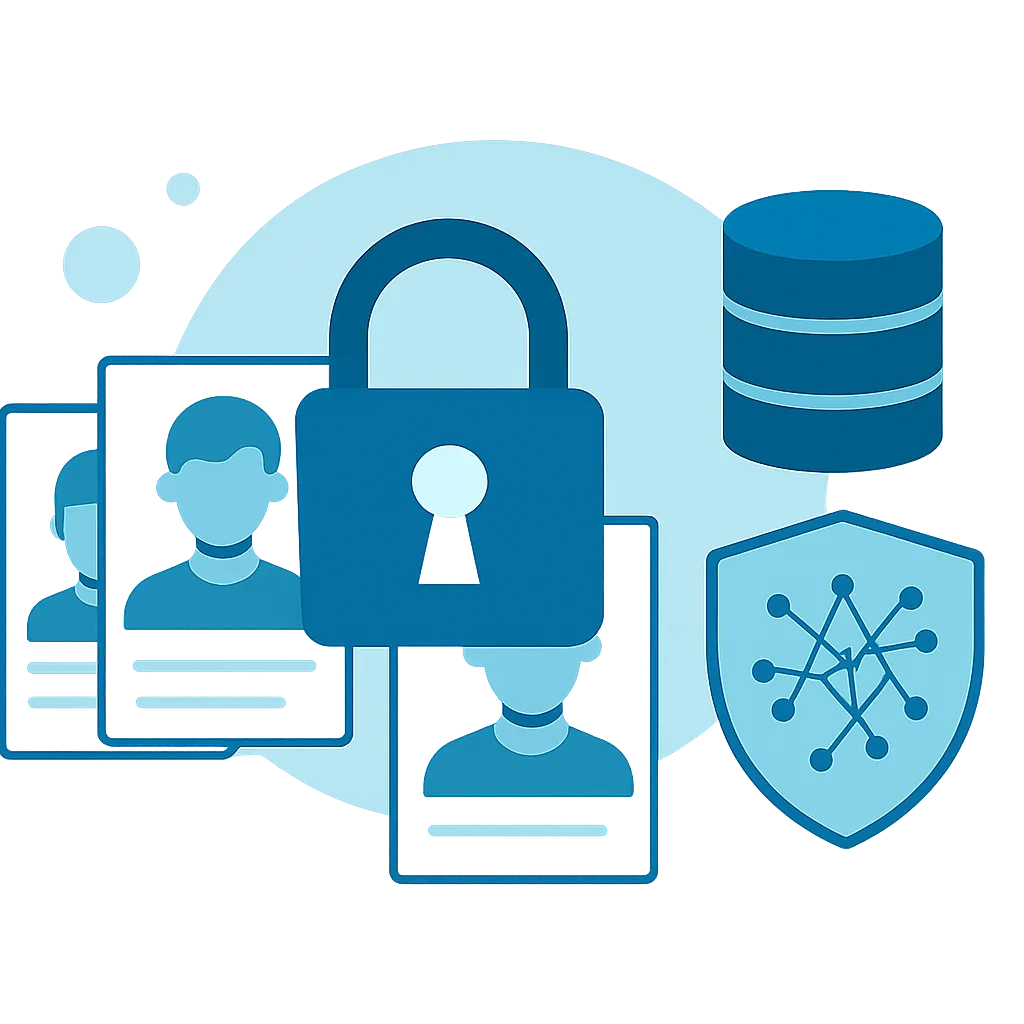
Data privacy is where policy has the sharpest teeth. Definition first: student data privacy means protecting personally identifiable information, learning records, and behavioral data from unauthorized access, sale, or model training.
Recent updates demand that schools verify three things before approving any AI tool:
- Compliance certification. The vendor must confirm FERPA, COPPA, or GDPR compliance in writing.
- No secondary use. Student inputs cannot be repurposed to train commercial models.
- Transparency. Families must be told which AI tools are in use and why.
In practice, this has reshaped procurement. Districts that once signed up for free AI apps now run formal data protection reviews. If your institution is building or buying education technology, our web application development services can help you ship platforms that are privacy-compliant from day one rather than retrofitted later.
Academic Integrity: From Bans to Guardrails
The biggest shift this year is philosophical. Early 2023 policies tried to ban AI entirely, then quickly failed because detection tools proved unreliable. Today's updates take a guardrail approach instead.
Modern integrity policies typically include:
- Clear examples of permitted use, such as outlining or proofreading
- Required citation when AI contributes substantively to work
- Assessment redesign that emphasizes process, oral defense, and in-class work
- A move away from punitive AI detectors toward transparent expectations
This reflects hard-won experience: institutions that punished students based on flawed detectors faced appeals and reputational damage. The smarter policy is to design assignments AI cannot easily complete and to teach honest disclosure.
Teacher Training: The Fastest-Growing Requirement
If there is one trend defining artificial intelligence education policy updates today, it is the pivot toward educator readiness. Policies increasingly mandate that teachers complete AI literacy training before deploying tools in class.
Effective training programs now cover:
- How generative AI works and where it makes mistakes
- Prompting techniques for lesson planning and differentiation
- Bias, hallucination, and the limits of AI accuracy
- Privacy obligations and disclosure rules
The rationale is simple. A teacher who understands AI limitations can supervise it responsibly; one who does not may over-trust flawed output. This is why well-funded districts are budgeting for ongoing development rather than one-off workshops.
How Global AI Education Policies Compare
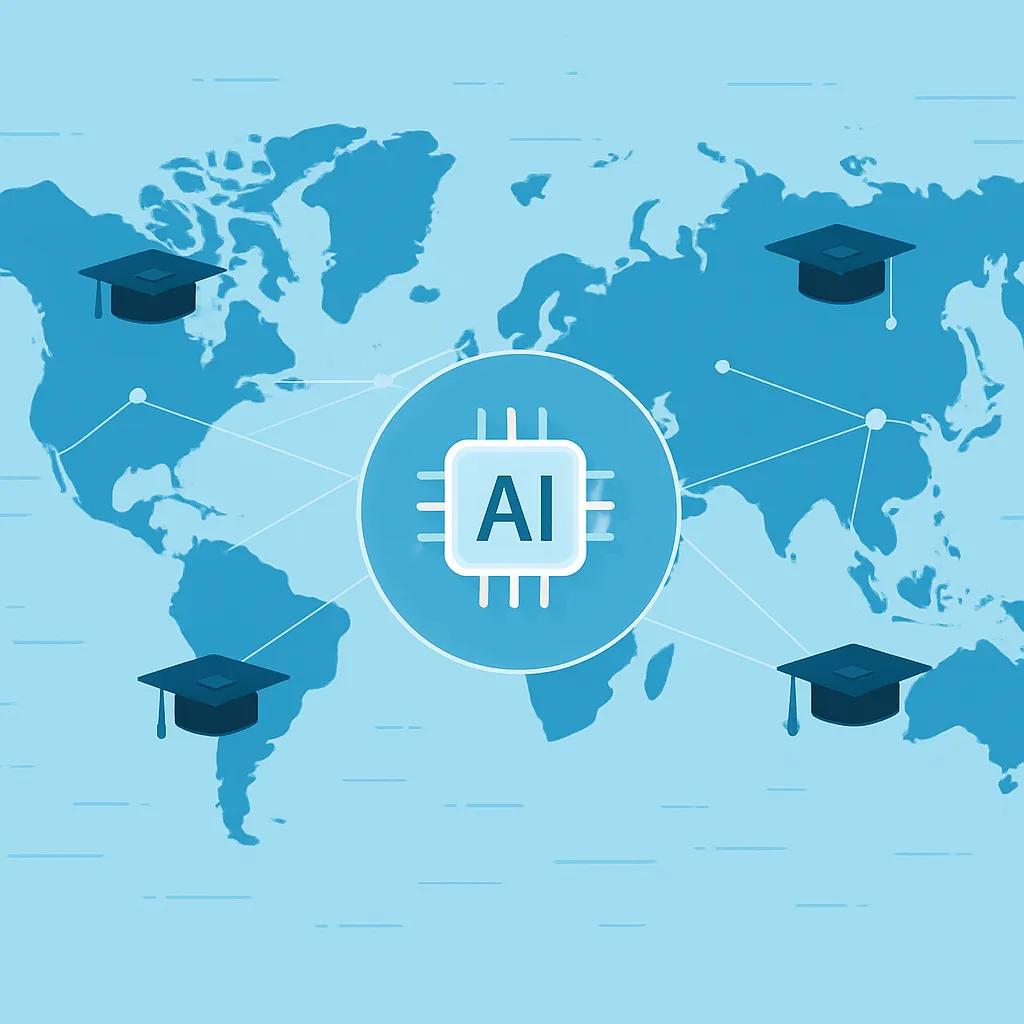
Policy maturity varies widely by region. The table below summarizes the current direction of major frameworks based on published government guidance.
| Region | Policy Approach | Primary Focus | Status |
|---|---|---|---|
| United States | Voluntary federal guidance, state-led rules | Human oversight, privacy | Active, decentralized |
| European Union | Risk-based regulation via the AI Act | Transparency, high-risk use | Binding law phasing in |
| United Kingdom | National guidance for schools | Safe, effective use | Active guidance |
| China | Centralized national directives | AI literacy at scale | Mandatory rollout |
| Australia | National framework for schools | Ethics, equity, privacy | Active framework |
The key takeaway is that the EU is the only major bloc treating some educational AI as legally "high-risk," while most others rely on voluntary frameworks. Schools operating across borders should default to the strictest applicable standard.
A Practical Roadmap for Schools and Institutions
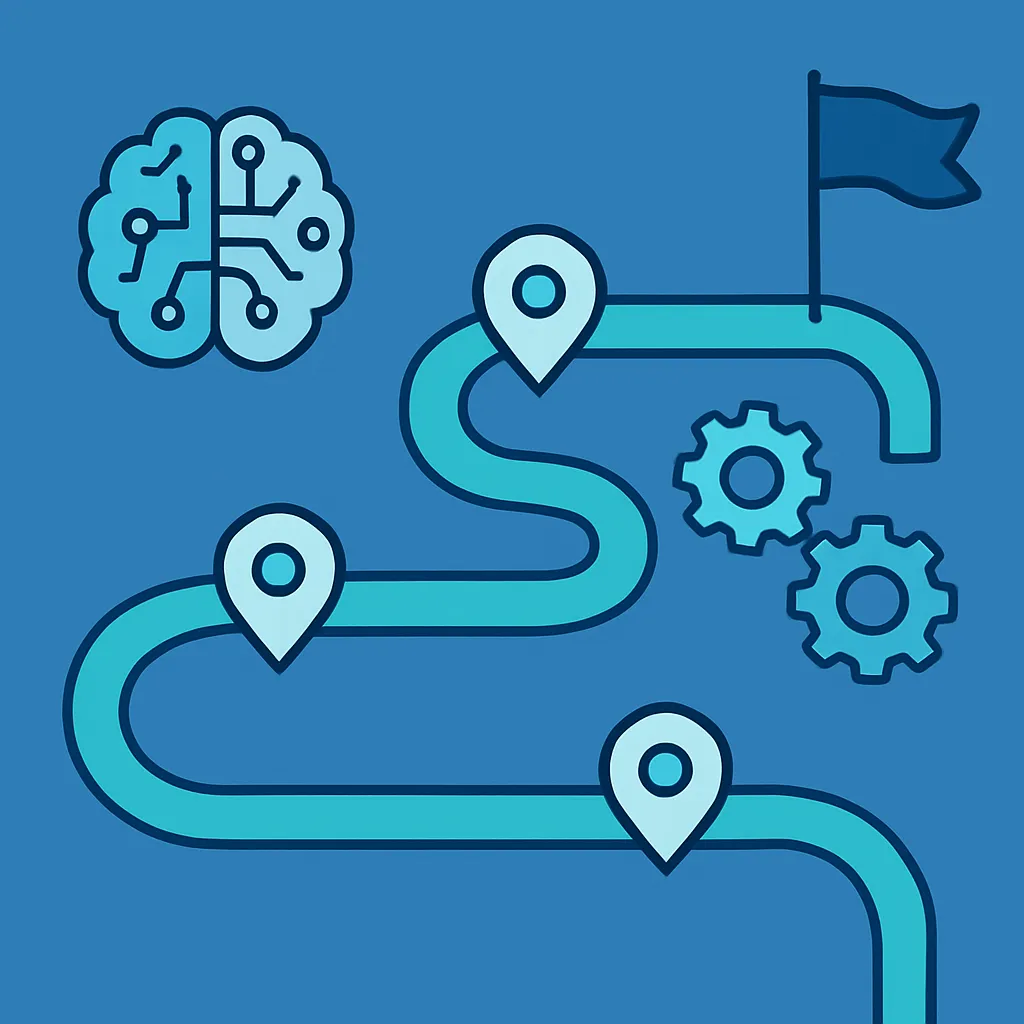
Policy awareness is useless without execution. Based on rollouts we have supported, here is a sequence that consistently works.
- Audit current AI use. Survey staff and students to learn which tools are already in play, sanctioned or not.
- Adopt a clear written policy. Cover the four pillars in plain language families can understand.
- Vet your vendors. Require written privacy compliance before approval.
- Train before you deploy. Make AI literacy a prerequisite, not an afterthought.
- Redesign assessments. Emphasize reasoning, projects, and live demonstration.
- Review quarterly. AI changes fast; static policies become outdated within months.
Institutions that treat policy as a living document, not a one-time PDF, adapt far better as new models and risks emerge.
Real Implementation: What Success Looks Like
The schools getting this right share a pattern. They communicate openly with families, they invest in teachers first, and they measure outcomes instead of chasing trends. One mid-sized district we observed reduced plagiarism disputes after replacing AI detection software with a disclosure-based honor code and redesigned oral assessments. The lesson is that culture and assessment design beat surveillance.
The institutions struggling most are those that issued a blanket ban, watched it get ignored, and lost credibility. Trust, transparency, and training consistently outperform prohibition.
Key Takeaways
- Artificial intelligence education policy updates today center on four pillars: responsible use, data privacy, academic integrity, and teacher training.
- The U.S. Department of Education emphasizes keeping humans in the loop for all high-stakes decisions.
- A 2024 Pew Research Center study found 26% of U.S. teens used ChatGPT for schoolwork, double the prior year.
- The EU AI Act is the only major framework classifying some educational AI as legally high-risk.
- Bans have largely failed; guardrails, disclosure, and assessment redesign work better.
- Privacy compliance (FERPA, COPPA, GDPR) is now a hard requirement for vendor approval.
Frequently Asked Questions (FAQ)
What are the latest AI education policy updates today?
The latest updates focus on responsible classroom use, strict student data privacy, redesigned academic integrity rules, and mandatory teacher training. Most governments are issuing voluntary frameworks rather than binding laws, encouraging transparent AI adoption while keeping human educators in control of all major decisions affecting students.
Is AI allowed in schools now?
Yes, most schools now allow AI with conditions rather than banning it. Updated policies permit AI for brainstorming, tutoring, and accessibility support, provided students disclose use and do not submit AI-generated work as their own. The trend is toward clear guardrails instead of outright prohibition, which proved unenforceable.
How do AI policies protect student data privacy?
AI policies protect student data by requiring vendors to comply with laws like FERPA, COPPA, and GDPR. Tools cannot train commercial models on student inputs, must encrypt data, and must allow deletion on request. Schools must also tell families which AI tools are used and for what purpose.
Do teachers need training to use AI?
Increasingly, yes. Many new policies require teachers to complete AI literacy training before using tools in class. Training covers how generative AI works, its limitations, bias and hallucination risks, and privacy obligations, ensuring educators can supervise AI responsibly rather than over-trusting unreliable or inaccurate automated output.
Which country has the strictest AI education policy?
The European Union currently has the strictest approach through its AI Act, which classifies certain educational AI systems as high-risk and legally regulated. Most other regions, including the United States and United Kingdom, rely on voluntary national guidance, making the EU the benchmark for compliance-focused institutions worldwide.
Final Thoughts
Artificial intelligence education policy updates today reward institutions that act with clarity and humility. The winning formula is consistent: protect student data, train teachers first, redesign assessments, and treat policy as a living document. Schools that build on transparency and human oversight will adapt smoothly as AI evolves, while those relying on bans or surveillance will keep falling behind. Start with the four pillars, and you are already ahead.